Refrigerator repair
Warm fresh-food side, frosted freezer coils, or a garage fridge losing the fight against summer heat? We trace the cause and put a price on the fix before touching it.
Appliance repair
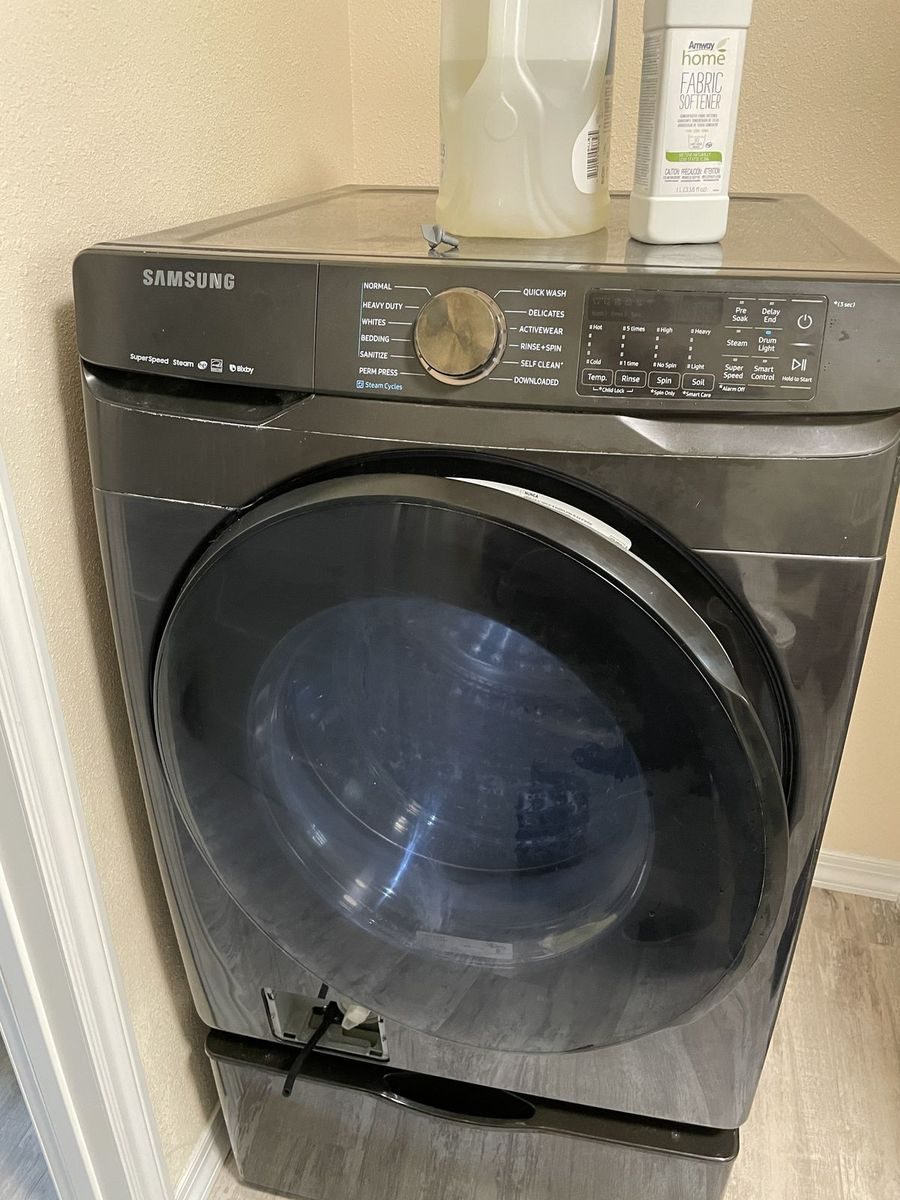
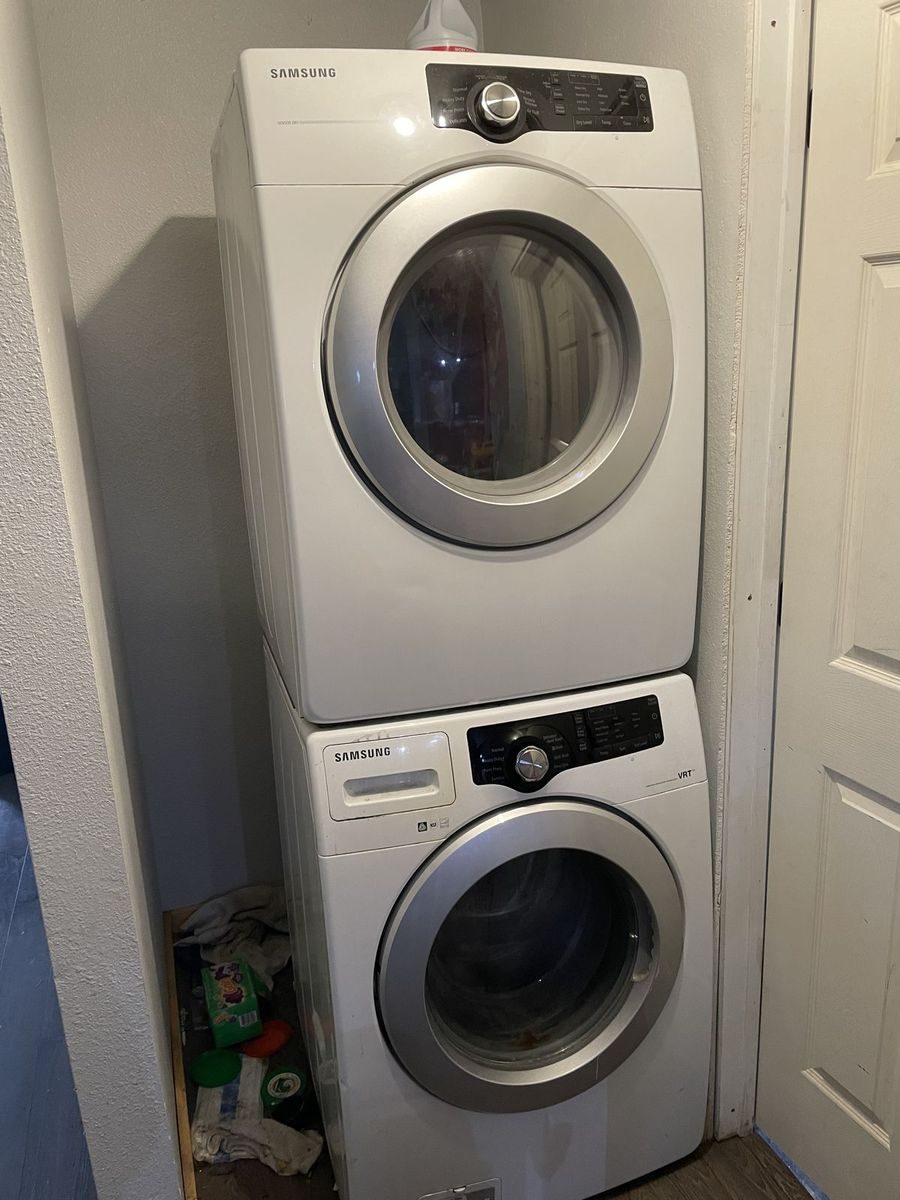
When the fridge warms up or the washer stalls halfway through a load, the whole household feels it. Our technicians handle cold storage, laundry and cooking equipment in homes around Kennewick, Pasco, Richland and the outlying towns, from a garage freezer in Finley to an upstairs laundry room in West Pasco.
Short answer
Larch fixes household appliances throughout the Tri-Cities, licensed through the 07D Appliance Repair specialty that sits on our Washington electrical contractor license. Kitchen and laundry equipment is all in scope: fridges, freezers, ice makers, ranges, ovens, cooktops, dishwashers, washers and dryers, with brands such as Bosch, Speed Queen, Maytag, LG, Electrolux, GE and Whirlpool. The technician tests the suspect part, prices it on paper, and begins once you approve.
Every appliance has a short list of parts that give out first, so each visit begins by testing those with a meter, and nobody swaps parts on a hunch.
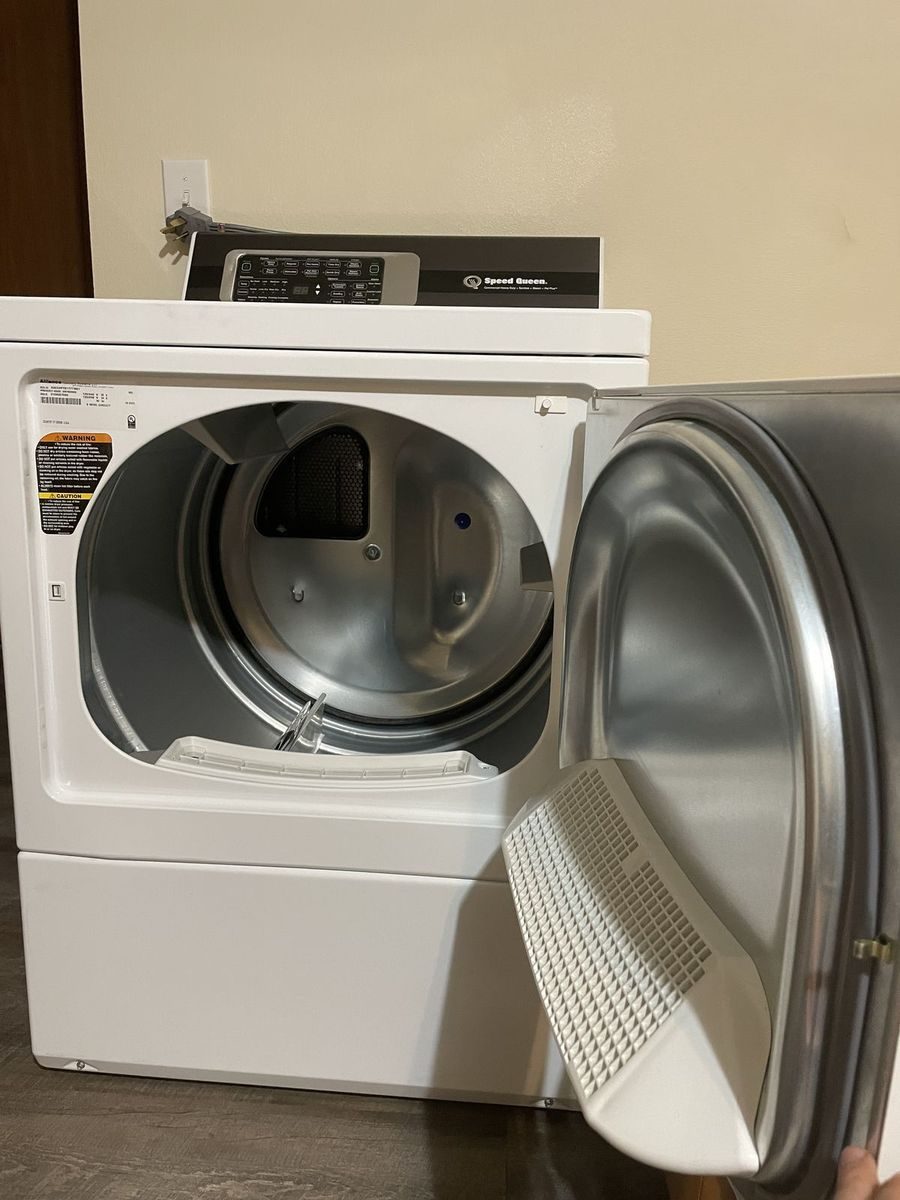
Warm fresh-food side, frosted freezer coils, or a garage fridge losing the fight against summer heat? We trace the cause and put a price on the fix before touching it.
Front-load or top-load, draining slowly, leaking upstairs, or flashing a code? We test the pump, valves, locks and bearings, then put the price in writing.
Gas or electric dryer running cold, needing two cycles, or quitting early? We test fuses, elements, igniters and the vent run, and quote in writing first.
Standing water, white film, leaks or a blinking code. We trace drain pumps, filters, heaters and inlet valves on Bosch, KitchenAid, Whirlpool, GE, LG and Samsung dishwashers.
Gas or electric, a cold oven, a clicking burner or a door locked after self-clean. We test igniters, elements, sensors and boards and price the repair in writing.
No ice, small cubes or a frozen fill tube. We trace inlet valves, filters, well sediment and ice maker modules, including garage fridges that stall in a Tri-Cities winter.
Water is the first culprit for anything with a valve or a screen. Kennewick pulls its supply partly from the Columbia and partly from Ranney collector wells; hardness runs from about 50 up to 200 ppm (5–14 grains per gallon) and moves with the seasons. Pasco and Richland rely mostly on treated river water, moderately hard. Mineral buildup chokes the little inlet screens in a dishwasher, a washing machine or an ice maker's fill valve, and it films over a dishwasher's heating element. Where a private well supplies the house, as on many properties in Finley, Benton City, Burbank and rural West Richland, sediment arrives at those screens even sooner.
Heat is the other strain. Keep an overflow refrigerator or deep freezer out in an uninsulated garage or shop, and once July bakes that space, its condenser fan, start relay and compressor run far longer than they would indoors; summer dust packed under the cabinet stretches run time further. Laundry placement matters too. Many new West Pasco houses put the washer and dryer upstairs, where a slow leak from a torn door boot or failing drain pump soaks the ceiling below, and a long vent run fills with lint until the dryer's thermal fuse opens.
Repair usually makes sense when one part has failed and the cabinet, tub or sealed system is sound. A blown thermal fuse, a seized drain pump or a cracked bake element is a contained job, and many such parts travel on the truck, including thermal fuses, door switches, pumps, igniters, belts and valves. Sealed-system trouble on a refrigerator, like a leaking evaporator or a dead compressor, is a larger job, and the estimate states that plainly.
Whatever the appliance, the diagnostic fee follows one rule. The office quotes it when you schedule; it rolls into the repair if you proceed, and it becomes the entire charge when you say no. Parts that must be ordered carry their price on the estimate before anything is ordered, and warranty terms appear on the invoice. To get a technician out, grab a time slot through the booking form, or call.
One photo per tab from our service calls. Tap a tab, or let the file turn on its own.
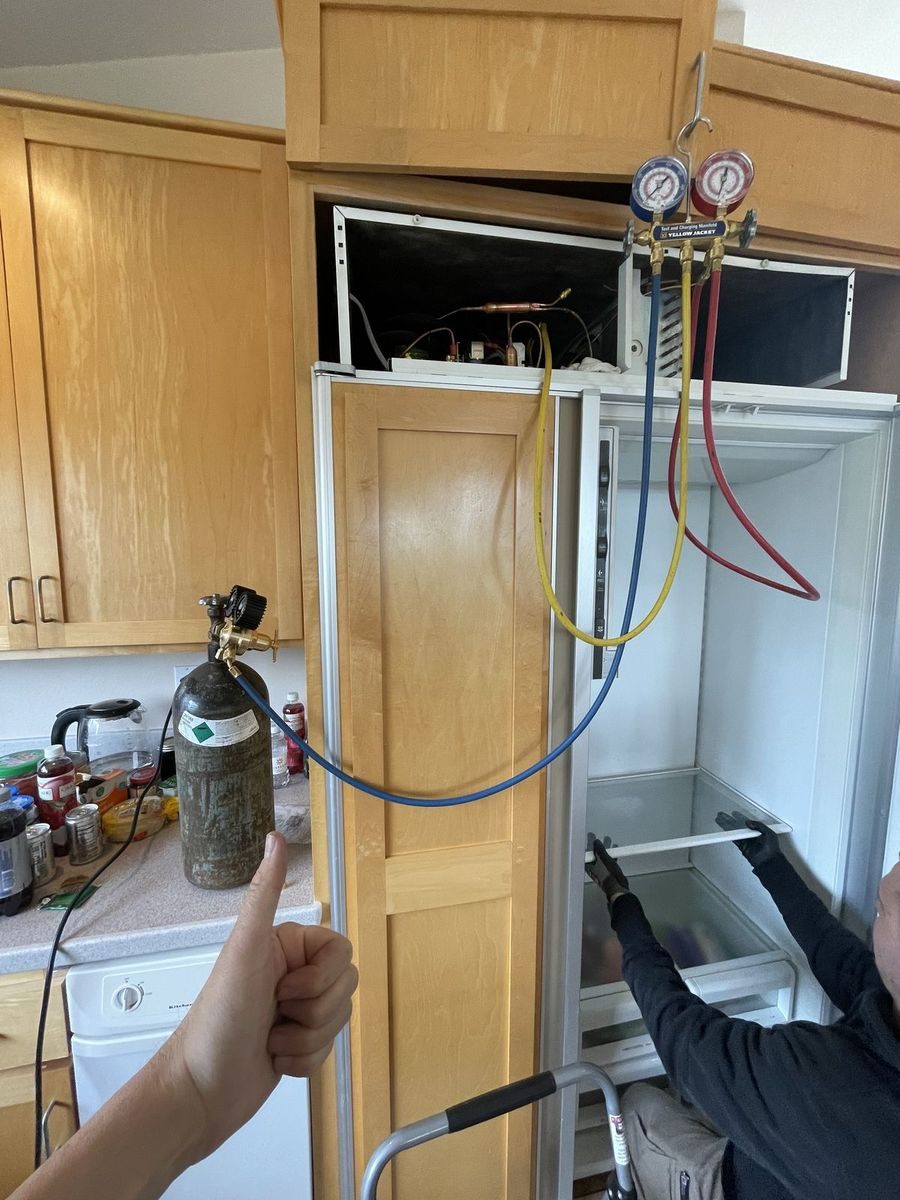
01 / 12
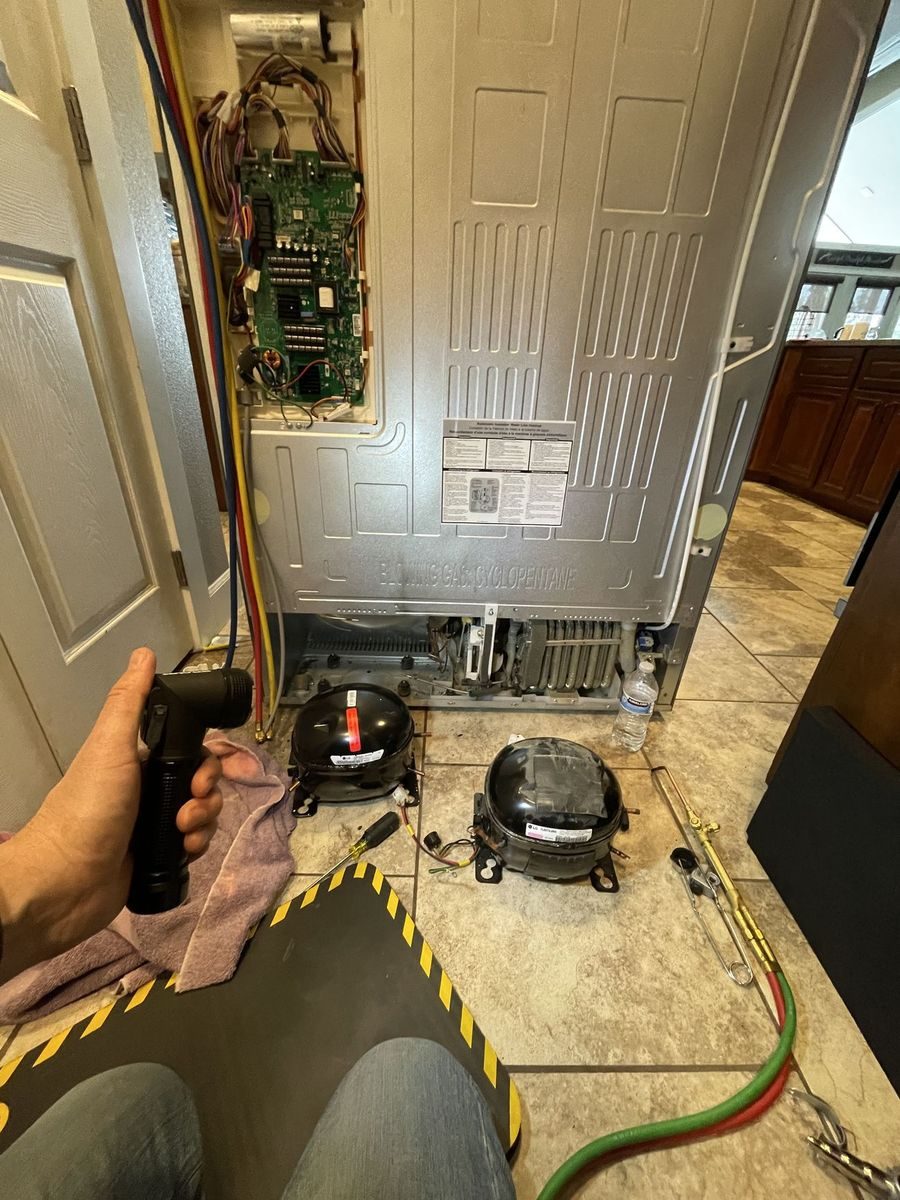
Gauges connected to a built-in refrigerator's sealed system. Leak searches, brazing and recharges happen in the kitchen, so the fridge stays where it is.
Read the service page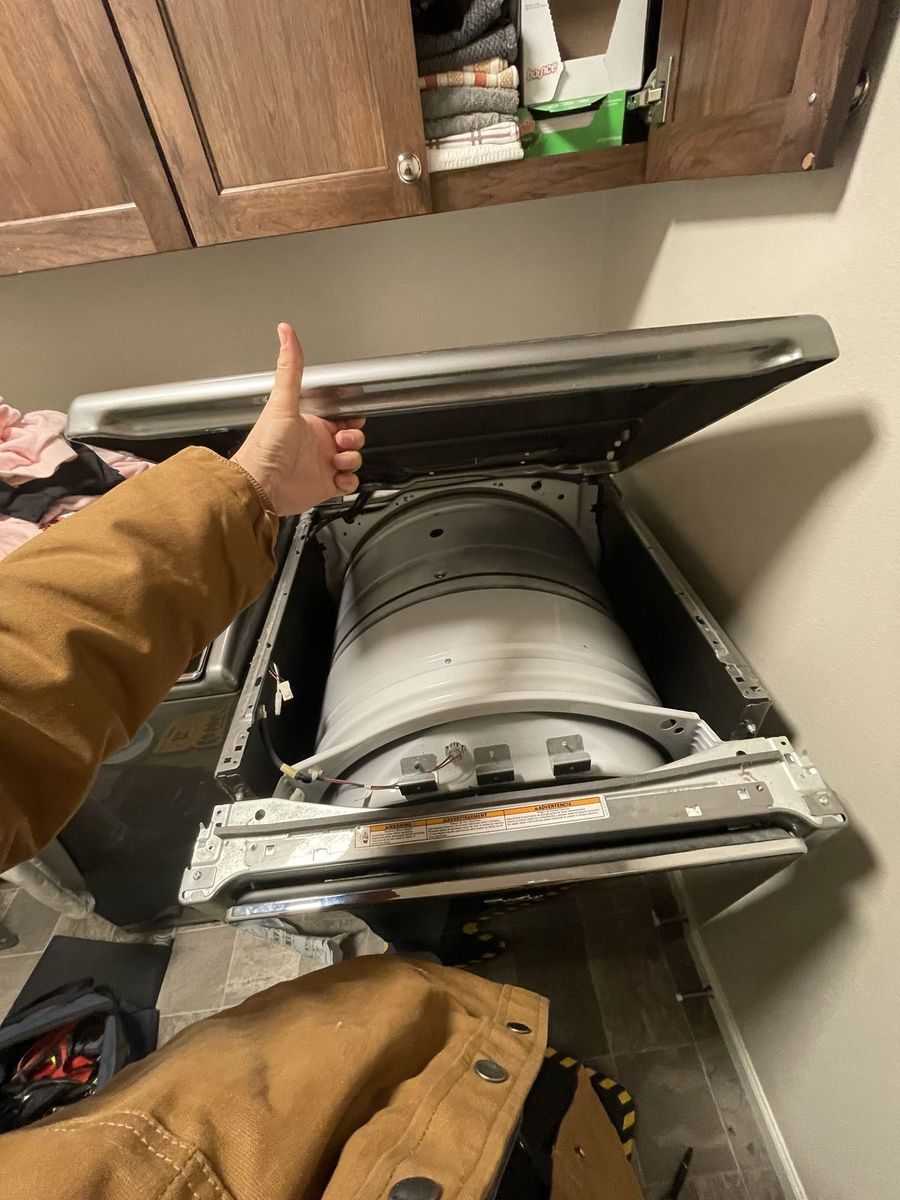
02 / 12
A top-load washer with the top panel raised. Lid switch, drive coupler and drain pump are all within reach once the top comes up.
Read the service page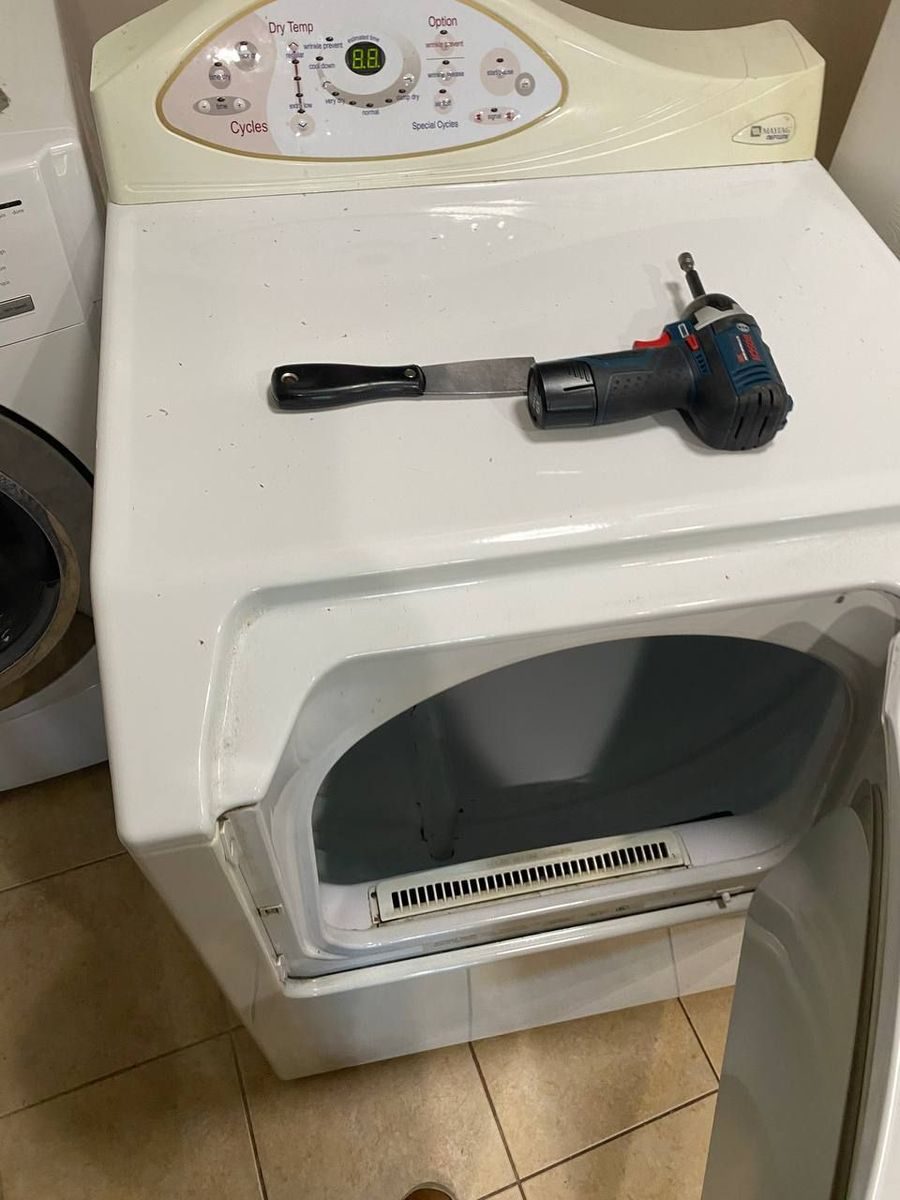
03 / 12
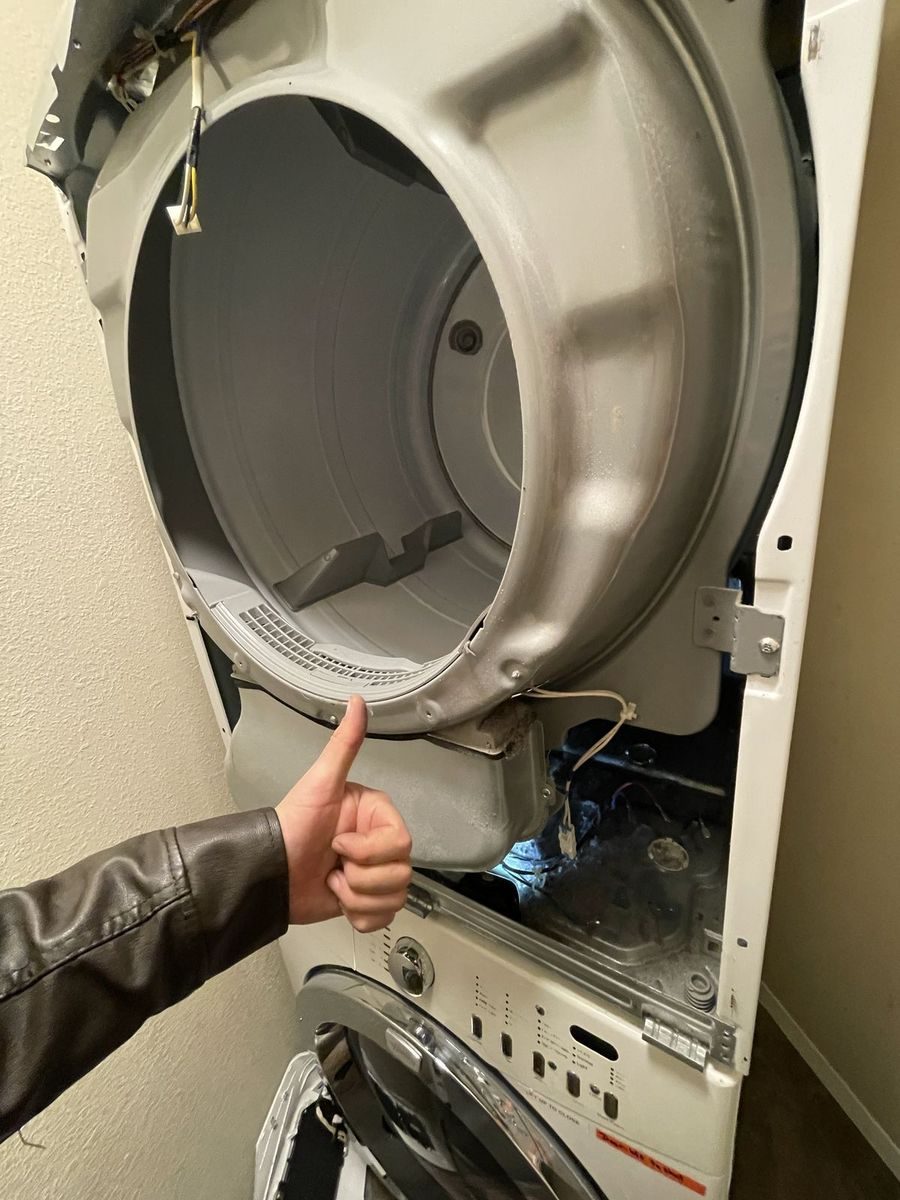
An electric dryer opened up in a laundry room. The thermal fuse, the heating element and the vent run behind the machine get tested together.
Read the service page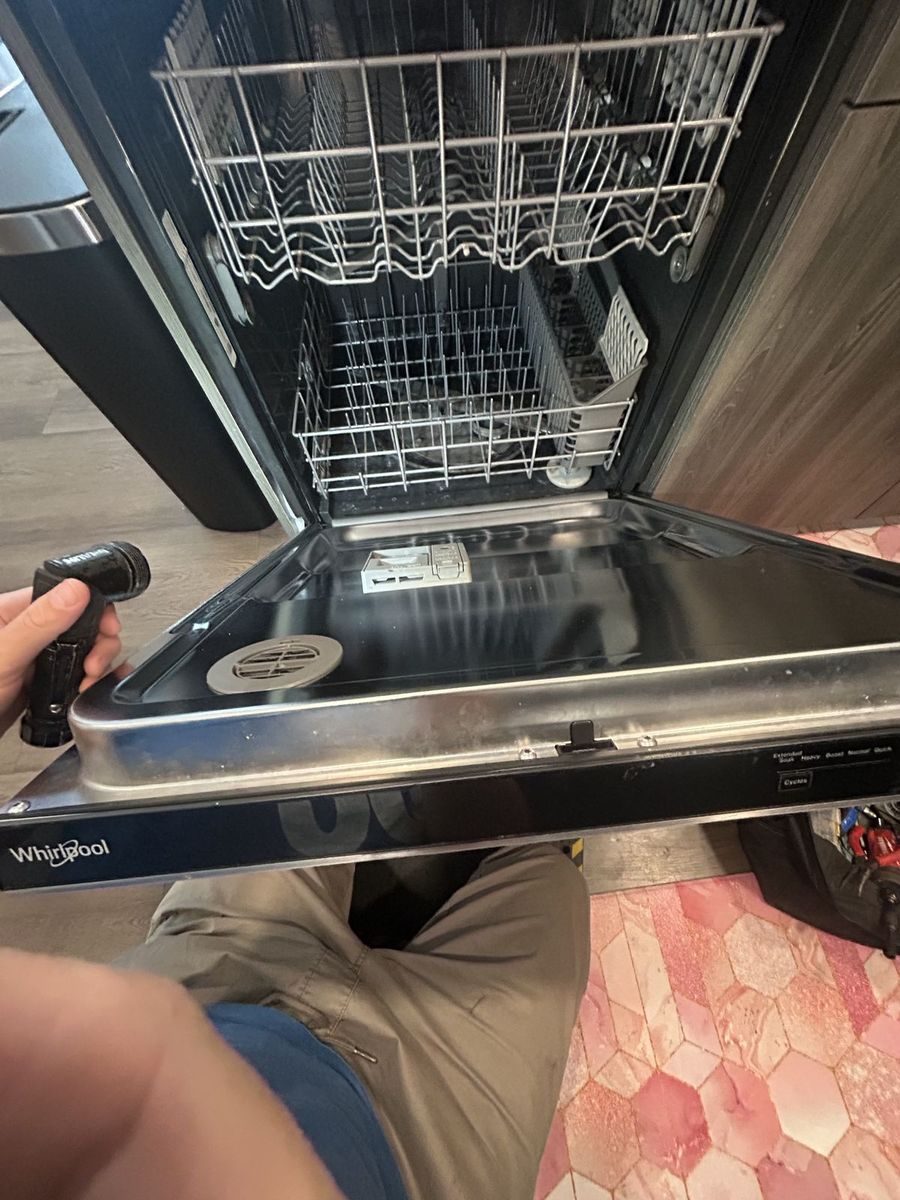
04 / 12
Door open and racks out on a dishwasher. A puddle left behind after the last rinse sends us to the filter screen, the pump and the hose route under the sink, in that order.
Read the service page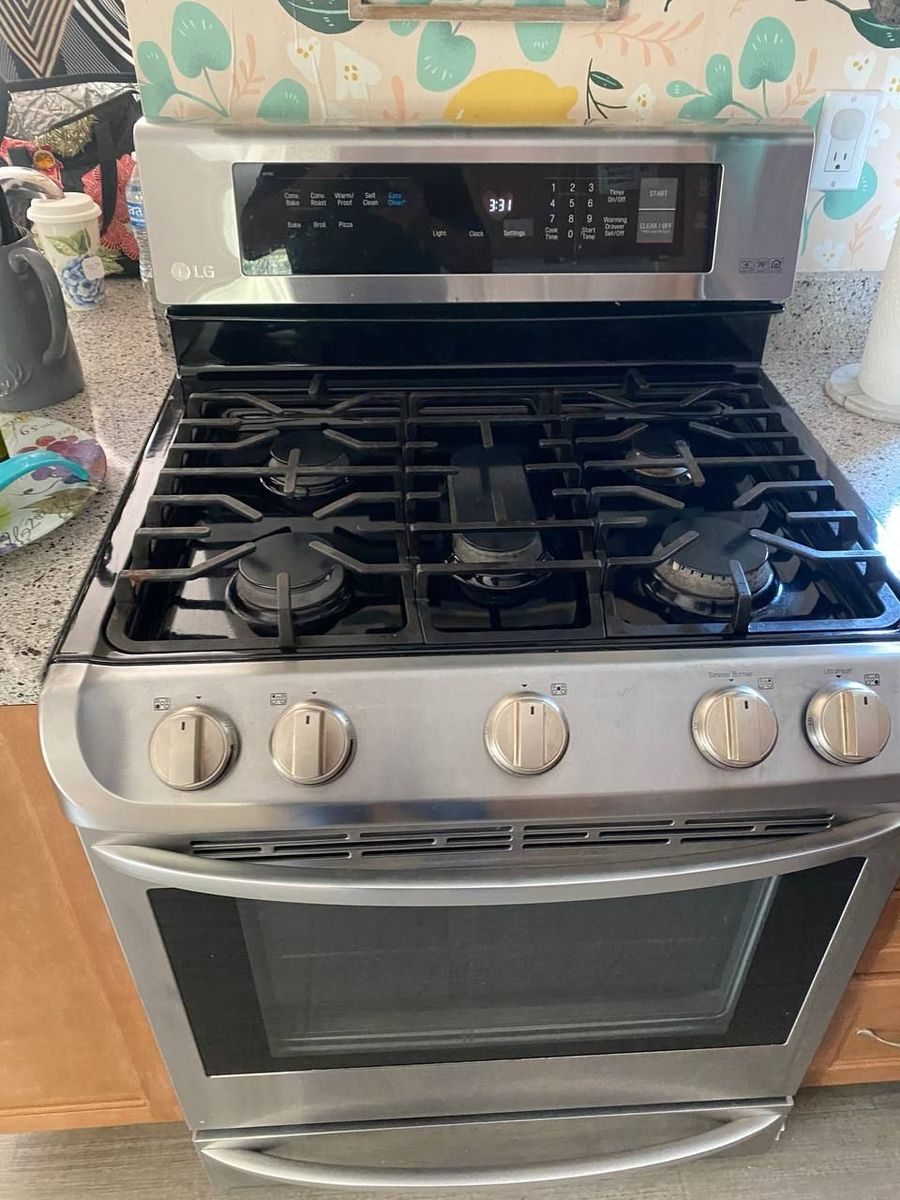
05 / 12
A five-burner gas range ready for testing. Burner igniters, the spark module and the bake igniter's amp draw are measured before a part is ordered.
Read the service page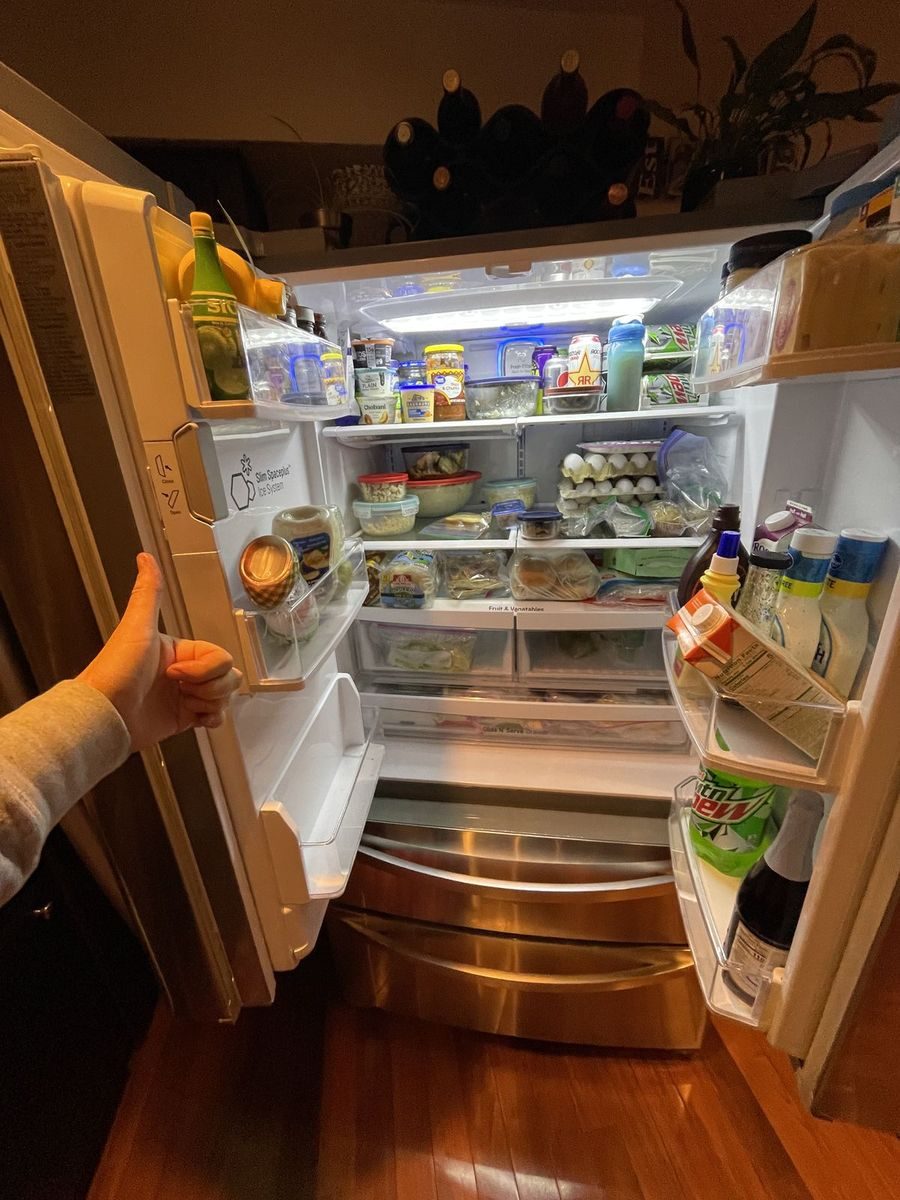
06 / 12
A French-door refrigerator open for diagnosis. Slow ice starts with the water: the inlet valve, the filter and a fill tube that can freeze shut.
Read the service page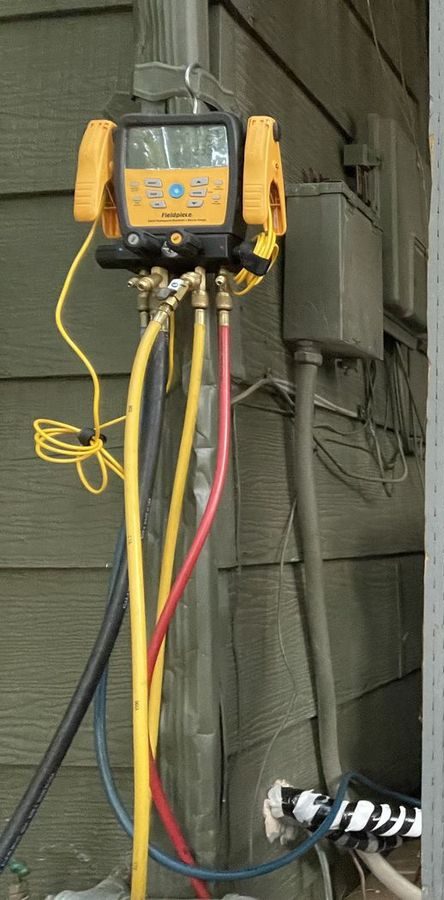
07 / 12
Digital gauges hang by the outdoor unit while the heat pump runs. Superheat and subcooling show whether the charge, a valve or the defrost board is the problem.
Read the service page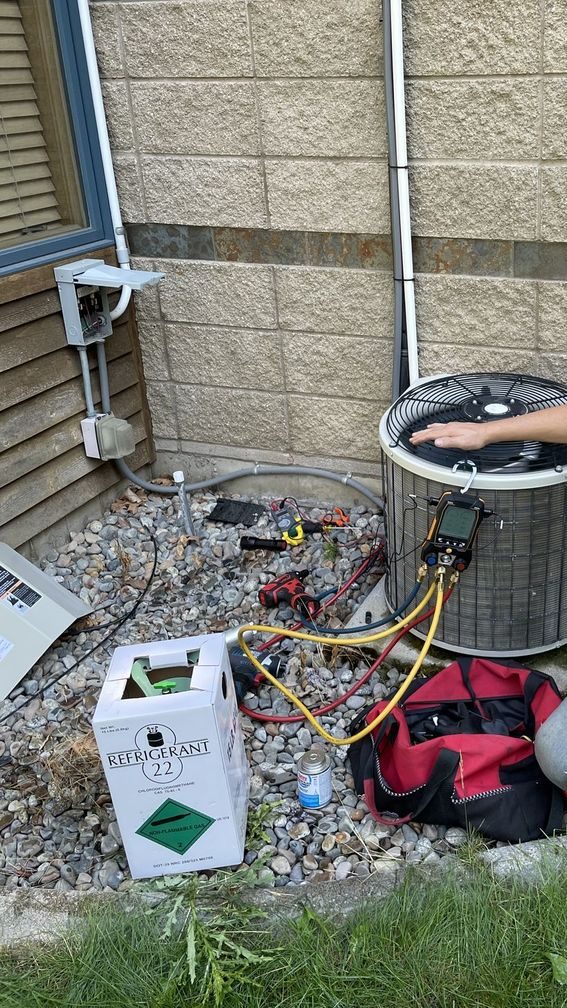
08 / 12
An older condenser under test with hoses on the service ports. The capacitor, contactor and fan motor get checked before anyone talks about refrigerant.
Read the service page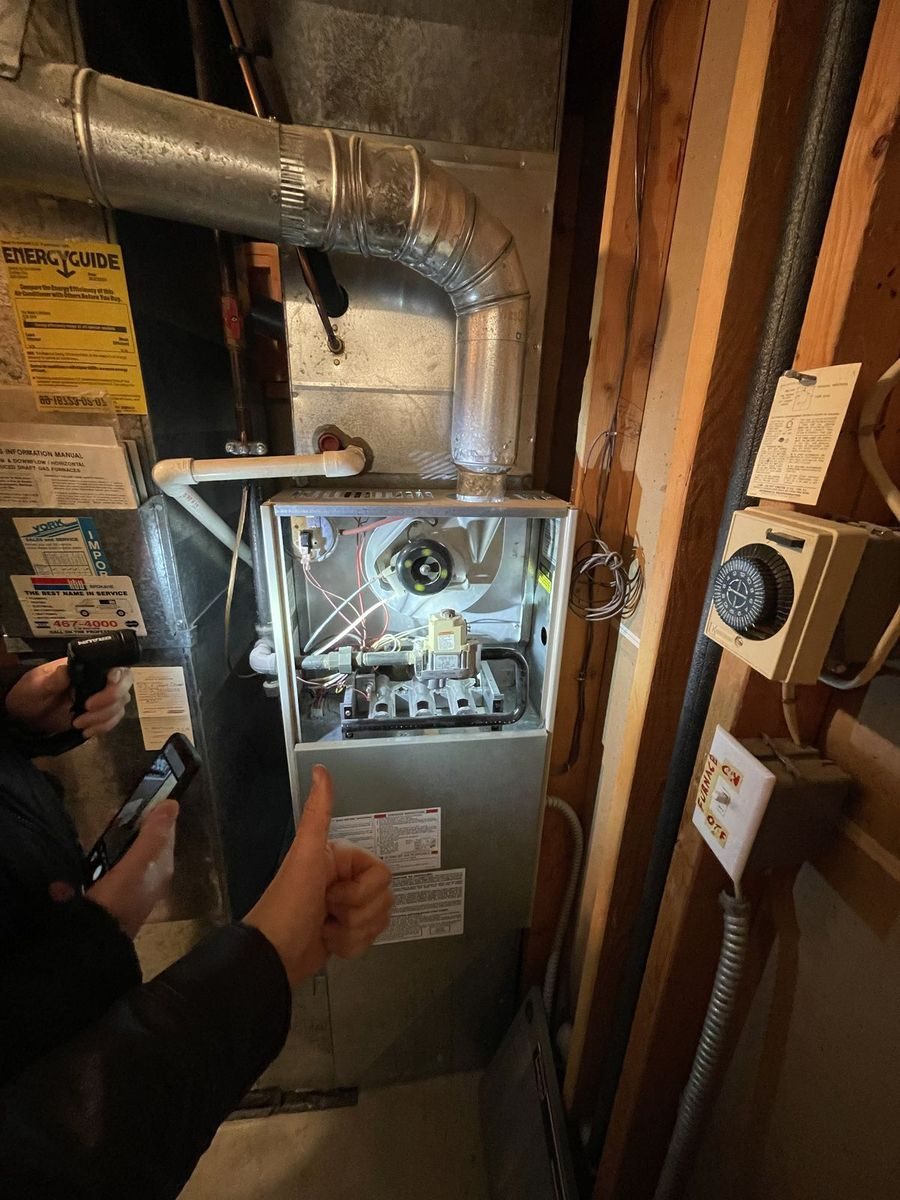
09 / 12
The burner compartment of a gas furnace, open. We follow the start-up order, inducer, pressure switch, igniter, flame sensor, until the step that fails.
Read the service page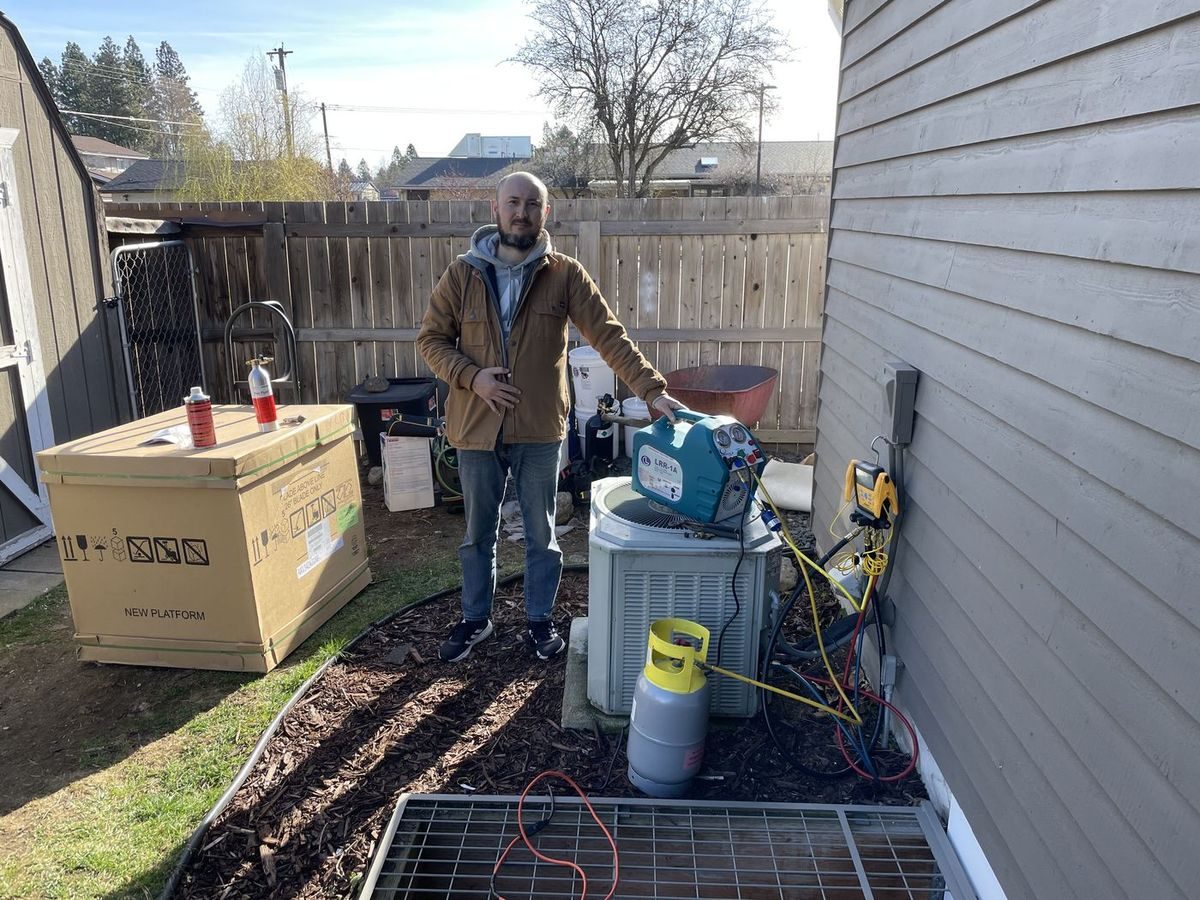
10 / 12
A recovery machine and cylinder beside an outdoor unit. On a replacement, the old refrigerant is pulled into the cylinder instead of the air.
Read the service page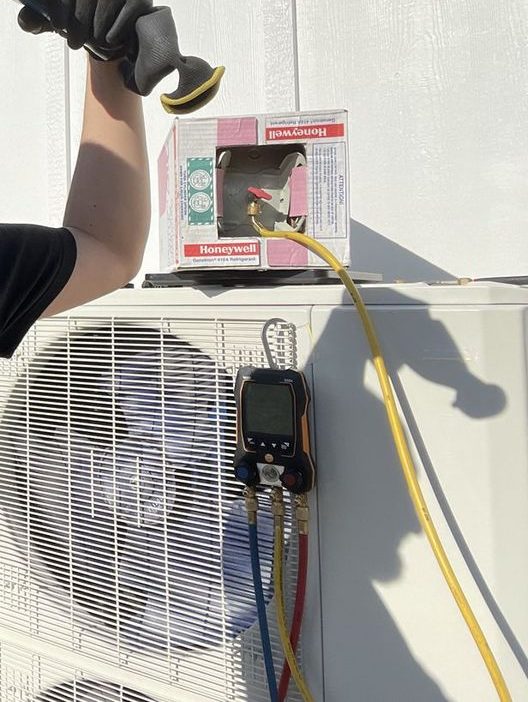
11 / 12
A ductless outdoor unit with a gauge set on it. Mini-splits get the same pressure and temperature readings as a central system, plus a look at the line-set insulation.
Read the service page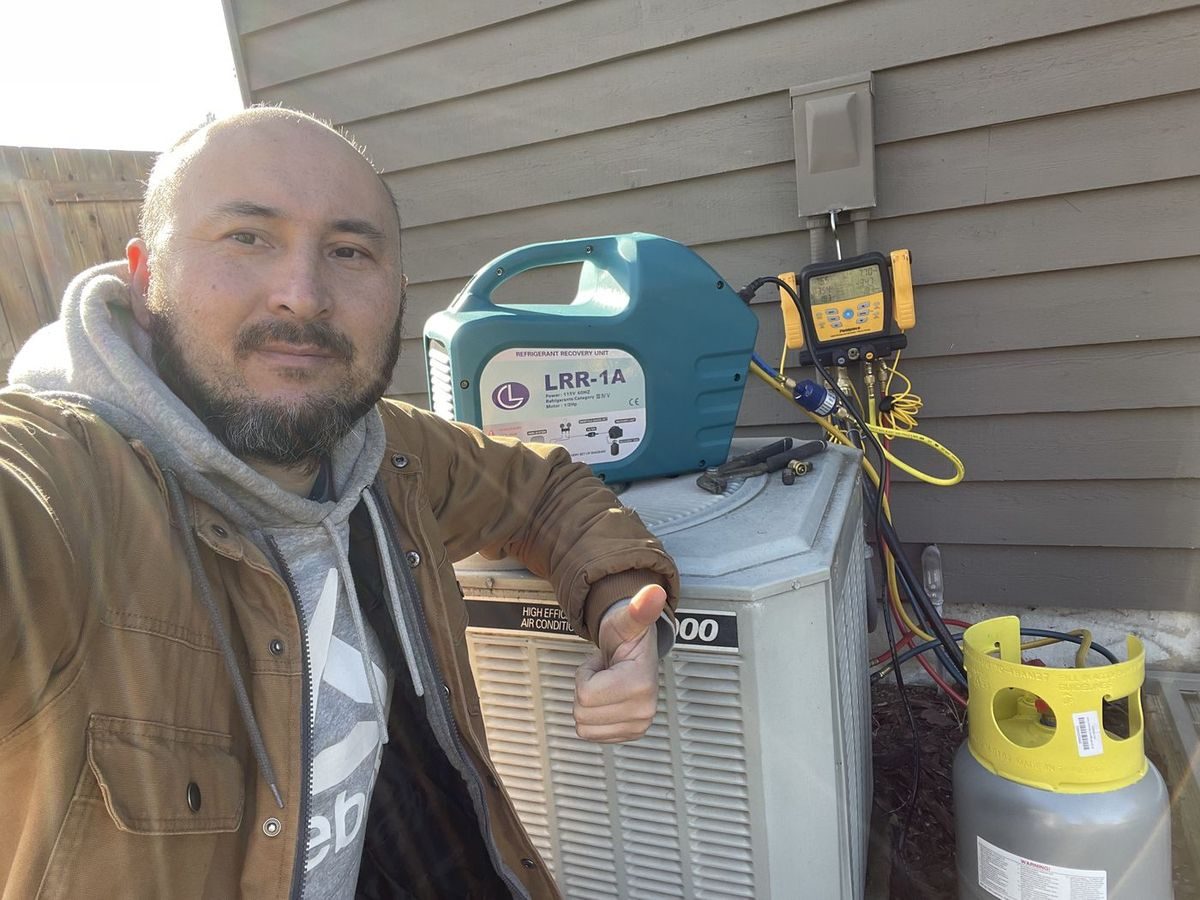
12 / 12
Gauges on a condenser during a seasonal visit. Spring visits wash the dust out of the coil; fall visits test defrost and heat strips before the fog weeks.
Read the service pageMost often, frost has smothered the evaporator coil, or the fan behind it has quit. When any defrost part fails, whether heater, thermostat or control, ice keeps building until the coil is a solid block and the fresh food side gets no cold air. A dead evaporator fan leaves cold air sitting still. Our technicians run continuity tests on the defrost parts and check the fan before pricing a repair.
On an electric dryer, the usual suspects are a blown thermal fuse, an open heating element or a failed cycling thermostat. Gas models point first to the igniter and the gas valve coils. A thermal fuse often blows because the vent is restricted, so the technician checks vent airflow as well; replacing the fuse without clearing the lint simply sets up the next failure.
Yes. Standing water after a cycle most often traces to a clogged pump filter, a drain pump that has jammed or burned out, or a drain hose bent behind the machine. With front-loaders, a stray sock near the door boot sometimes blocks the pump inlet. Straightening the hose is a safe owner check; our technicians test the pump motor, clear the path and price any part before replacing it.
Yes. Speed Queen laundry pairs and Bosch dishwashers are regulars, along with Electrolux, Kenmore, Frigidaire, Maytag, KitchenAid, Whirlpool, GE and LG equipment. While booking, read the office the brand and model off the rating label, usually found inside the door frame or across the back. With that, the technician can load matching parts, and ordering anything missing goes faster.
Talk to us
Use the booking form to hold a day and an arrival slot, then watch for the office's confirming call. Phone lines run 8 AM to 7 PM, any day.
Book a visit
One slip, filled top to bottom. The office phones to confirm the visit, and the technician calls again when on the way.
Every number below is a public state record. Look each one up on L&I Verify, or read what each license allows on our licenses page.
What our licenses cover