Heat pump repair
Cool air in winter, an iced outdoor coil or an AUX light that never goes out. We sort normal defrost from real faults across the Tri-Cities.
Heating and cooling
From a heat pump stuck in defrost through a foggy January to a condenser that quits on a 100°F afternoon, our technicians repair, tune and replace the equipment that keeps Tri-Cities houses livable. Each job is priced on paper first.
Short answer
Larch repairs heat pumps, central air conditioners, gas and electric furnaces, air handlers and ductless mini-splits, and installs new systems, around Kennewick, Pasco, Richland and the neighboring towns. This work falls under our 06A HVAC/Refrigeration specialty, and our technicians handle refrigerant under the EPA 608 Universal credential. A written price arrives before anything is touched, and warranty terms are spelled out on the invoice.
All of the common ones, because Tri-Cities houses use nearly every type. Heat pumps, gas furnaces, electric furnaces paired with central air, and ductless mini-splits all turn up on our routes, from Carrier, Trane, Lennox, Goodman, Rheem and Ruud, Bryant, York, Daikin, Mitsubishi, Fujitsu and LG. Here is what each kind of visit usually involves:
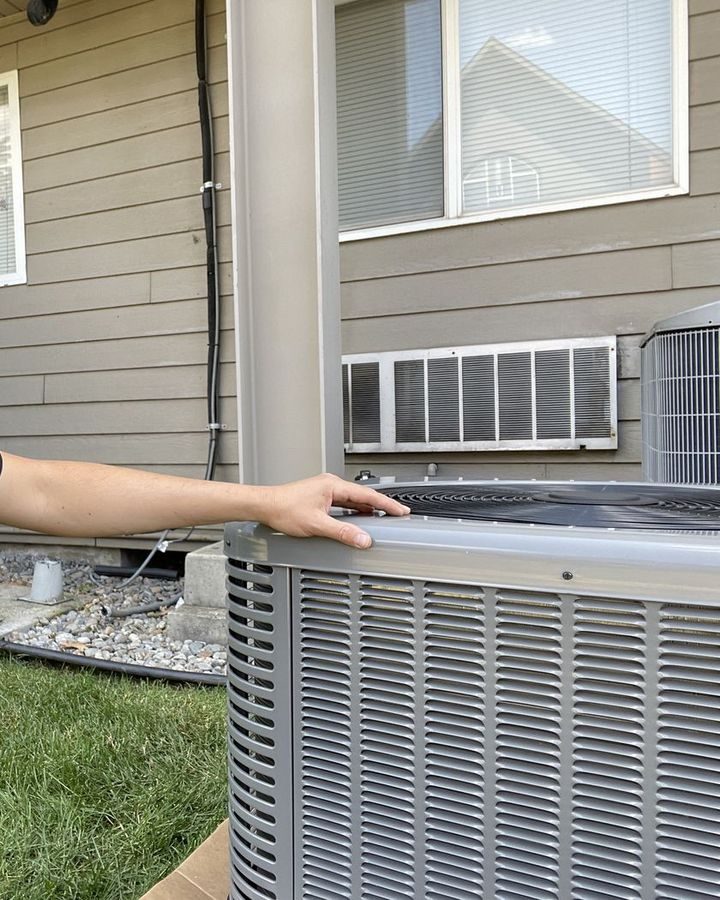
Cool air in winter, an iced outdoor coil or an AUX light that never goes out. We sort normal defrost from real faults across the Tri-Cities.
AC losing ground on 100°F afternoons or blowing warm air? We test capacitors, contactors, coils and charge, then price the fix in writing first.
Gas or electric furnace not heating? We trace the start-up sequence, from inducer and pressure switch to igniter, flame sensor and heat strips.
Replacing a tired heat pump or AC in the Tri-Cities: load-sized for 100°F afternoons and 10°F nights, a clean line set, a deep vacuum and one written figure.
Mini-split installation and repair for shops, detached garages, bonus rooms, additions and manufactured homes in every Tri-Cities town, from blinking error codes to dust-packed outdoor coils.
Spring cooling checks ahead of the first 100°F week and fall heating checks before inversion fog, with every reading written down: capacitors, charge, flame sensor, defrost.
It loads the same equipment hard at both ends of the calendar. In summer, long cycles in 90-plus heat shorten capacitor life and burn contactor faces, while attic duct runs and garages get so hot that supply air loses capacity before it ever reaches a register. A condenser coil stuffed with dust and cottonwood fluff forces head pressure up, which our gauges show as high liquid-line pressure and a liquid line running well above its normal temperature.
In winter, the inversion that parks over the Columbia Basin keeps air damp and close to freezing for stretches at a time. A heat pump sitting in that fog frosts quickly and defrosts often, which is expected. When a cold snap drags lows toward 10°F, backup heat strips take on more of the work, and a unit with a weak defrost sensor or a reversing valve hanging between positions can end up iced solid with the AUX light glowing. Outdoor units on open, windy ground such as Horn Rapids or West Richland acreage also catch grit and tumbleweed debris head-on from the west.
A spring and fall tune-up catches much of this early. We rinse the coil, measure the capacitor in microfarads, inspect contactor faces, record static pressure and temperature split, and check flame-sensor microamps on gas furnaces. Schedule one in a mild month, ahead of the first triple-digit week or the first fog bank.
One photo per tab from our service calls. Tap a tab, or let the file turn on its own.
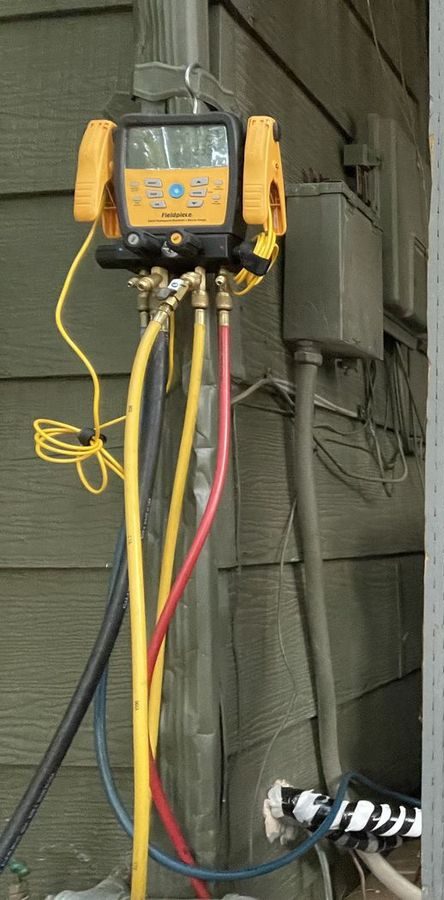
01 / 12
Digital gauges hang by the outdoor unit while the heat pump runs. Superheat and subcooling show whether the charge, a valve or the defrost board is the problem.
Read the service page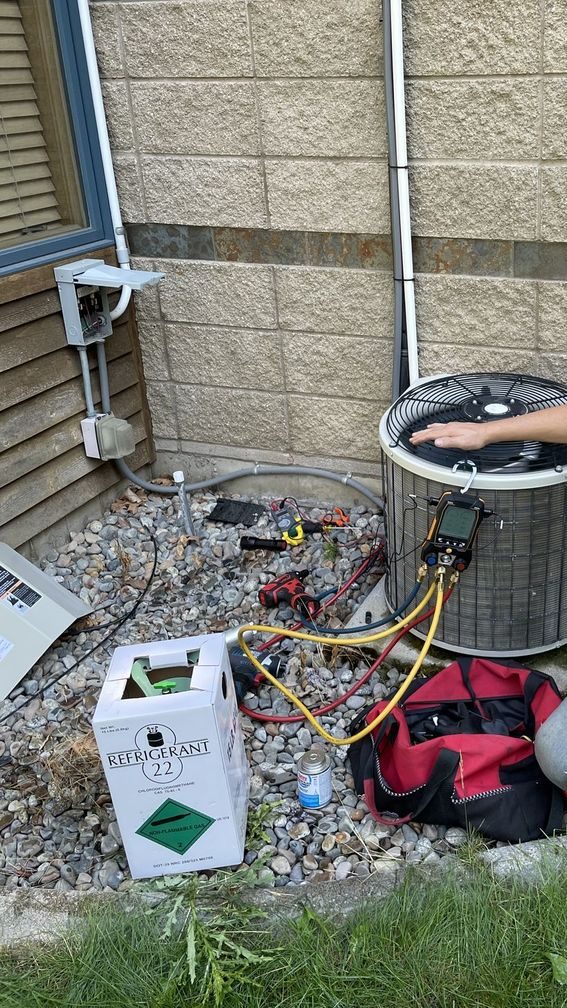
02 / 12
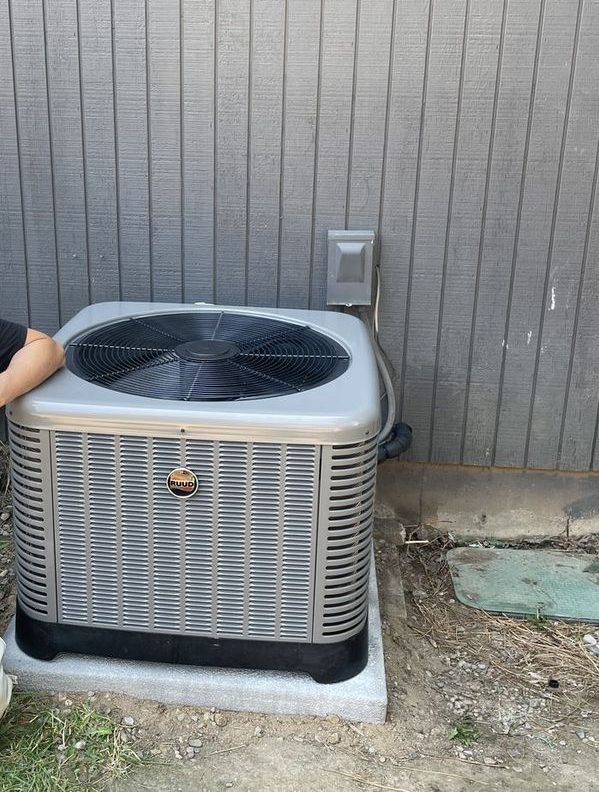
An older condenser under test with hoses on the service ports. The capacitor, contactor and fan motor get checked before anyone talks about refrigerant.
Read the service page03 / 12
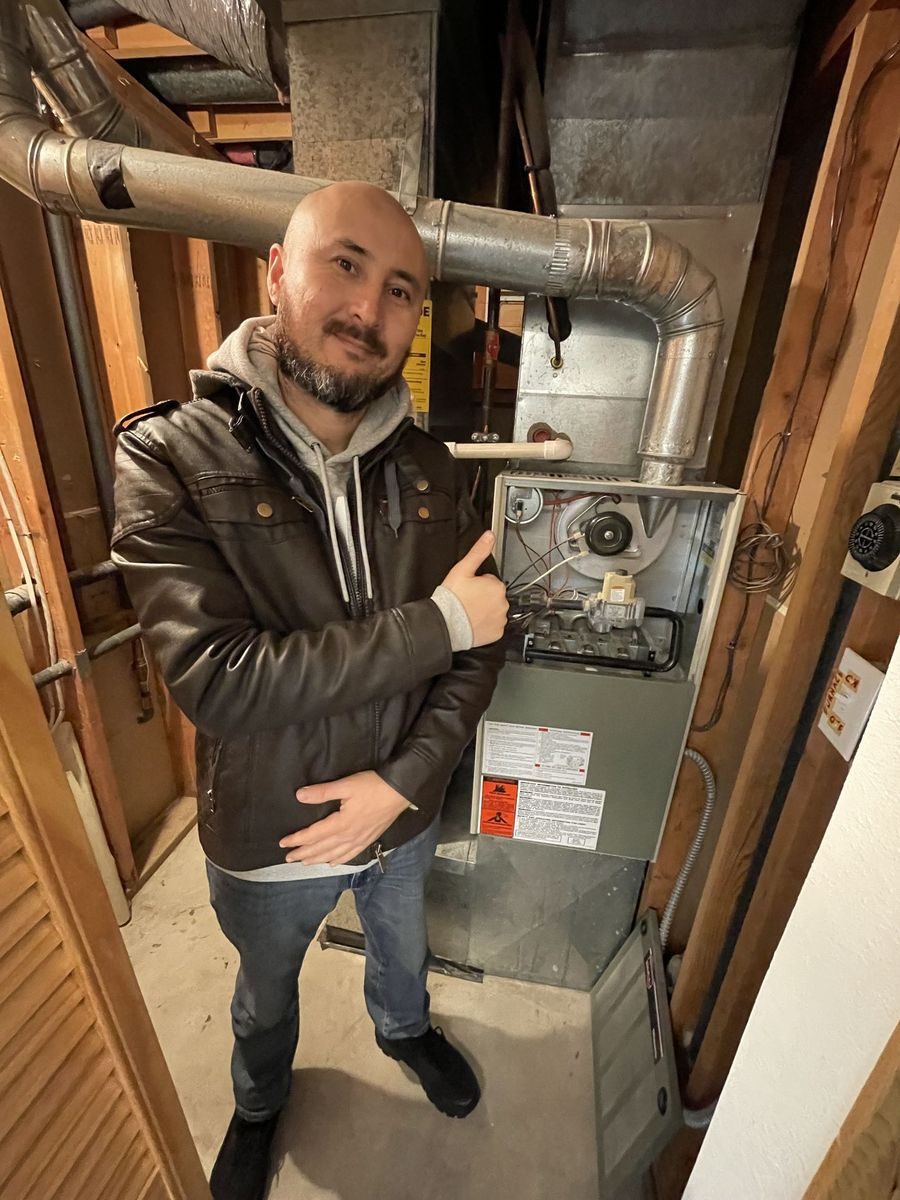
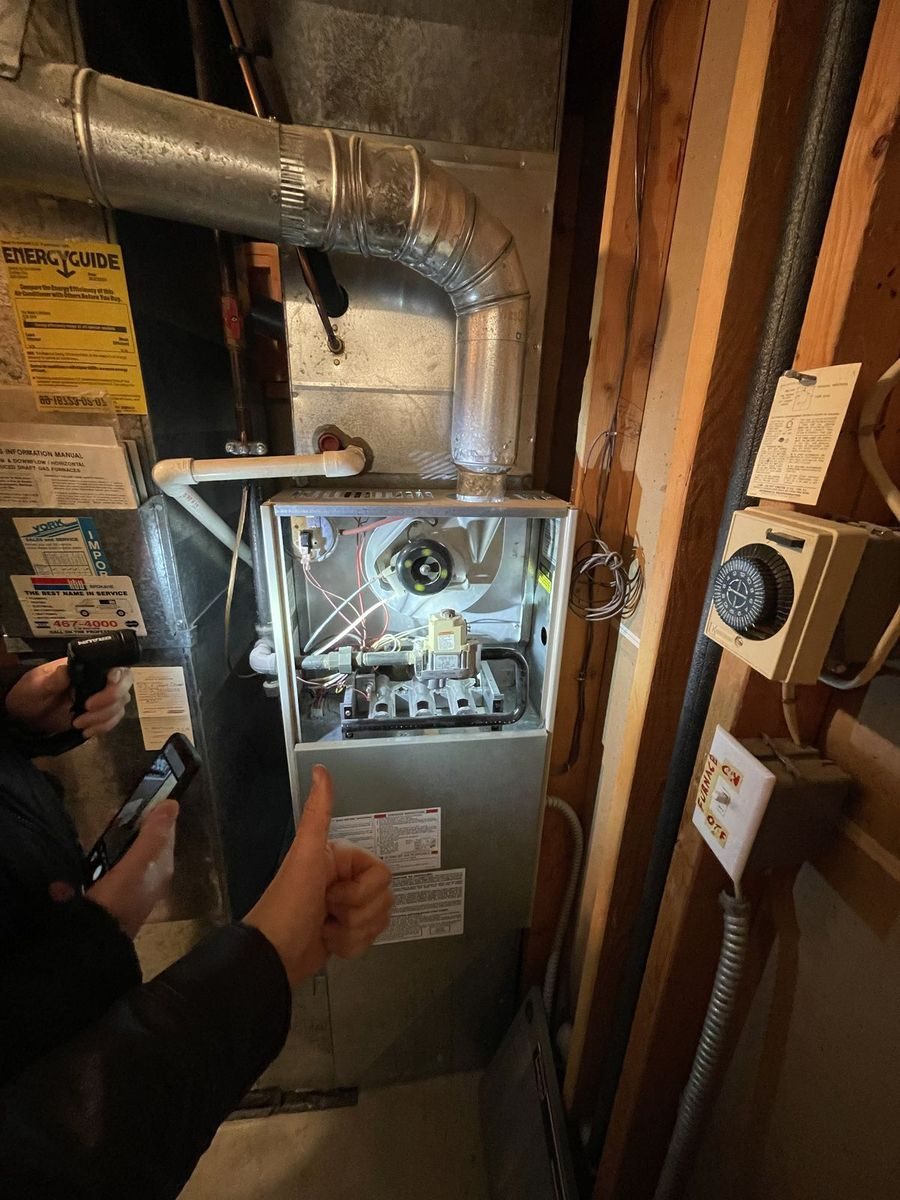
The burner compartment of a gas furnace, open. We follow the start-up order, inducer, pressure switch, igniter, flame sensor, until the step that fails.
Read the service page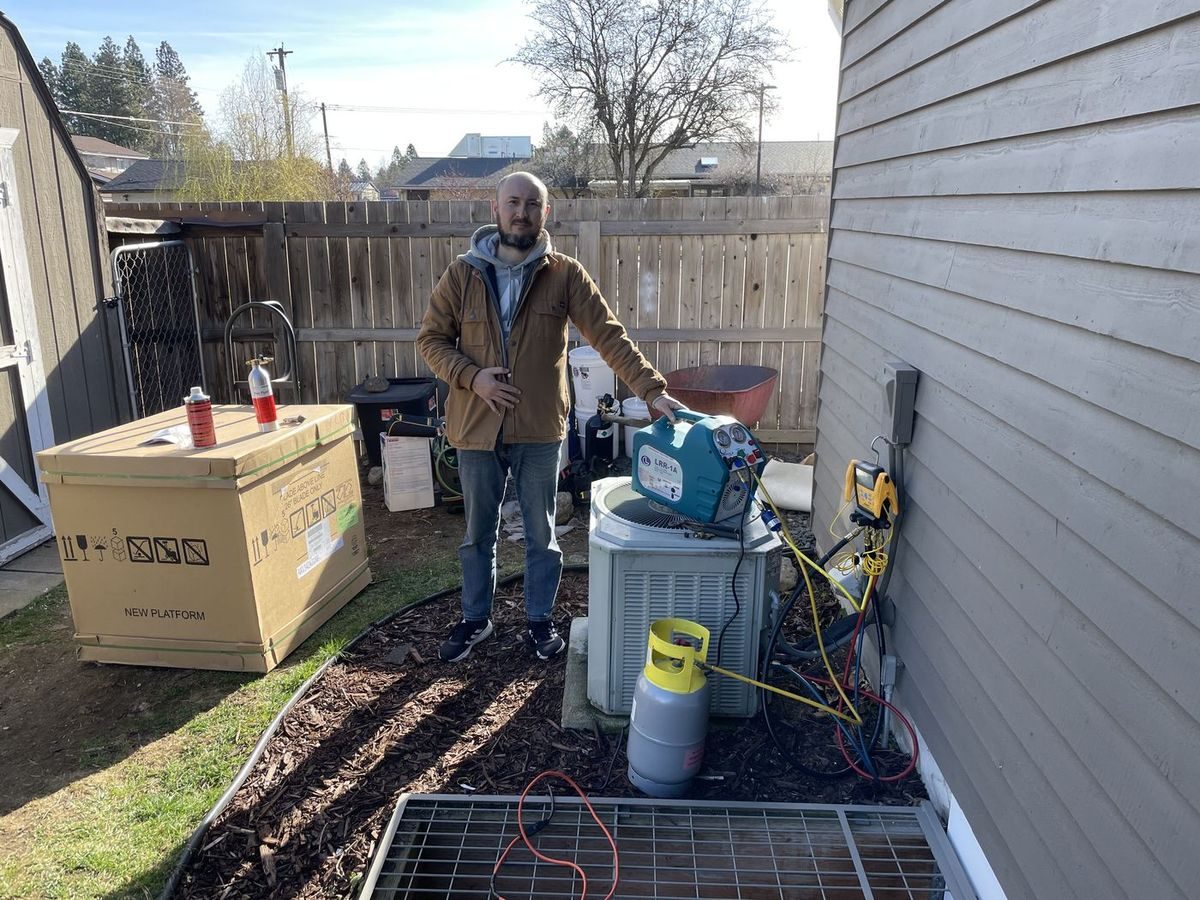
04 / 12
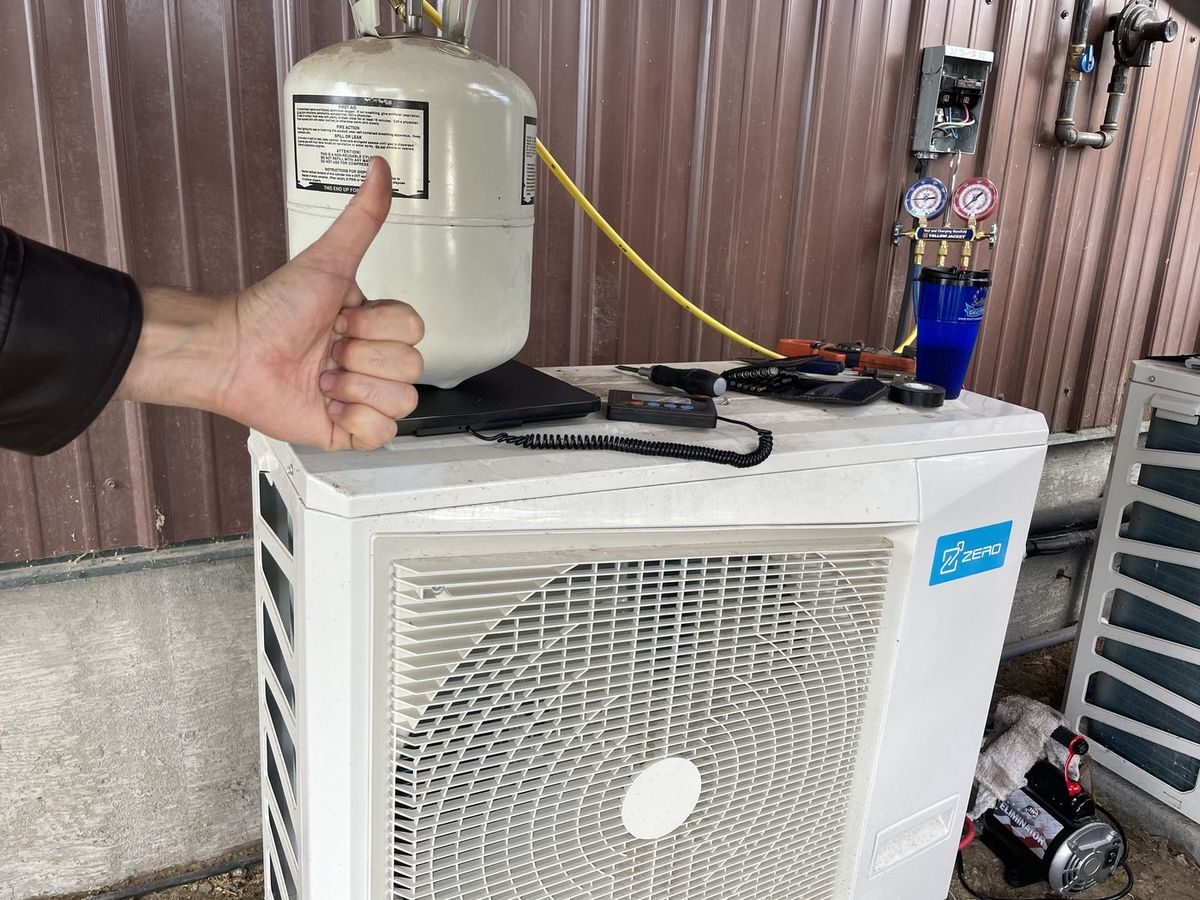
A recovery machine and cylinder beside an outdoor unit. On a replacement, the old refrigerant is pulled into the cylinder instead of the air.
Read the service page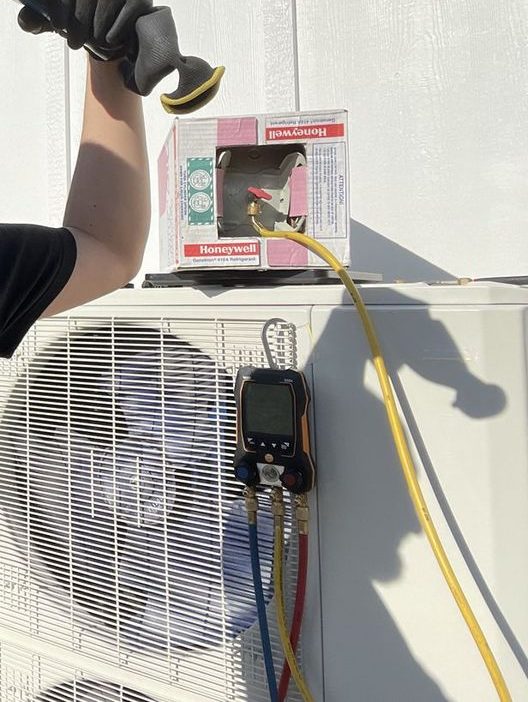
05 / 12
A ductless outdoor unit with a gauge set on it. Mini-splits get the same pressure and temperature readings as a central system, plus a look at the line-set insulation.
Read the service page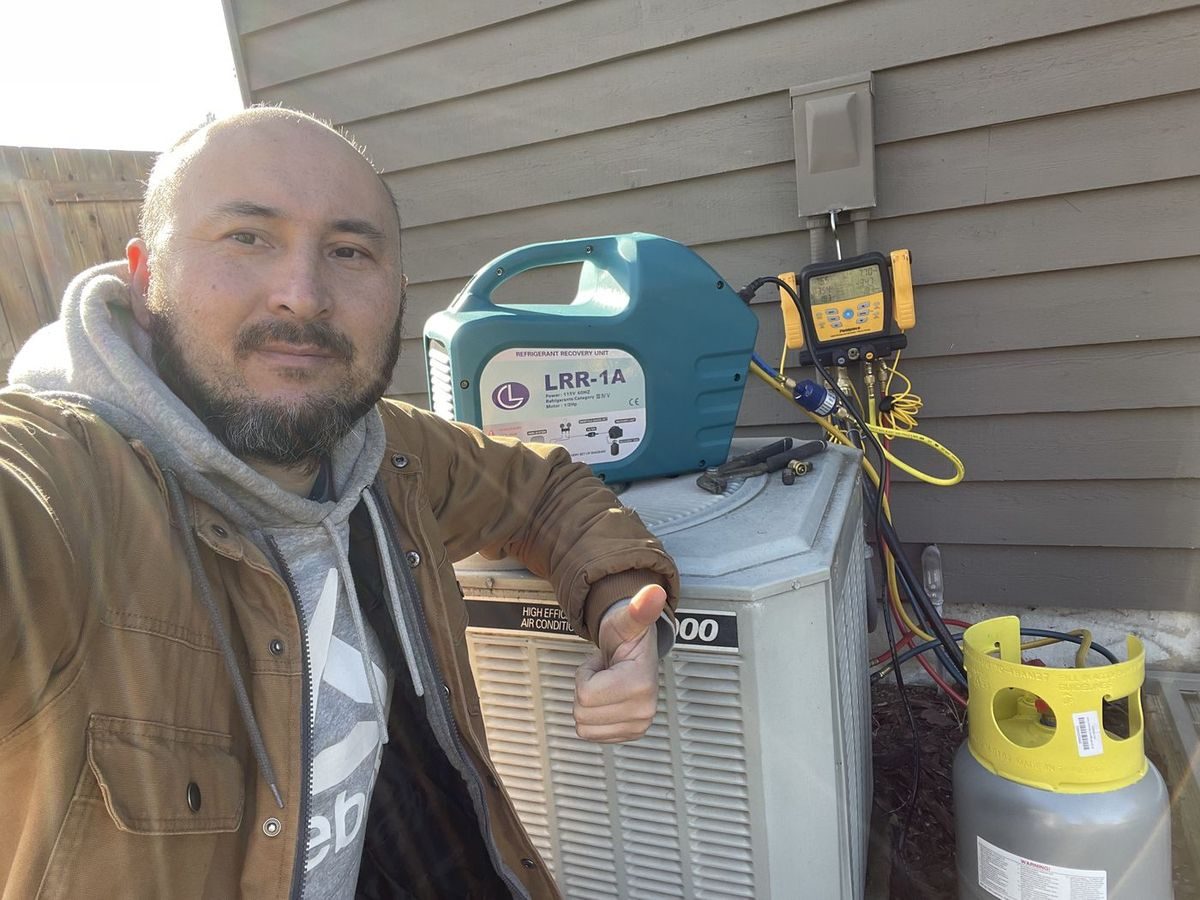
06 / 12
Gauges on a condenser during a seasonal visit. Spring visits wash the dust out of the coil; fall visits test defrost and heat strips before the fog weeks.
Read the service page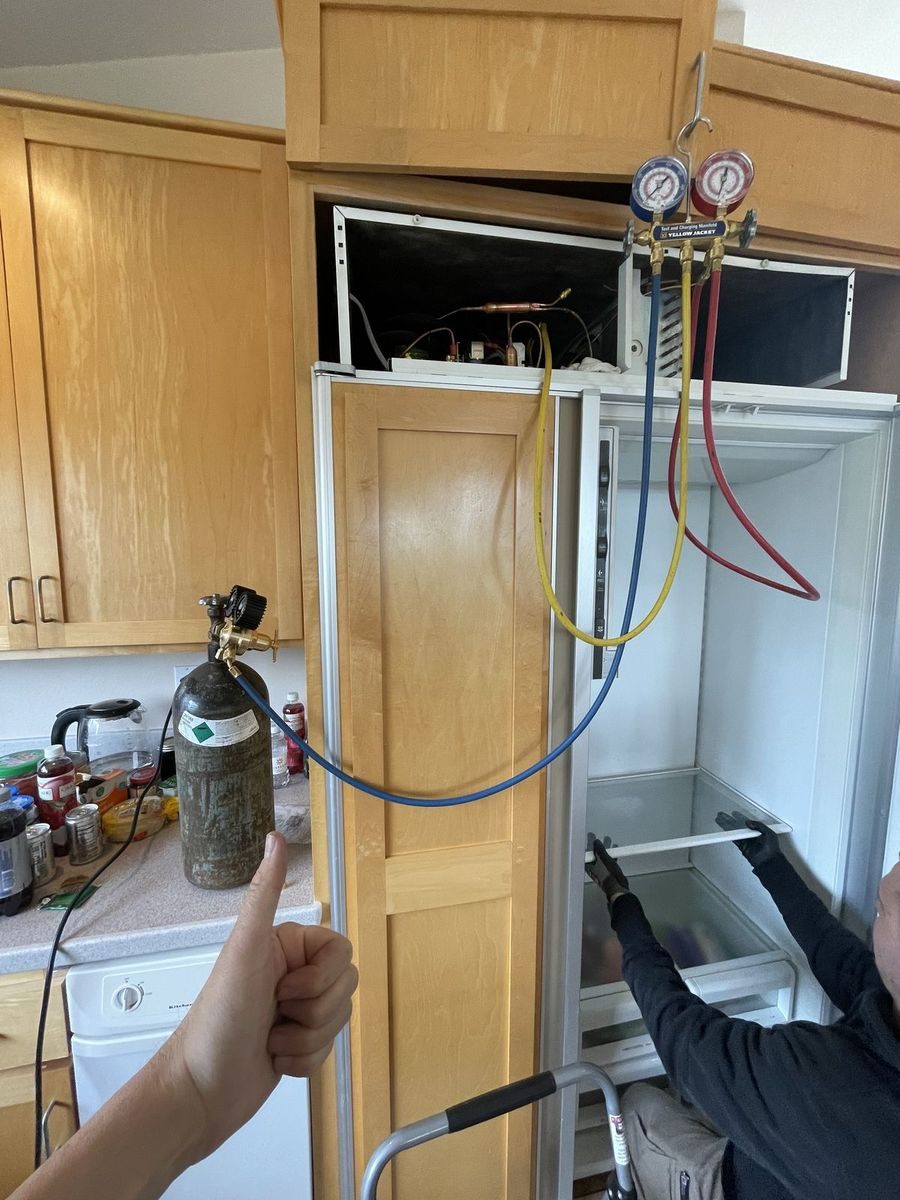
07 / 12
Gauges connected to a built-in refrigerator's sealed system. Leak searches, brazing and recharges happen in the kitchen, so the fridge stays where it is.
Read the service page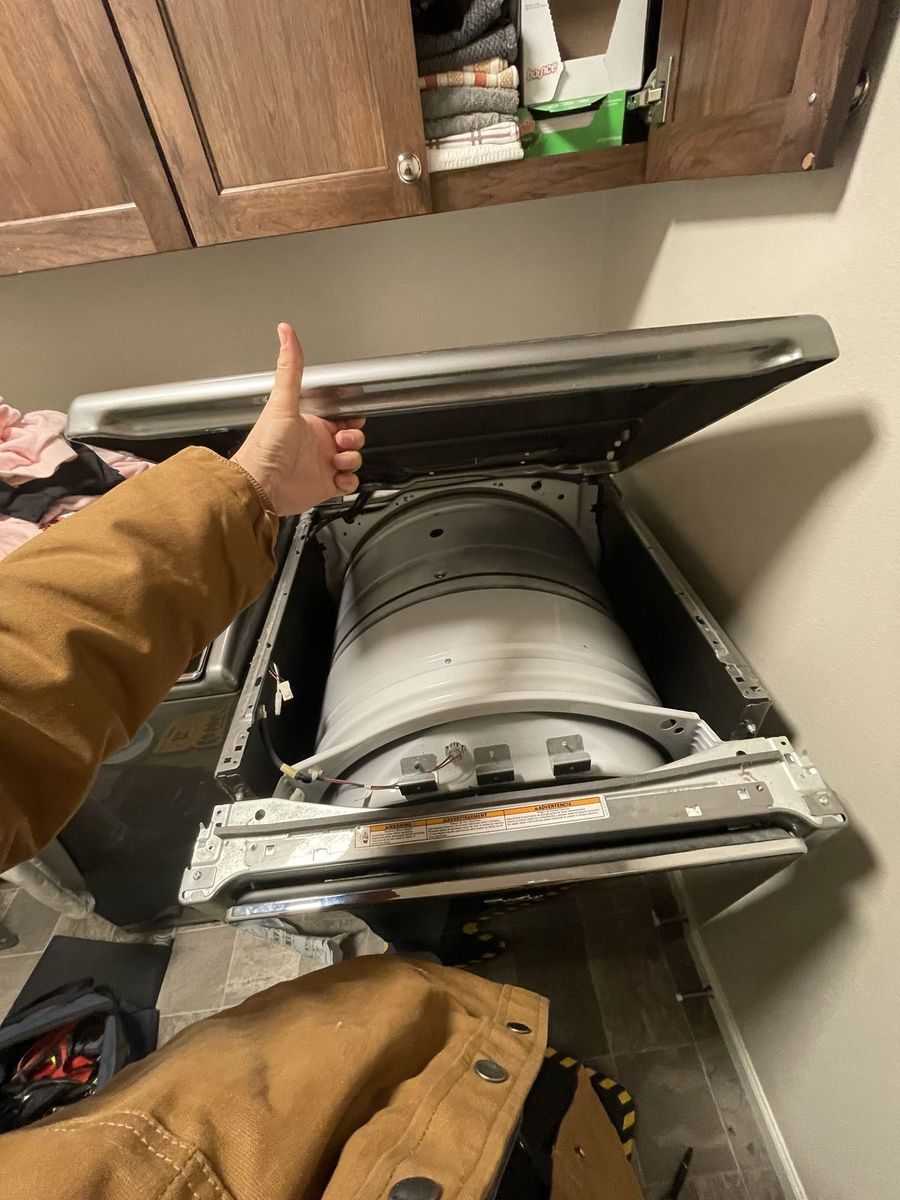
08 / 12
A top-load washer with the top panel raised. Lid switch, drive coupler and drain pump are all within reach once the top comes up.
Read the service page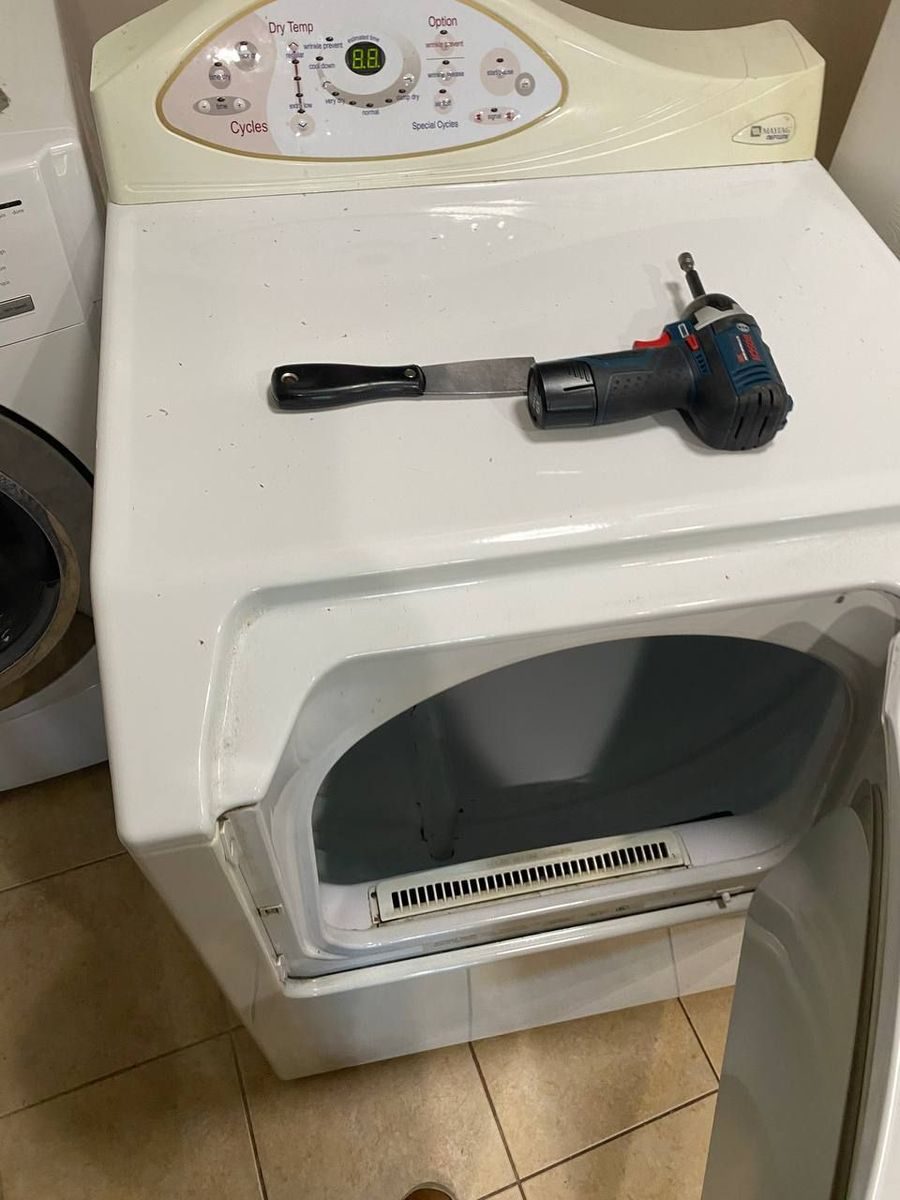
09 / 12
An electric dryer opened up in a laundry room. The thermal fuse, the heating element and the vent run behind the machine get tested together.
Read the service page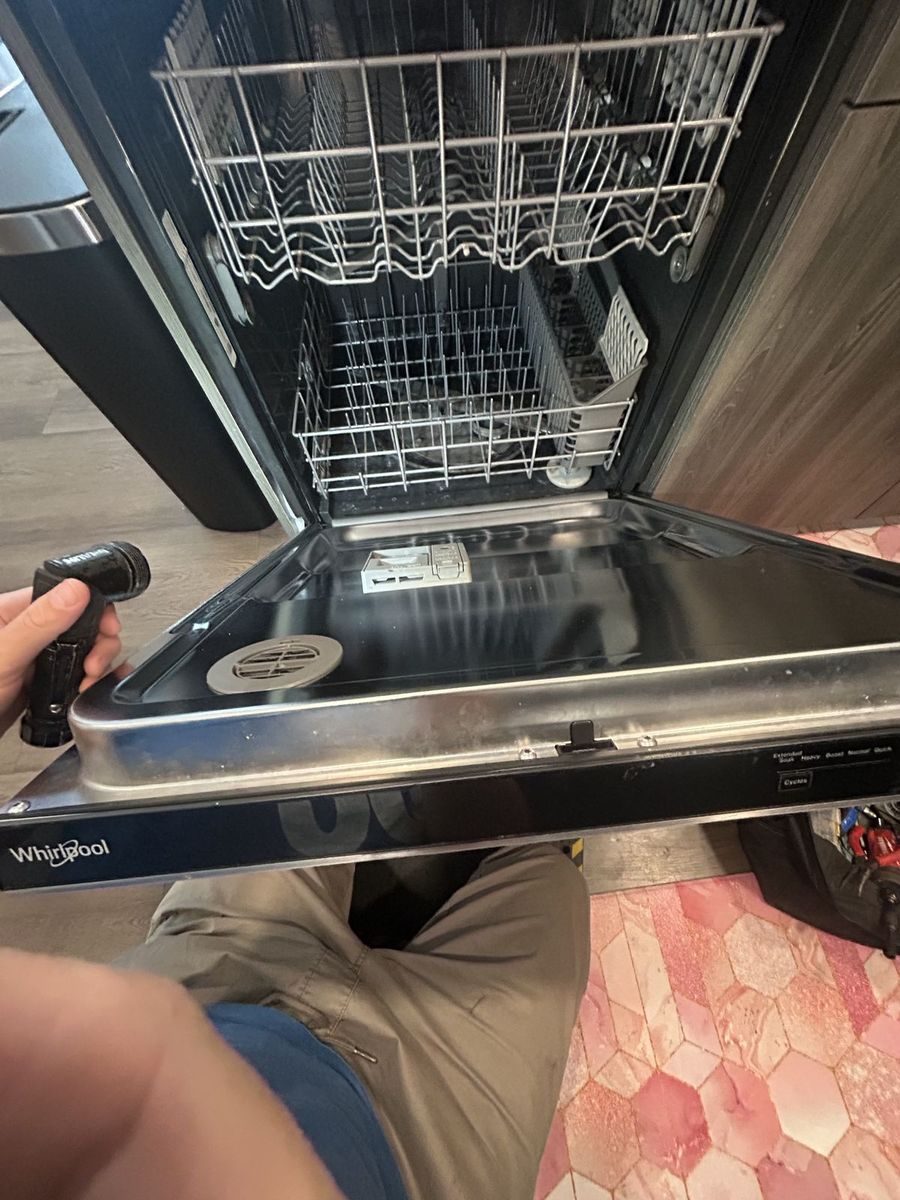
10 / 12
Door open and racks out on a dishwasher. A puddle left behind after the last rinse sends us to the filter screen, the pump and the hose route under the sink, in that order.
Read the service page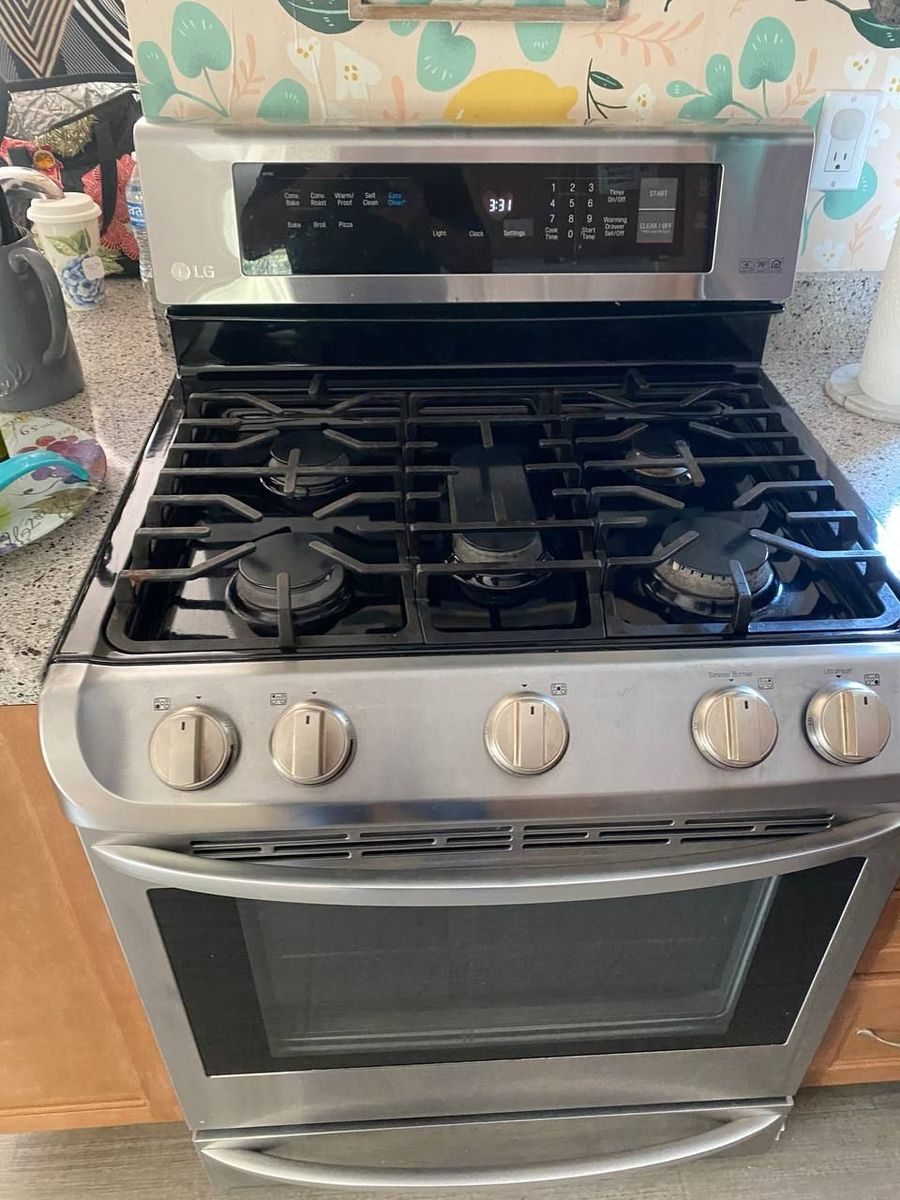
11 / 12
A five-burner gas range ready for testing. Burner igniters, the spark module and the bake igniter's amp draw are measured before a part is ordered.
Read the service page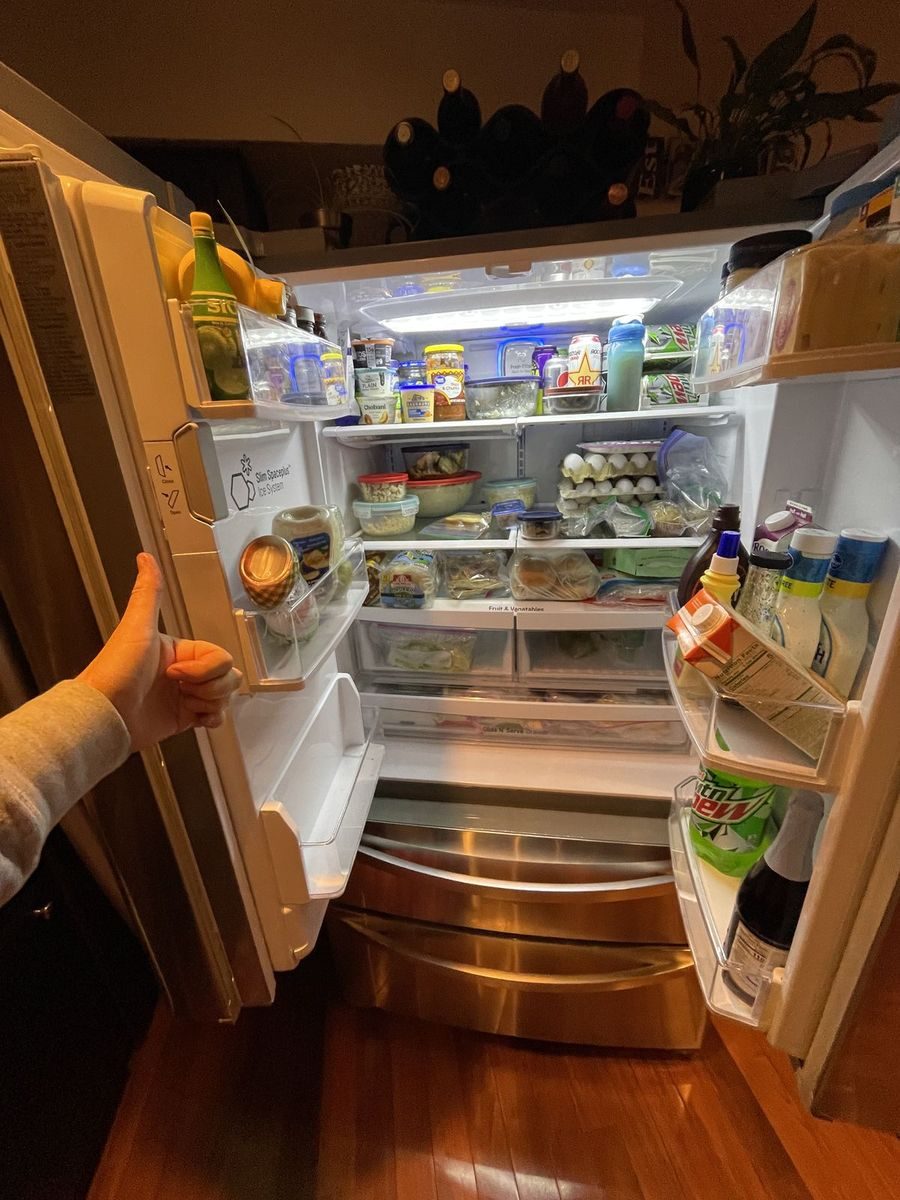
12 / 12
A French-door refrigerator open for diagnosis. Slow ice starts with the water: the inlet valve, the filter and a fill tube that can freeze shut.
Read the service pageWe lead with the repair price, since fixing is often the sensible call. The technician writes down what failed, what the repair runs, and any other wear spotted along the way, such as an oil stain at a coil joint or a compressor drawing high amps. If replacement makes more sense, for example on an older system with a leaking coil, you receive a written quote for the new system that rolls equipment and installation into a single figure.
Installs cover the heat pump, condenser, furnace, air handler or mini-split, the thermostat, and ductwork connections at the equipment. Houses built in Kennewick's Creekstone and Cherry Creek Estates during the 2000s and 2010s now have builder-grade heat pumps and furnaces nearing that decision point, and in older remodeled homes the original equipment size may no longer suit the house. For a diagnosis or an install quote, grab an arrival window online or call the office between 8 AM and 7 PM.
Heat pump supply air normally feels milder than furnace air, often somewhere in the 90-degree range at the register, so lukewarm air is not always a fault. During defrost the unit briefly reverses, and the air can feel cool for a few minutes. If it stays cool for long stretches, the AUX light stays on, or the outdoor coil remains iced, the defrost controls, reversing valve or refrigerant charge need testing.
Yearly suits an air conditioner or furnace, and twice a year suits a heat pump because it works through both seasons. Around here, a spring visit before the dust and heat set in and a fall visit before inversion season match how hard the equipment actually runs. Each tune-up includes coil cleaning, electrical checks on capacitors and contactors, and airflow readings.
Yes. Mini-splits fit detached shops, garages and bonus rooms that the main system never reaches. We install the indoor head, outdoor unit and line set, and the written quote shows equipment and installation as one figure. If the shop needs a new electrical supply for the unit, that portion is not something we take on, and the quote notes it so you can arrange it before install day.
Shut it off at the thermostat instead. A steady hum from the outdoor unit with a motionless fan often means a failed run capacitor or a stuck contactor, and leaving it energized can overheat the compressor or fan motor. Our technicians test the capacitor's microfarads and the contactor's faces, then write up the repair price before replacing anything.
Talk to us
Pick your day and an arrival window on the form, and the office rings back to confirm. Phones are answered daily from 8 AM until 7 PM.
Book a visit
One slip, filled top to bottom. The office phones to confirm the visit, and the technician calls again when on the way.
Every number below is a public state record. Look each one up on L&I Verify, or read what each license allows on our licenses page.
What our licenses cover