01 / 12
Dryer repair
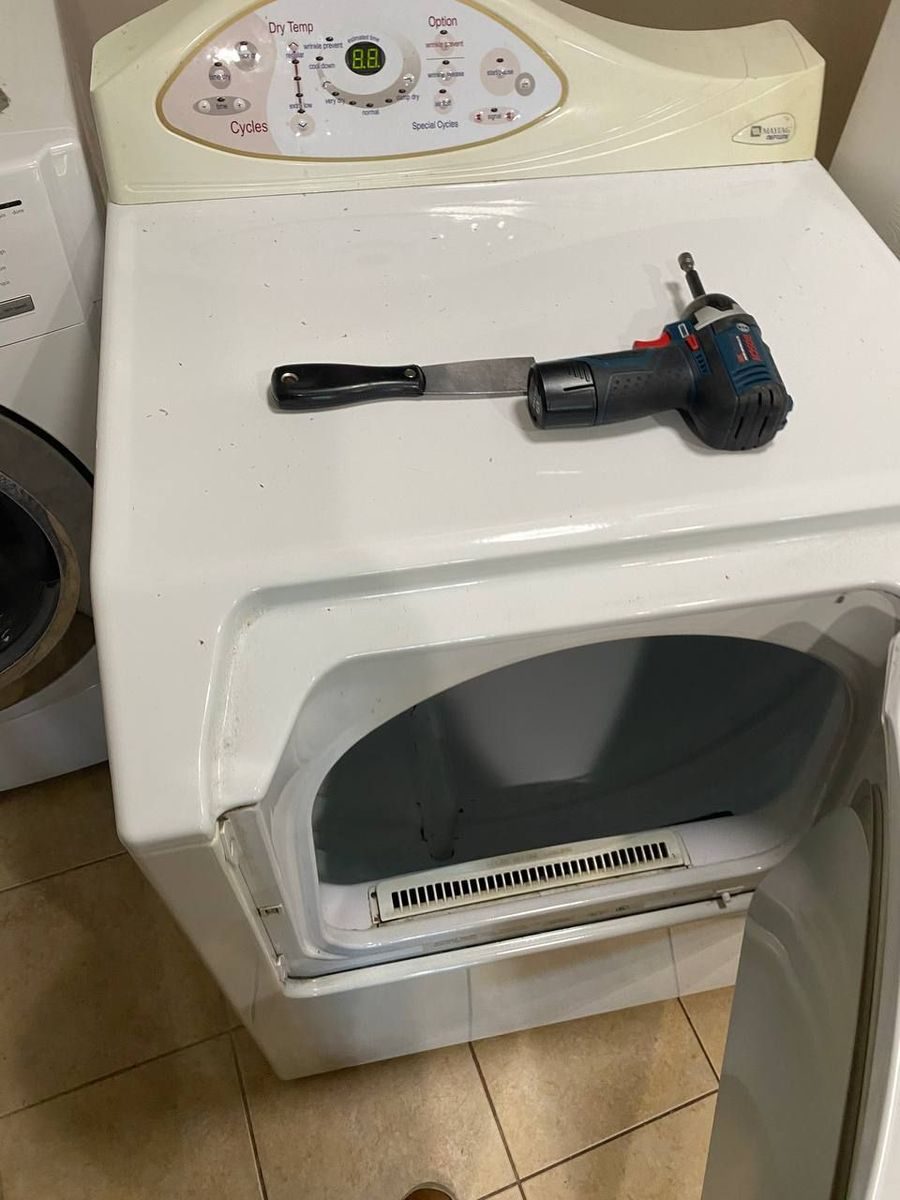
An electric dryer opened up in a laundry room. The thermal fuse, the heating element and the vent run behind the machine get tested together.
Read the service page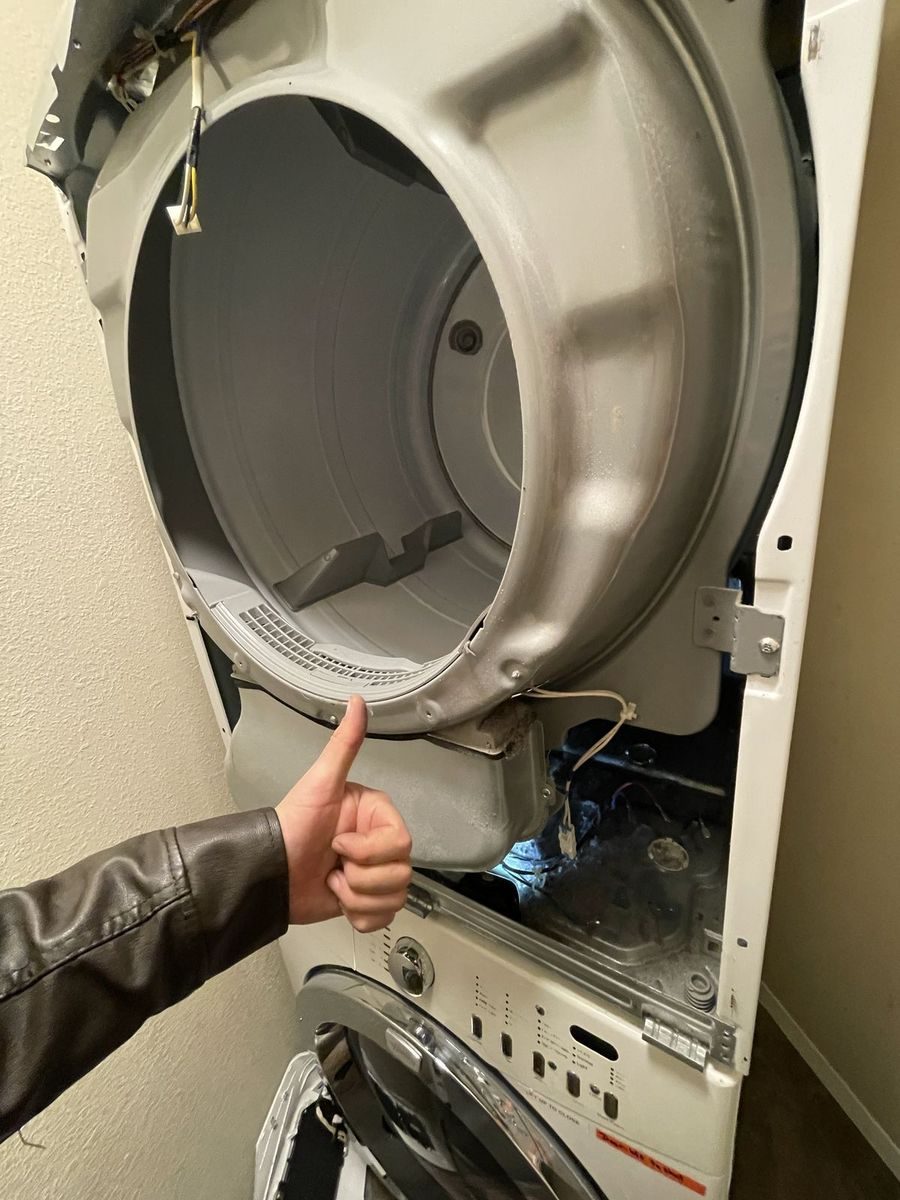
Gas and electric dryer repair
Plenty of dryers that stop heating or need a second cycle are really complaining about airflow. Our technicians test the thermal fuse, element or igniter, then follow the vent out to its hood, because fitting a new part to a choked vent only restarts the clock on the next failure.
Short answer
When the drum spins but no heat arrives, suspect an open thermal fuse first, then a burned-through element on electric models, or a dead igniter or weak valve coils on gas ones. When drying simply drags on, check airflow before buying parts: lint built up in the ducting, a squashed foil hose, or a hood choked with debris. Our technicians test parts and vent alike, then hand you a written price.
Because a link in the heating path has gone open, and on most models the drum keeps turning when that happens. The thermal fuse mounted on the exhaust housing is suspect number one: it blows when exhaust gets too hot, and exhaust gets too hot when air cannot leave. On electric dryers the coiled heating element can break after long stretches of running hot; on gas dryers the igniter may never light up, or it lights and no flame follows.
That last pattern usually points at the gas valve coils. The igniter heats, the radiant flame sensor sees it and opens its contacts, and that hands power to the valve coils, which should pull the valve open. Coils that weaken when warm never manage it, so the igniter cools, the sensor resets and the whole thing repeats. The cycling thermostat, the high-limit thermostat and, on some models, a thermal cutoff on the heater housing finish the list.
On electric dryers, supply can be the cause too. These machines need two legs of 240-volt power, and with one missing, the drum may spin while the element sits cold. You can look at the breaker and reset it once; the technician then tests voltage at the dryer's terminal block before condemning any part. Dryers fall under our 07D Appliance Repair specialty, gas and electric alike.
The visit starts behind the dryer and ends at the vent hood outdoors. First the supply: voltage at the terminal block on electric models, or an open shutoff and a working igniter circuit on gas ones. Then the cabinet comes apart so each heat part can be metered (fuse, thermostats, and either the element or the igniter with its valve coils), along with the belt, rollers and moisture sensor. Lint packed inside the cabinet gets vacuumed out while it is open; lint sitting beside a burner or element is fuel waiting for a spark.
Next, the technician checks the exhaust outside. Warm air pushing hard out of the hood says the run is clear; a weak puff says something in between is choking it. Repairs wait until you have read a written price and agreed to it. Thermal fuses, igniters, belts and rollers usually ride along on the truck. As for cost, the diagnostic visit has a fee that the office states during booking. Your approval rolls the fee into the repair bill; a pass leaves it as the only charge. Written warranty terms come on the invoice.
More than most places in the Northwest. Ranked against the other medium and large Pacific Northwest metros, the Tri-Cities comes out windiest, with March, April and June the windiest months and most of it blowing in from the west. A vent hood on a west-facing wall takes those gusts head-on: they press the flap shut against the exhaust and pack the louvers with blowing dust, broken bits of tumbleweed and cottonwood fluff. Open, exposed ground like Horn Rapids in Richland catches the worst of it. After a blowing-dust advisory, it pays to step outside while a load is drying and check that the flap still swings open.
Housing changes the route the exhaust takes. Manufactured homes make up a real share of houses in Benton City and Finley, and their dryer vents are often routed differently from a site-built house, sometimes dropping beneath the floor and exiting through the skirting. A vent that stops under the home instead of reaching open air dumps lint and moisture where nobody looks. During winter inversions, when freezing fog sits over the Columbia Basin for days, warm, damp exhaust condenses inside long runs through cold crawlspaces and attics, and wet lint clings to the duct walls.
One photo per tab from our service calls. Tap a tab, or let the file turn on its own.
01 / 12
An electric dryer opened up in a laundry room. The thermal fuse, the heating element and the vent run behind the machine get tested together.
Read the service page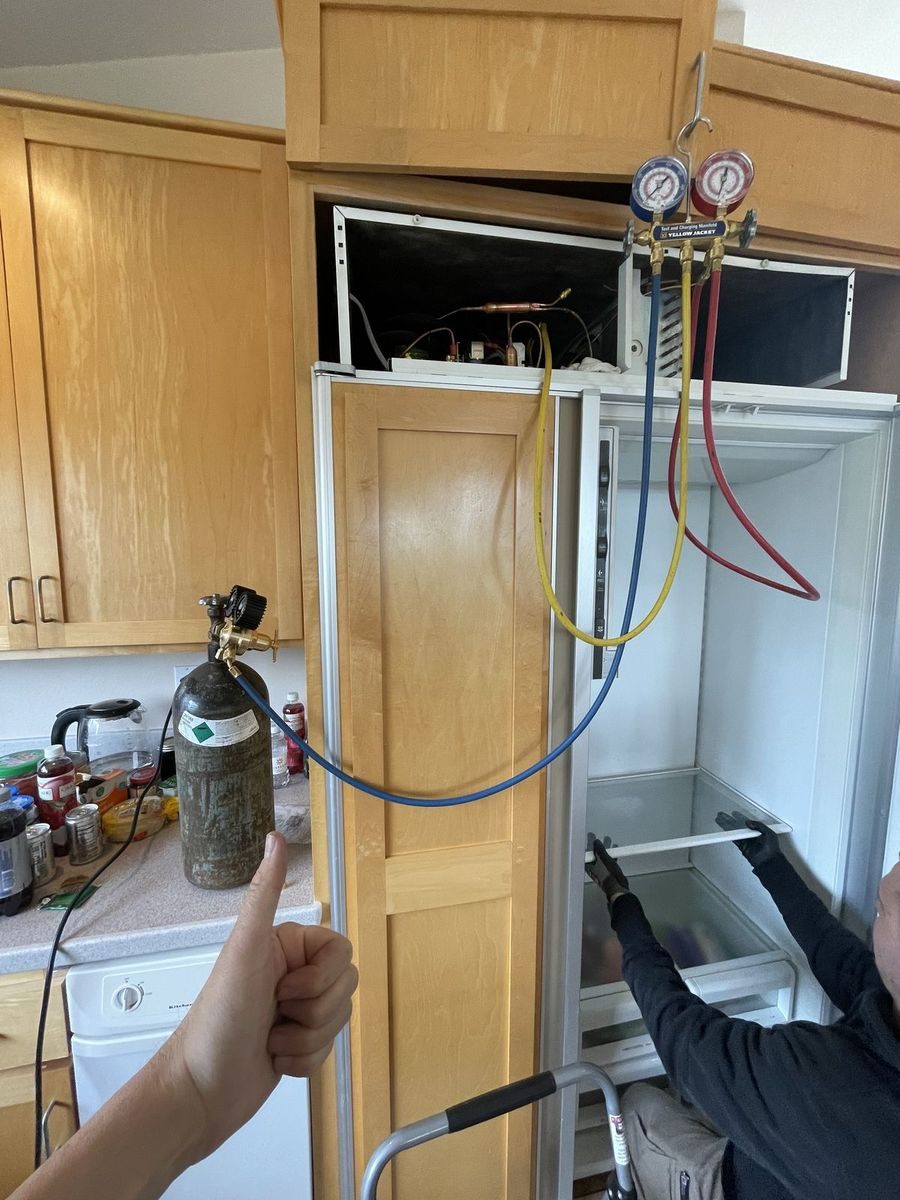
02 / 12
Gauges connected to a built-in refrigerator's sealed system. Leak searches, brazing and recharges happen in the kitchen, so the fridge stays where it is.
Read the service page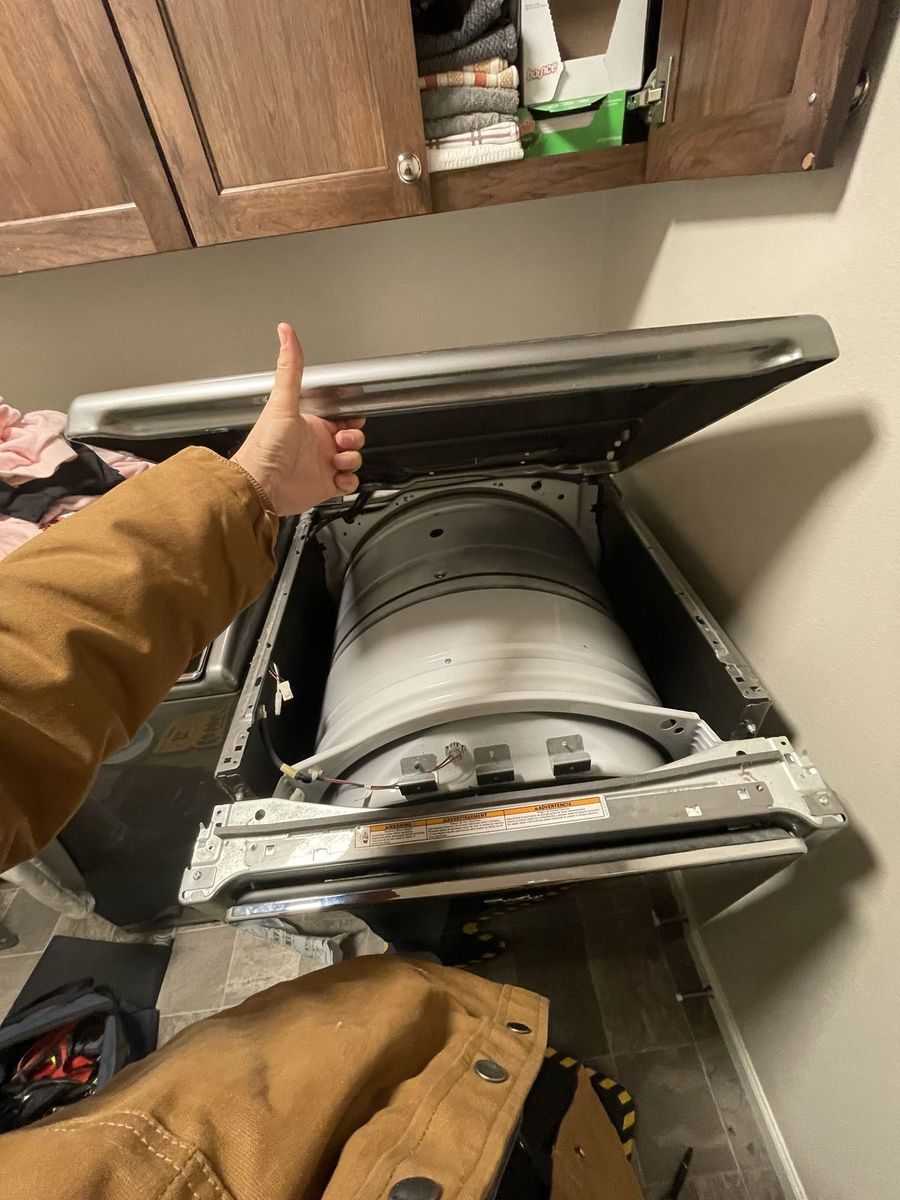
03 / 12
A top-load washer with the top panel raised. Lid switch, drive coupler and drain pump are all within reach once the top comes up.
Read the service page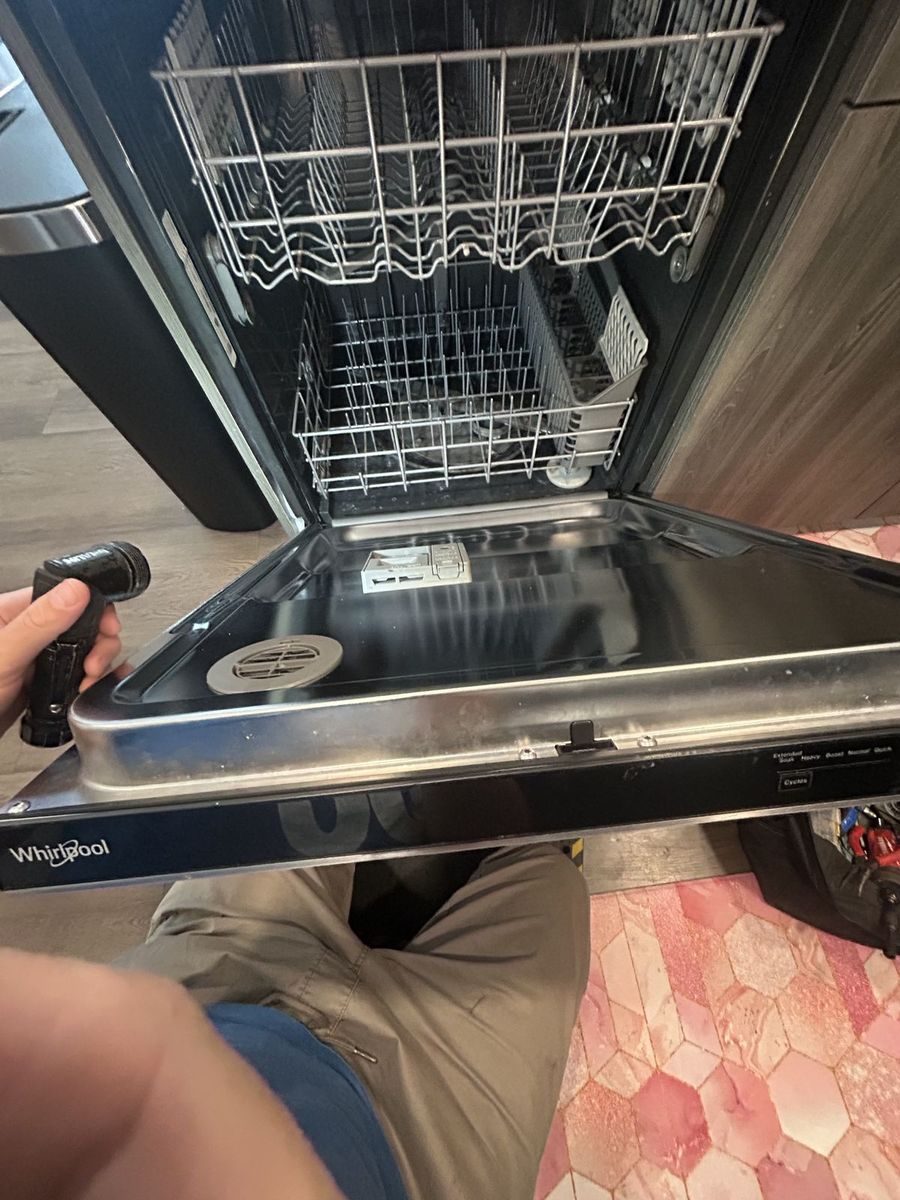
04 / 12
Door open and racks out on a dishwasher. A puddle left behind after the last rinse sends us to the filter screen, the pump and the hose route under the sink, in that order.
Read the service page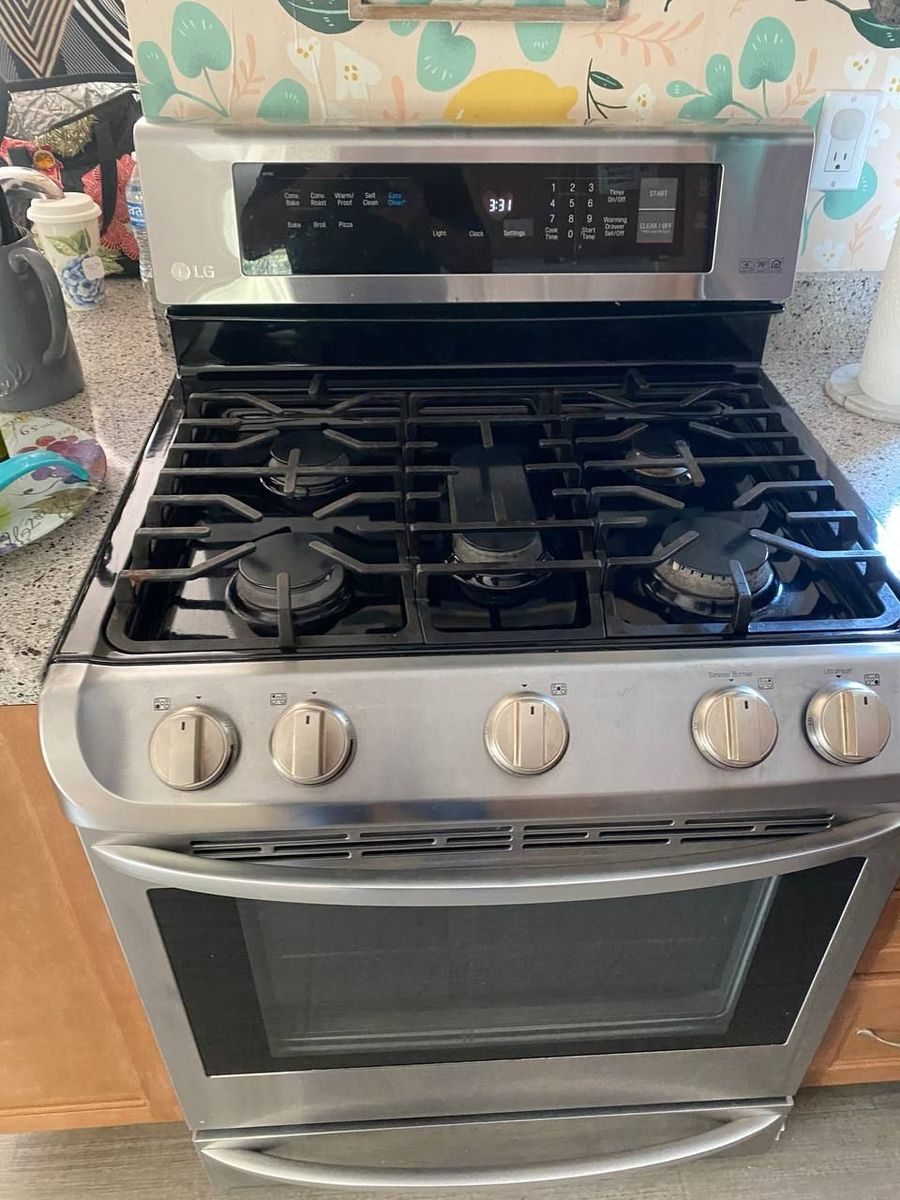
05 / 12
A five-burner gas range ready for testing. Burner igniters, the spark module and the bake igniter's amp draw are measured before a part is ordered.
Read the service page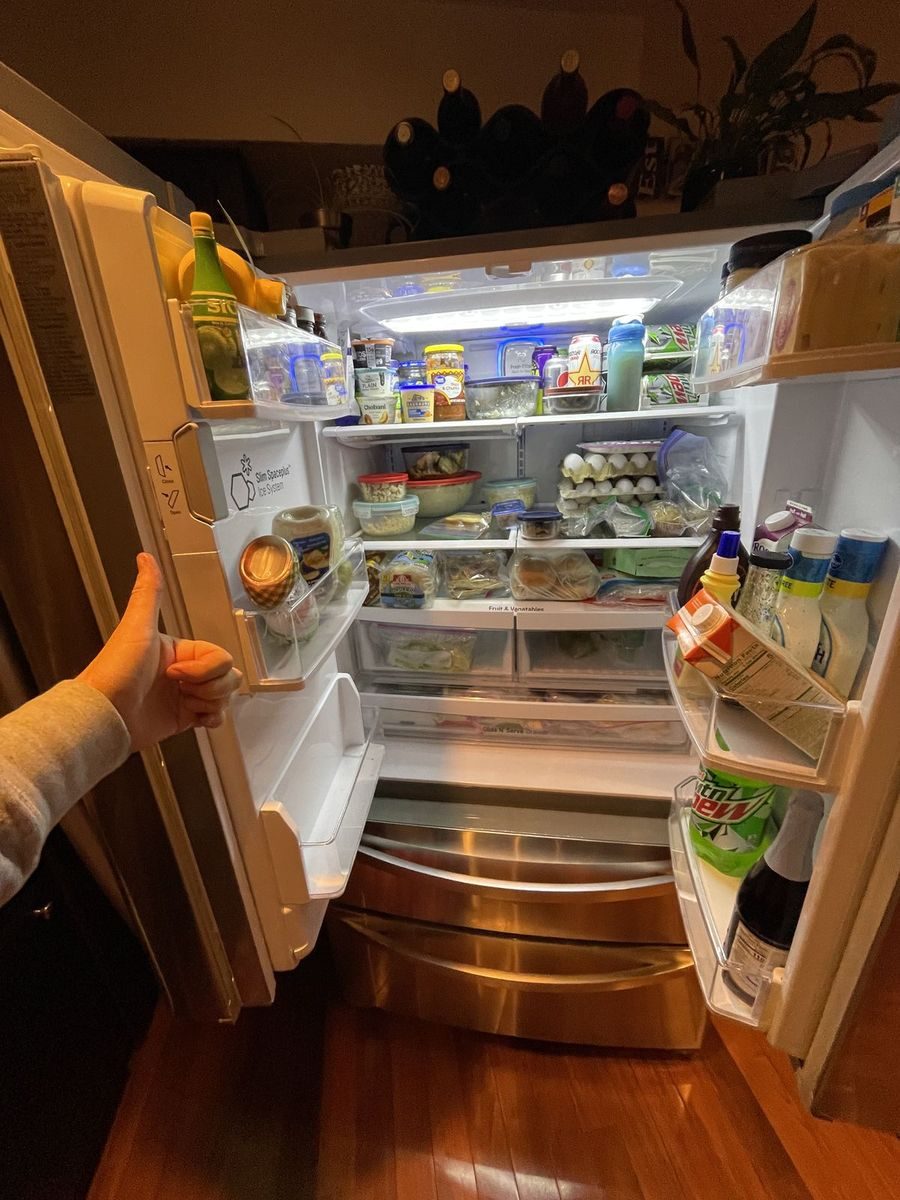
06 / 12
A French-door refrigerator open for diagnosis. Slow ice starts with the water: the inlet valve, the filter and a fill tube that can freeze shut.
Read the service page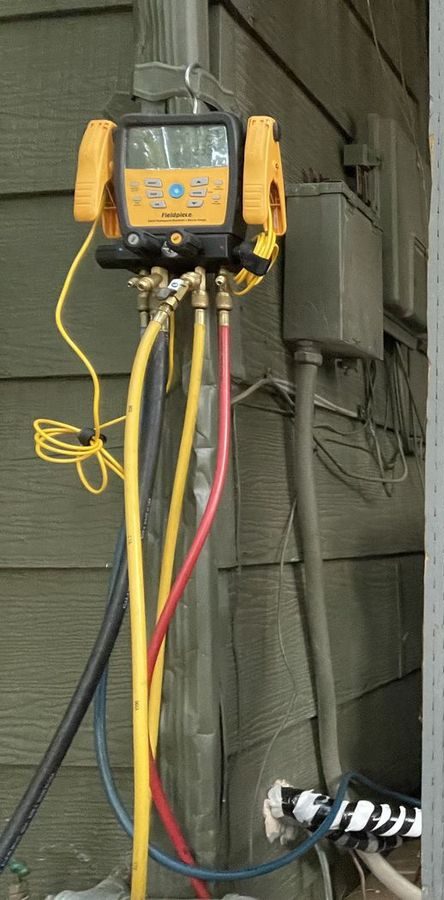
07 / 12
Digital gauges hang by the outdoor unit while the heat pump runs. Superheat and subcooling show whether the charge, a valve or the defrost board is the problem.
Read the service page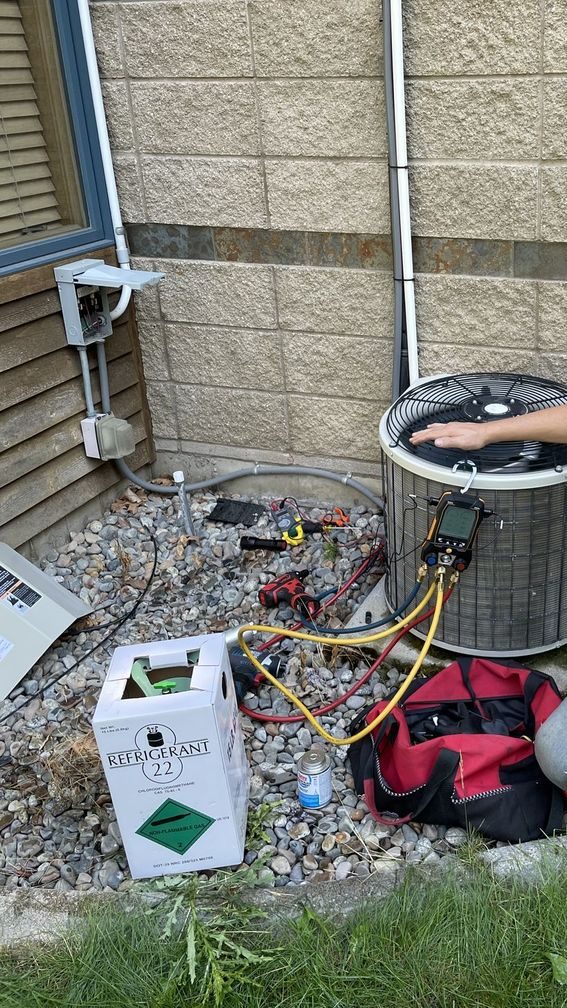
08 / 12
An older condenser under test with hoses on the service ports. The capacitor, contactor and fan motor get checked before anyone talks about refrigerant.
Read the service page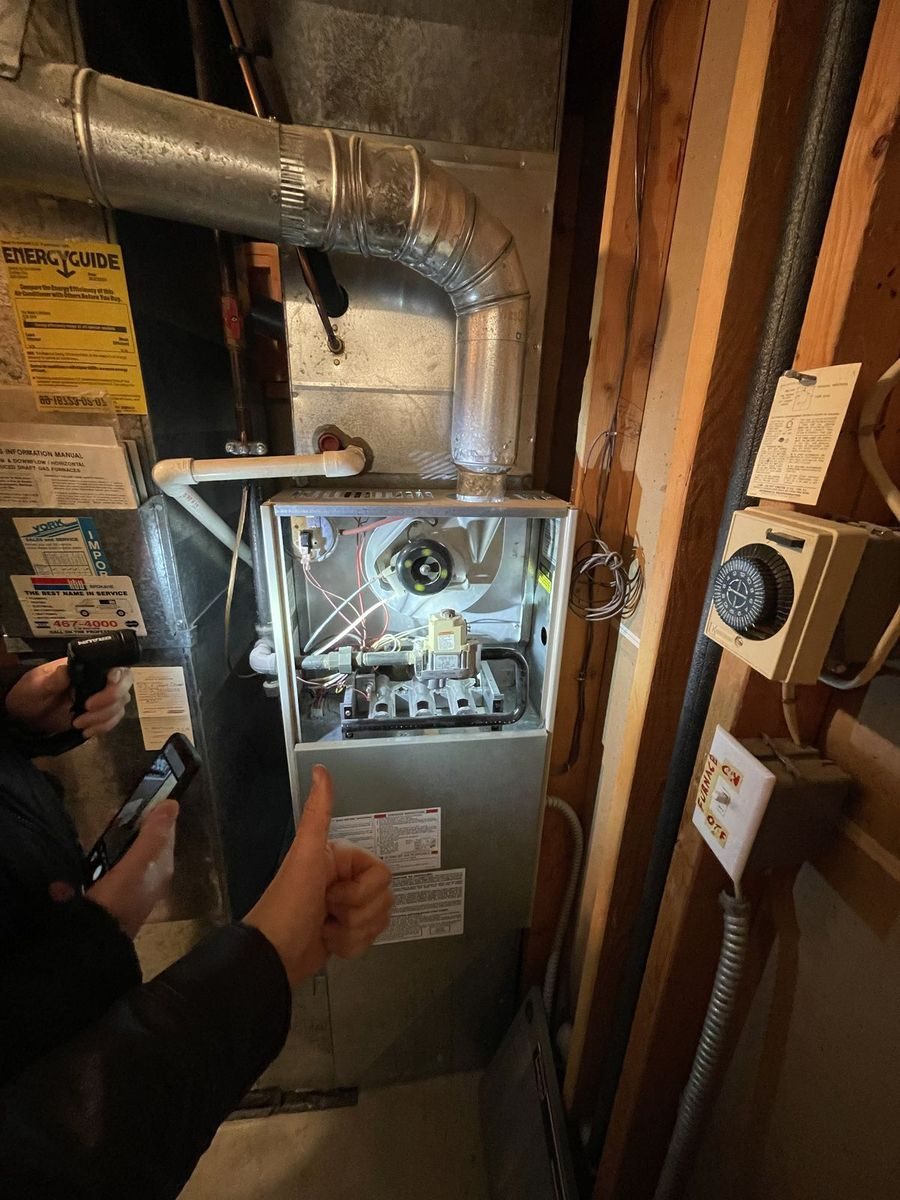
09 / 12
The burner compartment of a gas furnace, open. We follow the start-up order, inducer, pressure switch, igniter, flame sensor, until the step that fails.
Read the service page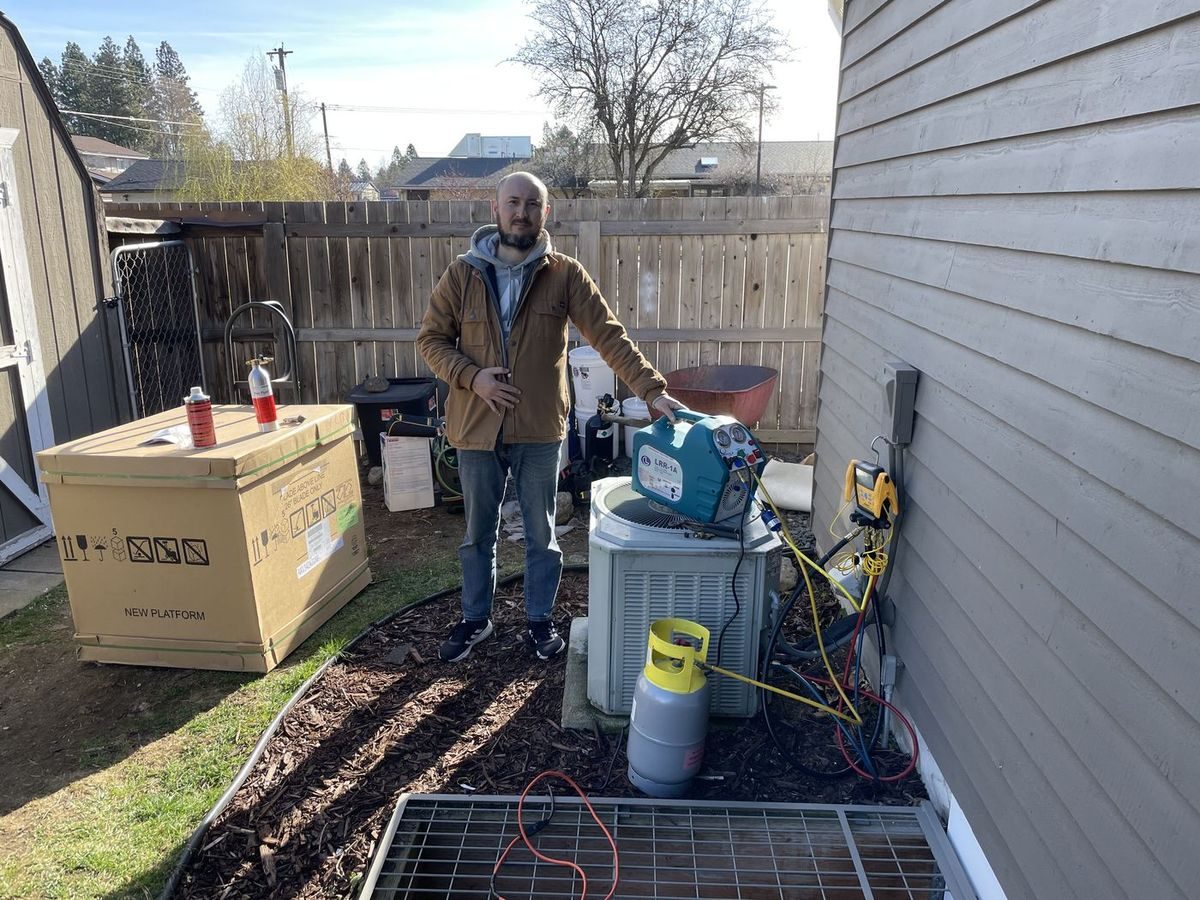
10 / 12
A recovery machine and cylinder beside an outdoor unit. On a replacement, the old refrigerant is pulled into the cylinder instead of the air.
Read the service page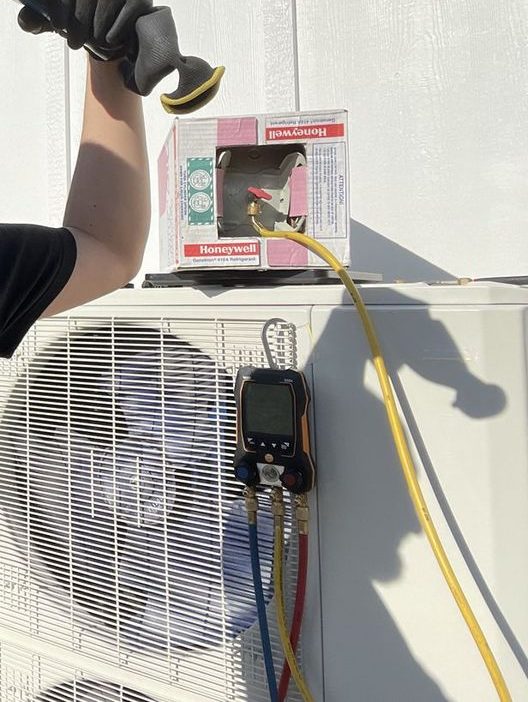
11 / 12
A ductless outdoor unit with a gauge set on it. Mini-splits get the same pressure and temperature readings as a central system, plus a look at the line-set insulation.
Read the service page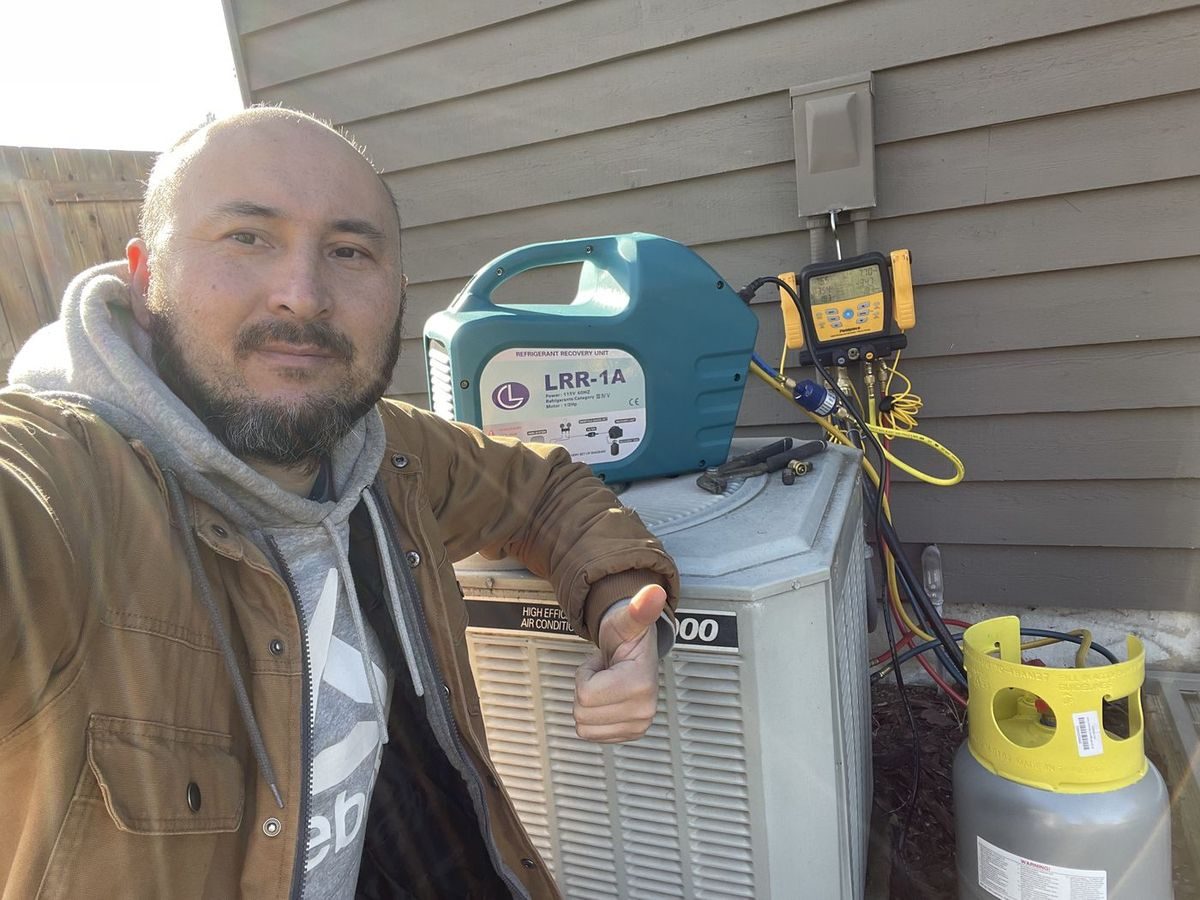
12 / 12
Gauges on a condenser during a seasonal visit. Spring visits wash the dust out of the coil; fall visits test defrost and heat strips before the fog weeks.
Read the service pageUsually, yes. Mechanically a dryer is simple, and the parts that wear out (fuses, elements, igniters, coils, belts, rollers, sensors) are modest beside what a whole new machine runs. Replacing it makes more sense once the drum has rusted through or cracked, when the control board has died on an older model and its replacement is pricey or discontinued, or when a gas burner assembly is badly corroded. A fuse that keeps blowing is an airflow problem, not a parts problem. Our technician puts what failed, why it failed and the cost of fixing it in writing, then leaves the choice with you.
The exhaust is overheating, and that almost always traces back to restricted airflow. Lint compacted in the ducting, a squashed hose behind the machine, a run with more elbows than the maker permits, or a hood flap that sticks shut will all trap heat in the drum. A new fuse alone only buys a short reprieve.
Yes: whatever the dryer maker's installation sheet sets, and every elbow eats into that number. Long runs come with laundry rooms set deep inside the house. Rigid metal duct keeps air moving; foil accordion duct sags and traps lint. With a long run, check the hood more often, and note that some models are rated for longer vents than others.
Yes, we work on gas dryers, including igniters, flame sensors, valve coils and burner parts. If the laundry room smells of gas, don't touch switches or the dryer's controls. Get the household out first, then make the call to 911 or to the gas utility once everyone is clear of the house. Gas piping up to the dryer's shutoff valve is not our work; our repairs begin at the appliance.
Yes, because whatever plugs the hood plugs the whole run. In windy weather, tumbleweed pieces, dust and fluff wedge into the louvers and flaps, and birds like a warm opening in spring. With the dryer off, clear what you can reach from outside. Never fit a screen over a dryer hood, since it catches lint and clogs fast.
Most often the moisture sensor is misreading the load. Dryer-sheet and softener residue coat the two metal bars in the drum, so wet clothes stop registering as wet. Wipe the bars with rubbing alcohol. A very small load may also tumble without touching them. If neither explains it, the cause may be a sensor wire or the control, which a technician tests with a meter.
Pick a day and the arrival window that fits around your shift on the booking page, or call the office any day from 8 AM to 7 PM. A confirmation call follows, and that is when the office names the diagnostic fee. Approve the repair and the fee becomes part of its bill; decline and you pay that fee by itself. A written price always comes before any fixing.
Talk to us
Choose a day and an arrival slot online, or ring the office between 8 AM and 7 PM on any day. After a confirming call from the office, the technician phones as they set out.
Book a visit
One slip, filled top to bottom. The office phones to confirm the visit, and the technician calls again when on the way.
Every number below is a public state record. Look each one up on L&I Verify, or read what each license allows on our licenses page.
What our licenses cover