01 / 12
Furnace repair
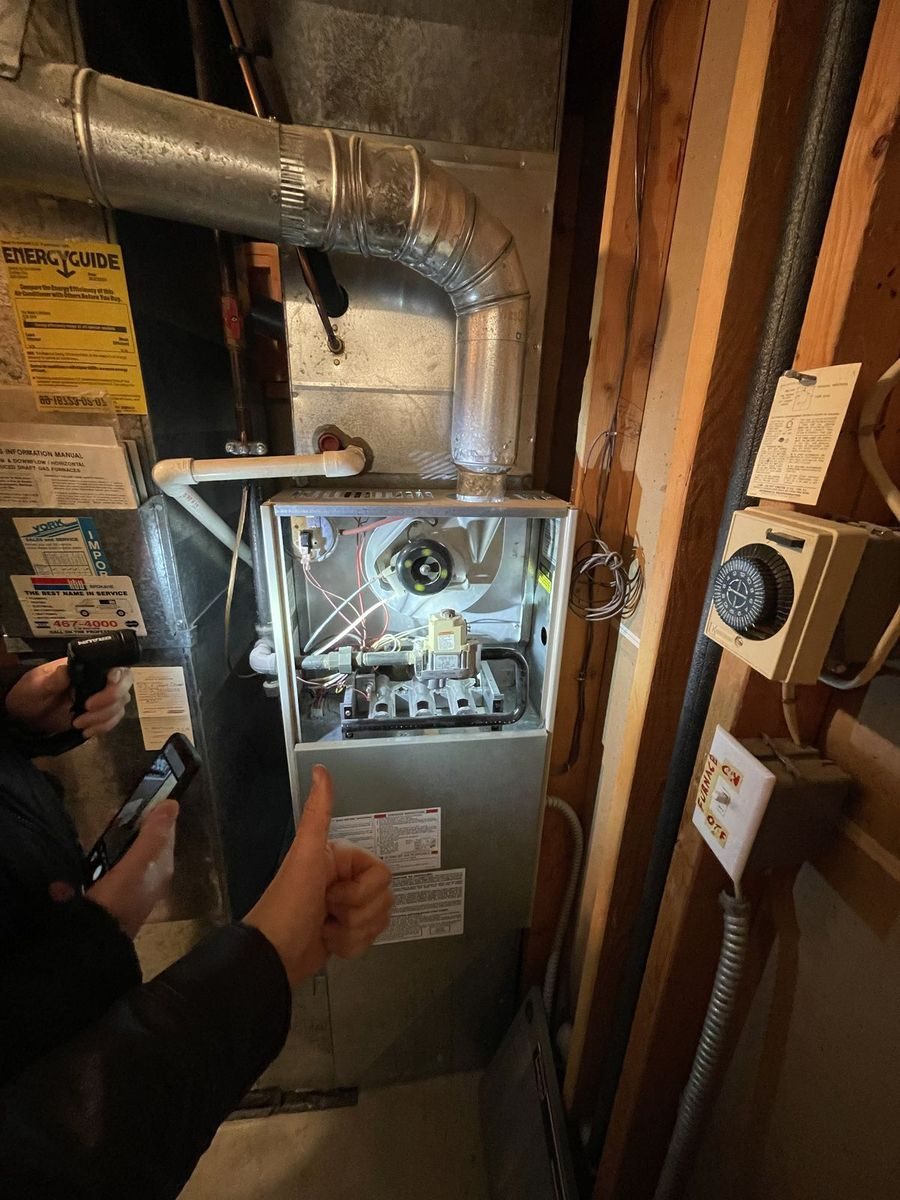
The burner compartment of a gas furnace, open. We follow the start-up order, inducer, pressure switch, igniter, flame sensor, until the step that fails.
Read the service page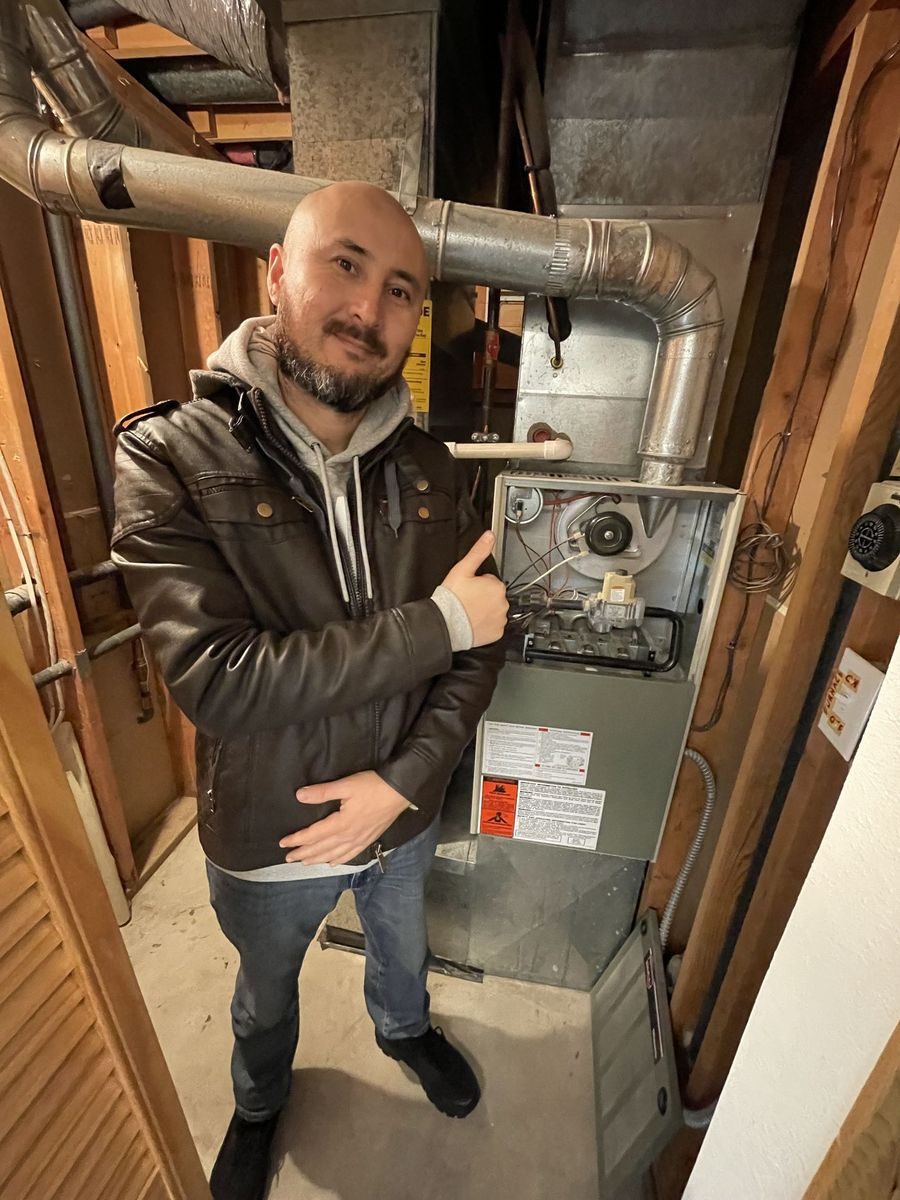
Gas and electric furnace repair
Every gas furnace lights in the same order, and the step where it stops tells most of the story. Our technicians walk that sequence, test igniter, flame sensor, inducer and limit, and handle electric heat strips too, pricing the repair in writing first.
Short answer
A furnace that won't heat usually stops at one step of its start-up: the inducer and pressure switch, the igniter, flame sensing, the limit switch or the indoor fan. Electric models fail at heat strips, sequencers or the fan. We pin down the step, show you the worn part and wait for your yes on a written price. Smell gas? Get everyone outdoors before dialing 911 or the gas utility.
Rule out gas and carbon monoxide first, then look at the simple things. If you notice the rotten-egg odor added to natural gas and propane, don't flip switches, touch the thermostat or try to relight anything. Get everyone out. Then, standing well away from the house, ring the gas utility or 911, and wait for responders to say it's safe before going back inside. A sounding CO alarm calls for the same exit and a 911 call.
With safety settled, the useful question is where the furnace stops. A modern gas furnace runs a fixed routine on every call for heat: the inducer motor purges the heat exchanger, the pressure switch proves draft, the hot surface igniter heats up, the gas valve opens, the flame sensor proves flame, and after a short delay the indoor fan pushes heat into the ducts. The step that fails points to the part, and most control boards flash an LED code that narrows it further.
Electric furnaces skip the flame. They bring heating elements on in stages through sequencers or relays, with limit switches and fusible links guarding each element, and the fan carries the heat out. Paired with central AC, they are common across the Tri-Cities. We repair them alongside gas models from Bryant, Carrier, Goodman, Lennox, Ruud, Rheem, Trane and York, under our electrical contractor license with the 06A HVAC/Refrigeration specialty.
The technician reads the board's fault code and any stored history, then starts a call for heat and watches each stage. Measurements tell the rest: inducer draft at the pressure switch, igniter resistance, flame current at the sensor, gas pressure at the valve, temperature rise from return to supply, and voltage and amperage at the fan motor. A clean sensor often shows several microamps; a coated one can slip under one. On electric furnaces, every element and sequencer is checked under load. If a furnace is unsafe to run, they leave it off and tell you why.
Before anything is replaced, you see the repair price on a written estimate and choose yes or no. Diagnosis has its own fee, which the office states when you call or book online. Approved repairs absorb that fee into their total, while a declined repair leaves the fee as the entire bill. Igniters, flame sensors, capacitors and fan motors travel with our technicians; an ordered part, like a model-specific control board or an inducer assembly, is quoted before the order goes in. Warranty terms appear on your invoice, and the office can reply in Spanish on request.
January cold snaps find the weak part. December and January lows average around 28°F, a cold snap can drag nights toward 10°F, and during inversions the Columbia Basin can sit under fog and low cloud for days or weeks, with afternoons that never get out of the 30s. A furnace in that stretch cycles day and night. An igniter close to burning out, a flame sensor wearing a coat of oxide or a fan motor with dry bearings often makes it through fall and then quits on the first hard cold morning. A fall check of those parts beats a cold house in a freezing-fog week.
Homes here also put furnaces in very different spots. Richland's alphabet houses, built in 1943 to 1945 for wartime workers from 22 lettered floorplans, have mostly been remodeled, so furnaces, ducts and venting from different decades may meet in a small space. In Benton City and Finley, manufactured homes make up a sizable part of the housing, and the furnace or air handler typically sits in a tight hallway closet, often as a downflow unit feeding ducts under the floor. With so little room for return air, a clean filter and an open return grille matter more. Tell the office what kind of home it is, and the technician can plan for the closet.
One photo per tab from our service calls. Tap a tab, or let the file turn on its own.
01 / 12
The burner compartment of a gas furnace, open. We follow the start-up order, inducer, pressure switch, igniter, flame sensor, until the step that fails.
Read the service page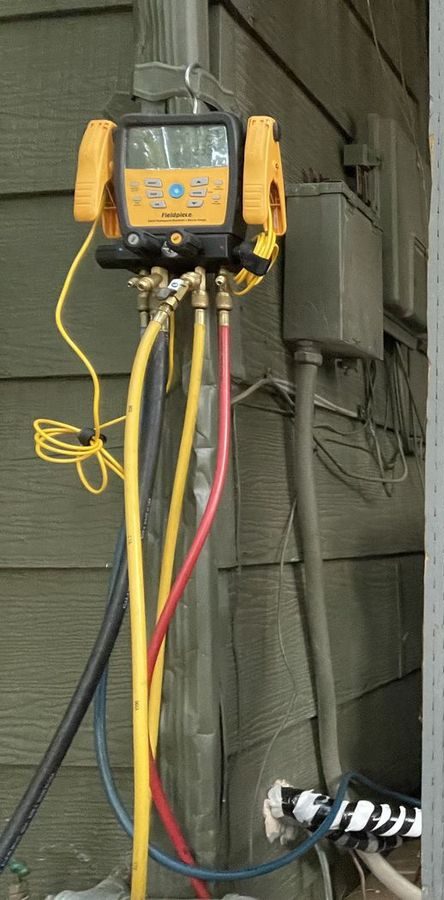
02 / 12
Digital gauges hang by the outdoor unit while the heat pump runs. Superheat and subcooling show whether the charge, a valve or the defrost board is the problem.
Read the service page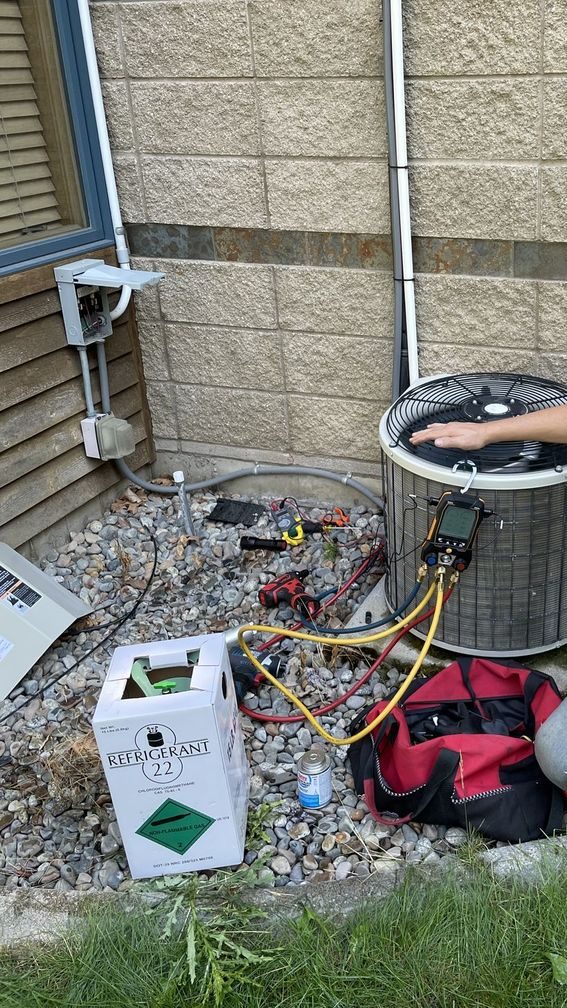
03 / 12
An older condenser under test with hoses on the service ports. The capacitor, contactor and fan motor get checked before anyone talks about refrigerant.
Read the service page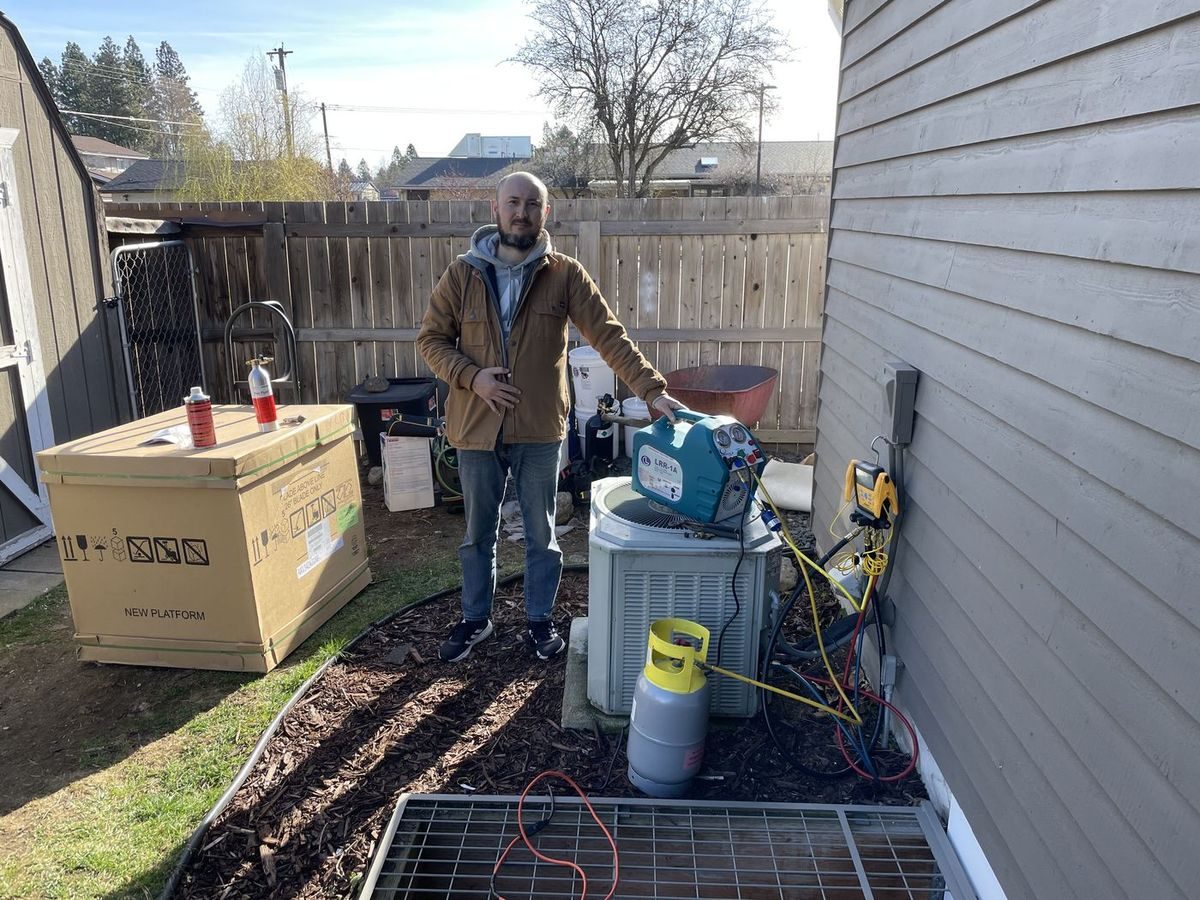
04 / 12
A recovery machine and cylinder beside an outdoor unit. On a replacement, the old refrigerant is pulled into the cylinder instead of the air.
Read the service page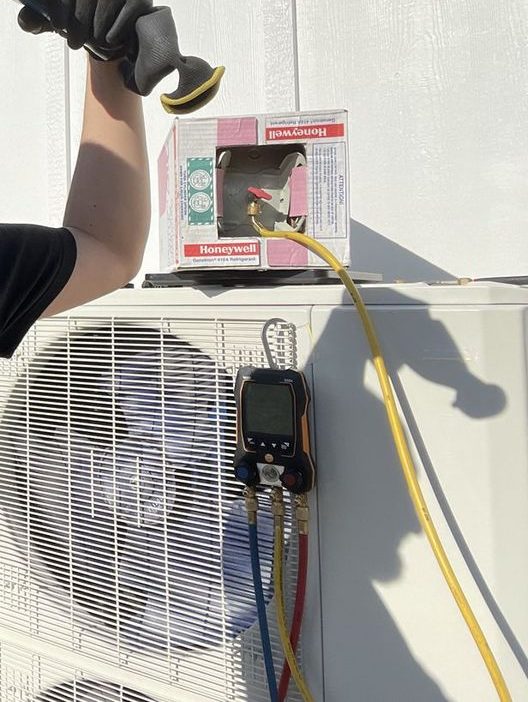
05 / 12
A ductless outdoor unit with a gauge set on it. Mini-splits get the same pressure and temperature readings as a central system, plus a look at the line-set insulation.
Read the service page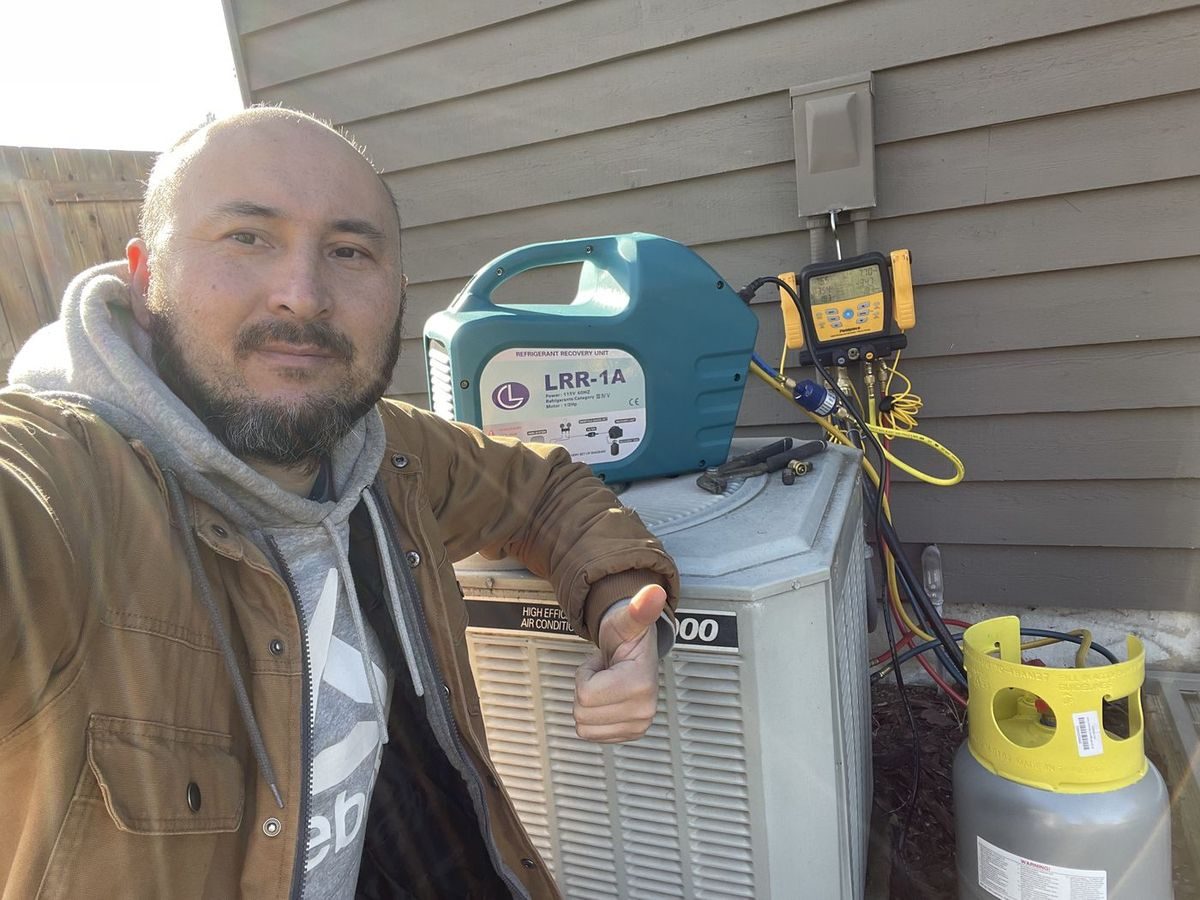
06 / 12
Gauges on a condenser during a seasonal visit. Spring visits wash the dust out of the coil; fall visits test defrost and heat strips before the fog weeks.
Read the service page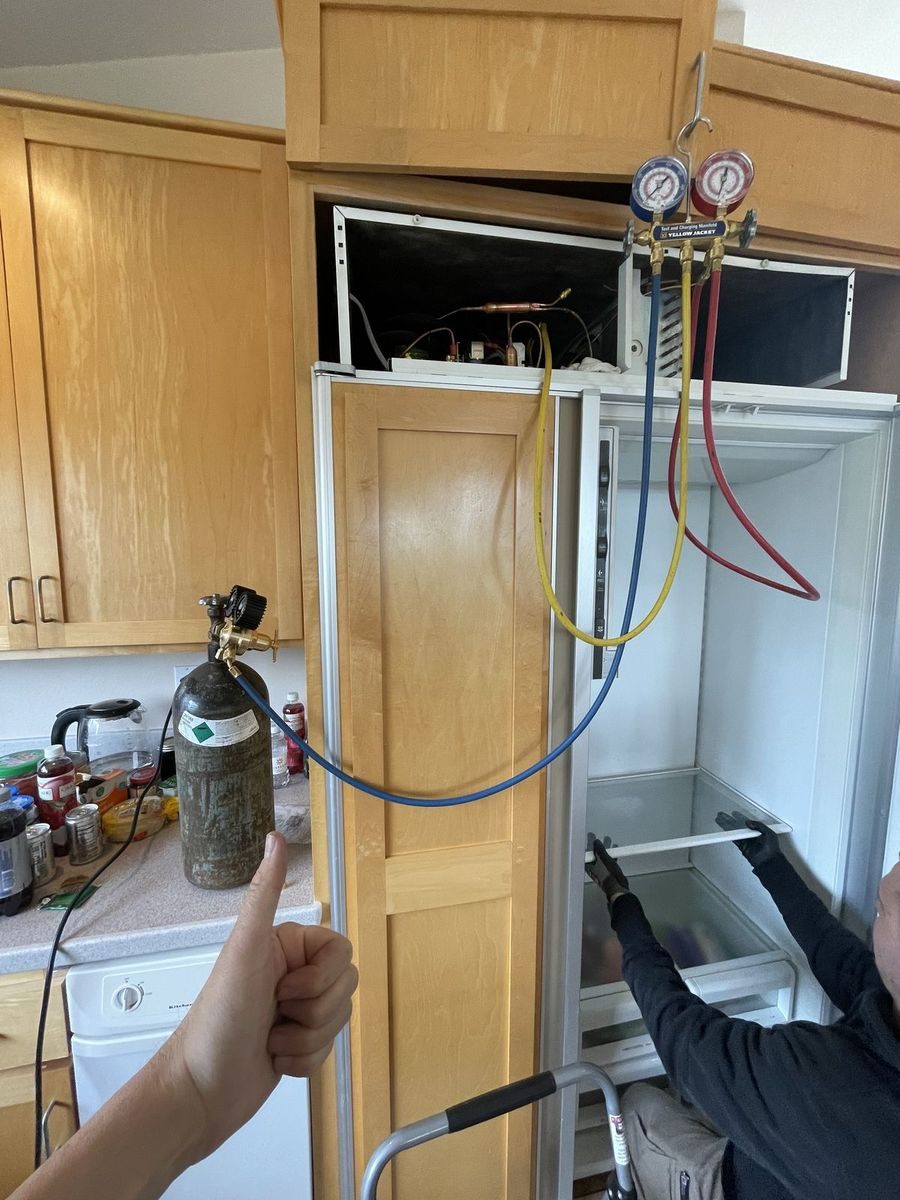
07 / 12
Gauges connected to a built-in refrigerator's sealed system. Leak searches, brazing and recharges happen in the kitchen, so the fridge stays where it is.
Read the service page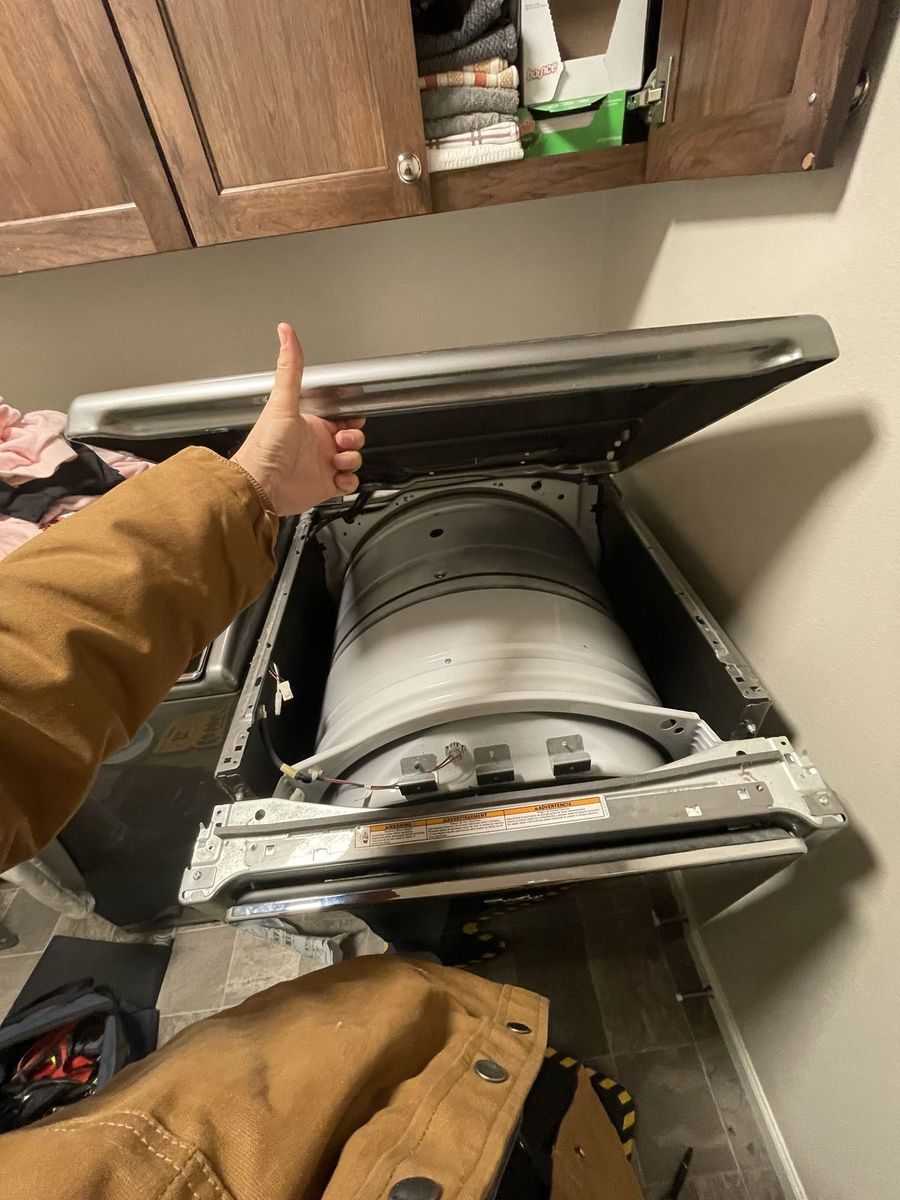
08 / 12
A top-load washer with the top panel raised. Lid switch, drive coupler and drain pump are all within reach once the top comes up.
Read the service page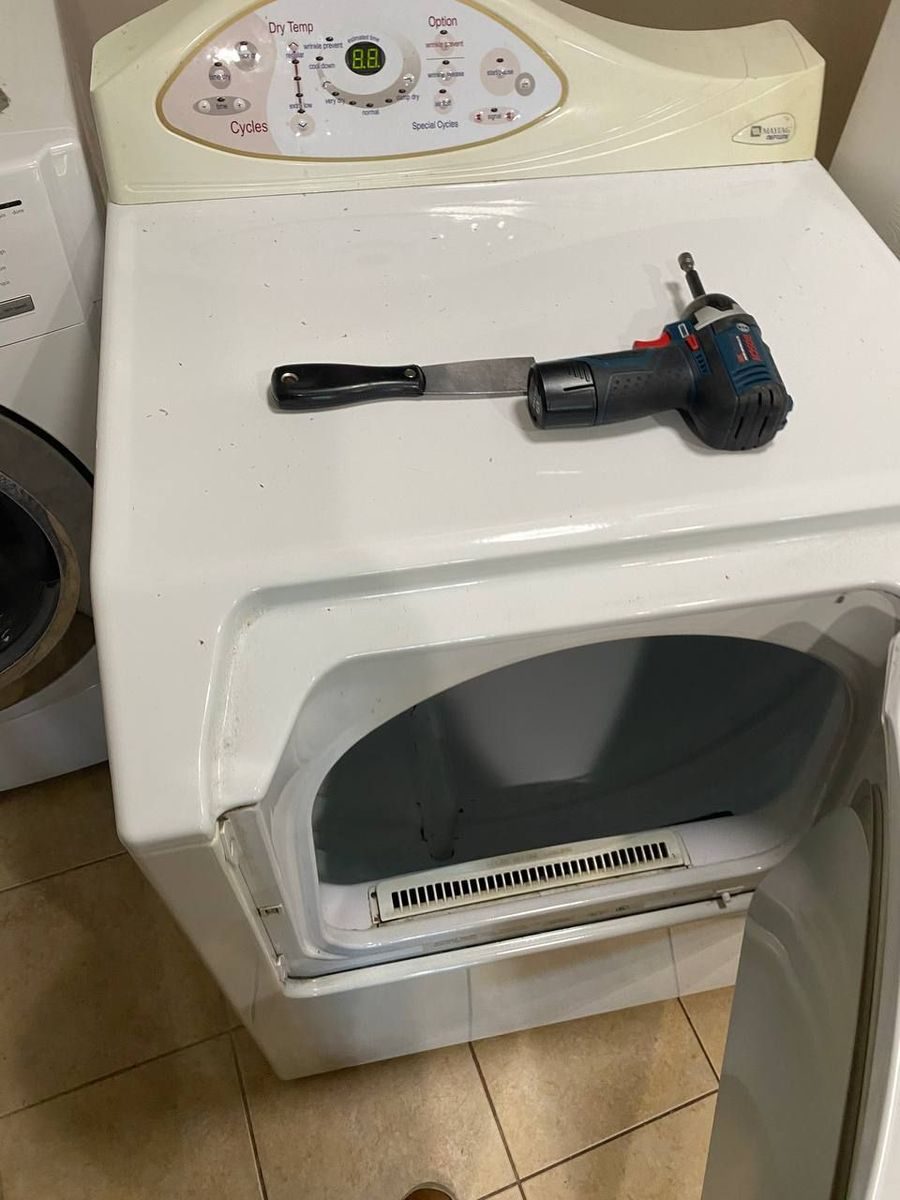
09 / 12
An electric dryer opened up in a laundry room. The thermal fuse, the heating element and the vent run behind the machine get tested together.
Read the service page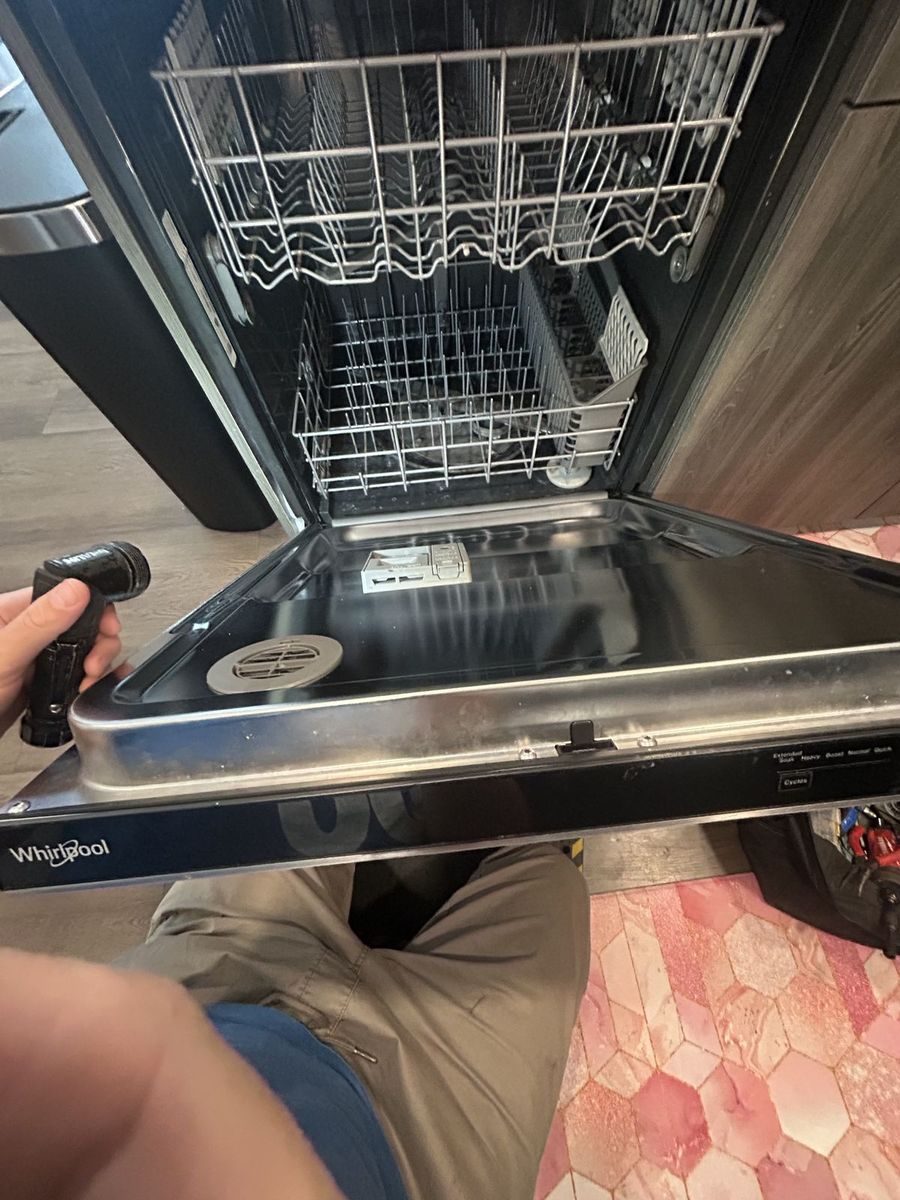
10 / 12
Door open and racks out on a dishwasher. A puddle left behind after the last rinse sends us to the filter screen, the pump and the hose route under the sink, in that order.
Read the service page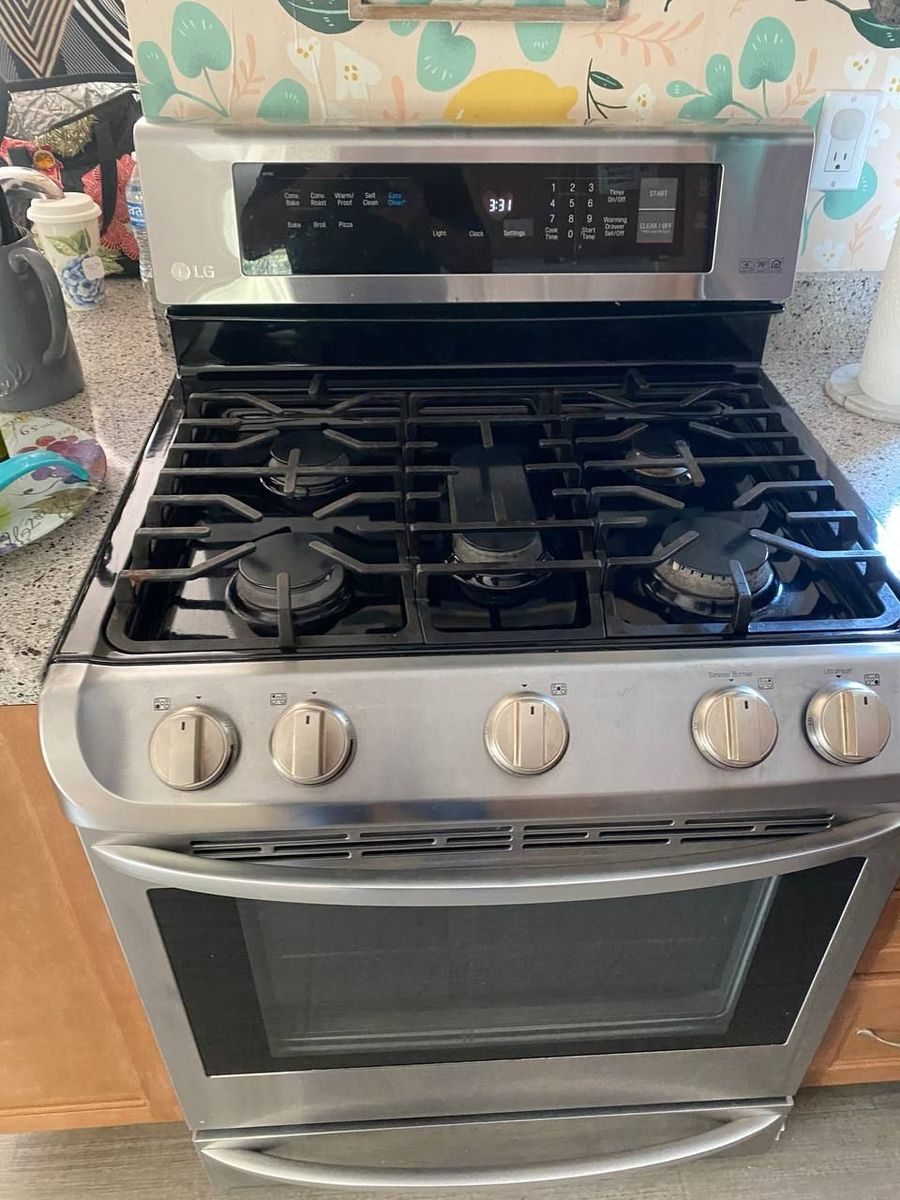
11 / 12
A five-burner gas range ready for testing. Burner igniters, the spark module and the bake igniter's amp draw are measured before a part is ordered.
Read the service page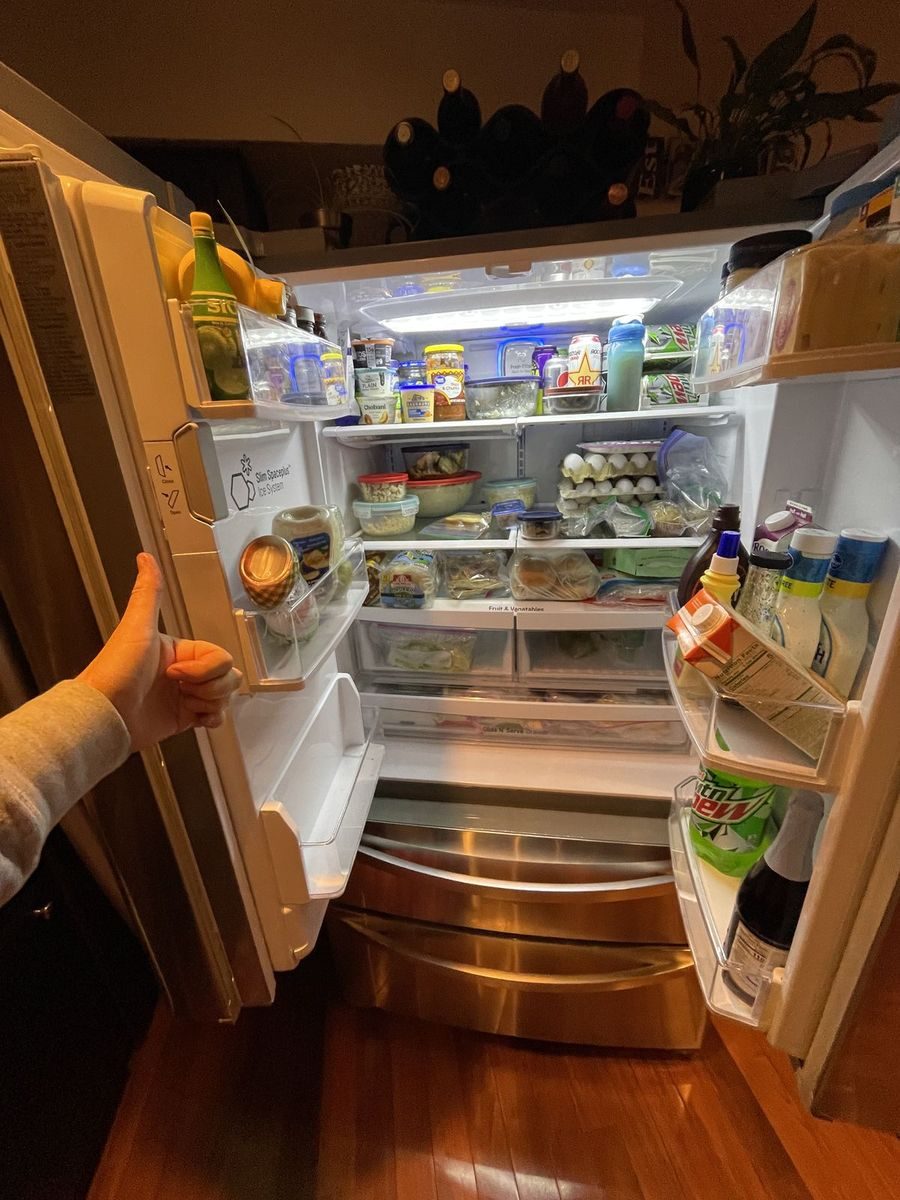
12 / 12
A French-door refrigerator open for diagnosis. Slow ice starts with the water: the inlet valve, the filter and a fill tube that can freeze shut.
Read the service pageRepair it when the failed part is one of the replaceable ones: igniter, flame sensor, pressure switch, limit, inducer, fan motor, capacitor, control board, sequencer or heating element. Those are wear parts and say little about the furnace's overall health. Replacement becomes a fair question when the heat exchanger is cracked, when a major component quits on a furnace with a record of repeat calls, or when the air conditioner or heat pump is due as well and matching the two makes sense. On request, we set the repair price beside a new-system quote with equipment and installation in one figure. With a cracked exchanger, we advise keeping the furnace off until it is dealt with.
Leave right away, and once outdoors, call the gas utility or 911. Don't use light switches, the thermostat or the furnace on the way out, and don't hunt for the source. After responders clear the home, book a visit so a technician can inspect the furnace before it runs again.
Most often, the flame sensor is dirty. Within seconds of the gas valve opening, the control board has to detect a tiny current passing through the flame; a coated rod lets that current fall short, and the board closes the valve as a safety step. After several tries it locks out. Our trucks carry sensors, so the fix is quick.
First, are the burners lit? If not, the furnace may have locked out after failed ignition tries while the fan keeps going, or the thermostat fan is set to On. If they are lit but the air stays cool, the limit switch may be cutting the burners because the heat exchanger overheats. On electric furnaces, dead heating elements or sequencers cause the same complaint.
Usually it is a safety control doing its job rather than a hazard, but it shouldn't be ignored. Short-cycling most often means the limit switch opens because air isn't crossing the heat exchanger fast enough, and repeated overheating stresses the metal until it can crack. Change the filter and open registers; if the cycling continues, have temperature rise and static pressure measured.
Yes, we work on electric and gas furnaces in manufactured homes in Benton City, Finley and the rest of our area. These units often sit in a narrow closet and push air down into ducts beneath the floor, so access and return airflow take care. Our technicians test heating elements, sequencers, limits and the fan, and match replacement parts to the exact model.
We try to, since early and shift schedules are common here. Pick the date and window that fit when booking online, or call the office, open daily 8 AM to 7 PM, and describe your hours. A call from the office locks in the slot, and the technician rings ahead while driving over.
Talk to us
Use the online scheduler to pick a date and window, or call; the office will confirm the visit by phone. A written repair price comes first, every time.
Book a visit
One slip, filled top to bottom. The office phones to confirm the visit, and the technician calls again when on the way.
Every number below is a public state record. Look each one up on L&I Verify, or read what each license allows on our licenses page.
What our licenses cover