01 / 12
Washer repair
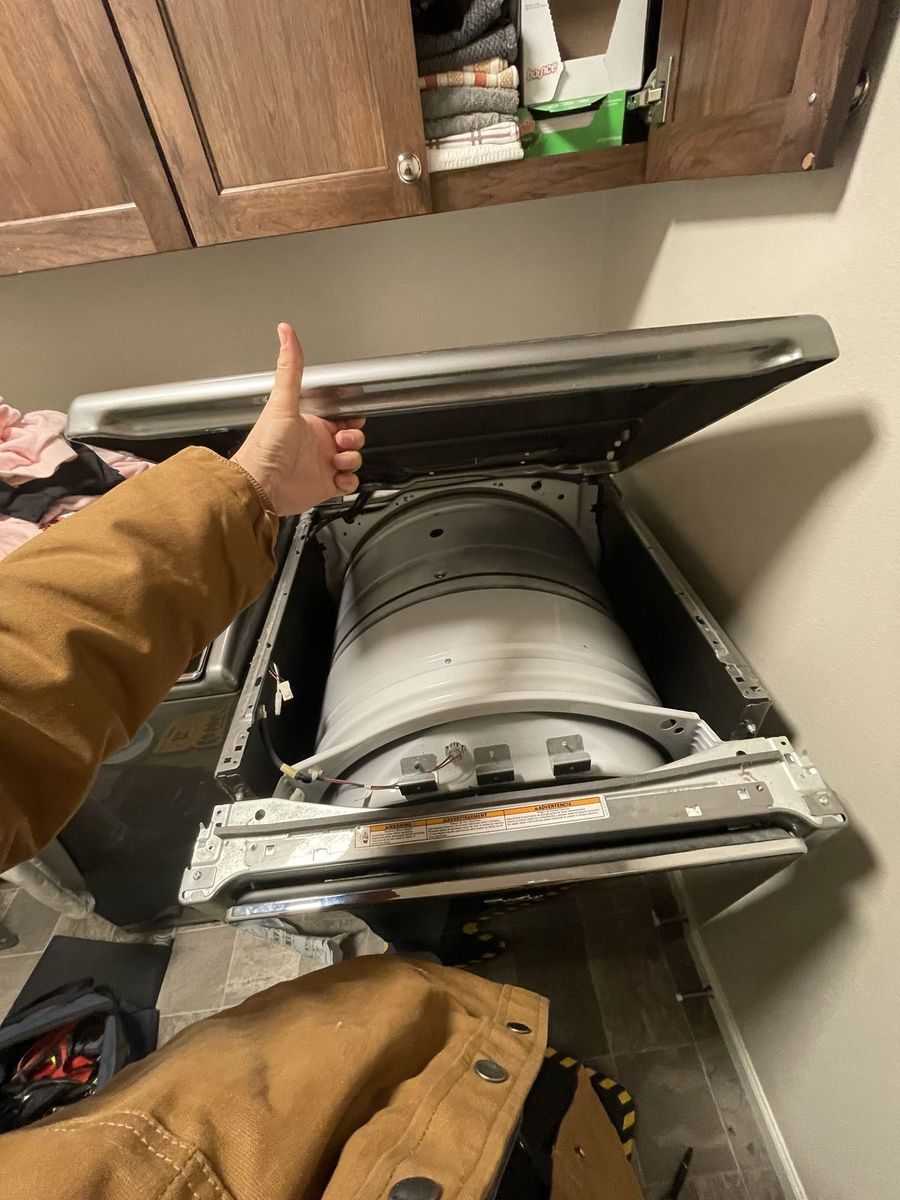
A top-load washer with the top panel raised. Lid switch, drive coupler and drain pump are all within reach once the top comes up.
Read the service page
Front-load and top-load washer service
A washer juggles water, weight and spin speed at once, so a small fault turns into a puddle or a locked door hiding wet towels. Our technicians check pumps, valves, locks and bearings on both styles of machine, front-loading or top-loading, and quote in writing before repairing.
Short answer
Washer trouble nearly always traces back to one of three jobs: letting water in, getting water out, or holding the door shut through spin. A clogged drain pump, scaled inlet valve screens, a torn door boot or a worn-out lid lock are the usual suspects, and each one can be tested right at the machine. Suspension and tub bearings come after that. The repair price reaches you on paper before any work.
Usually because it could not drain in time, and the control gave up waiting. Front-loaders put a clock on draining; if the water level has not dropped within that window, they halt and post a code, such as OE on an LG or 5C on a Samsung. The culprit is often something small in the drain pump filter, say a sock, a coin or a hair tie, a pump motor that hums without turning its impeller, or a drain hose bent double behind the cabinet.
Top-loaders quit for other reasons. A lid lock that cannot prove it has latched will refuse to spin, so a failed lid switch or lock assembly is a frequent top-load repair. Older belt-drive and direct-drive machines may hum without agitating because of a cracked motor coupler or a slipping belt, while newer designs stall when the shift actuator or drive motor fails.
Error codes help, but they name a circuit or a condition, not always a part. A door-lock code can come from the lock itself, the harness running through the hinge area, or the control board. Our technicians run the machine's service test mode where the model offers one, then confirm with a meter, because replacing a board on a hunch is an expensive way to learn it was the lock all along. Washers fall under our 07D Appliance Repair specialty, from inlet valve to main board.
The technician first asks what the machine was doing when it quit, reads any stored codes, and runs a diagnostic cycle if the model has one. After that it is meter work: voltage at the pump and inlet valve, resistance across the lock and valve coils, the pressure switch reading, and a hand check of the drum for bearing play. A washer still full of water gets drained first, with towels down.
Before a wrench turns, the repair price is written out for you, and work waits on your approval. Drain pumps, lid switches, inlet valves and belts are typical truck stock; door boots, bearings and control boards are often ordered for the exact model, and that cost is quoted up front too. The diagnostic visit has its own fee, given to you by the office at booking; go ahead with the work and it is credited to the repair, or skip the work and you settle up for the visit alone. Your invoice carries the written warranty terms.
Water first. Kennewick's tap water mixes two sources, the Columbia itself and Ranney collector wells, and hardness there wanders between about 50 and 200 ppm over the year, which works out near 5 to 14 grains a gallon. Pasco and Richland get mostly treated river water that is moderately hard. Over time that mineral load narrows the inlet valve's mesh screens and crusts the internal heating element on front-loaders that warm their own water. On private wells, common across rural West Richland, Benton City, Finley and Burbank, sand and minerals reach those screens much sooner.
Then the house. In fast-growing West Pasco, upstairs laundry rooms are common in the new homes off Sandifur Parkway, Road 100, Chapel Hill Boulevard and Road 68, through Loviisa Farms, and across the Broadmoor area west of US 395. That layout is handy until a fill hose splits or a door boot tears, because the water then heads for the ceiling below. Wood-framed upper floors also flex more than a slab, so an unlevel front-loader can rattle the whole room. Pasco households can also ask the office for a reply in Spanish.
One photo per tab from our service calls. Tap a tab, or let the file turn on its own.
01 / 12
A top-load washer with the top panel raised. Lid switch, drive coupler and drain pump are all within reach once the top comes up.
Read the service page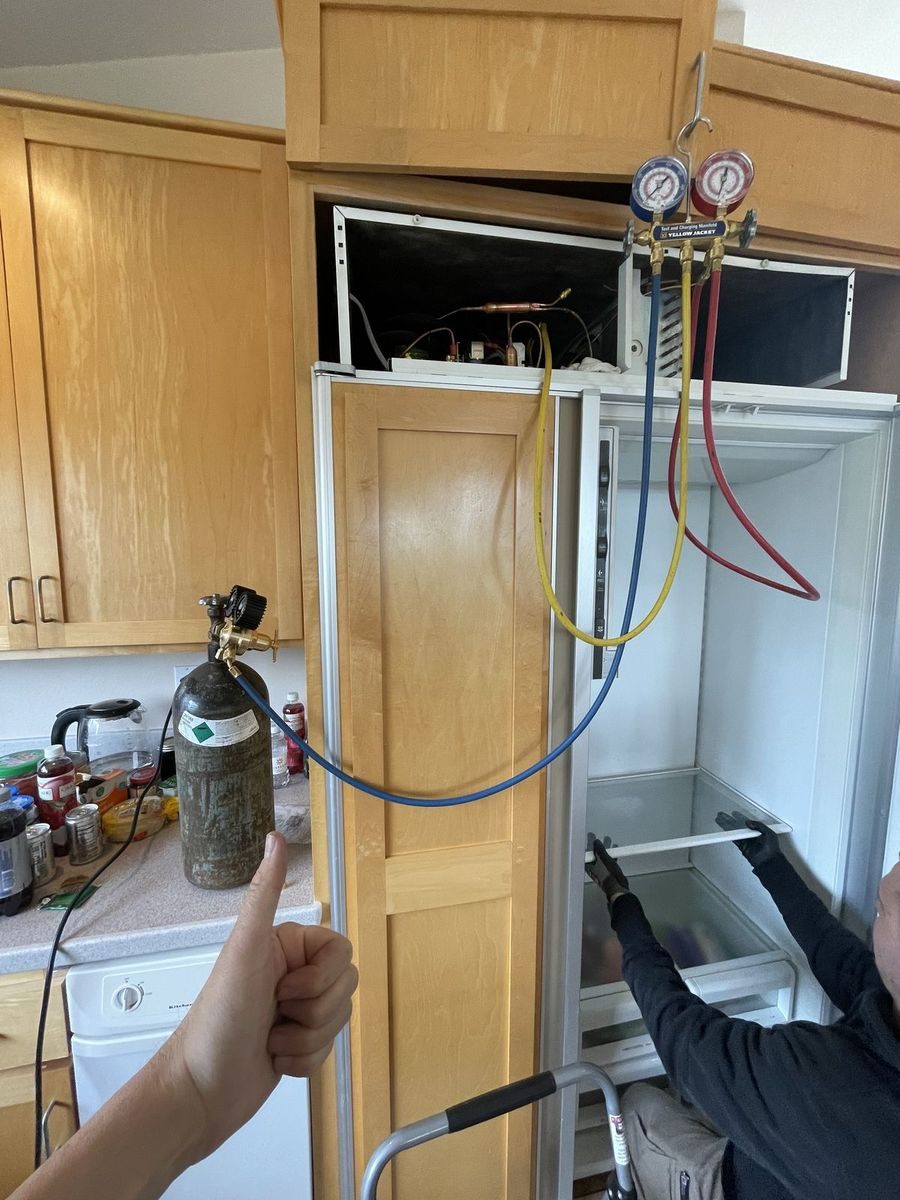
02 / 12
Gauges connected to a built-in refrigerator's sealed system. Leak searches, brazing and recharges happen in the kitchen, so the fridge stays where it is.
Read the service page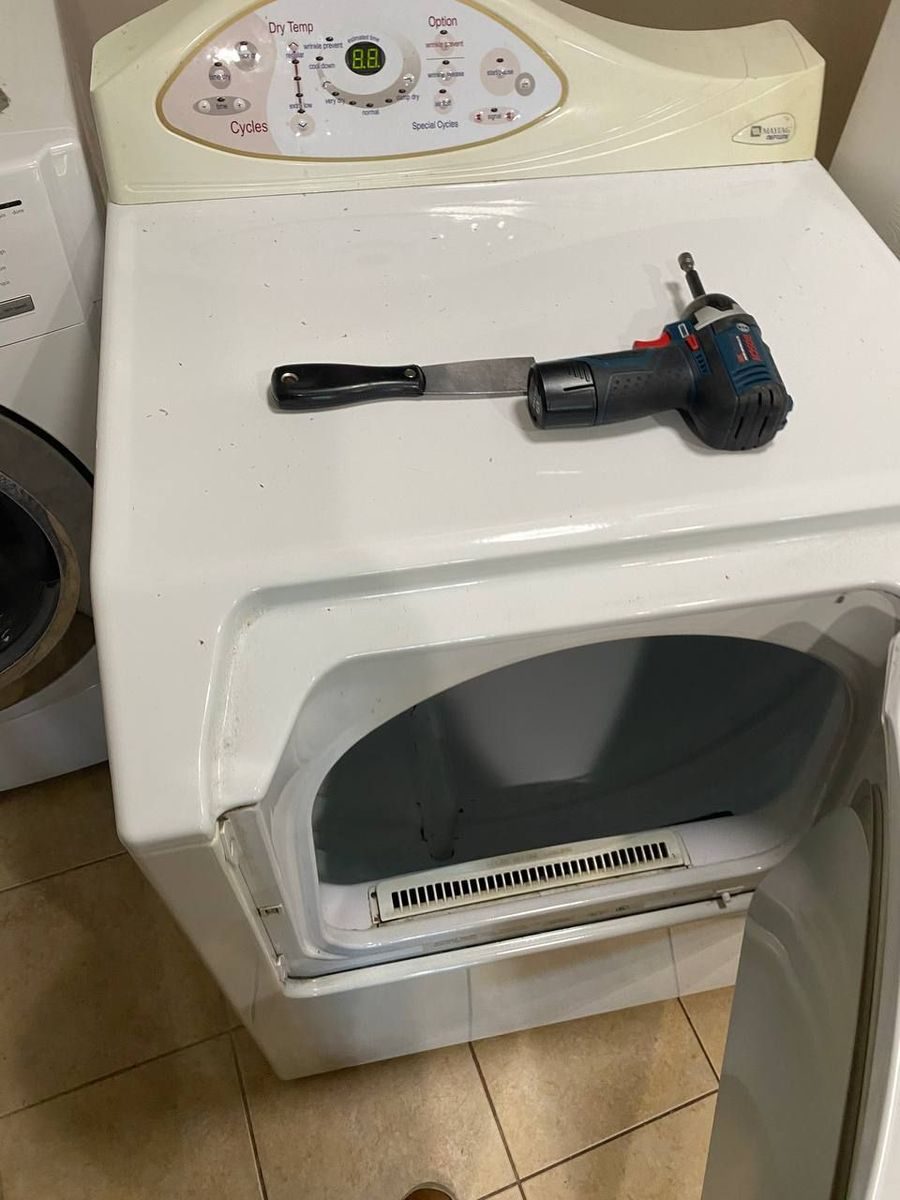
03 / 12
An electric dryer opened up in a laundry room. The thermal fuse, the heating element and the vent run behind the machine get tested together.
Read the service page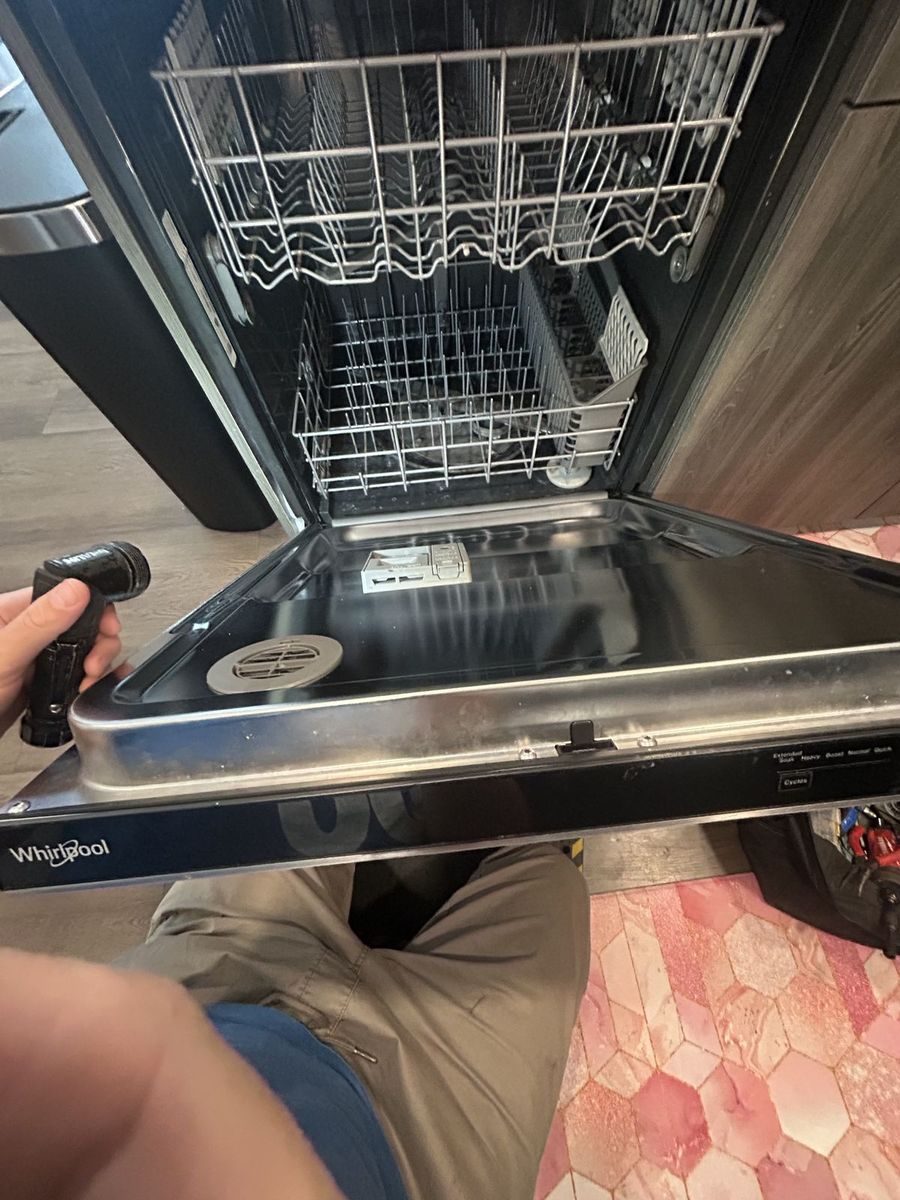
04 / 12
Door open and racks out on a dishwasher. A puddle left behind after the last rinse sends us to the filter screen, the pump and the hose route under the sink, in that order.
Read the service page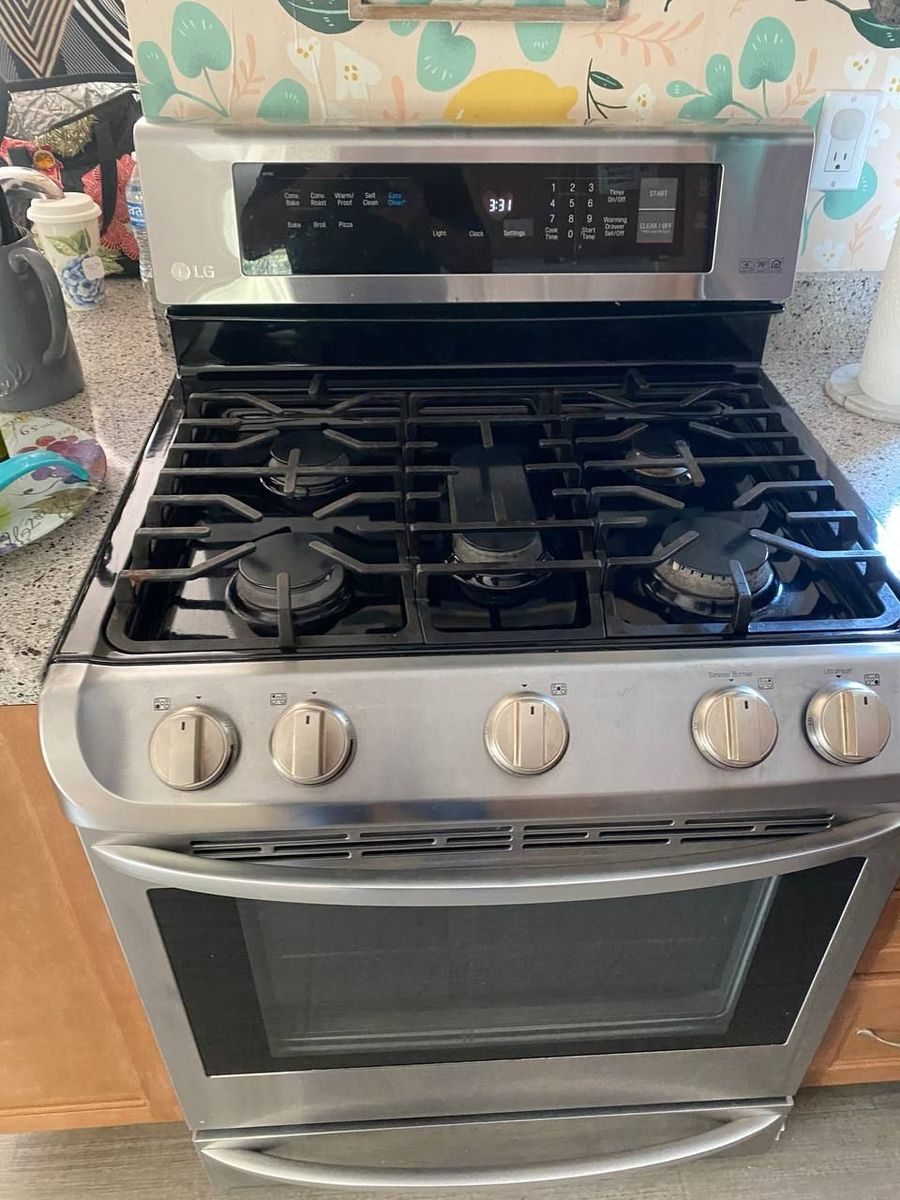
05 / 12
A five-burner gas range ready for testing. Burner igniters, the spark module and the bake igniter's amp draw are measured before a part is ordered.
Read the service page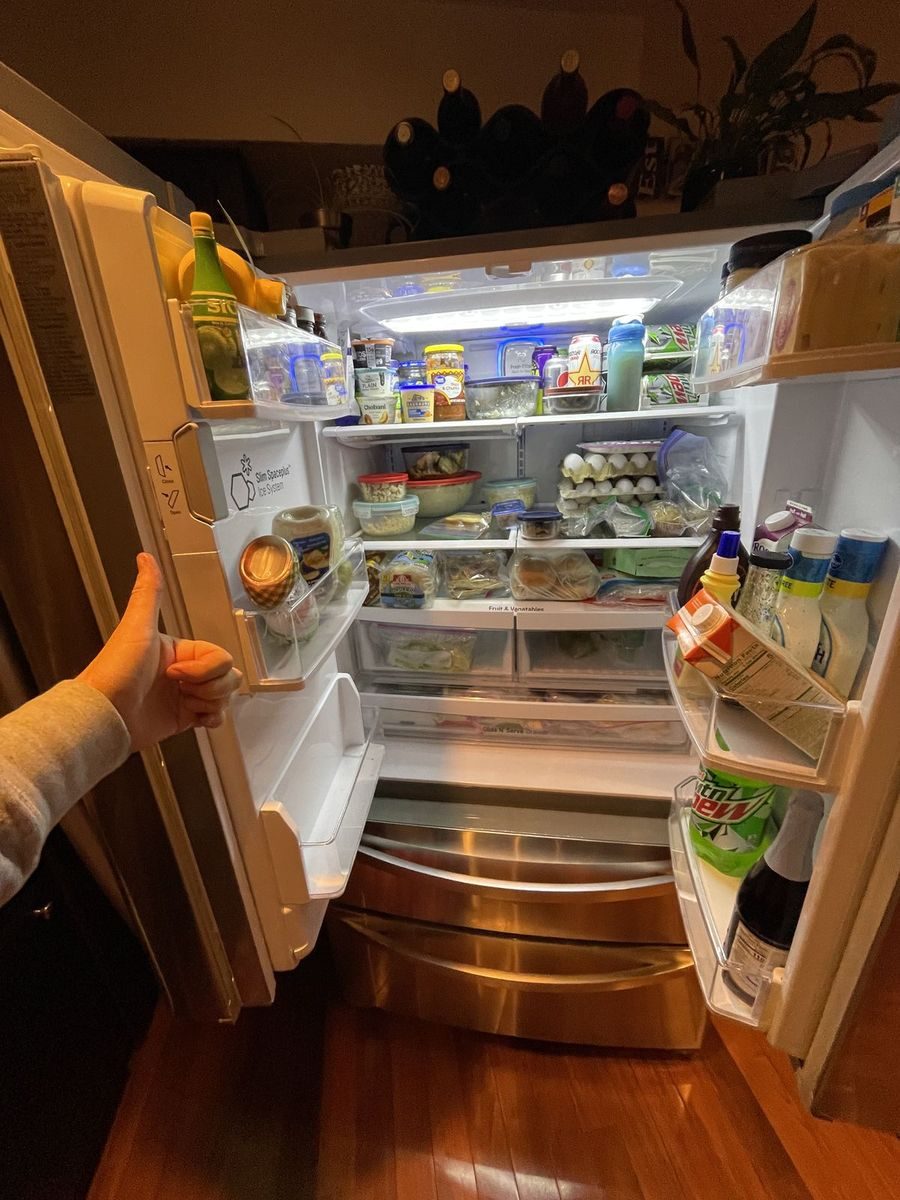
06 / 12
A French-door refrigerator open for diagnosis. Slow ice starts with the water: the inlet valve, the filter and a fill tube that can freeze shut.
Read the service page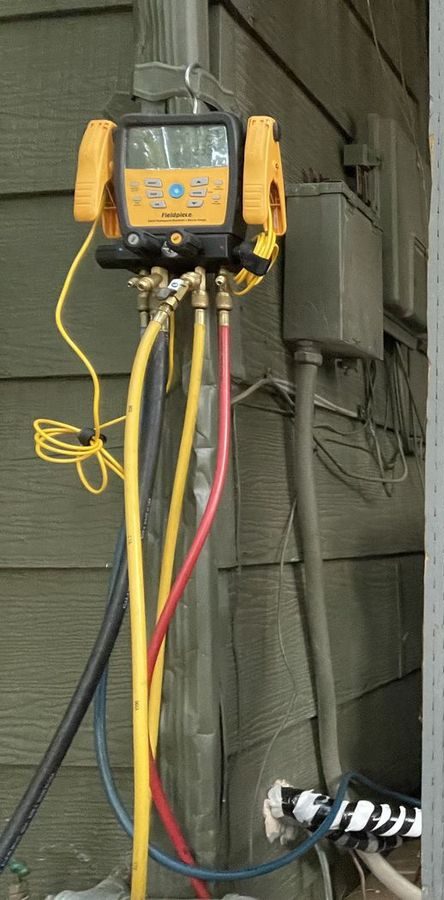
07 / 12
Digital gauges hang by the outdoor unit while the heat pump runs. Superheat and subcooling show whether the charge, a valve or the defrost board is the problem.
Read the service page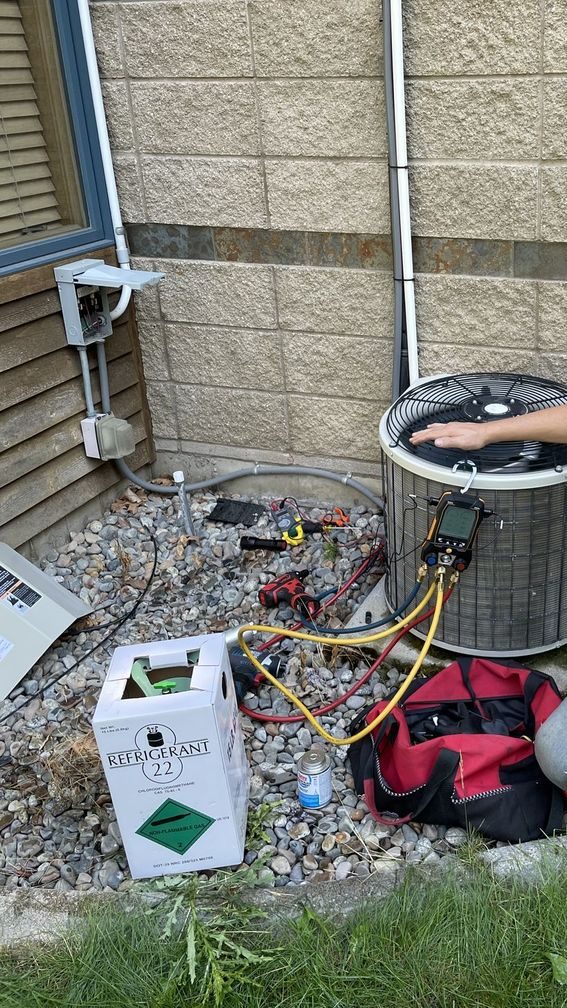
08 / 12
An older condenser under test with hoses on the service ports. The capacitor, contactor and fan motor get checked before anyone talks about refrigerant.
Read the service page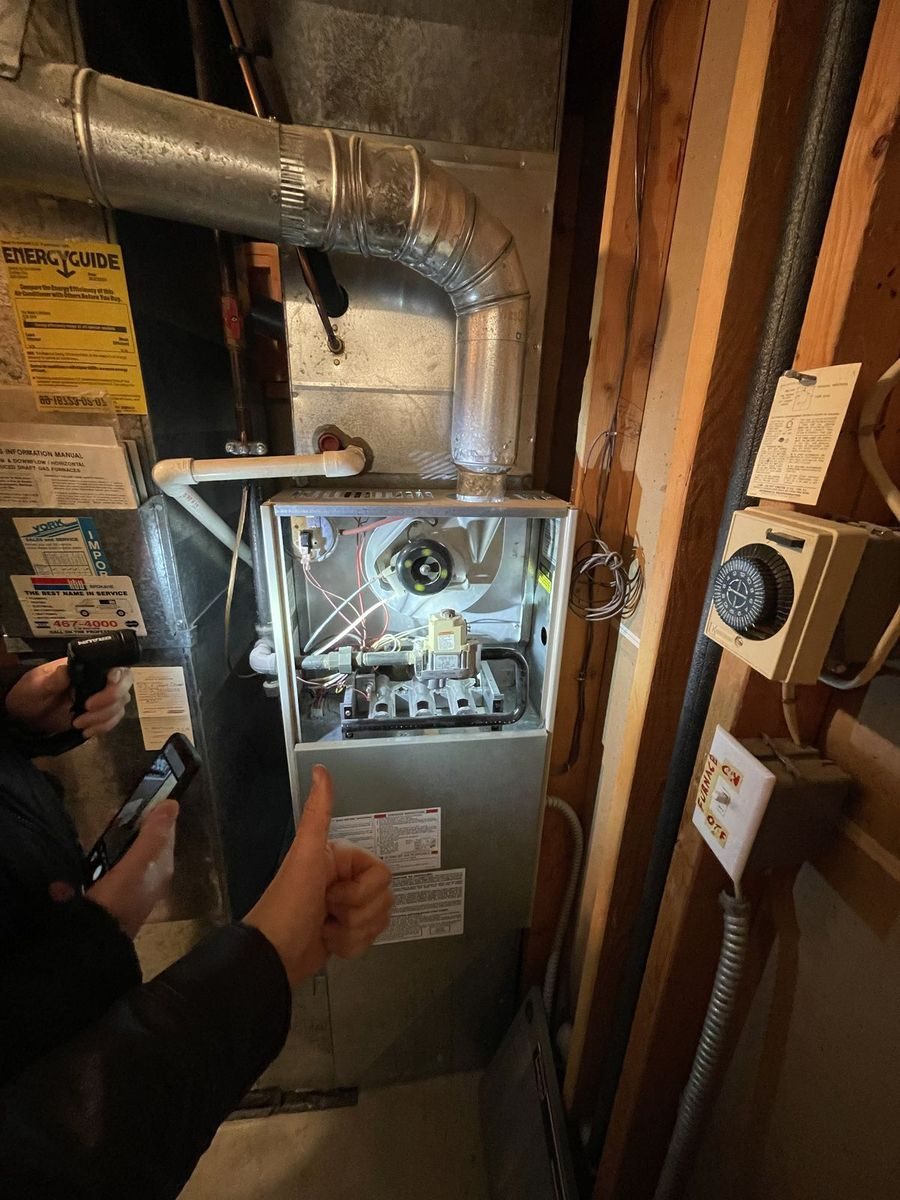
09 / 12
The burner compartment of a gas furnace, open. We follow the start-up order, inducer, pressure switch, igniter, flame sensor, until the step that fails.
Read the service page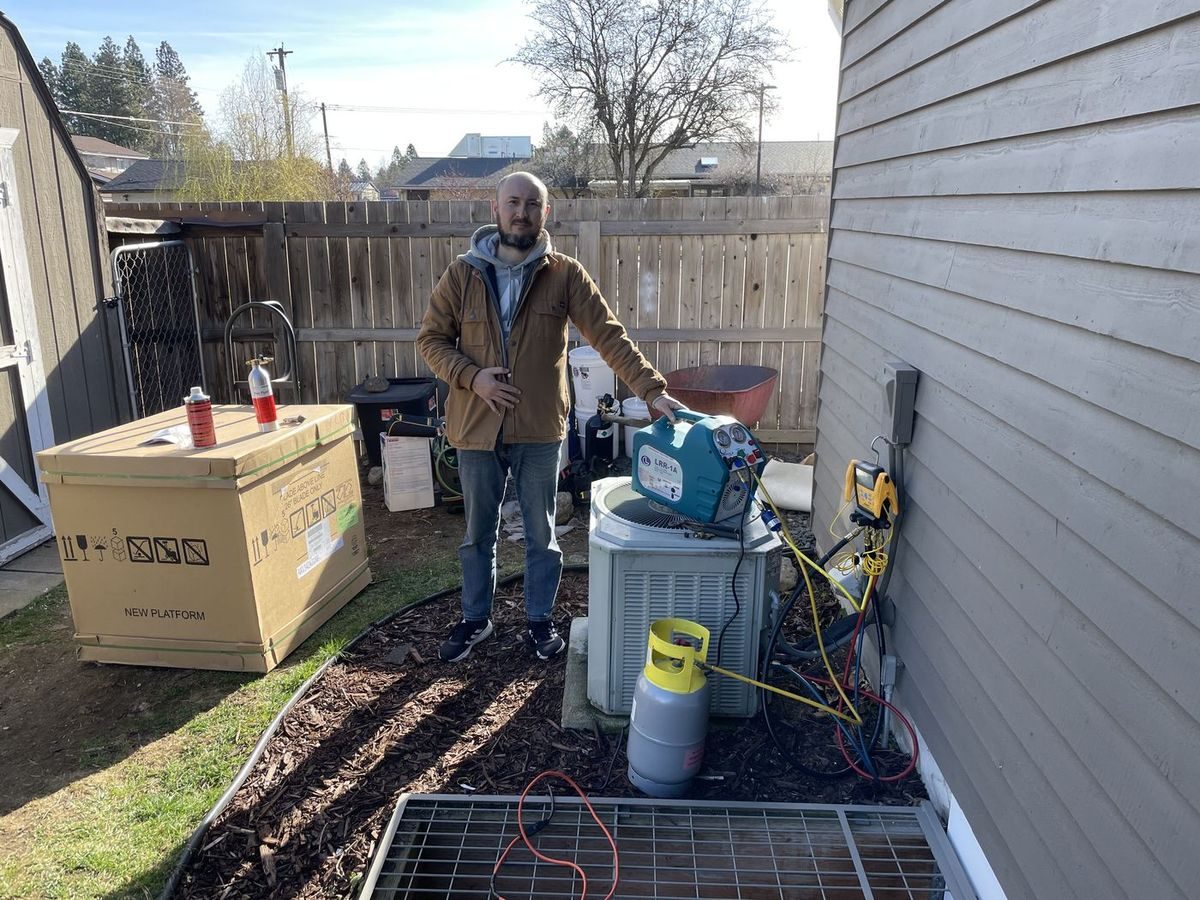
10 / 12
A recovery machine and cylinder beside an outdoor unit. On a replacement, the old refrigerant is pulled into the cylinder instead of the air.
Read the service page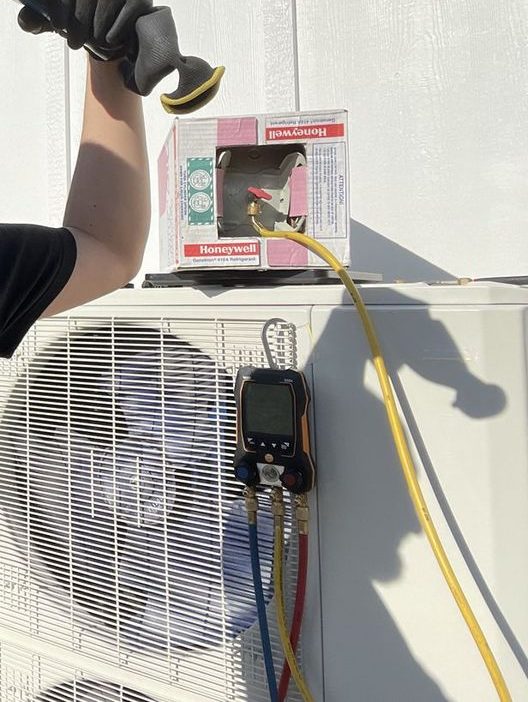
11 / 12
A ductless outdoor unit with a gauge set on it. Mini-splits get the same pressure and temperature readings as a central system, plus a look at the line-set insulation.
Read the service page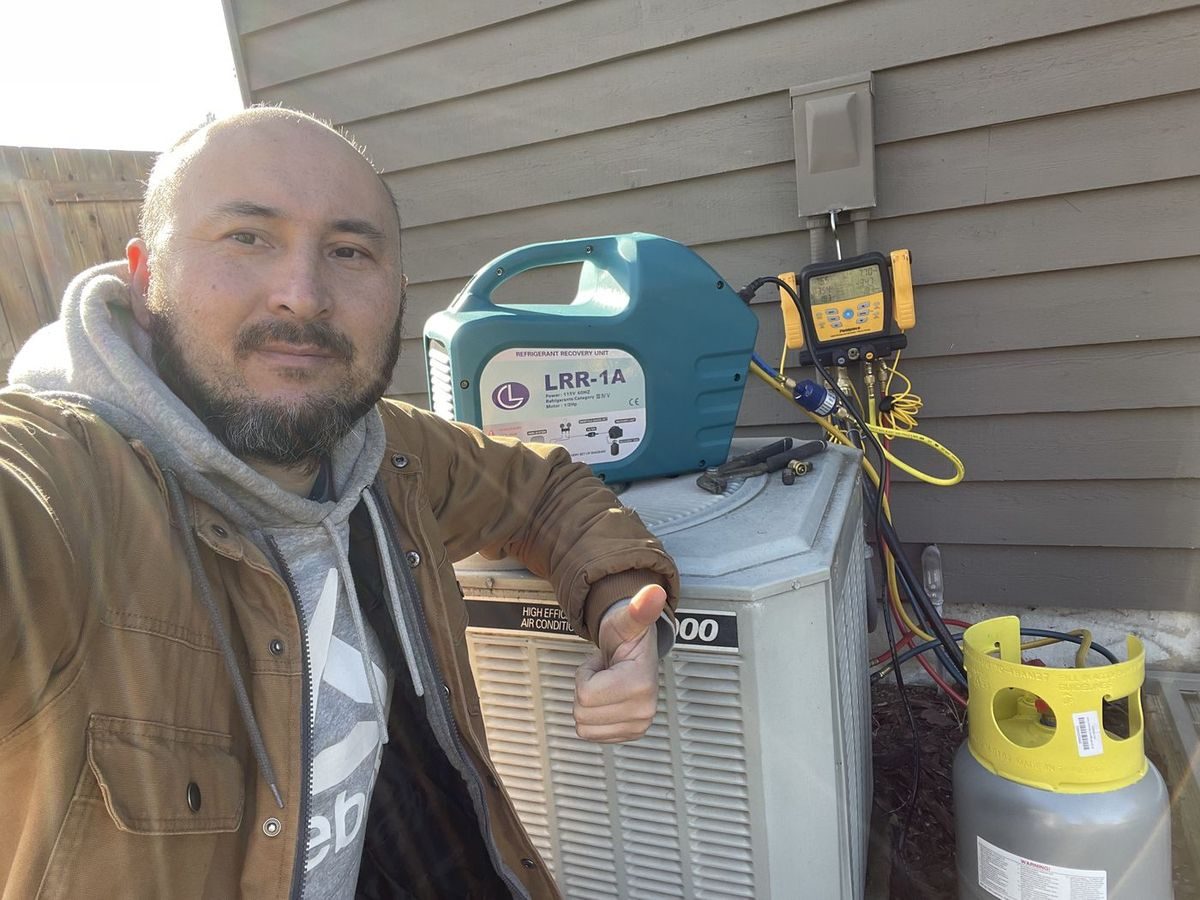
12 / 12
Gauges on a condenser during a seasonal visit. Spring visits wash the dust out of the coil; fall visits test defrost and heat strips before the fog weeks.
Read the service pagePumps, inlet valves, lid locks, door boots, belts and suspension parts are routine fixes worth making on a washer in otherwise good shape. Tub bearings are where the choice gets real. On many front-loaders the bearings are pressed into the outer tub, so the job means a full teardown or a whole new tub assembly, and on an older machine that can run close to a new washer's price. Commercial-style top-loaders such as Speed Queen are built to be rebuilt, so a larger repair often pays. Pause, too, over a cracked outer tub or a failed board on an aging machine. The technician writes down the repair figure and adds a candid view of the rest of the machine.
Usually it is not broken. Damp residue collects where water lingers between loads: inside the boot's folds, in the dispenser housing and around the pump filter. Run the cleaning cycle, wipe the boot folds, clear the pump filter, and prop the door and drawer ajar after each wash. If the odor lingers, the technician can look for a slow drain.
Yes, so stop the water first. Shut the hot and cold valves at the wall box, turn the machine off, and soak up what you can reach. Then book the soonest arrival window or call the office. Water from a second-floor laundry runs along joists and drips out somewhere else entirely, so the technician checks hoses, boot, pump and dispenser before naming the source.
It shortens the life of certain parts. Scale and sediment narrow the inlet valve's screens, so the washer fills slowly or throws an inlet error, and on front-loaders with an internal heater it builds up on the element. Cleaning screens is a small job; a valve with a dead coil gets replaced.
Yes, across LG, Whirlpool, Maytag, GE, Samsung, Kenmore, Electrolux, Bosch, Frigidaire and Speed Queen. Front-loaders lean toward boot, pump, bearing and door-lock work. Top-loaders more often need lid locks, shift actuators, couplers, belts and suspension rods. The routine stays the same for both: test with a meter, write up the price, and repair only after you agree.
It names the circuit or condition that tripped, not necessarily the broken part. On LG, OE points to draining, IE to filling and UE to an unbalanced load; on Samsung, 5C, 4C and UB cover the same ground. Jot the code down before clearing it and pass it along to the office. The technician confirms the real cause with a meter before quoting.
Only the diagnostic fee, and you will know its amount from the office before anyone arrives. Approve the work and it is credited inside the repair total rather than charged twice; turn the work down and that fee covers the visit by itself. Nothing gets repaired until you have read the written price and agreed.
Talk to us
Online, pick whichever day and arrival window work for you, or reach the office by phone from 8 AM to 7 PM, any day of the week. You get a call back to confirm, and another from the technician as they head your way.
Book a visit
One slip, filled top to bottom. The office phones to confirm the visit, and the technician calls again when on the way.
Every number below is a public state record. Look each one up on L&I Verify, or read what each license allows on our licenses page.
What our licenses cover