Heat pump repair
Cool air in winter, an iced outdoor coil or an AUX light that never goes out. We sort normal defrost from real faults across the Tri-Cities.
Kennewick · Pasco · Richland · West Richland · Benton City · Finley · Burbank
Larch HVAC & Appliance fixes heat pumps, furnaces, air conditioners and the appliances a household leans on daily, from riverfront neighborhoods out to the farm roads. Pick a date and an arrival slot online, wait for the office's confirming call, and expect the cost in writing before a single screw comes out.
Short answer
Larch HVAC & Appliance is a licensed Washington company. We fix and install heating and cooling equipment, and we fix household appliances, in Richland, Kennewick, Pasco, West Richland, Benton City, Finley and Burbank. Phones are staffed daily, 8 AM through 7 PM; online booking lets you pick a date plus an arrival window. A written price leads off every job, and work waits for your yes.
Heat pumps, central air, gas and electric furnaces and ductless systems, from a capacitor swap to a new system.
Cool air in winter, an iced outdoor coil or an AUX light that never goes out. We sort normal defrost from real faults across the Tri-Cities.
AC losing ground on 100°F afternoons or blowing warm air? We test capacitors, contactors, coils and charge, then price the fix in writing first.
Gas or electric furnace not heating? We trace the start-up sequence, from inducer and pressure switch to igniter, flame sensor and heat strips.
Replacing a tired heat pump or AC in the Tri-Cities: load-sized for 100°F afternoons and 10°F nights, a clean line set, a deep vacuum and one written figure.
Mini-split installation and repair for shops, detached garages, bonus rooms, additions and manufactured homes in every Tri-Cities town, from blinking error codes to dust-packed outdoor coils.
Spring cooling checks ahead of the first 100°F week and fall heating checks before inversion fog, with every reading written down: capacitors, charge, flame sensor, defrost.
Because heat, wind-blown grit, winter fog and mineral-laden water all wear on the same machines, and each picks on a different part. July afternoons average about 92°F, most summers bring 100°F days, and Kennewick has logged triple digits as early as mid-May and as late as early September. A condenser or heat pump running almost nonstop through that stretch cooks its run capacitor, pits the faces of its contactor and shoves the compressor against climbing head pressure.
Wind is the second load. Of the Pacific Northwest's medium and large metro areas, ours is the windiest, with March, April and June the roughest months and most gusts arriving out of the west. Sand, tumbleweed scraps and cottonwood fluff mat into condenser fins, and a coil that can't shed heat sends pressures and amp draw upward. In a high desert that collects only seven or eight inches of rain a year, nothing rinses those fins for you.
Winter turns the problem around. Cold air pools in the Columbia Basin beneath warmer air aloft, which can mean days or weeks of low cloud and freezing fog with highs stuck in the 30s. That damp chill frosts a heat pump's outdoor coil fast, so the defrost board triggers defrost again and again. Frequent cycling is expected; a coil that stays white with ice points toward a bad defrost sensor, a sticking reversing valve or a short charge. Indoors, scale from local water crusts the inlet valves on washers and dishwashers, plus the fill tube feeding an ice maker.
If any of that matches what your equipment is doing, set up a visit and let our technicians take readings in place of guesswork.
Kitchen and laundry machines from the brands most Tri-Cities homes own, fixed where they stand.
Warm fresh-food side, frosted freezer coils, or a garage fridge losing the fight against summer heat? We trace the cause and put a price on the fix before touching it.
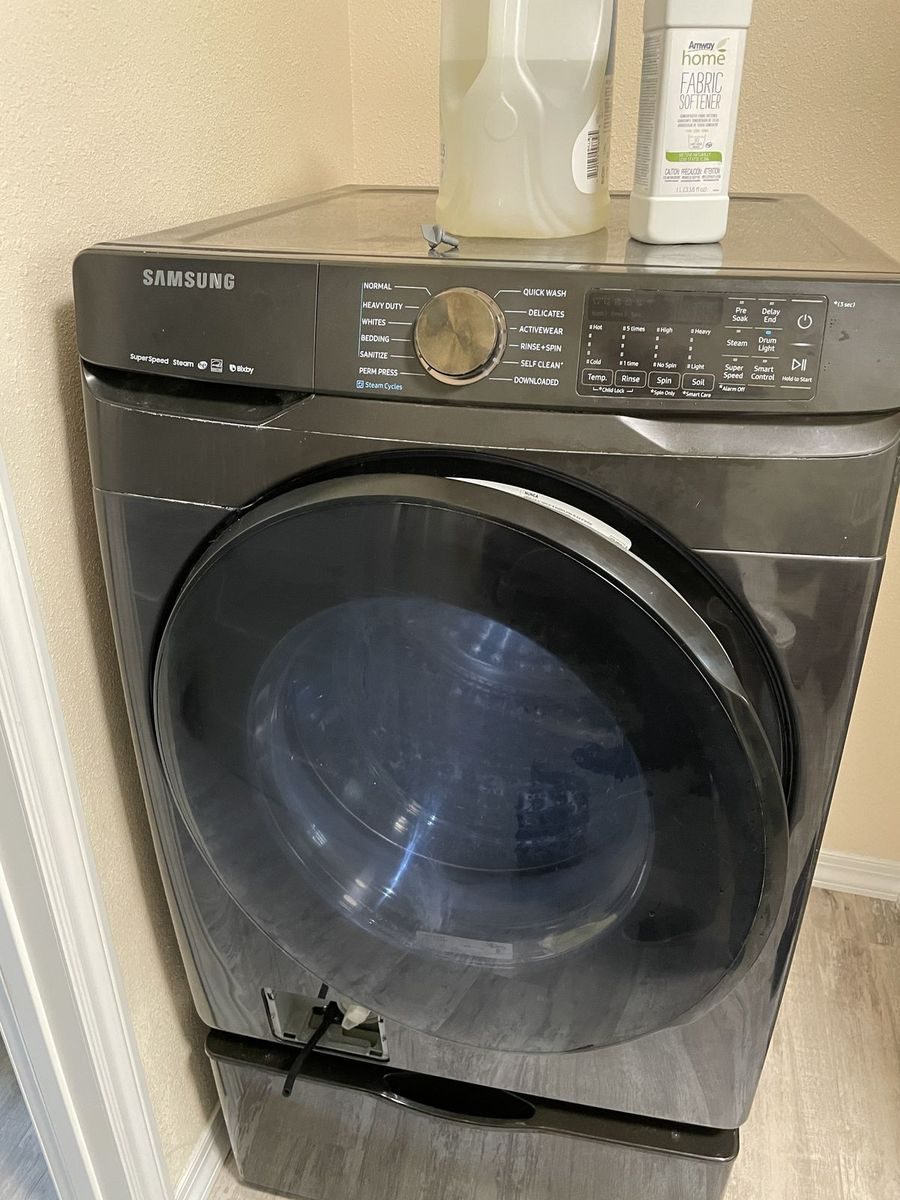
Front-load or top-load, draining slowly, leaking upstairs, or flashing a code? We test the pump, valves, locks and bearings, then put the price in writing.
Gas or electric dryer running cold, needing two cycles, or quitting early? We test fuses, elements, igniters and the vent run, and quote in writing first.
Standing water, white film, leaks or a blinking code. We trace drain pumps, filters, heaters and inlet valves on Bosch, KitchenAid, Whirlpool, GE, LG and Samsung dishwashers.
Gas or electric, a cold oven, a clicking burner or a door locked after self-clean. We test igniters, elements, sensors and boards and price the repair in writing.
No ice, small cubes or a frozen fill tube. We trace inlet valves, filters, well sediment and ice maker modules, including garage fridges that stall in a Tri-Cities winter.
Booking takes a minute: pick a date and arrival window on the form, or call. Someone at the office phones back to lock it in, and the technician rings again while driving over. At the house, diagnosis starts with meters and gauges: microfarads on a capacitor held up against its label rating, voltage and amps at the equipment, superheat and subcooling on a cooling system, flame-sensor microamps on a furnace, continuity across a dryer's thermal fuse.
With the cause pinned down, you get the repair cost on a written estimate, and the technician waits for your decision. The diagnostic visit has its own fee, which the office names at booking. Agree to the fix and that fee is absorbed into the repair figure. Turn it down, and what you owe stops at the diagnostic fee. Truck stock covers capacitors, contactors, igniters, flame sensors, fan motors, belts, pumps and door switches, so a worn piece can often be replaced during that same stop. Anything needing an order is priced on the estimate ahead of your answer.
When the job wraps up, warranty terms are printed on your invoice. Use the booking form below to claim a slot, or ring the office any day between 8 AM and 7 PM.
One photo per tab from our service calls. Tap a tab, or let the file turn on its own.
01 / 12
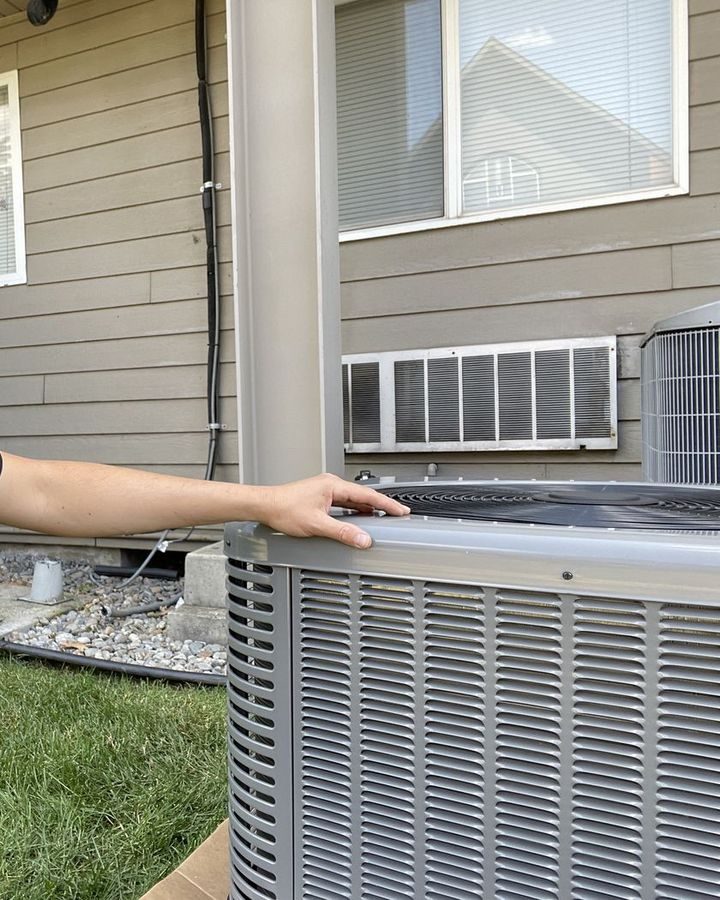
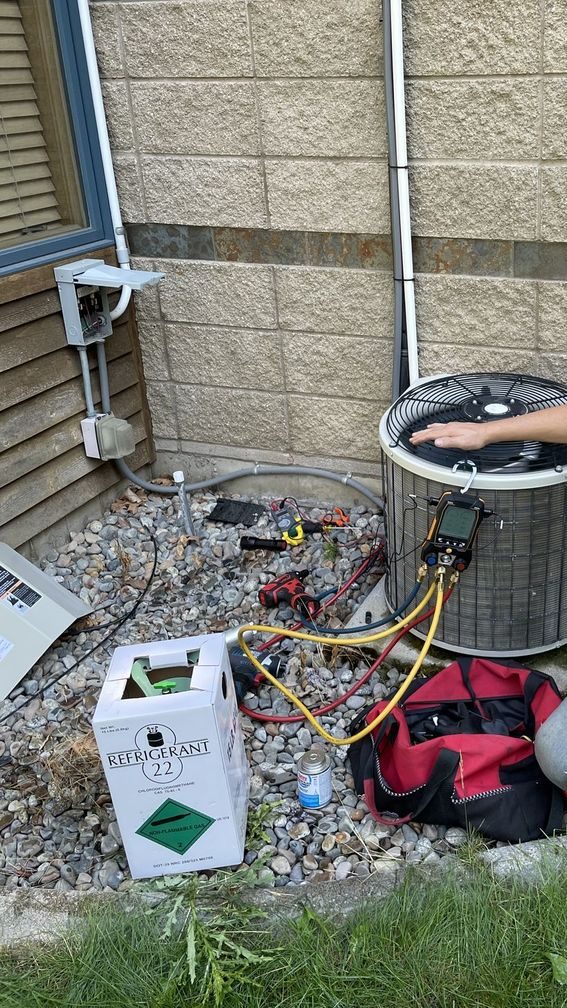
Digital gauges hang by the outdoor unit while the heat pump runs. Superheat and subcooling show whether the charge, a valve or the defrost board is the problem.
Read the service page02 / 12
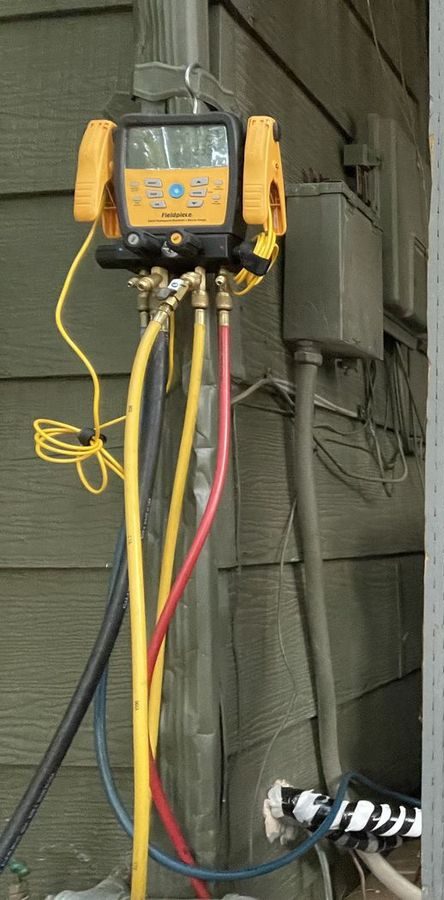
An older condenser under test with hoses on the service ports. The capacitor, contactor and fan motor get checked before anyone talks about refrigerant.
Read the service page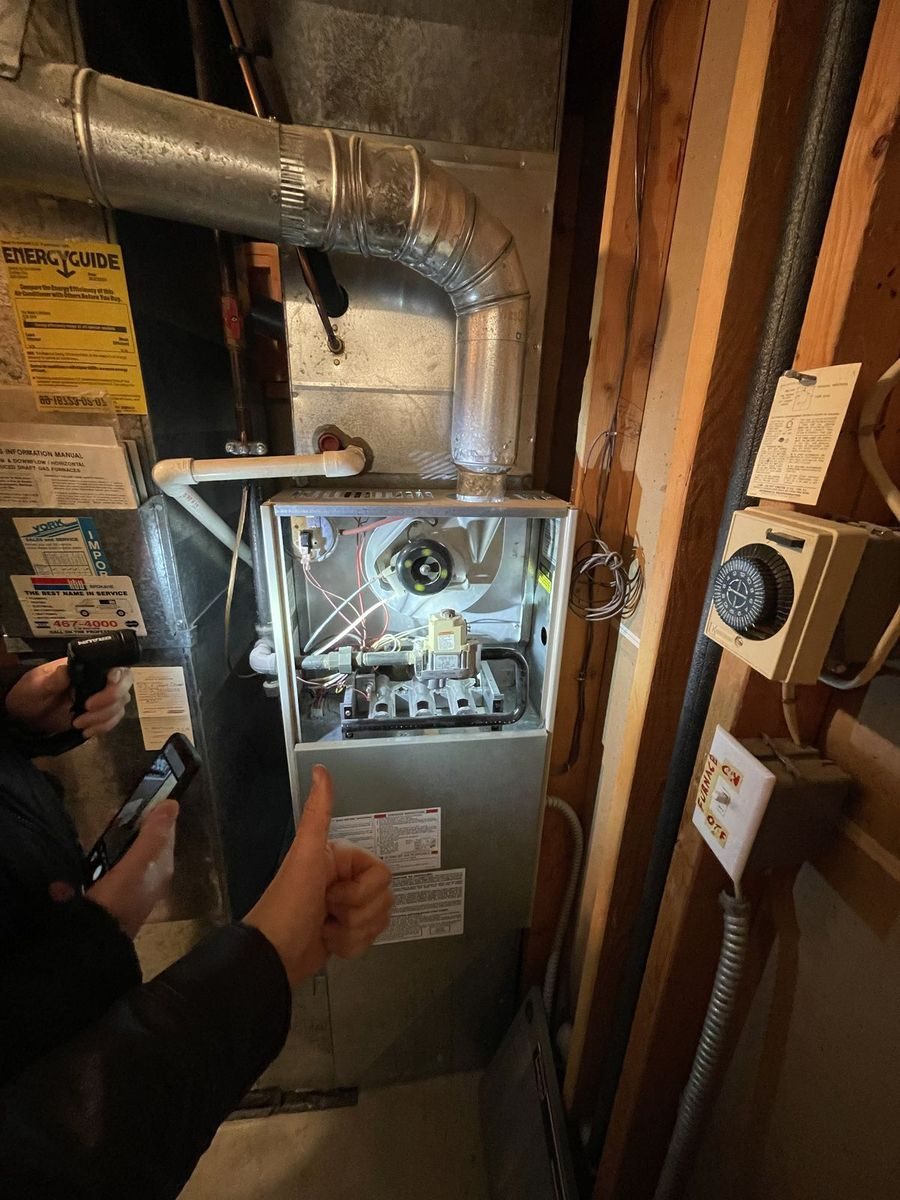
03 / 12
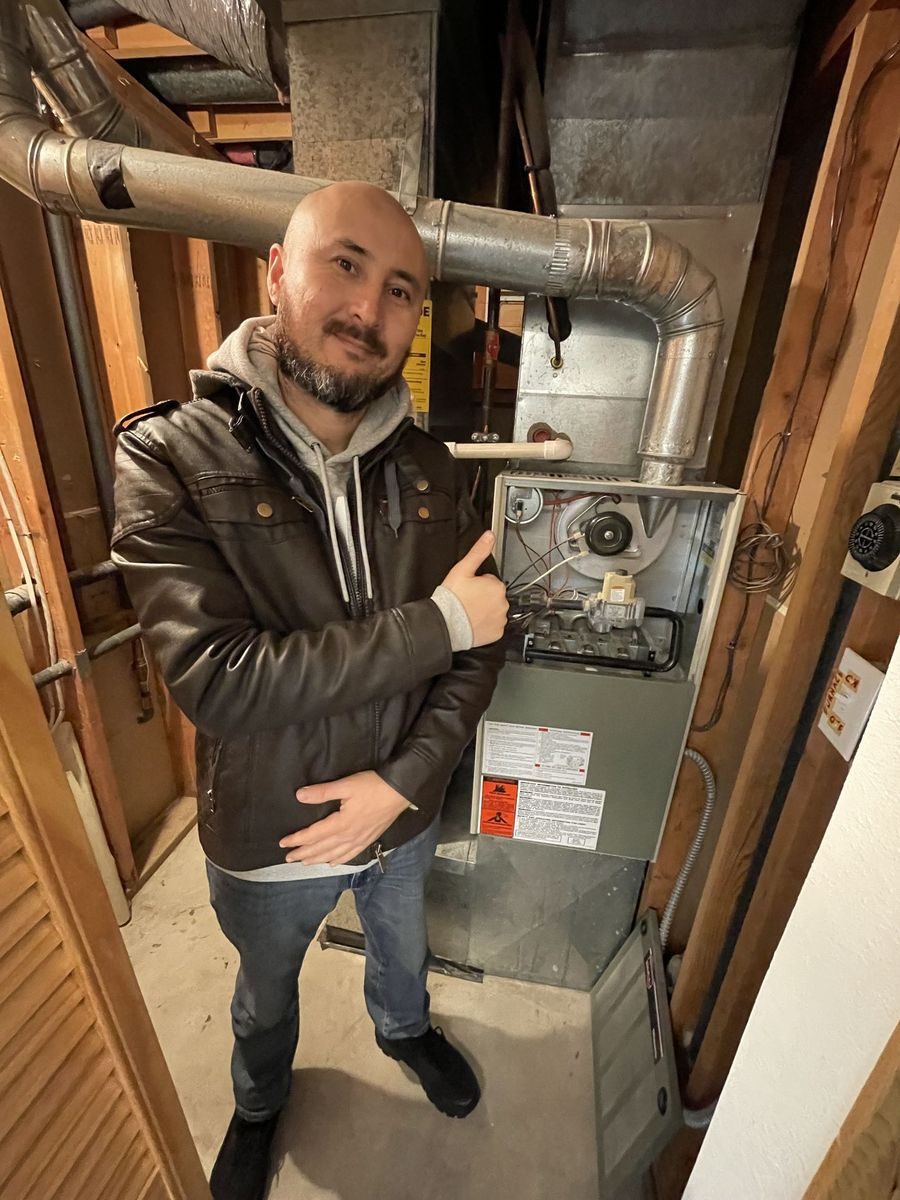
The burner compartment of a gas furnace, open. We follow the start-up order, inducer, pressure switch, igniter, flame sensor, until the step that fails.
Read the service page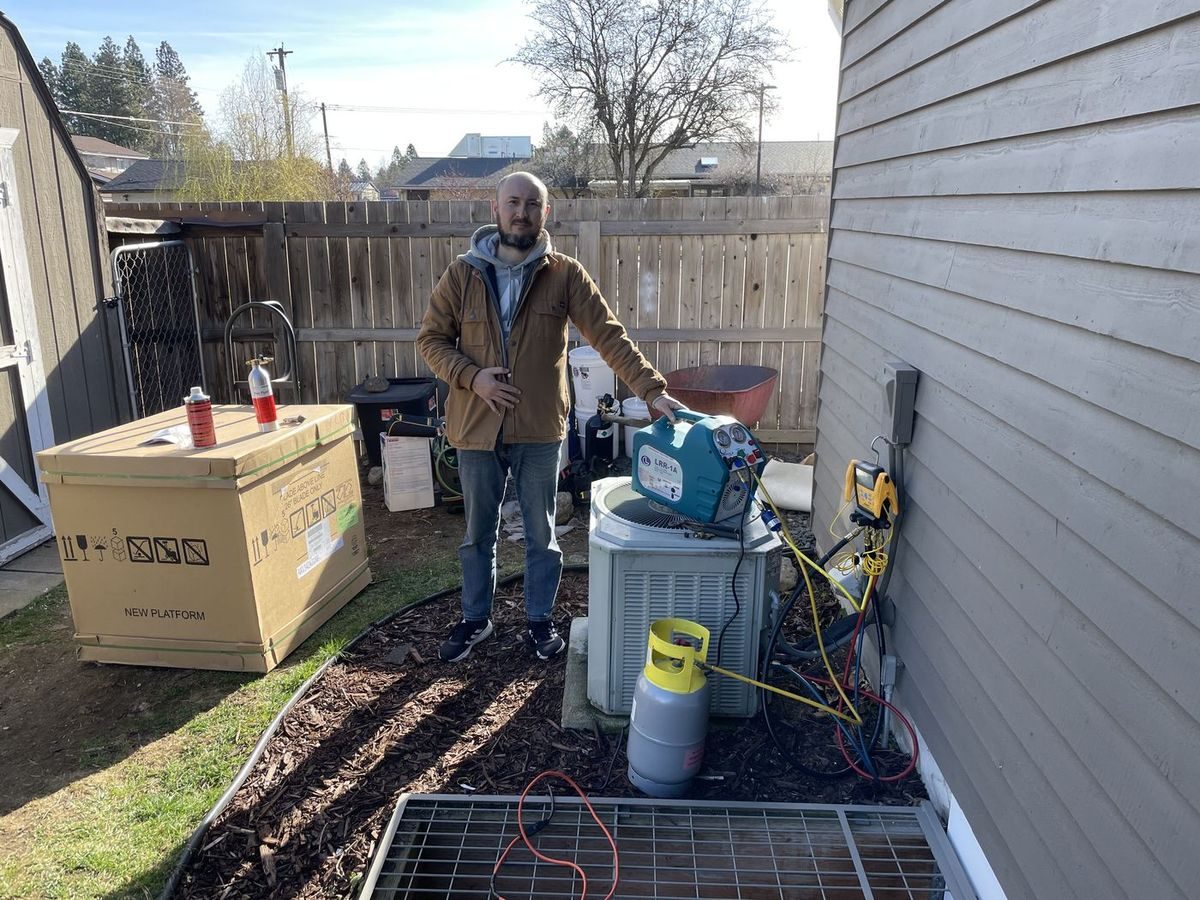
04 / 12
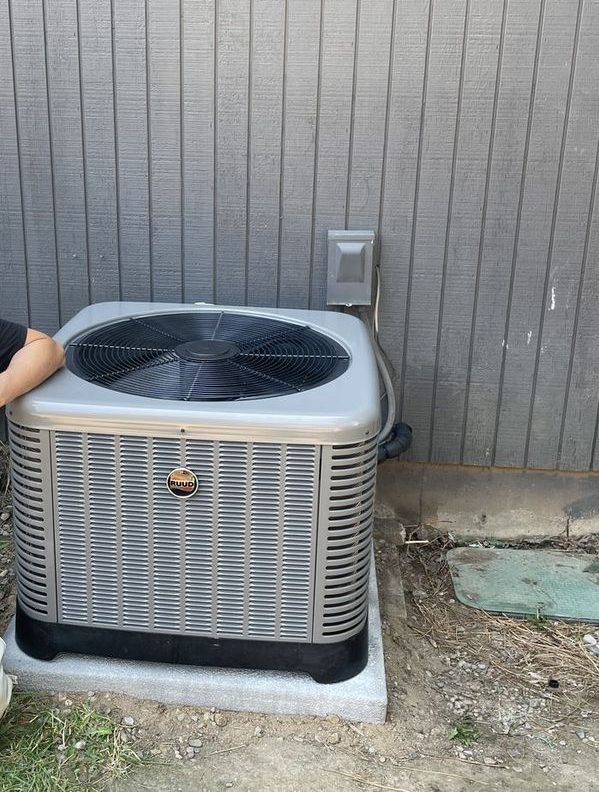
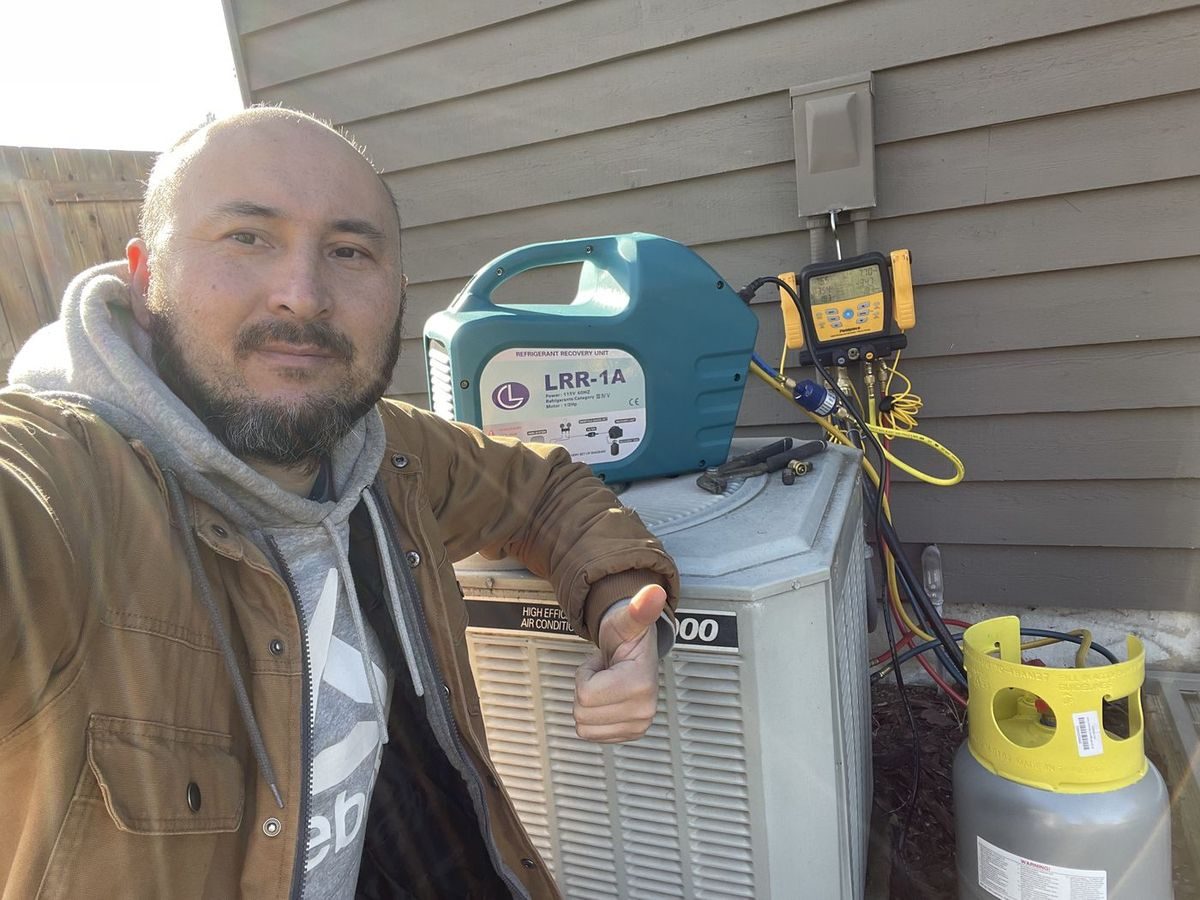
A recovery machine and cylinder beside an outdoor unit. On a replacement, the old refrigerant is pulled into the cylinder instead of the air.
Read the service page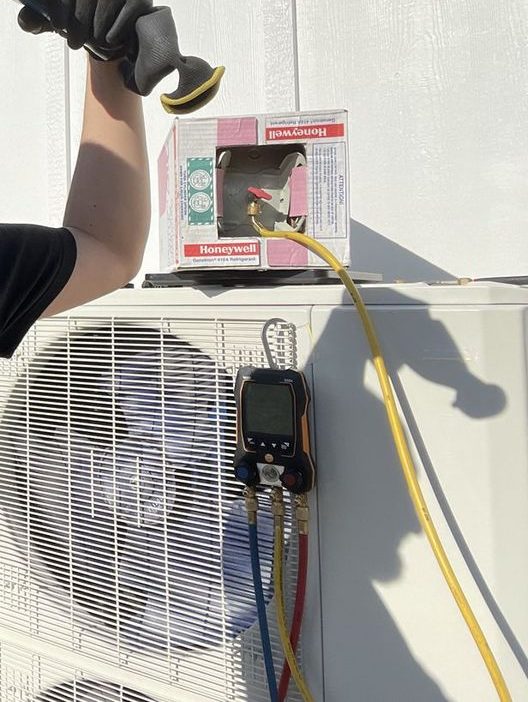
05 / 12
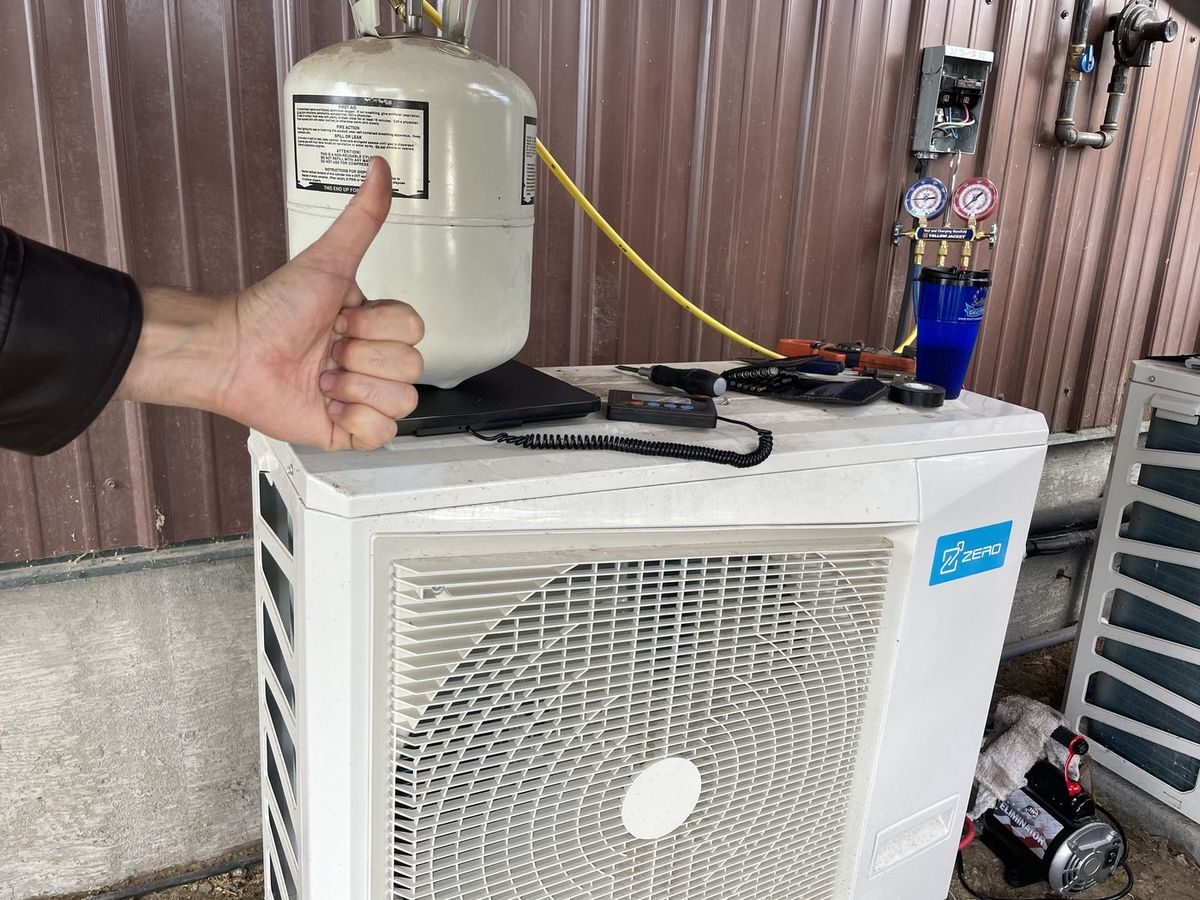
A ductless outdoor unit with a gauge set on it. Mini-splits get the same pressure and temperature readings as a central system, plus a look at the line-set insulation.
Read the service page06 / 12
Gauges on a condenser during a seasonal visit. Spring visits wash the dust out of the coil; fall visits test defrost and heat strips before the fog weeks.
Read the service page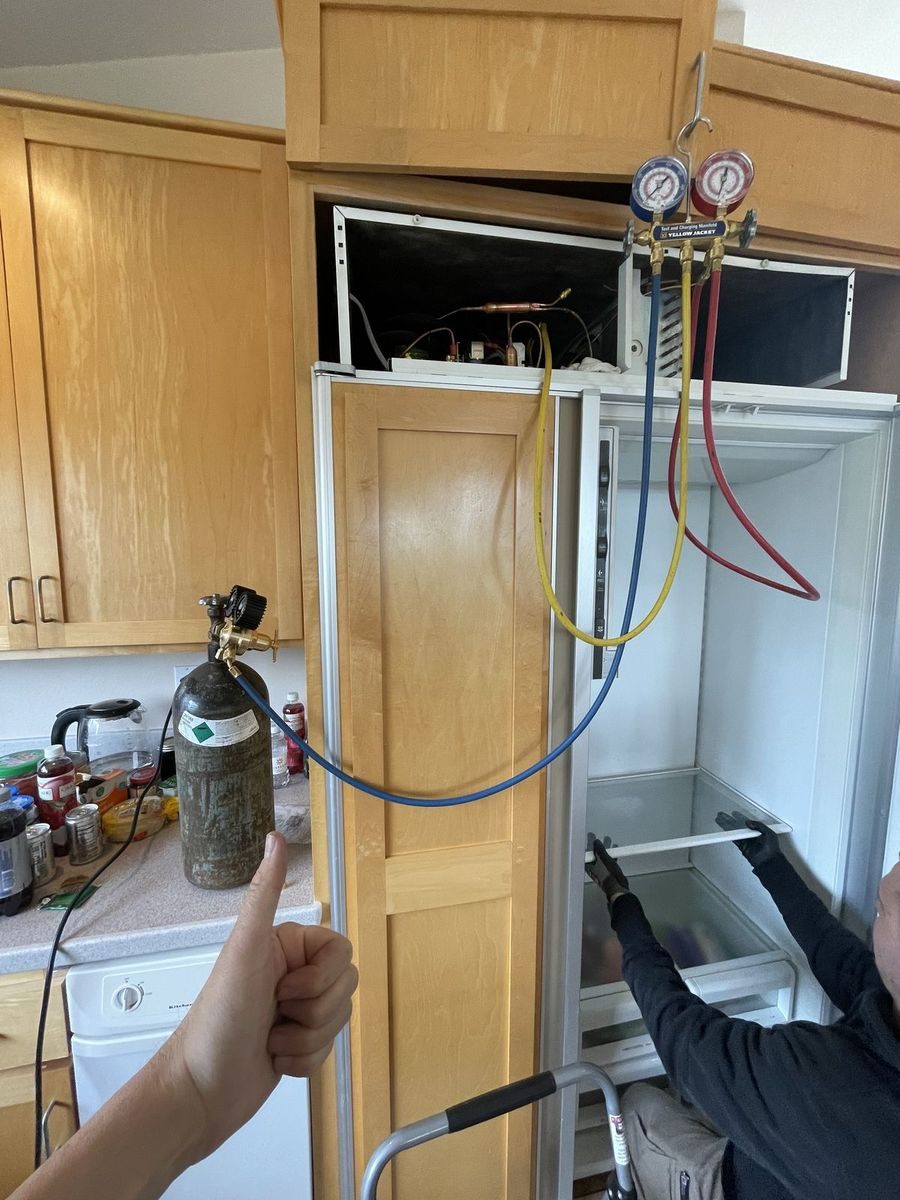
07 / 12
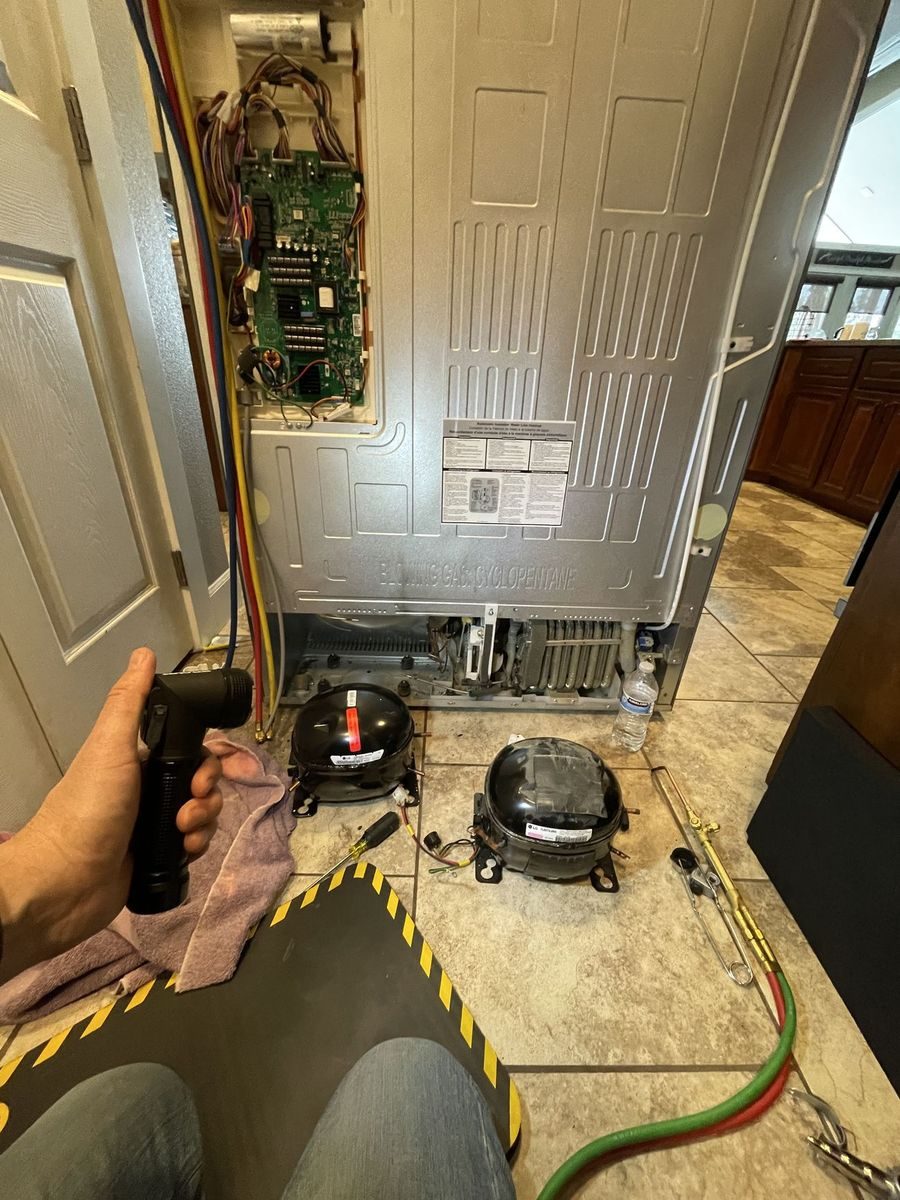
Gauges connected to a built-in refrigerator's sealed system. Leak searches, brazing and recharges happen in the kitchen, so the fridge stays where it is.
Read the service page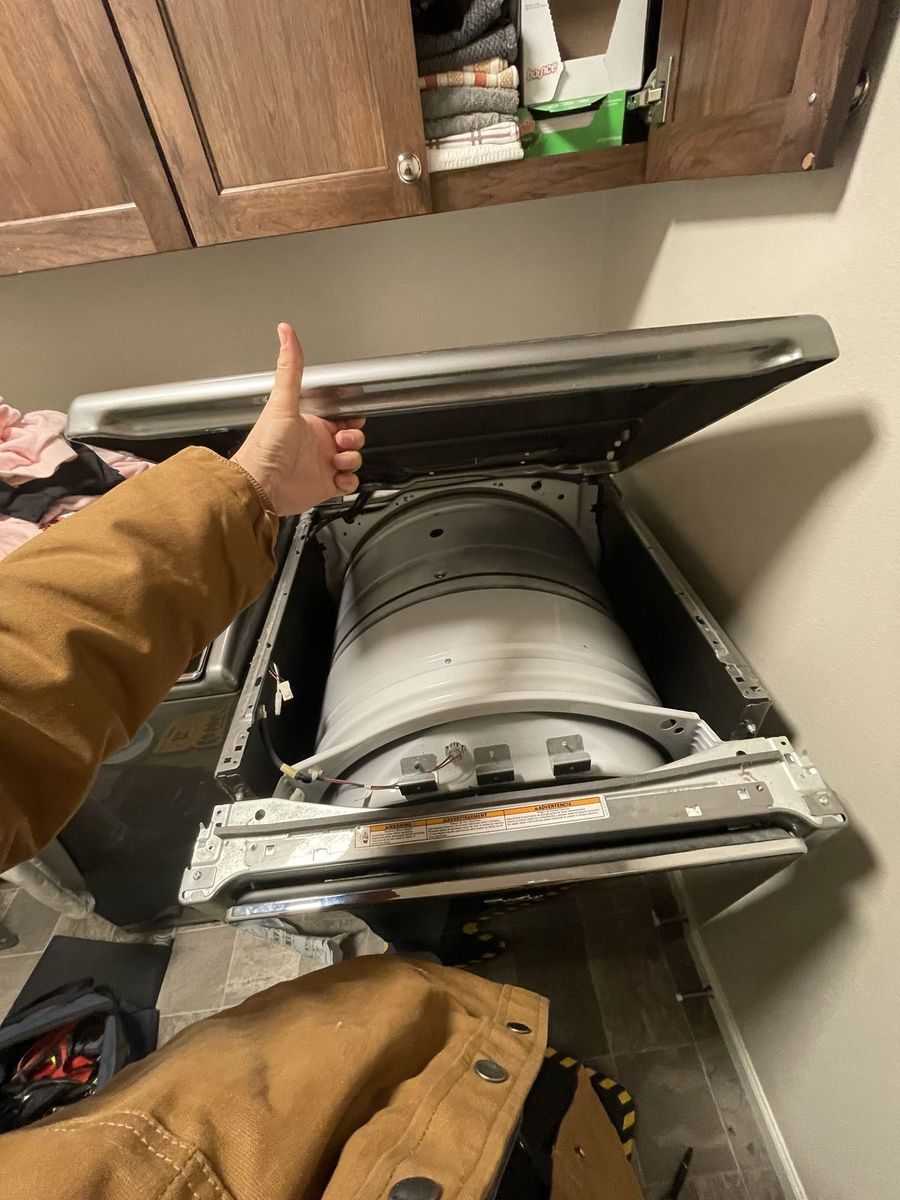
08 / 12
A top-load washer with the top panel raised. Lid switch, drive coupler and drain pump are all within reach once the top comes up.
Read the service page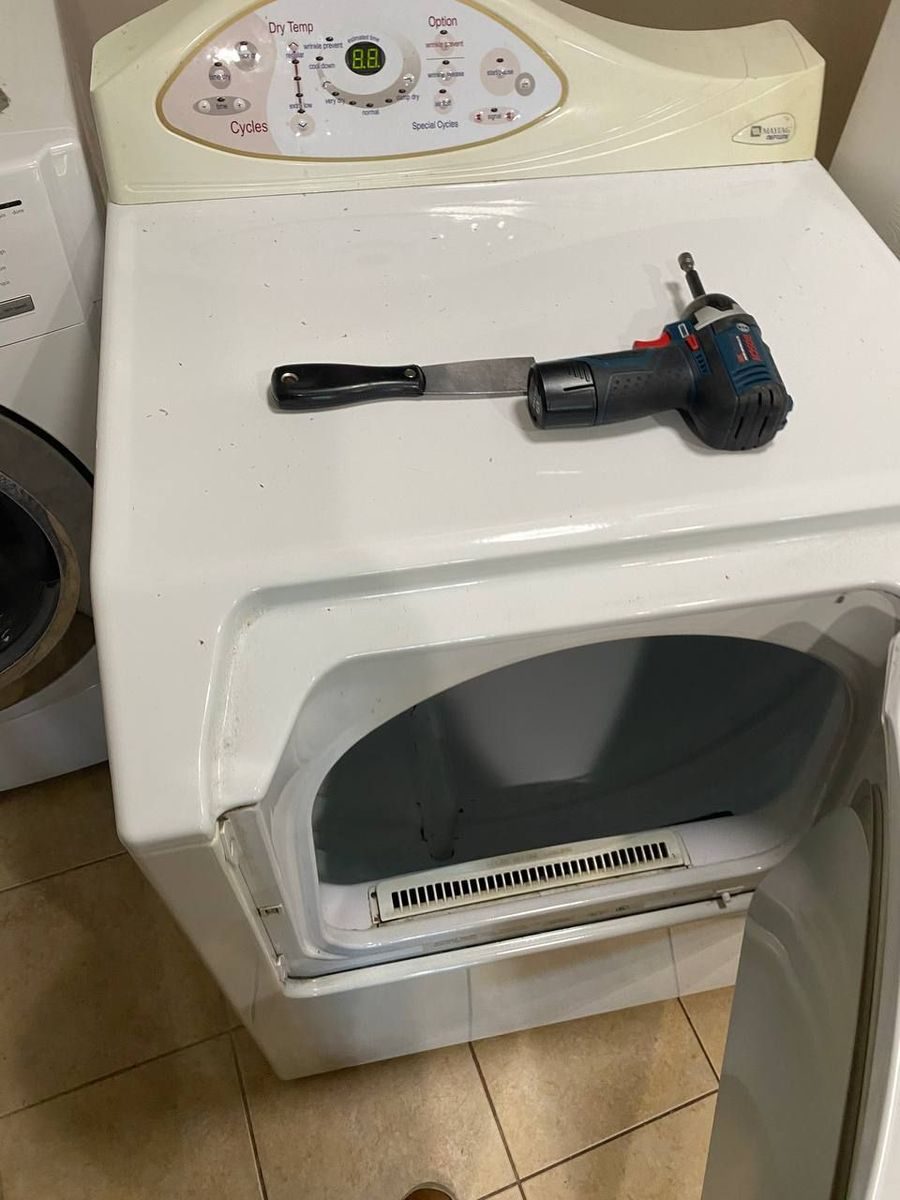
09 / 12
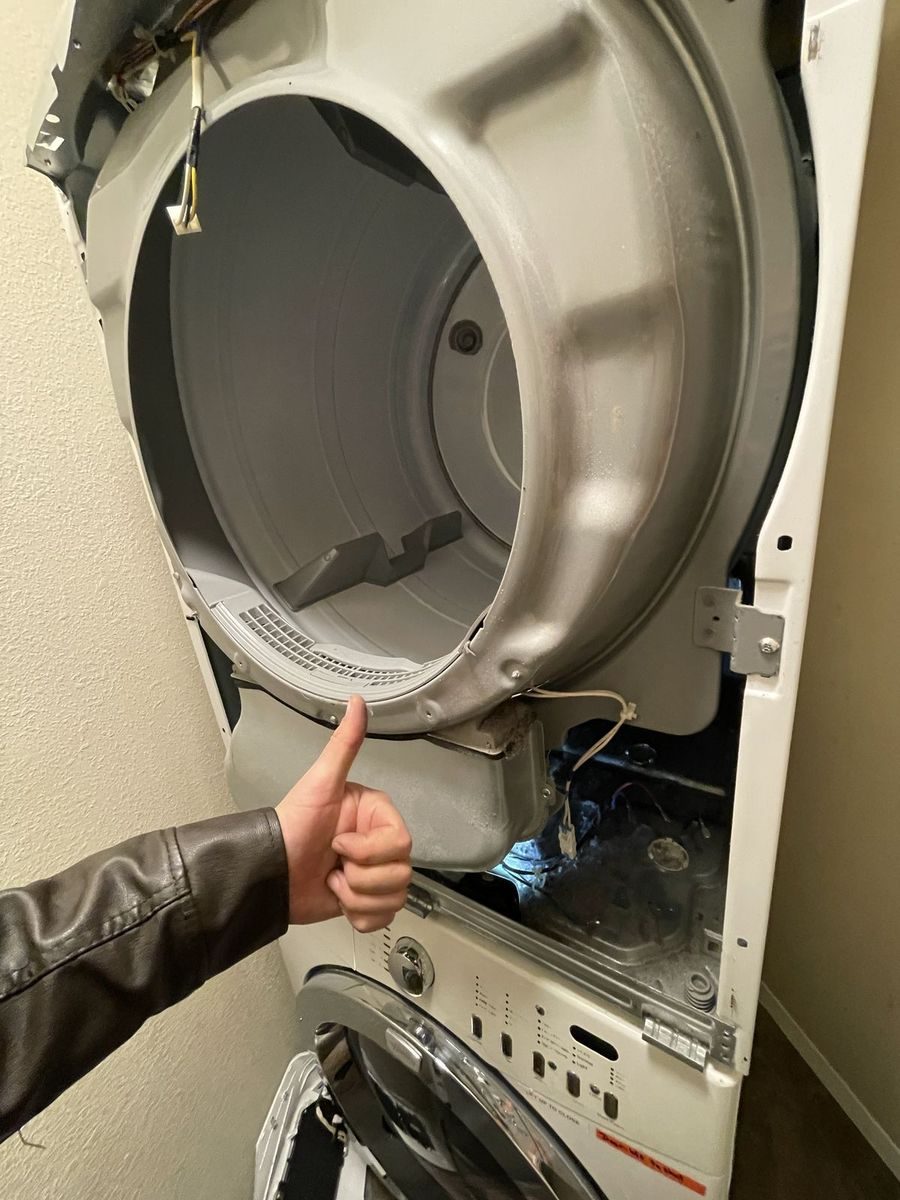
An electric dryer opened up in a laundry room. The thermal fuse, the heating element and the vent run behind the machine get tested together.
Read the service page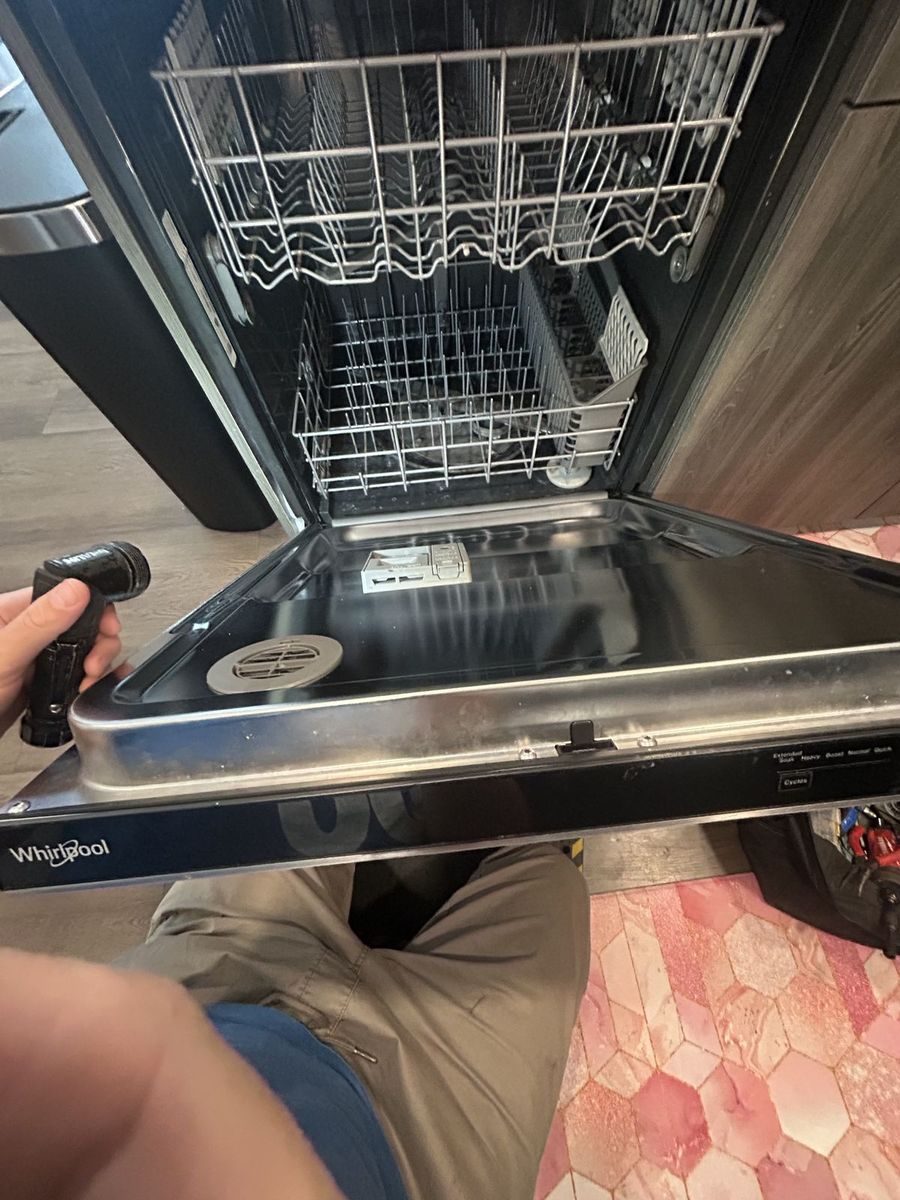
10 / 12
Door open and racks out on a dishwasher. A puddle left behind after the last rinse sends us to the filter screen, the pump and the hose route under the sink, in that order.
Read the service page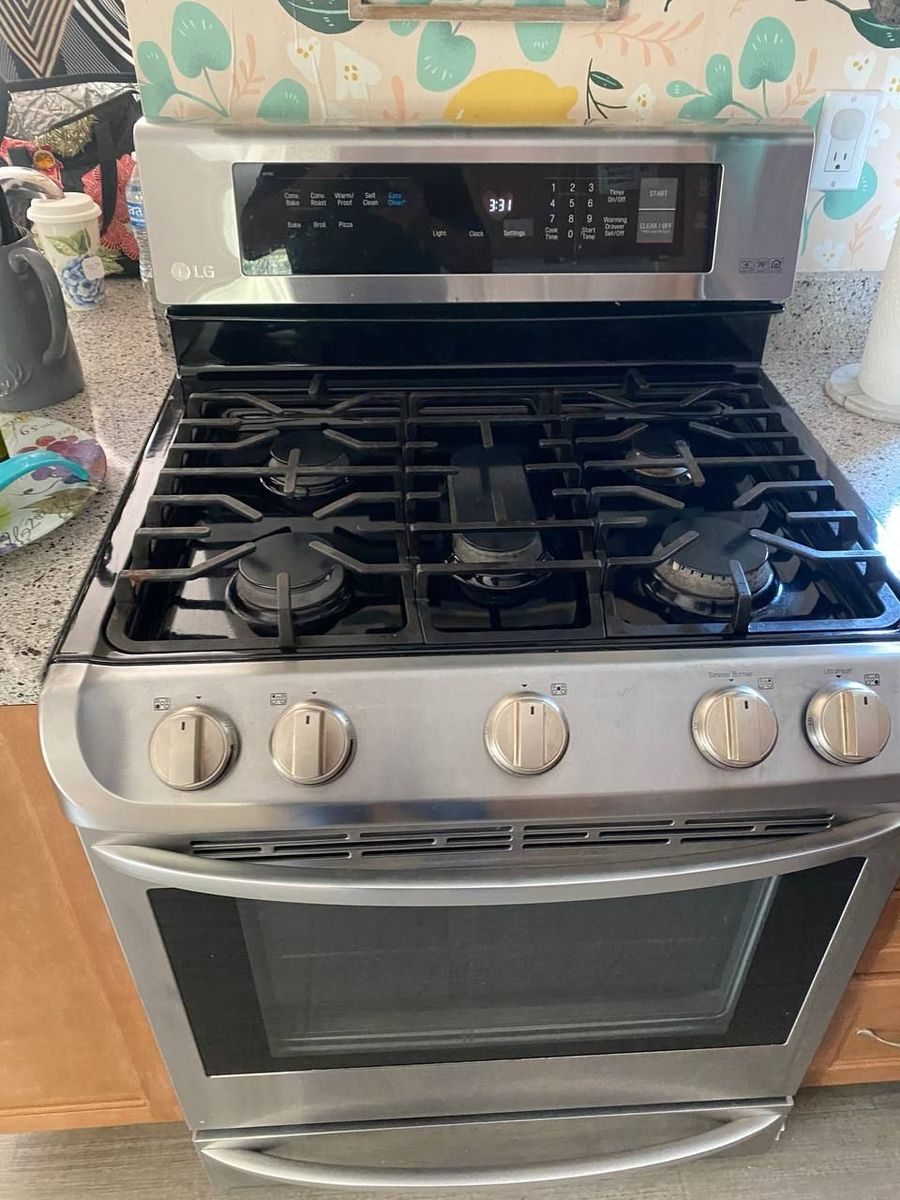
11 / 12
A five-burner gas range ready for testing. Burner igniters, the spark module and the bake igniter's amp draw are measured before a part is ordered.
Read the service page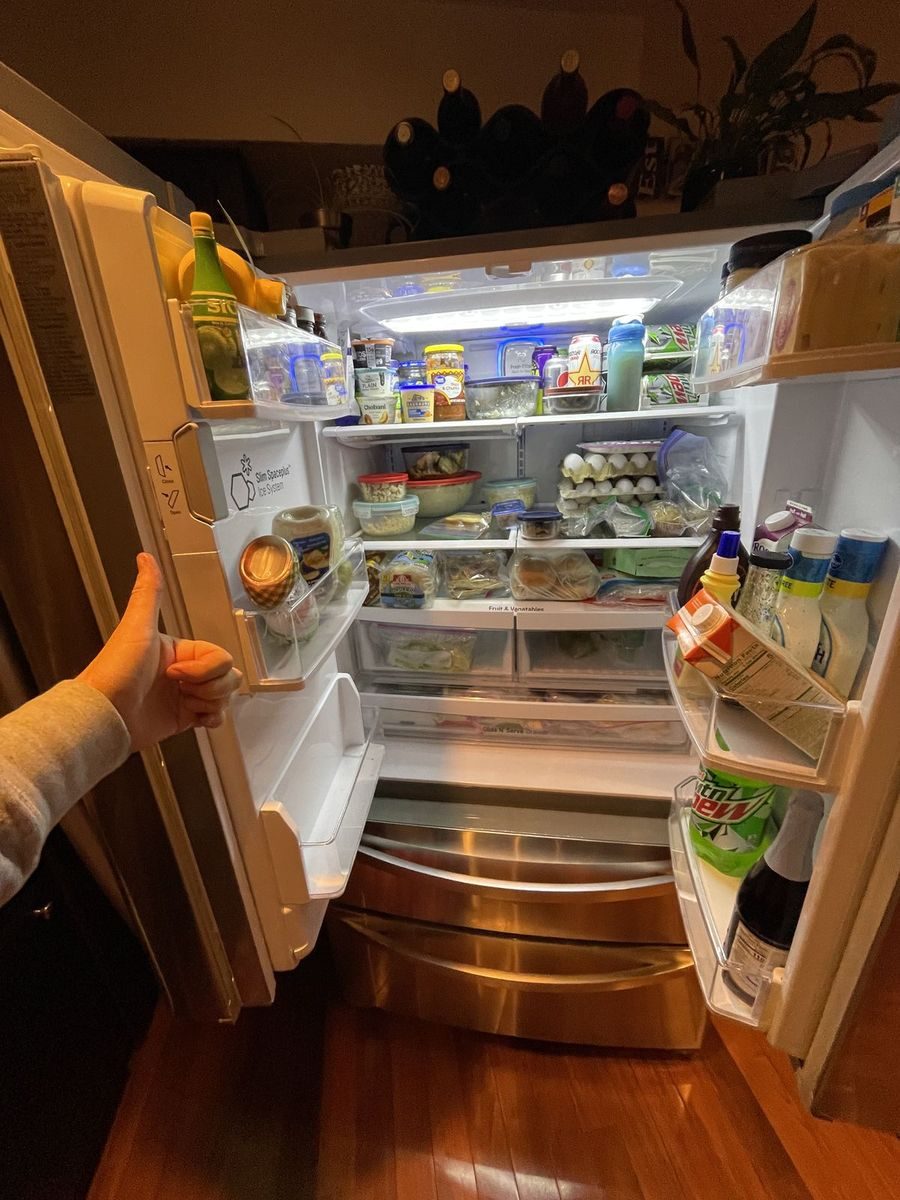
12 / 12
A French-door refrigerator open for diagnosis. Slow ice starts with the water: the inlet valve, the filter and a fill tube that can freeze shut.
Read the service pageYes. Our Washington electrical contractor license lists two specialties: 06A, which is HVAC/Refrigeration, and 07D, which is Appliance Repair. Larch also holds a general contractor license, and refrigerant work is covered by the EPA 608 Universal credential our technicians carry. For heating and cooling, that spans heat pumps, central air, gas and electric furnaces, air handlers, ductless mini-splits and thermostats. For appliances, it spans refrigerators, freezers, ice makers, cooktops, ranges and ovens, dishwashers, washers and dryers.
Having both trades under one roof helps in houses where equipment shares space: a laundry closet beside the furnace, a garage holding a spare refrigerator next to the air handler, a shop with a mini-split and a chest freezer. You make one call, and the paperwork comes from one licensed source. Each license is a public record, searchable by anyone on the Washington Labor & Industries Verify lookup.
Brands that come through regularly include Carrier, Trane, Lennox, Goodman, Rheem, Bryant, Daikin and Mitsubishi for heating and cooling, and LG, GE, Whirlpool, Maytag, Frigidaire, Bosch and Speed Queen among appliances. Mention yours when you book.
Yes. Ask for a reply in Spanish while booking online or on the phone, and the office will answer that way. Pasco's Spanish-speaking community is large, and the option stays open to every household across the seven communities we cover. This site also has a full Spanish version with the same booking form, the same written-price policy and the same written warranty terms.
Guide · Summer cooling
What a heat pump or central AC should do on a 100°F Tri-Cities afternoon, how to help it keep up, and the warning signs of a weak capacitor, pitted contactor or dirty coil.
Guide · Outdoor unit care
How Tri-Cities west winds, blowing dust, cottonwood fluff and tumbleweeds clog heat pumps and AC condensers, how to rinse a coil safely, and which jobs to leave to a technician.
Guide · Winter heat pumps
Why Tri-Cities heat pumps steam, pause and defrost so often during winter inversions, how to tell normal defrost from a coil that stays iced, and what the AUX light means.
Guide: appliances
Why a garage or shop refrigerator strains through 100°F afternoons and can let its freezer thaw in January, which parts wear first, what owners can do, and when to book a repair.
Seven of them: Benton City, Burbank, Finley, Kennewick, Pasco, Richland and West Richland. That takes in rural roads and acreage around Benton City, Finley and Burbank as well as the newer subdivisions in West Pasco and south Richland. When you book, the office slots your address into a technician's route and confirms the arrival window by phone. Unsure whether your property falls inside the area? Call and ask.
Each visit opens with a diagnostic charge, and you hear its amount from the office at booking, by phone or through the online form. After testing, the technician lists the repair cost in writing. If you approve, that charge is folded in with the repair rather than stacked on it. If you decline, you pay that one charge for the trip and owe nothing beyond it. Amounts stay off the website on purpose.
During inversion weather, damp air hovering near freezing frosts the outdoor coil quickly, and the unit runs defrost often, sometimes with steam rising off the cabinet. That much is normal. If the coil stays solid with ice, the AUX light never goes out, or rooms won't hold temperature, our technicians test the defrost board and sensor, the reversing valve and the refrigerant charge to find the failing piece.
You choose a day and an arrival window rather than a specific minute, because each technician works a route of nearby homes. The office calls to confirm that window, and the technician phones once heading your way, so you are not stuck watching the driveway all afternoon. If the window you wanted is full, the office can talk through other openings during its confirming call.
Leave right away and take everyone with you. From the yard or a neighbor's porch, reach 911 or the gas utility. Skip the light switches, the matches and any leak hunting. After the gas utility has declared the house safe, our technicians can inspect the furnace itself, including its gas valve, igniter, burners, inducer motor and pressure switch, and write up any repair before touching it.
Yes. Warranty terms are written on your invoice before the technician leaves, so you can see which part and which work are covered and for how long. Should that same fault return, call the office with the invoice nearby and a return visit can be arranged under those terms. Putting it on the invoice means nobody relies on memory months later.
Talk to us
Claim a day and arrival window below; a confirming call from the office follows. Prefer the phone? Lines are open daily, 8 AM to 7 PM.
Book a visit
One slip, filled top to bottom. The office phones to confirm the visit, and the technician calls again when on the way.
Every number below is a public state record. Look each one up on L&I Verify, or read what each license allows on our licenses page.
What our licenses cover