01 / 12
Heat pump repair
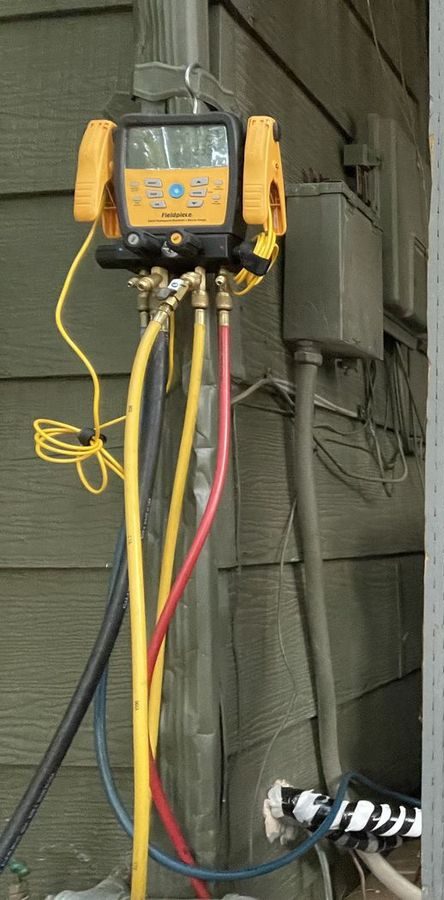
Digital gauges hang by the outdoor unit while the heat pump runs. Superheat and subcooling show whether the charge, a valve or the defrost board is the problem.
Read the service page
Guide · Summer cooling
Triple-digit afternoons arrive most summers in Kennewick, Pasco and Richland, sometimes by mid-May. This guide covers what your cooling system should and should not do on those days, how to give it a hand, and the point where a repair visit makes sense.
Short answer
On a 100°F afternoon a healthy heat pump or central AC runs in long stretches, sometimes without a break, and air at the supply registers should be roughly 15 to 20 degrees cooler than air entering the return. The house may slip a degree or two behind the setpoint by late day. Warm supply air, a humming condenser with a motionless fan, or frost on the lines means a part has failed.
Long run times are normal. Most residential systems are sized for a typical hot afternoon rather than the single hottest hour of the year, so once the thermometer passes 100°F a sound unit may run from early afternoon until after sunset with few breaks or none. Tri-Cities summers average about 92°F in July and 91°F in August, and 100°F days turn up in most years, from as early as mid-May to as late as early September.
The temperature split tells you more than the thermostat does. After fifteen minutes of steady cooling, hold a kitchen thermometer in a supply register close to the air handler, then at the return grille. A difference of roughly 15 to 20°F is healthy, and the dry desert air here often pushes it toward the high end. Under about 12°F hints at a low charge, a dirty coil or a tired compressor; well above 22°F usually means the indoor coil is starved for air.
Pick a setting in the morning and leave it. A big midday setback, such as letting the house climb to 85°F and then asking for 72°F at 5 PM, digs a hole the system cannot climb out of before bedtime, because it is already at full output while outdoor heat peaks. Pre-cooling works better: run a degree or two cooler through the morning, when the equipment has capacity to spare, then let the house coast through the worst hours.
Very low setpoints do not cool faster. A system asked for 68°F on a 104°F afternoon simply runs longer, and if airflow is already marginal the indoor coil can drop below freezing and ice over. Keep the fan on auto so the coil can drain between cycles, and keep interior doors open so air can find its way back to the return.
Shade on the house helps more than shade on the condenser. A unit in full afternoon sun works a little harder, but what matters most is the temperature of the air moving through its coil and whether that air has a clear path. Shade from a tree canopy or a tall awning is fine; a tarp, a box, lattice or shrubs crowded against the sides choke airflow and raise head pressure far more than sunshine does.
Leave about two feet open around the cabinet and plenty of clear air above the fan. Do not run a sprinkler or mister on a hot, running coil to cool it down; the minerals in the water dry onto the fins as scale, and that coating insulates the coil long after the heat wave ends.
Heat and long run times wear down the small electrical parts in the outdoor unit first. A run capacitor gives the compressor and the condenser fan motor the boost they need to start and keep turning; heat inside the control box breaks it down, and its microfarad reading slowly sinks below the rating on its label. Once it falls outside the tolerance printed there, often plus or minus 5 or 6 percent, motors run hot and may not start at all.
The contactor is a heavy switch the thermostat closes through a 24-volt coil. Every start draws an arc across its contacts, and after summers of all-day cycling the surfaces pit, burn and can weld shut, so the outdoor unit hums along even after the thermostat is switched off. Never nudge a stalled fan blade with a stick to get it going: the capacitor holds a charge, and the blade can spin up without warning. Switch the system off and book a visit.
A great deal, because the condenser has to dump the heat pulled out of your house into air that is already over 100°F. A layer of dust, cottonwood fluff or grass clippings on the fins works like a blanket. Head pressure and compressor amps rise, capacity falls, and on the hottest afternoon the system can trip its high-pressure switch or the compressor's internal overload.
Rinse the outdoor coil gently with a garden hose in late spring, after shutting cooling down at the wall control and flipping off its breaker, and change the indoor filter before the first hot week. Silt packed deep in the fins, a coil that needs chemical cleaning, and anything inside the cabinet belong to a technician, who can read superheat and subcooling afterward to confirm the charge.
One photo per tab from our service calls. Tap a tab, or let the file turn on its own.
01 / 12
Digital gauges hang by the outdoor unit while the heat pump runs. Superheat and subcooling show whether the charge, a valve or the defrost board is the problem.
Read the service page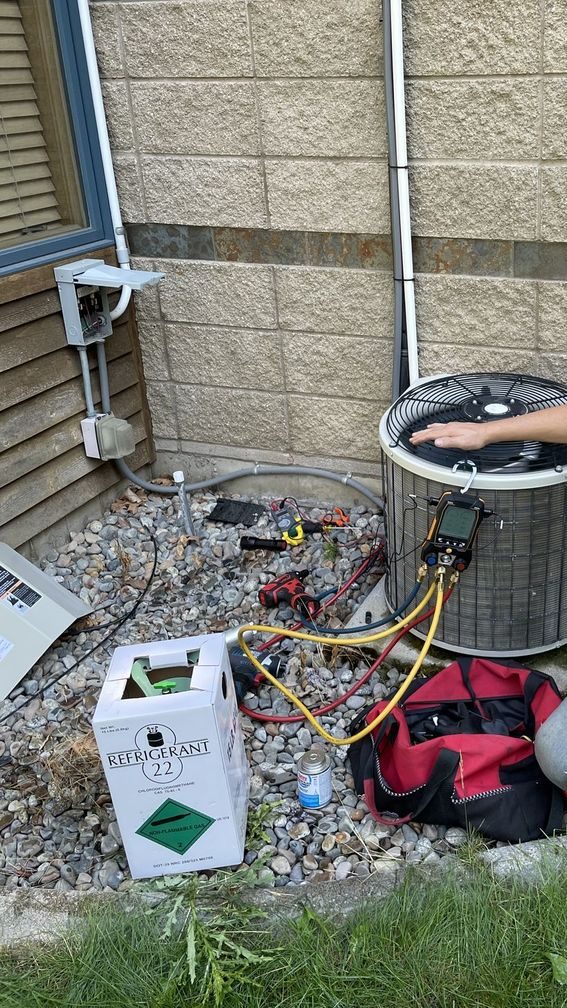
02 / 12
An older condenser under test with hoses on the service ports. The capacitor, contactor and fan motor get checked before anyone talks about refrigerant.
Read the service page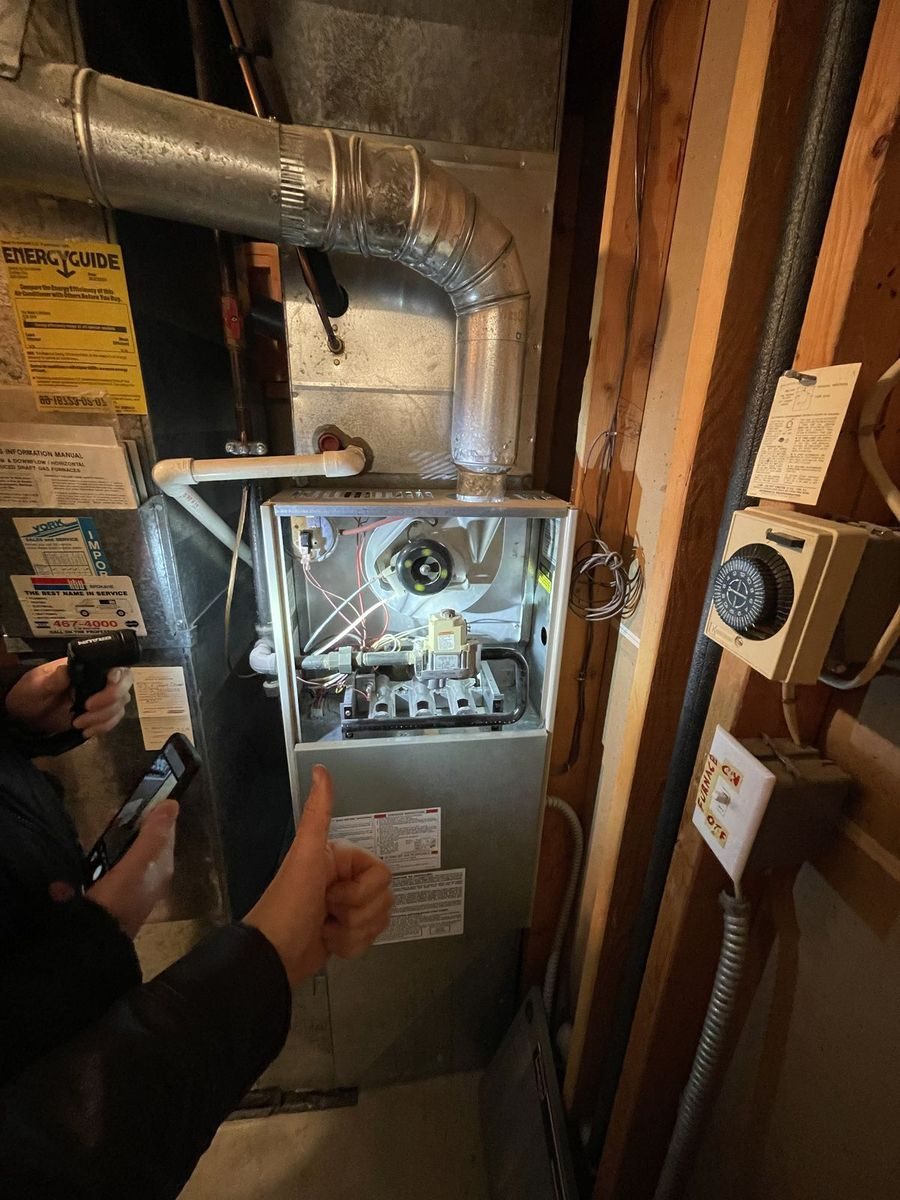
03 / 12
The burner compartment of a gas furnace, open. We follow the start-up order, inducer, pressure switch, igniter, flame sensor, until the step that fails.
Read the service page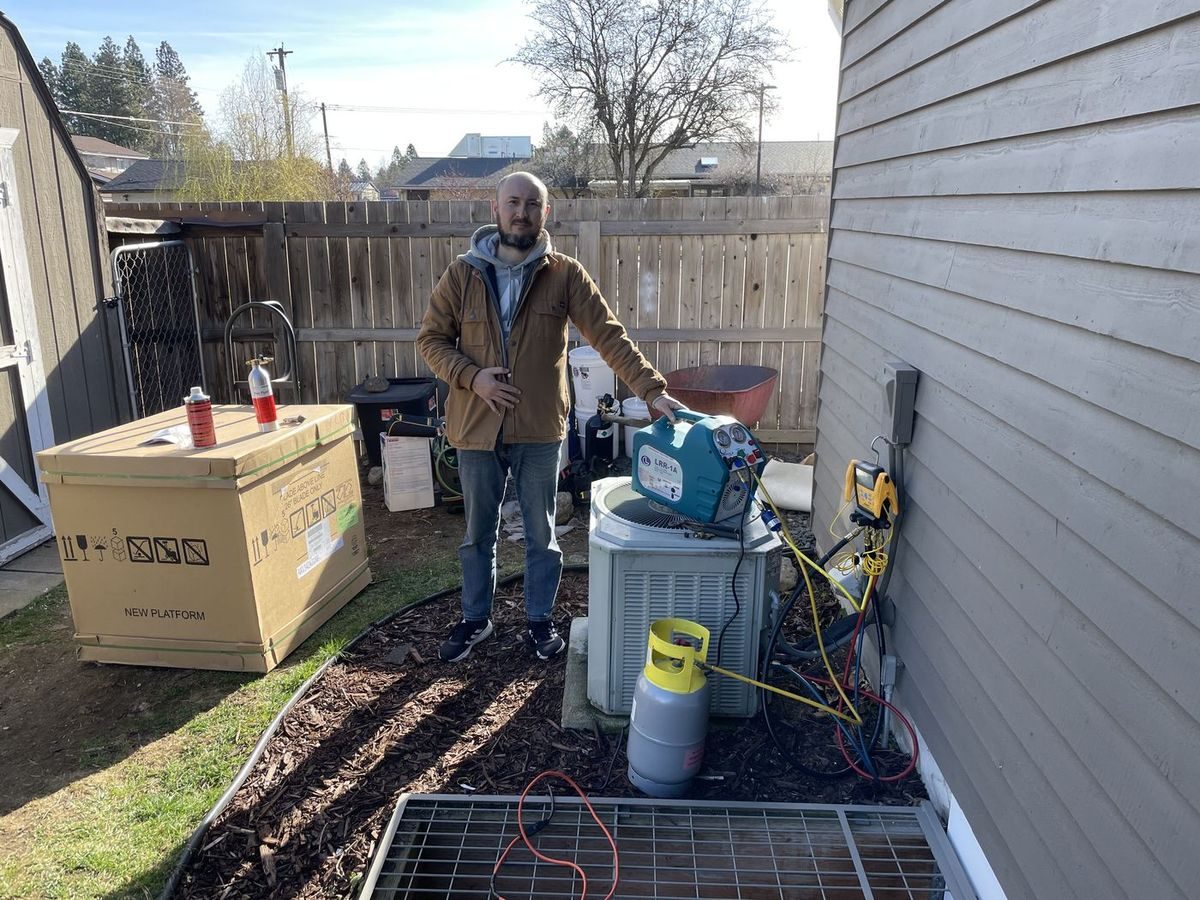
04 / 12
A recovery machine and cylinder beside an outdoor unit. On a replacement, the old refrigerant is pulled into the cylinder instead of the air.
Read the service page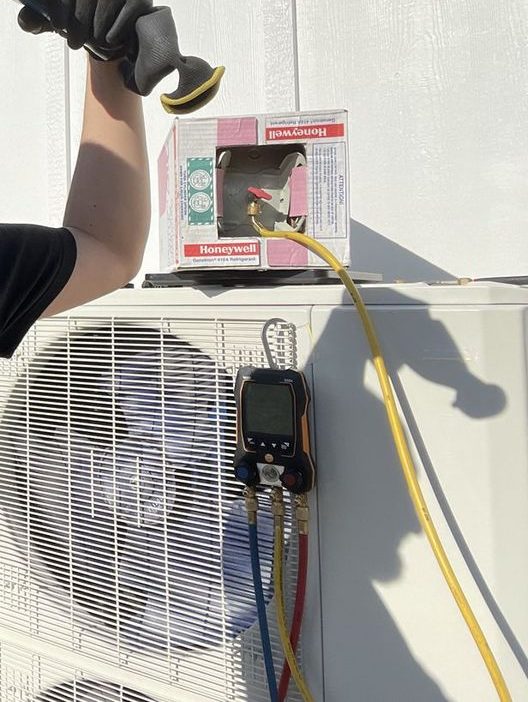
05 / 12
A ductless outdoor unit with a gauge set on it. Mini-splits get the same pressure and temperature readings as a central system, plus a look at the line-set insulation.
Read the service page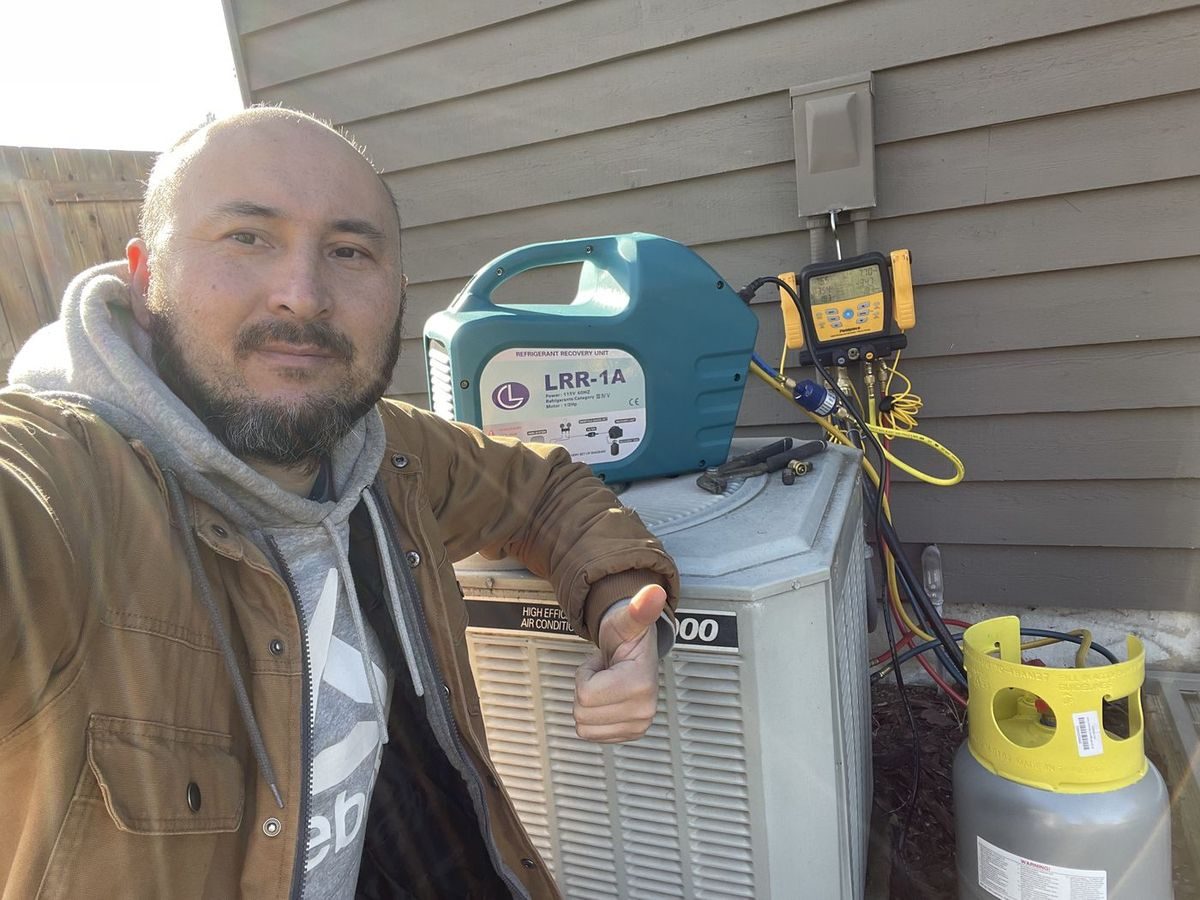
06 / 12
Gauges on a condenser during a seasonal visit. Spring visits wash the dust out of the coil; fall visits test defrost and heat strips before the fog weeks.
Read the service page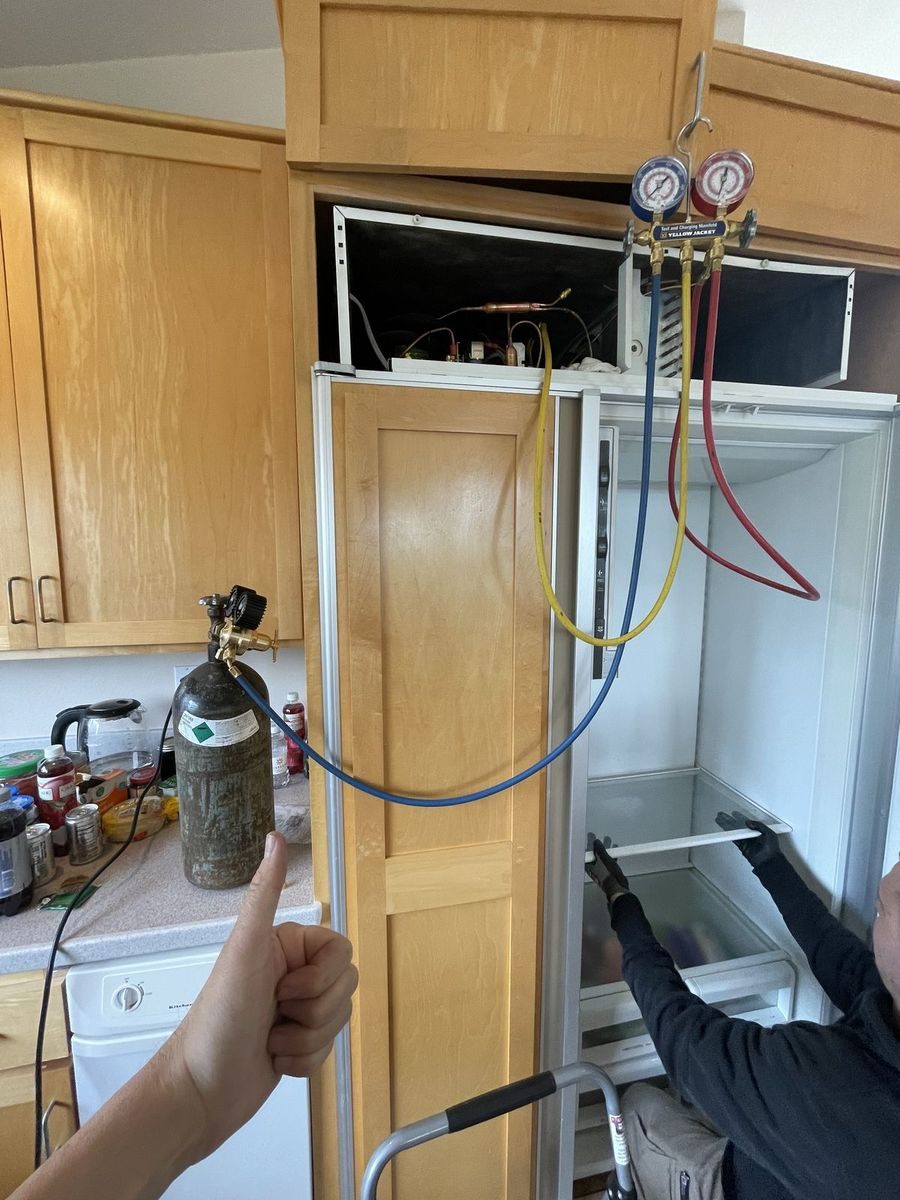
07 / 12
Gauges connected to a built-in refrigerator's sealed system. Leak searches, brazing and recharges happen in the kitchen, so the fridge stays where it is.
Read the service page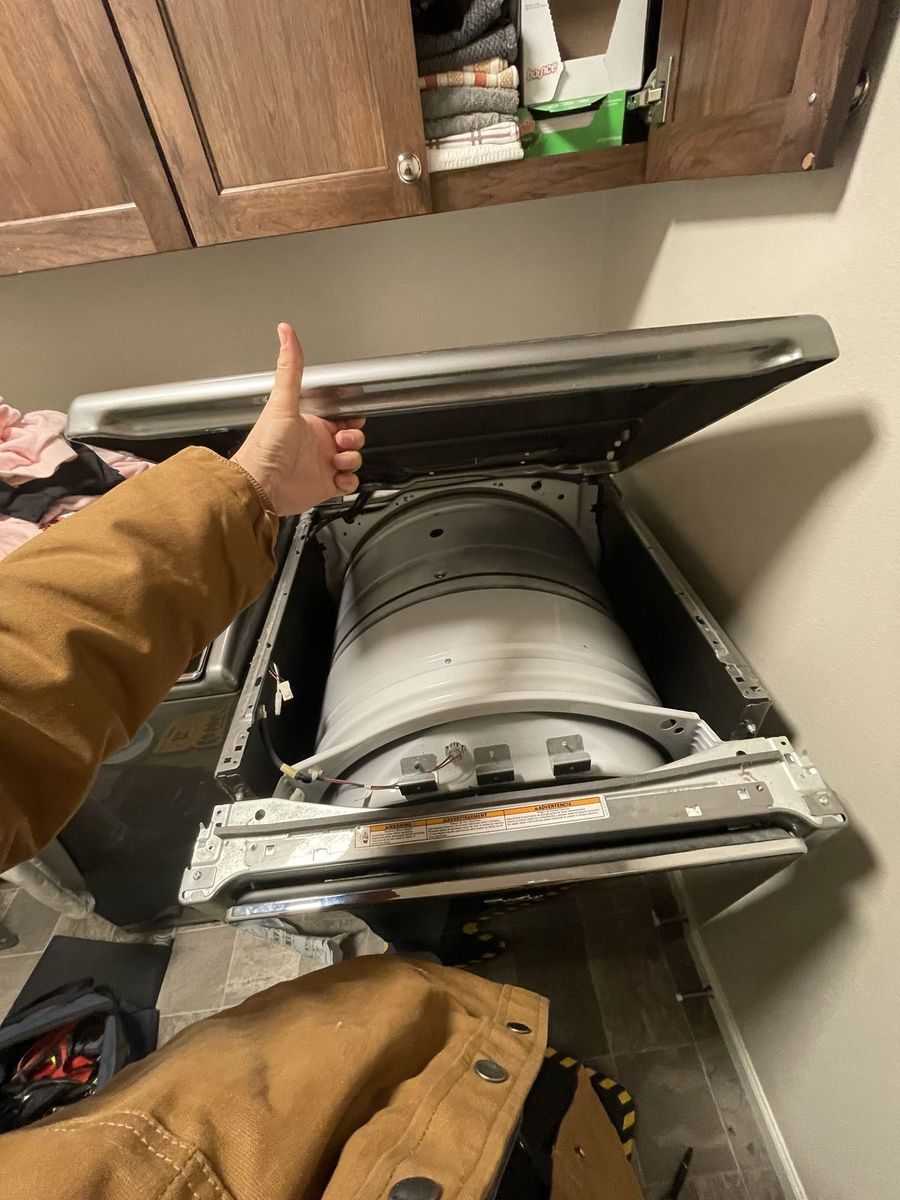
08 / 12
A top-load washer with the top panel raised. Lid switch, drive coupler and drain pump are all within reach once the top comes up.
Read the service page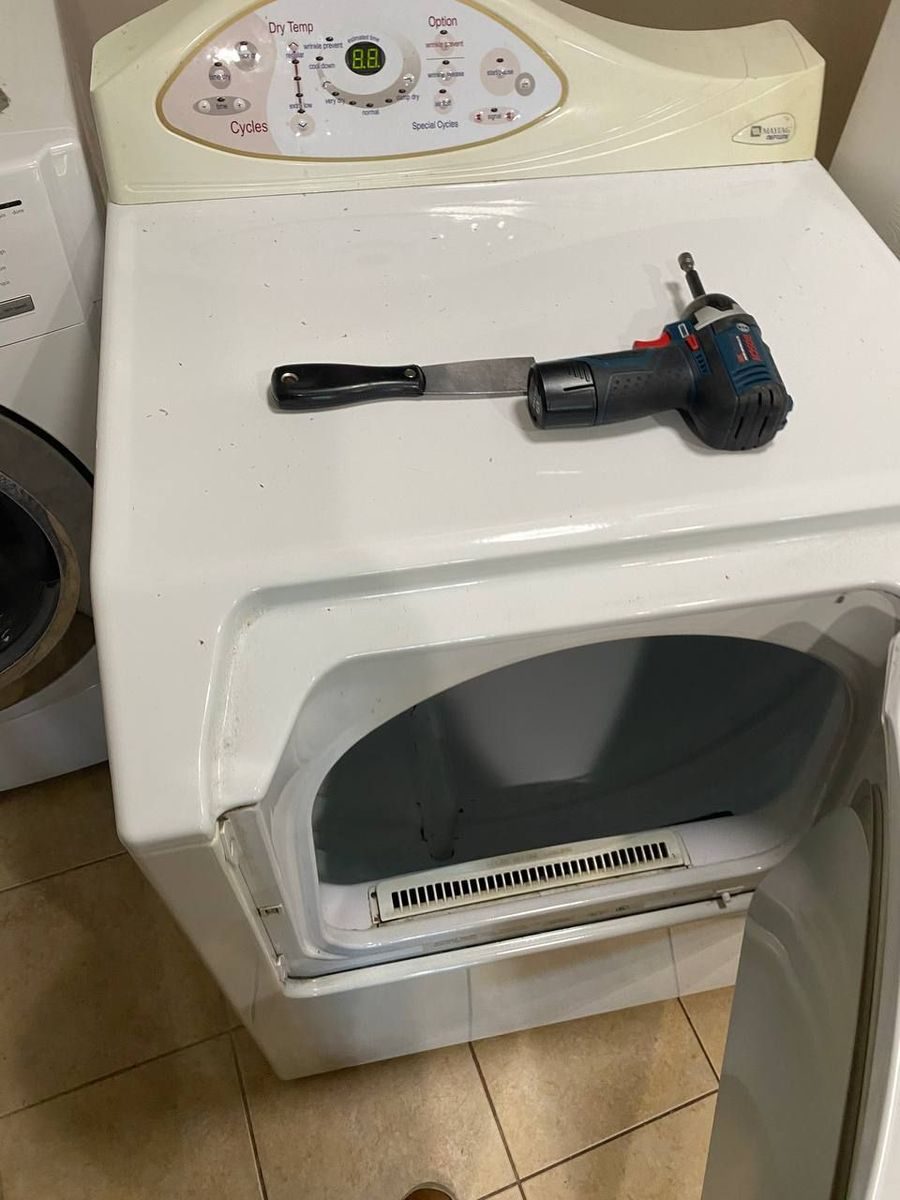
09 / 12
An electric dryer opened up in a laundry room. The thermal fuse, the heating element and the vent run behind the machine get tested together.
Read the service page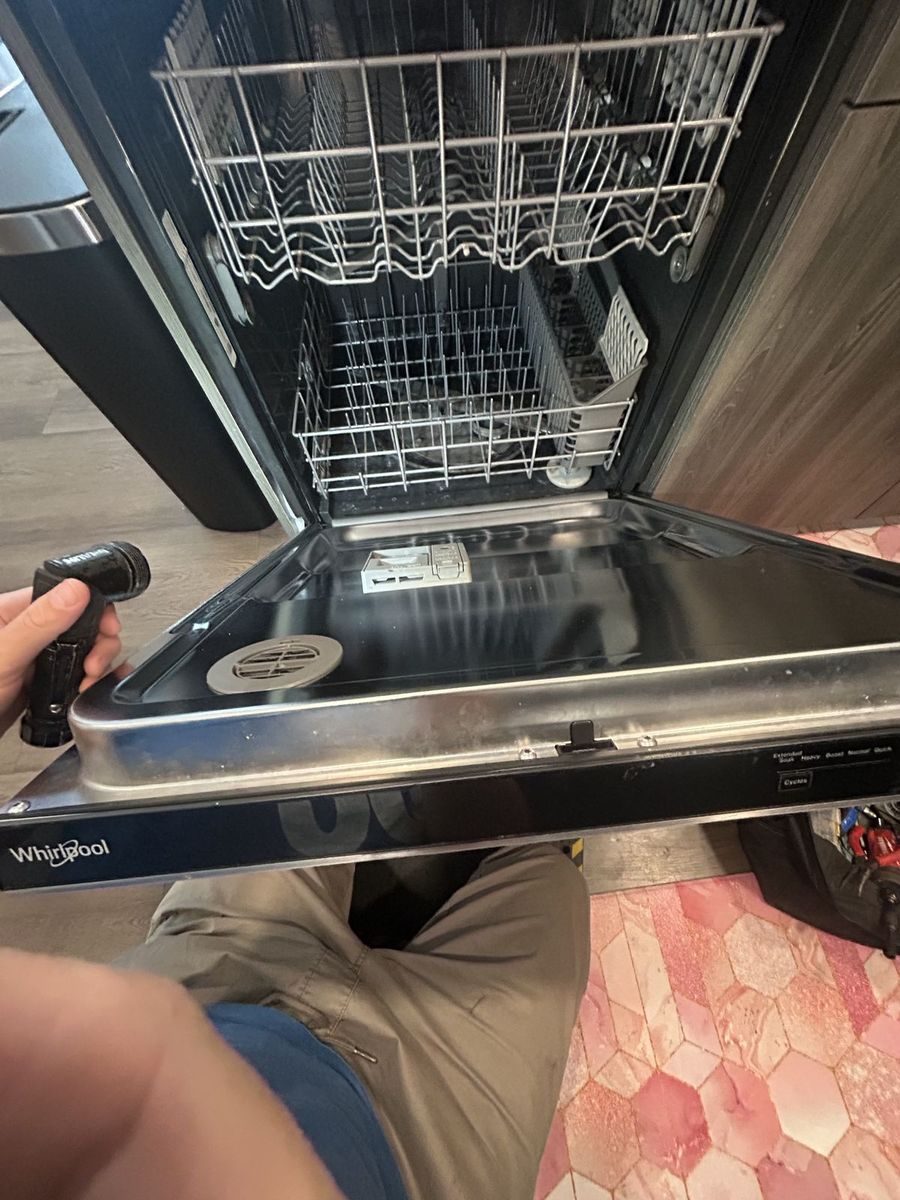
10 / 12
Door open and racks out on a dishwasher. A puddle left behind after the last rinse sends us to the filter screen, the pump and the hose route under the sink, in that order.
Read the service page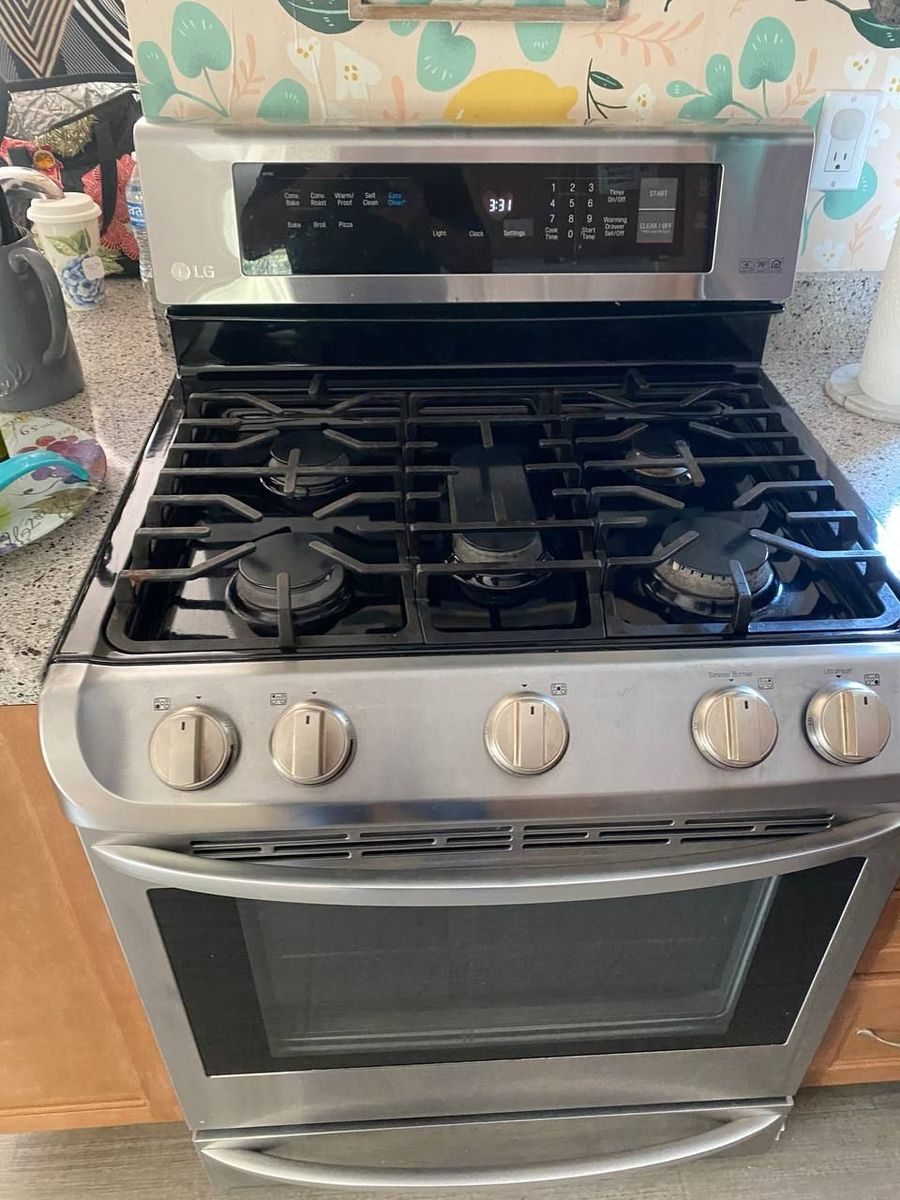
11 / 12
A five-burner gas range ready for testing. Burner igniters, the spark module and the bake igniter's amp draw are measured before a part is ordered.
Read the service page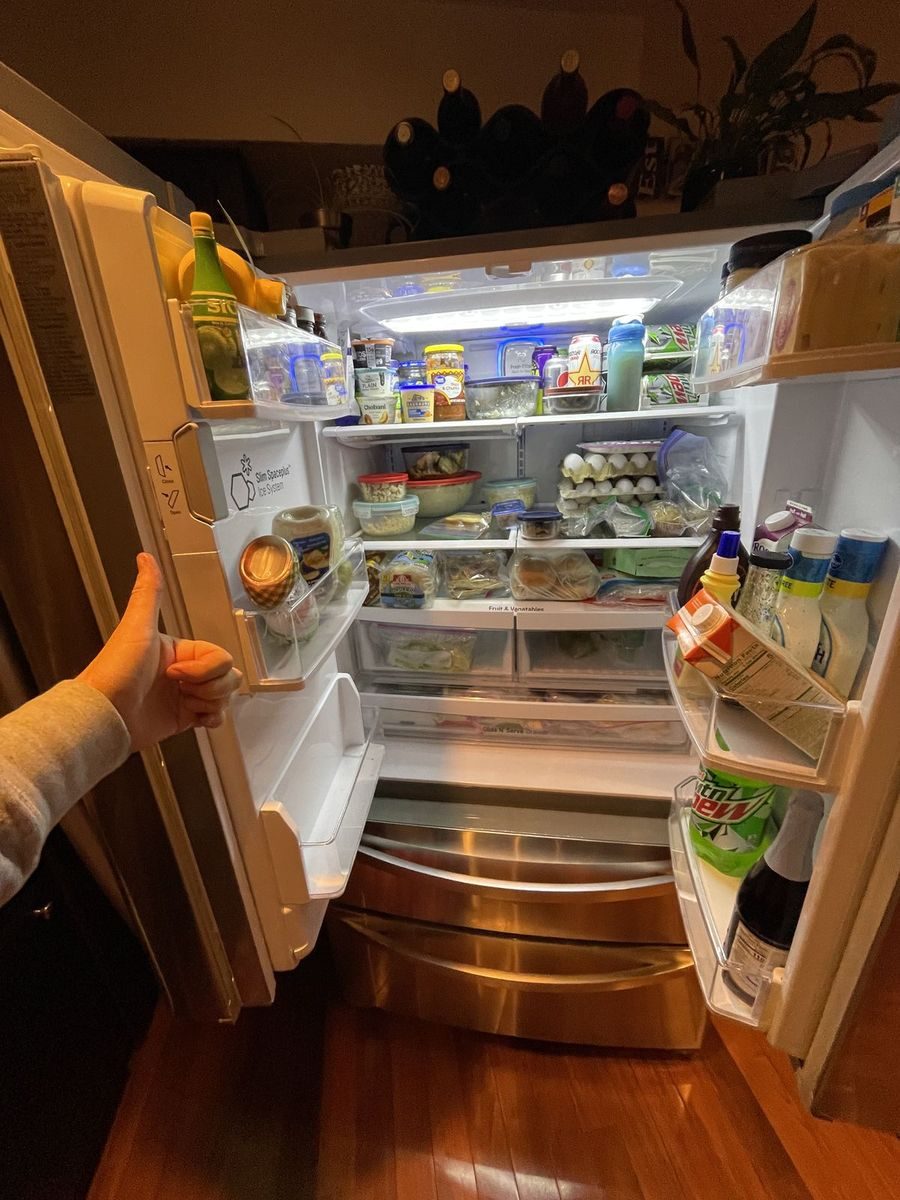
12 / 12
A French-door refrigerator open for diagnosis. Slow ice starts with the water: the inlet valve, the filter and a fill tube that can freeze shut.
Read the service pageCall when the system stops cooling, not when it simply runs long. Book a visit if supply air feels warm, the split stays under about 12°F, ice forms on the lines or indoor coil, the outdoor fan is still, a breaker trips twice, or you smell something burning. Turn the system off if it is iced or buzzing, because running it that way can hurt the compressor.
Our technicians check capacitors in microfarads, contactor surfaces, superheat and subcooling, static pressure and coil condition, and they carry the EPA 608 Universal credential for refrigerant work. The diagnostic visit has its own fee, quoted by the office in advance. A yes to the repair merges that fee into the job's total; a no leaves the fee as the single item you are billed for. Every repair is priced on paper first.
Guide · Outdoor unit care
How Tri-Cities west winds, blowing dust, cottonwood fluff and tumbleweeds clog heat pumps and AC condensers, how to rinse a coil safely, and which jobs to leave to a technician.
Guide · Winter heat pumps
Why Tri-Cities heat pumps steam, pause and defrost so often during winter inversions, how to tell normal defrost from a coil that stays iced, and what the AUX light means.
Guide: appliances
Why a garage or shop refrigerator strains through 100°F afternoons and can let its freezer thaw in January, which parts wear first, what owners can do, and when to book a repair.
Probably not, as long as supply air is still about 15 to 20 degrees cooler than the return and the outdoor fan is turning. On a 100°F-plus afternoon many systems fall a few degrees behind late in the day and catch up after sunset. If the split is small, or the gap grows wider each afternoon, book a visit so a technician can check charge, airflow and the coil.
Not during a heat wave. A full shutdown lets heat soak into walls, furniture and attic ducts, and the system may not recover before night. A setback of two to four degrees is reasonable. Smart thermostats with an early-start feature help further, since they begin cooling ahead of your return instead of the moment you walk through the door.
A heat wave rarely harms a healthy system, but it finds weak parts quickly. A capacitor already drifting low, contactor surfaces already pitted, or a coil already coated with dust can give out when the unit runs hard all afternoon. A spring tune-up that measures those parts before the first 100°F day is the simplest way to catch them early.
In cooling, the indoor coil pulls moisture from the air and sends it down a condensate line. Long heat-wave runs push more water through that line, and a clog of algae or dust lets it back up into the pan or trip a float switch that shuts cooling down. Turn cooling off, mop the spill, and schedule a technician if the drain stays blocked.
Talk to us
Set up a visit online by choosing a date and whichever arrival window suits your day, or phone between 8 AM and 7 PM, any day. A confirmation call comes from the office, and the technician rings before pulling up.
Book a visit
One slip, filled top to bottom. The office phones to confirm the visit, and the technician calls again when on the way.
Every number below is a public state record. Look each one up on L&I Verify, or read what each license allows on our licenses page.
What our licenses cover