01 / 12
Heat pump repair
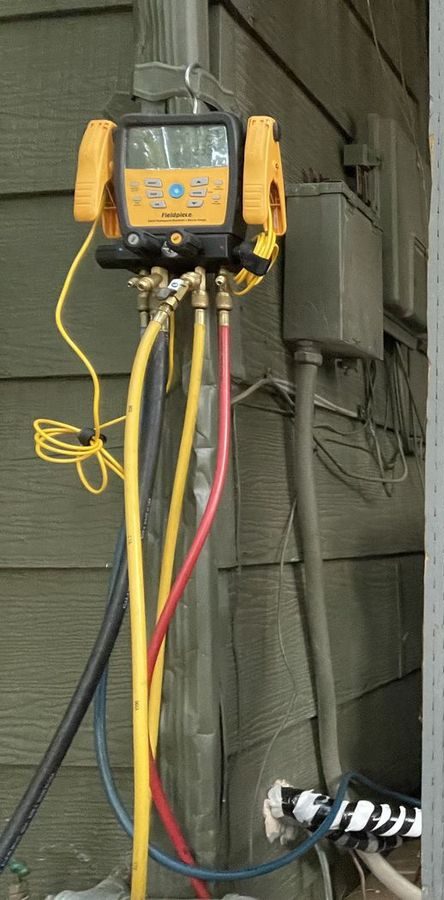
Digital gauges hang by the outdoor unit while the heat pump runs. Superheat and subcooling show whether the charge, a valve or the defrost board is the problem.
Read the service page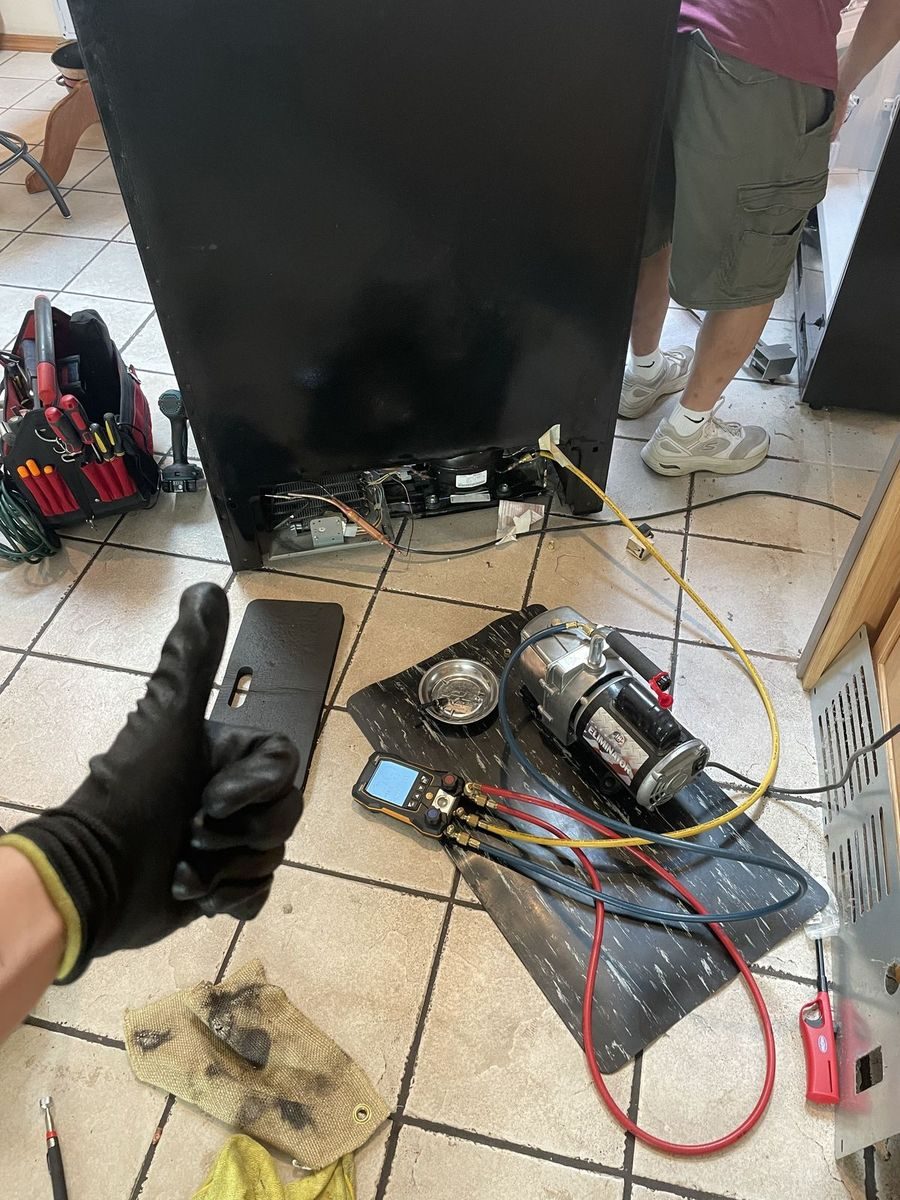
Guide: appliances
A second refrigerator or freezer out in the garage or shop lives far outside the room temperatures its designers planned around. Here that means 100°F afternoons in summer and nights sliding toward 10°F in a January cold snap. This guide explains what each extreme does to the machine.
Short answer
Most household refrigerators are designed for indoor rooms, so a garage or shop unit works far harder through Tri-Cities summers and can stop protecting its freezer in cold weather. Heat wears the compressor start relay, condenser fan and door gaskets; cold can keep the compressor idle for hours. Clean coils, shade, breathing room and a thermometer help, and steady temperature drift calls for a technician.
A fridge cools by pushing heat out through its condenser coil, and that only works while the surrounding air stays cooler than the coil, which a shut garage in July barely allows. Tri-Cities July highs average around 92°F, most summers include 100°F days, and a garage with a west-facing door or a shop under an uninsulated metal roof can sit hotter than the shade outside by late afternoon. The compressor stays on longer, the condenser runs hotter, and the cabinet walls let more heat creep back in.
Those long run times stack up wear. Relay and overload, the two small parts clipped to the compressor terminals, cycle while already hot, the condenser fan motor turns for most of the day, and rubber door gaskets stiffen and stop sealing at the corners. Every door opening lets a slug of hot air in for the evaporator to pull back out. Dust multiplies all of it: the region's west wind, blowing-dust days and early-summer cottonwood fluff end up on the condenser coil, and a furred coil pushes pressures and temperatures up further still.
Because plenty of models take their cue from a single temperature probe in the refrigerator compartment, and a chilly garage keeps that compartment satisfied with no help from the compressor. Picture a top-freezer model during a Columbia Basin inversion, when highs stall in the 30s for days and the garage hovers at about the same number. The upper box above it depends on that same idle compressor, so the freezer drifts up toward garage temperature. Ice cream goes soft and meat starts to thaw while frost coats the lawn outside.
Deeper cold adds other trouble. Compressor oil thickens, so a unit that does try to start in a garage near 10°F may labor and trip its overload. Milk and soda in the refrigerator section can freeze solid on models with nothing to hold that side above 32°F. Some manufacturers offer a small heater kit that mounts near the thermostat so the compressor runs more in a cold room, and some models are sold as garage-ready with a wider rated temperature range. Your owner's manual states which room temperatures the unit was built to handle.
The parts that work longest or breathe the dirtiest air go first. These are the usual suspects when our technicians open up a second refrigerator or freezer. Now and then the culprit sits inside the sealed system, as a slow refrigerant loss or a compressor at the end of its life; tracing that takes gauges and our EPA 608 Universal credential, and on an older spare unit it is usually the moment when replacing it beats repairing it.
For cold-season storage, often yes. A chest freezer's control reads the freezer compartment itself, so there is no refrigerator-side probe to fool, and cold air stays put when the lid opens because it sinks. Most are manual-defrost, which means no defrost heater to fail. They still have limits: oil thickening in deep cold, a condenser that needs room to shed heat in summer, and a lid gasket that grit wears down. The manual names the coldest room the model tolerates; read that figure before trusting it with a January cold snap.
Most of the useful steps take a few minutes and nothing more than a vacuum and a thermometer. Unplug the unit before reaching near the condenser or its fan.
One photo per tab from our service calls. Tap a tab, or let the file turn on its own.
01 / 12
Digital gauges hang by the outdoor unit while the heat pump runs. Superheat and subcooling show whether the charge, a valve or the defrost board is the problem.
Read the service page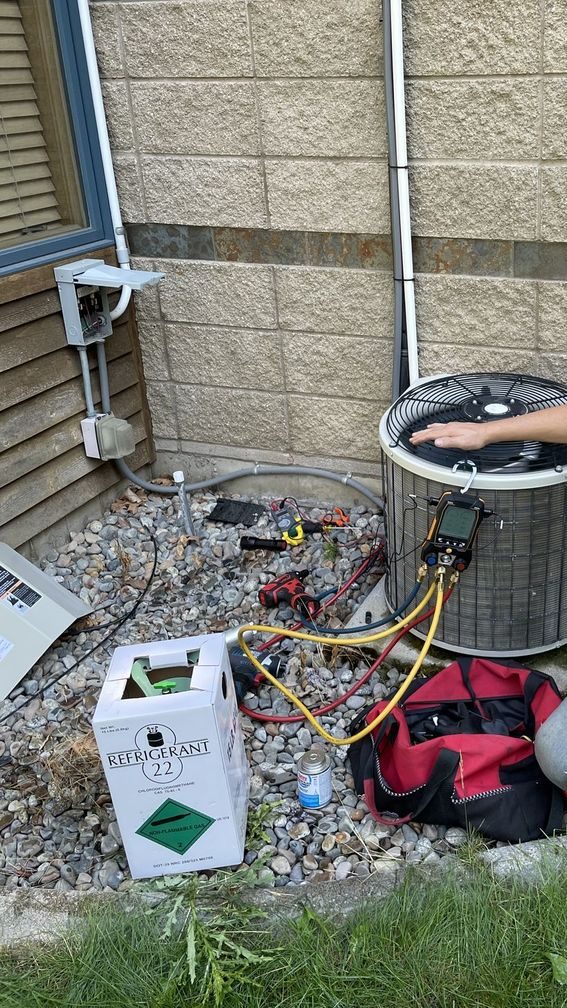
02 / 12
An older condenser under test with hoses on the service ports. The capacitor, contactor and fan motor get checked before anyone talks about refrigerant.
Read the service page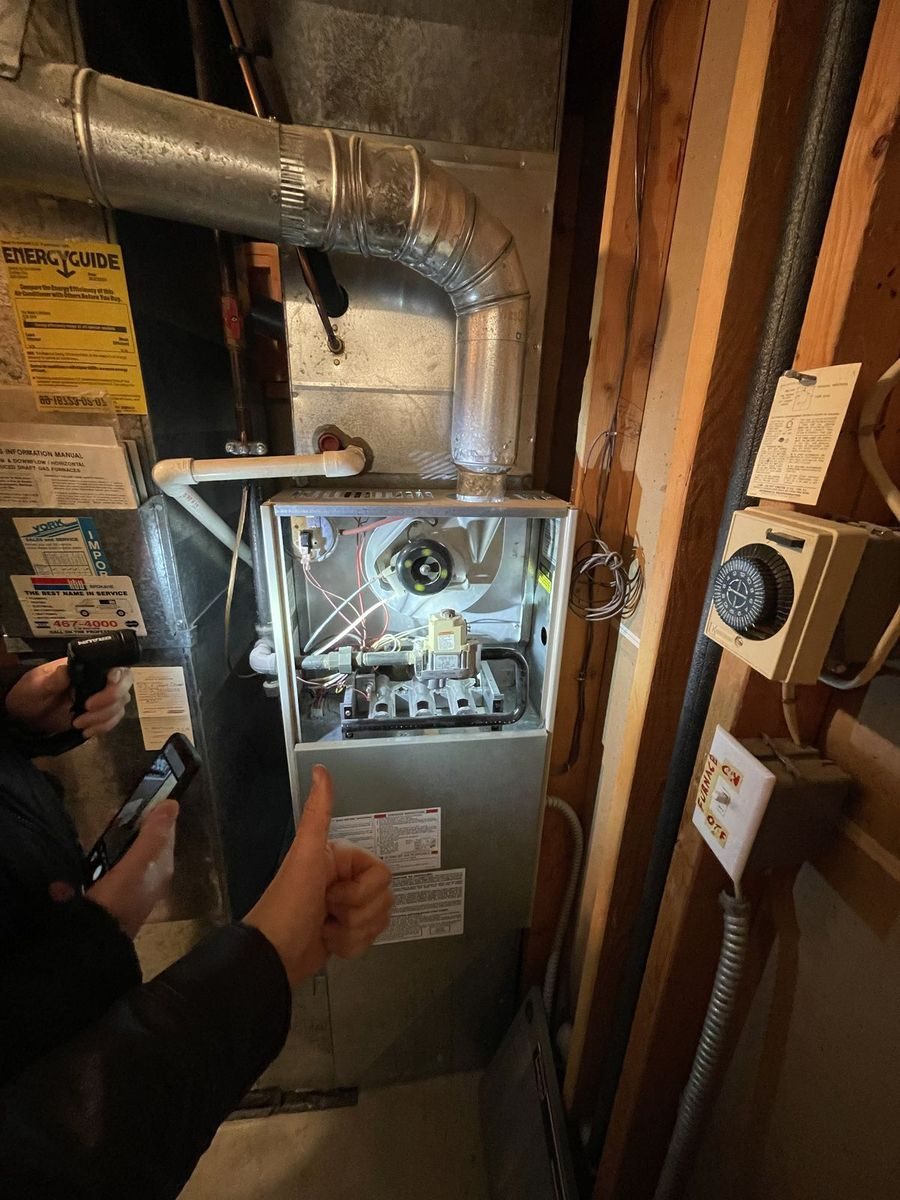
03 / 12
The burner compartment of a gas furnace, open. We follow the start-up order, inducer, pressure switch, igniter, flame sensor, until the step that fails.
Read the service page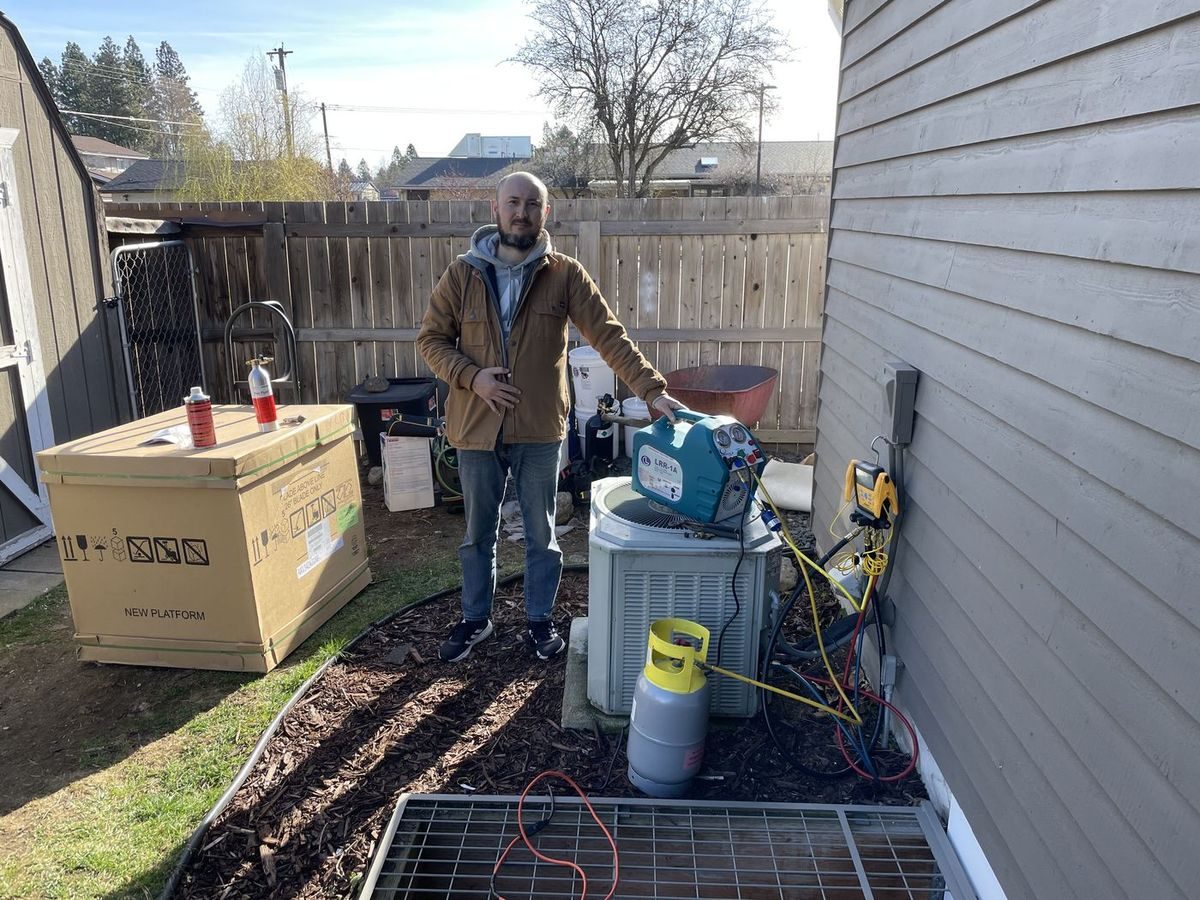
04 / 12
A recovery machine and cylinder beside an outdoor unit. On a replacement, the old refrigerant is pulled into the cylinder instead of the air.
Read the service page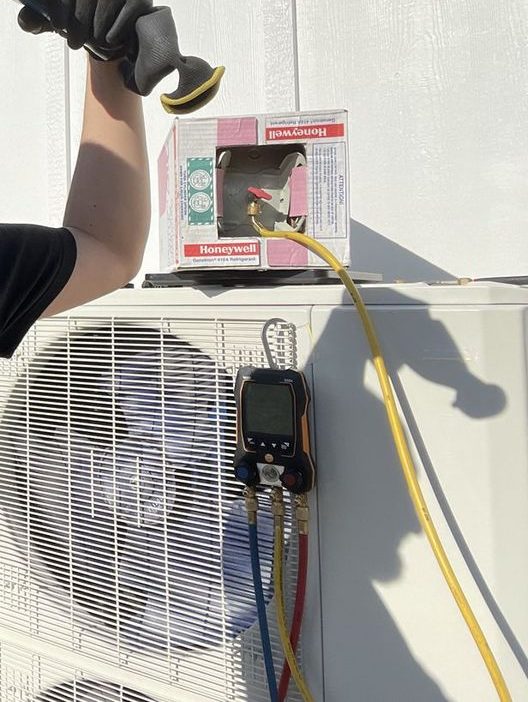
05 / 12
A ductless outdoor unit with a gauge set on it. Mini-splits get the same pressure and temperature readings as a central system, plus a look at the line-set insulation.
Read the service page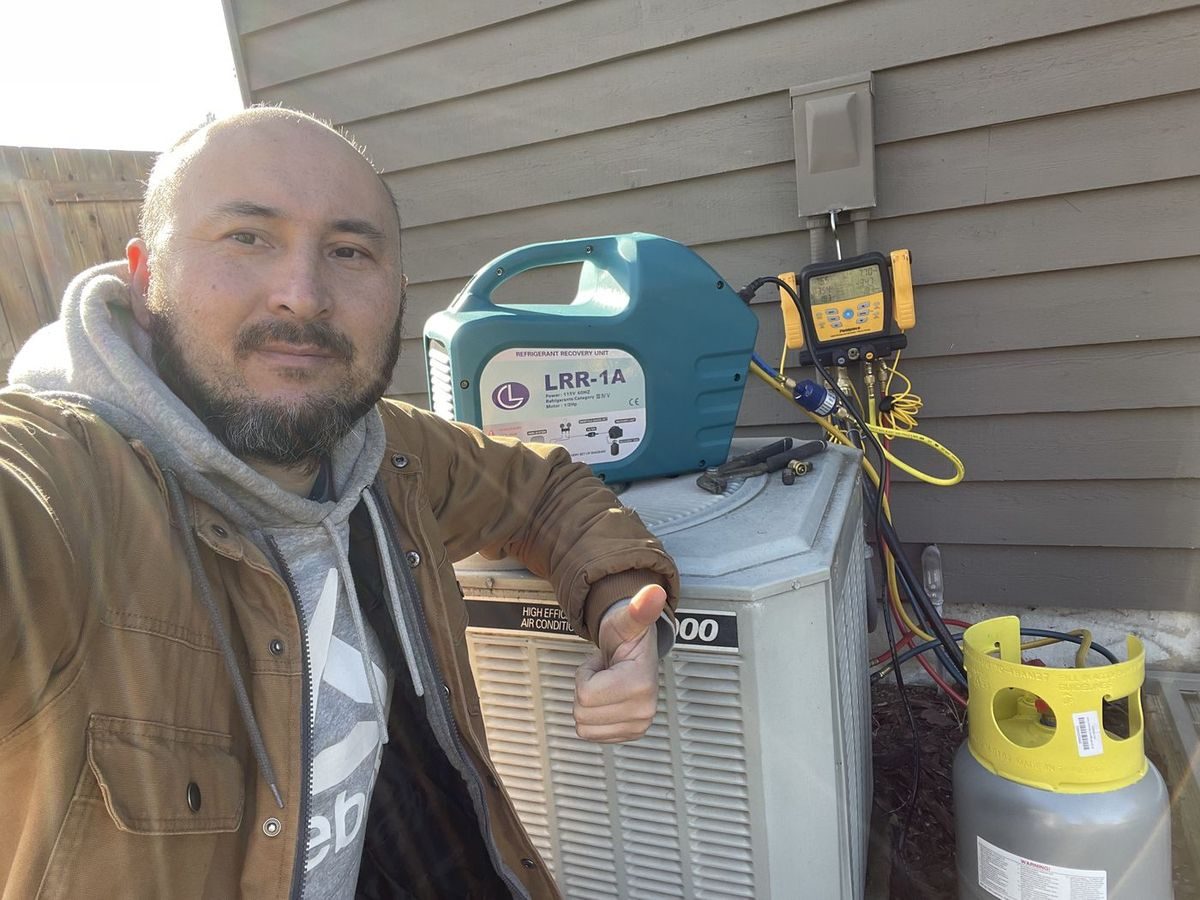
06 / 12
Gauges on a condenser during a seasonal visit. Spring visits wash the dust out of the coil; fall visits test defrost and heat strips before the fog weeks.
Read the service page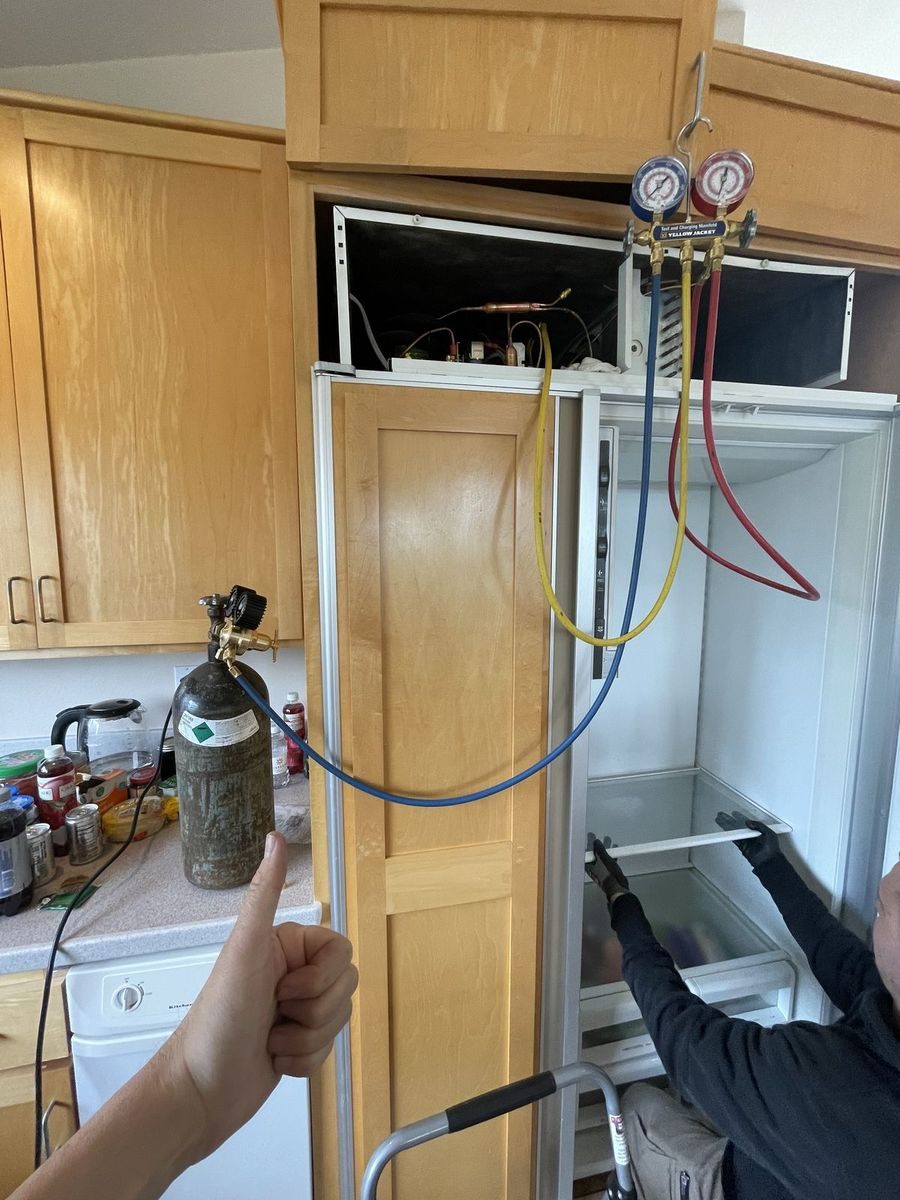
07 / 12
Gauges connected to a built-in refrigerator's sealed system. Leak searches, brazing and recharges happen in the kitchen, so the fridge stays where it is.
Read the service page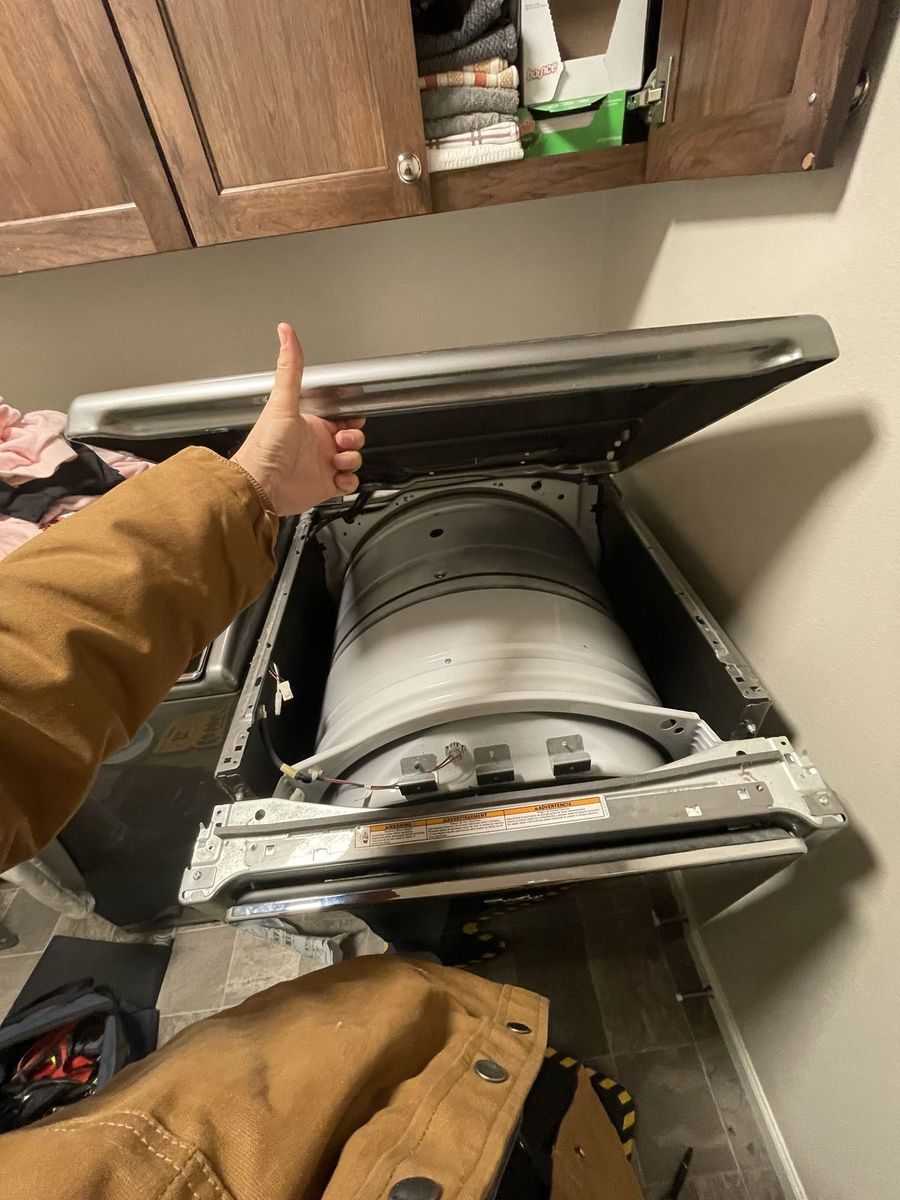
08 / 12
A top-load washer with the top panel raised. Lid switch, drive coupler and drain pump are all within reach once the top comes up.
Read the service page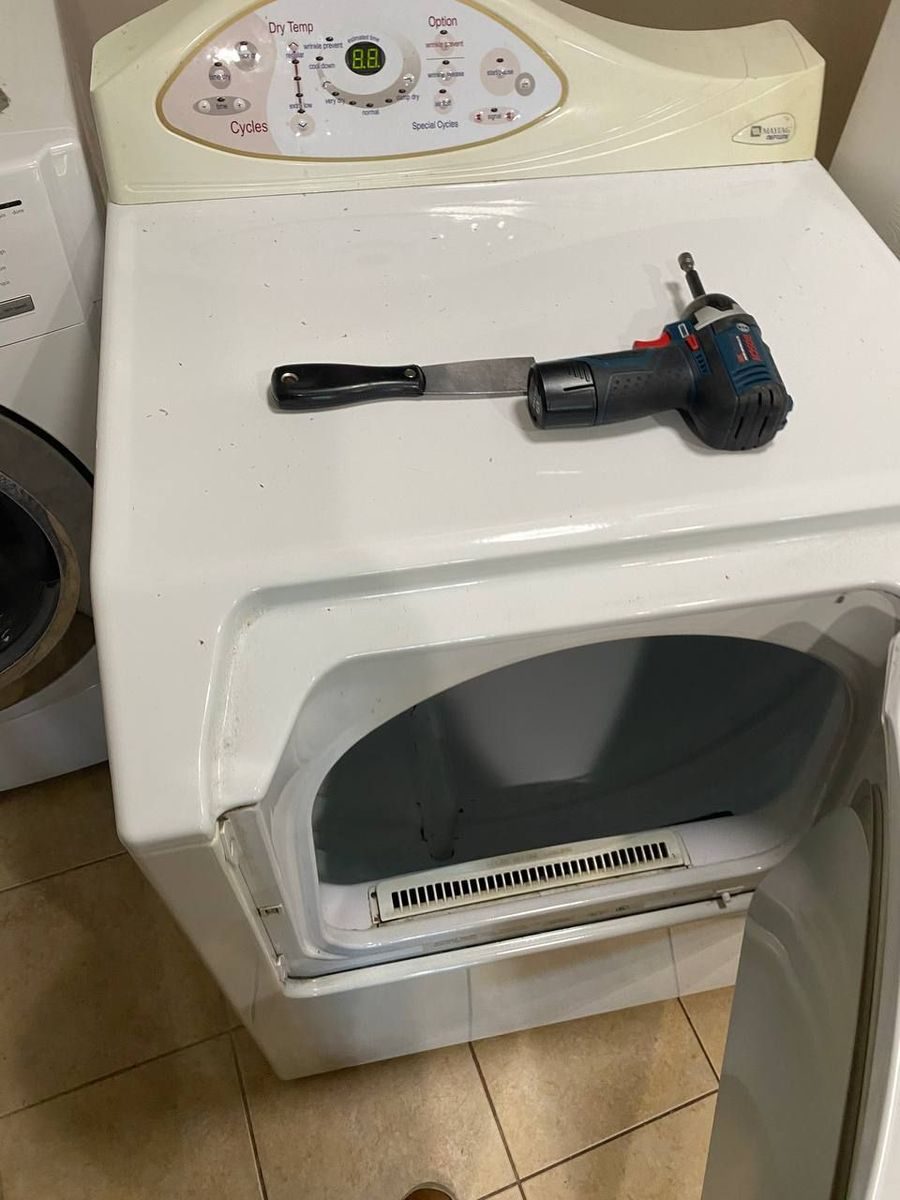
09 / 12
An electric dryer opened up in a laundry room. The thermal fuse, the heating element and the vent run behind the machine get tested together.
Read the service page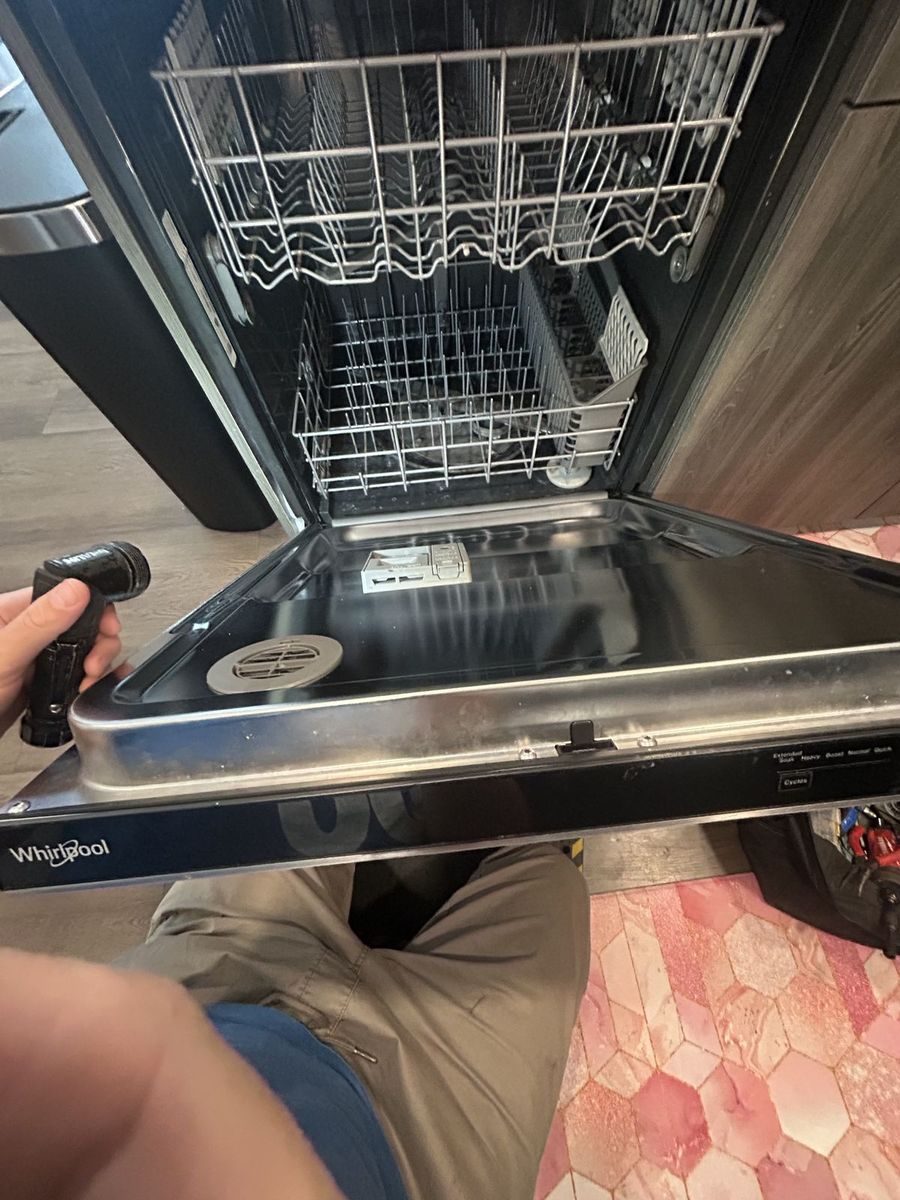
10 / 12
Door open and racks out on a dishwasher. A puddle left behind after the last rinse sends us to the filter screen, the pump and the hose route under the sink, in that order.
Read the service page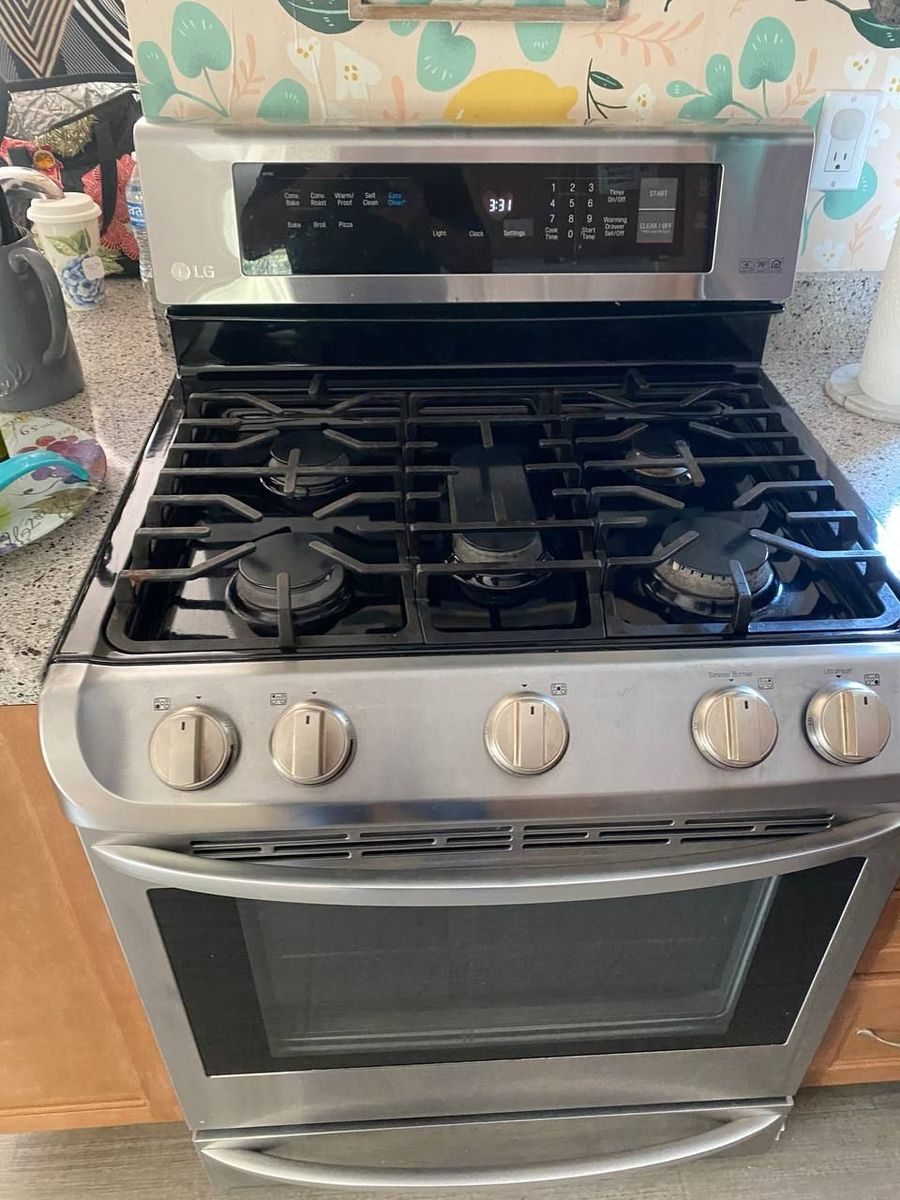
11 / 12
A five-burner gas range ready for testing. Burner igniters, the spark module and the bake igniter's amp draw are measured before a part is ordered.
Read the service page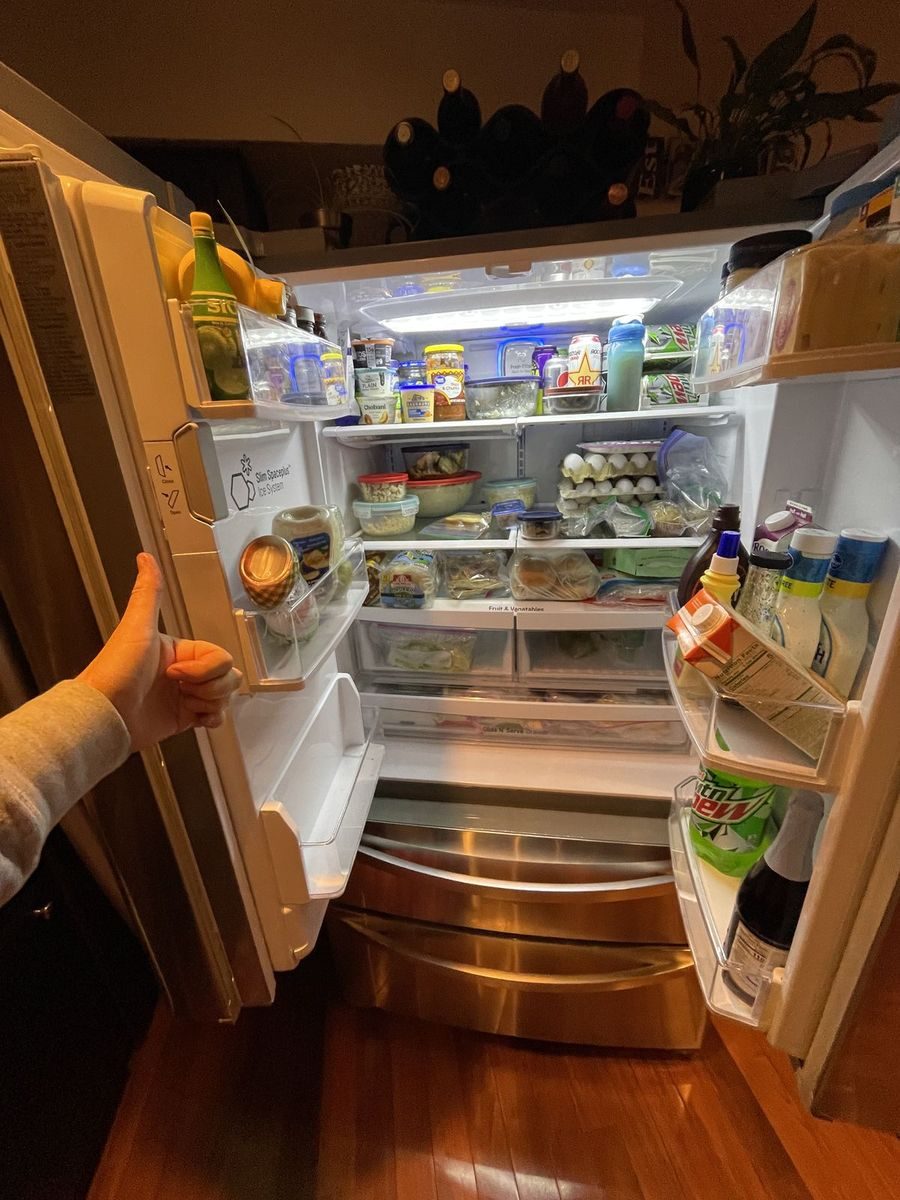
12 / 12
A French-door refrigerator open for diagnosis. Slow ice starts with the water: the inlet valve, the filter and a fill tube that can freeze shut.
Read the service pageCall when temperatures keep drifting even after the coil is clean and the unit has room to breathe. Specific signs: a relay that ticks over and over at the rear while the compressor never catches, a warm refrigerator section above a freezer that still holds hard ice, a white crust of frost climbing the freezer's rear panel, a silent condenser fan beside a humming compressor, or a unit that runs nonstop through a mild evening and still cannot reach 40°F.
Our technicians test the start relay and overload, both fan motors, the defrost heater and thermostat, and the control. You then get the repair price on a written estimate, and nothing proceeds until you agree to it. That diagnostic visit has a fee the office quotes at booking; approving the repair rolls that fee into the repair total, and declining leaves it as the only charge. If an aging spare fridge isn't worth fixing, you hear that before spending anything more, and repairs carry written warranty terms on the invoice. Reserve a date and arrival slot online, or call any day from 8 AM to 7 PM.
Guide · Summer cooling
What a heat pump or central AC should do on a 100°F Tri-Cities afternoon, how to help it keep up, and the warning signs of a weak capacitor, pitted contactor or dirty coil.
Guide · Outdoor unit care
How Tri-Cities west winds, blowing dust, cottonwood fluff and tumbleweeds clog heat pumps and AC condensers, how to rinse a coil safely, and which jobs to leave to a technician.
Guide · Winter heat pumps
Why Tri-Cities heat pumps steam, pause and defrost so often during winter inversions, how to tell normal defrost from a coil that stays iced, and what the AUX light means.
It is not bad, but it is harder on the machine. A standard refrigerator in a Tri-Cities garage faces summer heat above its design range and winter cold that can confuse its controls. Expect longer compressor run times, earlier wear on fans and start parts, and a freezer that may warm during cold weeks. A garage-ready model or a chest freezer copes with the swings better.
Usually because the garage is hot and the condenser cannot shed heat fast enough. Check that the coil is clean, the fan at the back or bottom is turning, and the unit has space around it. If the refrigerator section stays above 40°F after that, a weak condenser fan, a failing start relay or a sealed-system problem may be behind it, and a technician should test it.
You can, but read the owner's manual first for the coldest room it is rated to sit in. Top-freezer refrigerators are the likeliest to let the freezer warm in cold weather, because their control watches the refrigerator side. A standalone freezer reads its own temperature, though thick oil can still make starting hard near 10°F. Watch the thermometer daily during cold snaps.
Talk to us
Book online with the date and arrival slot that suit you, or call between 8 AM and 7 PM, any day. The office confirms by phone before the technician heads your way.
Book a visit
One slip, filled top to bottom. The office phones to confirm the visit, and the technician calls again when on the way.
Every number below is a public state record. Look each one up on L&I Verify, or read what each license allows on our licenses page.
What our licenses cover