01 / 12
Dishwasher repair
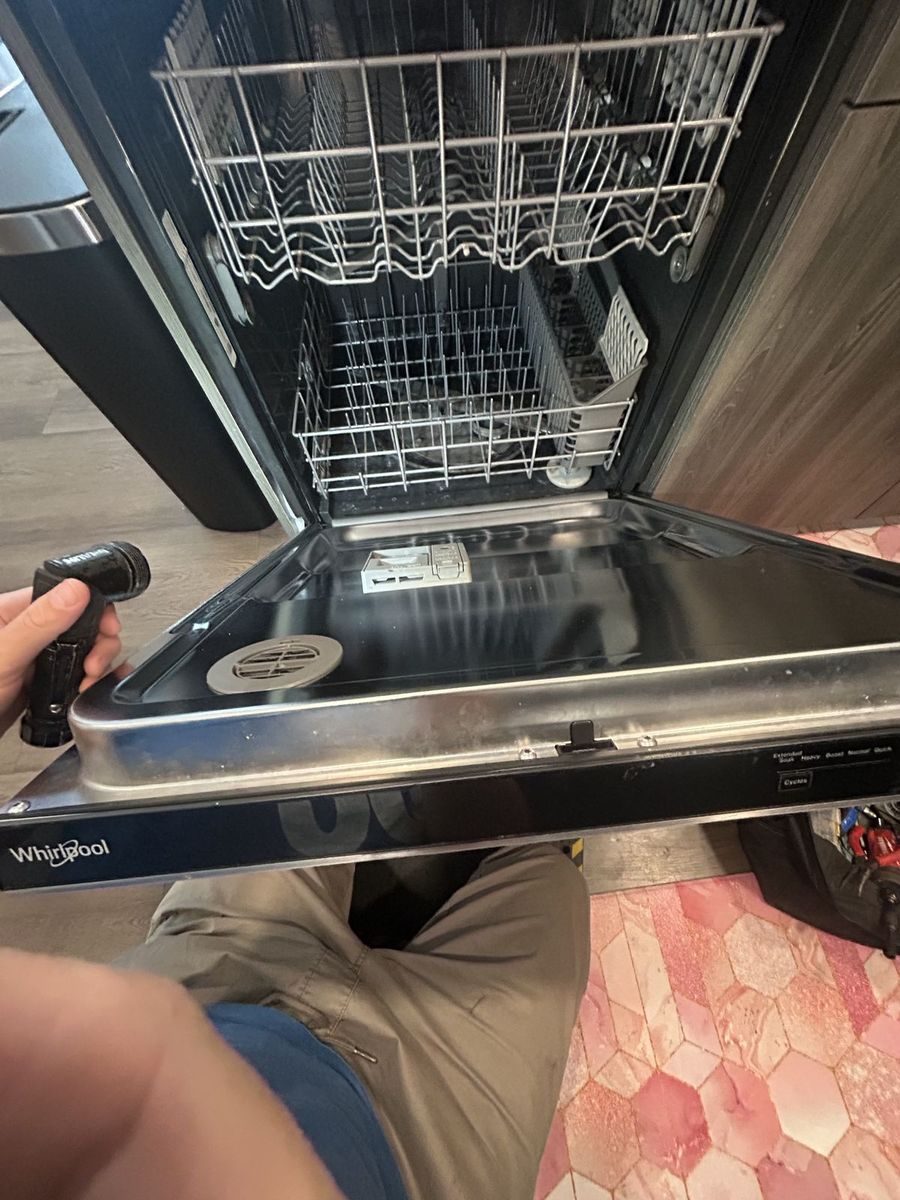
Door open and racks out on a dishwasher. A puddle left behind after the last rinse sends us to the filter screen, the pump and the hose route under the sink, in that order.
Read the service pageDishwasher repair under our 07D Appliance Repair specialty
When a dishwasher stops draining, leaves a chalky haze or quits mid-cycle, the cause is usually one part you can name: a jammed pump impeller, a scaled heater, a sticking float. Our technicians track that part down, put the repair figure on a written quote, and pick up a tool only after you agree.
Short answer
Most dishwasher failures trace to a short list of parts: the drain pump, the filter, the spray arms, the heater, the inlet valve and the float or leak sensor. Our technician reads the code, puts a meter on the likely suspects, and writes a quote before touching anything. Say yes, and the diagnostic charge becomes one line within the repair figure; turn it down, and that single line is the whole invoice.
Usually because water is not moving through the machine the way it should. A dishwasher is a small hydraulic loop: the inlet valve fills the tub to a set level, the circulation pump pushes that water through the spray arms, the heater brings it up to wash temperature, and the drain pump sends it out through the hose and the high loop under the sink. When one step falls short, the symptom shows up somewhere else. A clogged filter starves the spray arms, so food stays baked on the top rack.
Newer machines make guessing harder. Bosch, KitchenAid and recent Whirlpool models wash with very little water and depend on a manual filter that plenty of owners have never pulled out. On many Bosch units the water is warmed by an element wrapped around the circulation pump housing rather than a bare coil in the tub, while LG and Samsung machines flag faults as two-character codes on the display. We service every one of these, plus GE, Maytag, Frigidaire, Kenmore and Electrolux, under the 07D Appliance Repair specialty listed on our Washington electrical contractor license.
The technician begins with what you saw: the code, the noise, where the water sat. Most models have a service mode that runs each load on its own, so the drain pump, inlet valve, circulation motor and heater can be checked one at a time. With the toe kick off, a meter shows whether the pump winding is open, whether the valve coil gets voltage during fill, and whether the heater circuit is complete. Before anything is replaced, you receive the readings and a written repair quote.
Pumps, valves, door switches and thermal fuses for common models are stocked in the van, so a typical failure can often be handled on the spot. A control board or a brand-specific pump-heater assembly may need ordering; it is quoted to you before the order goes in. About the diagnostic fee: the office states the amount at scheduling. Should you approve the work, that fee is folded in; should you pass, it stands alone as the bill. Your invoice spells out the warranty in writing.
Hard water is the steady enemy here. Kennewick pulls its supply from two sources, the Columbia River and a set of Ranney collector wells, and hardness wanders between about 50 and 200 ppm over the year, a span of 5 to 14 grains per gallon. That swing explains why a detergent and rinse aid setting that worked in spring can leave glasses cloudy by fall. Pasco and Richland mostly use treated Columbia River water that is moderately hard. In all three cities, scale builds on heating elements, inside spray arm nozzles and across the inlet valve's screen, and a scaled heater takes longer to warm the water, which stretches every cycle.
Housing plays a part too. In Kennewick's Creekstone and Cherry Creek Estates, homes built in the 2000s and 2010s came with builder-grade dishwashers that have reached the age when pumps, door gaskets and latches wear out. In Richland's alphabet houses near Jadwin Avenue and George Washington Way, most kitchens have been remodeled, and a dishwasher fitted during a remodel can end up with a long, sagging drain hose and no proper high loop, letting dirty sink water creep back into the dishwasher between loads. We look at the route under the sink on every drain complaint.
One photo per tab from our service calls. Tap a tab, or let the file turn on its own.
01 / 12
Door open and racks out on a dishwasher. A puddle left behind after the last rinse sends us to the filter screen, the pump and the hose route under the sink, in that order.
Read the service page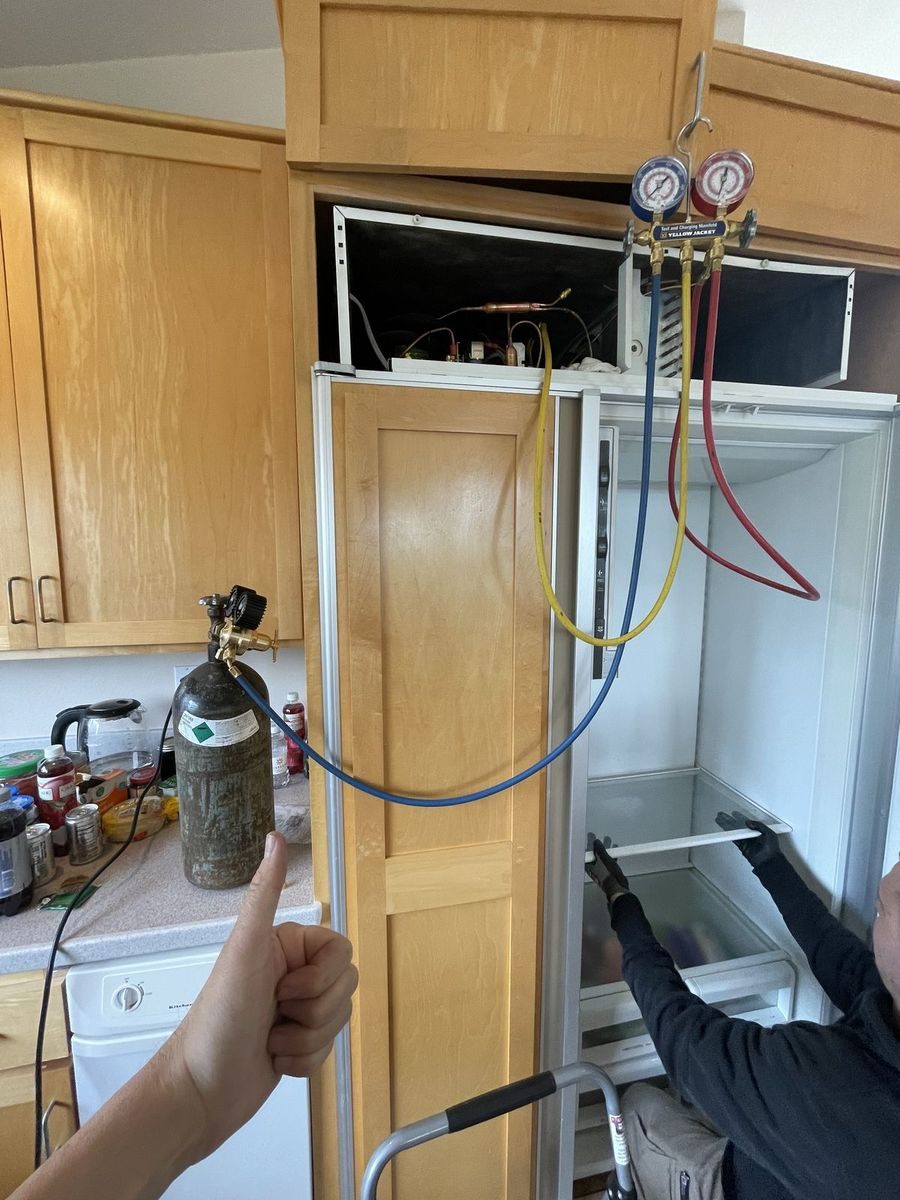
02 / 12
Gauges connected to a built-in refrigerator's sealed system. Leak searches, brazing and recharges happen in the kitchen, so the fridge stays where it is.
Read the service page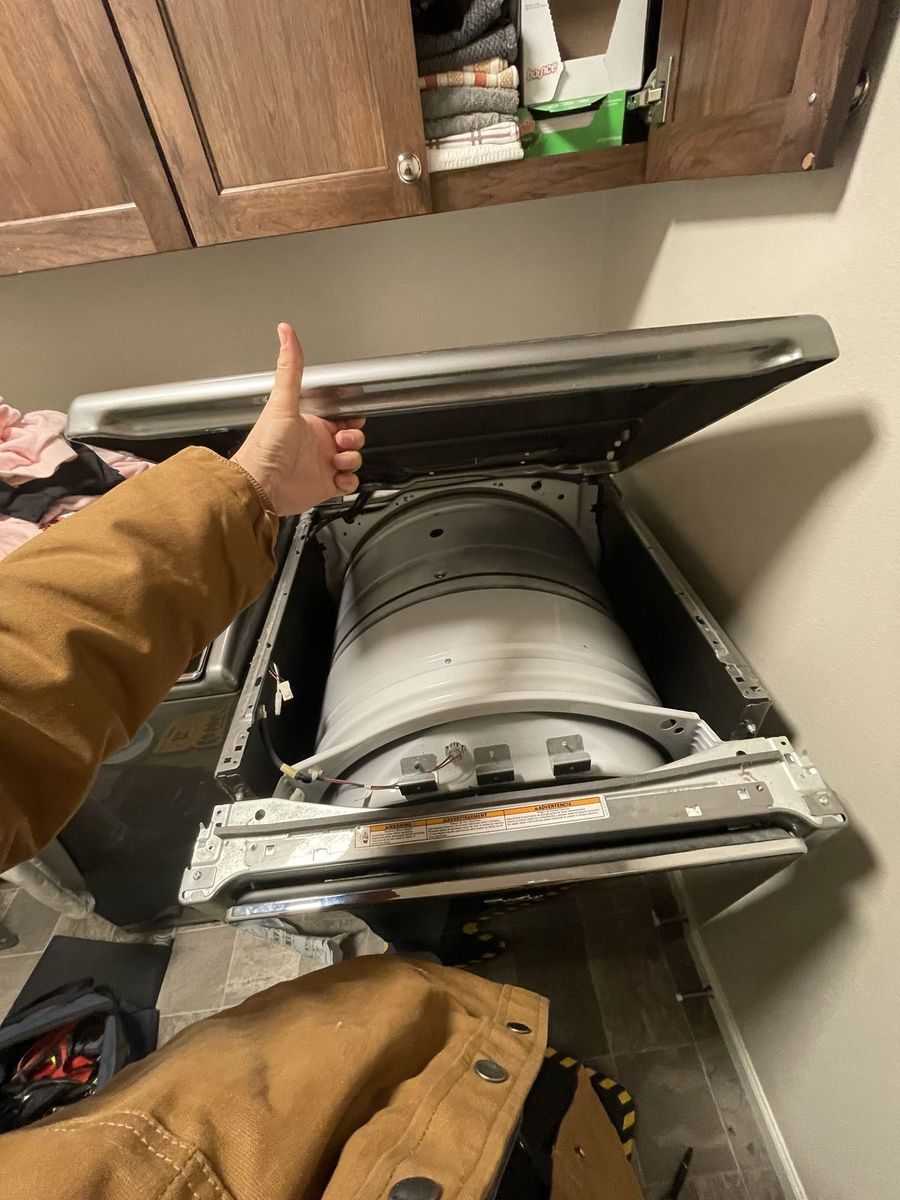
03 / 12
A top-load washer with the top panel raised. Lid switch, drive coupler and drain pump are all within reach once the top comes up.
Read the service page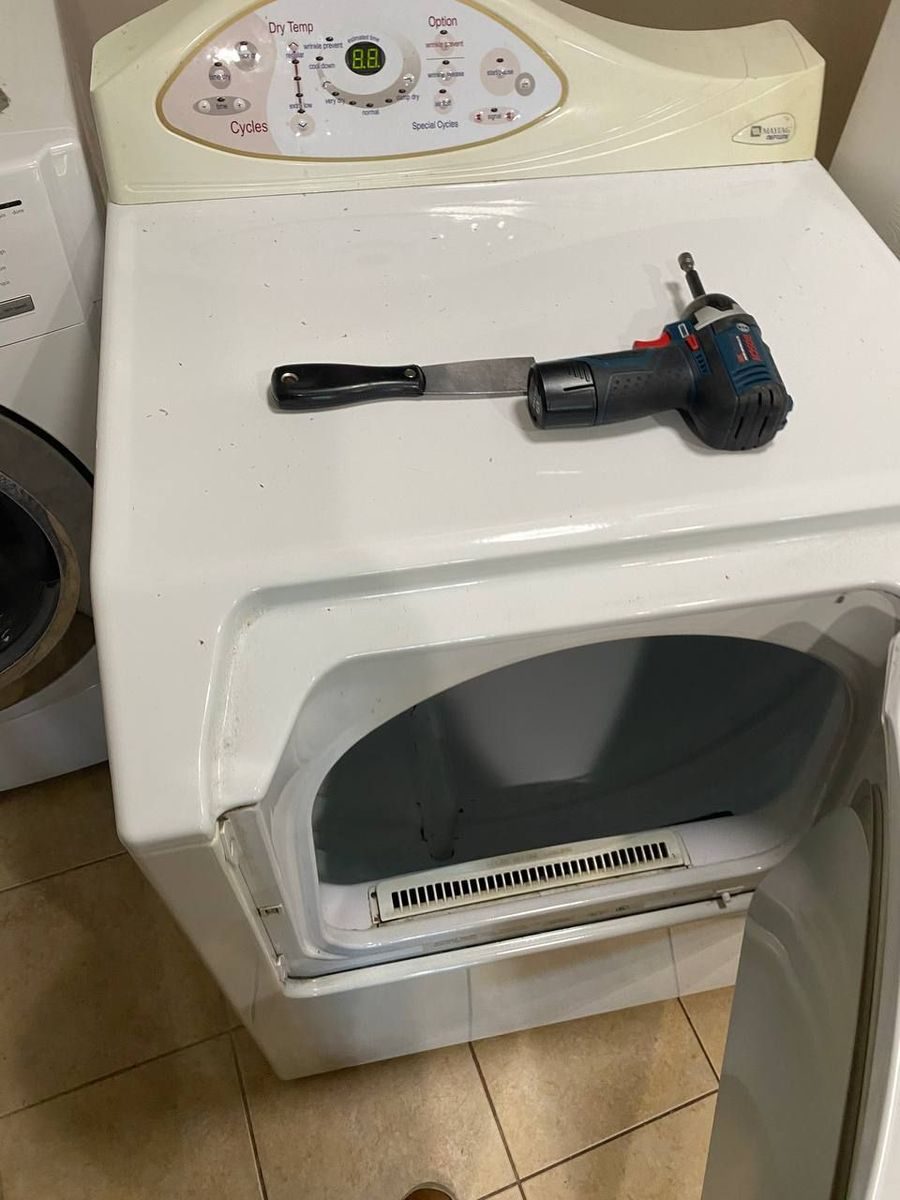
04 / 12
An electric dryer opened up in a laundry room. The thermal fuse, the heating element and the vent run behind the machine get tested together.
Read the service page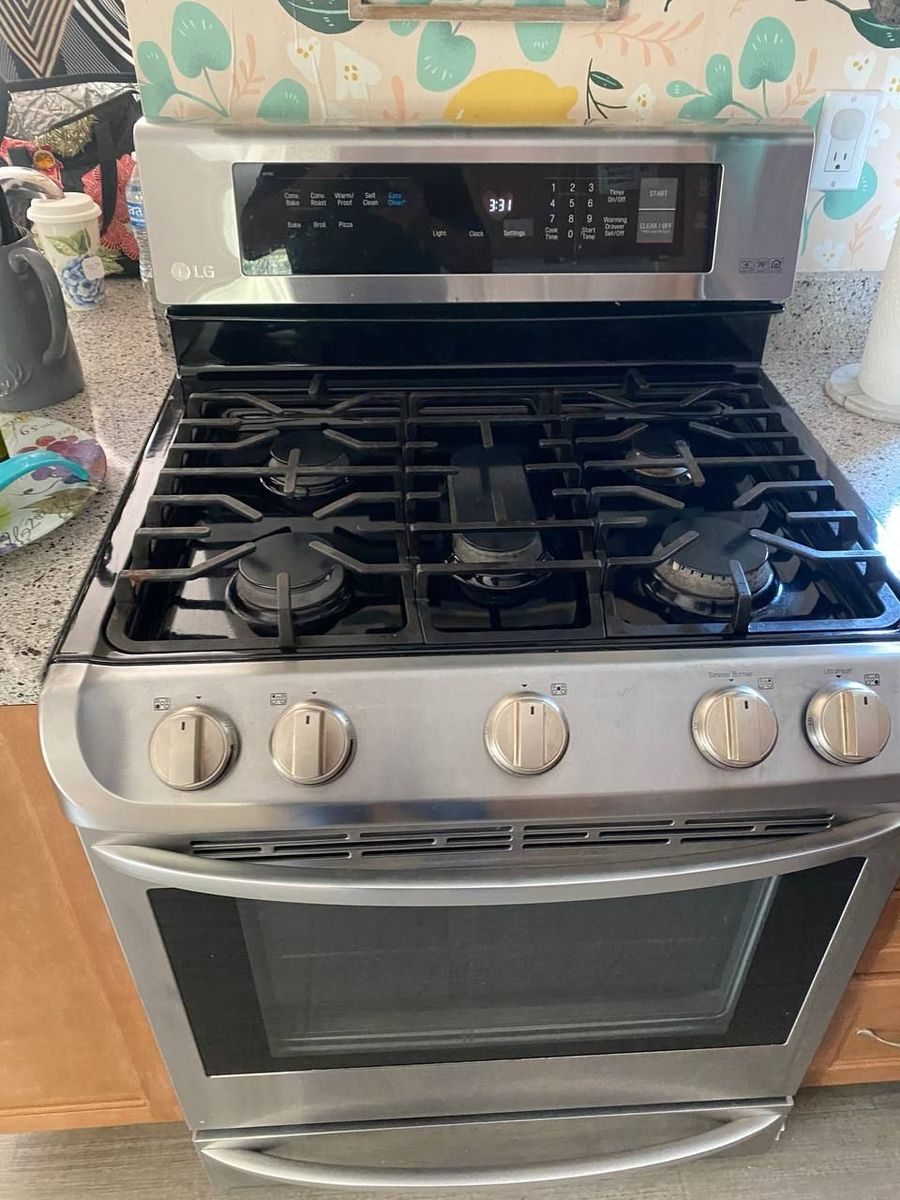
05 / 12
A five-burner gas range ready for testing. Burner igniters, the spark module and the bake igniter's amp draw are measured before a part is ordered.
Read the service page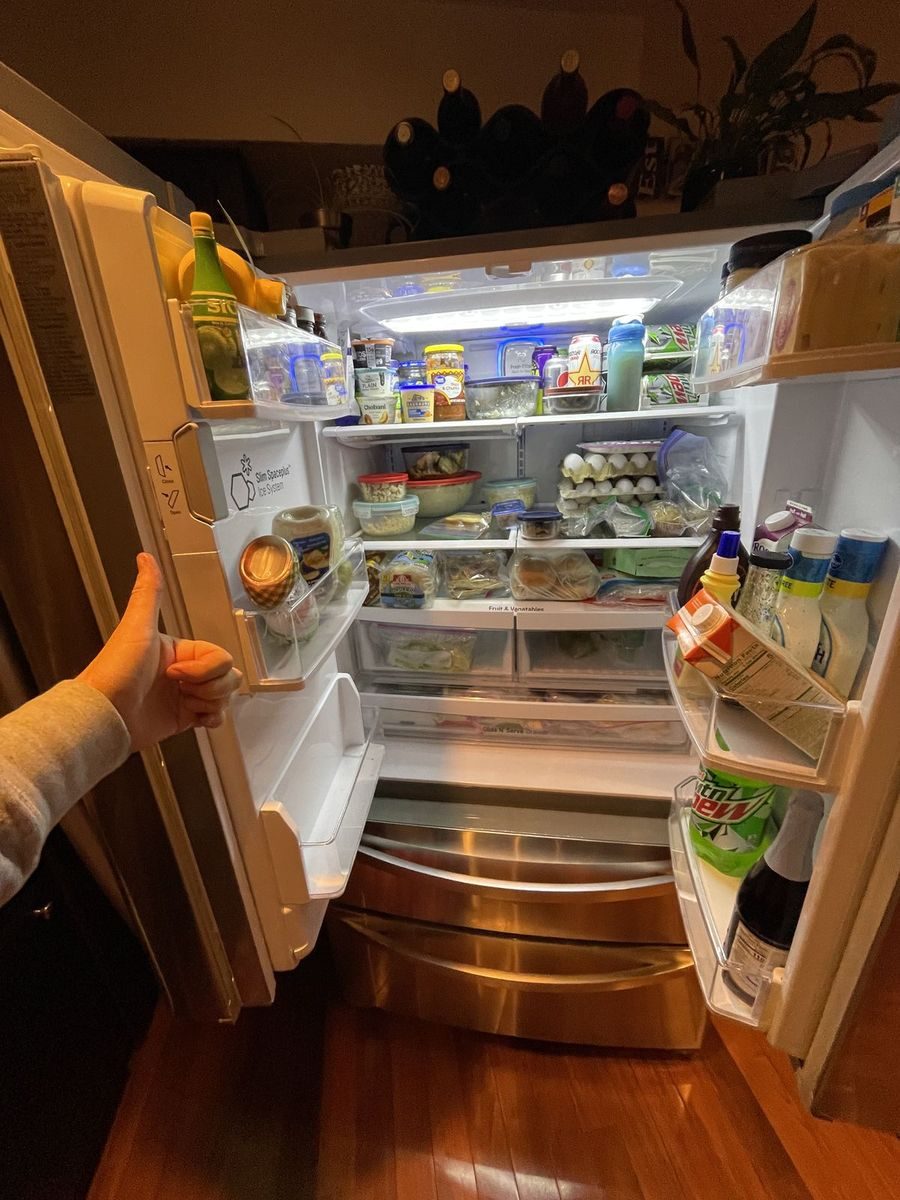
06 / 12
A French-door refrigerator open for diagnosis. Slow ice starts with the water: the inlet valve, the filter and a fill tube that can freeze shut.
Read the service page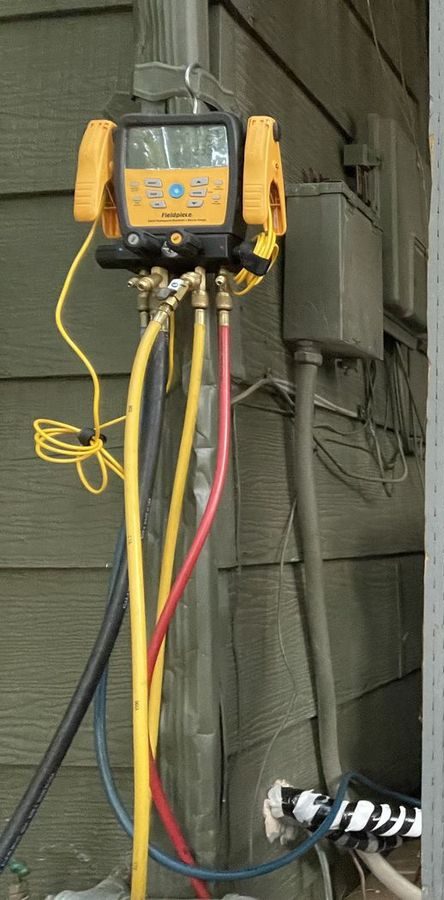
07 / 12
Digital gauges hang by the outdoor unit while the heat pump runs. Superheat and subcooling show whether the charge, a valve or the defrost board is the problem.
Read the service page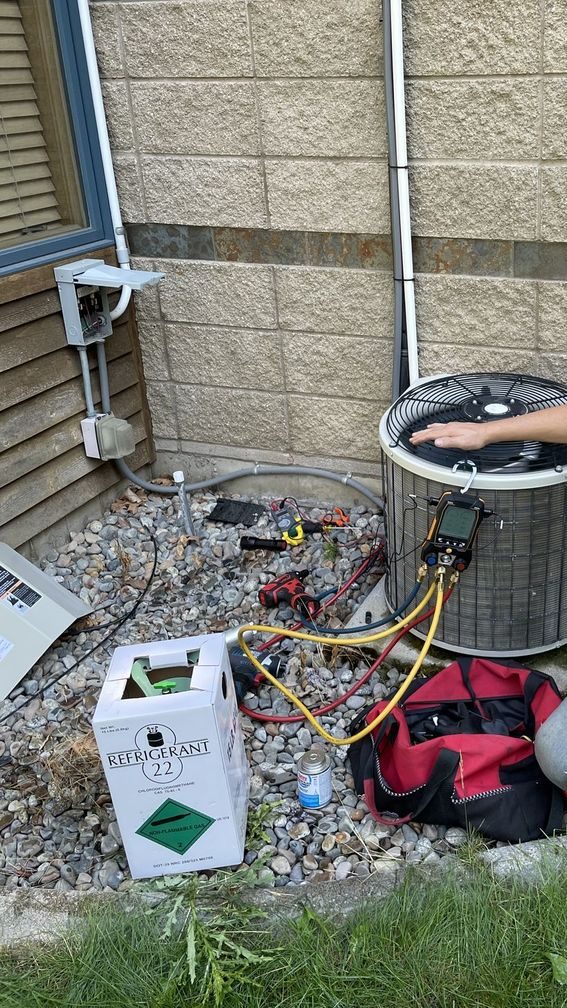
08 / 12
An older condenser under test with hoses on the service ports. The capacitor, contactor and fan motor get checked before anyone talks about refrigerant.
Read the service page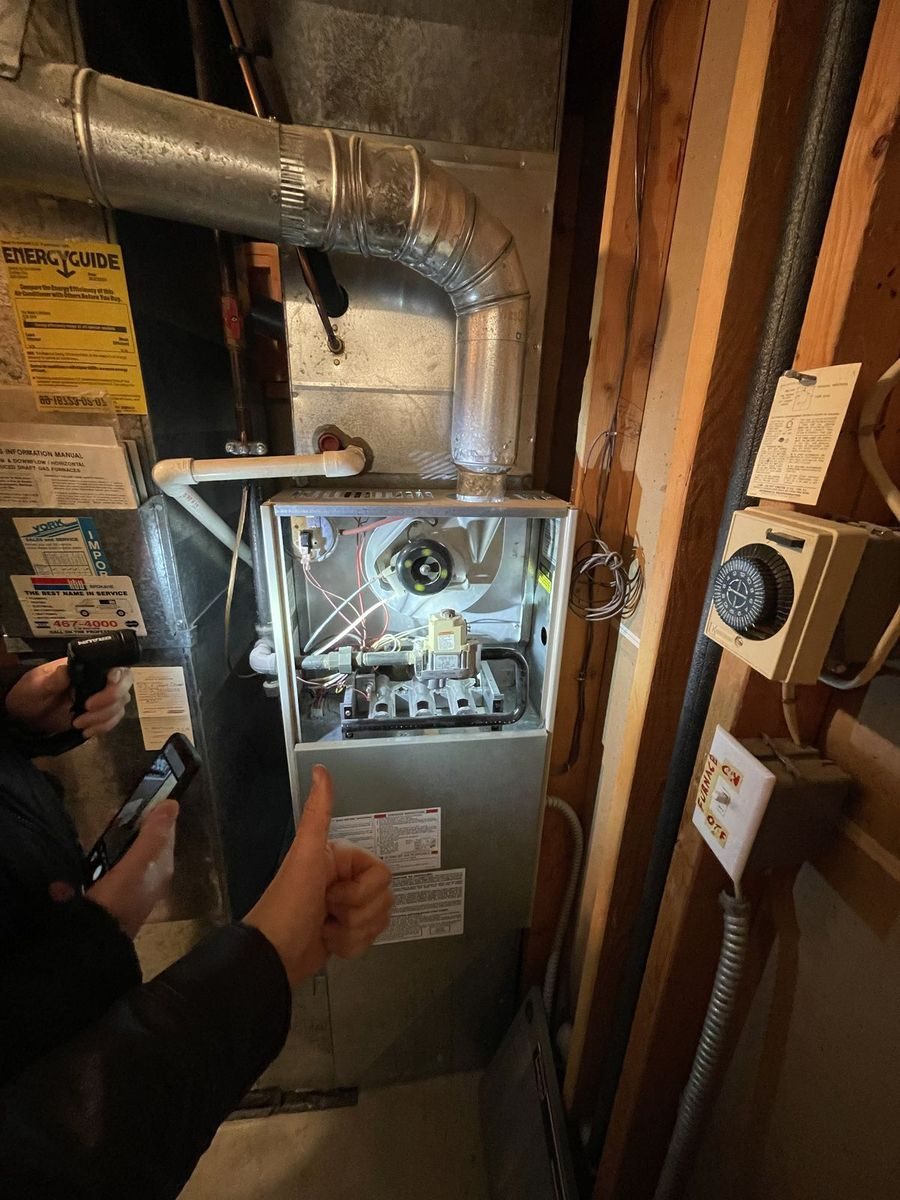
09 / 12
The burner compartment of a gas furnace, open. We follow the start-up order, inducer, pressure switch, igniter, flame sensor, until the step that fails.
Read the service page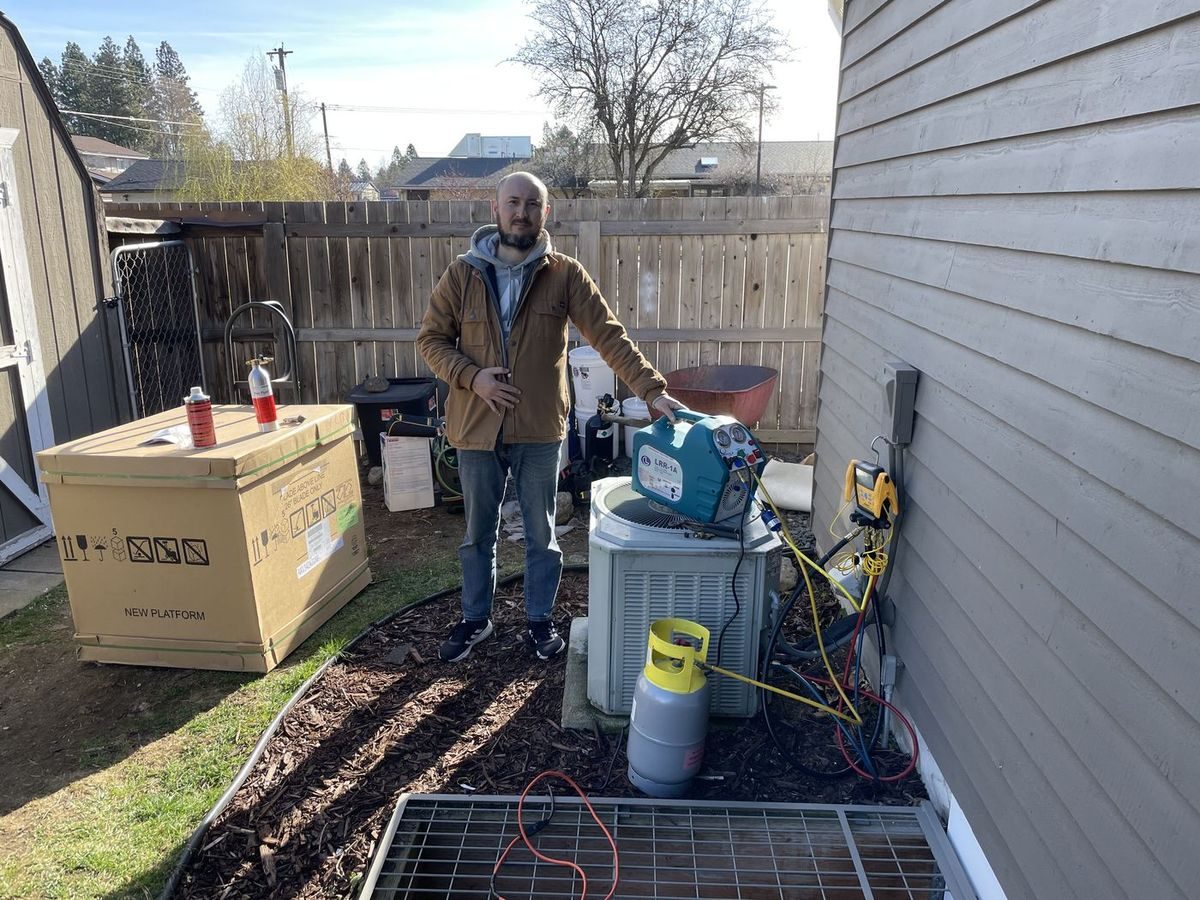
10 / 12
A recovery machine and cylinder beside an outdoor unit. On a replacement, the old refrigerant is pulled into the cylinder instead of the air.
Read the service page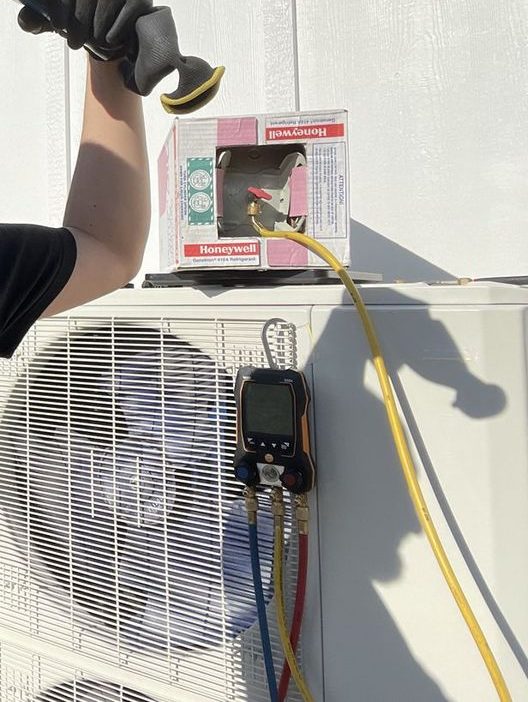
11 / 12
A ductless outdoor unit with a gauge set on it. Mini-splits get the same pressure and temperature readings as a central system, plus a look at the line-set insulation.
Read the service page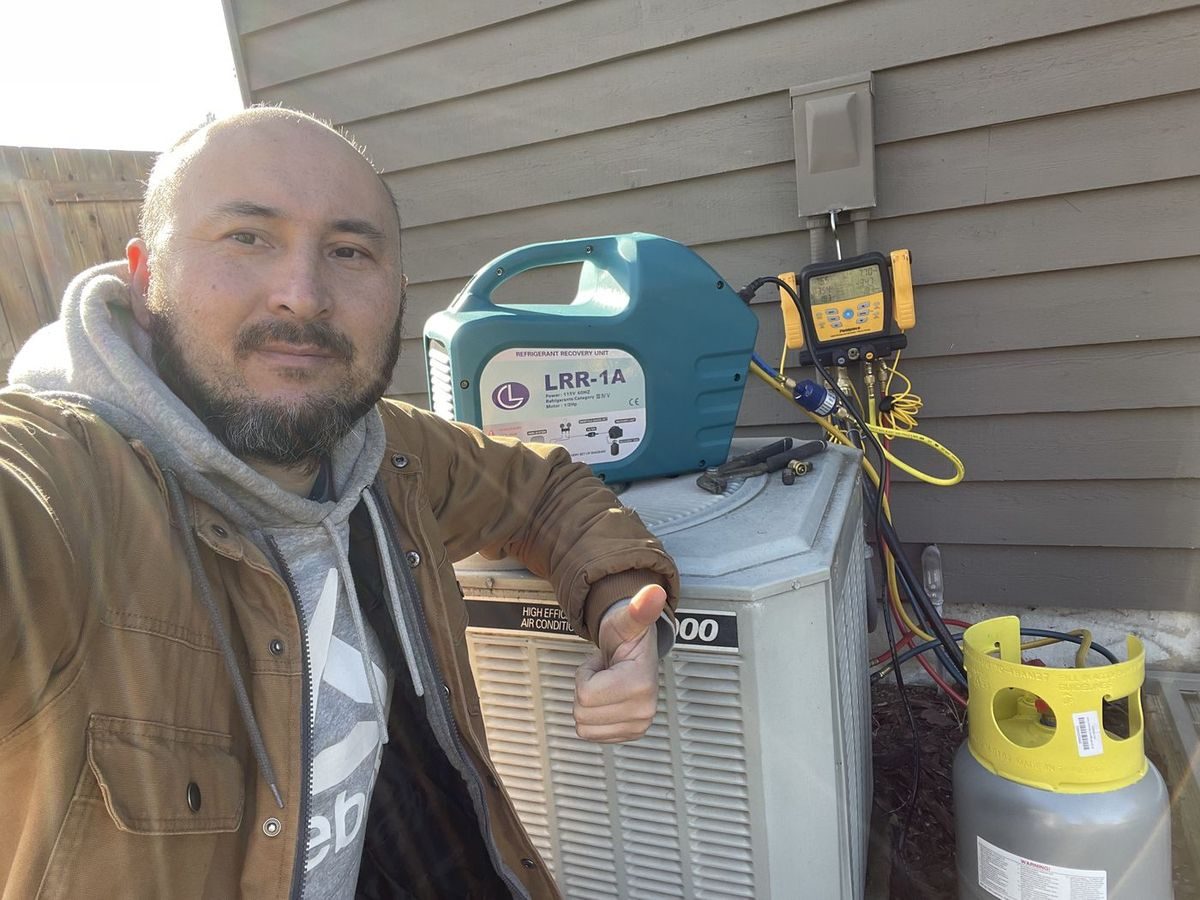
12 / 12
Gauges on a condenser during a seasonal visit. Spring visits wash the dust out of the coil; fall visits test defrost and heat strips before the fog weeks.
Read the service pageUsually it does, as long as the tub, racks and door are in good shape and only one part has quit. Replacing a drain pump, inlet valve, float switch or door gasket is a smaller job than pulling out a built-in machine and refitting the cabinet trim. The math changes when a rusted tub or a cracked inner door is leaking, when the control board and the pump have both gone, or when the rack coating has worn through and the tines are rusting. Then our technician tells you plainly and writes the repair figure down, so you can compare it with shopping for a new machine. To get on the schedule, pick a day plus an arrival window online, or call, and expect a confirming call from the office.
They point to a system, not a single part. On LG models, OE is a drain problem, IE means the fill took too long, AE flags water in the base and HE a heating fault. On Samsung dishwashers, 5C is drain, 4C is water supply, LC is a leak and HC is heating. Our technician uses the code as a starting point and confirms the failed part with a meter.
Often you can clear E24, which on most Bosch models means water is not leaving the tub fast enough. Clean the filter and check the drain hose for a kink. E25 points at the drain pump itself, usually a shard of glass or a pit lodged in the impeller, or a pump cover that has come loose. If cleaning the filter does not clear either code, a technician should open the pump housing.
A vinegar test settles it. Let a hazy tumbler soak in vinegar a few minutes, then rub it with a towel. Film that comes off is mineral deposit from hard water; more rinse aid, a correct detergent amount and a hotter wash all help. Haze that stays is etching, which is permanent and usually comes from heavy detergent doses in softer water. A heater running cool makes film worse, and we can test it.
Most odors come from food caught in the manual filter or from water that stays in the sump once the drain cycle ends. Many newer Bosch, KitchenAid and Whirlpool machines have no grinder, so the filter needs regular rinsing by hand. If water sits below the filter after a cycle, the drain pump, its check valve or a missing high loop is the likely cause, and that standing water turns sour between loads.
Yes, that is a door balance problem. Most built-in dishwashers hold the door with a spring on each side, tied to the hinge by a cord or cable. When a cable snaps or a spring stretches, the door falls hard, which can crack the hinge or the inner door panel. We replace springs and cables in pairs so both sides pull evenly, and we check the hinges for wear while the door is apart.
Then we tell you so and show you why. Our technician tests pressure at the inlet valve and follows the drain path from the pump to the sink connection. If the fault sits in the shutoff under the sink, the sink drain or the disposer inlet rather than the dishwasher, we note it on the invoice and explain who handles that work. You would owe only the diagnostic fee for that visit.
Talk to us
Reserve a day and an arrival window through the online form, or reach us by phone between 8 AM and 7 PM, any day of the week. A confirmation call follows, and your technician rings before pulling up.
Book a visit
One slip, filled top to bottom. The office phones to confirm the visit, and the technician calls again when on the way.
Every number below is a public state record. Look each one up on L&I Verify, or read what each license allows on our licenses page.
What our licenses cover