01 / 12
Refrigerator repair
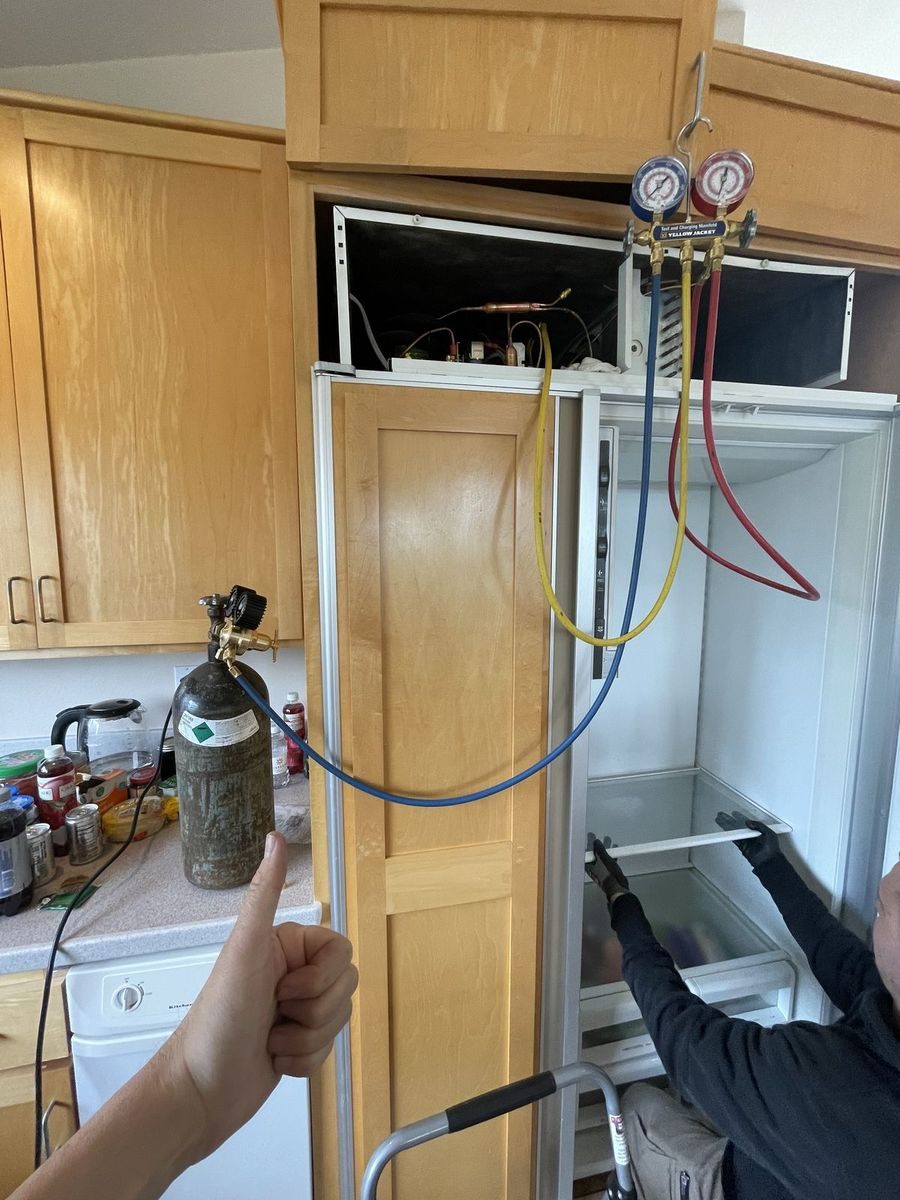
Gauges connected to a built-in refrigerator's sealed system. Leak searches, brazing and recharges happen in the kitchen, so the fridge stays where it is.
Read the service page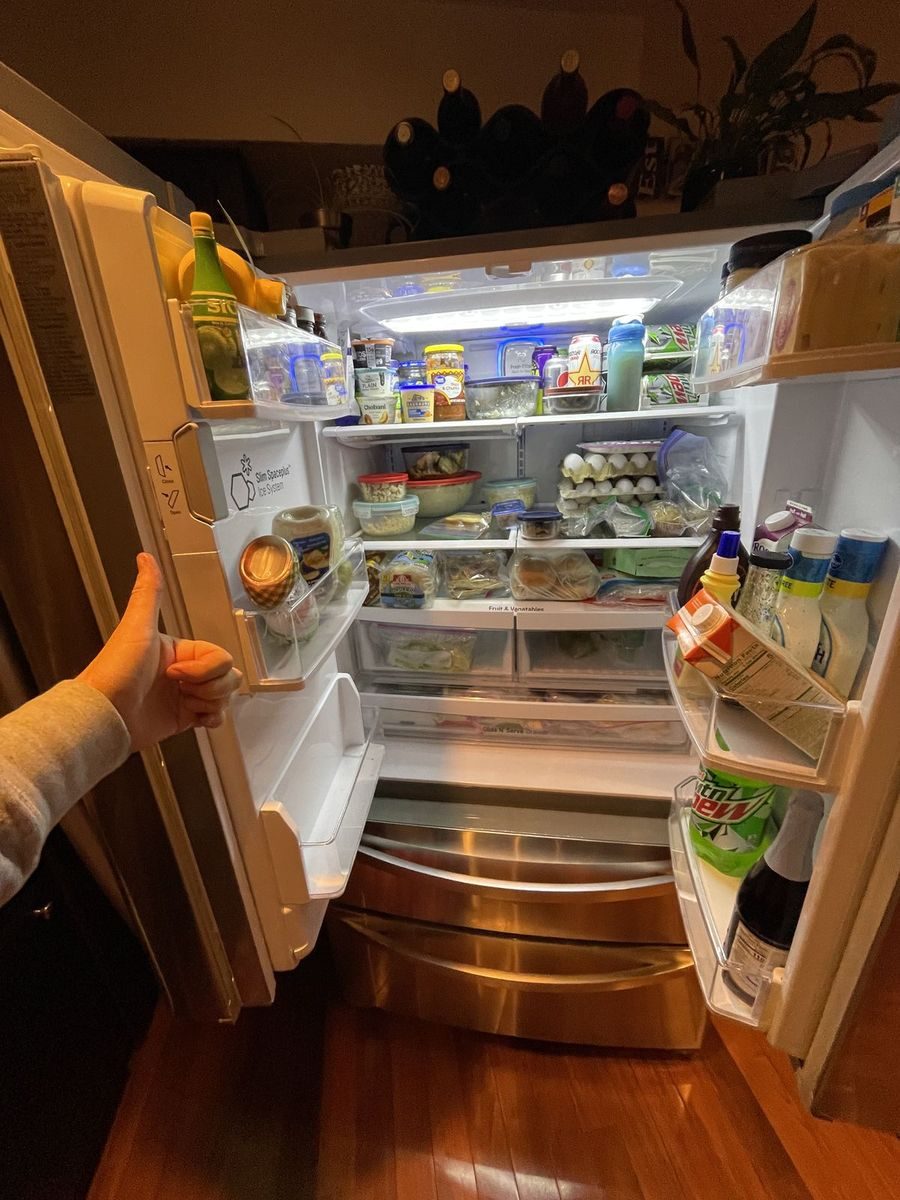
Richland · Kitchen, laundry & garage appliances
Across Richland, our technicians fix the cold, wet and hot machines of a household: refrigerators, freezers and ice makers; washers and dryers; dishwashers; and ranges, ovens and cooktops. They meter the part that actually failed, explain it in plain terms, and quote the job in writing before a single screw comes out for the fix.
Short answer
Richland appliance calls usually trace to a handful of parts: a defrost heater or evaporator fan in a refrigerator, a drain pump or torn door boot in a washer, a thermal fuse or igniter in a dryer, an inlet valve in a dishwasher, and a bake element or igniter in an oven. We test before replacing, write down the price, and proceed once you approve.
The technician starts by running the appliance and pulling any fault code, then tests the suspect part with a meter instead of swapping parts until something works. A refrigerator gets temperature readings at the evaporator and condenser and a check of the defrost heater, the bimetal defrost thermostat and the evaporator fan. A washer gets a drain test and a close look at the door boot and pump filter. A dryer gets continuity checks on the thermal fuse, cycling thermostat and element or gas igniter, plus a look down the vent.
Diagnosis is billed as a separate fee, and the office names the figure when you set up the visit. Approving the repair rolls that amount into the repair bill; declining leaves it standing as the full charge. The repair is priced on paper beforehand, parts that must be ordered are quoted at the same time, and the warranty terms come written on the invoice. Larch holds the Washington 07D Appliance Repair specialty.
Summer heat shows up first in the garage. Richland's July afternoons average about 92°F, and 100°F days arrive in most years, which keeps a garage refrigerator or chest freezer running almost without a break. The west wind drops fine dust on condenser coils, so the compressor runs hotter still. Leave a garage unit a few inches off the wall, vacuum its condenser coil each spring, and watch for a freezer that frosts heavily or a fresh-food side that keeps creeping warmer.
Most Richland taps deliver treated Columbia River water that is moderately hard. Over time those minerals settle on inlet valve screens, the holes of dishwasher spray arms and the ice maker's fill tube, and they make a washer's detergent work harder. Running a cleaning cycle and checking screens when filling slows keeps small scale problems from becoming failed valves. Speed Queen, Bosch, GE, Whirlpool, LG, Maytag, Kenmore, KitchenAid, Frigidaire and Electrolux are all regulars on Richland calls.
Bigger houses in Meadow Springs and across south Richland tend to keep an overflow fridge or a chest freezer beside the cars. On an August afternoon that space can run far hotter than the kitchen, so the compressor seldom rests. We check condenser airflow, door gaskets and the start relay, and tell you whether that particular model is built to live in an unconditioned garage.
Open, windy ground around Horn Rapids pushes fine dust into anything with a fan. Refrigerator condenser coils and dryer vent hoods clog sooner here, and a blocked vent is a frequent reason for a blown dryer thermal fuse. Our technicians look at the whole vent run on every dryer call before a new fuse goes in.
Remodeled alphabet houses near Jadwin Avenue and George Washington Way often fit modern appliances into wartime floorplans. Tight laundry closets can kink dryer vents and pinch washer drain hoses, and a refrigerator boxed in by cabinets may not get enough condenser air. We check installation clearances along with the part that failed.
One photo per tab from our service calls. Tap a tab, or let the file turn on its own.
01 / 12
Gauges connected to a built-in refrigerator's sealed system. Leak searches, brazing and recharges happen in the kitchen, so the fridge stays where it is.
Read the service page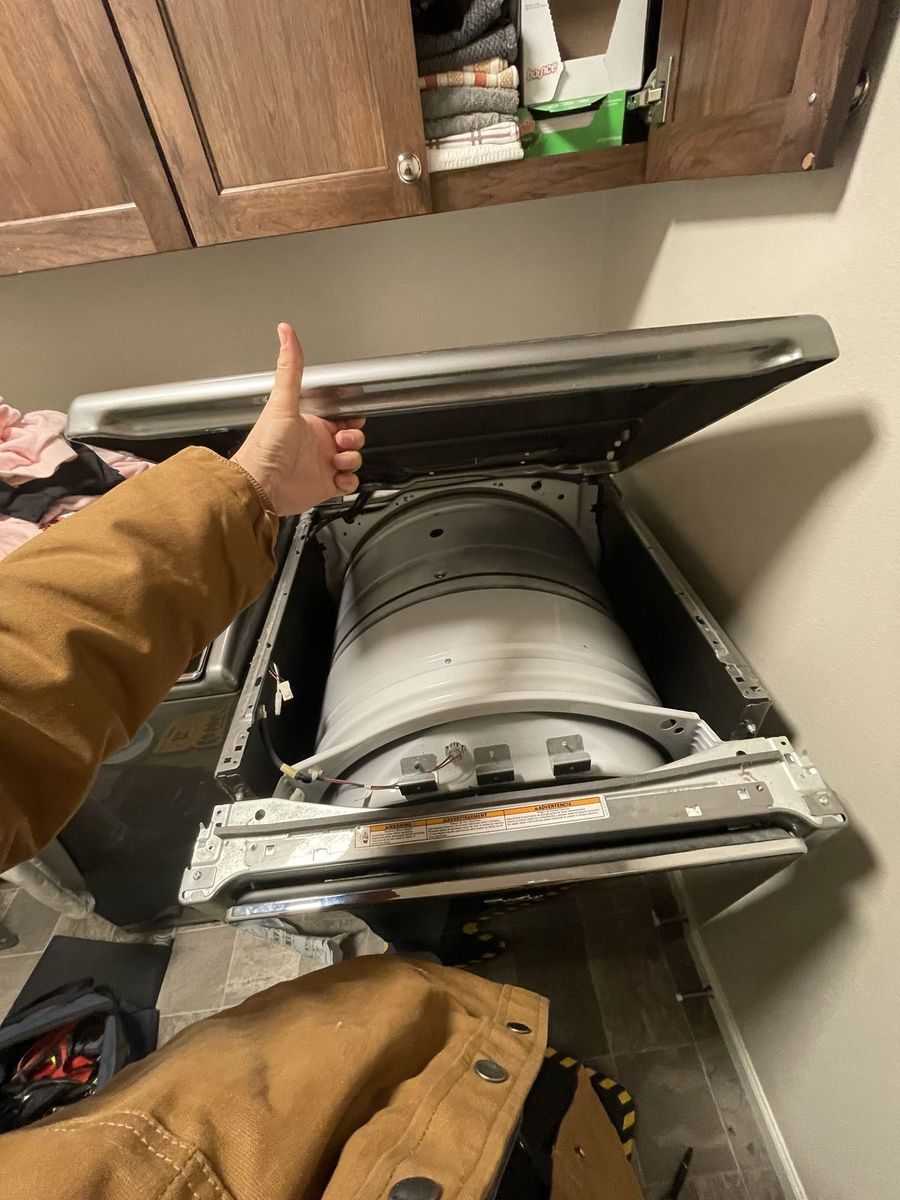
02 / 12
A top-load washer with the top panel raised. Lid switch, drive coupler and drain pump are all within reach once the top comes up.
Read the service page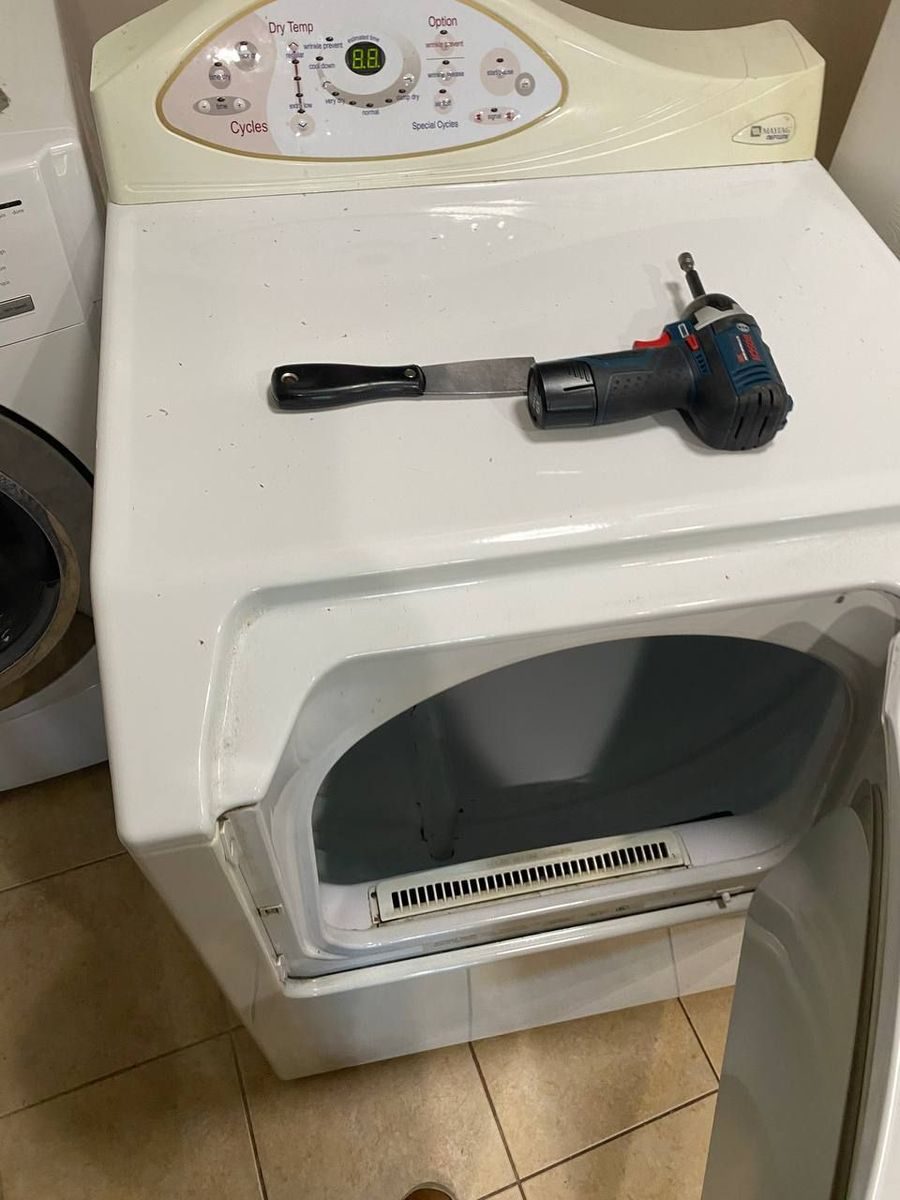
03 / 12
An electric dryer opened up in a laundry room. The thermal fuse, the heating element and the vent run behind the machine get tested together.
Read the service page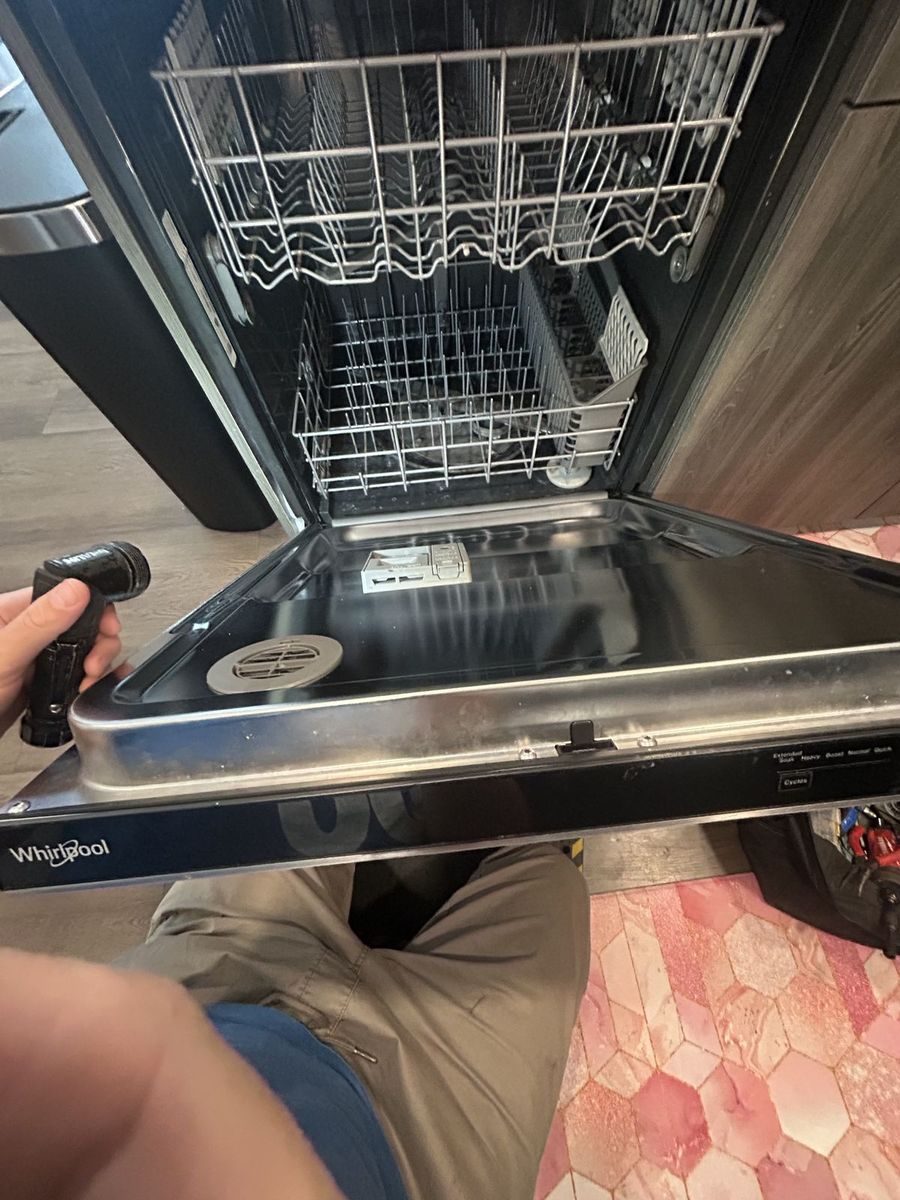
04 / 12
Door open and racks out on a dishwasher. A puddle left behind after the last rinse sends us to the filter screen, the pump and the hose route under the sink, in that order.
Read the service page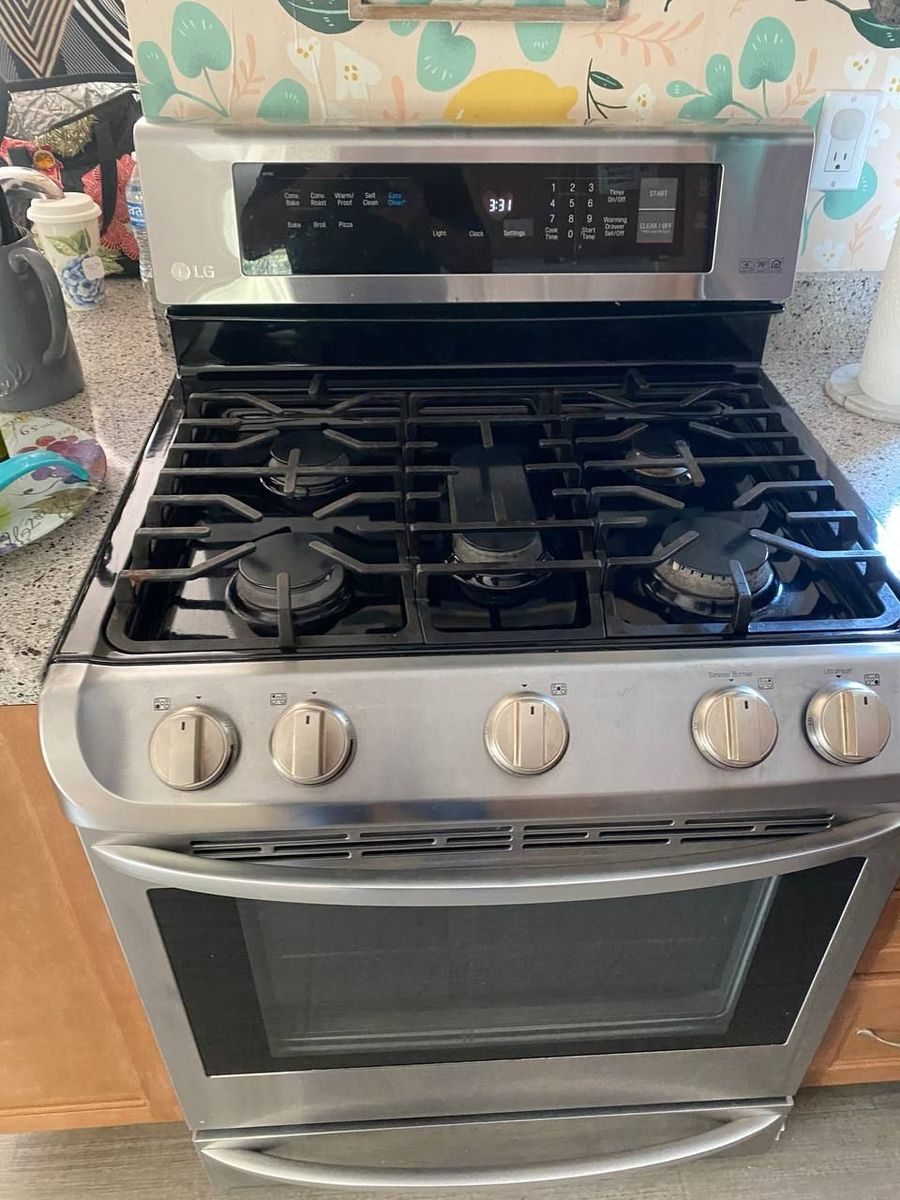
05 / 12
A five-burner gas range ready for testing. Burner igniters, the spark module and the bake igniter's amp draw are measured before a part is ordered.
Read the service page06 / 12
A French-door refrigerator open for diagnosis. Slow ice starts with the water: the inlet valve, the filter and a fill tube that can freeze shut.
Read the service page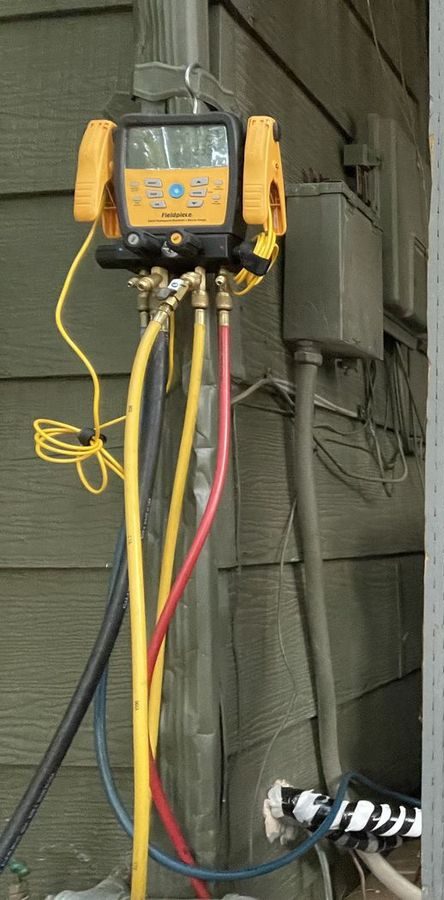
07 / 12
Digital gauges hang by the outdoor unit while the heat pump runs. Superheat and subcooling show whether the charge, a valve or the defrost board is the problem.
Read the service page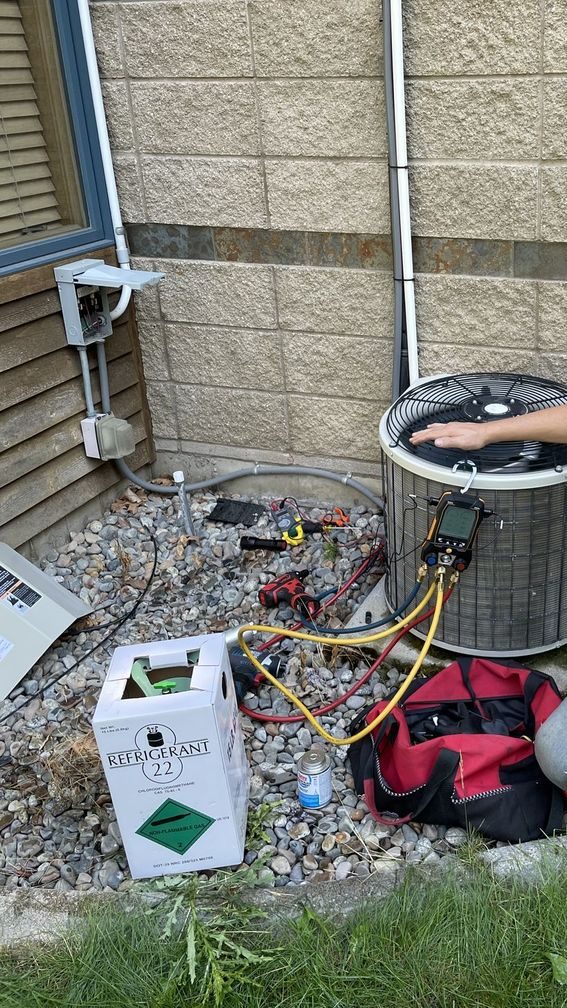
08 / 12
An older condenser under test with hoses on the service ports. The capacitor, contactor and fan motor get checked before anyone talks about refrigerant.
Read the service page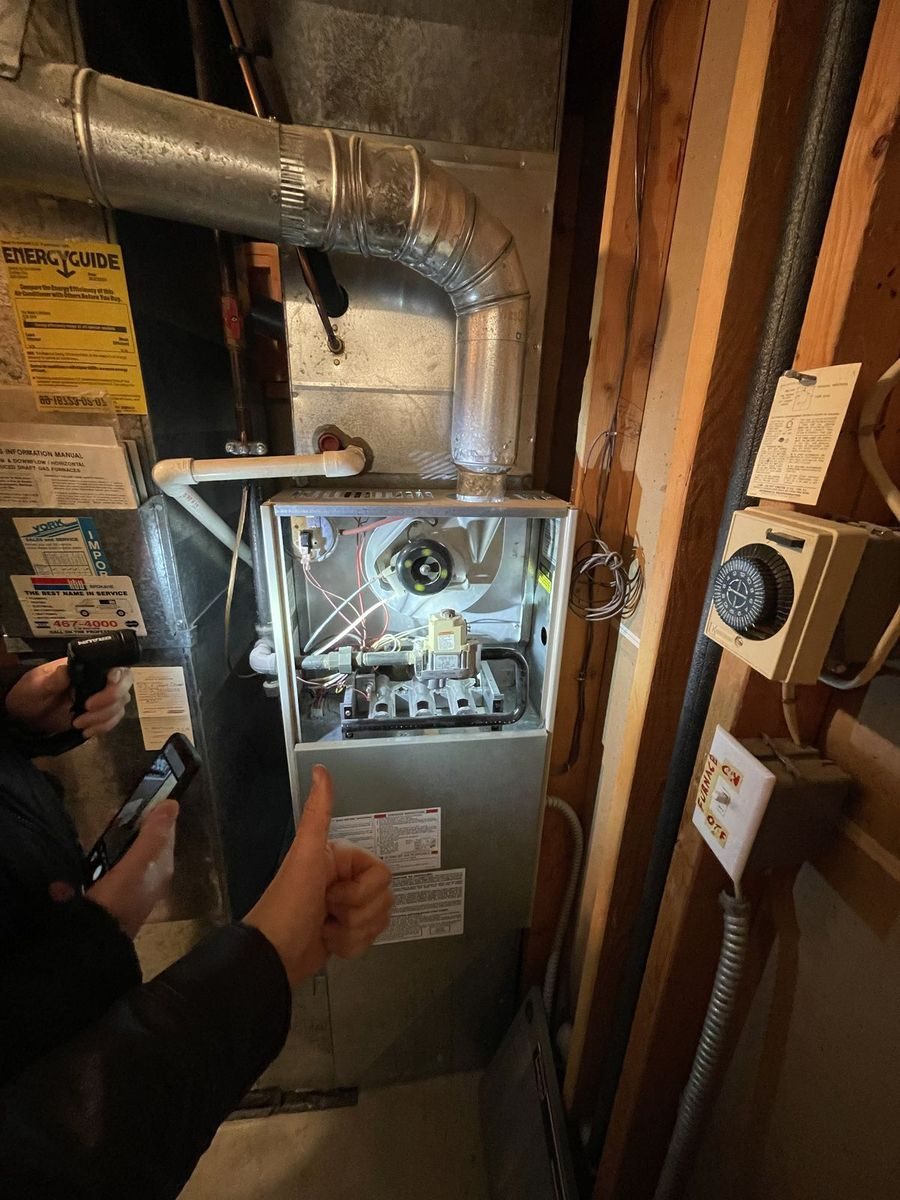
09 / 12
The burner compartment of a gas furnace, open. We follow the start-up order, inducer, pressure switch, igniter, flame sensor, until the step that fails.
Read the service page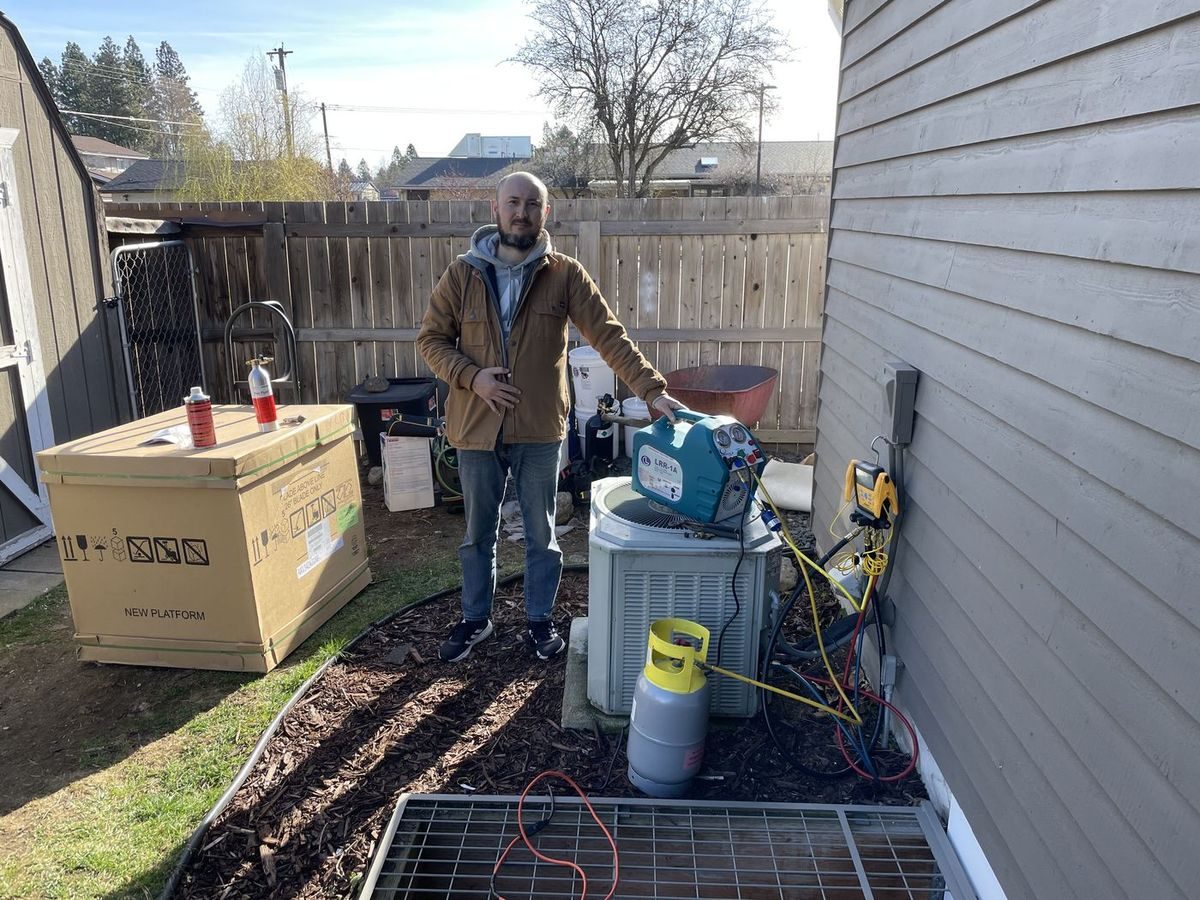
10 / 12
A recovery machine and cylinder beside an outdoor unit. On a replacement, the old refrigerant is pulled into the cylinder instead of the air.
Read the service page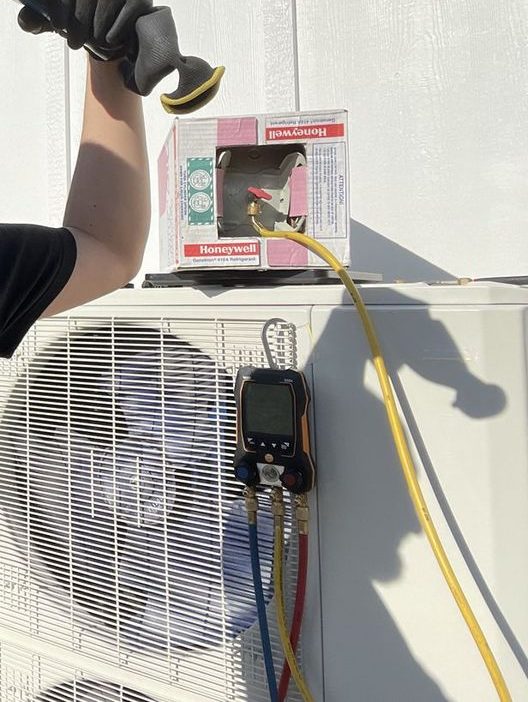
11 / 12
A ductless outdoor unit with a gauge set on it. Mini-splits get the same pressure and temperature readings as a central system, plus a look at the line-set insulation.
Read the service page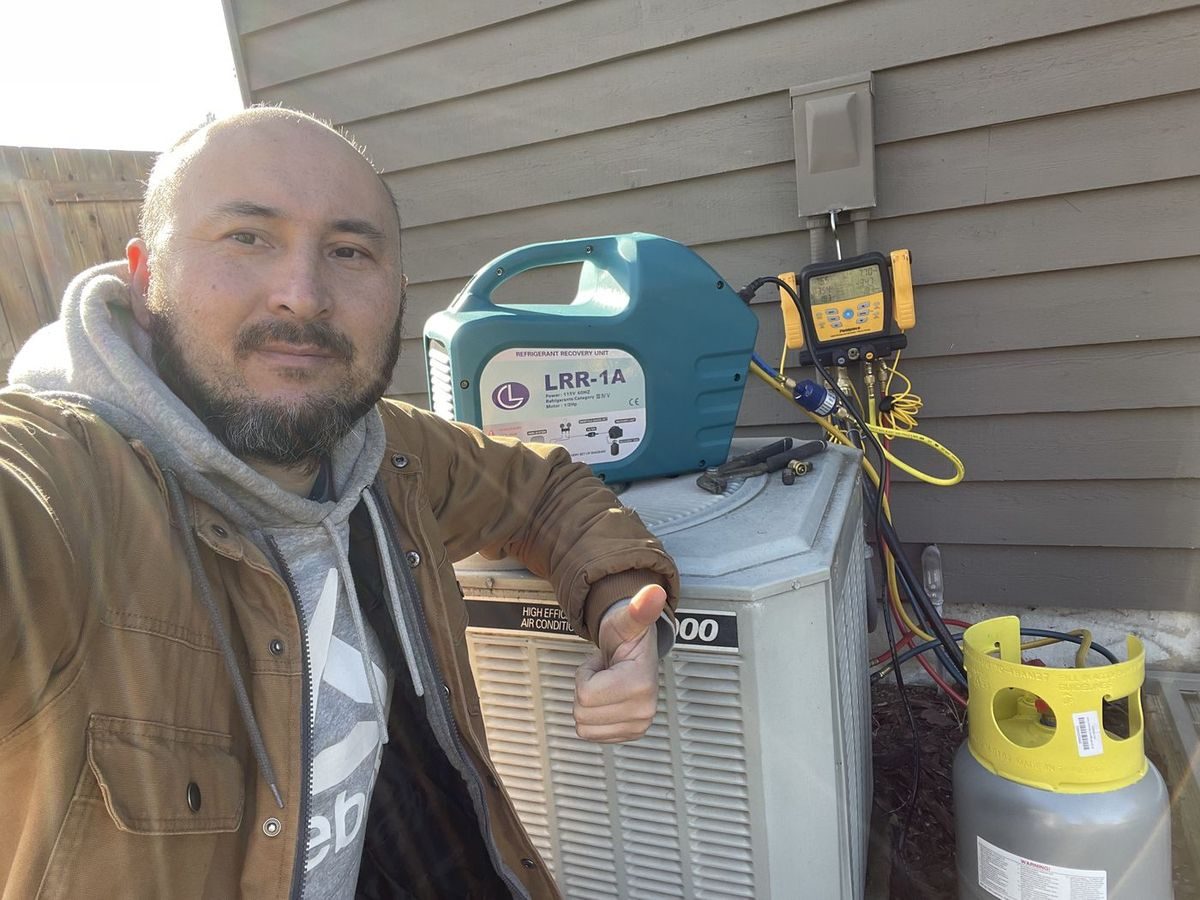
12 / 12
Gauges on a condenser during a seasonal visit. Spring visits wash the dust out of the coil; fall visits test defrost and heat strips before the fog weeks.
Read the service pageThe answer hinges on the failed part and the shape the cabinet, gaskets and compressor are in. A defrost heater, evaporator fan, start relay or water valve is usually a sensible repair. A sealed-system leak or a dead compressor is a far bigger job, and on an aging refrigerator a new one may win out. You get the repair figure on paper so the choice is yours to weigh.
A thermal fuse opens when exhaust air runs too hot, and that almost always points to restricted airflow. Lint packed in the duct, a flattened foil connector squeezed behind the machine, or an outside hood plugged with dust or nesting are the usual culprits. A new fuse without a clear vent just sets up the next failure, so our technicians check the run first.
Common parts ride along, including thermal fuses, door switches, igniters, belts, pumps, valves and fan motors. When testing points to one of those, the fix can usually be finished on that same trip once your approval of the written price is in hand. Control boards and model-specific parts get ordered, with their cost quoted before the order goes in.
Usually a water supply problem rather than a bad ice maker. Scale or sediment on the inlet valve screen, a clogged water filter, or a partly frozen fill tube cuts the water each cycle delivers, so the cubes come out thin or hollow. Replace the filter first. If cubes stay small, the technician measures valve flow and inspects both the fill tube and the mold heater.
Talk to us
Pick a visit date and arrival window on our booking page, or call the office, open 8 AM to 7 PM every day. A confirming phone call follows, and replies in Spanish are available on request.
Book a visit
One slip, filled top to bottom. The office phones to confirm the visit, and the technician calls again when on the way.
Every number below is a public state record. Look each one up on L&I Verify, or read what each license allows on our licenses page.
What our licenses cover