01 / 12
Air conditioner repair
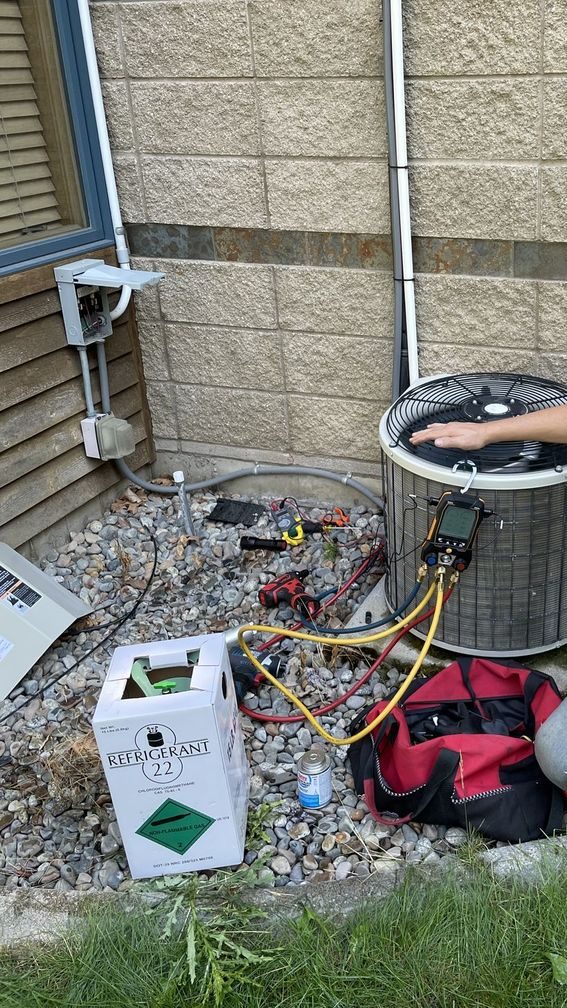
An older condenser under test with hoses on the service ports. The capacitor, contactor and fan motor get checked before anyone talks about refrigerant.
Read the service page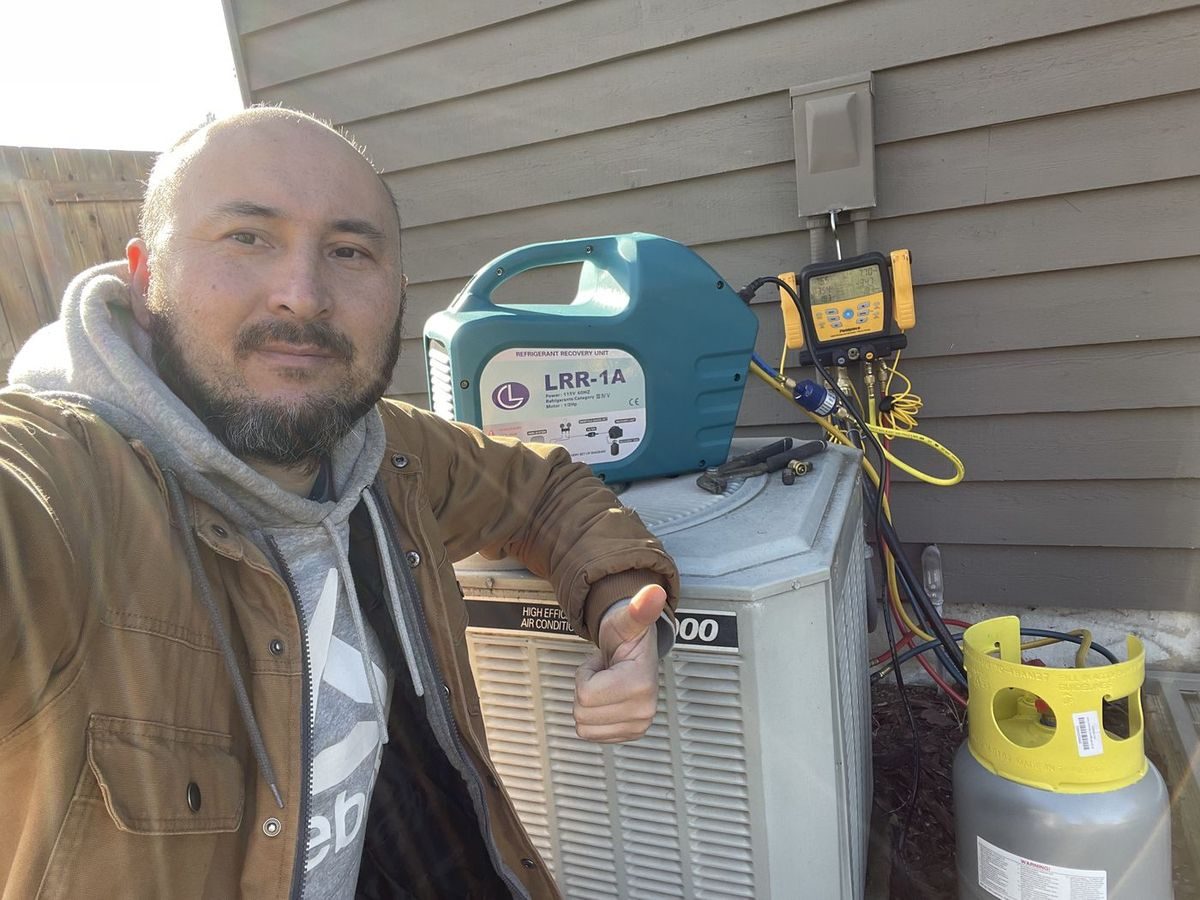
Richland · Central air, heat pumps & mini-splits
When the house in Meadow Springs or off Jadwin Avenue stops cooling at 4 PM in July, our technicians track down the fault with meters and gauges, hand you a written repair price, and start once you agree. Central air, heat pumps in cooling mode and ductless mini-splits are all part of the job.
Short answer
Most Richland air conditioners that quit in summer have a weak run capacitor, a pitted contactor, a condenser coil caked with wind-blown dust, or a slow refrigerant leak. A technician measures each of those, writes up the price, and repairs only after your yes. Online booking lets you choose the date and an arrival slot, and the office line is staffed every day, 8 AM–7 PM.
An AC repair visit begins with readings, not guesses. The technician confirms the thermostat is calling, tests voltage at the outdoor unit, reads the run capacitor in microfarads against the rating on its label, and inspects the contactor points for pitting. With the system running, the gap between return and supply air (the temperature split) plus superheat and subcooling show whether the charge and the TXV or metering piston are doing their part. Leak searches, recovery and charging stay with us, since our technicians carry EPA 608 Universal.
The diagnostic visit carries a fee, which the office quotes as you book. Say yes and that fee simply melts into the repair figure; say no and the fee covers the call and nothing more. Before any work, you receive the repair figure in writing, and the warranty terms are printed on your invoice. Larch holds the 06A HVAC/Refrigeration specialty and a general contractor license with Washington Labor and Industries, both searchable on the state's Verify lookup.
Heat and hours are the main stressors. Richland sits in high desert where July averages about 92°F, and most summers bring 100°F days, sometimes as early as mid-May and as late as early September. A condenser that runs from noon until well after sunset cycles its contactor and cooks its capacitor far more than one in a mild climate, which is why those two parts wear out first here.
Wind piles on. The Tri-Cities is the windiest of the medium and large metros in the Pacific Northwest, with most of the wind out of the west and the roughest months in March, April and June. That air carries fine dust, sand and cottonwood fluff into condenser fins, where it insulates the coil and pushes head pressure higher. Plenty of Richland households keep shift hours, so the office will look for a slot that fits an early start or a late return.
Open ground and a steady west wind make Horn Rapids hard on condensers. Fine grit can pack the fins within one season, so coil condition is the first thing our technicians look at on calls here. A gentle hose rinse between visits helps, but silt lodged deep in the coil calls for lifting the fan top and cleaning from inside.
Larger two-story homes in Meadow Springs often have long duct runs to upstairs bedrooms, some of them passing through hot attic space. On a 100°F afternoon the second floor can lag the thermostat noticeably. We check duct temperatures, filter condition and static pressure before deciding the condenser is the problem.
The wartime alphabet houses near Jadwin Avenue date from 1943–45 and came in 22 lettered floorplans, and most have been remodeled since. Cooling in any one of them might be a ductless mini-split, a heat pump, or central air added with new ductwork. We trace what was installed and how it was connected before diagnosing it.
One photo per tab from our service calls. Tap a tab, or let the file turn on its own.
01 / 12
An older condenser under test with hoses on the service ports. The capacitor, contactor and fan motor get checked before anyone talks about refrigerant.
Read the service page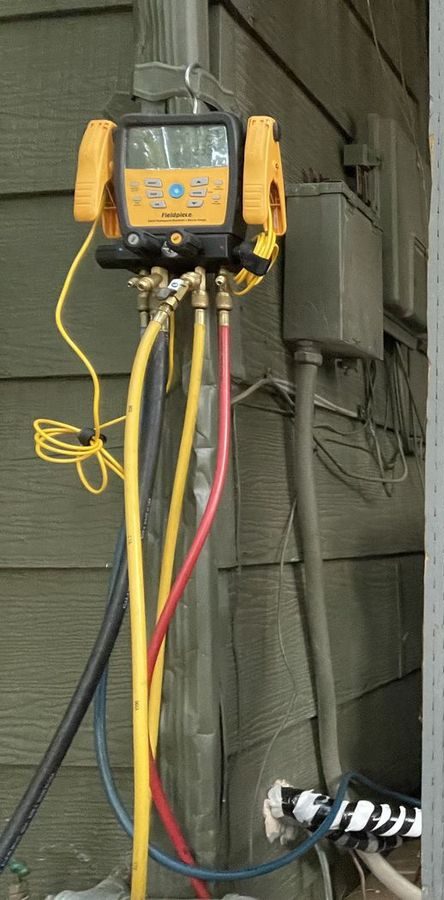
02 / 12
Digital gauges hang by the outdoor unit while the heat pump runs. Superheat and subcooling show whether the charge, a valve or the defrost board is the problem.
Read the service page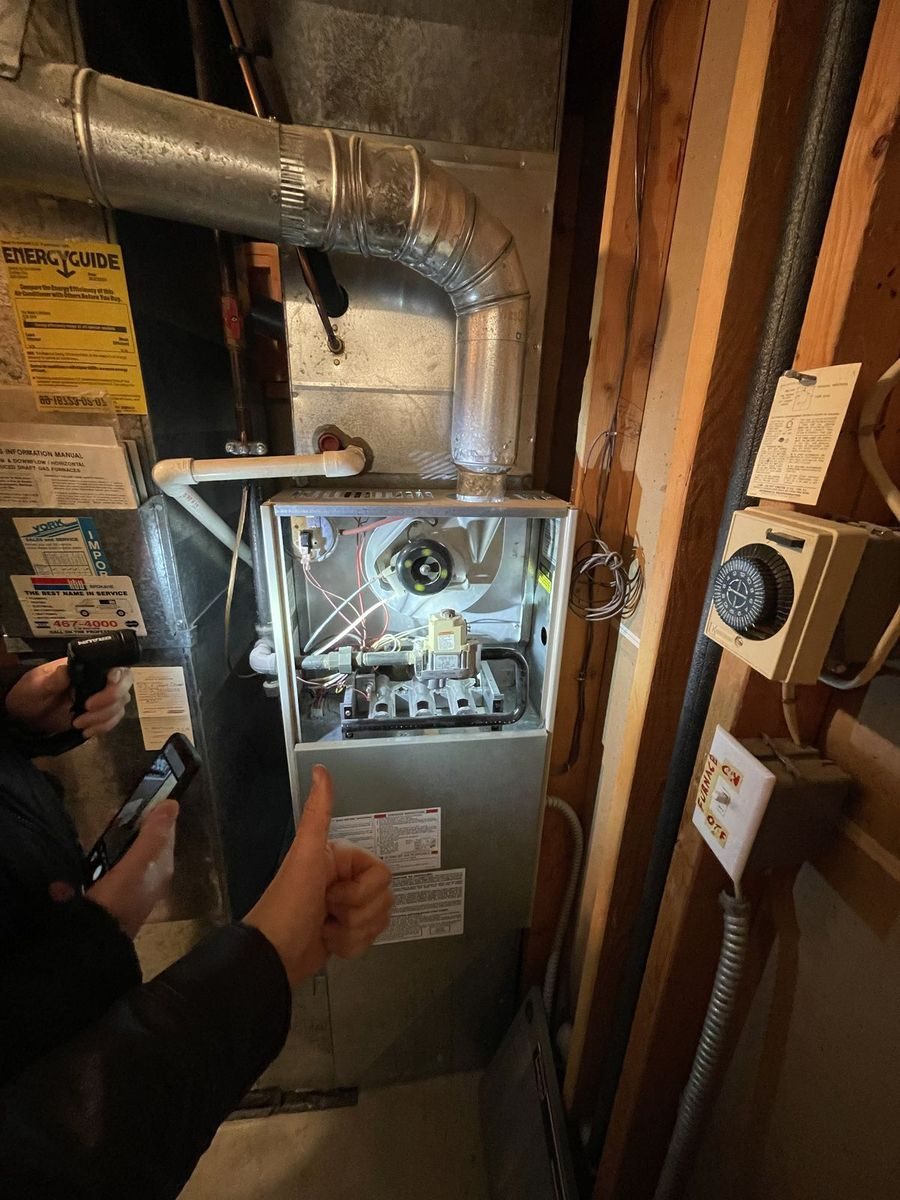
03 / 12
The burner compartment of a gas furnace, open. We follow the start-up order, inducer, pressure switch, igniter, flame sensor, until the step that fails.
Read the service page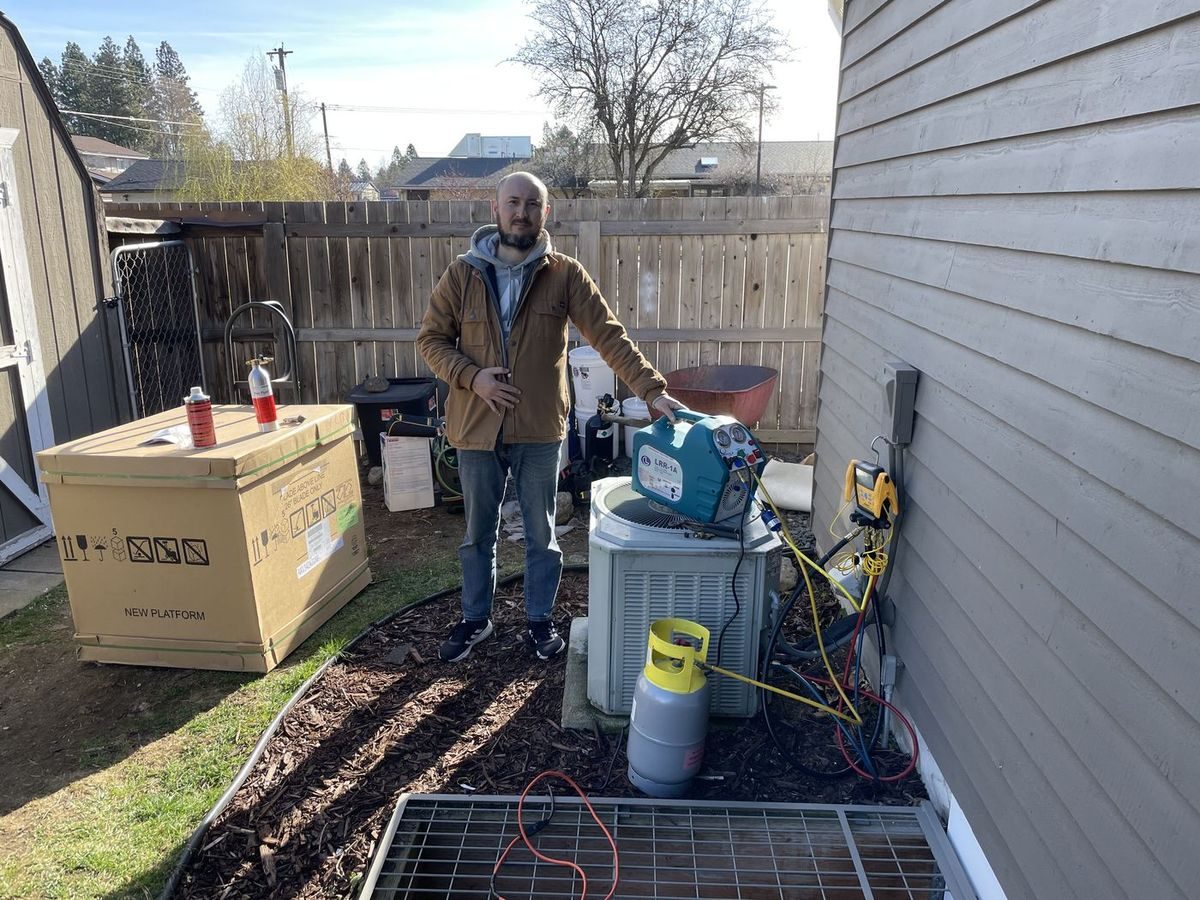
04 / 12
A recovery machine and cylinder beside an outdoor unit. On a replacement, the old refrigerant is pulled into the cylinder instead of the air.
Read the service page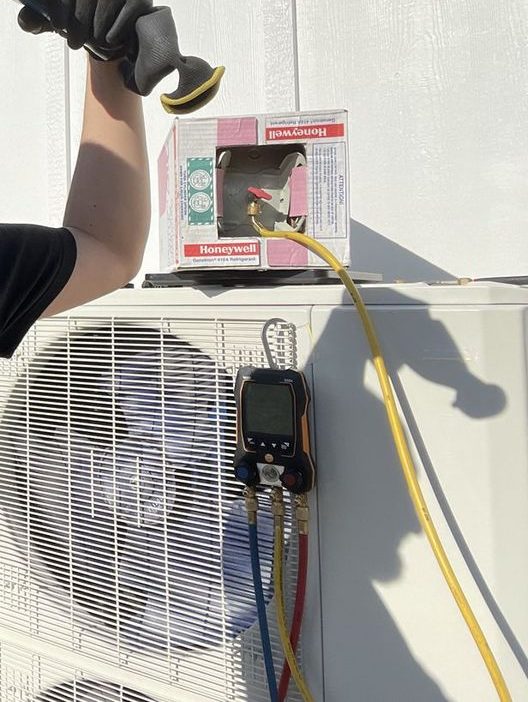
05 / 12
A ductless outdoor unit with a gauge set on it. Mini-splits get the same pressure and temperature readings as a central system, plus a look at the line-set insulation.
Read the service page06 / 12
Gauges on a condenser during a seasonal visit. Spring visits wash the dust out of the coil; fall visits test defrost and heat strips before the fog weeks.
Read the service page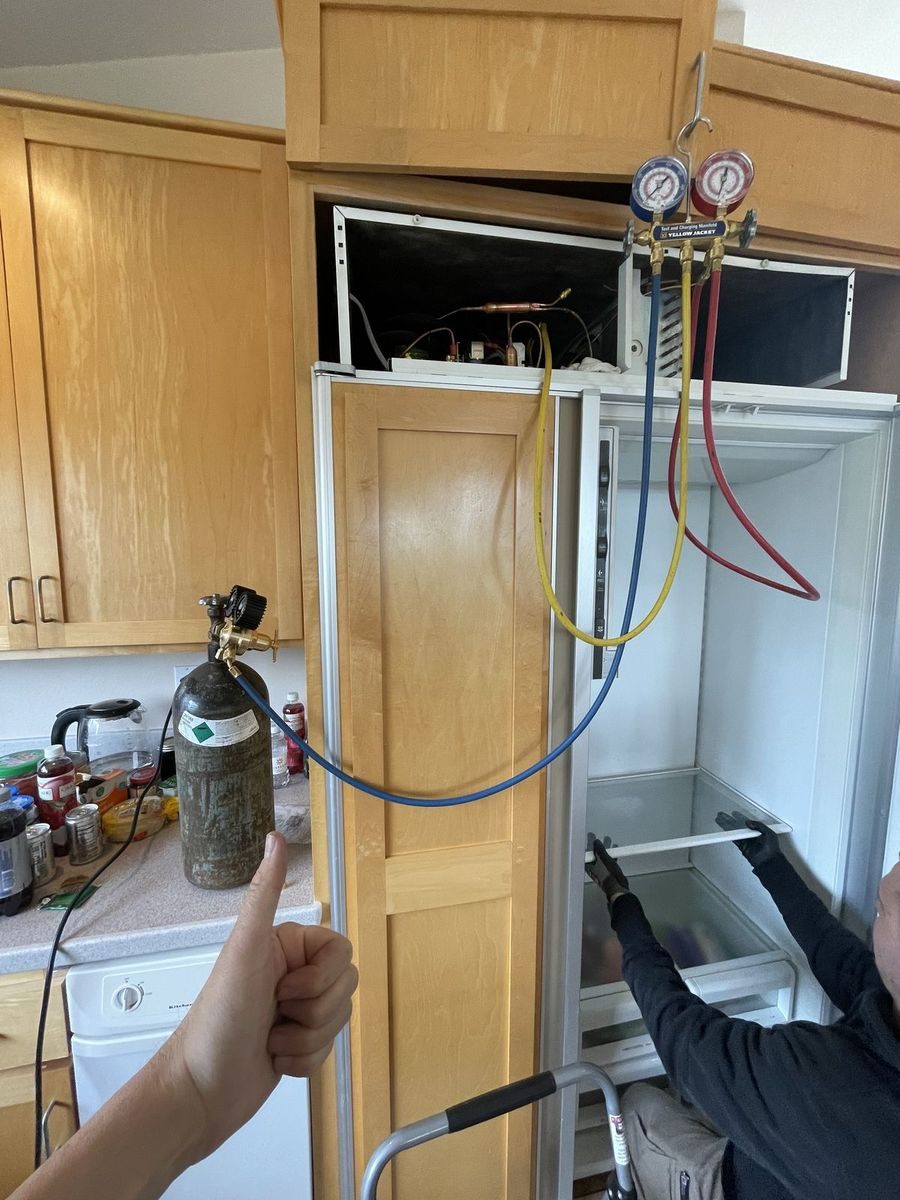
07 / 12
Gauges connected to a built-in refrigerator's sealed system. Leak searches, brazing and recharges happen in the kitchen, so the fridge stays where it is.
Read the service page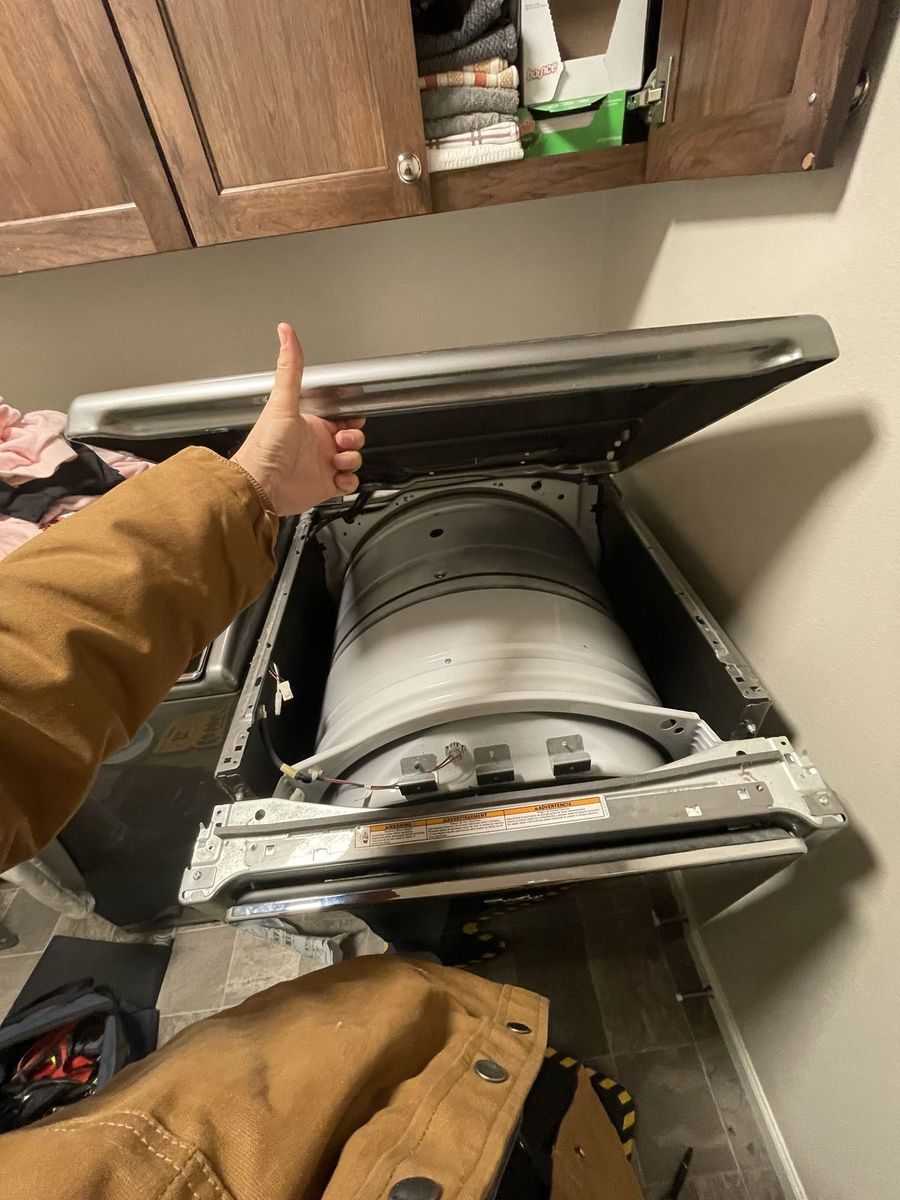
08 / 12
A top-load washer with the top panel raised. Lid switch, drive coupler and drain pump are all within reach once the top comes up.
Read the service page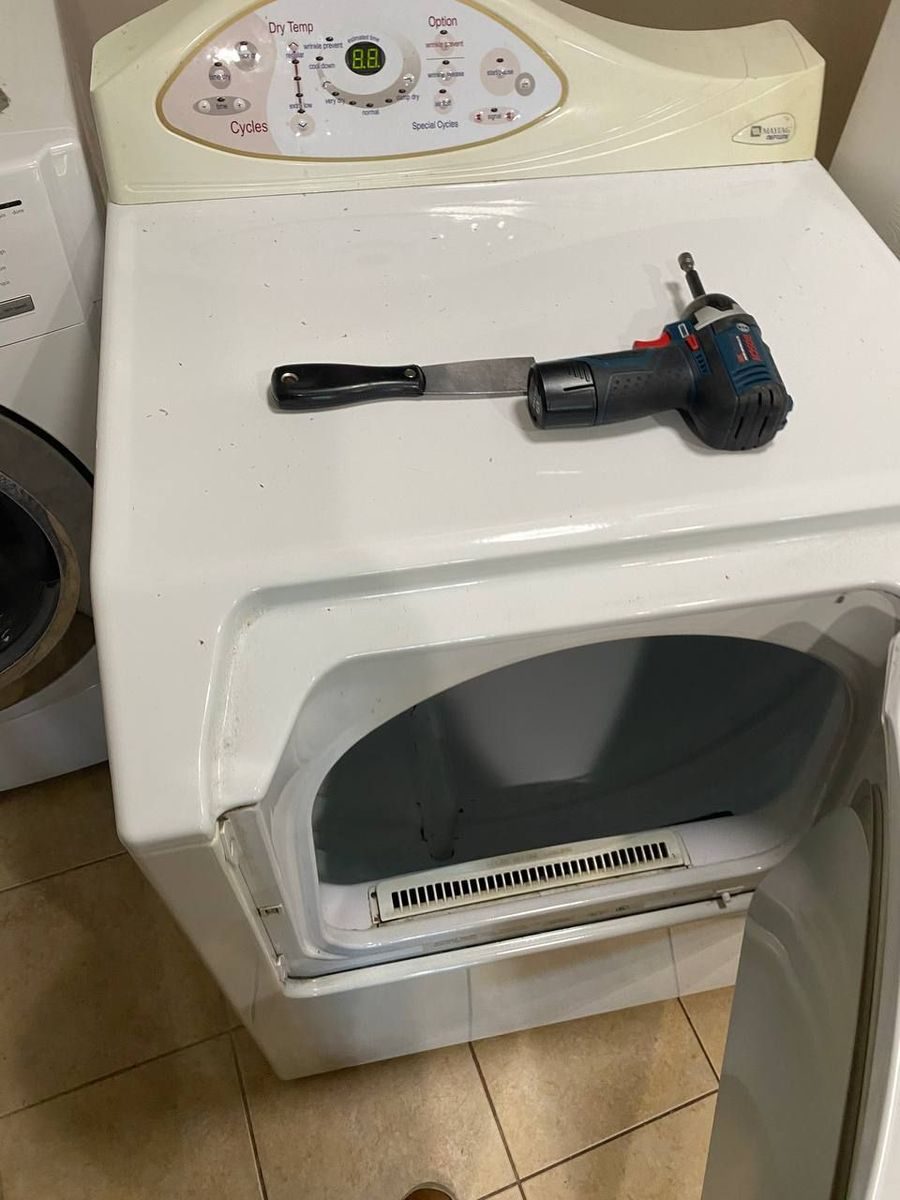
09 / 12
An electric dryer opened up in a laundry room. The thermal fuse, the heating element and the vent run behind the machine get tested together.
Read the service page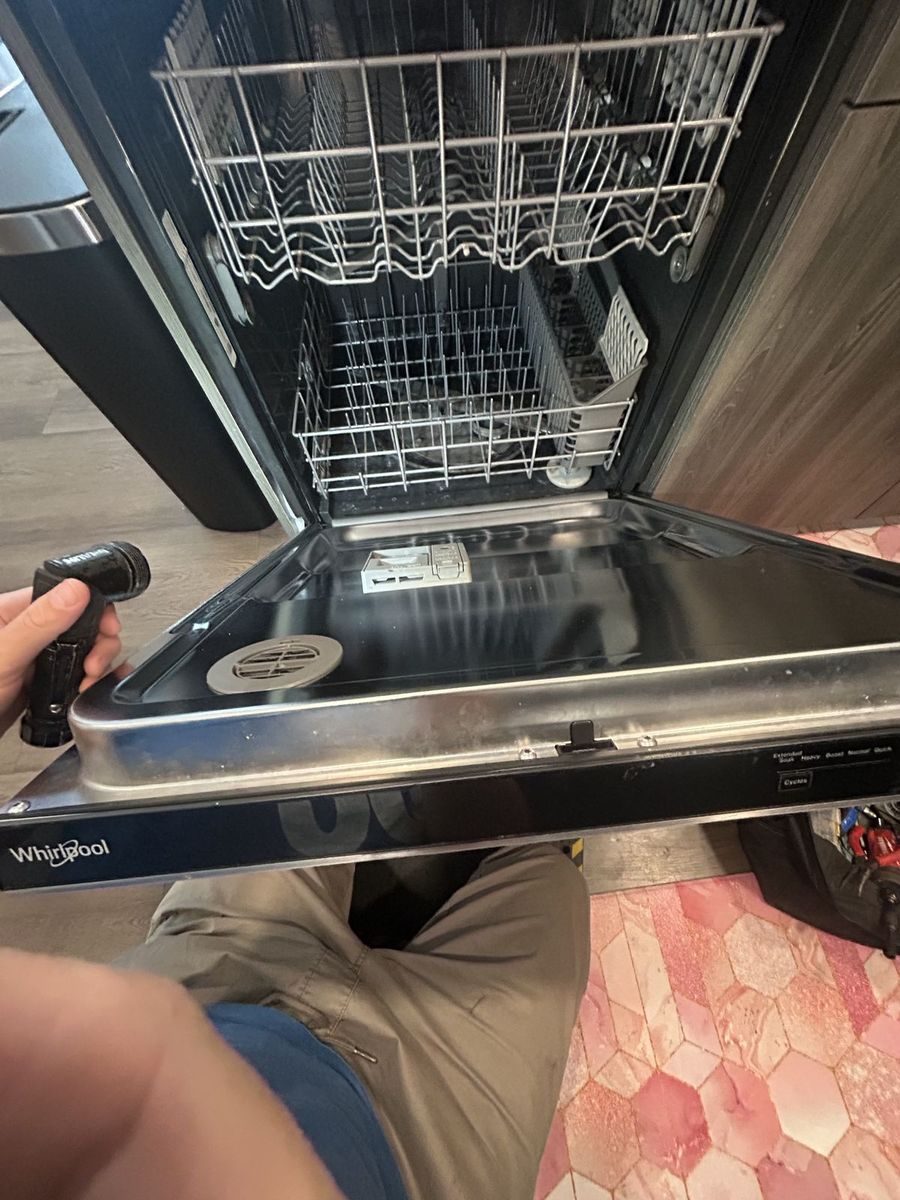
10 / 12
Door open and racks out on a dishwasher. A puddle left behind after the last rinse sends us to the filter screen, the pump and the hose route under the sink, in that order.
Read the service page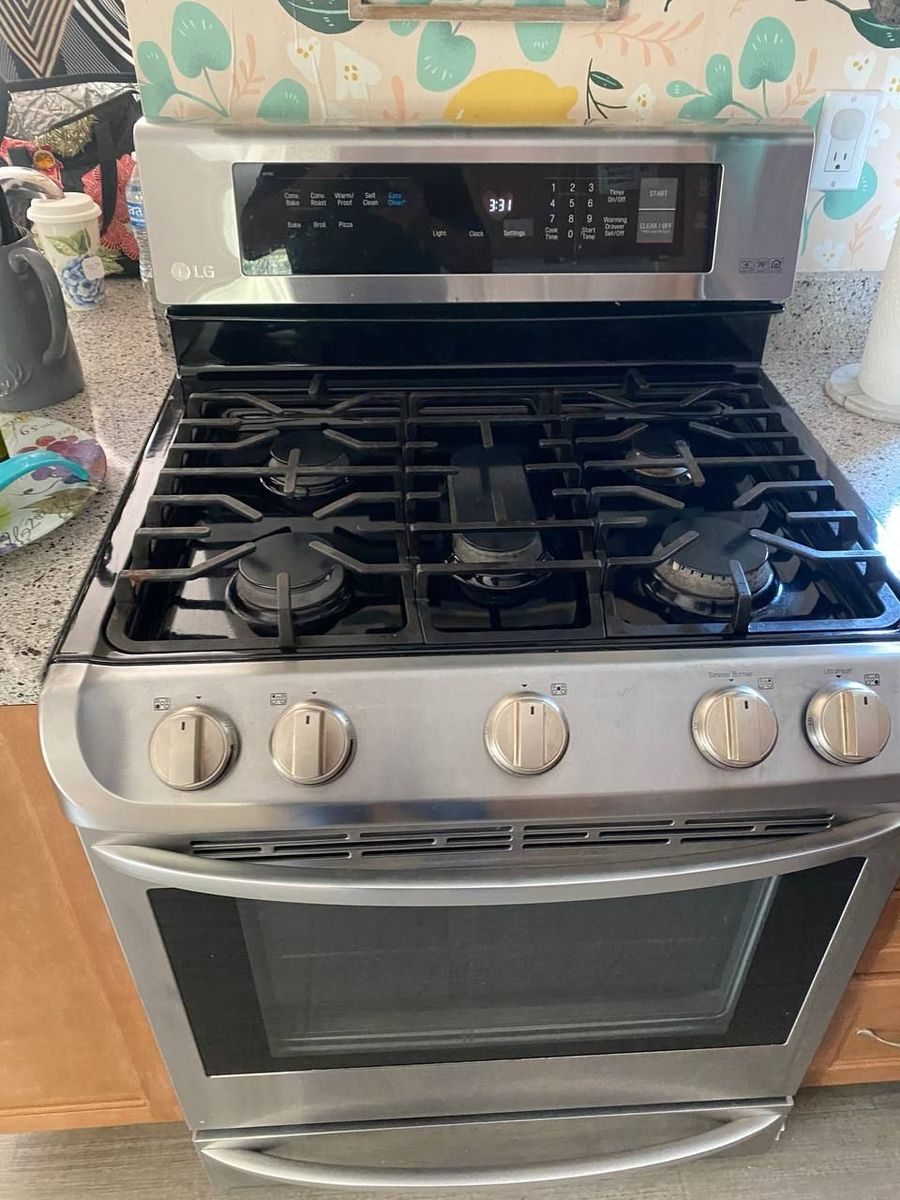
11 / 12
A five-burner gas range ready for testing. Burner igniters, the spark module and the bake igniter's amp draw are measured before a part is ordered.
Read the service page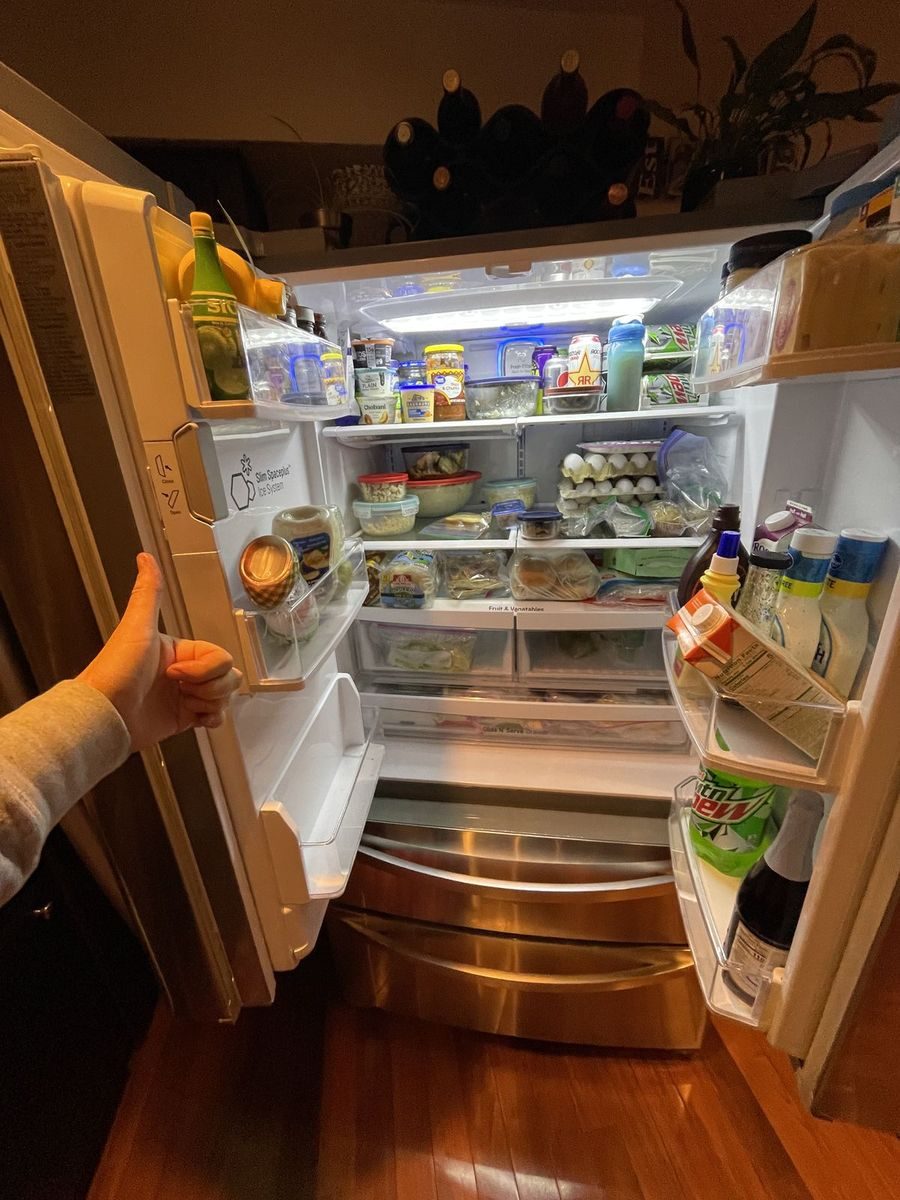
12 / 12
A French-door refrigerator open for diagnosis. Slow ice starts with the water: the inlet valve, the filter and a fill tube that can freeze shut.
Read the service pageYes, long or nonstop running on a triple-digit afternoon is normal for a healthy system. Equipment is sized for a typical hot day, not the single hottest hour, so the house may drift a degree or two above the setting by late afternoon and recover after sunset. Warm air from the vents, a humming condenser with a still fan, or ice on the lines is not normal.
Pick the earliest slot the online calendar shows, or ask for one when you call. The office confirms that slot by phone, and the technician calls from the truck once headed your way, which helps when you have to leave for work early. During a July heat spell the first windows of the day tend to fill quickly, which makes booking a day or two ahead the safer bet.
Usually, yes. Run capacitors, dual capacitors and contactors ride on the truck, so when one tests below its rated microfarads the technician can replace it during the same visit, right after you approve the written price. If a condenser fan motor needs ordering instead, you get its price before we place the order.
It depends on what failed. A capacitor, contactor or fan motor on an R-22 system is still a reasonable repair. Leaks are another matter: R-22 is out of production in the US, so refilling an old system with it gets hard to justify. On request, the technician writes up the repair price next to a replacement quote that shows equipment and installation as one figure.
Talk to us
Use the online calendar to pick your date and arrival slot, or ring the office between 8 AM and 7 PM, any day. A confirmation call follows, and no work begins until you have approved the written price.
Book a visit
One slip, filled top to bottom. The office phones to confirm the visit, and the technician calls again when on the way.
Every number below is a public state record. Look each one up on L&I Verify, or read what each license allows on our licenses page.
What our licenses cover