01 / 12
Air conditioner repair
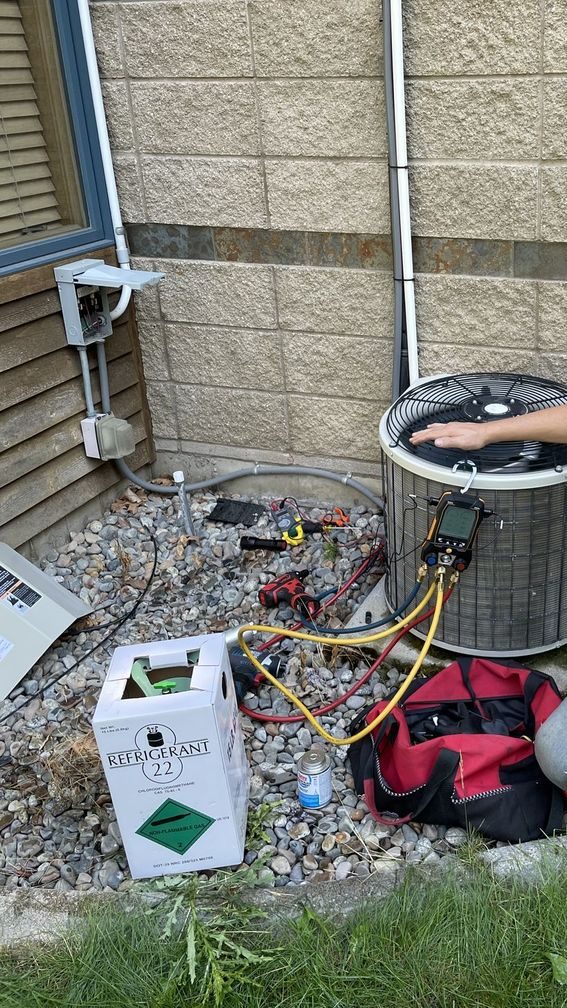
An older condenser under test with hoses on the service ports. The capacitor, contactor and fan motor get checked before anyone talks about refrigerant.
Read the service pageAir conditioning repair in Kennewick
Kennewick can hit 100°F by mid-May and still be at it in early September. When your central air stops keeping up, our technicians find the failed part, explain it in plain words and write down the price before a single wire is touched.
Short answer
Most Kennewick air conditioners that quit in summer trace back to a weak run capacitor, a pitted contactor, a condenser coil caked in grit and cottonwood, or refrigerant lost through a slow leak. A technician tests each suspect at the equipment, writes out a price, and waits for your nod before touching anything. Calls are answered every day, 8 AM to 7 PM.
Long run hours wear out the electrical parts first. July highs here average about 92°F, most summers bring 100°F afternoons, and on those days a condenser may run from lunch until well after dark. The run capacitor slowly drifts below its microfarad rating, which makes the compressor and outdoor fan motor run hot, and the contactor's contacts pit and burn until they no longer pass full voltage.
Dust does the rest of the damage. West winds push sand and grit across the basin, and early summer adds a mat of cottonwood fluff on the condenser fins. A blocked coil can't shed heat, so head pressure climbs, the compressor pulls more amps, and the vents deliver air that is merely cool. Each technician carries the EPA 608 Universal credential and works under our 06A HVAC/Refrigeration specialty, so refrigerant testing and charging happen on the same visit.
It shortens the life of the switching parts and fouls the outdoor coil. Kennewick records show 100°F as early as mid-May and as late as early September, and the windiest months, March, April and June, load the fins with grit before the heat even arrives. Rinse the fins gently with a garden hose a couple of times a season, never with a pressure washer. Kennewick water comes from the Columbia River and Ranney collector wells and can leave a faint mineral film, so a light rinse is plenty.
Getting a technician to you is planned around the river. Kennewick shares the west bank with Richland, while a technician coming from a Pasco call crosses the Columbia on the Cable Bridge or the US 395 Blue Bridge, so the office builds routes with those crossings in mind, and you get a call once the van is headed your way. We cover all three Kennewick ZIP codes, 99336, 99337 and 99338, plus Finley, which is served from Kennewick ZIPs.
Homes in Southridge are larger and newer, and some run two systems, one per floor. When only the upstairs struggles, we test that system's charge, airflow and attic duct temperatures on their own instead of assuming both units are failing, and we confirm each thermostat calls the unit it should.
These neighborhoods were built through the 2000s and into the 2010s, and many still run the builder-grade condenser and coil that came with the house. Capacitors and contactors from that era are wearing out, and when the temperature split runs narrow we also check the TXV or fixed metering device on the indoor coil.
Established homes along Clearwater Avenue and around Hansen Park may have central air added to ductwork first sized for a furnace alone. We measure static pressure, because an undersized return can starve a newer, larger coil and freeze it even when the refrigerant charge is correct.
One photo per tab from our service calls. Tap a tab, or let the file turn on its own.
01 / 12
An older condenser under test with hoses on the service ports. The capacitor, contactor and fan motor get checked before anyone talks about refrigerant.
Read the service page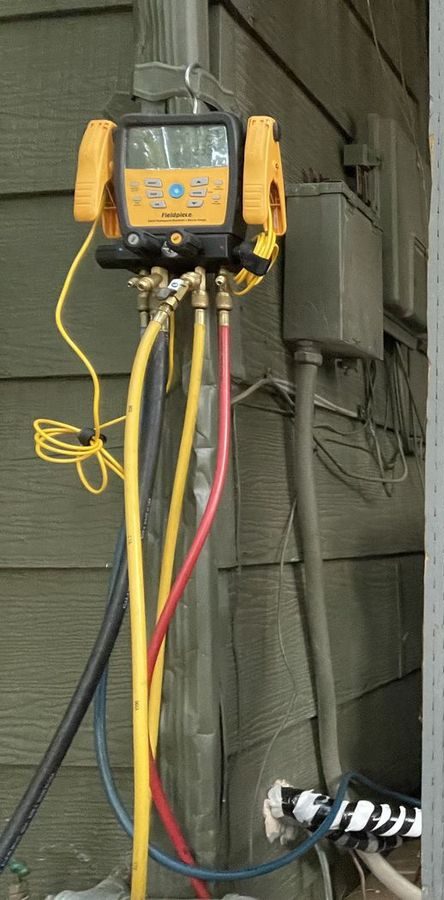
02 / 12
Digital gauges hang by the outdoor unit while the heat pump runs. Superheat and subcooling show whether the charge, a valve or the defrost board is the problem.
Read the service page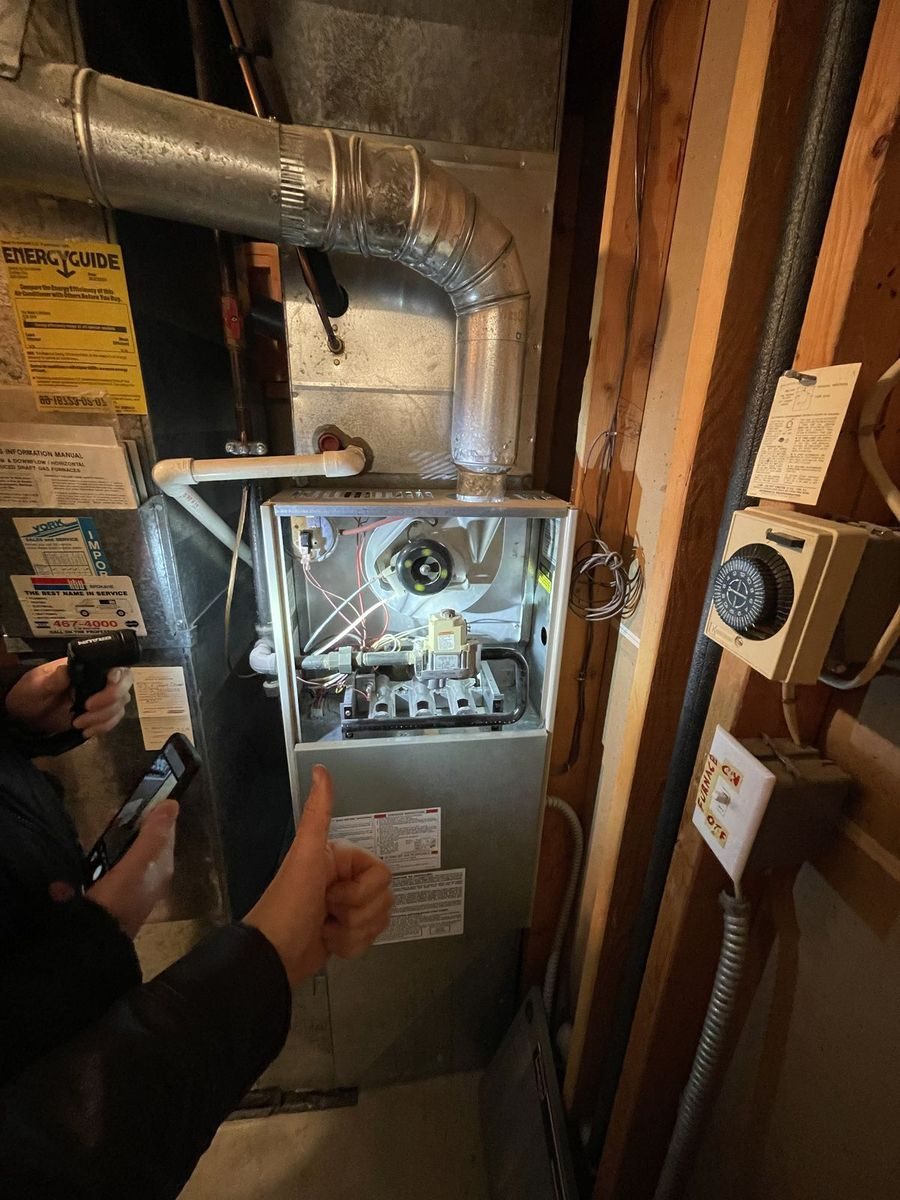
03 / 12
The burner compartment of a gas furnace, open. We follow the start-up order, inducer, pressure switch, igniter, flame sensor, until the step that fails.
Read the service page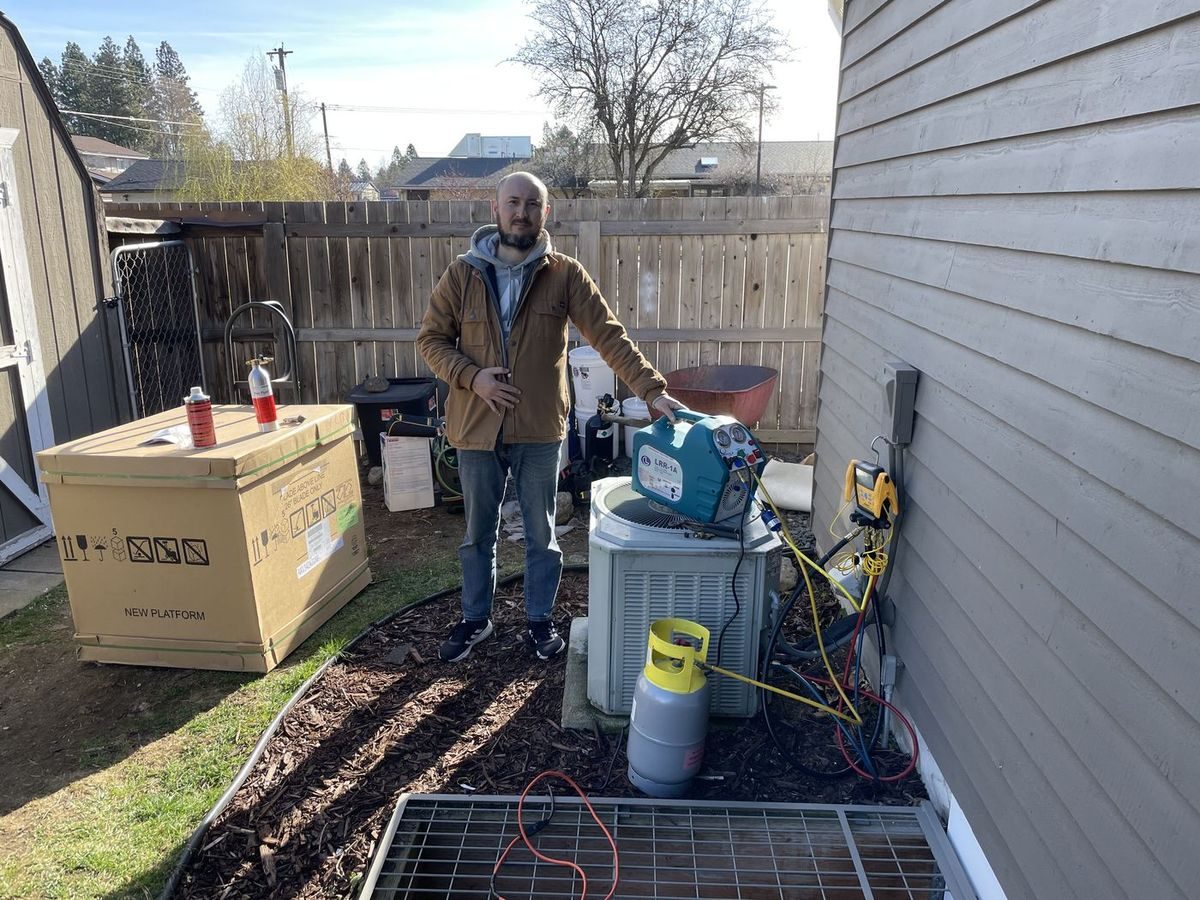
04 / 12
A recovery machine and cylinder beside an outdoor unit. On a replacement, the old refrigerant is pulled into the cylinder instead of the air.
Read the service page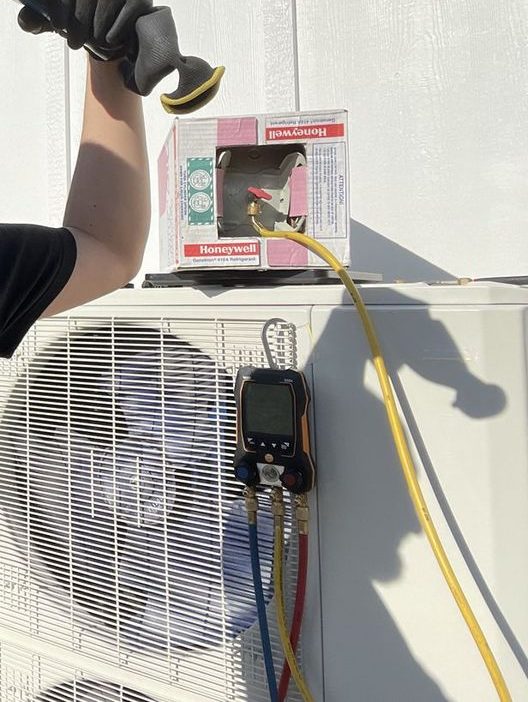
05 / 12
A ductless outdoor unit with a gauge set on it. Mini-splits get the same pressure and temperature readings as a central system, plus a look at the line-set insulation.
Read the service page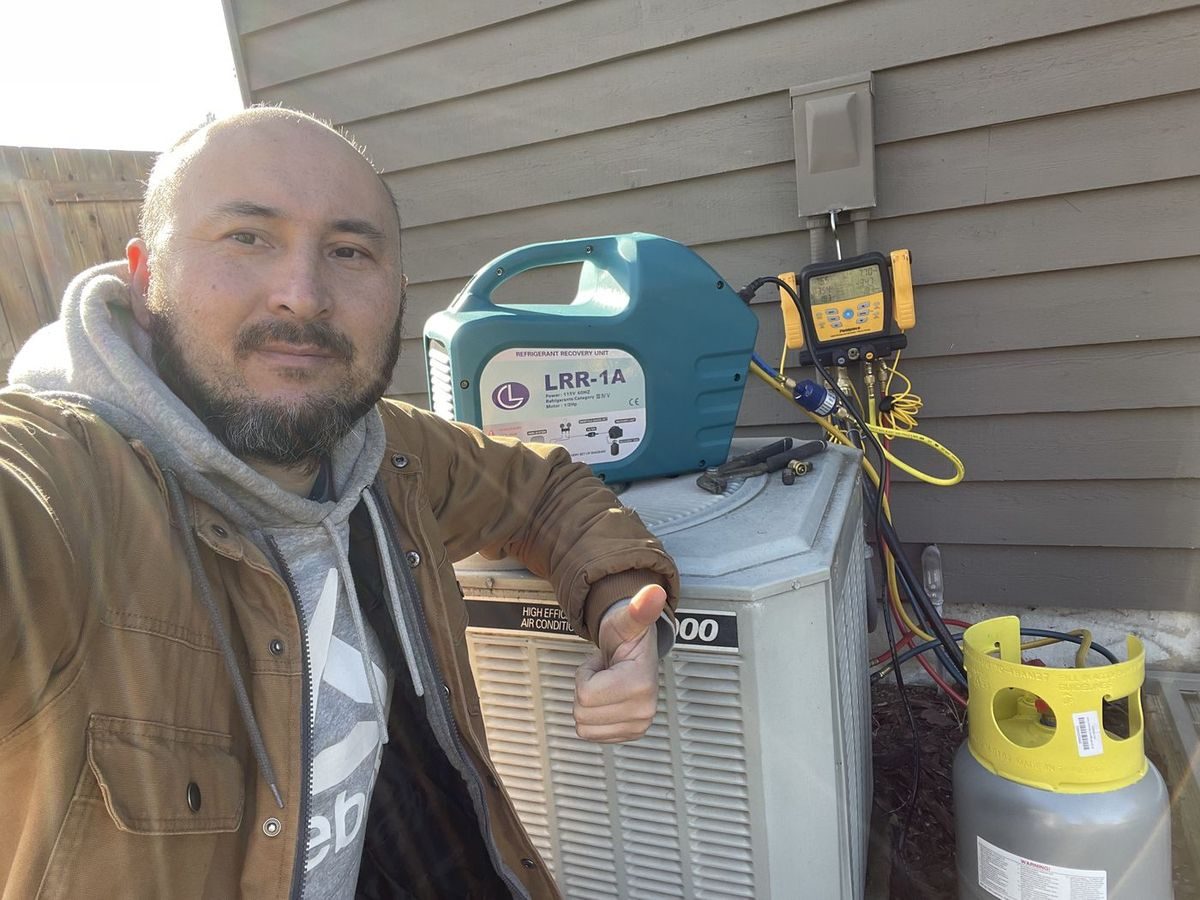
06 / 12
Gauges on a condenser during a seasonal visit. Spring visits wash the dust out of the coil; fall visits test defrost and heat strips before the fog weeks.
Read the service page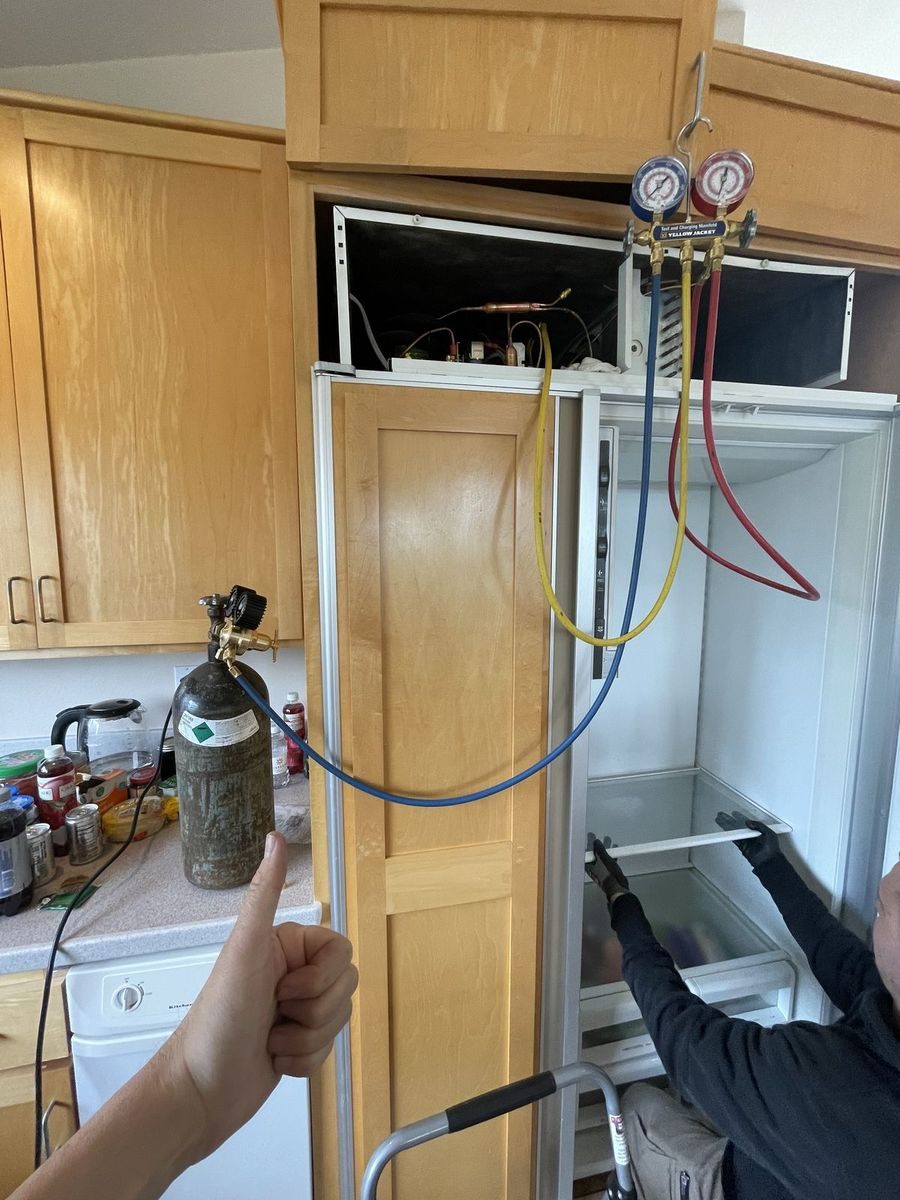
07 / 12
Gauges connected to a built-in refrigerator's sealed system. Leak searches, brazing and recharges happen in the kitchen, so the fridge stays where it is.
Read the service page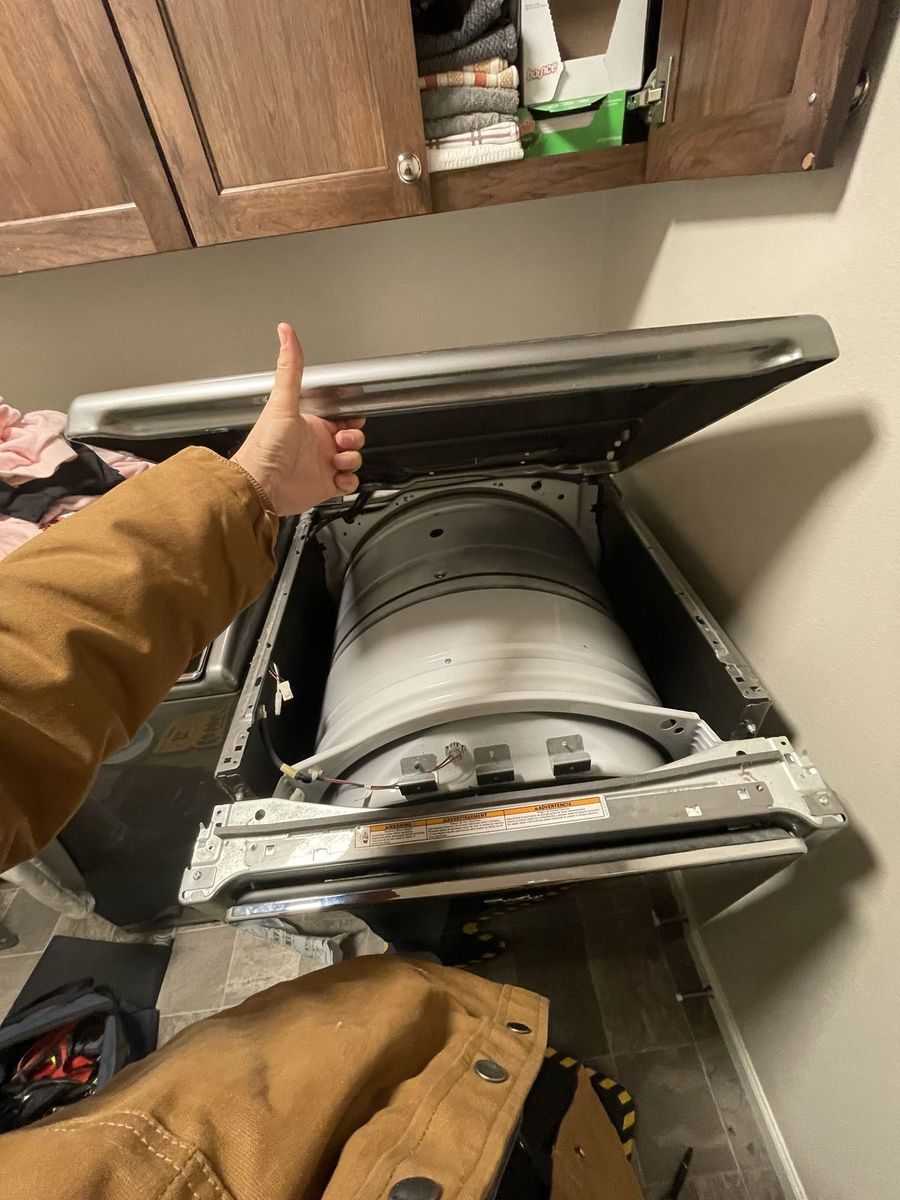
08 / 12
A top-load washer with the top panel raised. Lid switch, drive coupler and drain pump are all within reach once the top comes up.
Read the service page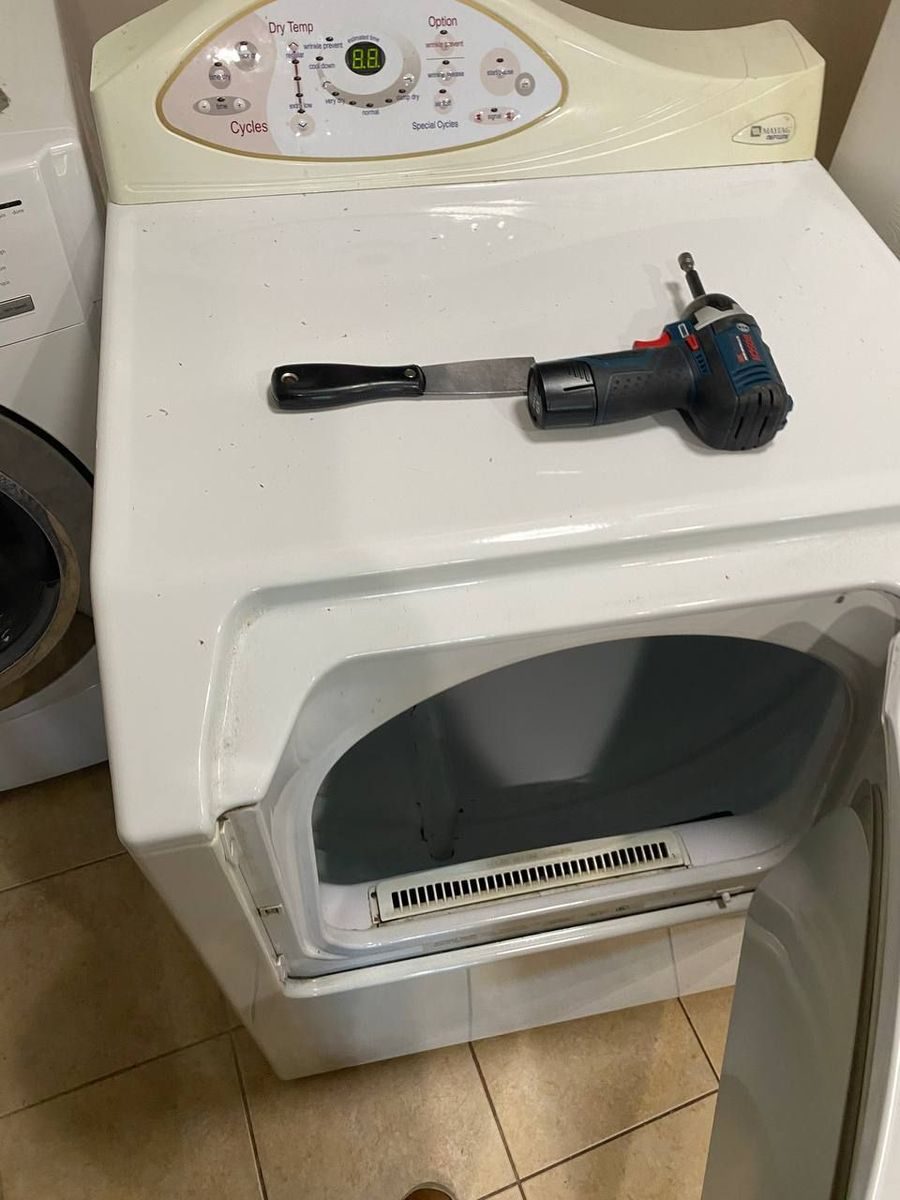
09 / 12
An electric dryer opened up in a laundry room. The thermal fuse, the heating element and the vent run behind the machine get tested together.
Read the service page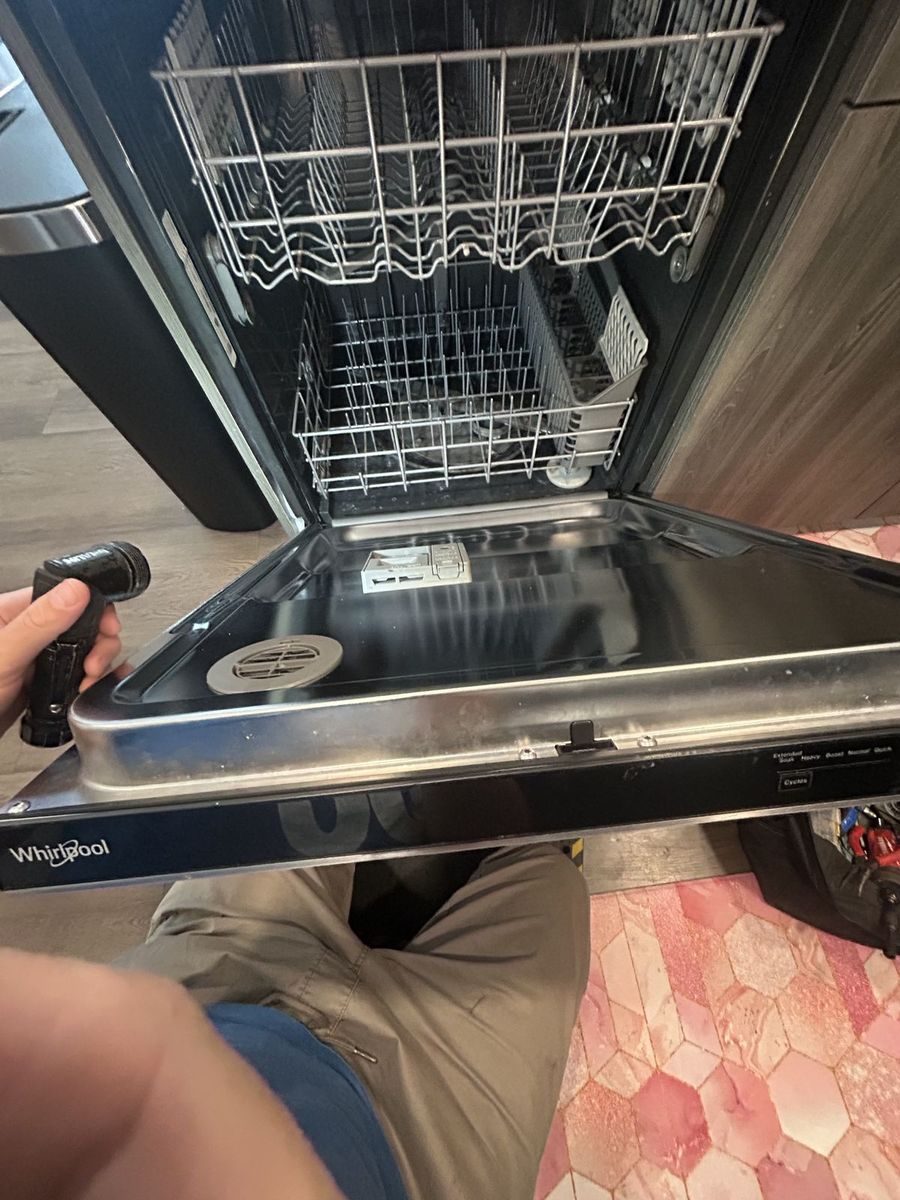
10 / 12
Door open and racks out on a dishwasher. A puddle left behind after the last rinse sends us to the filter screen, the pump and the hose route under the sink, in that order.
Read the service page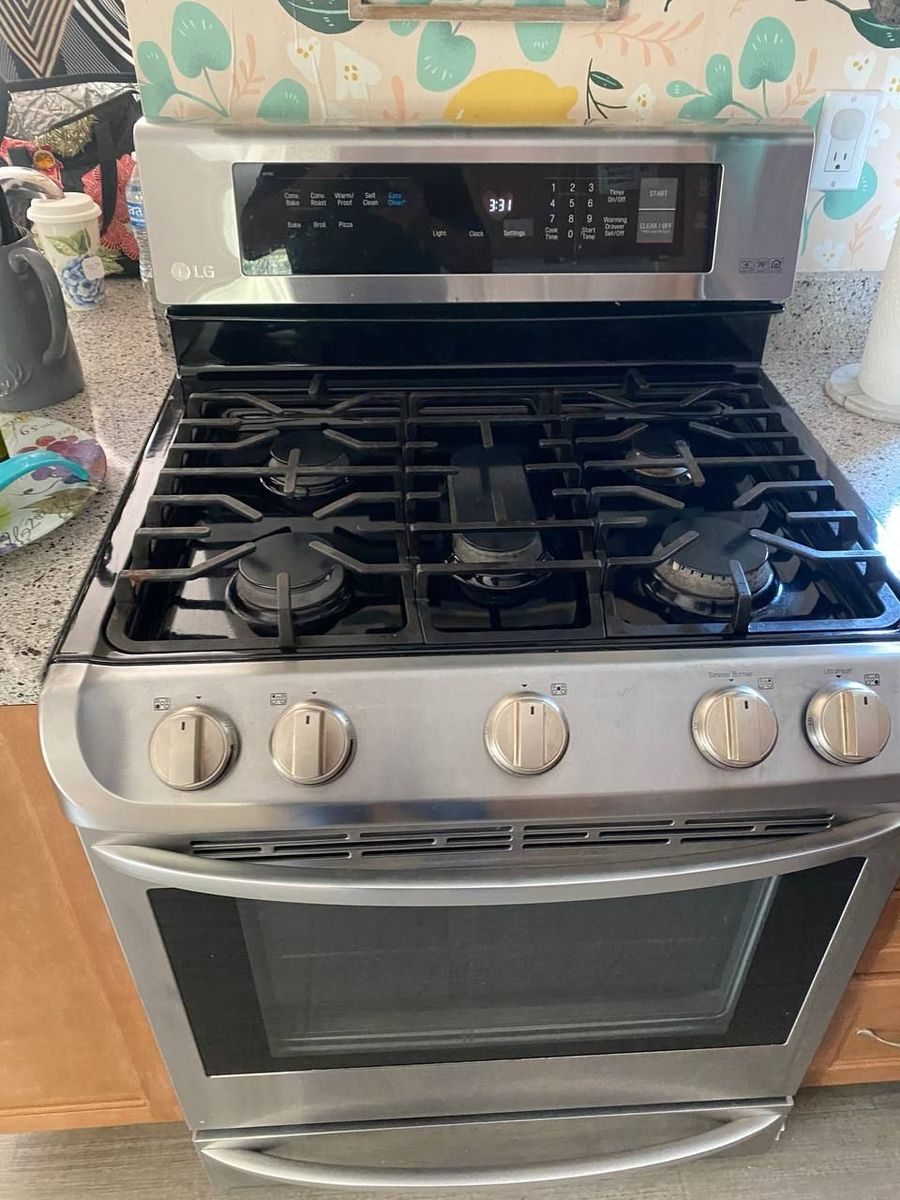
11 / 12
A five-burner gas range ready for testing. Burner igniters, the spark module and the bake igniter's amp draw are measured before a part is ordered.
Read the service page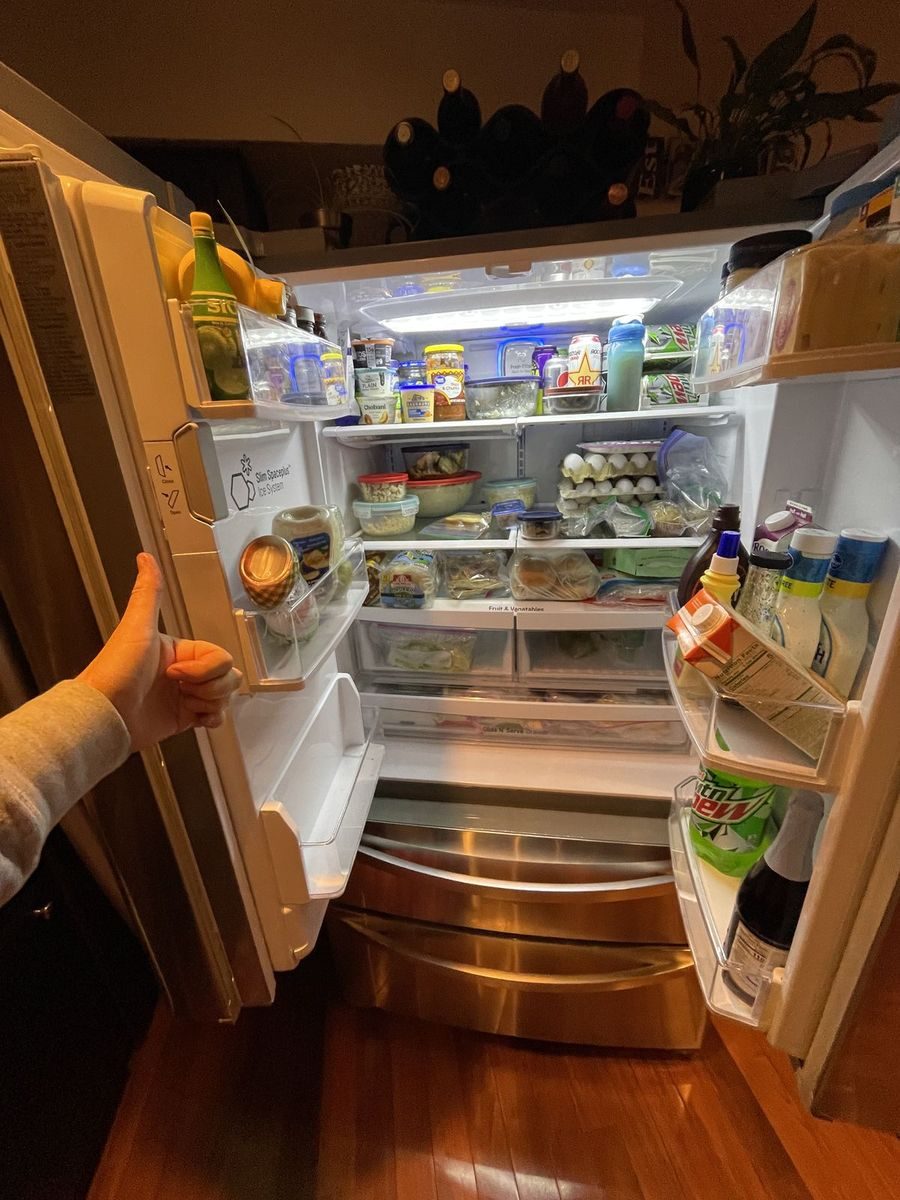
12 / 12
A French-door refrigerator open for diagnosis. Slow ice starts with the water: the inlet valve, the filter and a fill tube that can freeze shut.
Read the service pageIt depends on the day's schedule, so the office confirms your arrival window by phone once you book. Choose a day and a window online, or call any day between 8 AM and 7 PM. The technician calls on the way, which helps on days when bridge traffic or a slow stretch of Clearwater Avenue shifts the timing a little.
A Kennewick AC visit starts with a diagnostic fee, quoted by the office as you schedule. Approve our written repair price and that fee sits inside the total, not added beside it. If you decline, you are billed only for the diagnostic visit itself. Our technician won't open a panel for repair work until you have the price in hand and agree.
Repair usually wins when the fault is a capacitor, contactor, fan motor or a small leak at an accessible joint. Replacement deserves a look when the compressor has failed, the coil leaks in several places, or the system uses an older refrigerant that is costly to recharge. We lay out both paths, and a replacement quote shows equipment and installation as one figure.
Yes, check the breaker and reset it one time. Should it trip a second time, leave the breaker off and phone us, because a repeat trip often means a shorted capacitor, a compressor drawing too many amps, or a seized fan motor. Our technician tests power at the outdoor unit and traces the cause before anything is replaced. Warranty terms for the repair are written on your invoice.
Talk to us
Use the online scheduler to choose a day plus an arrival window, or call from 8 AM to 7 PM; the office rings back to confirm. Spanish replies are available on request.
Book a visit
One slip, filled top to bottom. The office phones to confirm the visit, and the technician calls again when on the way.
Every number below is a public state record. Look each one up on L&I Verify, or read what each license allows on our licenses page.
What our licenses cover