01 / 12
Furnace repair
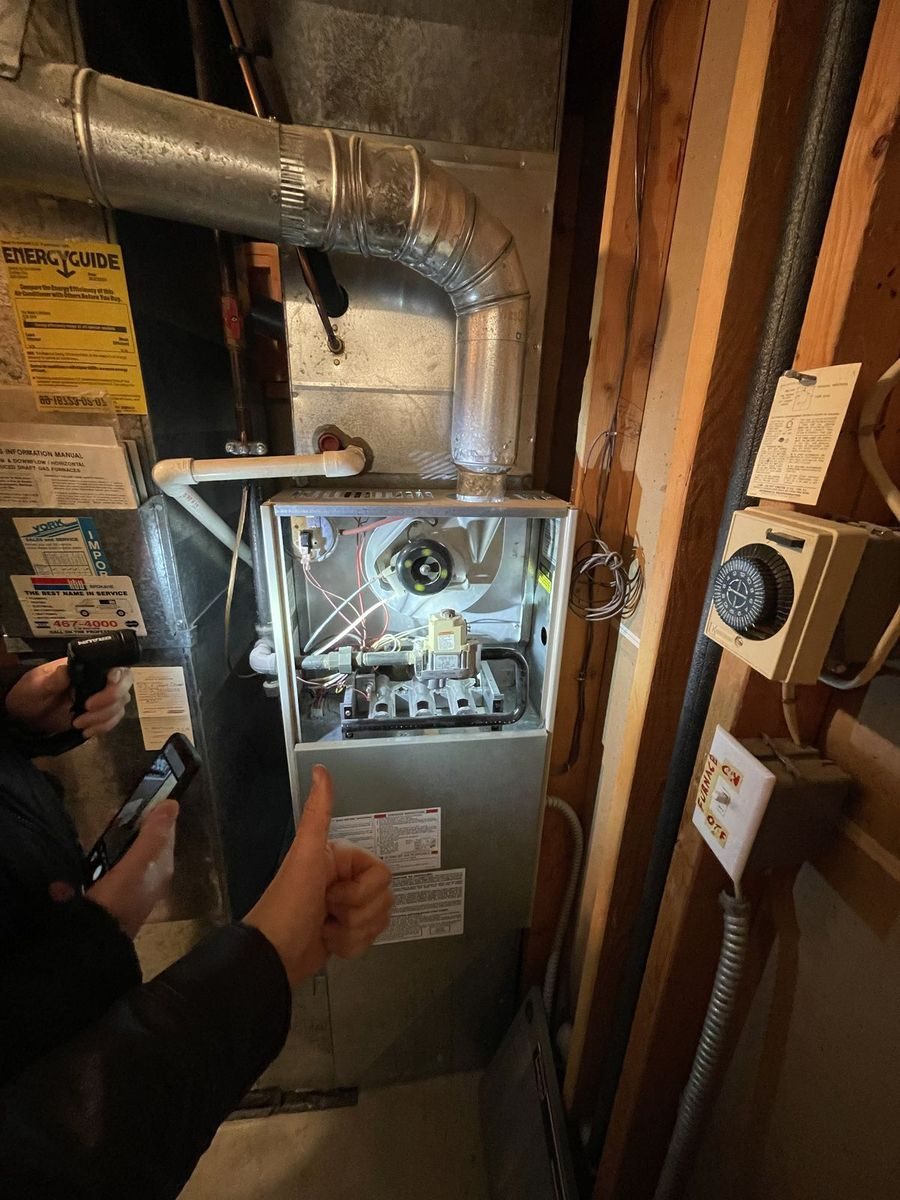
The burner compartment of a gas furnace, open. We follow the start-up order, inducer, pressure switch, igniter, flame sensor, until the step that fails.
Read the service pageKennewick heating repair
When a Kennewick furnace quits during a week of inversion fog, the house cools quickly. Our technicians repair gas and electric furnaces, read the fault codes, test every safety in the sequence, and write out the price before any part is swapped.
Short answer
A Kennewick gas furnace that fires up and then quits usually has a dirty flame sensor, a cracked igniter, a pressure switch that won't close, or an inducer motor slowing down. Electric furnaces more often lose a heating element, a sequencer or a limit. We pin down the fault, put the price on paper, and make the repair once you say go.
A safety check is usually stopping it. A modern gas furnace proves each step before it keeps running: the inducer motor purges the vent, the pressure switch confirms draft, the hot surface igniter heats to a glow, gas flows once the valve opens, and the flame sensor has to read a few microamps to keep the burners lit. When an oxidized sensor reads low, the board shuts off the gas within seconds, retries a few times, then locks out.
Electric furnaces fail along different lines. They use resistance heating elements switched by sequencers or relays, guarded by high limits, and an indoor fan that has to move enough air to keep those limits closed. Kennewick homes have both kinds, plus heat pumps that lean on an electric furnace for backup. Under our 06A HVAC/Refrigeration specialty, our technicians test power at the furnace itself and compare temperature rise with the range on the rating plate.
Long, cold, damp stretches keep a furnace cycling for days. Under winter inversions the Columbia Basin can sit in fog and freezing fog for days or weeks, with highs stuck in the 30s, and a cold snap can pull nights toward 10°F. A furnace that limped through fall tends to give out during the first long fog spell, when it barely rests. High-efficiency models also drain condensate, and a trap or drain line routed through a cold garage can freeze and trip the pressure switch.
Summer leaves its mark too. Furnaces in Kennewick garages and attics sit through 100°F afternoons, and the grit that west winds carry in settles in the cabinet and on the flame sensor. If your furnace has a bypass humidifier, Kennewick tap water, which swings between roughly 5 and 14 grains per gallon over the year, scales its pad quickly, so change the pad every fall. Smell gas at any time? Get the household outdoors, and from the driveway, reach 911 or the gas utility.
Houses on the older streets near downtown may have gone through two or three furnaces, each set onto ductwork that predates it. We check the vent connector at the furnace, the size of the return and how easy the filter is to reach, since a starved return is behind plenty of limit trips in these homes.
Furnaces in the established homes around Union and Edison range from recent replacements to older units with early electronic controls. When an older model's board or inducer needs ordering, you hear about it before we place the order, and the part appears in the written quote.
Larger homes in Southridge may run a two-stage or variable-speed gas furnace, sometimes on a communicating thermostat. We pull the stored fault history from the board, test both pressure switches on two-stage models, and confirm the inducer reaches each speed it is asked for.
One photo per tab from our service calls. Tap a tab, or let the file turn on its own.
01 / 12
The burner compartment of a gas furnace, open. We follow the start-up order, inducer, pressure switch, igniter, flame sensor, until the step that fails.
Read the service page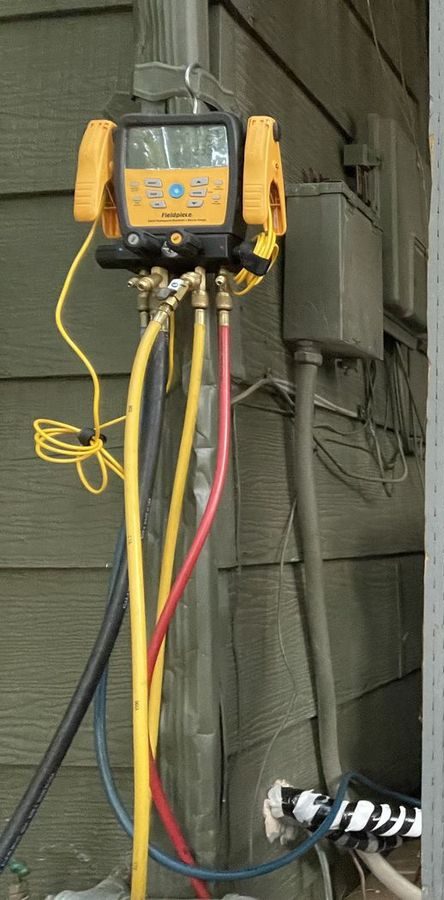
02 / 12
Digital gauges hang by the outdoor unit while the heat pump runs. Superheat and subcooling show whether the charge, a valve or the defrost board is the problem.
Read the service page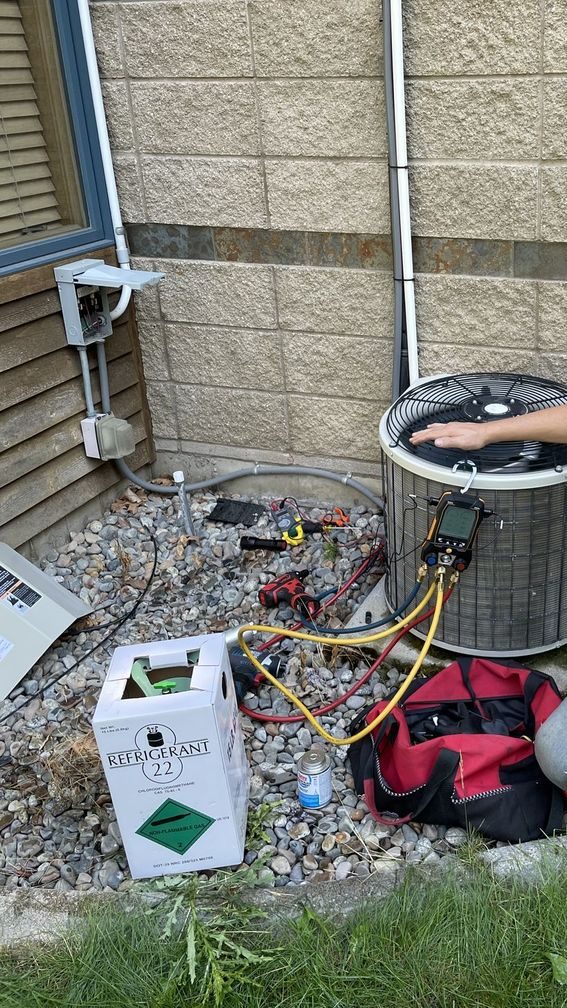
03 / 12
An older condenser under test with hoses on the service ports. The capacitor, contactor and fan motor get checked before anyone talks about refrigerant.
Read the service page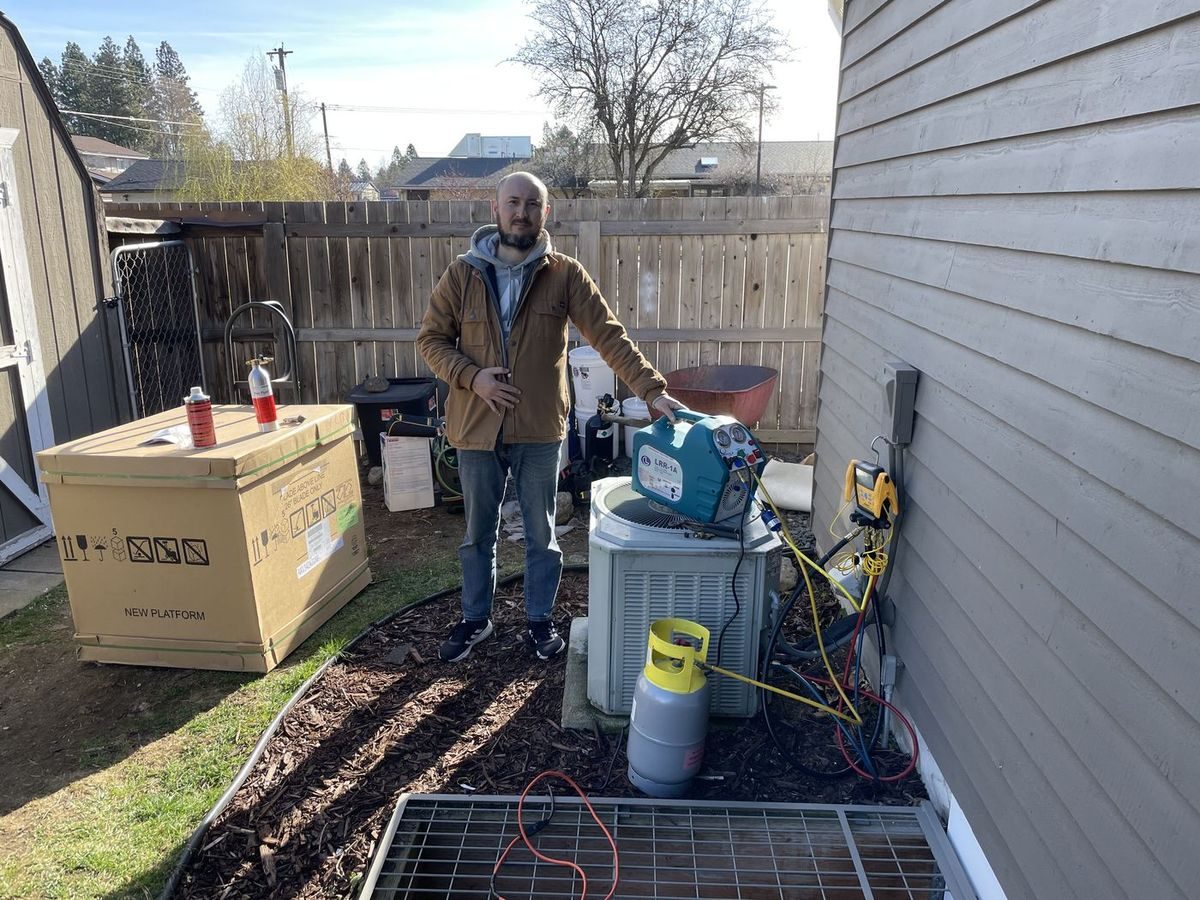
04 / 12
A recovery machine and cylinder beside an outdoor unit. On a replacement, the old refrigerant is pulled into the cylinder instead of the air.
Read the service page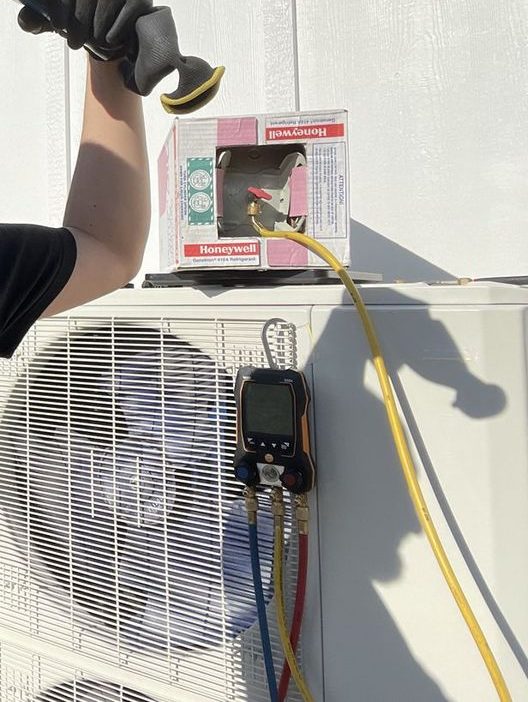
05 / 12
A ductless outdoor unit with a gauge set on it. Mini-splits get the same pressure and temperature readings as a central system, plus a look at the line-set insulation.
Read the service page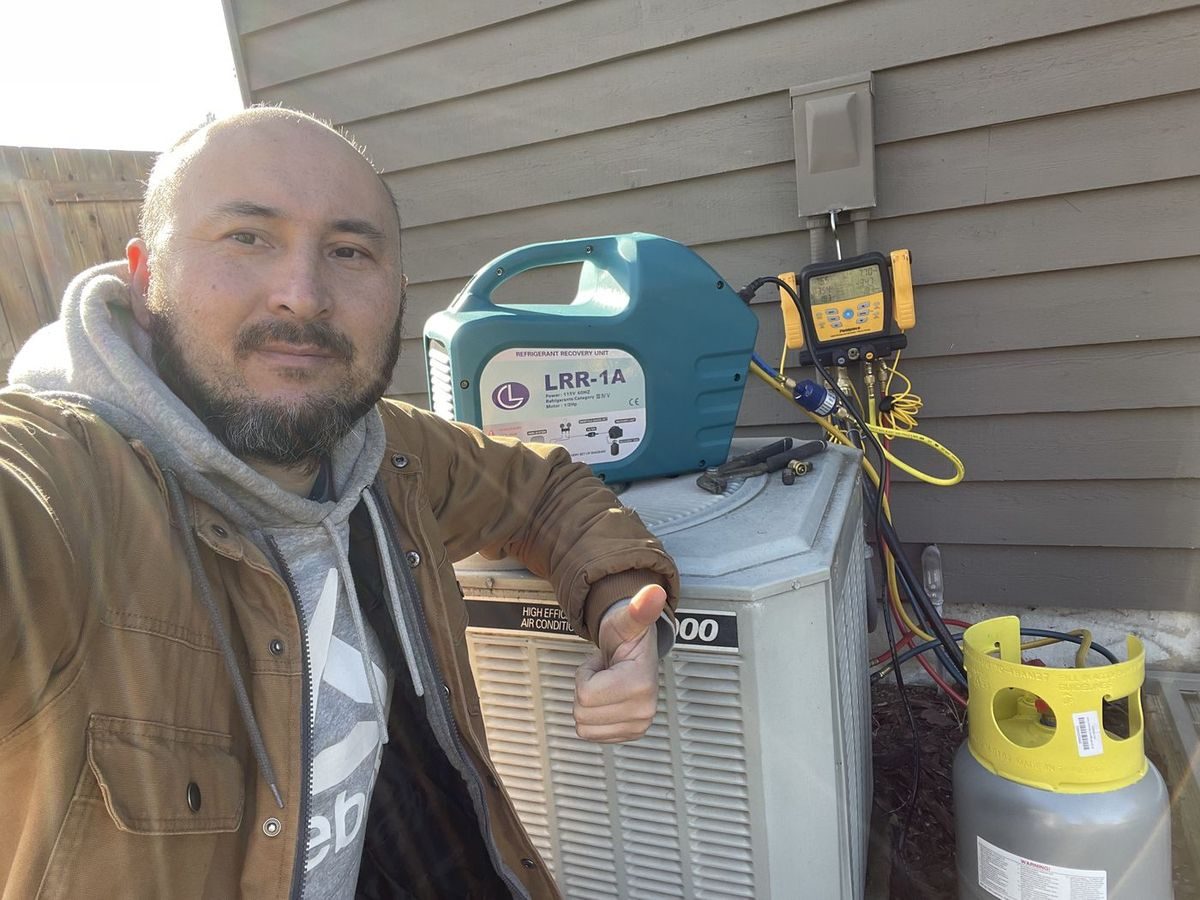
06 / 12
Gauges on a condenser during a seasonal visit. Spring visits wash the dust out of the coil; fall visits test defrost and heat strips before the fog weeks.
Read the service page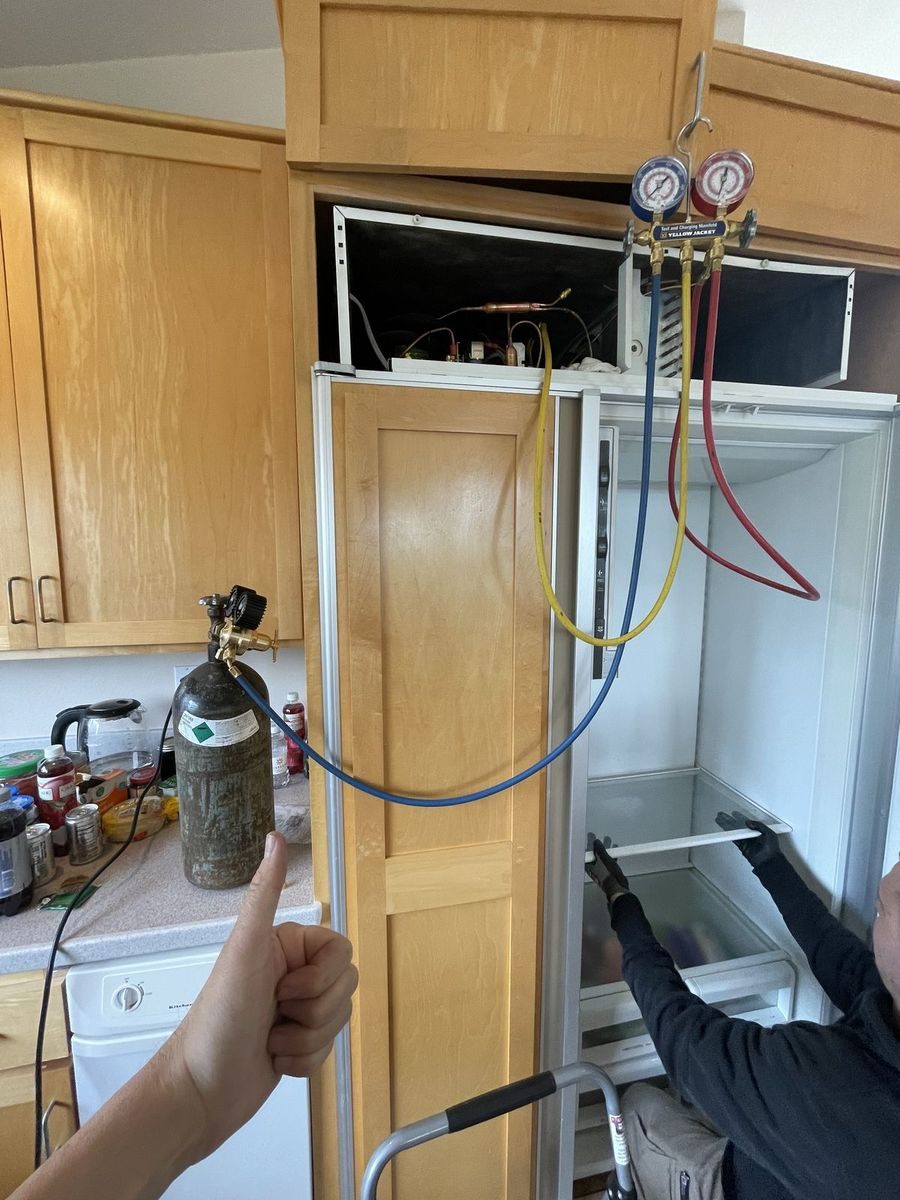
07 / 12
Gauges connected to a built-in refrigerator's sealed system. Leak searches, brazing and recharges happen in the kitchen, so the fridge stays where it is.
Read the service page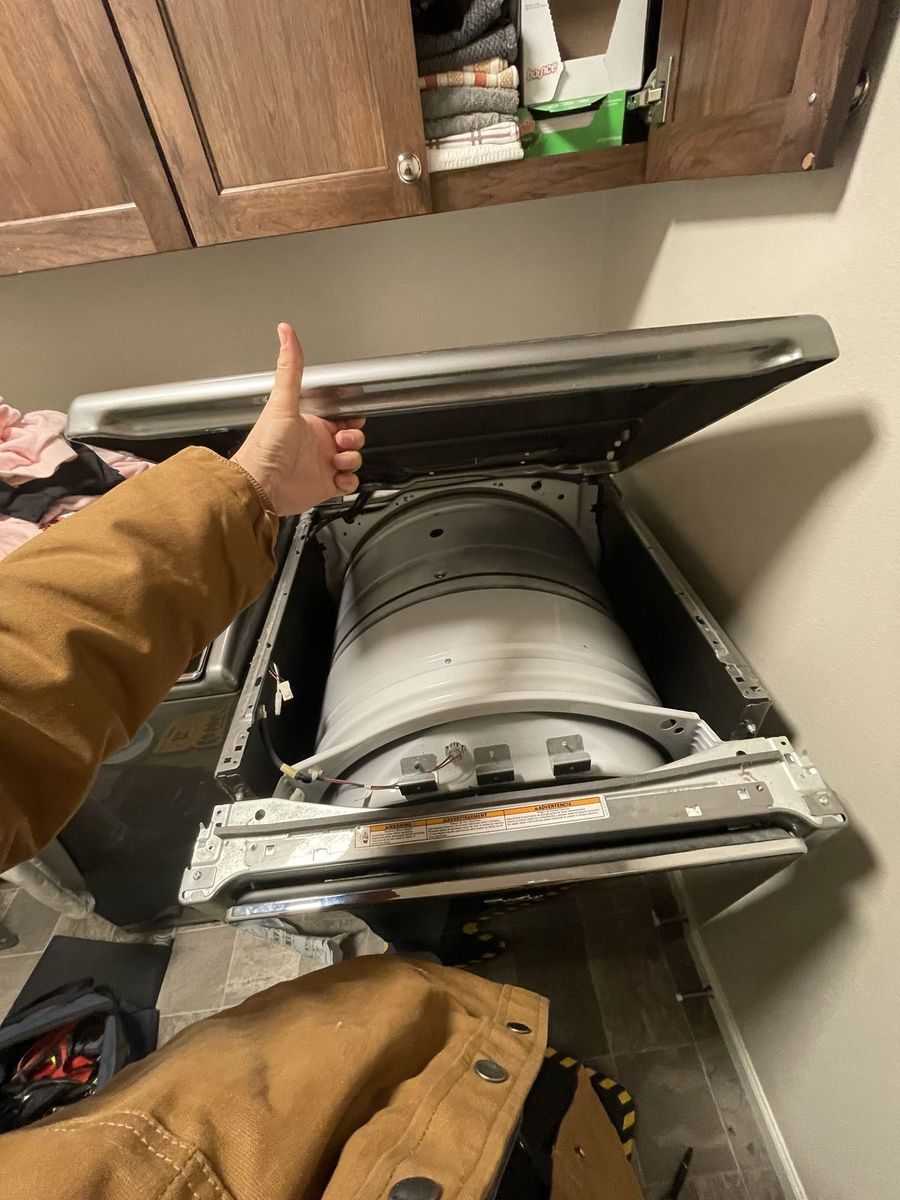
08 / 12
A top-load washer with the top panel raised. Lid switch, drive coupler and drain pump are all within reach once the top comes up.
Read the service page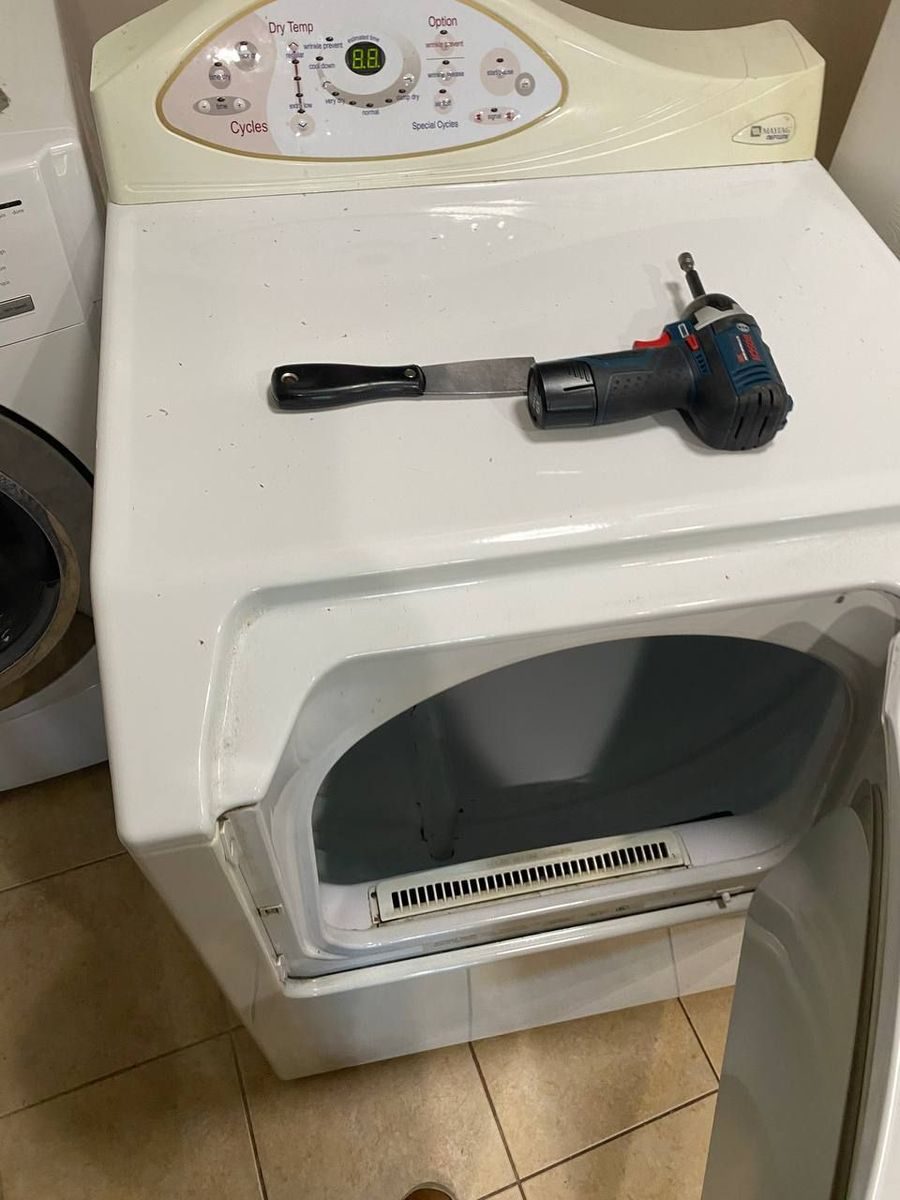
09 / 12
An electric dryer opened up in a laundry room. The thermal fuse, the heating element and the vent run behind the machine get tested together.
Read the service page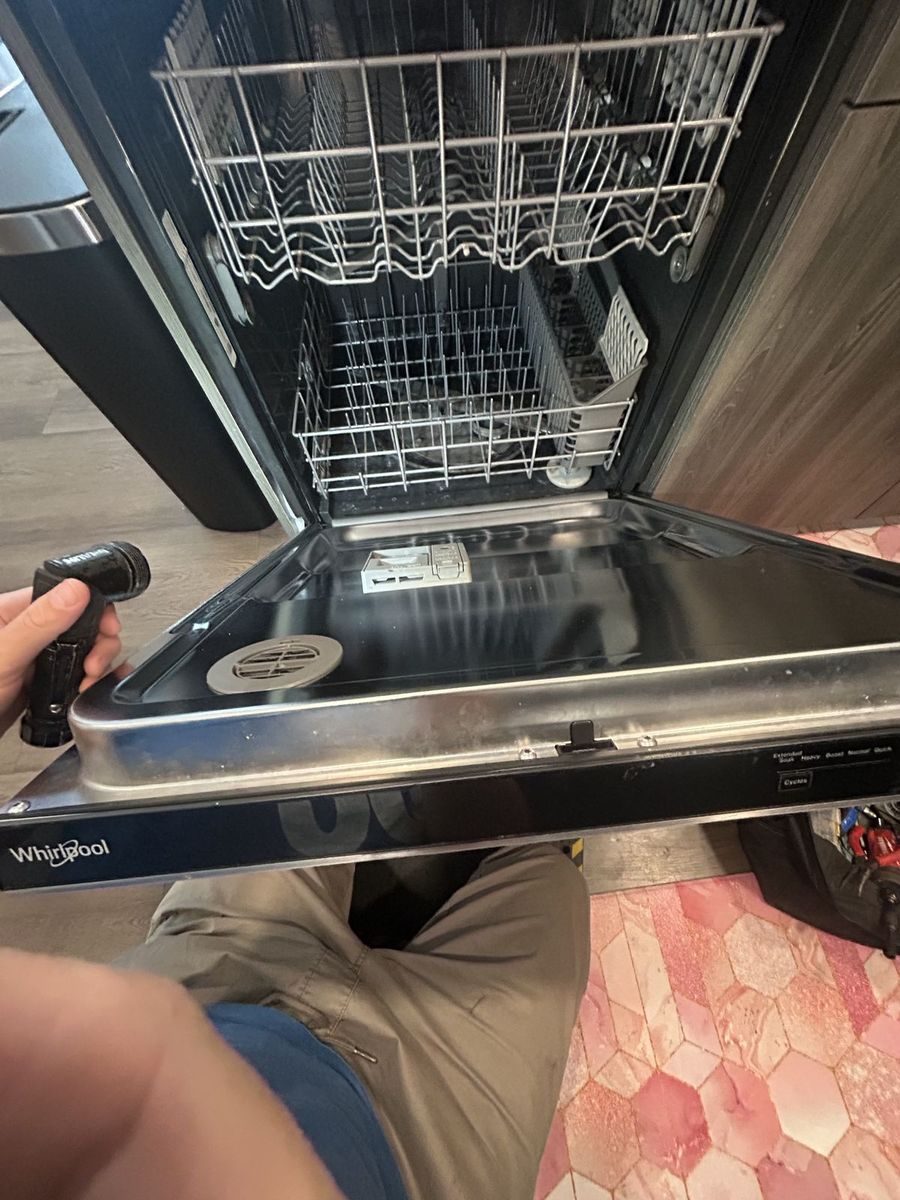
10 / 12
Door open and racks out on a dishwasher. A puddle left behind after the last rinse sends us to the filter screen, the pump and the hose route under the sink, in that order.
Read the service page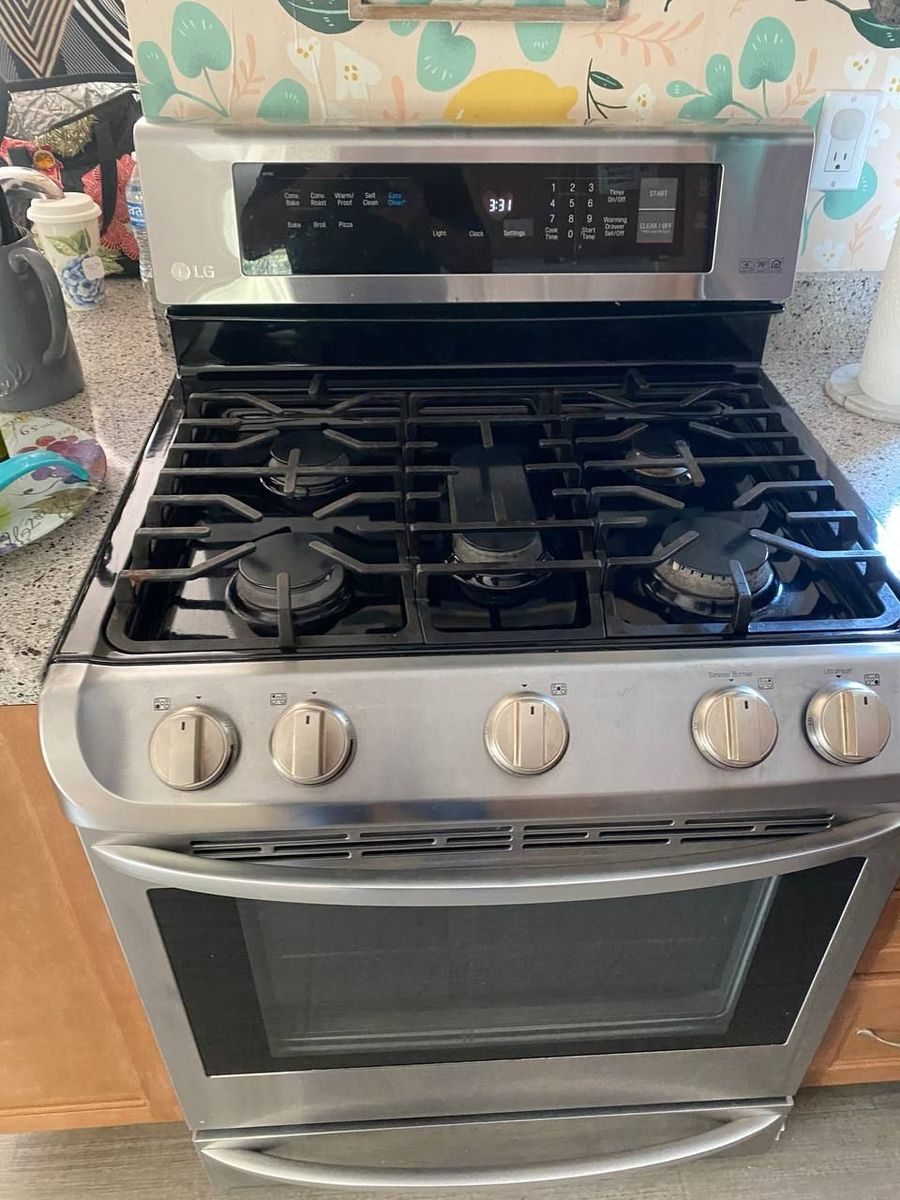
11 / 12
A five-burner gas range ready for testing. Burner igniters, the spark module and the bake igniter's amp draw are measured before a part is ordered.
Read the service page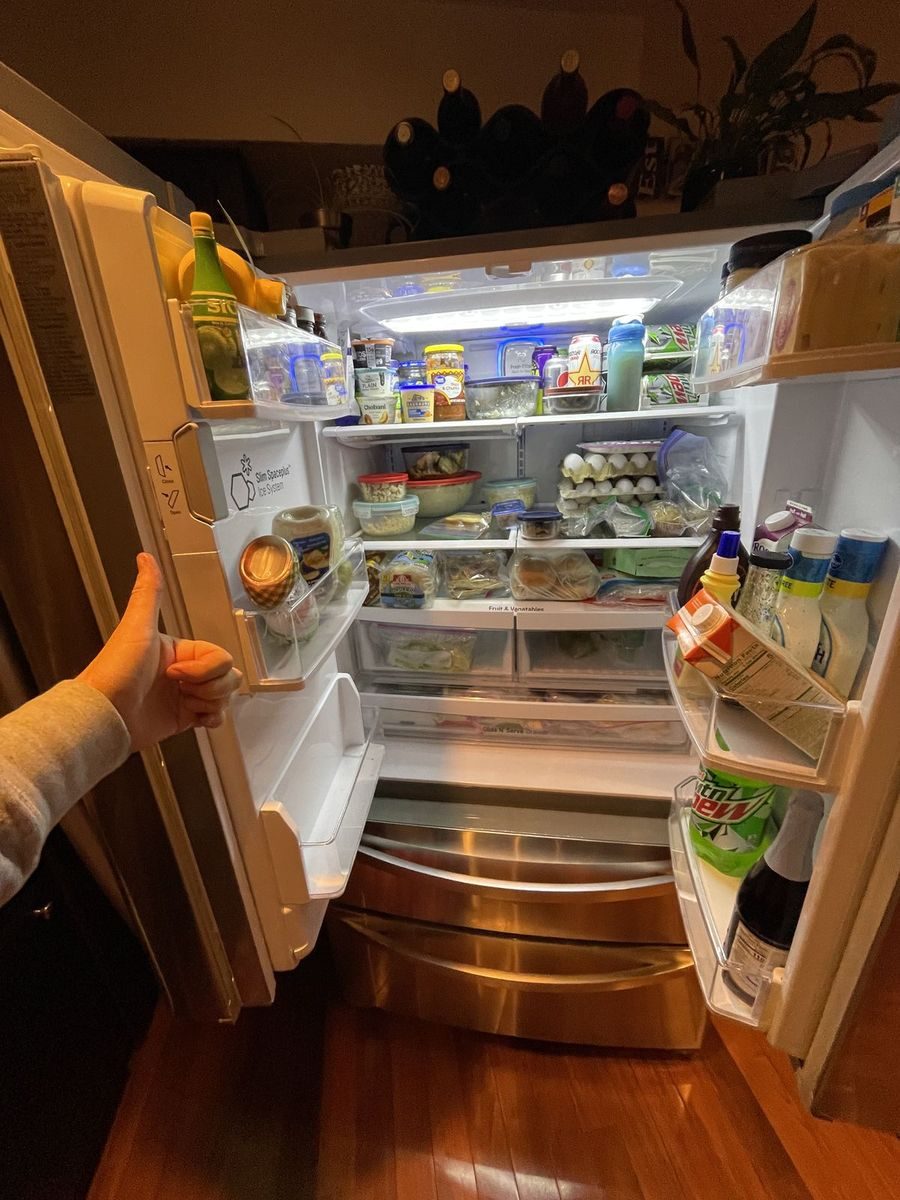
12 / 12
A French-door refrigerator open for diagnosis. Slow ice starts with the water: the inlet valve, the filter and a fill tube that can freeze shut.
Read the service pageUsually not. A brief dusty smell on the first chilly morning is dust burning off the heat exchanger and burners after summer, and Kennewick's blowing dust supplies plenty of it. If the odor lingers past an hour or the furnace keeps tripping a limit, turn it off at the thermostat and call. Gas odor calls for something else: walk out of the house, and from outdoors ring 911 or the gas utility.
Yes. Our 06A HVAC/Refrigeration specialty covers gas and electric furnaces, air handlers and the heat pumps paired with them. On electric units our technician tests each heating element, the sequencers, the limits and the indoor fan motor, and checks the power supply at the furnace. If the breaker trips, you can reset it once; if it trips a second time, keep it off and call us.
Turning down the repair leaves the diagnostic fee as your whole bill for the Kennewick visit. The office quotes that fee up front, during your call or online booking. Accept the written repair price instead, and the same fee is counted inside it, not billed separately. No wrench turns on the repair until you agree, and the warranty terms are listed on your invoice.
We repair the brands found in Kennewick homes, including Carrier, Trane, Lennox, Goodman, Rheem and Ruud, Bryant, York and Daikin. Igniters, flame sensors, capacitors and fan motors are stocked on the truck, so those swaps can often happen during the same visit. Anything that needs ordering, such as a control board or an inducer assembly, is priced in writing before we order it.
Talk to us
Go online and select a day with an arrival window, or phone between 8 AM and 7 PM, any day of the week. The office calls back to confirm, and no repair begins until the written price has your approval.
Book a visit
One slip, filled top to bottom. The office phones to confirm the visit, and the technician calls again when on the way.
Every number below is a public state record. Look each one up on L&I Verify, or read what each license allows on our licenses page.
What our licenses cover