01 / 12
Furnace repair
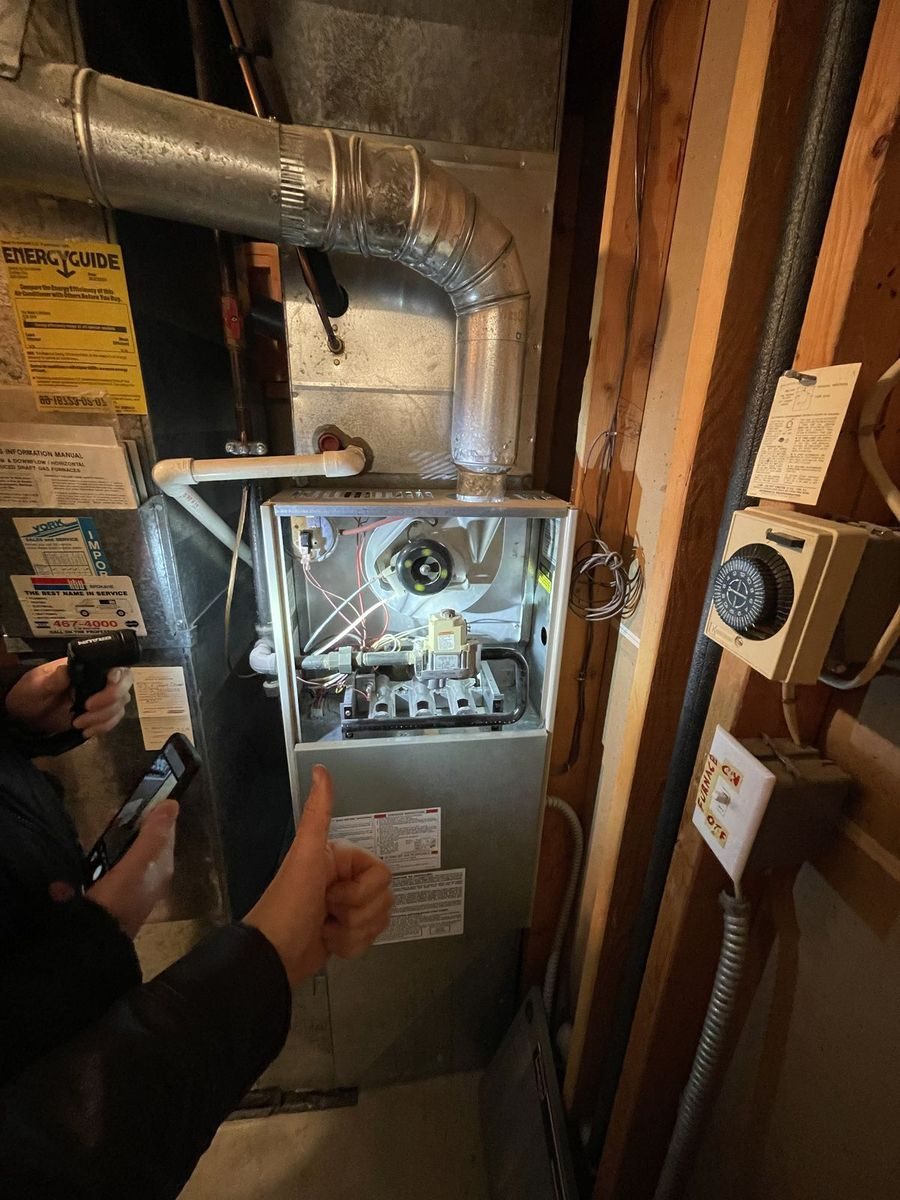
The burner compartment of a gas furnace, open. We follow the start-up order, inducer, pressure switch, igniter, flame sensor, until the step that fails.
Read the service page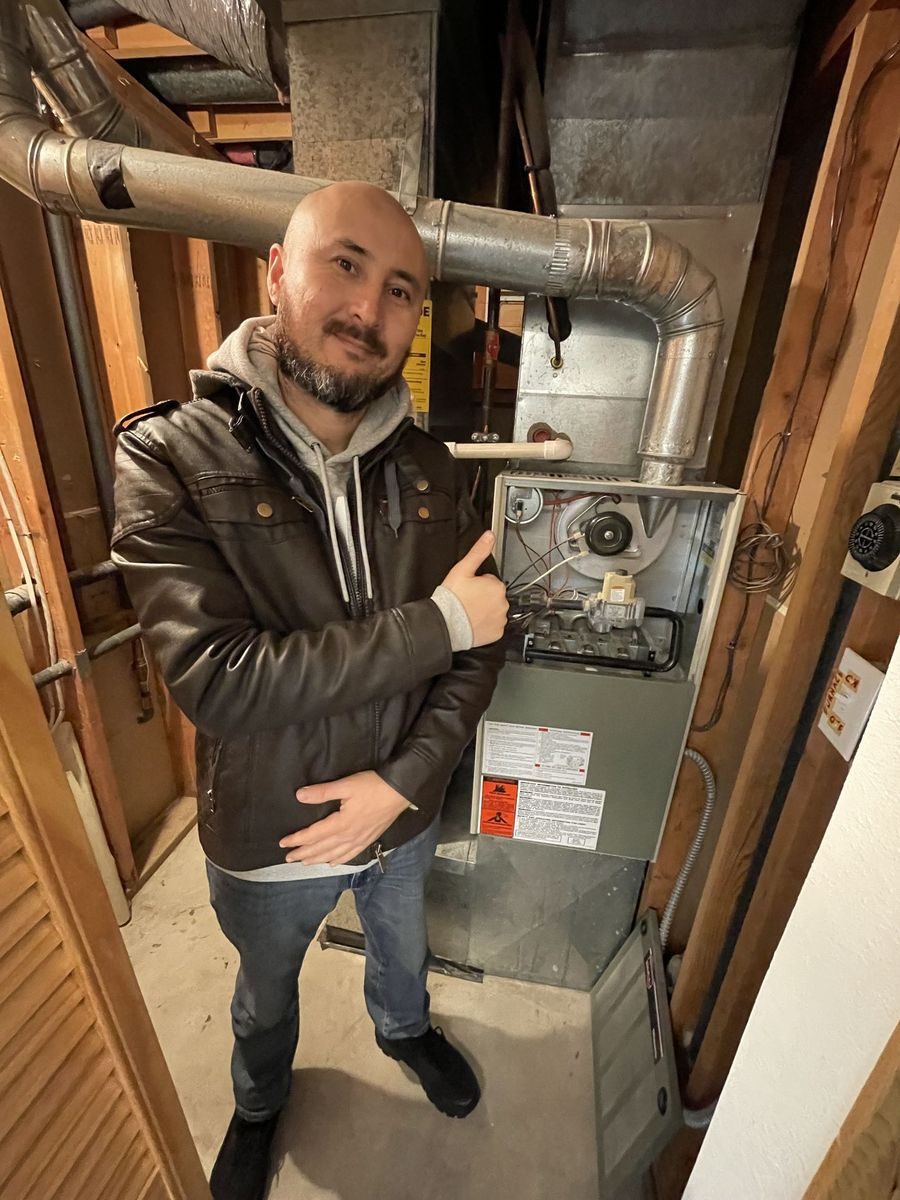
Pasco heating repair
A Pasco furnace that locks out on a foggy January morning calls for a quick, clear answer. We fix gas and electric furnaces across East and West Pasco, work through every safety in the chain, and write the cost down for you before replacing a single part.
Short answer
Pasco gas furnaces that won't stay lit most often trace to a fouled flame sensor, a worn hot surface igniter, a pressure switch stuck open, or an inducer dragging on worn bearings. Electric furnaces tend to lose elements, sequencers or limits. We read the codes, test the suspect parts, and repair after a written price gets your approval.
Start with the filter and the thermostat. A clogged filter can trip the high limit, and a thermostat with dead batteries, or one left on fan-on, keeps air moving with no heat behind it. Next, look at the status light on the control board through the small window in the furnace door. Its blink pattern names the fault, and the code chart is usually printed on the inside of the panel.
If those look normal, the trouble is usually somewhere in the ignition chain. The inducer starts, the pressure switch closes, the igniter heats, gas flows, and the flame rod must confirm the burners are lit. A break at any link locks the furnace out after a few tries. Licensed through the 06A HVAC/Refrigeration specialty, our technicians measure microamps at the flame rod and draft at the pressure switch, and they change out just the component that fails its test.
The long gray stretches do most of the damage. When an inversion settles over the Columbia Basin, Pasco can sit under fog and freezing fog with highs in the 30s for days or weeks, and the furnace runs long cycles through all of it. Igniters, flame sensors and inducer motors tend to give out after that kind of steady duty. High-efficiency furnaces also produce condensate, and water sitting in a trap inside an unheated garage may turn to ice, leaving the pressure switch unable to close.
Housing age plays a part too. East Pasco's established neighborhoods may have furnaces that were swapped onto older ductwork, while West Pasco's newer homes often have their first gas furnace in an attic or garage. Spanish speakers make up a large community in Pasco, and the office will answer in Spanish when asked. If gas odor ever reaches you, head outdoors with everyone in the house, and once clear of it, dial 911 or the gas utility.
Older homes here may have floor or wall registers fed by ductwork that has been modified over the years. Furnaces on those systems often trip their limits from restricted returns, so we measure static pressure and follow the return path as carefully as we check the furnace.
Newer homes near Sandifur Parkway commonly have high-efficiency gas furnaces vented with PVC. We check the vent termination for blockage, the condensate trap for sludge and the inducer for proper draft, because that trio is behind a good share of winter lockouts in condensing furnaces.
Homes in this growing area may run a gas furnace alongside a heat pump or central AC on the same air handler. We check how the thermostat controls each stage, test the furnace's flame sensor and igniter, and confirm the indoor fan speed is set for heating airflow.
One photo per tab from our service calls. Tap a tab, or let the file turn on its own.
01 / 12
The burner compartment of a gas furnace, open. We follow the start-up order, inducer, pressure switch, igniter, flame sensor, until the step that fails.
Read the service page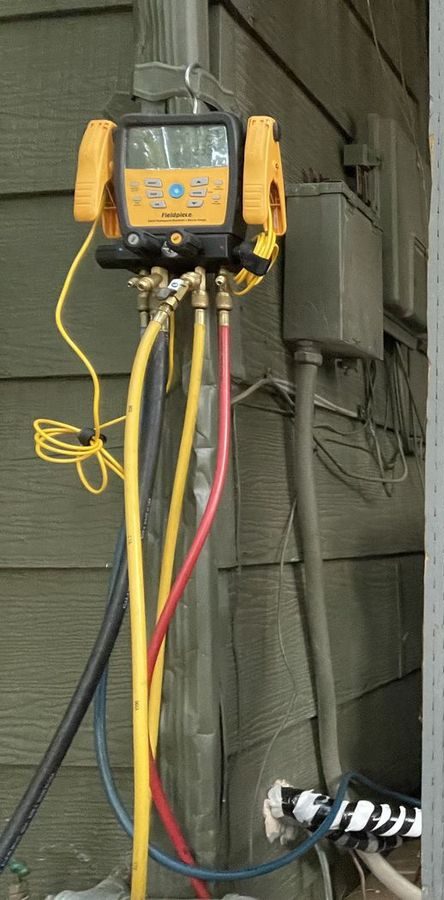
02 / 12
Digital gauges hang by the outdoor unit while the heat pump runs. Superheat and subcooling show whether the charge, a valve or the defrost board is the problem.
Read the service page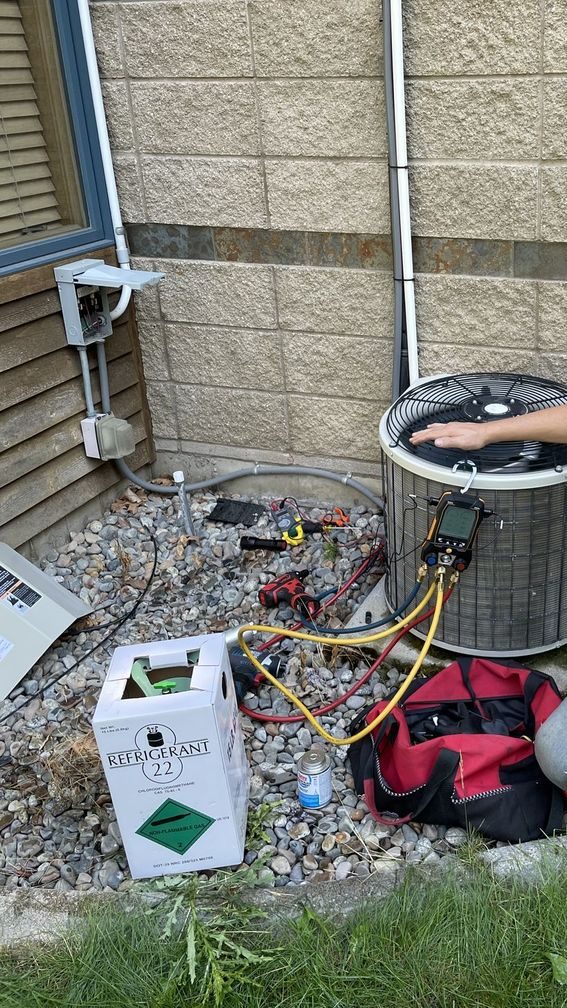
03 / 12
An older condenser under test with hoses on the service ports. The capacitor, contactor and fan motor get checked before anyone talks about refrigerant.
Read the service page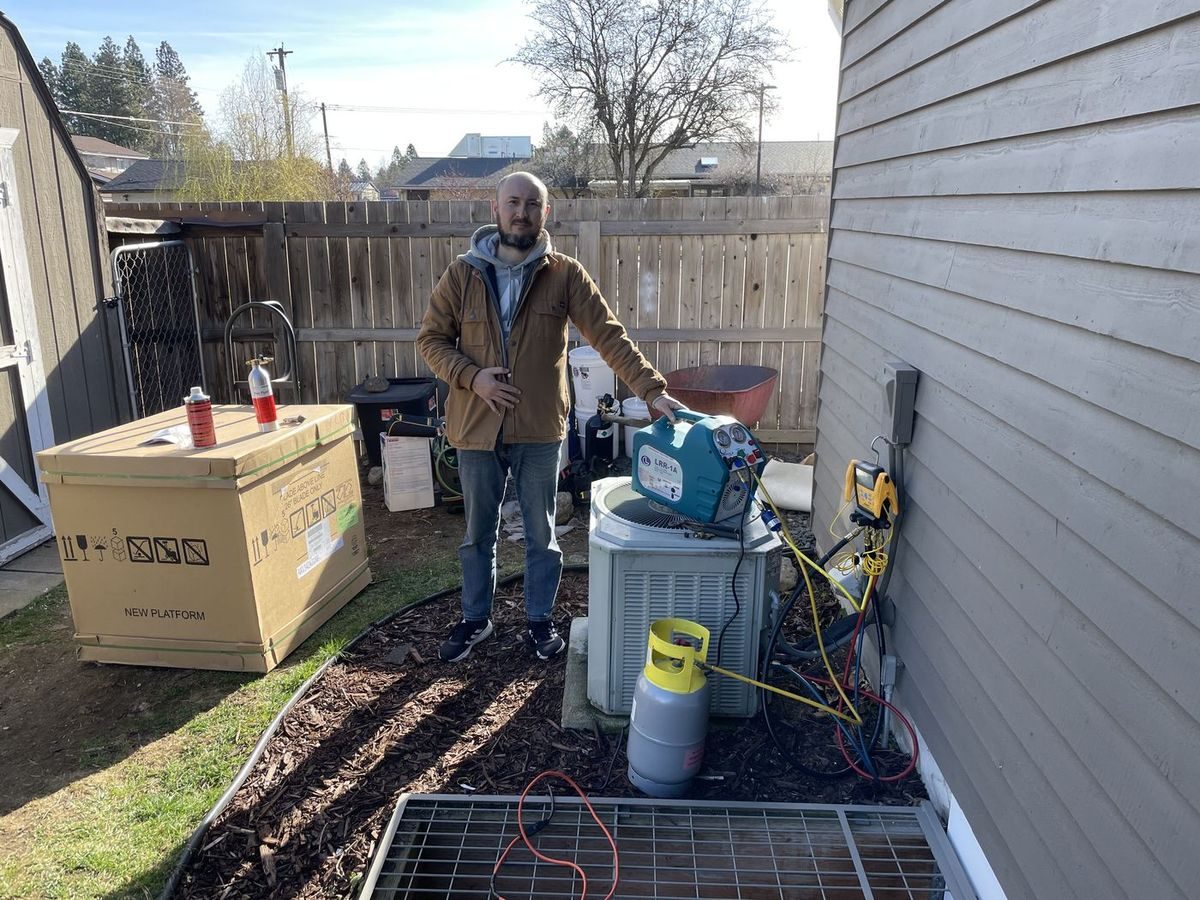
04 / 12
A recovery machine and cylinder beside an outdoor unit. On a replacement, the old refrigerant is pulled into the cylinder instead of the air.
Read the service page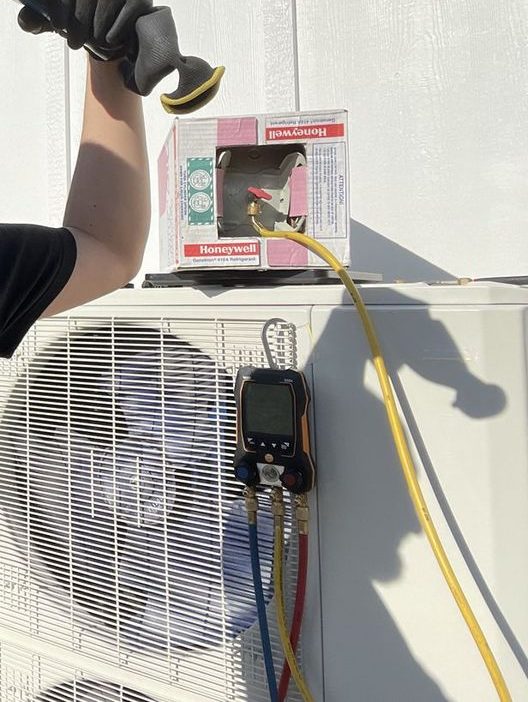
05 / 12
A ductless outdoor unit with a gauge set on it. Mini-splits get the same pressure and temperature readings as a central system, plus a look at the line-set insulation.
Read the service page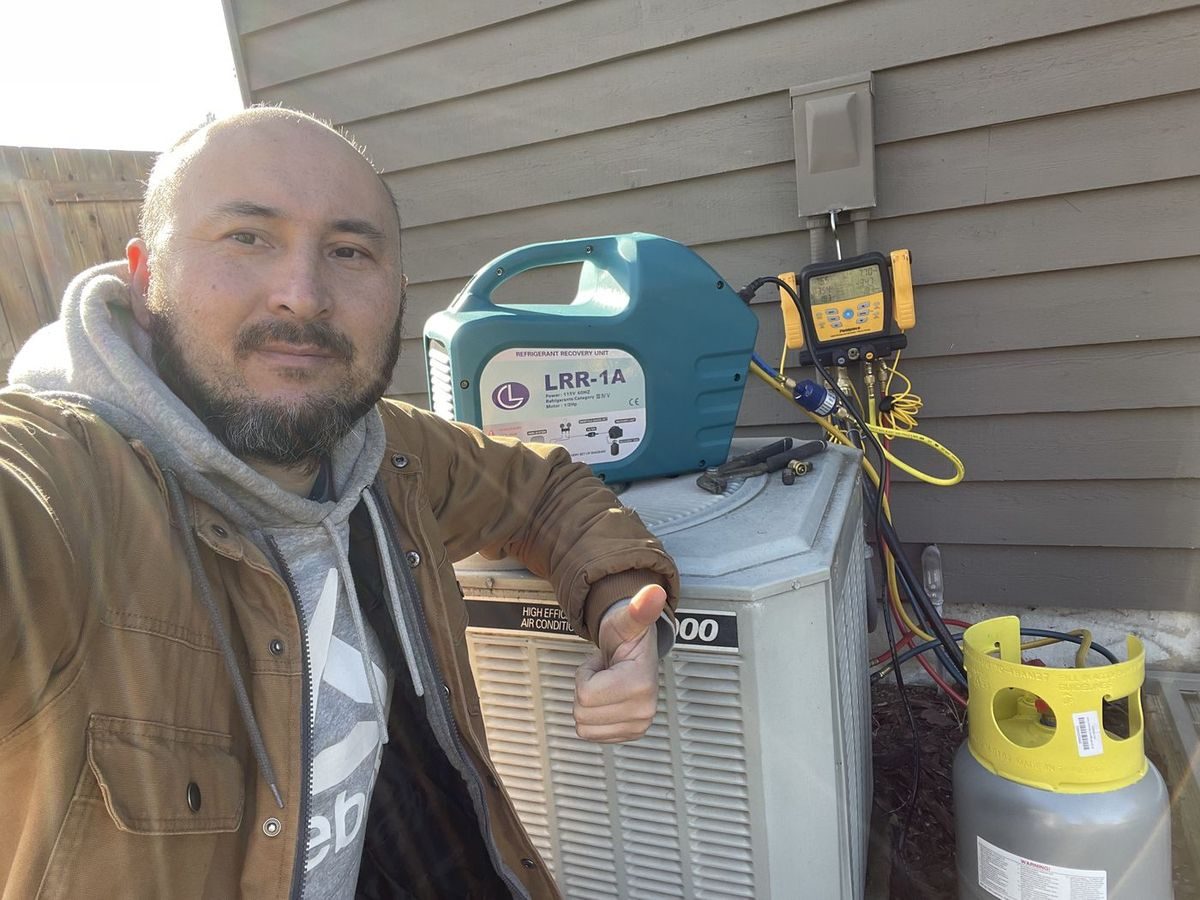
06 / 12
Gauges on a condenser during a seasonal visit. Spring visits wash the dust out of the coil; fall visits test defrost and heat strips before the fog weeks.
Read the service page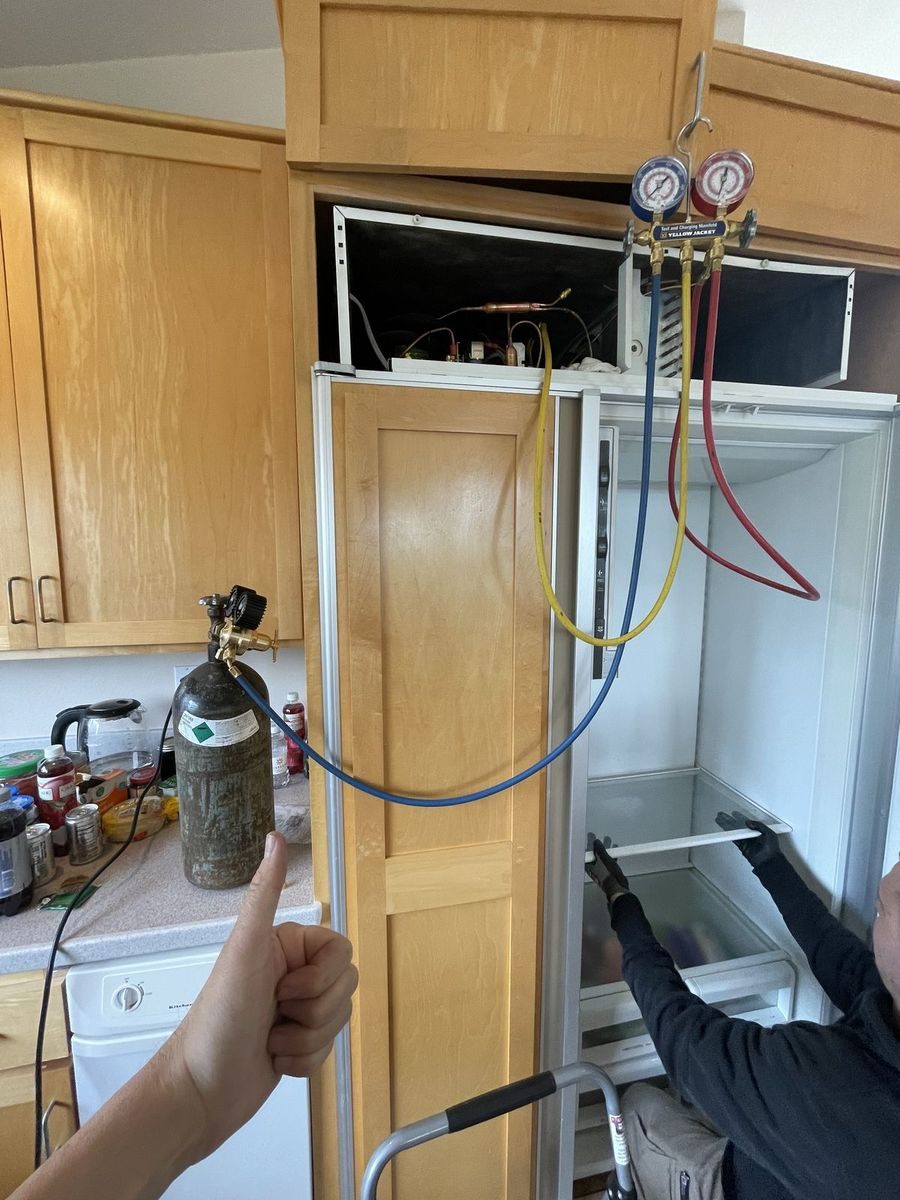
07 / 12
Gauges connected to a built-in refrigerator's sealed system. Leak searches, brazing and recharges happen in the kitchen, so the fridge stays where it is.
Read the service page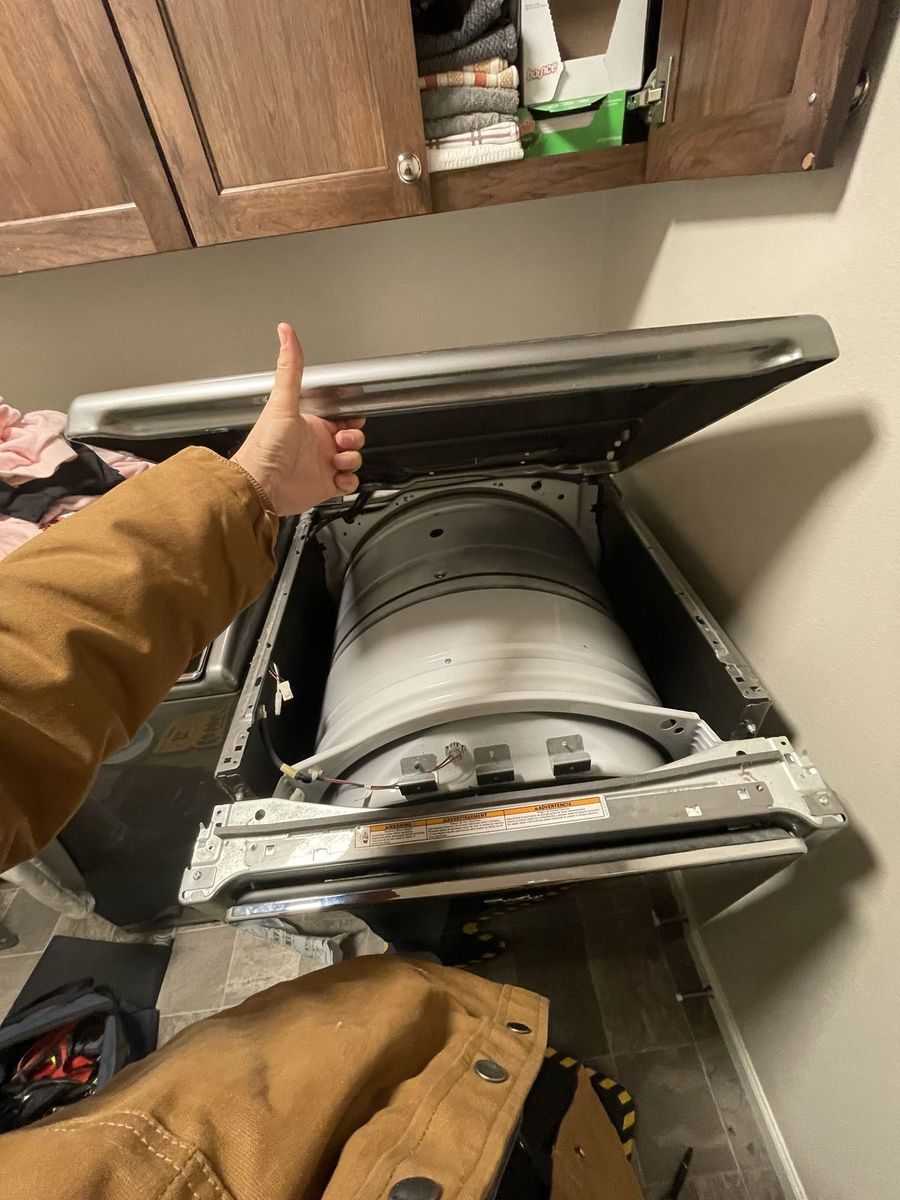
08 / 12
A top-load washer with the top panel raised. Lid switch, drive coupler and drain pump are all within reach once the top comes up.
Read the service page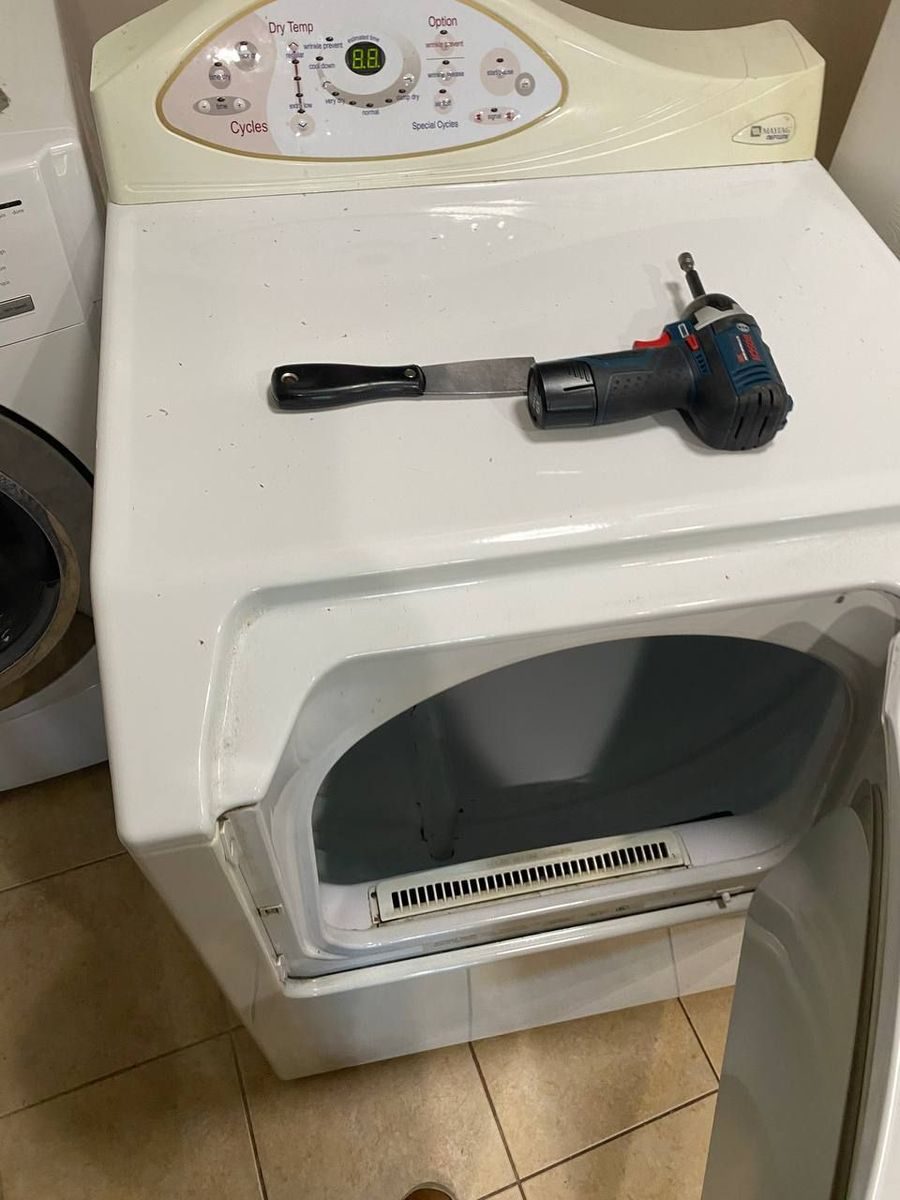
09 / 12
An electric dryer opened up in a laundry room. The thermal fuse, the heating element and the vent run behind the machine get tested together.
Read the service page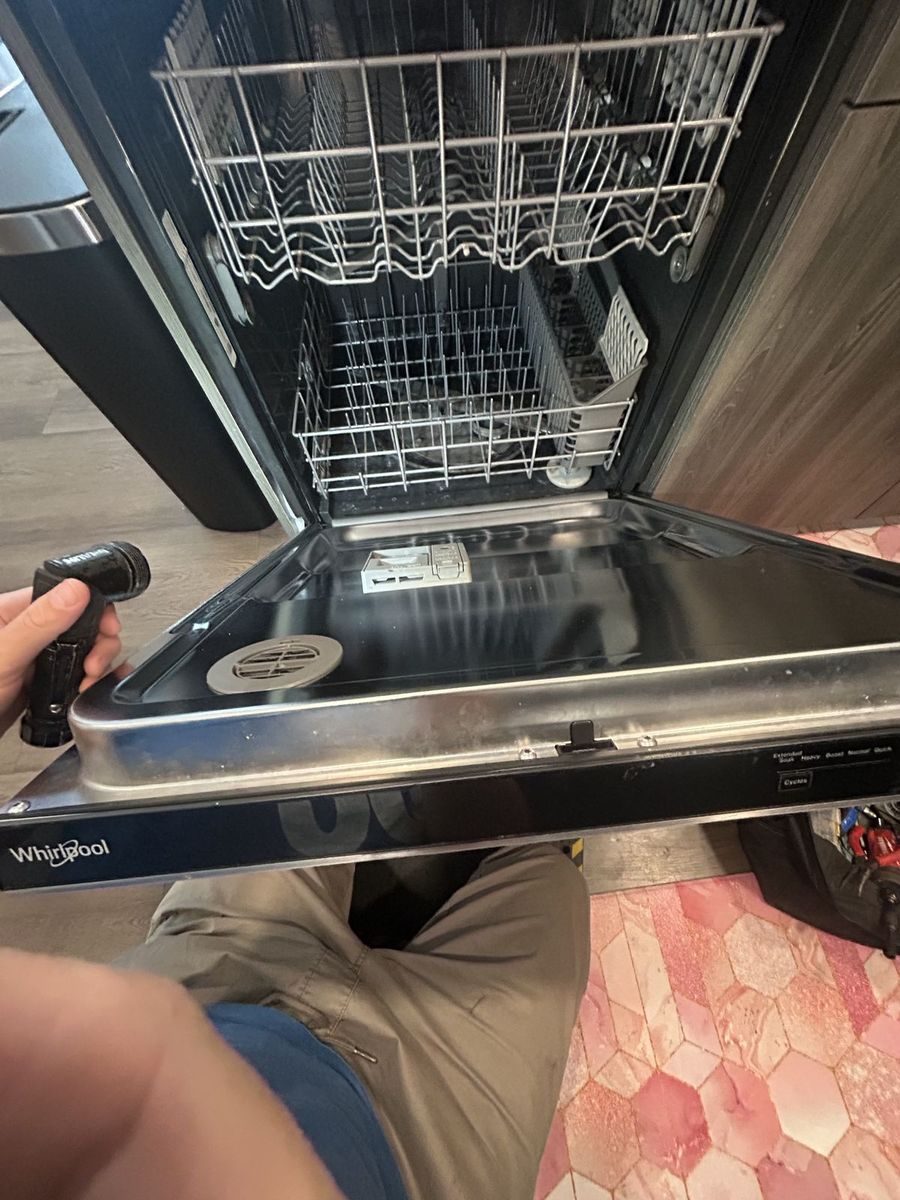
10 / 12
Door open and racks out on a dishwasher. A puddle left behind after the last rinse sends us to the filter screen, the pump and the hose route under the sink, in that order.
Read the service page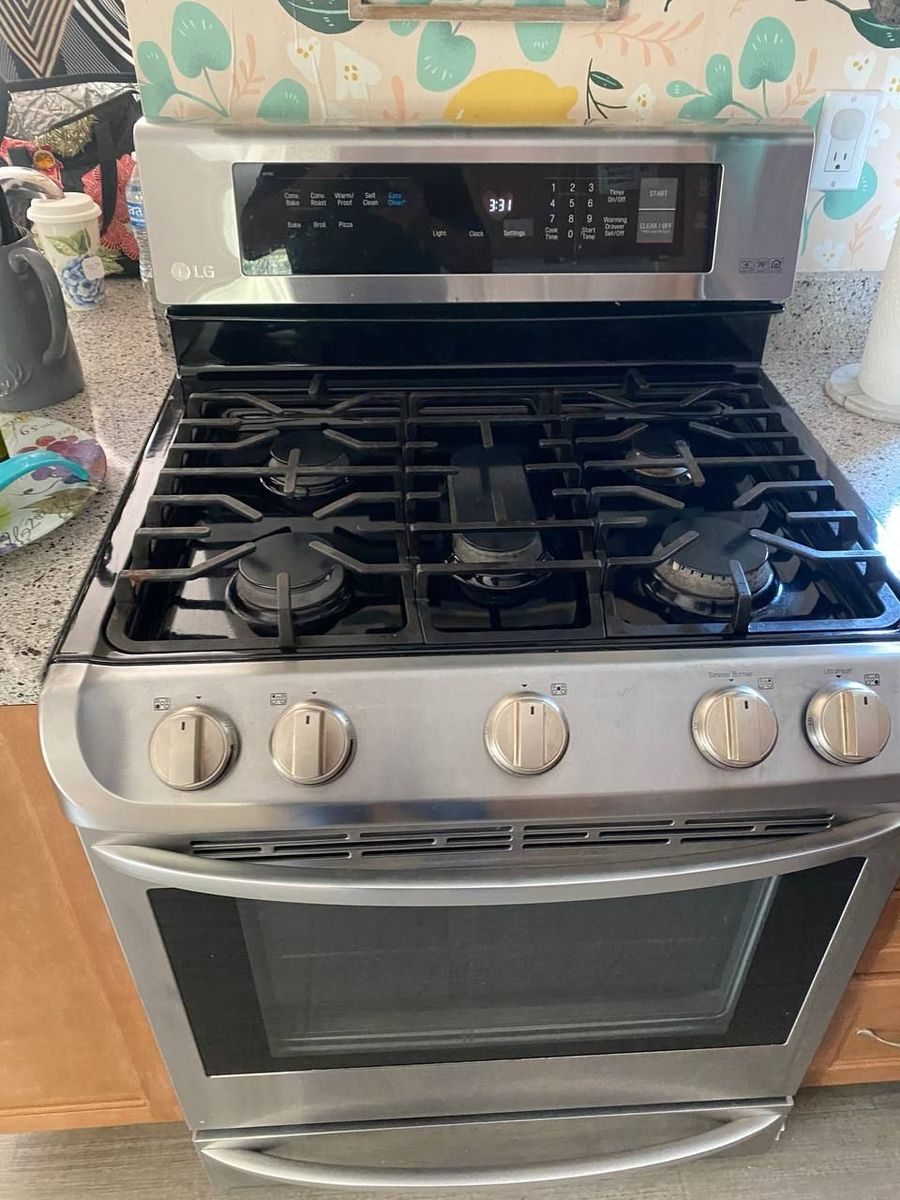
11 / 12
A five-burner gas range ready for testing. Burner igniters, the spark module and the bake igniter's amp draw are measured before a part is ordered.
Read the service page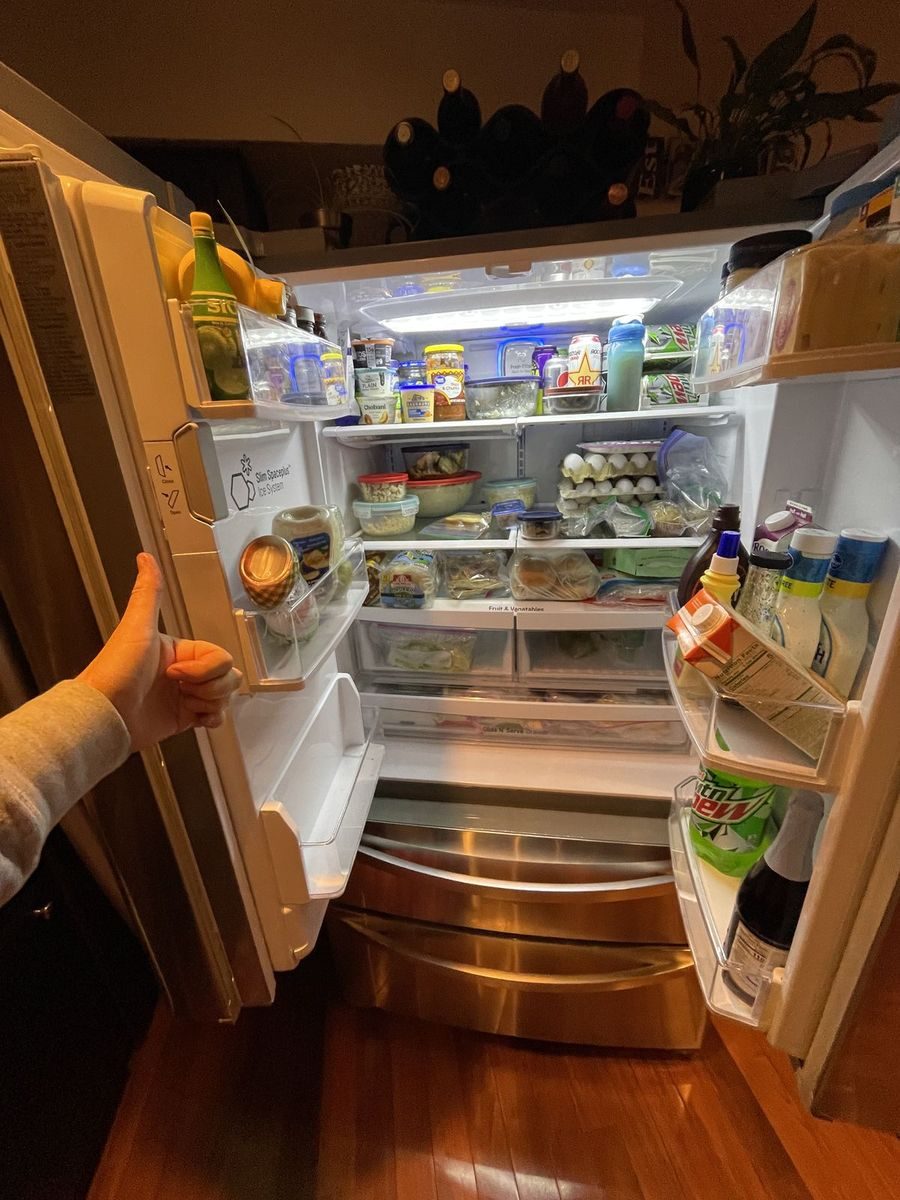
12 / 12
A French-door refrigerator open for diagnosis. Slow ice starts with the water: the inlet valve, the filter and a fill tube that can freeze shut.
Read the service pageCycling power once to clear a lockout is fine, but repeated resets hide the problem and wear on the igniter and control board. If the furnace locks out again, jot down the blink code on the board and call. A gas smell changes the plan: bring everyone outside, and from the yard contact 911 or the gas utility.
Yes, gas or electric, plus the air handlers and heat pumps that share the ductwork. An electric furnace warms the air with resistance elements that sequencers or relays bring on in steps, with limits guarding against overheating. We clamp each element's amp draw, check the sequencers, limits and indoor fan, and list the needed parts in a written quote before anything is replaced.
Our office names the diagnostic fee ahead of the visit, whether you book online or by phone. Say yes to the repair we price in writing, and the fee becomes part of that sum for your Pasco job. Say no and the fee alone settles the visit. A price in writing always comes first, and your invoice lists the warranty terms.
Rarely for lockouts alone. Many lockouts trace to a flame sensor, igniter, pressure switch or inducer, all of which can be repaired. Replacement enters the conversation when the heat exchanger is cracked, the controls are obsolete, or the repair cost approaches a large share of a new system. We give both options in writing, and a new-system quote rolls equipment and installation into a single figure.
Talk to us
Choose a day and arrival window with our online booking tool, or call 8 AM to 7 PM, any day. Once the office has confirmed by phone, expect a call from the technician as they set out for your address.
Book a visit
One slip, filled top to bottom. The office phones to confirm the visit, and the technician calls again when on the way.
Every number below is a public state record. Look each one up on L&I Verify, or read what each license allows on our licenses page.
What our licenses cover