01 / 12
Heat pump repair
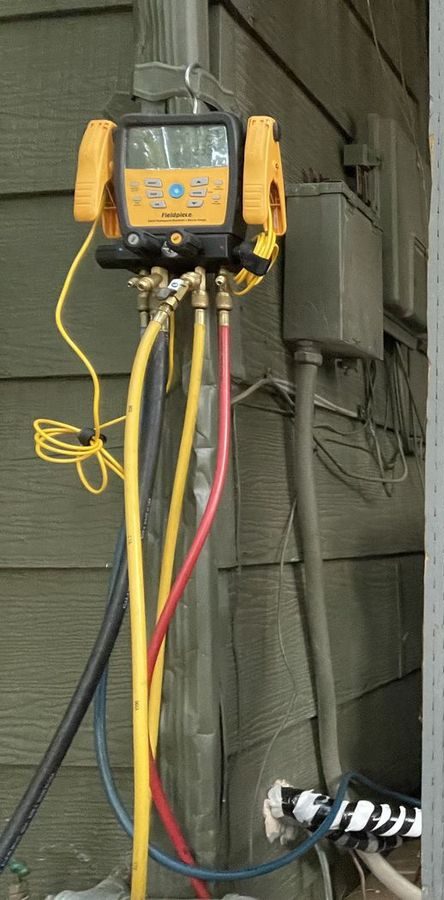
Digital gauges hang by the outdoor unit while the heat pump runs. Superheat and subcooling show whether the charge, a valve or the defrost board is the problem.
Read the service page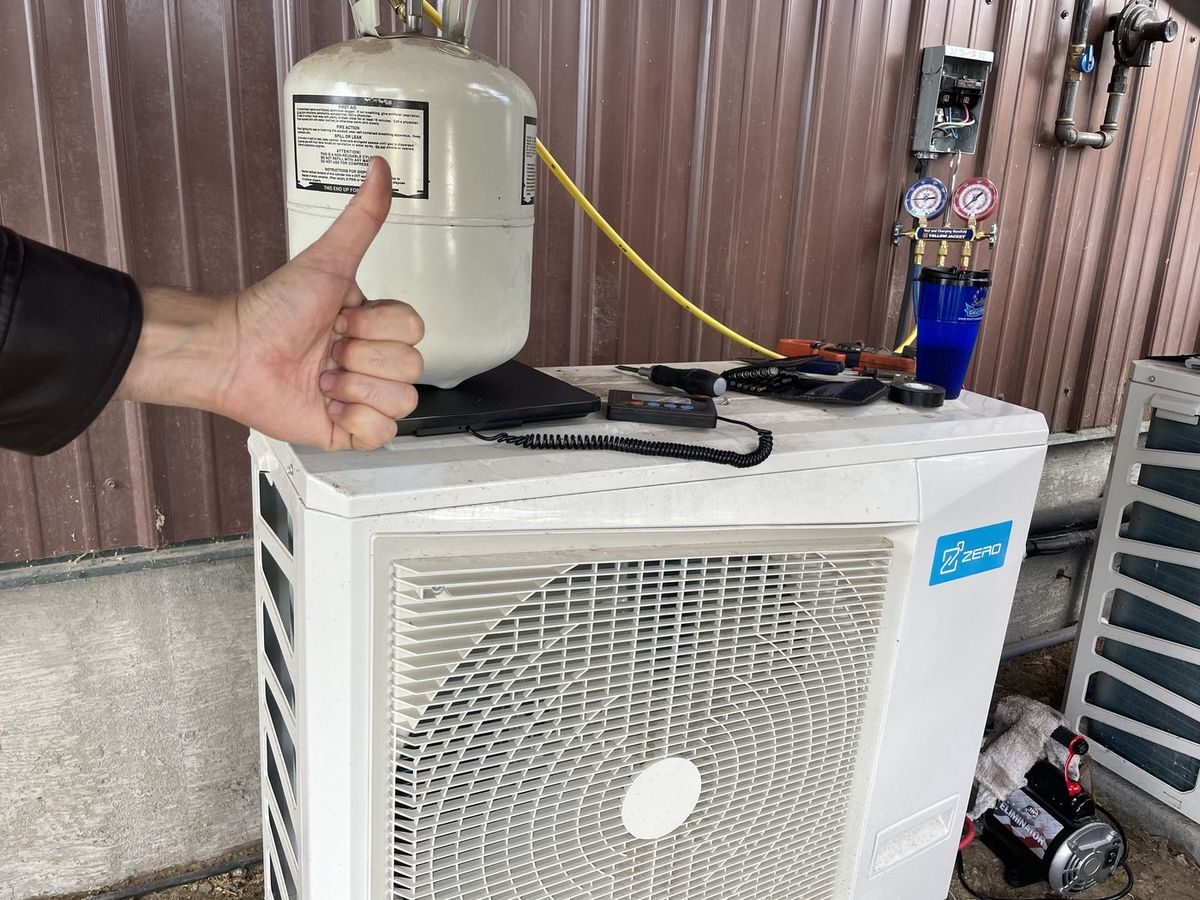
Pasco heat pump repair
In Pasco, a single heat pump handles foggy inversion winters and 100°F summers, so its faults can surface in either season. Our technicians check defrost controls, reversing valves, refrigerant charge and backup heat, and you see a written figure before they repair anything.
Short answer
A Pasco heat pump that stays frosted, delivers lukewarm air in heat mode, or keeps the AUX indicator glowing most of the day usually has a defrost control fault, a reversing valve problem, low refrigerant or a thermostat staging issue. Brief defrost cycles during freezing fog are part of normal operation. We diagnose, quote on paper and repair once you approve.
Watch how long the ice stays. During inversions the Columbia Basin traps cold, damp air beneath warmer air aloft, and freezing fog advisories go out for the region; an outdoor coil frosts quickly in that air. A healthy unit melts the frost off in a defrost cycle lasting a few minutes, often with a plume of steam. If the coil stays coated cycle after cycle, or ice climbs up from the base pan, part of the defrost system has failed.
Then compare indoor comfort with the thermostat. Backup heat strips are meant to help on the coldest nights, when a cold snap pushes lows toward 10°F, and during each defrost. If the AUX indicator glows through mild afternoons, the heat pump itself is falling short. With the EPA 608 Universal credential, our technicians read the charge, check the TXV and compressor, and confirm whether the reversing valve shifts all the way.
They carry the house through every season with little rest. Average lows in December and January sit near 28°F, inversion fog can hold highs in the 30s for weeks, and summer brings July highs averaging about 92°F with 100°F days most years. That steady duty wears contactors and capacitors and piles hours onto the compressor, reversing valve and defrost board within a single year.
Placement in newer subdivisions adds a wrinkle. Lots along Sandifur Parkway and Chapel Hill Boulevard can sit close together, leaving the outdoor unit in a narrow side yard where dust and tumbleweeds collect and discharge air loops back into the coil. Keep the sides clear and the top open. Pasco's water is moderately hard treated river water, so if you rinse the coil with a hose, do it on a warm day and keep the spray gentle.
This newer West Pasco neighborhood has many first-generation systems still close to their builder setup. Thermostat staging, outdoor sensor placement and the drainage path for defrost melt are worth checking early, before a small setup issue turns into a frozen coil during a foggy week.
Homes around the Road 68 corridor range from recent builds to houses from earlier decades, so heat pumps here run from variable-speed inverter units to older single-stage models. Our technicians bring gauges and controls knowledge for both, and any ordered part is priced for you before the order goes in.
Established Riverview homes near the Columbia may have a heat pump paired with an older gas furnace as a dual-fuel system. We check how the thermostat hands off between the two, test the furnace's own safeties, and see whether the switchover temperature suits inversion weeks.
One photo per tab from our service calls. Tap a tab, or let the file turn on its own.
01 / 12
Digital gauges hang by the outdoor unit while the heat pump runs. Superheat and subcooling show whether the charge, a valve or the defrost board is the problem.
Read the service page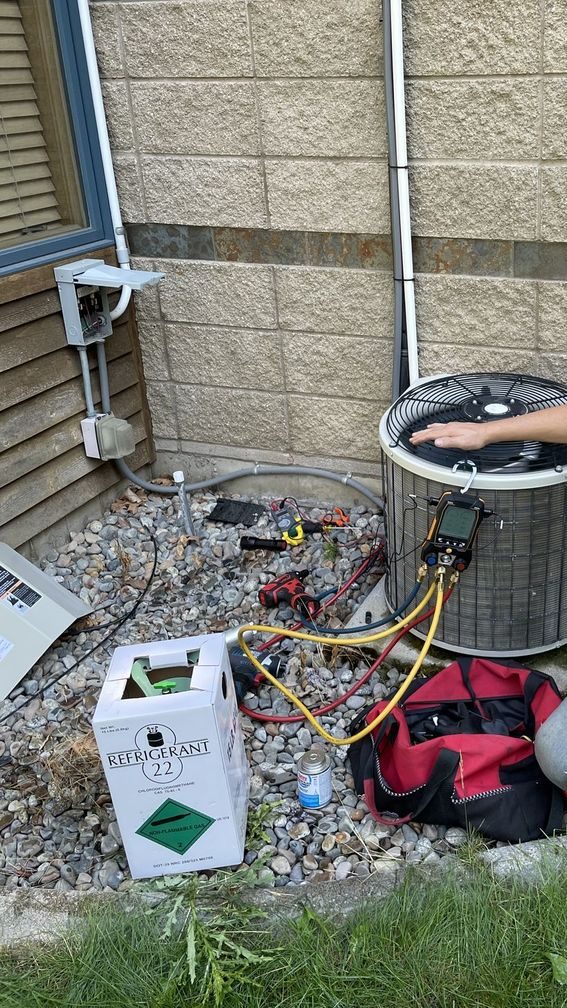
02 / 12
An older condenser under test with hoses on the service ports. The capacitor, contactor and fan motor get checked before anyone talks about refrigerant.
Read the service page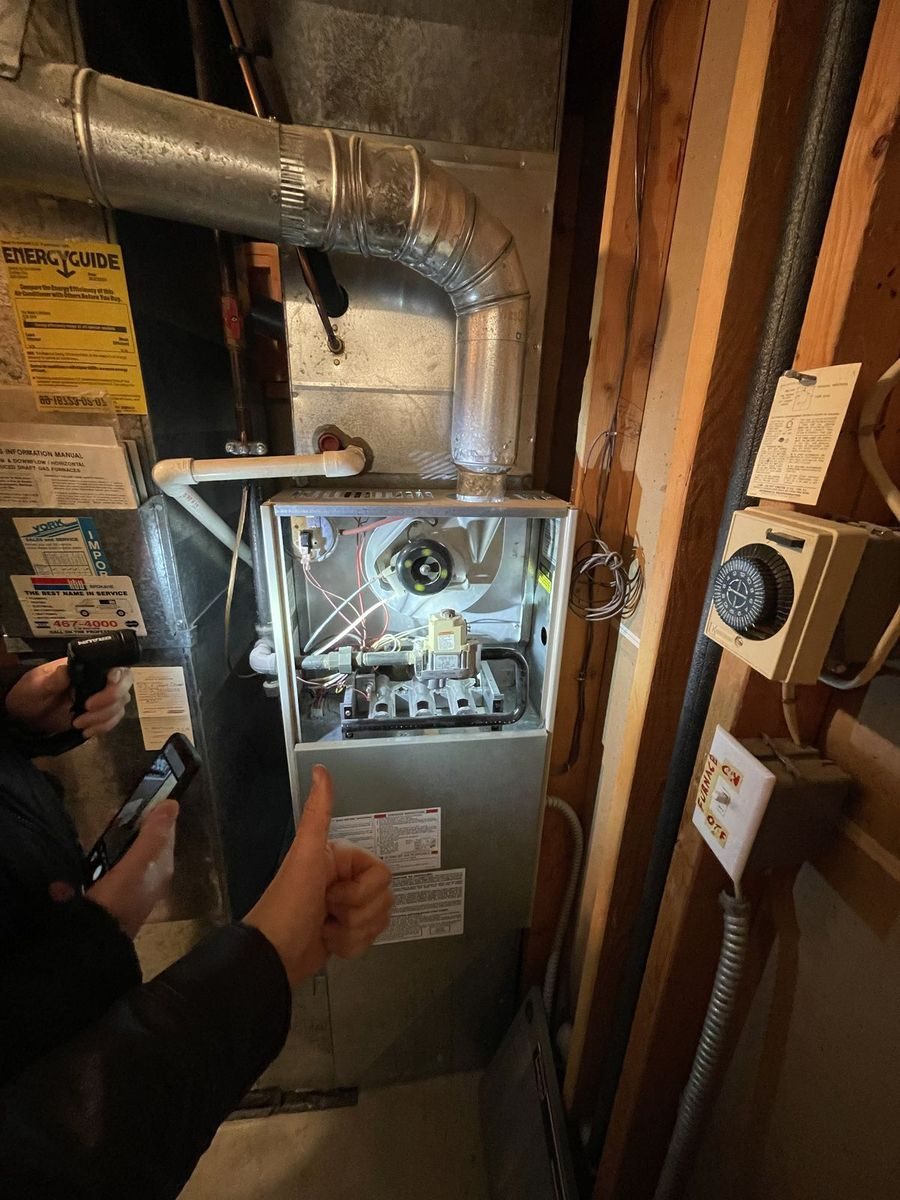
03 / 12
The burner compartment of a gas furnace, open. We follow the start-up order, inducer, pressure switch, igniter, flame sensor, until the step that fails.
Read the service page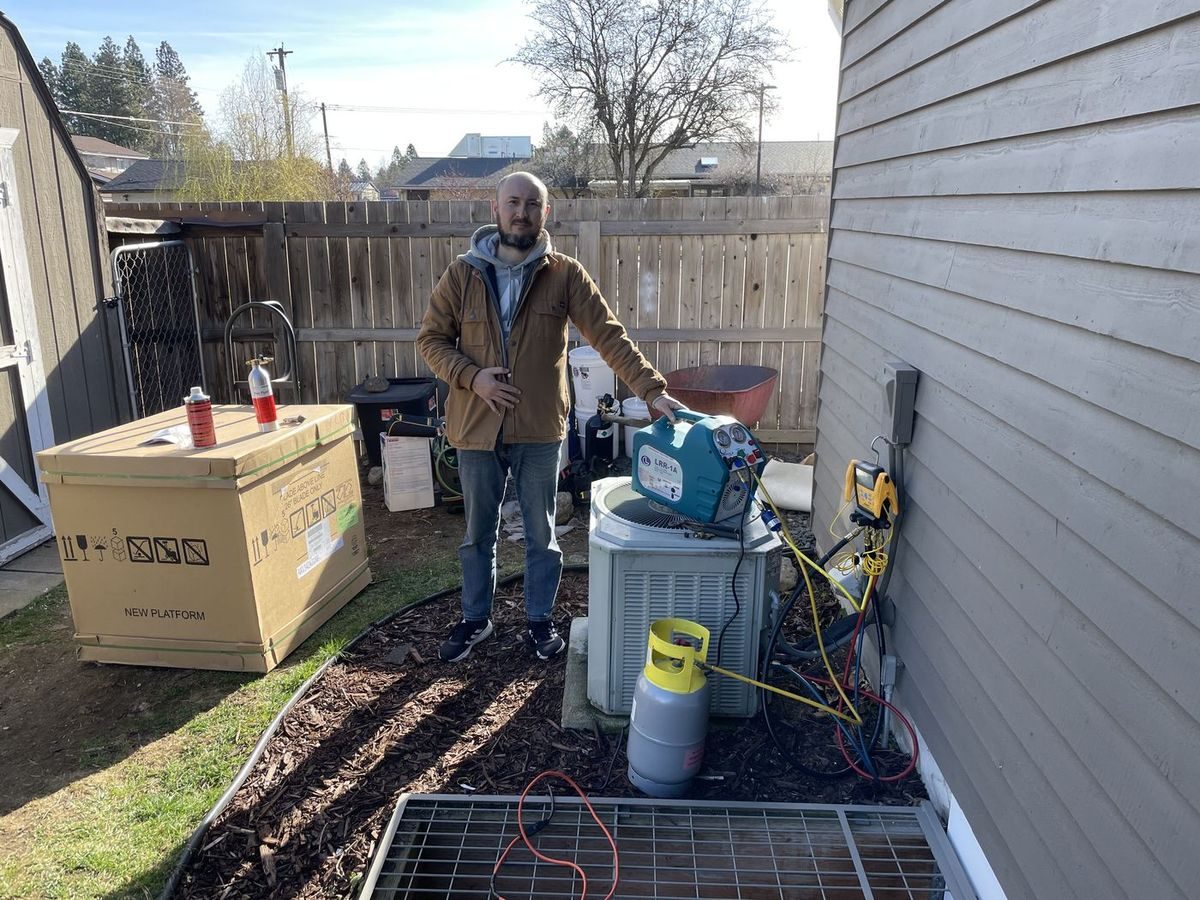
04 / 12
A recovery machine and cylinder beside an outdoor unit. On a replacement, the old refrigerant is pulled into the cylinder instead of the air.
Read the service page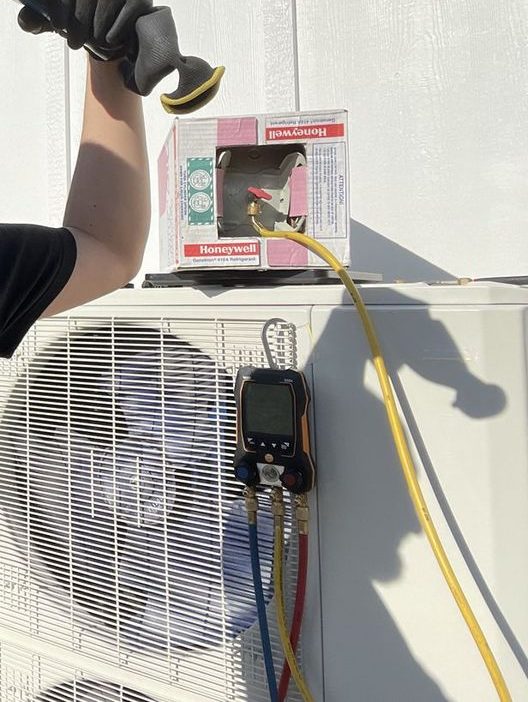
05 / 12
A ductless outdoor unit with a gauge set on it. Mini-splits get the same pressure and temperature readings as a central system, plus a look at the line-set insulation.
Read the service page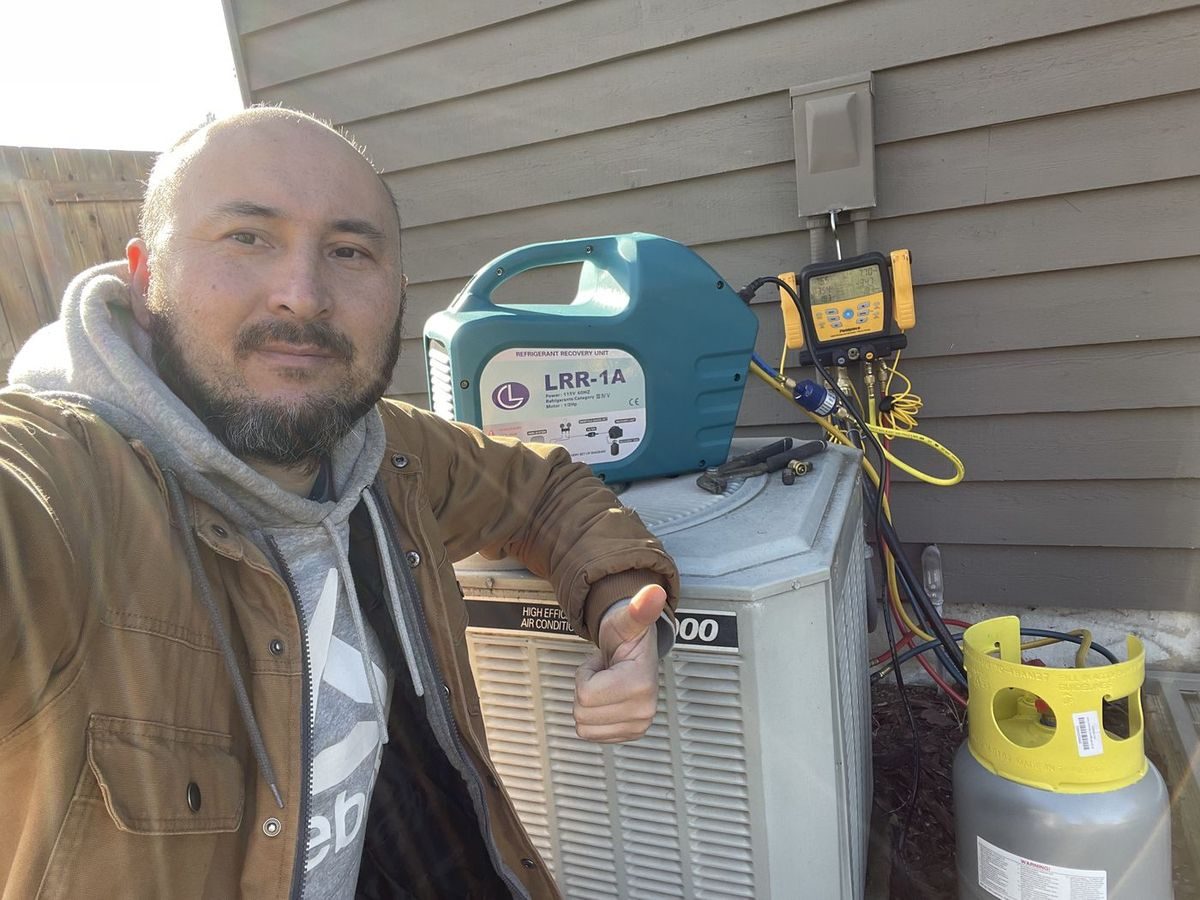
06 / 12
Gauges on a condenser during a seasonal visit. Spring visits wash the dust out of the coil; fall visits test defrost and heat strips before the fog weeks.
Read the service page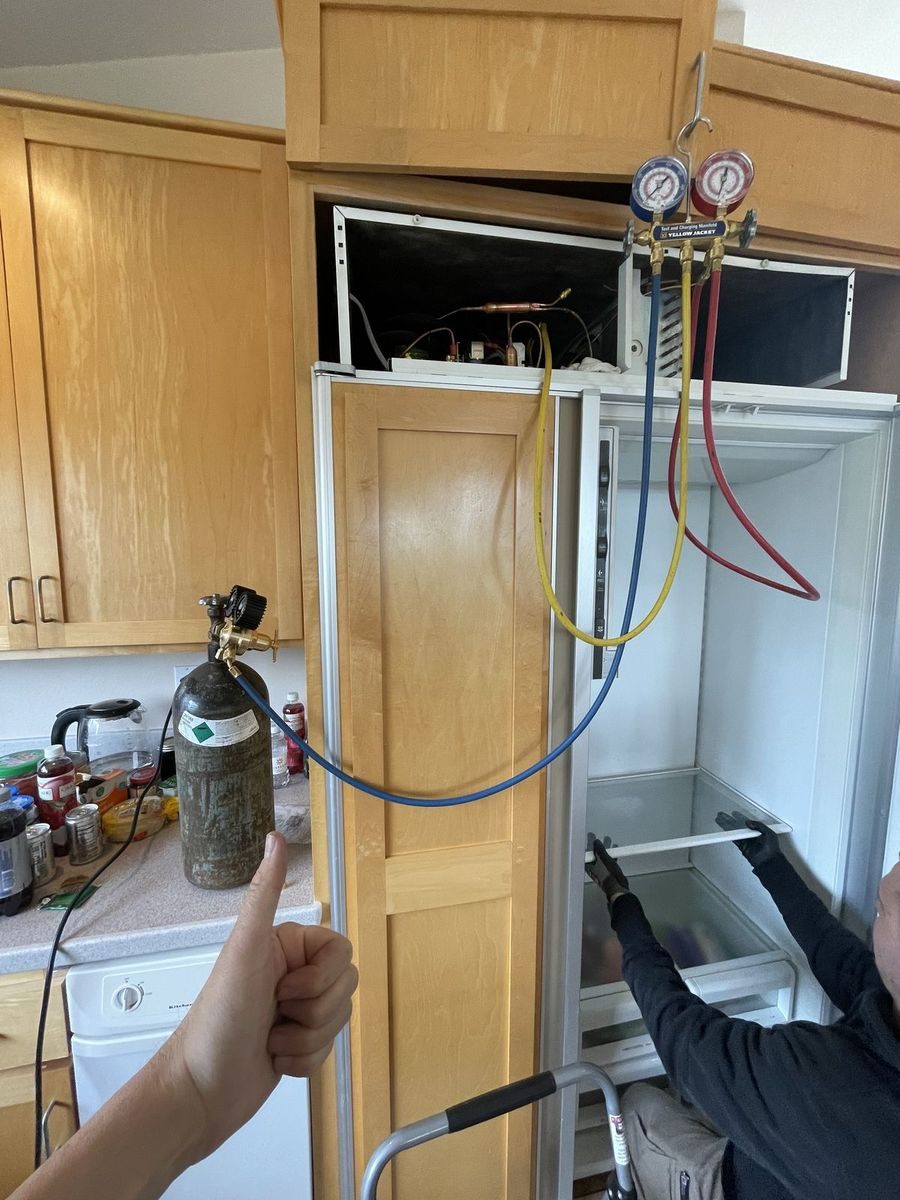
07 / 12
Gauges connected to a built-in refrigerator's sealed system. Leak searches, brazing and recharges happen in the kitchen, so the fridge stays where it is.
Read the service page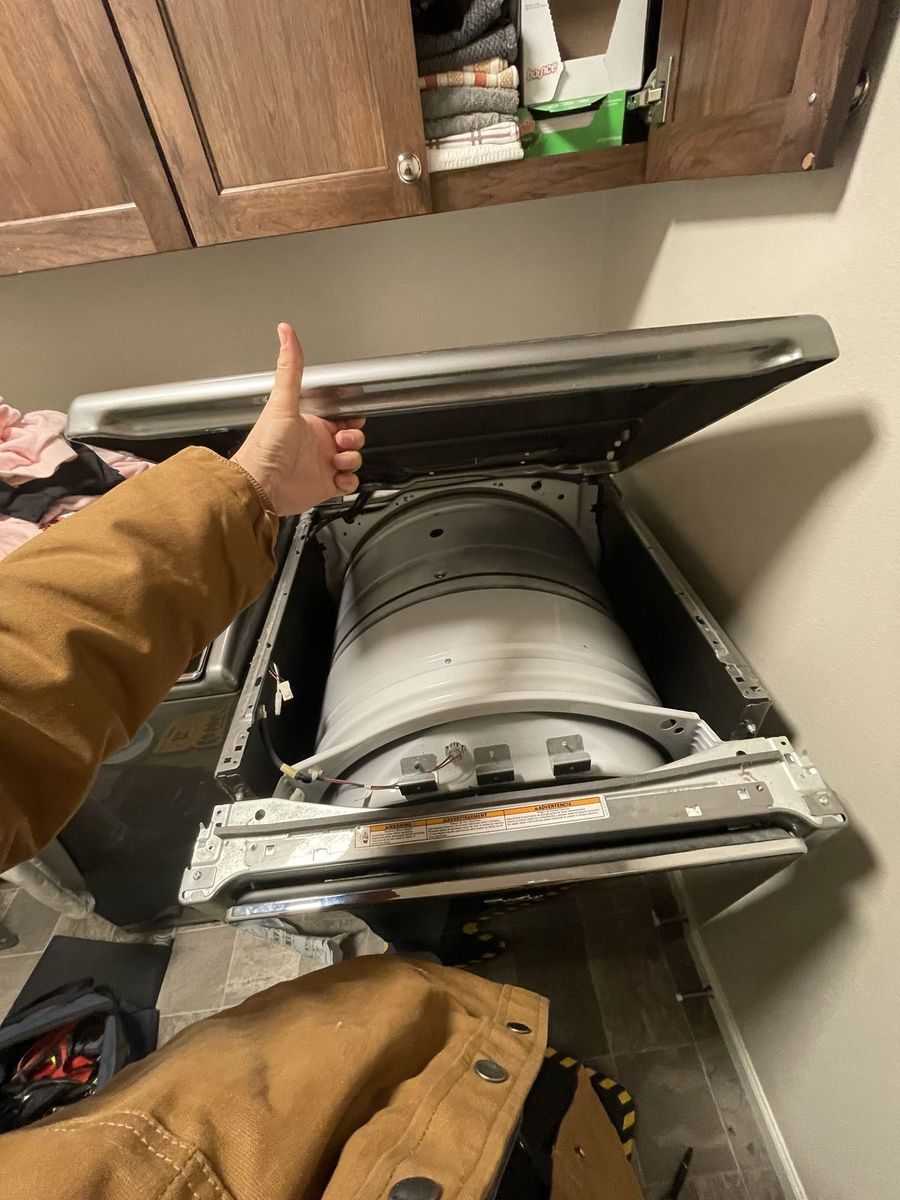
08 / 12
A top-load washer with the top panel raised. Lid switch, drive coupler and drain pump are all within reach once the top comes up.
Read the service page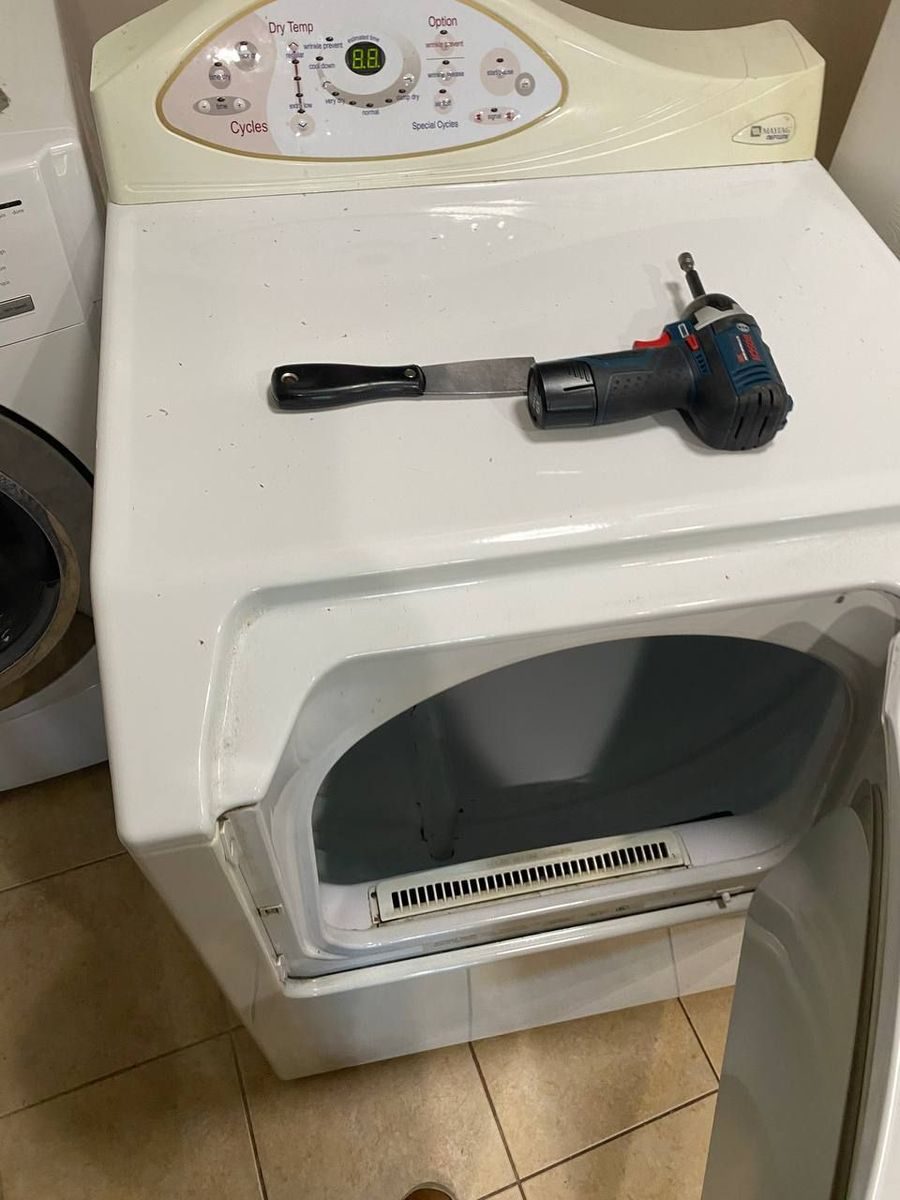
09 / 12
An electric dryer opened up in a laundry room. The thermal fuse, the heating element and the vent run behind the machine get tested together.
Read the service page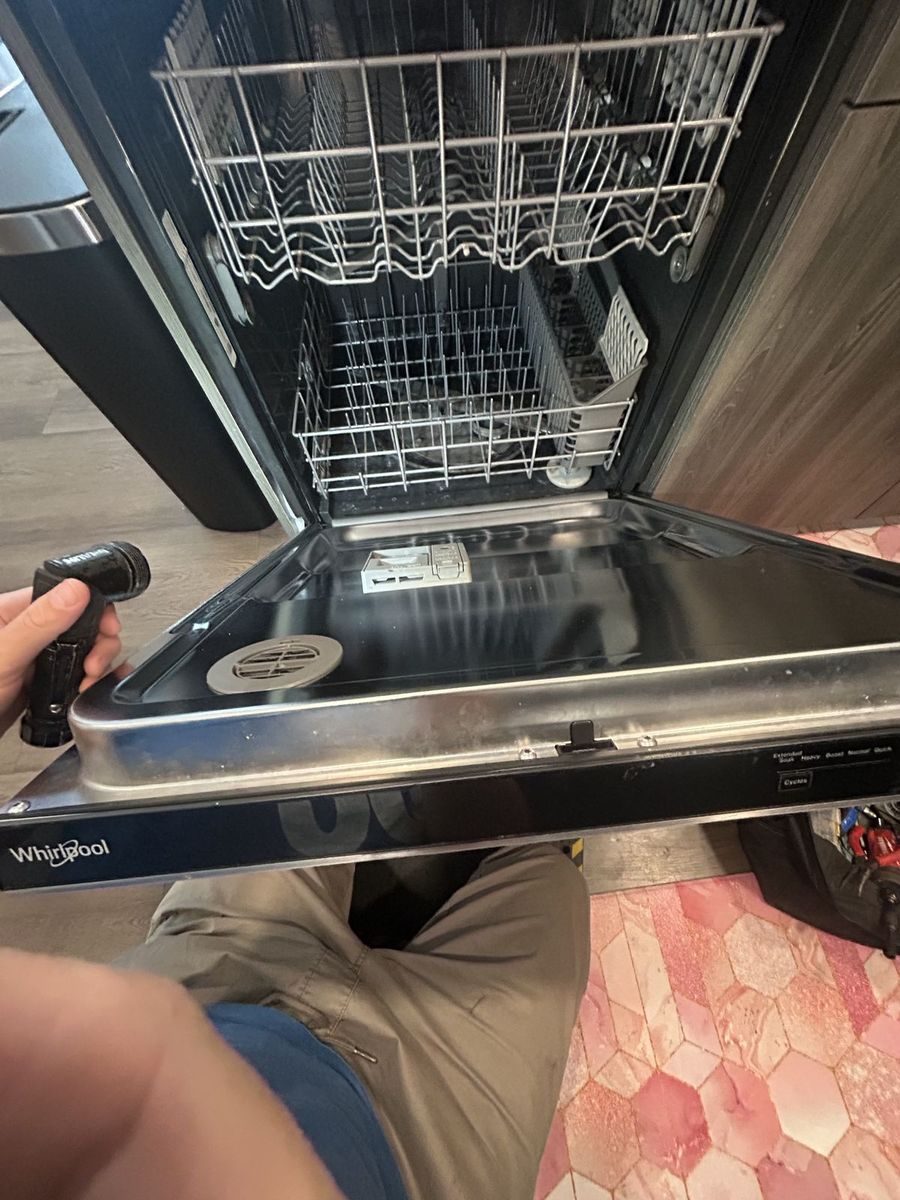
10 / 12
Door open and racks out on a dishwasher. A puddle left behind after the last rinse sends us to the filter screen, the pump and the hose route under the sink, in that order.
Read the service page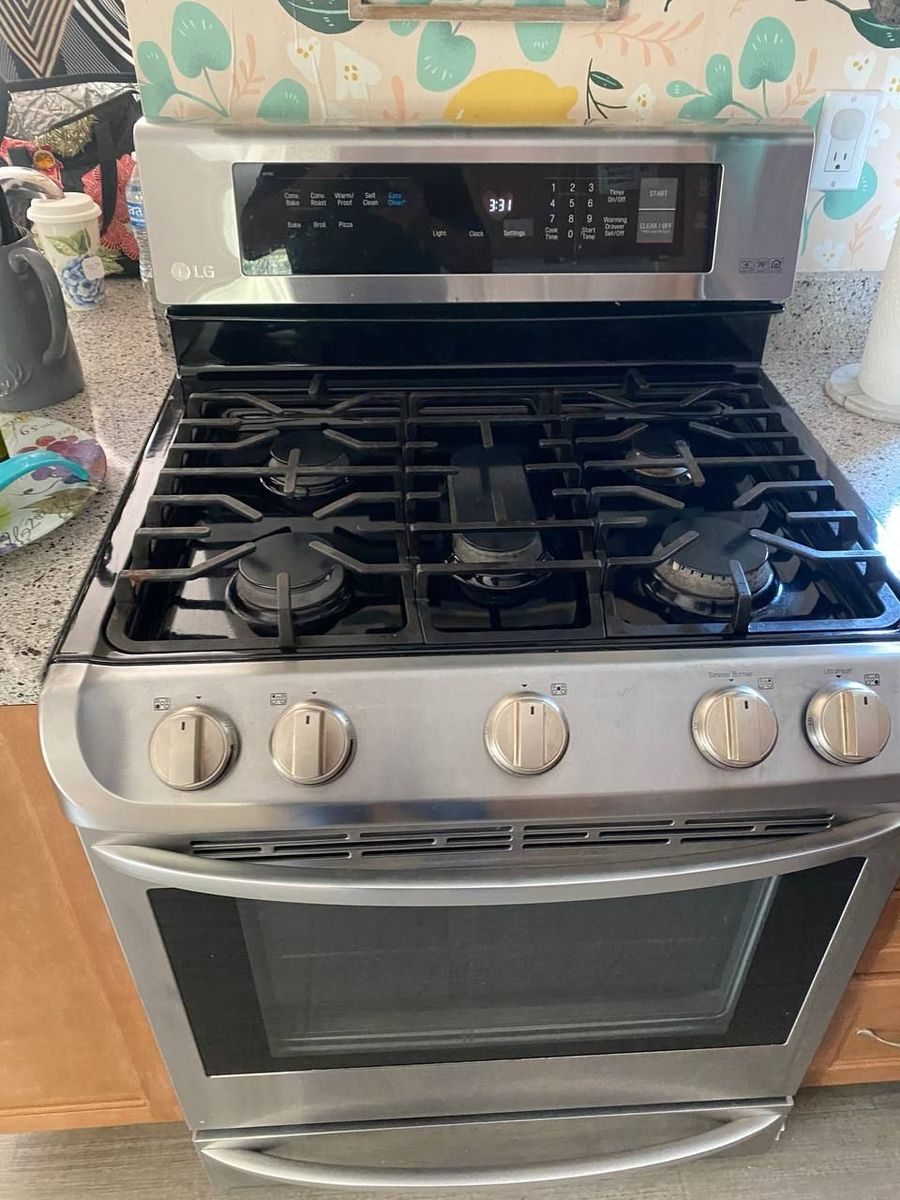
11 / 12
A five-burner gas range ready for testing. Burner igniters, the spark module and the bake igniter's amp draw are measured before a part is ordered.
Read the service page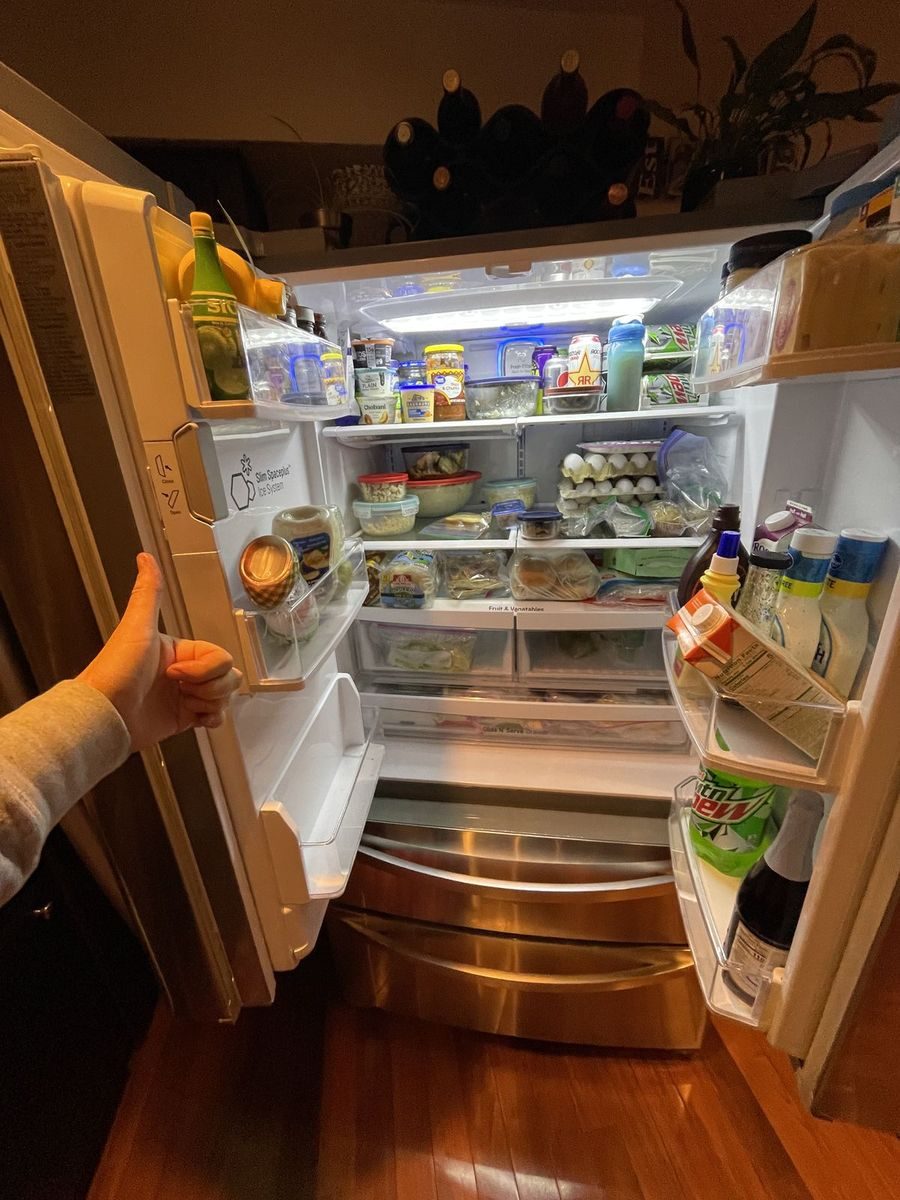
12 / 12
A French-door refrigerator open for diagnosis. Slow ice starts with the water: the inlet valve, the filter and a fill tube that can freeze shut.
Read the service pageThere is no single number, because timing depends on the control and on how fast frost forms. In Pasco's damp inversion weather, cycles every 30 to 90 minutes can be perfectly normal. What matters is that each cycle clears the coil. A coil that stays white, or defrost that repeats within minutes, is the point to have a technician take readings.
A properly sized heat pump with backup heat strips handles Pasco cold snaps, though it leans harder on the strips as lows head toward 10°F. Cold-climate models from Mitsubishi, Daikin, Fujitsu and others hold their output better in deep cold. If you are weighing a replacement, we compare models, and the written quote covers equipment and installation in one figure.
A diagnostic fee applies to each Pasco heat pump call, and the office shares the figure while setting up your appointment, by phone or online. Approving our repair means that fee gets credited within its total. If you decide the diagnosis is as far as you want to go, the fee is the whole amount due. The repair price reaches you in writing first, and nothing moves forward without your okay.
Yes. Mini-splits are heat pumps, and we repair Mitsubishi, Fujitsu, Daikin and LG ductless systems, among others. Typical faults include clogged indoor coils and filters, failed fan motors, thermistor errors, and blocked condensate lines that leave water streaks under the indoor head. Our technicians read the error code first, then test charge and components before quoting the repair.
Talk to us
Book online by picking the day and the arrival window that work for you, or phone the office between 8 AM and 7 PM. A confirmation call follows, and Spanish replies are yours for the asking.
Book a visit
One slip, filled top to bottom. The office phones to confirm the visit, and the technician calls again when on the way.
Every number below is a public state record. Look each one up on L&I Verify, or read what each license allows on our licenses page.
What our licenses cover