01 / 12
HVAC tune-ups
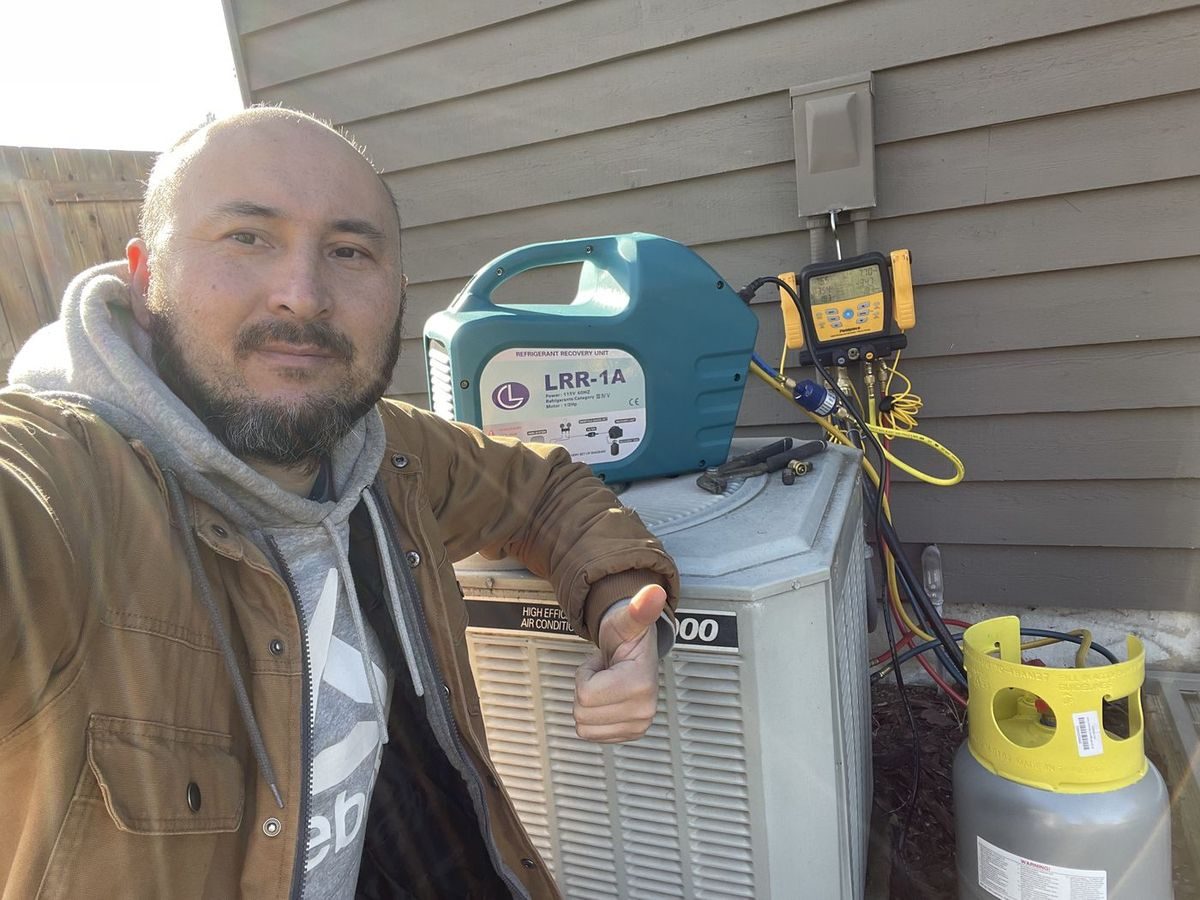
Gauges on a condenser during a seasonal visit. Spring visits wash the dust out of the coil; fall visits test defrost and heat strips before the fog weeks.
Read the service pageSeasonal maintenance · spring and fall
Around here a tune-up is really two different visits. In spring we ready the cooling side before the first 100°F week; in fall we prove the heating side before inversion season settles in. Each visit is a set of measurements on paper, so you can see what has changed since last year.
Short answer
Book a spring cooling check in April or early May, since Kennewick has reached 100°F as early as mid-May. That visit covers a coil wash, capacitor microfarads, contactor wear, refrigerant charge, temperature split and the condensate drain. Book a fall heating check in October, ahead of inversion fog: heat pump defrost test, backup heat strips, furnace flame sensor, inducer and venting. Look at filters monthly through the windy months.
A tune-up catches the worn part before it fails on the hottest or coldest day of the year. Most summer breakdowns in the Tri-Cities start small: a run capacitor drifting under its rated microfarads, contactor points pitted by a long season of starts, a condenser coil packed with spring dust. Each one makes the system work harder until something gives out, usually on a 100°F afternoon when half the neighborhood is trying to get a technician too.
We treat cooling and heating as separate visits because the work differs and the timing matters. A spring visit on a heat pump or central air system focuses on the refrigerant side and the outdoor unit. A fall visit focuses on whatever heats the house: the heat pump's defrost cycle and backup strips, or the gas furnace's ignition, flame proving and venting. In a dual-fuel home, where the heat pump and gas furnace share the winter, the fall visit covers both.
Every reading goes on a sheet you keep. When a part is close to failing, the technician shows you the number, explains what it means and writes a price for the replacement, and nothing is swapped without your approval. Capacitors, contactors, igniters and flame sensors ride on the truck, so an approved fix can often be handled during the same stop.
The spring visit begins outside. With power shut off at the unit, the technician rinses the condenser coil from the inside out so dust and fluff leave the way they came in, combs bent fins straight and clears the base. Then the meters come out: capacitor microfarads, contactor condition, compressor and fan amps, charge by superheat or subcooling, and the temperature drop across the evaporator coil. Indoors, the condensate line gets flushed and the float switch tested. Anything outside the manufacturer's range is explained on the spot, with a written price if a part needs replacing.
The fall visit proves the heat. On a heat pump we switch to heating, run a forced defrost test, and measure amp draw on each backup heat strip along with its sequencer. For a gas furnace, the technician inspects the igniter, reads flame-sensor microamps, listen for worn inducer bearings, confirm the pressure switch closes, compare temperature rise to the nameplate range and inspect the vent pipe for slope, sealed joints and blockages. Any repair gets a written price first and waits for your approval.
Our seasons turn abruptly. July highs average about 92°F, most summers bring 100°F days, and Kennewick has hit 100°F as early as mid-May and as late as early September. A cooling check booked after the first heat wave is already behind, because a weak capacitor or a dusty coil reveals itself on that first long afternoon. Spring is also the windiest stretch, with March, April and June carrying most of the blowing dust, so a coil we rinse in April may want another rinse after the June wind.
Winter is a different test. Cold air pools in the Columbia Basin beneath warmer air aloft, and the inversion can hold low cloud, fog and freezing fog over Kennewick, Pasco and Richland for days or weeks, with highs stuck in the 30s. That damp cold frosts a heat pump's outdoor coil fast, so defrost cycles run often, and a defrost system that is marginal in October tends to give out in that fog. Furnaces work their longest stretch of the year then too, which is why homes in established areas along the Clearwater Avenue corridor and around Hansen Park, where equipment tends to be older, benefit most from a fall check.
One photo per tab from our service calls. Tap a tab, or let the file turn on its own.
01 / 12
Gauges on a condenser during a seasonal visit. Spring visits wash the dust out of the coil; fall visits test defrost and heat strips before the fog weeks.
Read the service page02 / 12
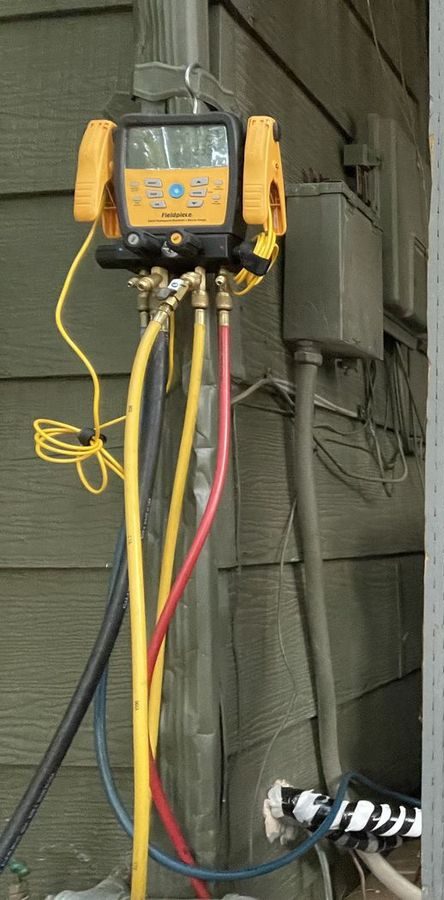
Digital gauges hang by the outdoor unit while the heat pump runs. Superheat and subcooling show whether the charge, a valve or the defrost board is the problem.
Read the service page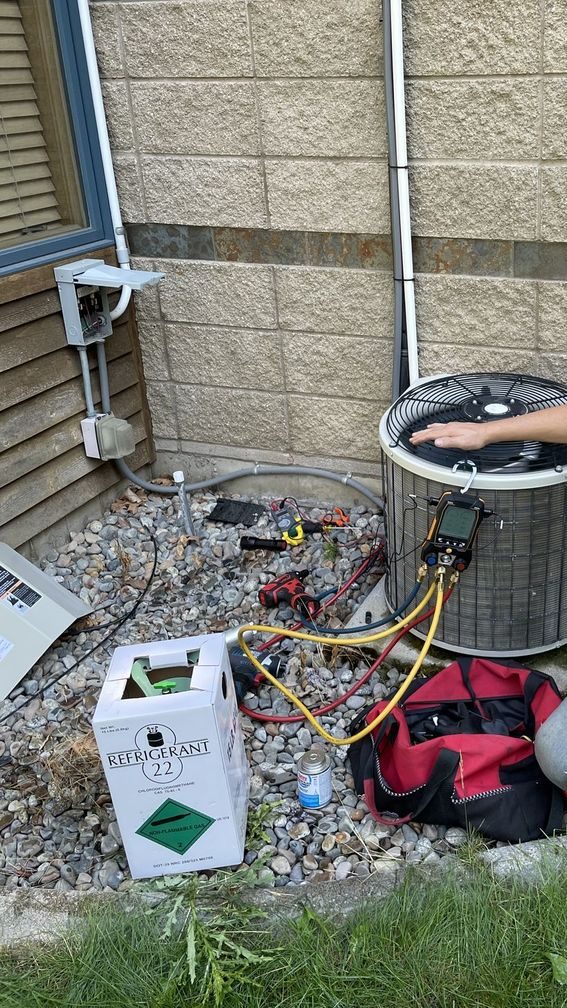
03 / 12
An older condenser under test with hoses on the service ports. The capacitor, contactor and fan motor get checked before anyone talks about refrigerant.
Read the service page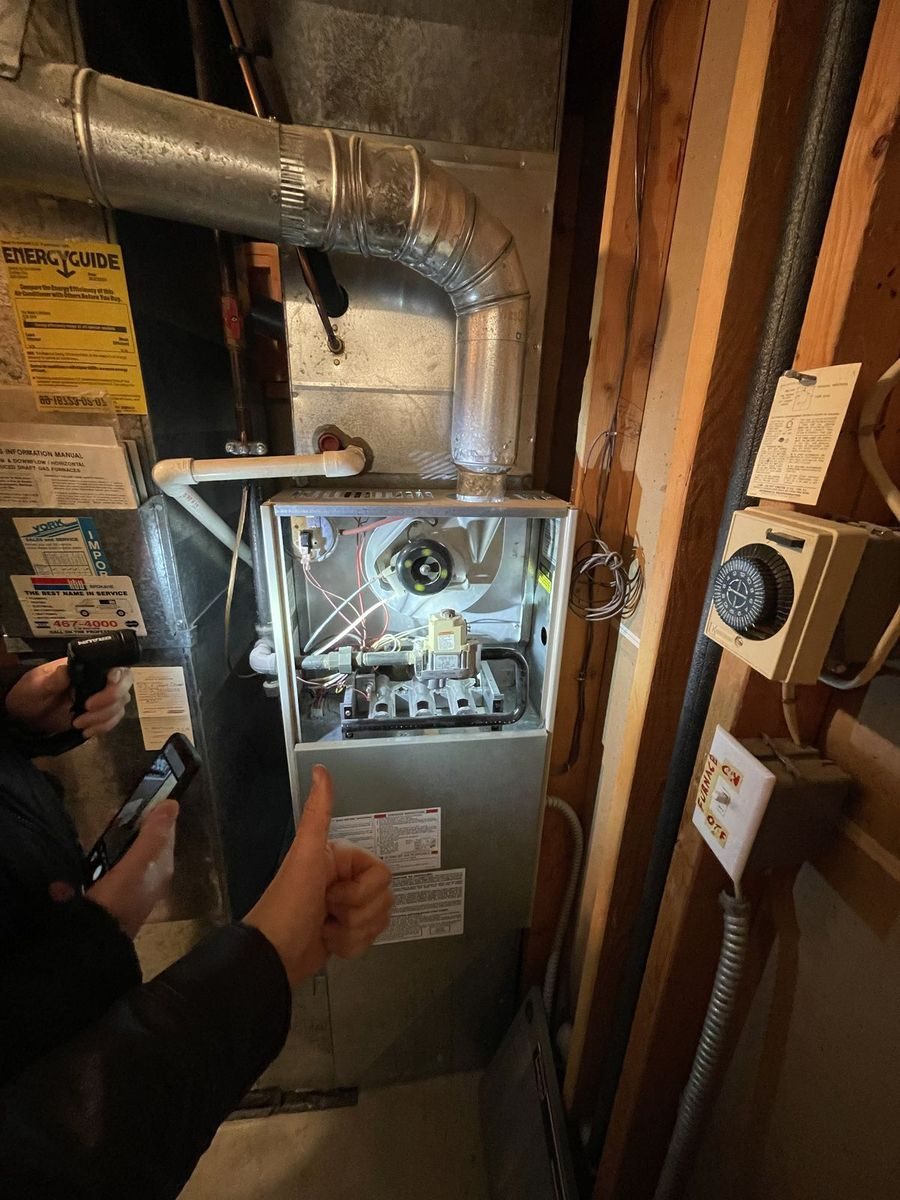
04 / 12
The burner compartment of a gas furnace, open. We follow the start-up order, inducer, pressure switch, igniter, flame sensor, until the step that fails.
Read the service page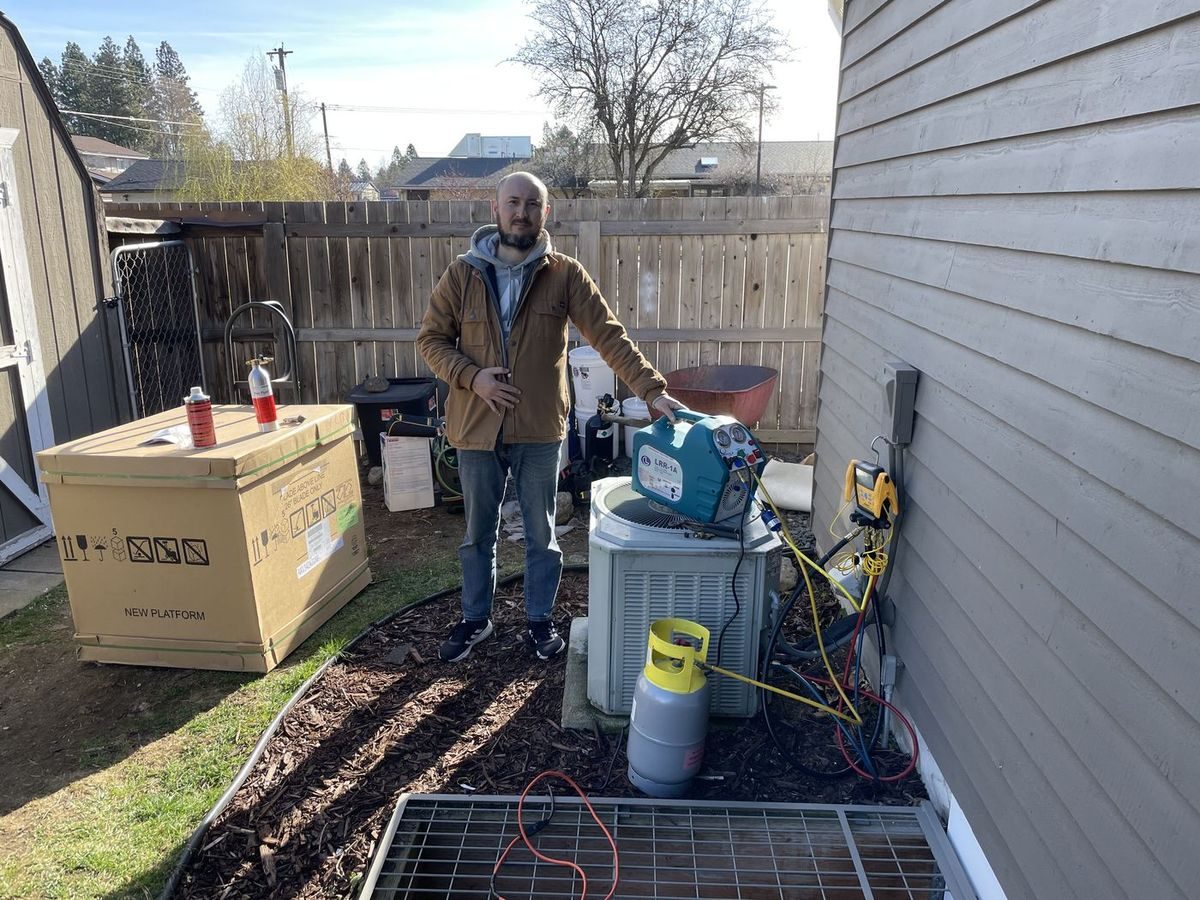
05 / 12
A recovery machine and cylinder beside an outdoor unit. On a replacement, the old refrigerant is pulled into the cylinder instead of the air.
Read the service page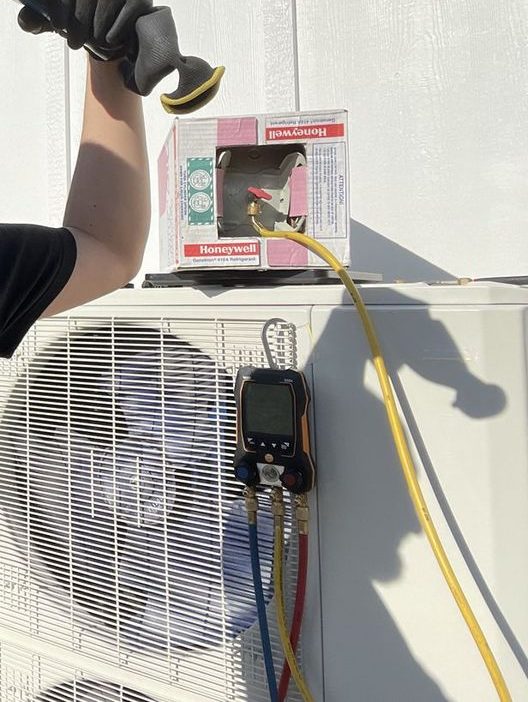
06 / 12
A ductless outdoor unit with a gauge set on it. Mini-splits get the same pressure and temperature readings as a central system, plus a look at the line-set insulation.
Read the service page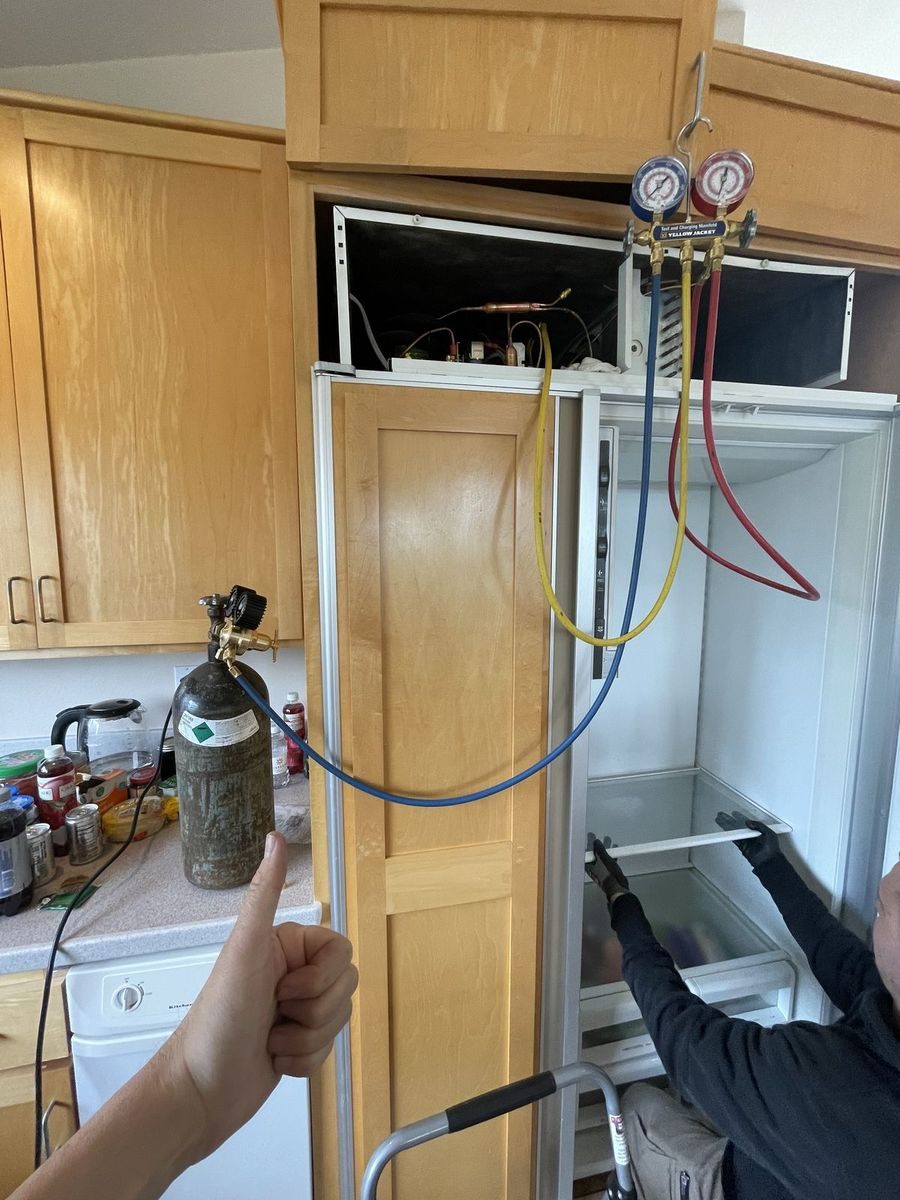
07 / 12
Gauges connected to a built-in refrigerator's sealed system. Leak searches, brazing and recharges happen in the kitchen, so the fridge stays where it is.
Read the service page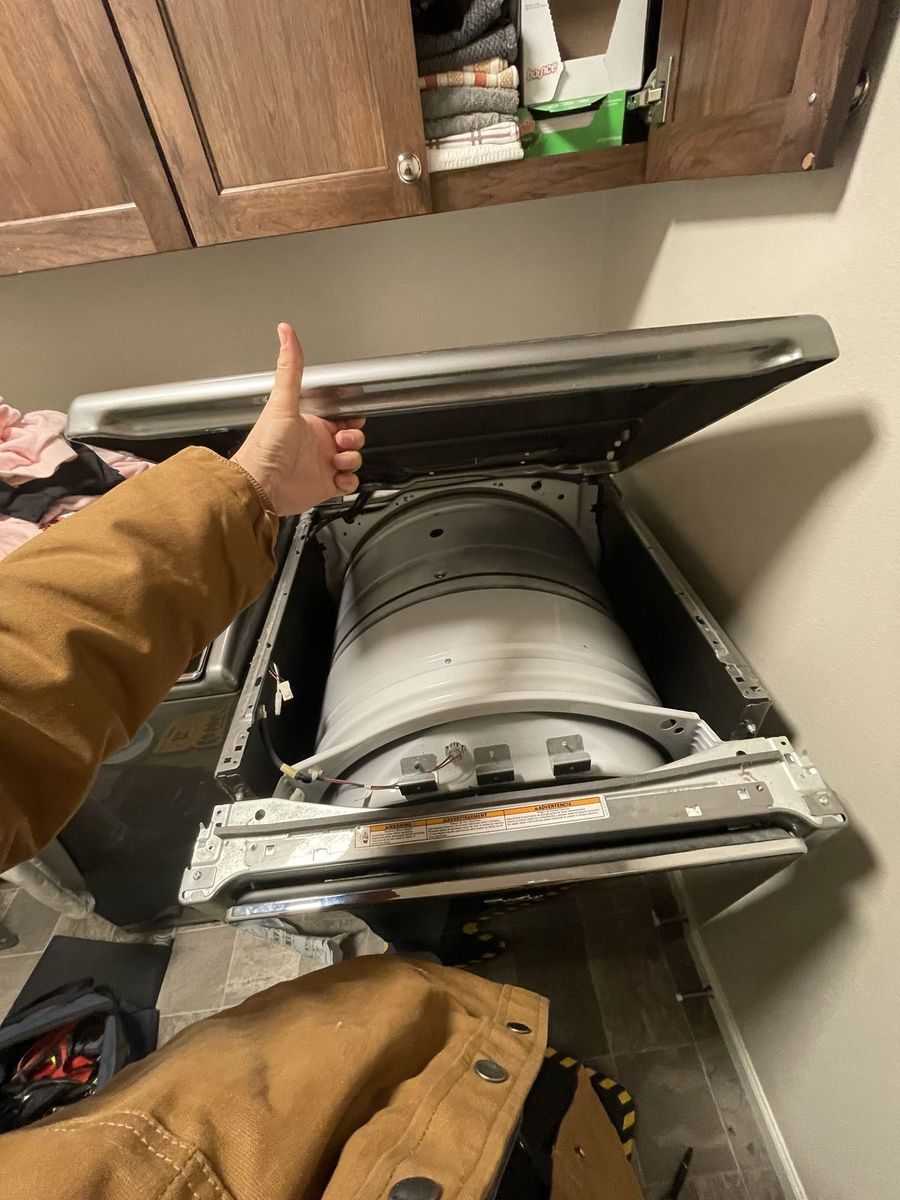
08 / 12
A top-load washer with the top panel raised. Lid switch, drive coupler and drain pump are all within reach once the top comes up.
Read the service page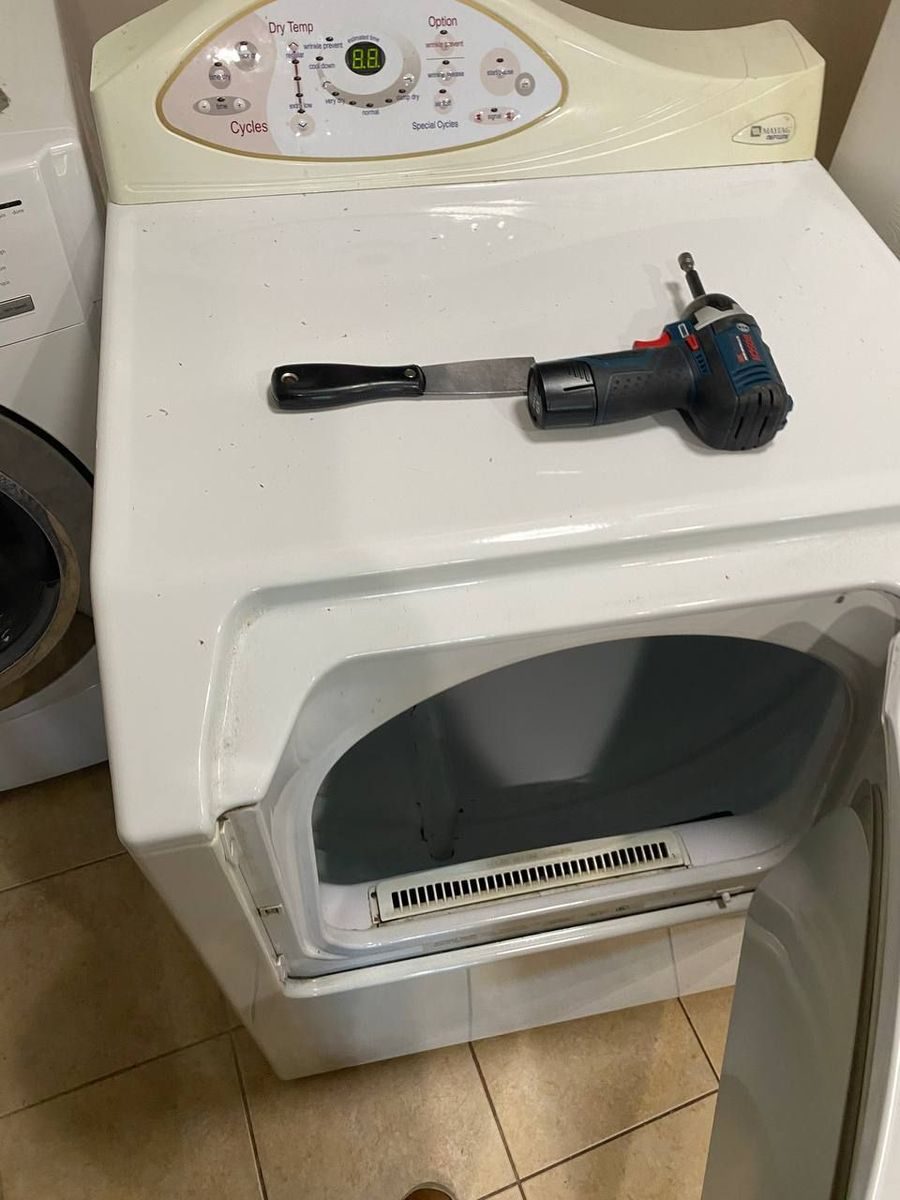
09 / 12
An electric dryer opened up in a laundry room. The thermal fuse, the heating element and the vent run behind the machine get tested together.
Read the service page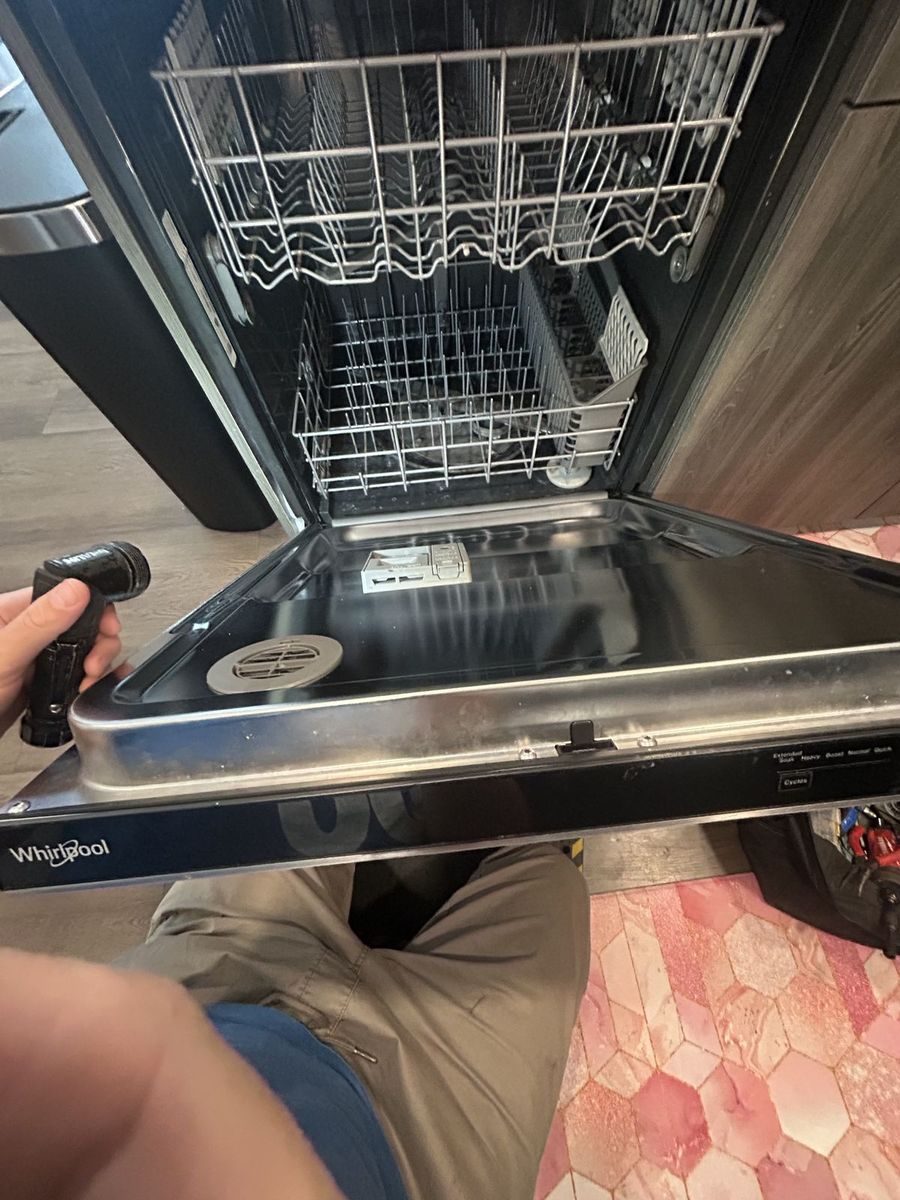
10 / 12
Door open and racks out on a dishwasher. A puddle left behind after the last rinse sends us to the filter screen, the pump and the hose route under the sink, in that order.
Read the service page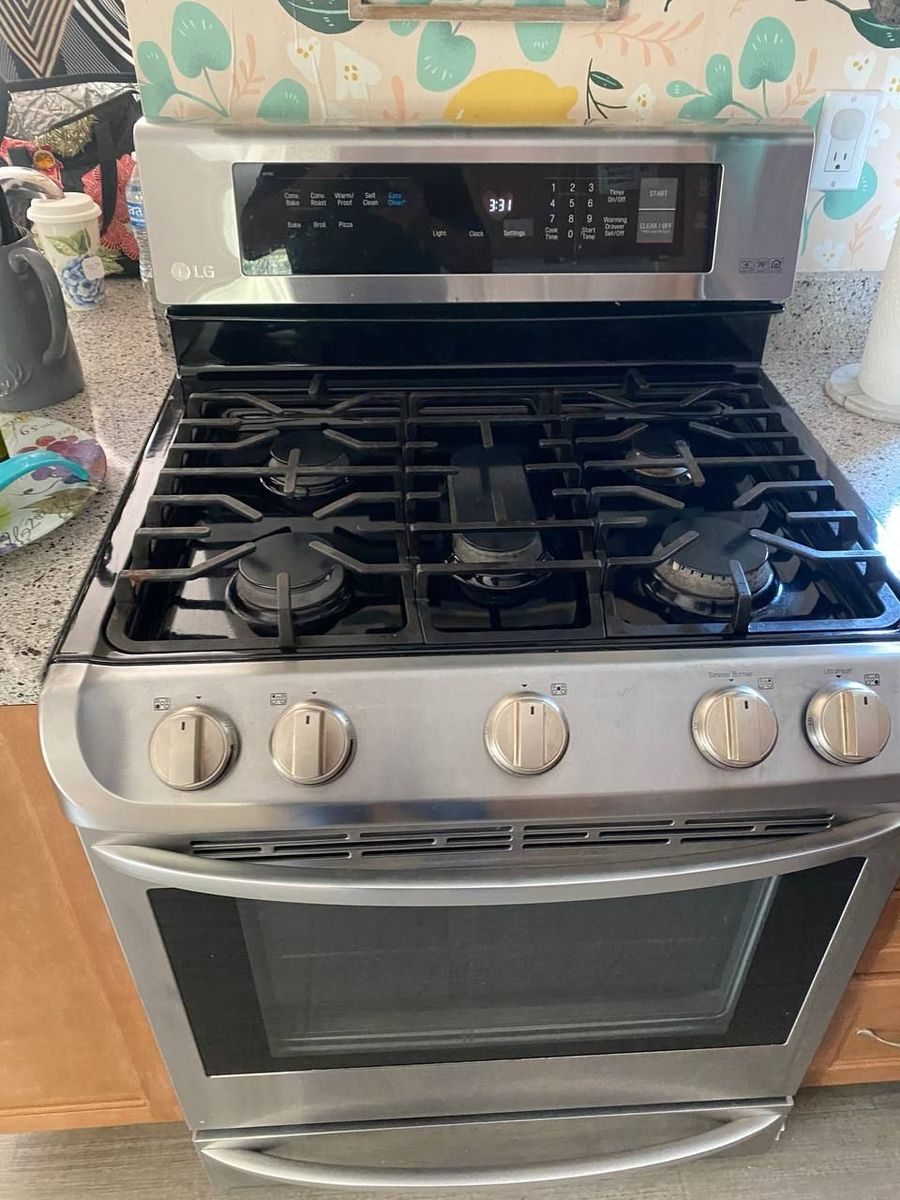
11 / 12
A five-burner gas range ready for testing. Burner igniters, the spark module and the bake igniter's amp draw are measured before a part is ordered.
Read the service page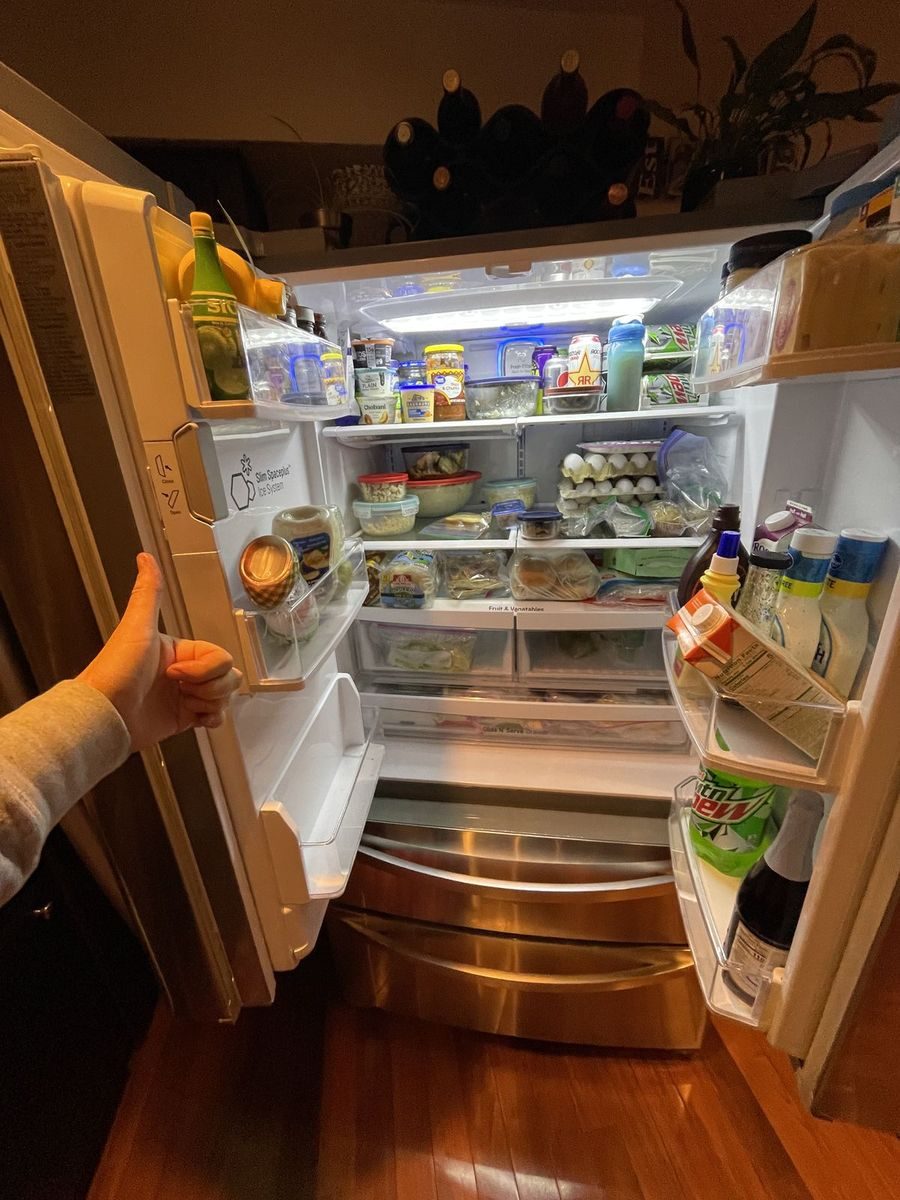
12 / 12
A French-door refrigerator open for diagnosis. Slow ice starts with the water: the inlet valve, the filter and a fill tube that can freeze shut.
Read the service pageIt is, though the payoff differs with age. On a newer system, the value is a baseline: readings taken while the equipment is healthy make the first drift easy to spot later. On builder-grade systems like many in Creekstone and Cherry Creek Estates, which went in during the 2000s and 2010s and are now aging, the visit is about catching tired capacitors, contactors and flame sensors before they quit. On an older system, the readings tell you whether repairs still make sense or whether to plan a replacement on your own timeline instead of during a heat wave. If you book only one visit a year, choose spring for central air and fall for a furnace; a heat pump working year-round earns both.
Aim for April or the first half of May. Kennewick has recorded 100°F as early as mid-May, and once the heat arrives the calendar fills with breakdown calls. An April visit also reaches the coil after the worst of the March and April wind, though June gusts can coat it again. Reserve a date and arrival window online, or phone us, and the office confirms by phone.
It is still worth doing, because inversion fog is hard on parts that only matter in heating mode. Coil sensors, defrost controls and reversing valves can weaken over the summer without any sign, then fail once freezing fog frosts the coil hour after hour. The fall visit forces a defrost cycle and measures the backup heat strips, so trouble turns up in October rather than January.
Look at it every month and replace it once it has turned gray or matted, which can happen quickly in March, April and June. A one-inch filter in a dusty spring may last only a few weeks. Skip very dense filters unless the system was set up for them, since they can raise static pressure and cut airflow, which strains the indoor fan motor.
You get numbers, not just checkmarks. For cooling: capacitor microfarads against the rating, compressor and fan amps, superheat or subcooling, temperature split and static pressure. For heating: flame-sensor microamps, temperature rise, amp draw on the backup strips and the defrost result. Everything is written on your paperwork, so next year's visit can be compared line by line with this one.
The technician shows you the reading and writes a price for the replacement before touching anything. You decide whether to do it now, wait, or watch it until the next visit. Capacitors, contactors, flame sensors and igniters are usually on the truck, so an approved replacement can often happen right away, and it carries written warranty terms on the invoice.
Schedule a repair visit online or call; the phones are staffed daily from 8 AM to 7 PM. A diagnostic visit has its own fee, and you will hear the amount from the office while booking. That fee counts toward the repair total once you say yes to the work; decline, and the fee alone is the bill. Either way, the repair price is in writing before anything starts.
Talk to us
Choose your date and arrival window on the booking page, or call the office any day from 8 AM to 7 PM. We confirm by phone, and your technician calls on the way over.
Book a visit
One slip, filled top to bottom. The office phones to confirm the visit, and the technician calls again when on the way.
Every number below is a public state record. Look each one up on L&I Verify, or read what each license allows on our licenses page.
What our licenses cover