01 / 12
Heat pump repair
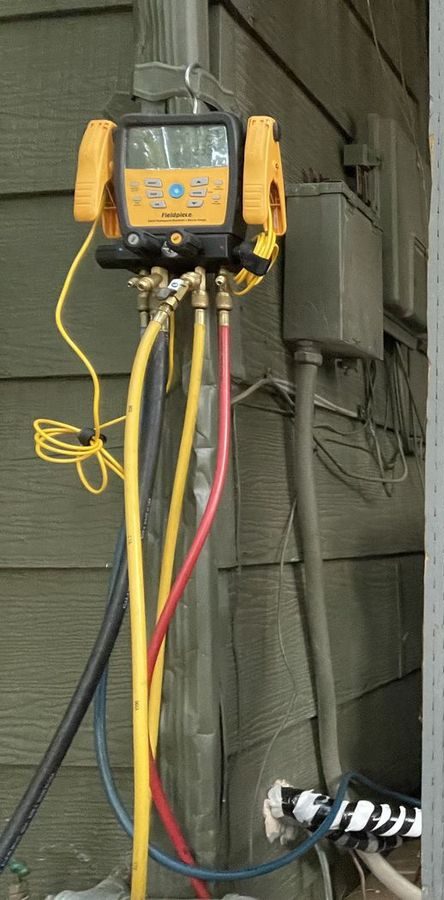
Digital gauges hang by the outdoor unit while the heat pump runs. Superheat and subcooling show whether the charge, a valve or the defrost board is the problem.
Read the service page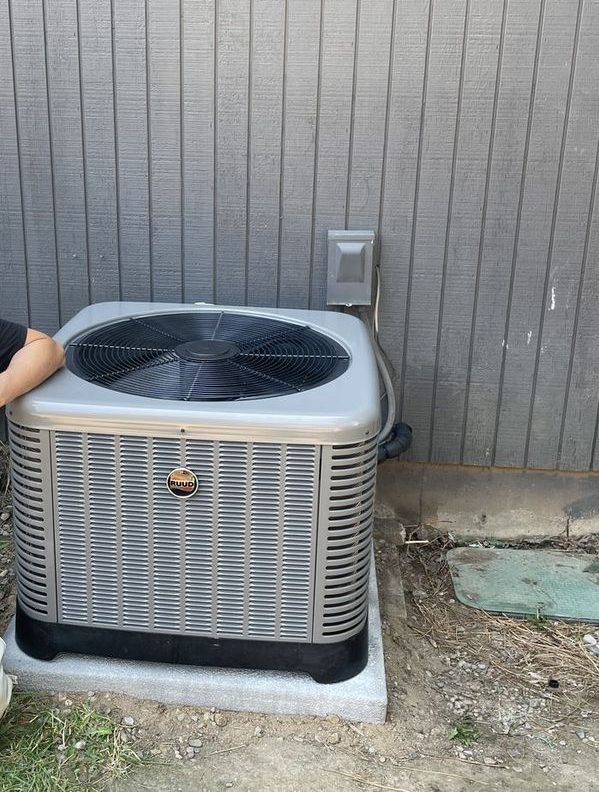
Guide · Outdoor unit care
No medium or large metro in the Pacific Northwest is windier than the Tri-Cities, and that wind delivers dust, sand, cottonwood fluff and tumbleweeds straight to heat pumps and AC condensers. Here is what the debris does to the equipment, what you can safely handle, and what belongs to a technician.
Short answer
Wind-blown dust, sand and cottonwood fluff mat onto the fins of an outdoor coil, which raises head pressure, trims capacity and shortens compressor life. Walk out after each windy spell, pull tumbleweeds and debris away by hand, keep roughly two feet open around the cabinet, and rinse the coil with gentle garden-hose water while the power is off. Chemical cleaning, bent fins and work inside the cabinet are technician jobs.
Because it hardly lets up. Among medium and large Pacific Northwest metros, the Tri-Cities ranks windiest, with the gustiest months in March, April and June and most of the flow out of the west. Blowing-dust advisories are issued for the region. An outdoor unit behaves like a giant yard filter: its fan drags thousands of cubic feet of air through the coil every minute, and whatever rides in that air lodges on the thin aluminum fins.
Units on the west, upwind side of a house load up fastest, and so do units beside open lots, bare dirt, gravel or unplanted fields. Fine silt works deep between the fins, where a quick look from outside will not reveal it. Late spring adds cottonwood fluff, which felts over the coil face in a gray mat, and windstorms roll tumbleweeds into fences, deck corners and the sides of condensers until they pin against the grille.
It makes everything run hotter. In cooling, a clogged condenser cannot shed heat, so head pressure and compressor current climb, capacity drops, and every cooling cycle stretches out. On a 100°F afternoon that can trip the high-pressure switch or the compressor overload. Run capacitors and contactors already wear quickly from long Tri-Cities summers, and a hotter control box speeds that along.
In heating, the outdoor coil of a heat pump becomes the evaporator. Dirt reduces the heat it can pull out of winter air and can make frost build unevenly, so the unit defrosts more often. Inside the house, the same dust loads the air filter, raising static pressure across the indoor fan and coil and cutting the airflow both seasons depend on.
Rinse with the power off and the water soft. Set the thermostat to off, then flip the breaker that serves the outdoor unit and give it five minutes. Lift leaves, fluff and twigs off the coil face by hand or with a soft brush, stroking along the fins instead of across them. Then spray with an ordinary garden hose on a shower or fan pattern, working top to bottom, until the water running off looks clean.
Skip the pressure washer, jet nozzles and household cleaners. Hard spray folds soft aluminum fins flat, which blocks more air than the dust ever did, and many cleaners leave residue or eat at the metal. Let the unit drip for a few minutes, switch the breaker back on, wait a few more minutes before asking for cooling or heat, and listen for the fan to start smoothly.
Roughly two feet of open space on every side, and nothing overhead that blocks the fan discharge. Trim shrubs back, keep tall grass and weeds down, and never stack firewood, bikes or yard waste against the cabinet. A low fence or screen on the west side can catch wind-blown debris if it stands well back and leaves a wide air path. After any windstorm, walk out and clear tumbleweeds and anything caught against the grille.
Indoors, check the filter more often in the windy months. A 1-inch filter can need replacing monthly in a dusty spring, while a 4- or 5-inch media filter lasts longer but still loads up. Higher MERV ratings trap more fine dust but add resistance, and a filter that is undersized, bowed or leaking air around its edges lets dust coat the indoor coil instead. Close windows when a blowing-dust advisory is out so the house does not draw grit inside.
Anything inside the cabinet, and any cleaning beyond a rinse. Silt packed deep in a coil often calls for lifting the fan top and cleaning from the inside out with a coil cleaner made for the job, then a thorough rinse. Bent fins need a fin comb and patience. The indoor evaporator coil, condensate drain and indoor fan wheel sit behind sealed panels, and cleaning them is technician work.
A technician can also tell whether the dust has already done harm: capacitor microfarads below rating, contactor surfaces pitted by heat, high head pressure, or a fan motor with dry bearings. Our technicians read superheat and subcooling after a cleaning to confirm the charge, and they hold the EPA 608 Universal credential in case a leak turns up. The visit begins with a diagnostic fee the office states ahead of time; go ahead and the repair total takes that fee in, or decline and it covers the call by itself.
One photo per tab from our service calls. Tap a tab, or let the file turn on its own.
01 / 12
Digital gauges hang by the outdoor unit while the heat pump runs. Superheat and subcooling show whether the charge, a valve or the defrost board is the problem.
Read the service page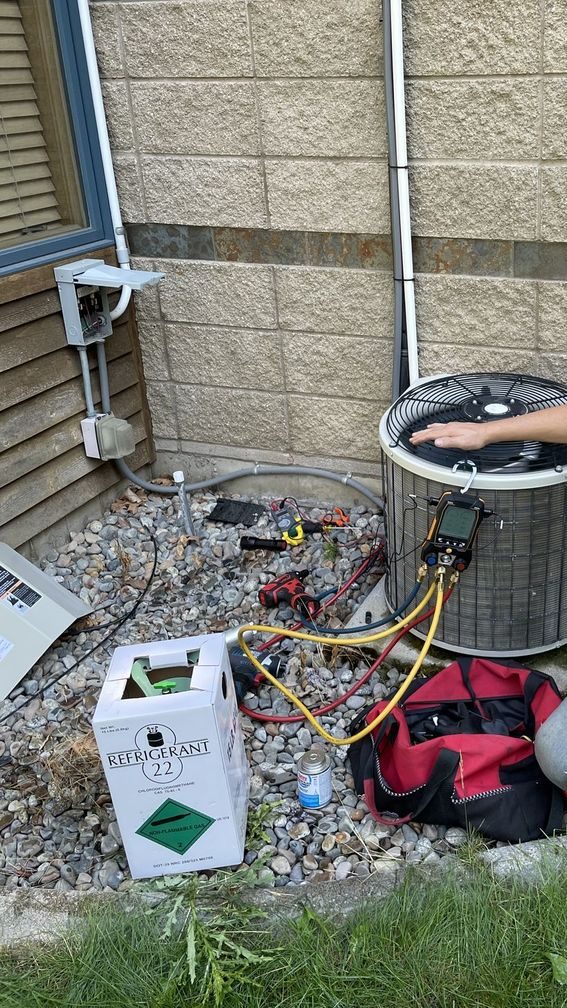
02 / 12
An older condenser under test with hoses on the service ports. The capacitor, contactor and fan motor get checked before anyone talks about refrigerant.
Read the service page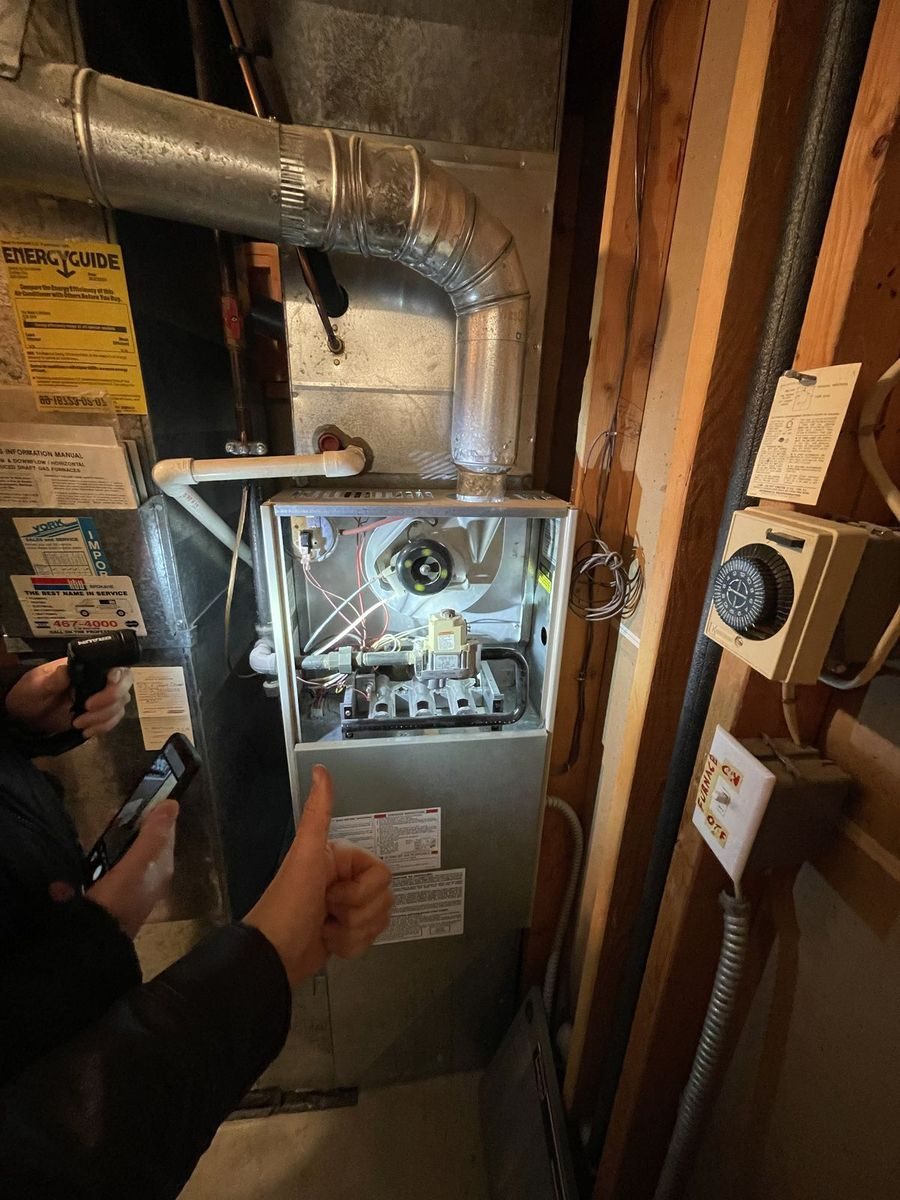
03 / 12
The burner compartment of a gas furnace, open. We follow the start-up order, inducer, pressure switch, igniter, flame sensor, until the step that fails.
Read the service page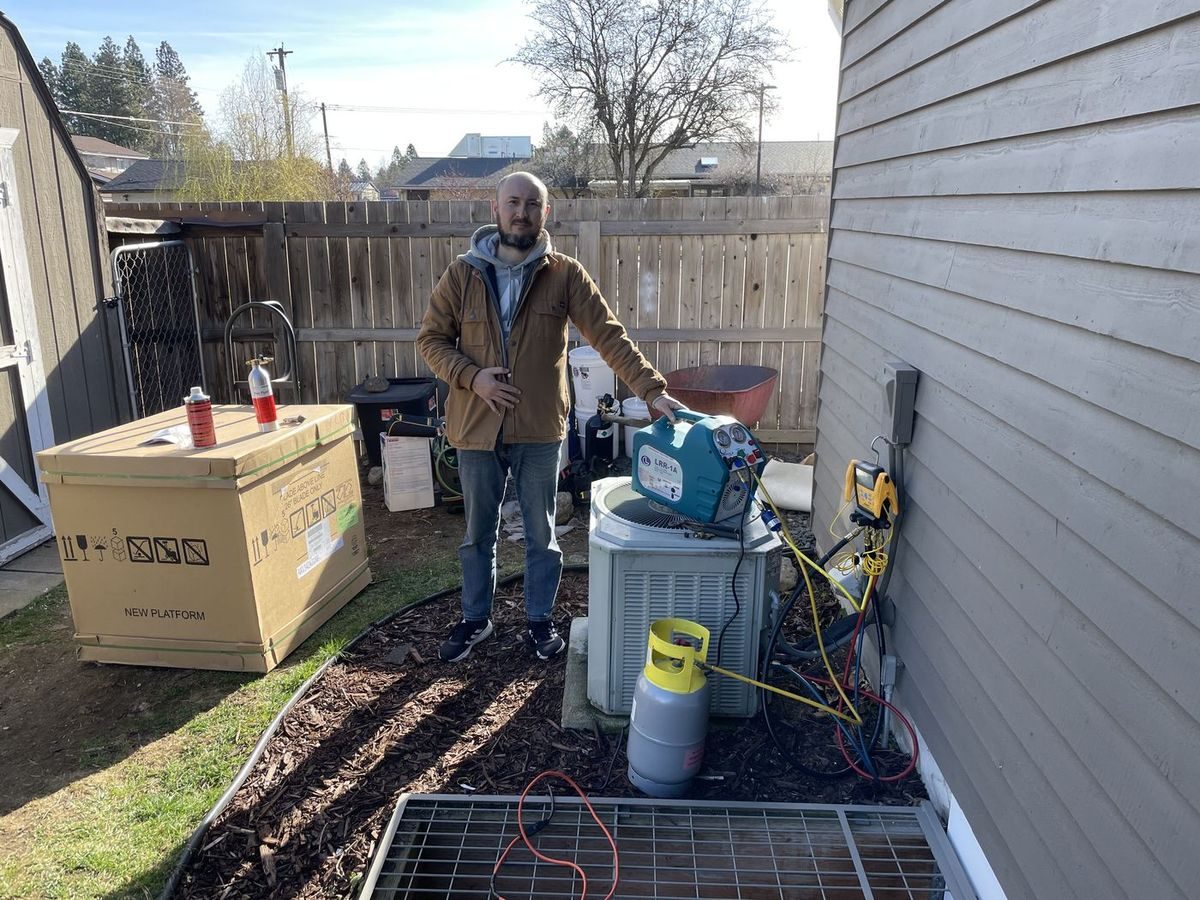
04 / 12
A recovery machine and cylinder beside an outdoor unit. On a replacement, the old refrigerant is pulled into the cylinder instead of the air.
Read the service page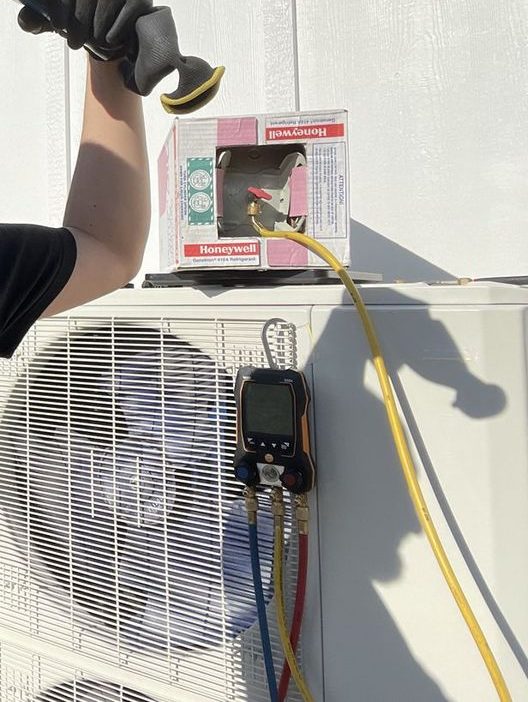
05 / 12
A ductless outdoor unit with a gauge set on it. Mini-splits get the same pressure and temperature readings as a central system, plus a look at the line-set insulation.
Read the service page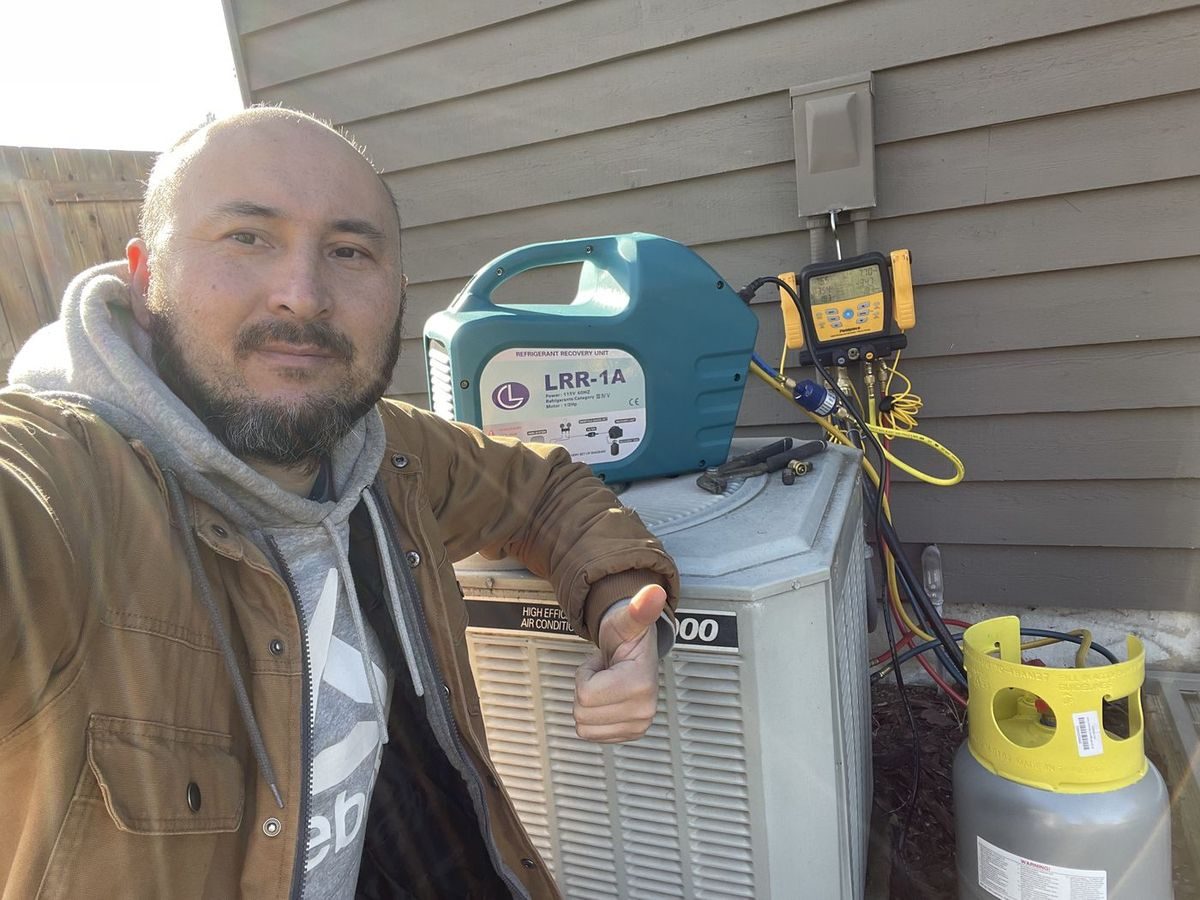
06 / 12
Gauges on a condenser during a seasonal visit. Spring visits wash the dust out of the coil; fall visits test defrost and heat strips before the fog weeks.
Read the service page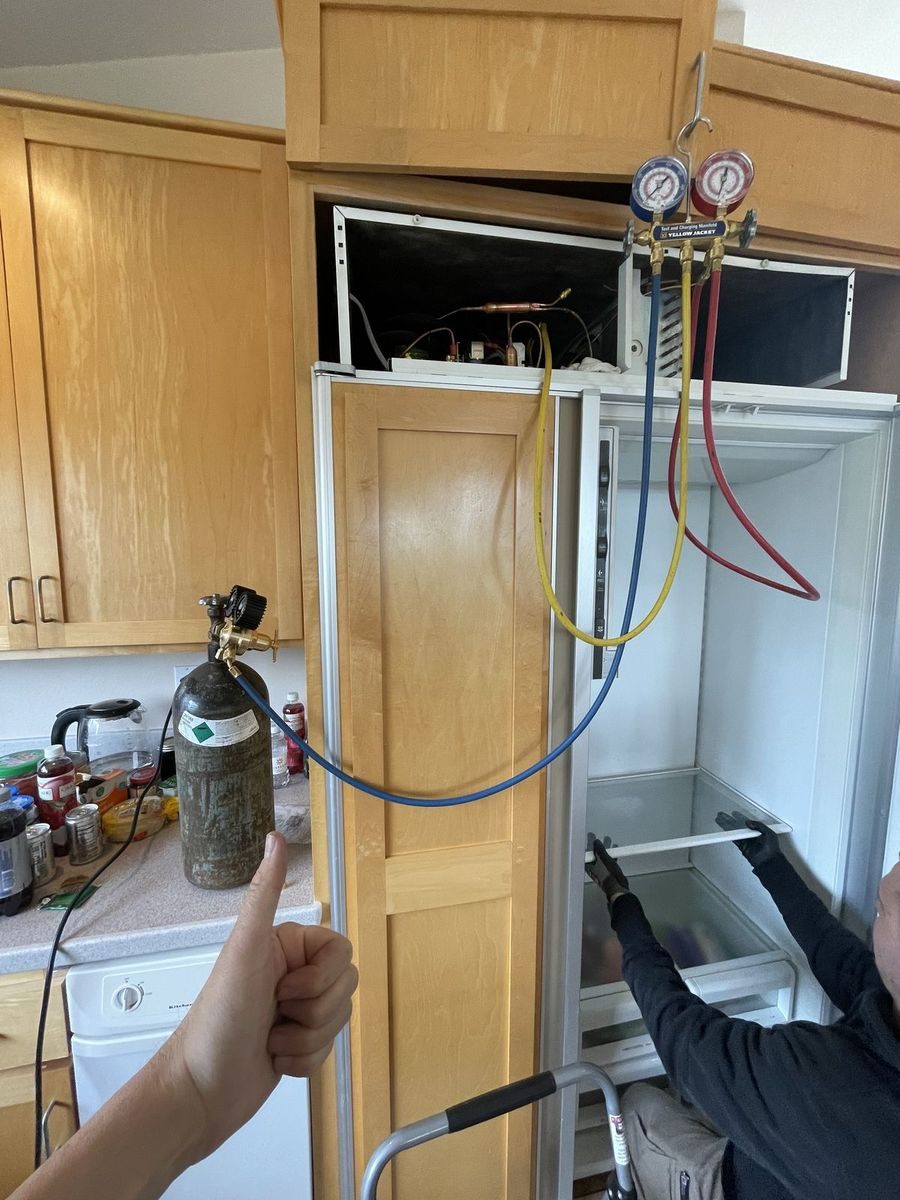
07 / 12
Gauges connected to a built-in refrigerator's sealed system. Leak searches, brazing and recharges happen in the kitchen, so the fridge stays where it is.
Read the service page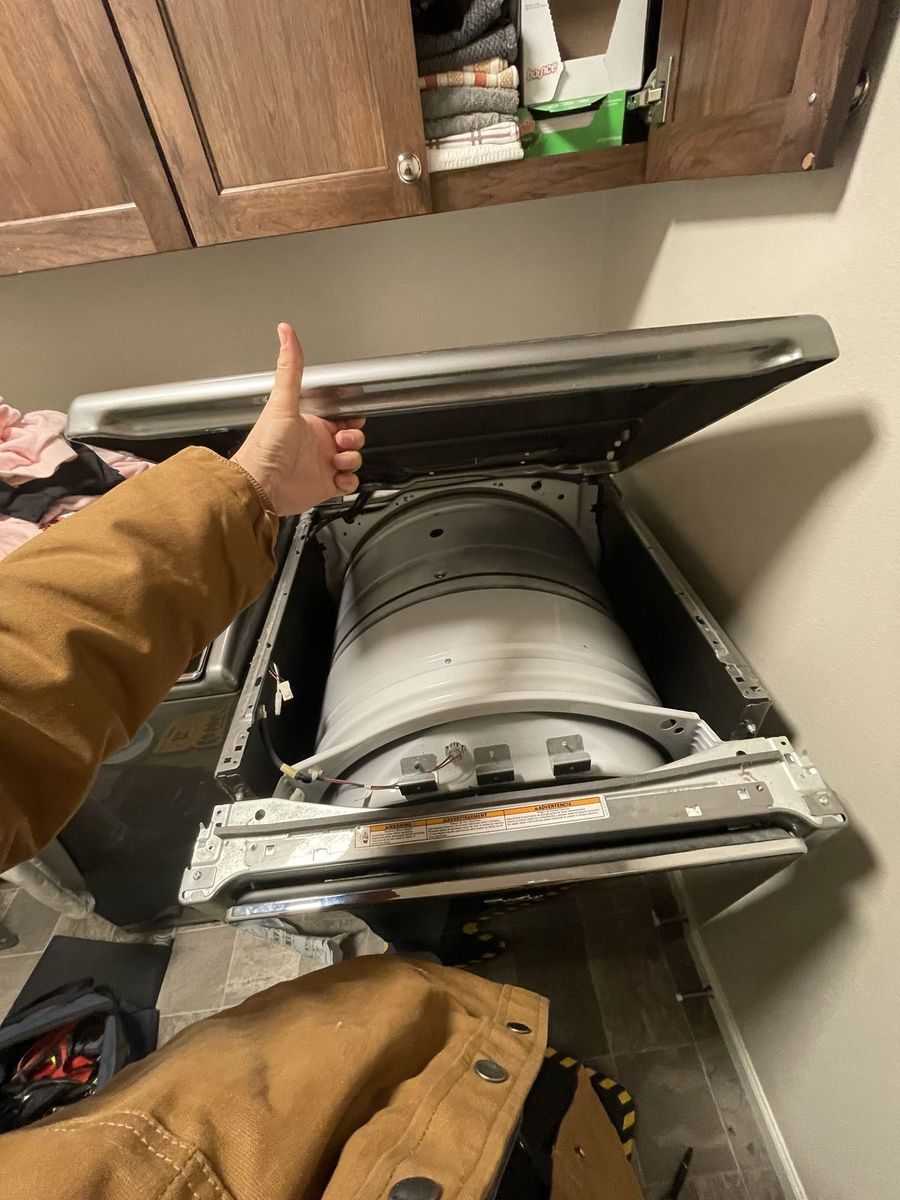
08 / 12
A top-load washer with the top panel raised. Lid switch, drive coupler and drain pump are all within reach once the top comes up.
Read the service page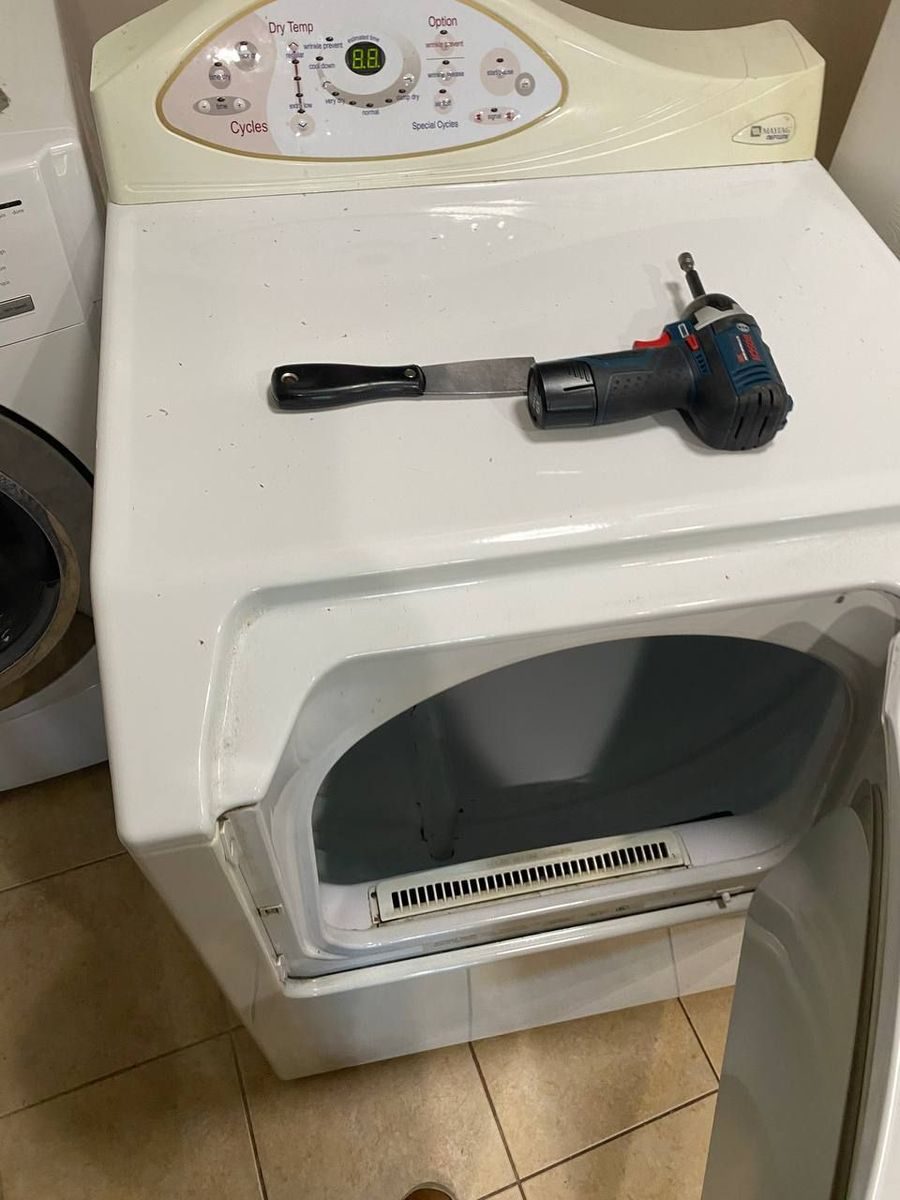
09 / 12
An electric dryer opened up in a laundry room. The thermal fuse, the heating element and the vent run behind the machine get tested together.
Read the service page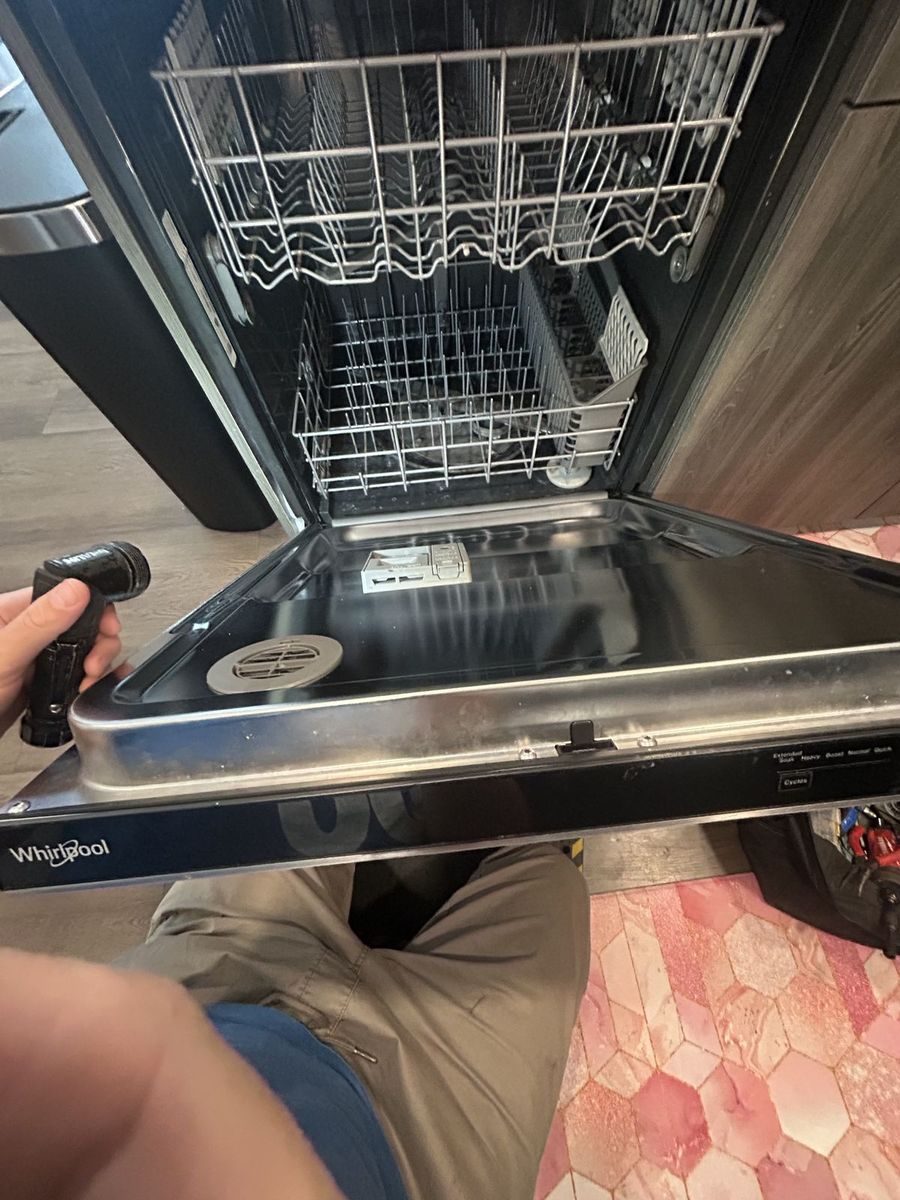
10 / 12
Door open and racks out on a dishwasher. A puddle left behind after the last rinse sends us to the filter screen, the pump and the hose route under the sink, in that order.
Read the service page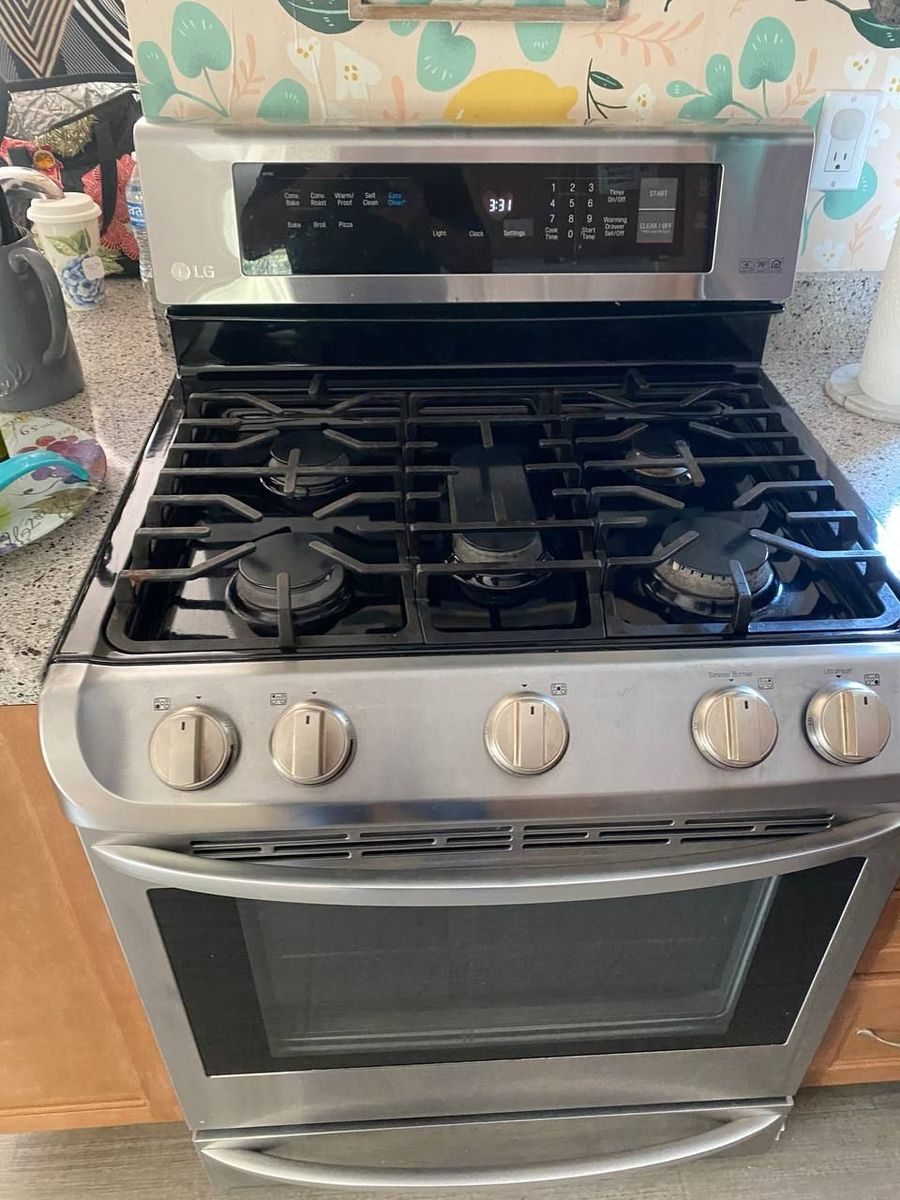
11 / 12
A five-burner gas range ready for testing. Burner igniters, the spark module and the bake igniter's amp draw are measured before a part is ordered.
Read the service page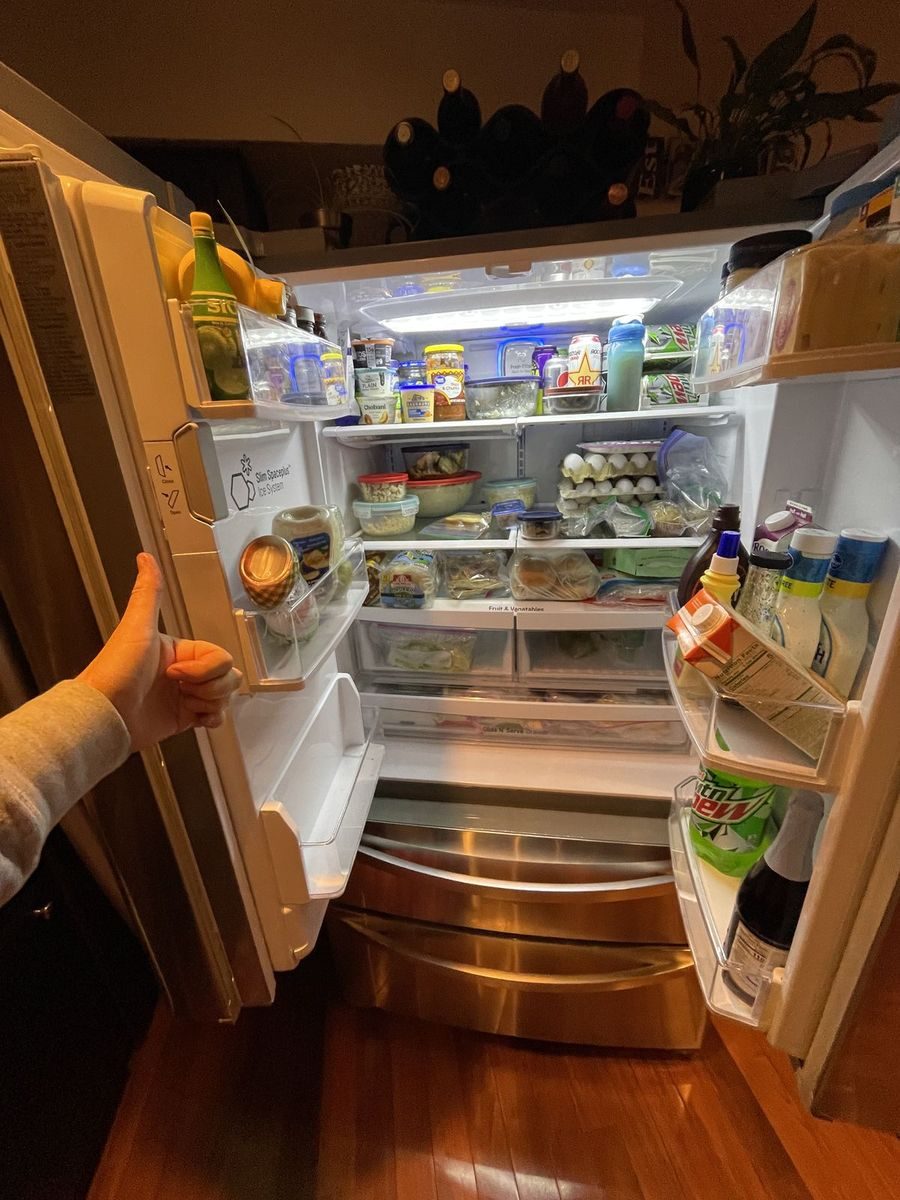
12 / 12
A French-door refrigerator open for diagnosis. Slow ice starts with the water: the inlet valve, the filter and a fill tube that can freeze shut.
Read the service pageGuide · Summer cooling
What a heat pump or central AC should do on a 100°F Tri-Cities afternoon, how to help it keep up, and the warning signs of a weak capacitor, pitted contactor or dirty coil.
Guide · Winter heat pumps
Why Tri-Cities heat pumps steam, pause and defrost so often during winter inversions, how to tell normal defrost from a coil that stays iced, and what the AUX light means.
Guide: appliances
Why a garage or shop refrigerator strains through 100°F afternoons and can let its freezer thaw in January, which parts wear first, what owners can do, and when to book a repair.
Once in late spring, after the March and April winds and the worst of cottonwood season, makes a good baseline, with a second look in early summer once June's gusts have passed. Homes on open or upwind lots may need more. Shine a flashlight at the coil face: if you cannot see light through the fins, or a gray felt layer has formed, it is time.
Not while it might run. A heat pump works year-round, and even an AC can get switched on during a warm spell, so a full cover blocks airflow and traps moisture that invites rust and rodents. A flat piece over the top that shields the fan opening from falling debris is fine on an AC through winter, as long as the sides stay open.
Yes. A mini-split's outdoor unit has a compact, tightly finned coil that clogs quickly, and the indoor head has washable filters that catch fine dust. Rinse the outdoor coil gently with the power off and wash the indoor filters every few weeks during windy months. Cleaning the indoor coil and fan wheel is a technician job, since water has to be kept off the electronics.
It can. A loaded filter raises static pressure, so the indoor fan moves less air, the coil runs colder in cooling and can freeze, and in heating a furnace can trip its high limit. Check filters monthly through windy spring and early summer and replace them once they look gray. A technician can measure static pressure to see whether the filter or ductwork is restricting airflow.
Talk to us
If the coil is matted, the fins are flattened, or the system struggles after a windstorm, reserve a date and arrival window on the site or call any day, 8 AM–7 PM. The office phones back to confirm.
Book a visit
One slip, filled top to bottom. The office phones to confirm the visit, and the technician calls again when on the way.
Every number below is a public state record. Look each one up on L&I Verify, or read what each license allows on our licenses page.
What our licenses cover