01 / 12
Heat pump repair
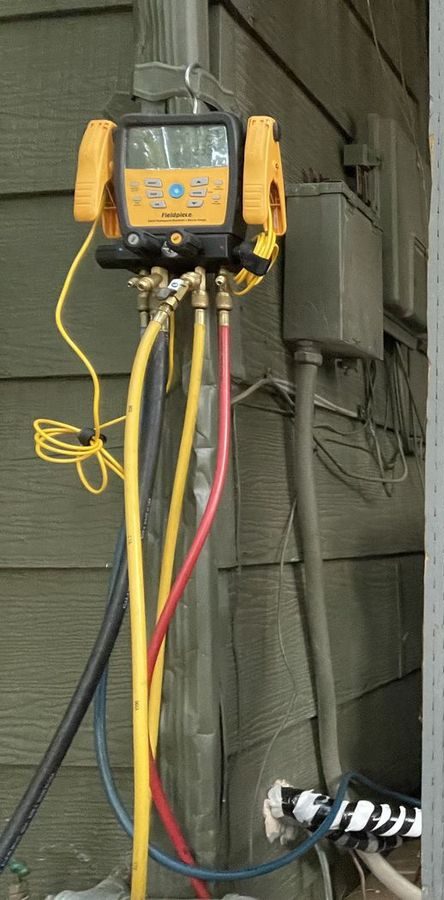
Digital gauges hang by the outdoor unit while the heat pump runs. Superheat and subcooling show whether the charge, a valve or the defrost board is the problem.
Read the service page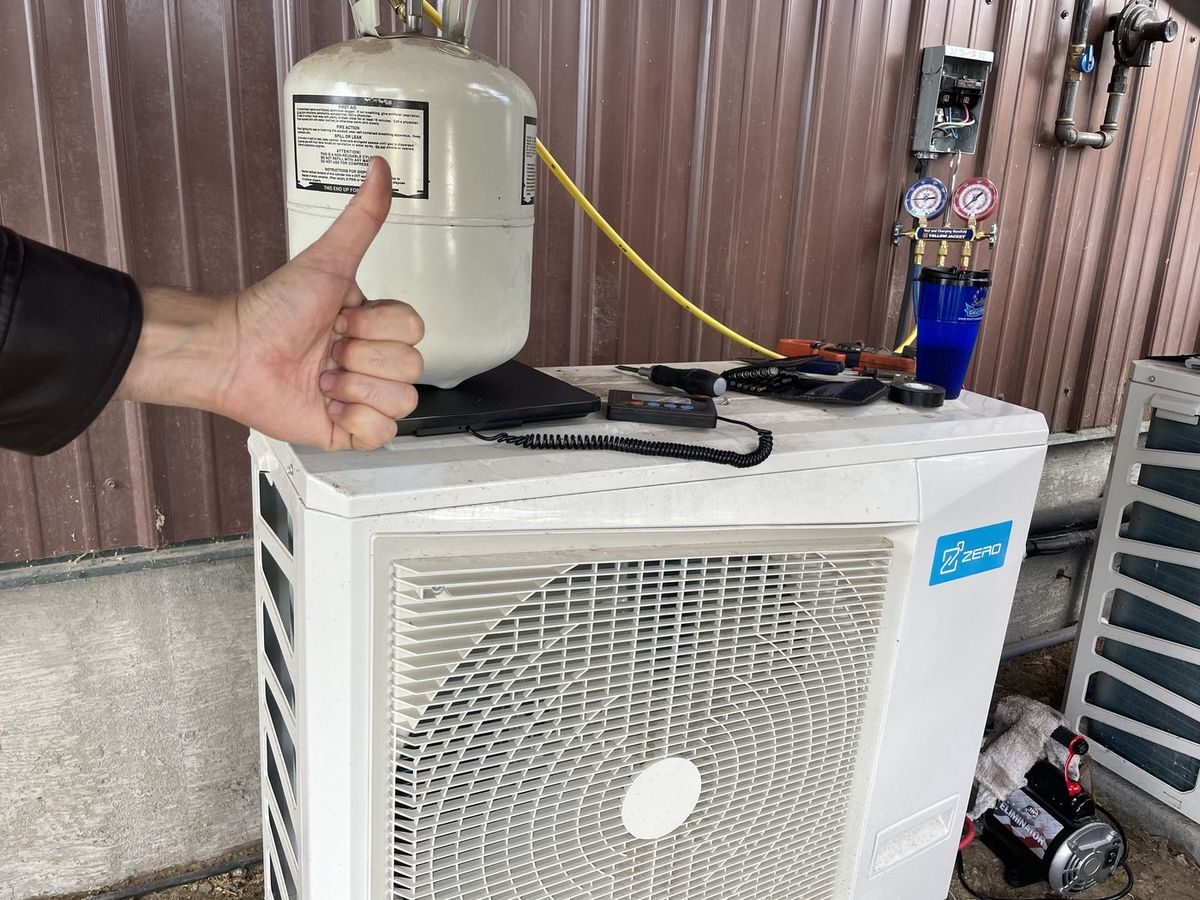
Guide · Winter heat pumps
Most winters, inversions trap cold, damp air over the Columbia Basin and wrap Kennewick, Pasco and Richland in fog for days on end. Heat pumps feel it first. This guide explains defrost cycles, the AUX light, and how to tell frost that clears from ice that calls for a repair.
Short answer
In inversion fog, a heat pump's outdoor coil frosts quickly, so the unit defrosts often: the outdoor fan stops, the coil steams, and the reversing valve shifts with a whoosh. A normal cycle runs a few minutes and leaves bare metal behind, and the AUX light may glow meanwhile. Book service if the coil stays white or solid with ice afterward, or if heat strips run without a break.
It is the part of winter when cold air settles into the Columbia Basin and a layer of warmer air parks on top of it like a lid. With no wind to stir it out, the cold pool can linger for days or weeks, bringing low cloud, fog and freezing fog while daytime highs stall in the 30s. Western Washington is often milder during the same spells. Freezing fog advisories go out for the basin, and fences, wires and trees grow a white coat of rime.
That air sits near freezing and near saturation, which is the hardest condition a heat pump faces. It is not the coldest weather; cold snaps can drag lows toward 10°F, but very cold air is usually dry. Damp air between the mid-20s and mid-30s drops its moisture on the outdoor coil as frost faster than nearly any other weather, so a heat pump can collect a white layer within one run cycle.
It is defrosting. When the defrost control senses frost, using a coil sensor plus a timer or temperature and pressure readings, it flips the reversing valve so the system runs briefly in cooling mode. Hot refrigerant flows out to the outdoor coil, the outdoor fan stops so that heat stays put, and the frost melts. The cloud you see is meltwater evaporating off a warm coil into frigid air. When it finishes, the valve swings back with a loud whoosh and the fan restarts.
A typical defrost takes somewhere between two and ten minutes. Many defrost boards have jumper pins that set the interval between coil checks at 30, 60 or 90 minutes of compressor time, so in heavy fog a cycle every half hour to hour and a half is ordinary. The house keeps getting warm air because the electric strips in the air handler switch on during defrost to temper what comes out of the registers.
Check the coil about ten minutes after a defrost ends. A light, even frost that comes and goes is normal in fog, and the coil should show bare metal right after each cycle. Trouble looks different: thick white or clear ice that never clears, ice on the top panel or fan grille, a blade scraping against ice, or a ridge that starts at the bottom and climbs a little higher each day.
Usual causes include a failed defrost sensor or defrost thermostat, a board that never starts a cycle, a reversing valve that sticks or whose solenoid coil has opened, a low refrigerant charge, or an outdoor fan motor that will not restart after defrost. Water can be the culprit as well: a gutter dripping onto the top, or a base pan sitting in a puddle that refreezes, builds ice from the bottom up no matter how well defrost is working.
AUX means auxiliary heat is on, usually the electric heat strips inside the air handler. It is expected during defrost and for short stretches on cold mornings, when the thermostat asks for more heat than the heat pump can deliver quickly. It becomes a warning when it stays lit for hours on a mild foggy afternoon, since that usually means the heat pump itself has stopped producing heat and the strips are carrying the house alone.
Backup strips draw far more electricity than the heat pump, so a stuck AUX light can show up on the next bill from your power company. Some thermostats also offer a setting that runs only the backup strips and locks out the outdoor unit. Treat that as a short-term measure for a coil frozen into a solid block or an outdoor unit making grinding noises, and book a visit the same day.
Keep the outdoor unit's surroundings open. Clear snow, leaves and tumbleweeds away from the base, make sure the unit sits on its pad or riser above standing water, and redirect any gutter that drips onto the top. Hold the thermostat at a steady setting rather than deep overnight setbacks, which can call for strip heat at dawn. Never chip ice off the coil; a screwdriver or ice pick can pierce a tube, and then a frozen coil becomes a leaking one.
Call when ice stays put after defrost, the outdoor fan fails to restart, the AUX light burns for hours, or a breaker trips. Our technicians trigger a defrost by hand and observe the whole cycle, test the sensor, board and reversing valve, measure the charge, and check the outdoor fan motor and its capacitor. They carry the EPA 608 Universal credential for leak repair and charging. The visit carries a diagnostic fee the office spells out beforehand: count it inside the repair total if you approve, or as your only bill if you pass.
One photo per tab from our service calls. Tap a tab, or let the file turn on its own.
01 / 12
Digital gauges hang by the outdoor unit while the heat pump runs. Superheat and subcooling show whether the charge, a valve or the defrost board is the problem.
Read the service page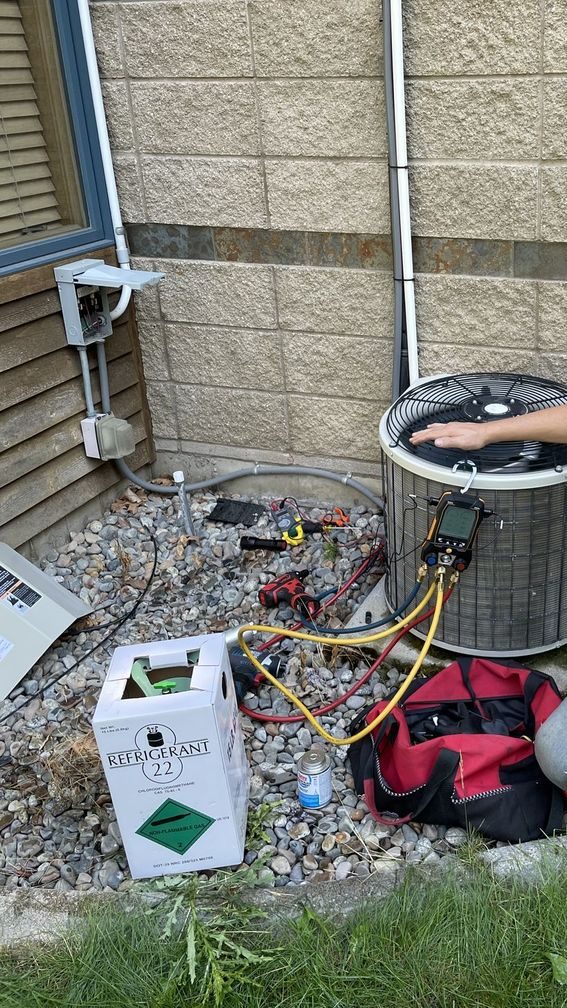
02 / 12
An older condenser under test with hoses on the service ports. The capacitor, contactor and fan motor get checked before anyone talks about refrigerant.
Read the service page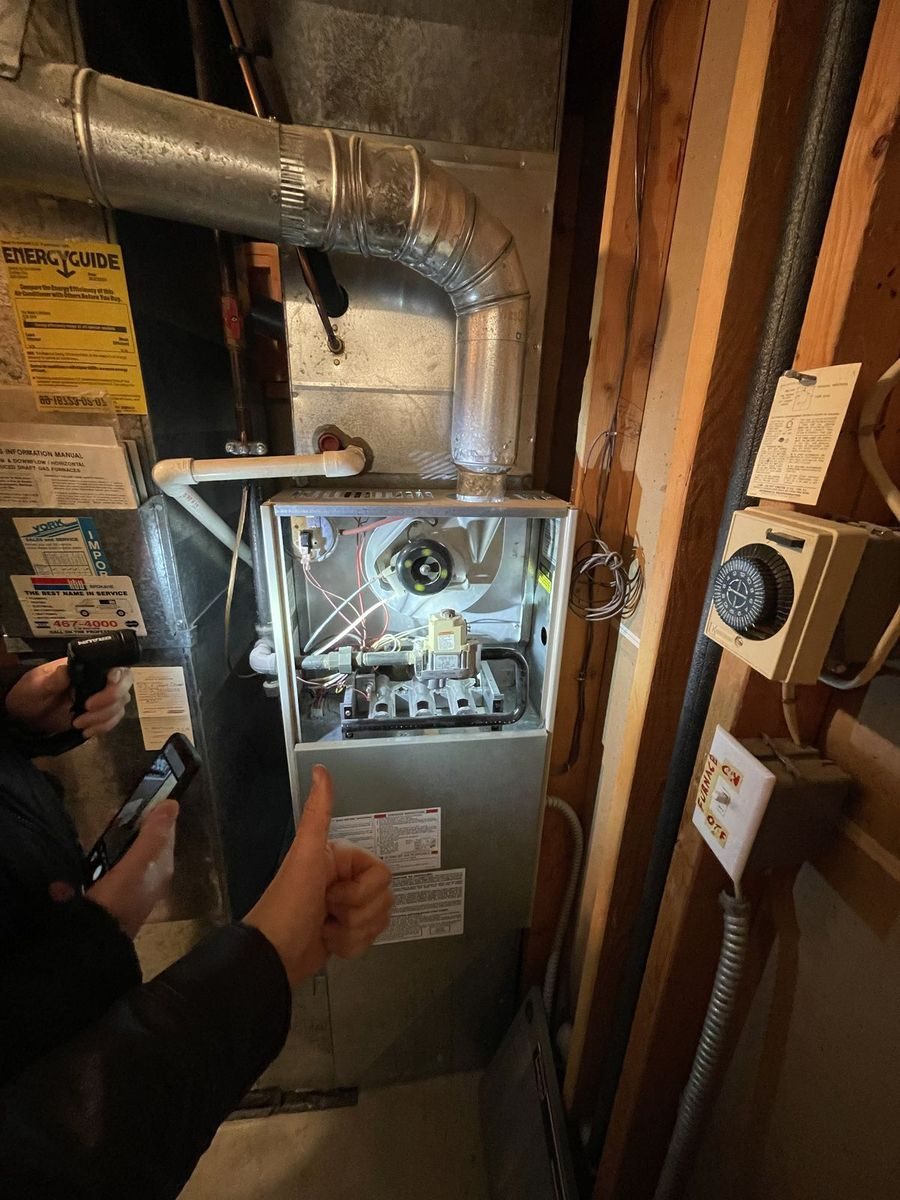
03 / 12
The burner compartment of a gas furnace, open. We follow the start-up order, inducer, pressure switch, igniter, flame sensor, until the step that fails.
Read the service page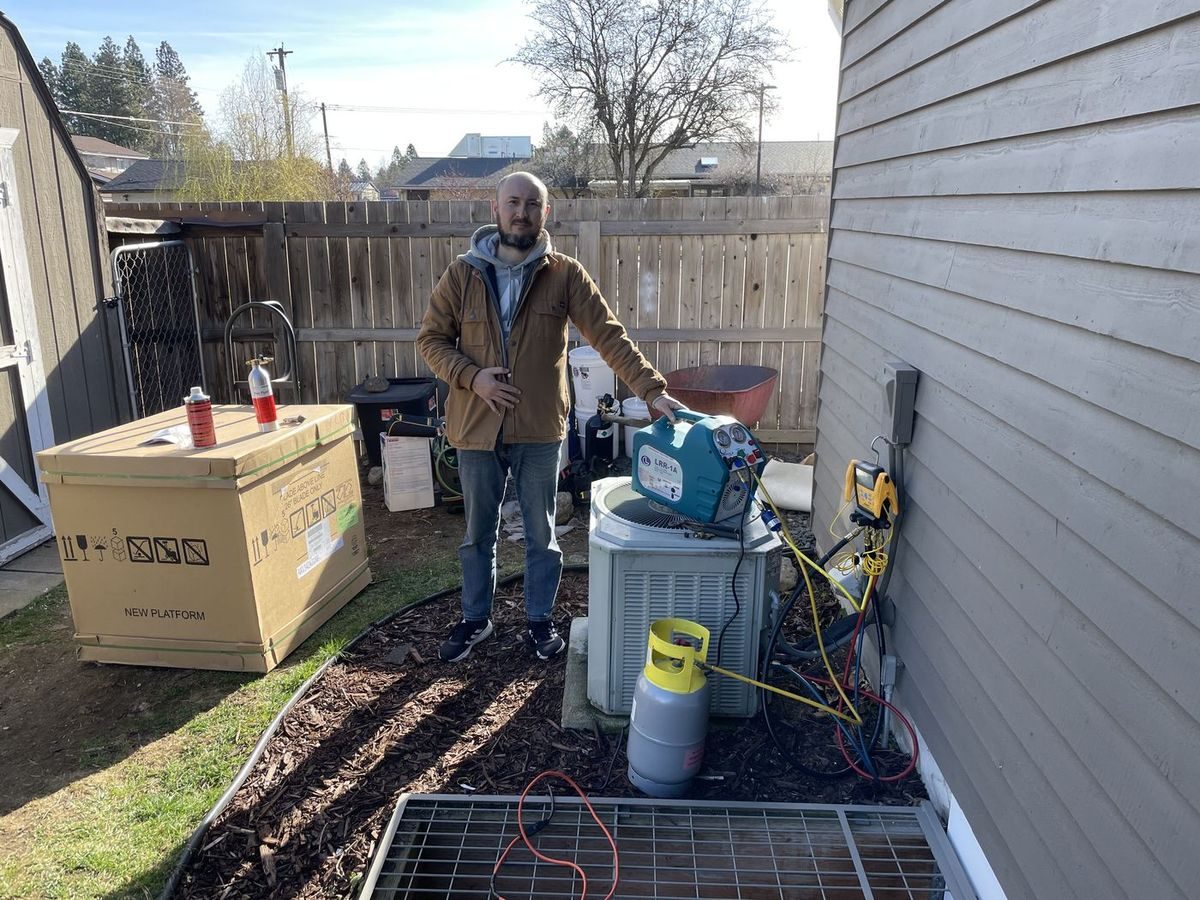
04 / 12
A recovery machine and cylinder beside an outdoor unit. On a replacement, the old refrigerant is pulled into the cylinder instead of the air.
Read the service page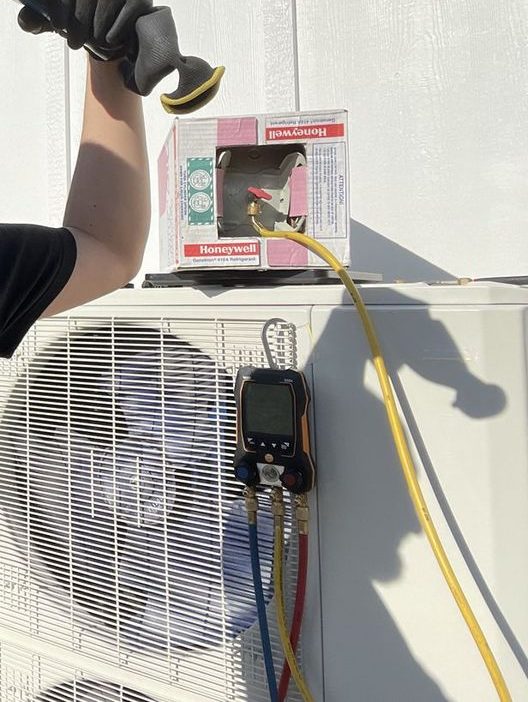
05 / 12
A ductless outdoor unit with a gauge set on it. Mini-splits get the same pressure and temperature readings as a central system, plus a look at the line-set insulation.
Read the service page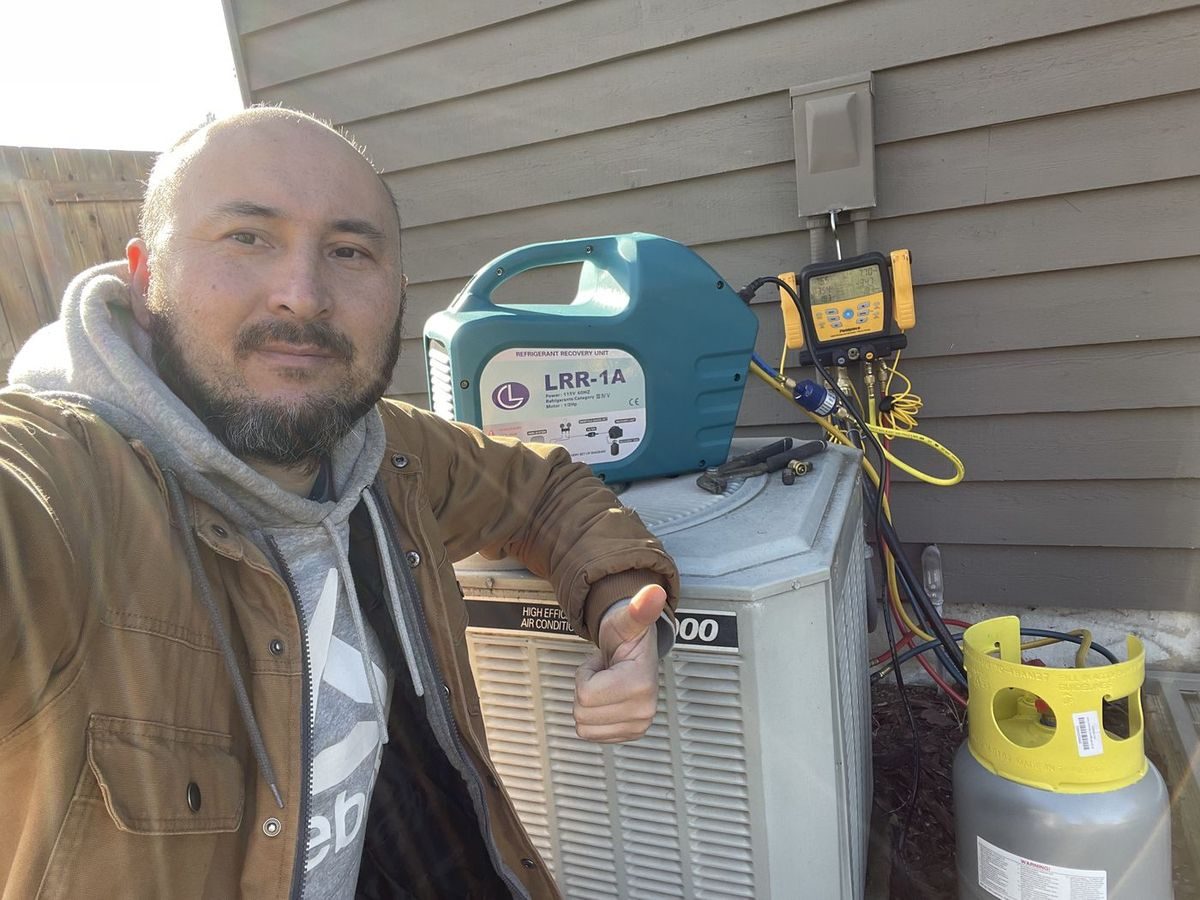
06 / 12
Gauges on a condenser during a seasonal visit. Spring visits wash the dust out of the coil; fall visits test defrost and heat strips before the fog weeks.
Read the service page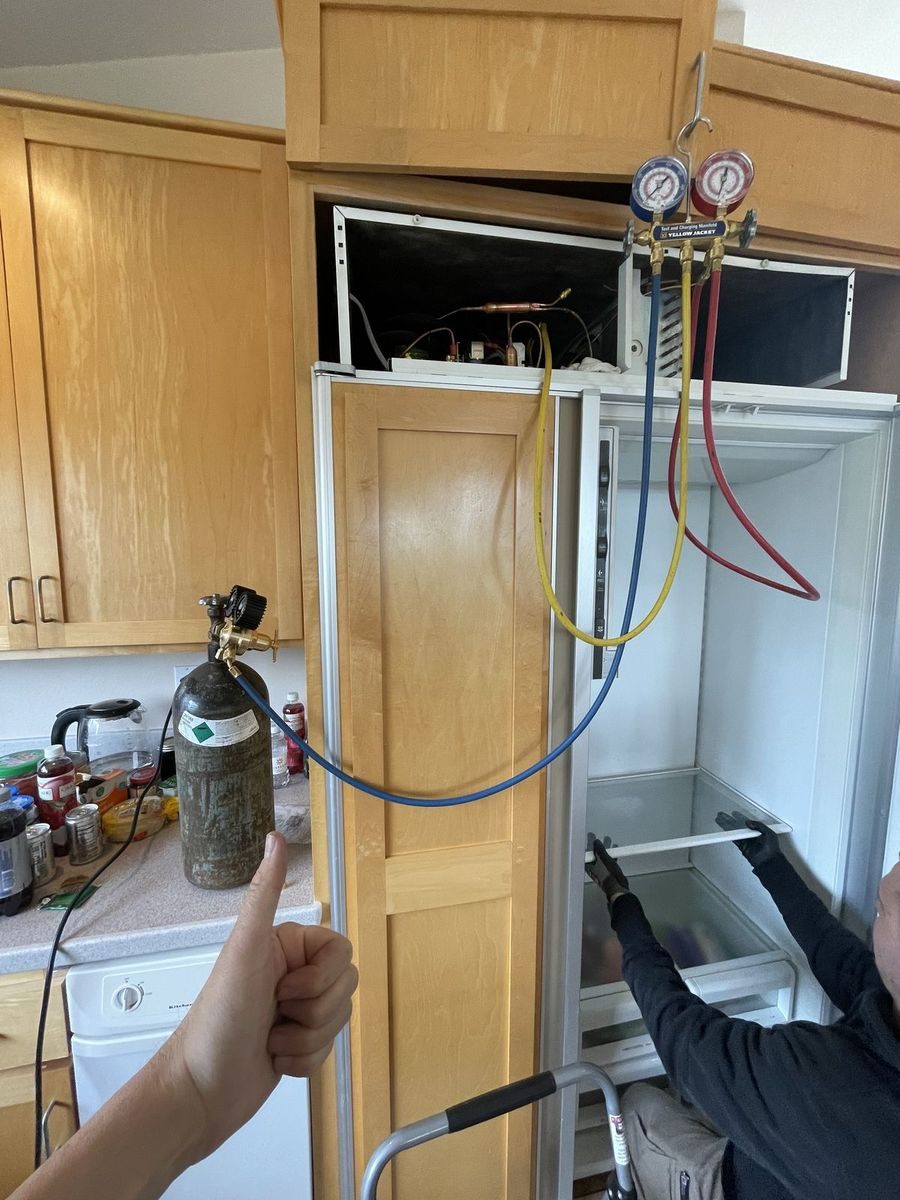
07 / 12
Gauges connected to a built-in refrigerator's sealed system. Leak searches, brazing and recharges happen in the kitchen, so the fridge stays where it is.
Read the service page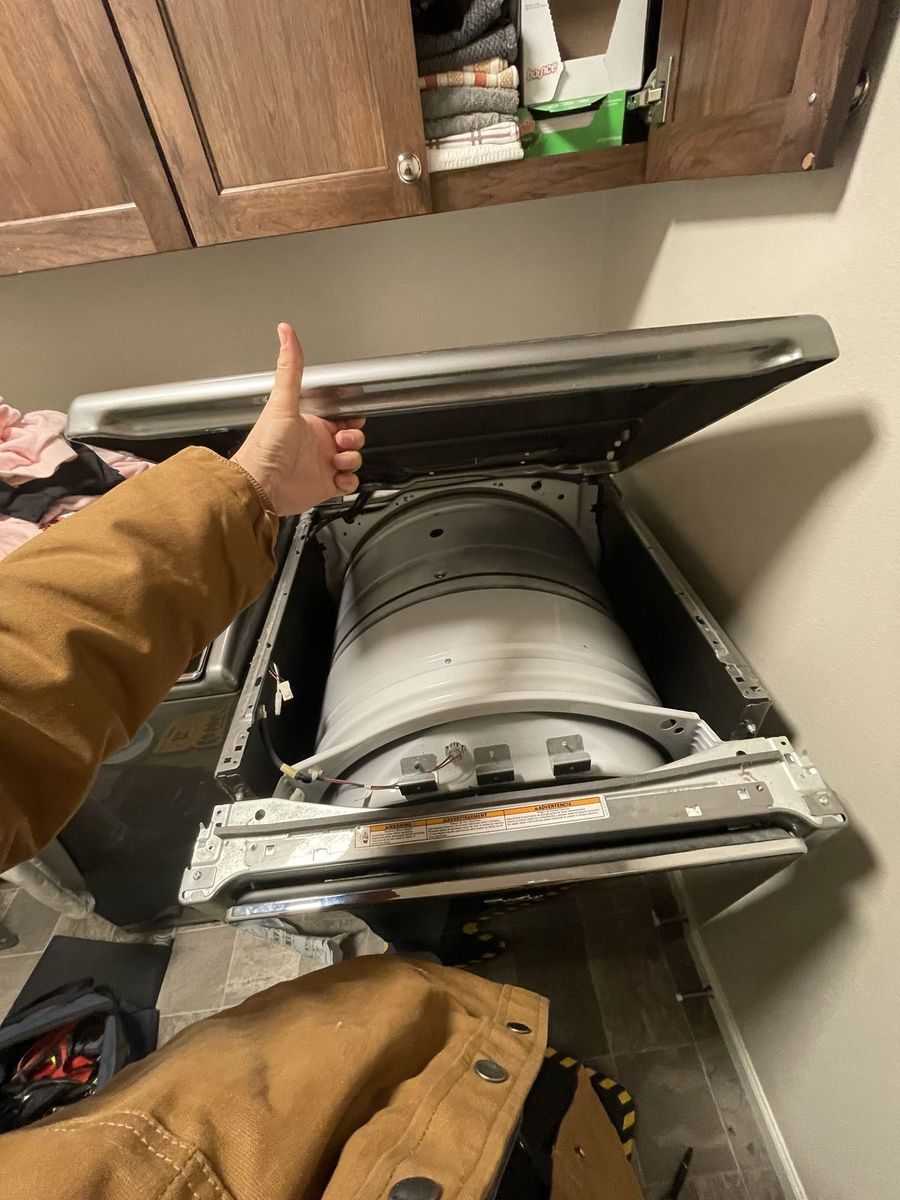
08 / 12
A top-load washer with the top panel raised. Lid switch, drive coupler and drain pump are all within reach once the top comes up.
Read the service page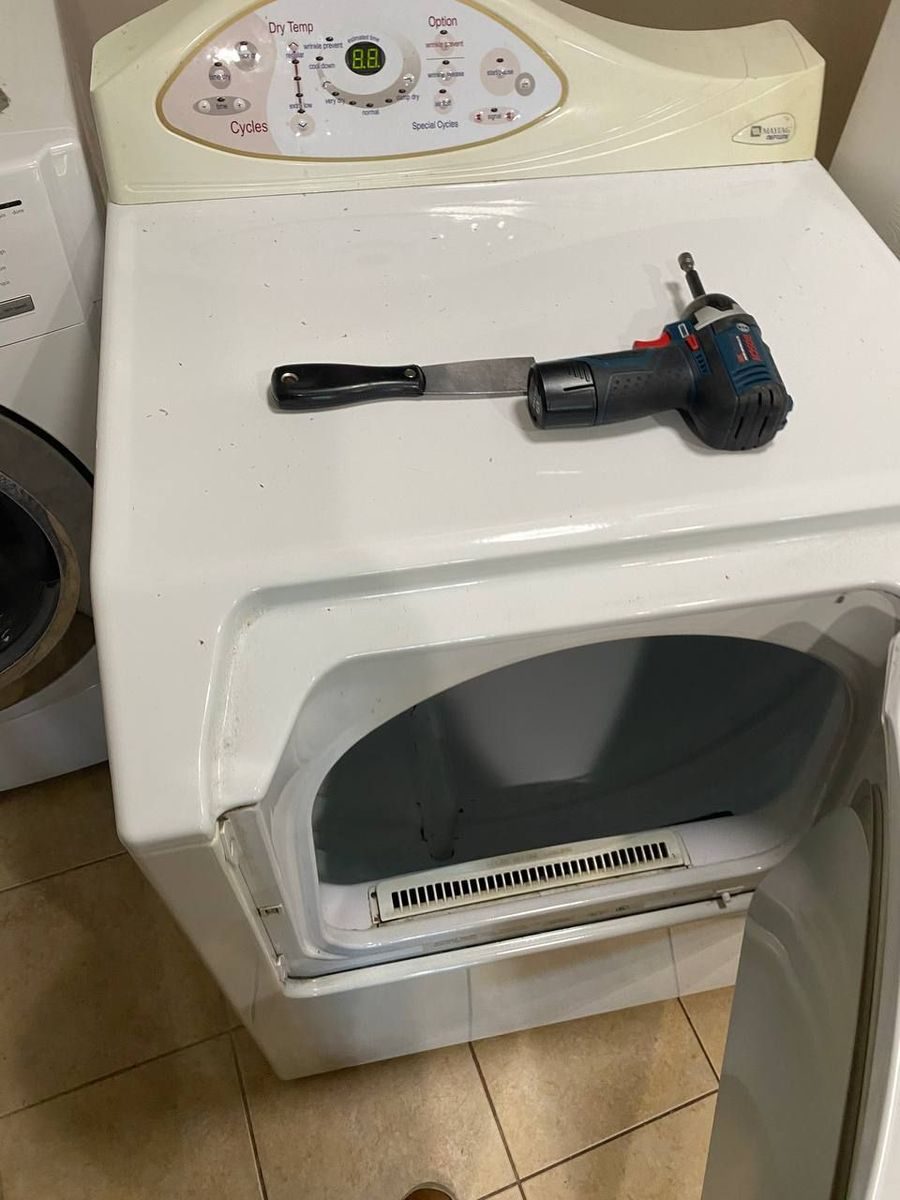
09 / 12
An electric dryer opened up in a laundry room. The thermal fuse, the heating element and the vent run behind the machine get tested together.
Read the service page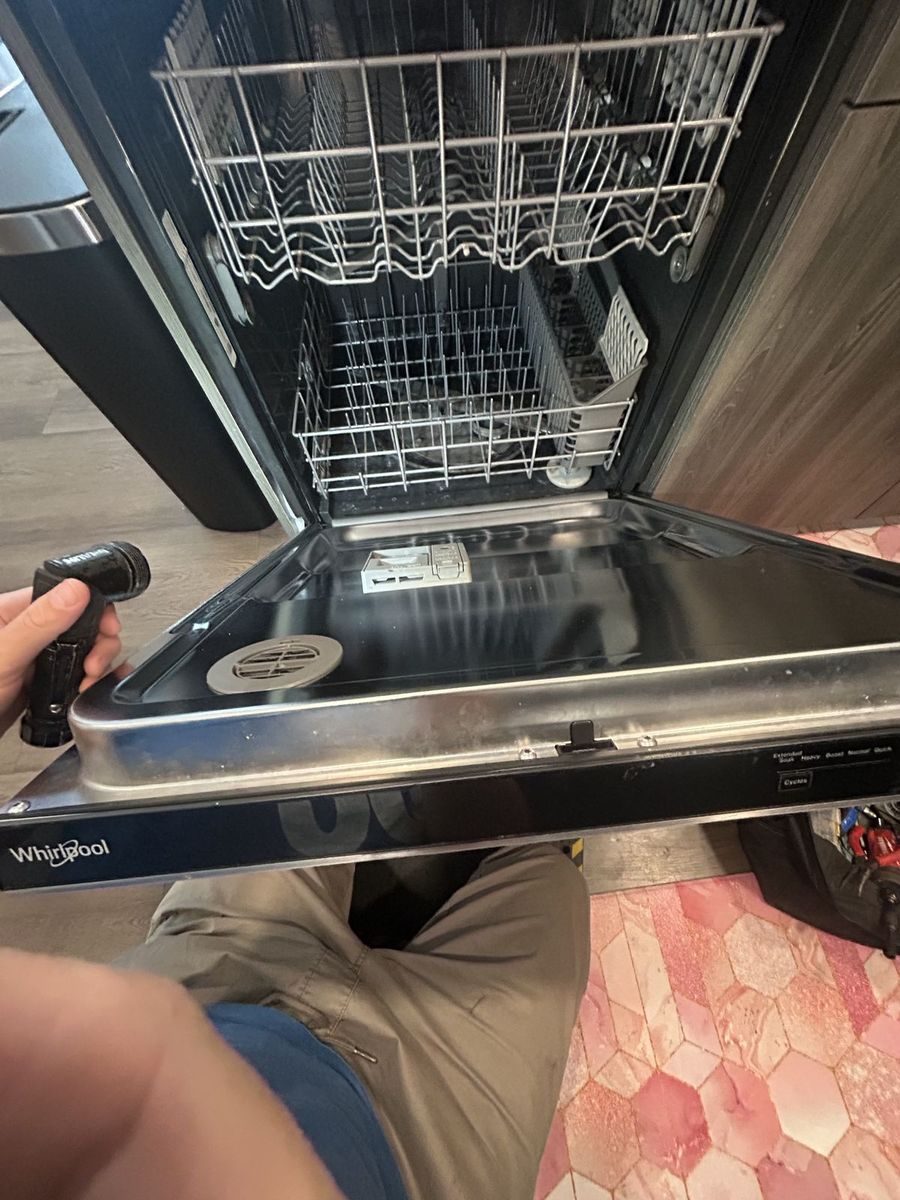
10 / 12
Door open and racks out on a dishwasher. A puddle left behind after the last rinse sends us to the filter screen, the pump and the hose route under the sink, in that order.
Read the service page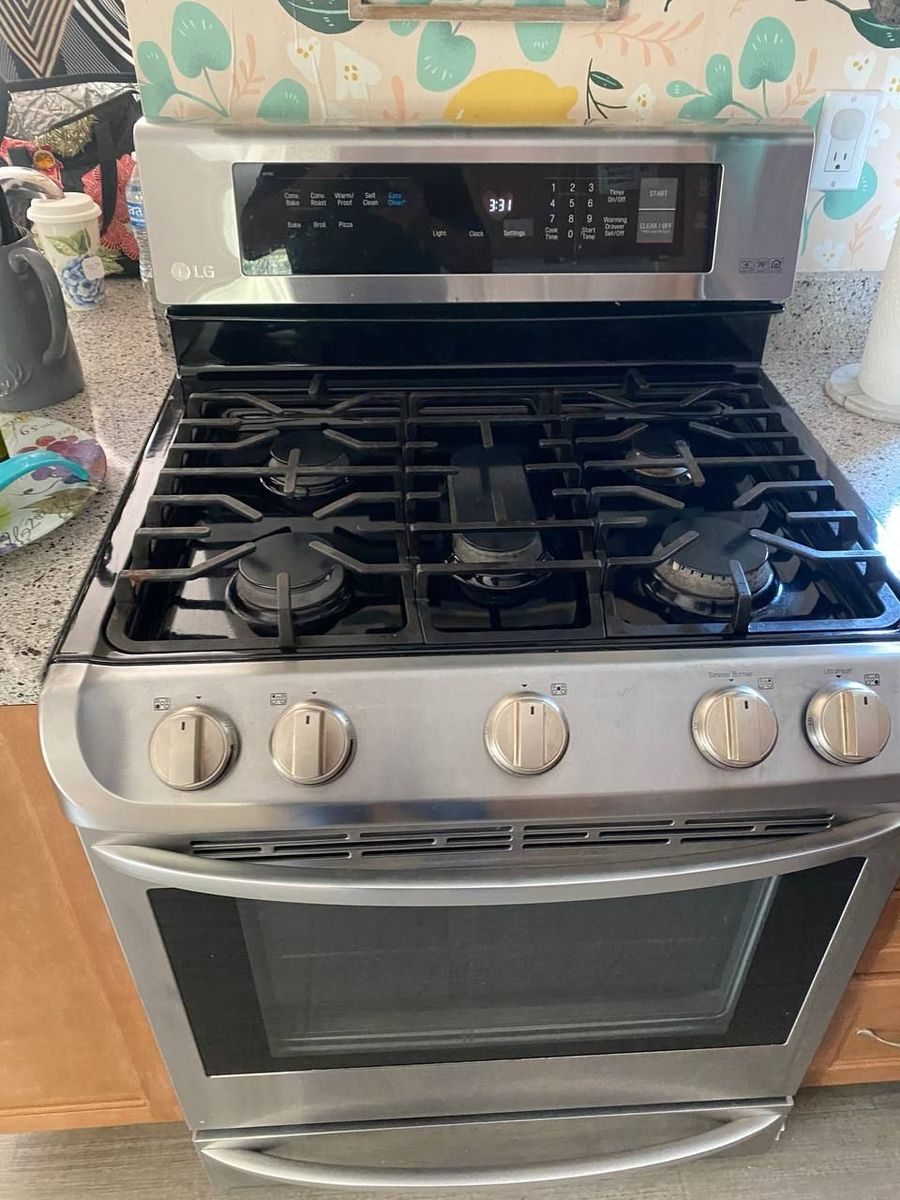
11 / 12
A five-burner gas range ready for testing. Burner igniters, the spark module and the bake igniter's amp draw are measured before a part is ordered.
Read the service page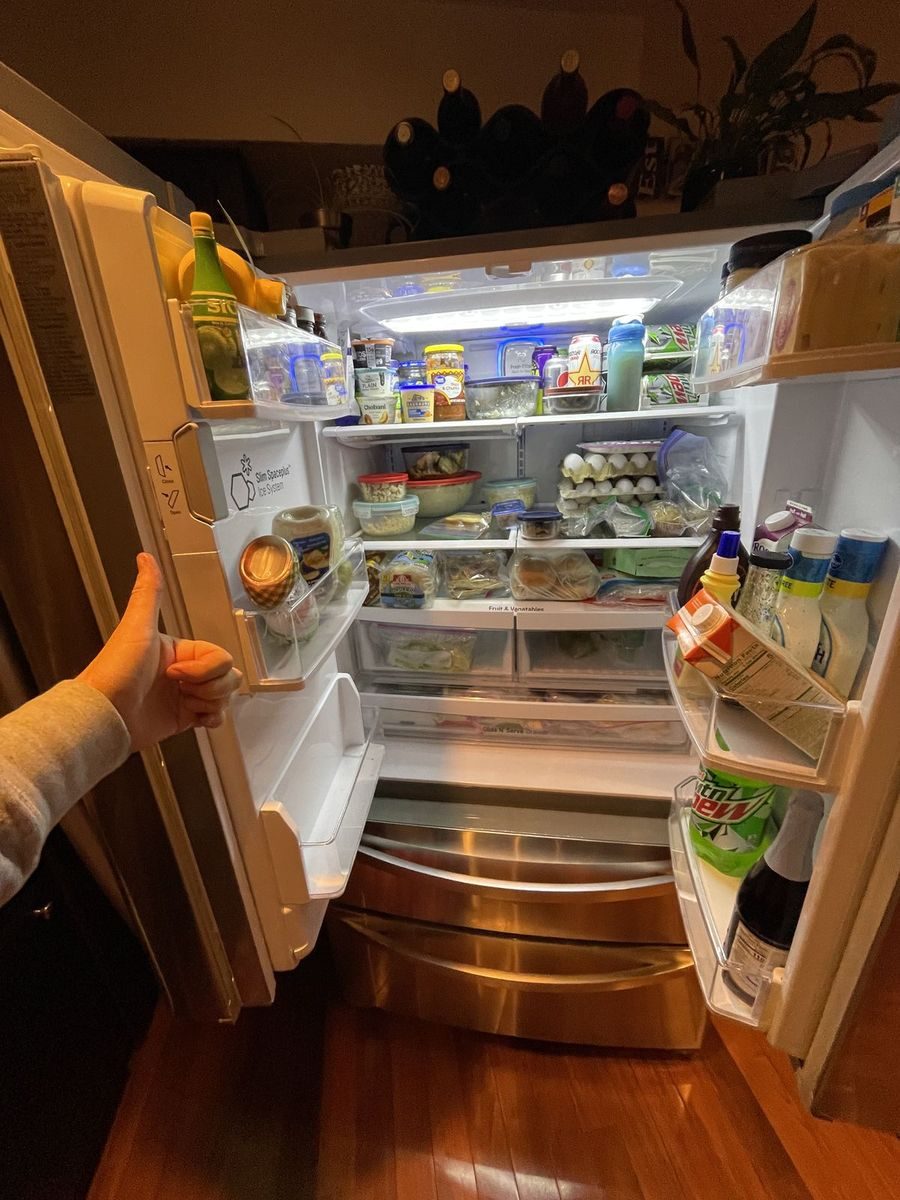
12 / 12
A French-door refrigerator open for diagnosis. Slow ice starts with the water: the inlet valve, the filter and a fill tube that can freeze shut.
Read the service pageGuide · Summer cooling
What a heat pump or central AC should do on a 100°F Tri-Cities afternoon, how to help it keep up, and the warning signs of a weak capacitor, pitted contactor or dirty coil.
Guide · Outdoor unit care
How Tri-Cities west winds, blowing dust, cottonwood fluff and tumbleweeds clog heat pumps and AC condensers, how to rinse a coil safely, and which jobs to leave to a technician.
Guide: appliances
Why a garage or shop refrigerator strains through 100°F afternoons and can let its freezer thaw in January, which parts wear first, what owners can do, and when to book a repair.
Not by itself. Freezing fog builds frost fast, and many defrost boards are set to check the coil as often as every 30 minutes of run time. If each cycle clears the coil to bare metal and the house stays comfortable, the system is doing its job. Frequent defrost paired with a coil that stays white, or ice that keeps rising, is the time to book a visit.
During defrost the heat pump runs briefly in cooling mode to warm the outdoor coil, so the indoor coil turns cool. Backup heat strips should switch on to temper that air. If it feels truly cold for several minutes, a strip, sequencer or relay may have failed, or the thermostat may not be wired to bring strips on during defrost. A technician can test both.
A properly sized heat pump keeps heating in that range, though its output falls as the air gets colder, so the AUX light comes on more often to fill the gap. Cold-climate models hold more of their capacity at low temperatures. If the house cannot hold its setpoint even with strip heat running, have a technician check the strips, sequencers, charge and thermostat settings.
Yes. A mini-split's outdoor unit defrosts the same way, and because most have no backup heat, the indoor head may stop blowing and blink a light while the coil clears. That pause is normal. If the head shows an error code, stays off for long stretches, or the outdoor unit builds solid ice, book a visit so a technician can read the code and test the sensors.
Talk to us
Request a visit online by naming the day and your preferred arrival window, or reach the office by phone from 8 AM to 7 PM, every day. You get a confirmation call, plus a heads-up from the technician on the way.
Book a visit
One slip, filled top to bottom. The office phones to confirm the visit, and the technician calls again when on the way.
Every number below is a public state record. Look each one up on L&I Verify, or read what each license allows on our licenses page.
What our licenses cover