01 / 12
Ice maker repair
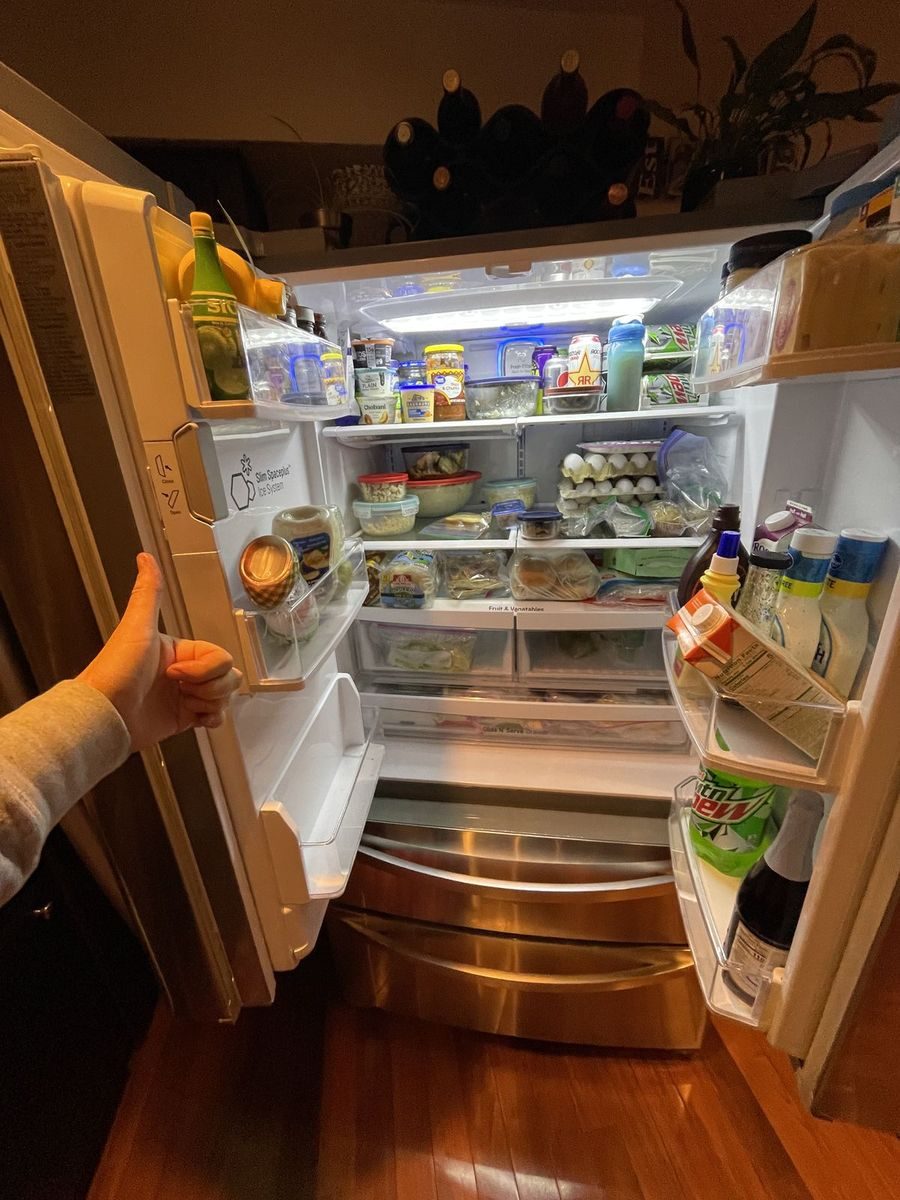
A French-door refrigerator open for diagnosis. Slow ice starts with the water: the inlet valve, the filter and a fill tube that can freeze shut.
Read the service pageRefrigerator ice makers: valves, filters, modules
Ice depends on a short chain: steady water pressure, a freezer that holds near zero, and a module that times each harvest. Break any link and the bin sits empty or collects hollow, cloudy slivers. Our technicians test every link and hand over a written repair figure before a single part comes off.
Short answer
A refrigerator ice maker usually stops because of a clogged water filter, an inlet valve that has failed or filled with sediment, a fill tube frozen shut, weak water pressure, or a freezer drifting warmer than about 5°F. Our technician works through those in order, valve to module, then hands you a written quote. Accept the quote and the diagnostic fee gets absorbed by the repair bill; decline, and you leave owing just the diagnostic.
Most often because water is not reaching the mold, or is reaching it too slowly. The route runs from the home's supply line to a solenoid valve mounted low at the rear of the cabinet, through the water filter, and up a fill tube into the freezer. A filter loaded with silt, a valve screen packed with grit, or line pressure sagging under what the valve wants (many specify at least 20 psi) all shorten the fill. A short fill freezes into small, hollow cubes. A slow trickle can freeze inside the tube itself and stop the fill altogether.
The other half is cold. The crescent-cube ice maker found in many Whirlpool, KitchenAid, Maytag and Kenmore refrigerators waits for a thermostat clipped to the mold to sense frozen water before it warms the mold, sweeps the cubes out and refills. GE and LG designs reach the same decision with a thermistor and an electronic module. If a frosted evaporator, a stalled evaporator fan or an open defrost heater lets the freezer warm up, the module never sees a cold enough reading and simply waits. We repair GE, Whirlpool, KitchenAid, Maytag, Frigidaire, LG, Kenmore, Electrolux and Bosch refrigerators and their ice makers under our 07D Appliance Repair specialty.
The check moves upstream to downstream. Water comes first: pressure at the refrigerator's inlet, flow from the dispenser with the filter in and, where the model has a bypass plug, with it out, and voltage at the valve solenoid when the ice maker calls for a fill. Cold comes next: freezer air temperature, the evaporator's frost pattern, which reveals a defrost failure, and the evaporator fan. The ice maker is last, with a forced harvest so the heater, the ejector and the refill can be watched in a single cycle. When the warmth comes from refrigerant escaping the sealed system, we can handle that as well, since each technician holds the EPA 608 Universal refrigerant credential.
Inlet valves and the common ice maker assemblies ride along on the truck. Brand-specific modules and door-mounted ice maker parts may need ordering, and you get that price in writing before anything is ordered. As for the diagnostic fee, the office gives you the figure during booking. Approving the repair folds it into the quoted total; declining leaves it as the full bill. Nothing begins without your approval, and written warranty terms sit on every invoice.
Wells are the biggest local factor. Along Keene Road and Bombing Range Road in rural West Richland, out toward Red Mountain, and across Benton City, Finley and Burbank, plenty of properties pump from private wells, and the silt and minerals in that water reach a refrigerator's valve screen and filter far sooner than city water does. A well pump cycling between its pressure switch's cut-in and cut-out points can also dip under what the valve needs right when the ice maker asks for water, which shows up as short fills and undersized cubes. In town, Pasco and Richland households get treated Columbia River water with moderate hardness, so scale creeps into the mold and fill cup more slowly.
Garages are the second factor. Many refrigerators are built for rooms that stay well above freezing, and a Tri-Cities garage does not. With January lows near 28°F, cold snaps that push toward 10°F, and inversion spells that hold highs in the 30s for weeks, the fresh-food thermostat in a garage refrigerator stays satisfied, the compressor rarely gets a call, and freezer temperatures climb. Ice softens and fuses, and a supply tube run along a cold garage wall can freeze. Summer flips the problem: a garage that bakes on a 100°F afternoon keeps the compressor running nonstop. West Richland's detached shops see both extremes in one year.
One photo per tab from our service calls. Tap a tab, or let the file turn on its own.
01 / 12
A French-door refrigerator open for diagnosis. Slow ice starts with the water: the inlet valve, the filter and a fill tube that can freeze shut.
Read the service page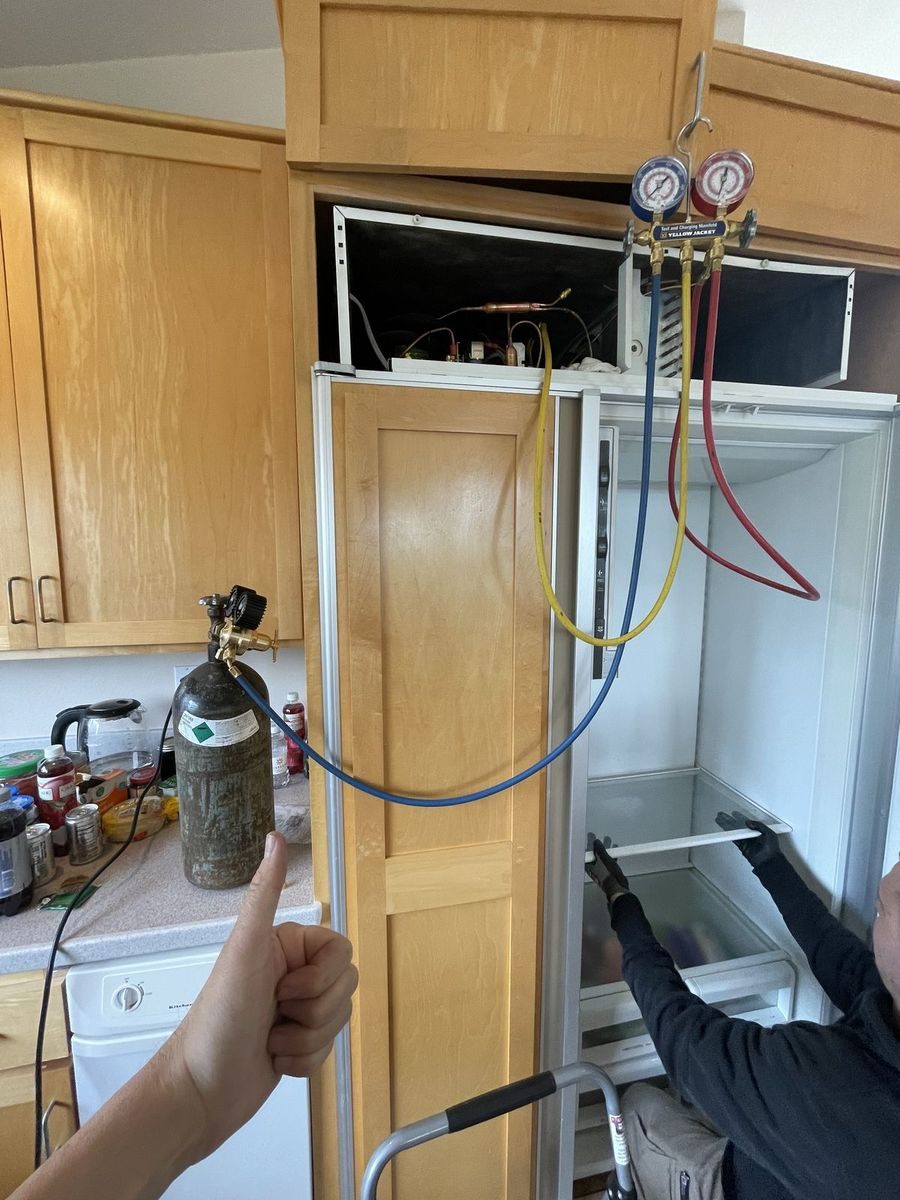
02 / 12
Gauges connected to a built-in refrigerator's sealed system. Leak searches, brazing and recharges happen in the kitchen, so the fridge stays where it is.
Read the service page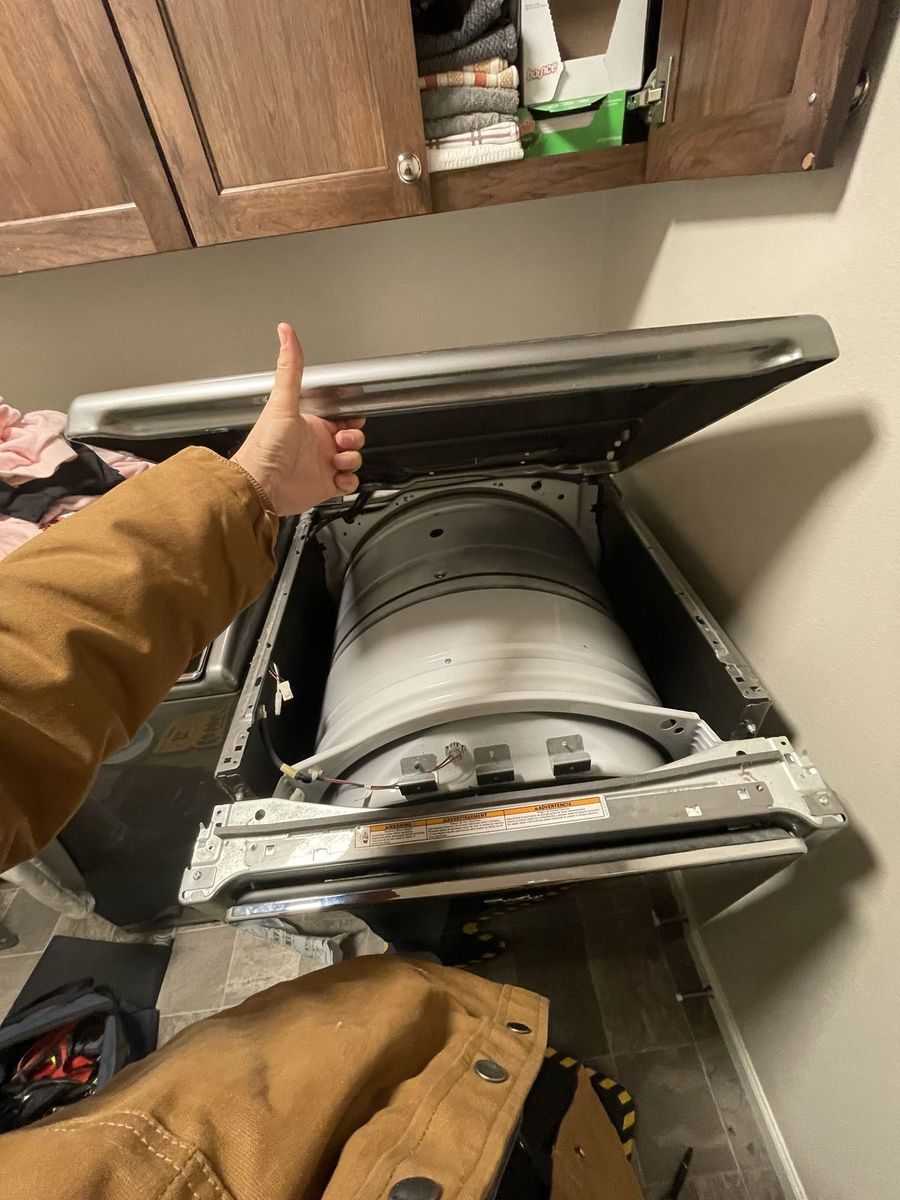
03 / 12
A top-load washer with the top panel raised. Lid switch, drive coupler and drain pump are all within reach once the top comes up.
Read the service page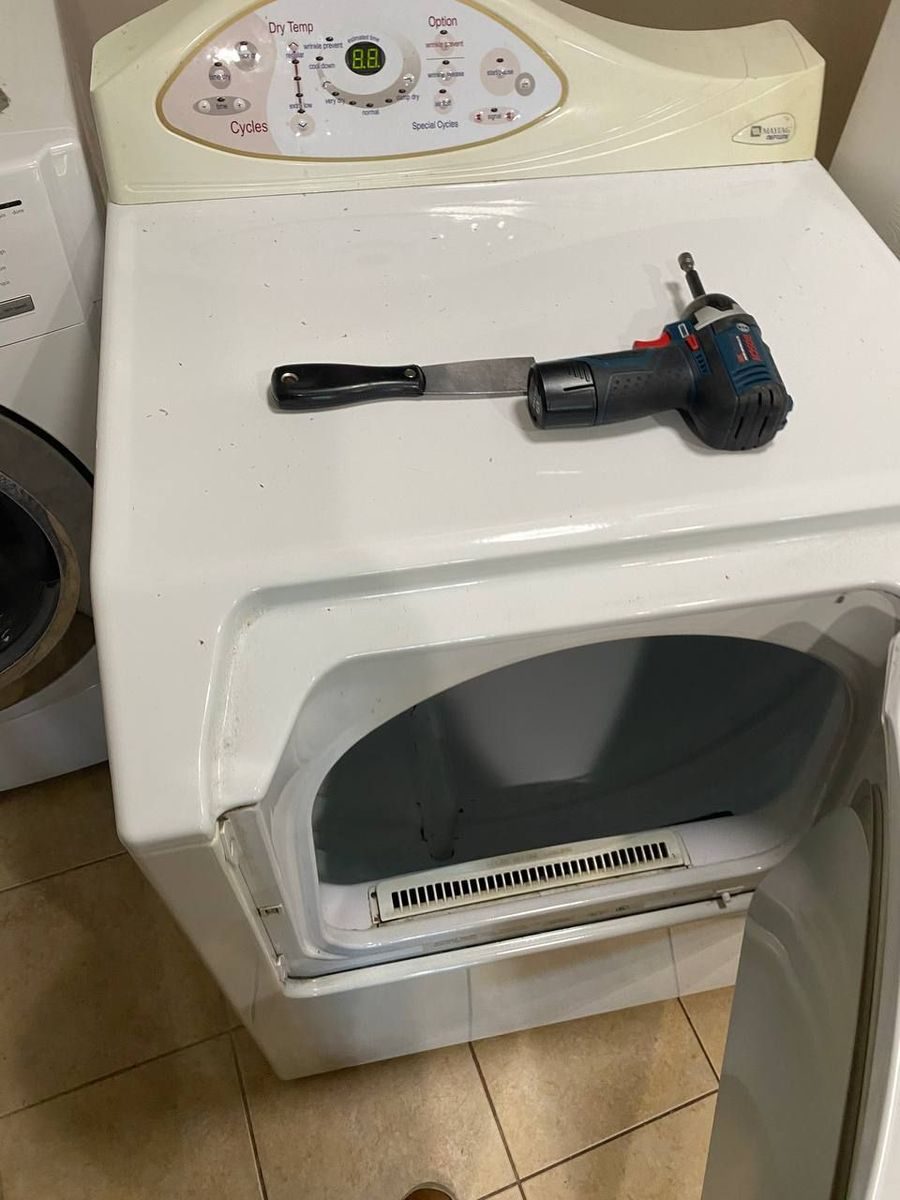
04 / 12
An electric dryer opened up in a laundry room. The thermal fuse, the heating element and the vent run behind the machine get tested together.
Read the service page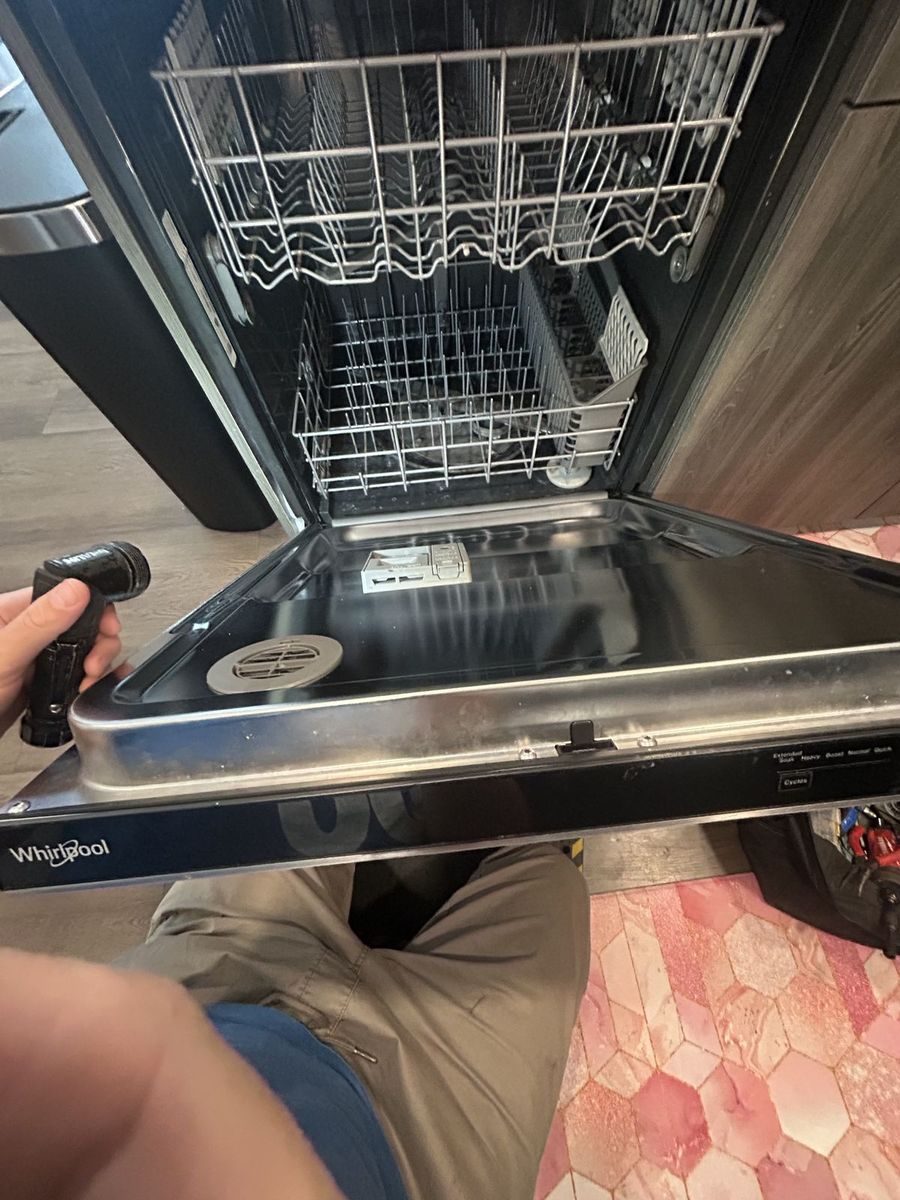
05 / 12
Door open and racks out on a dishwasher. A puddle left behind after the last rinse sends us to the filter screen, the pump and the hose route under the sink, in that order.
Read the service page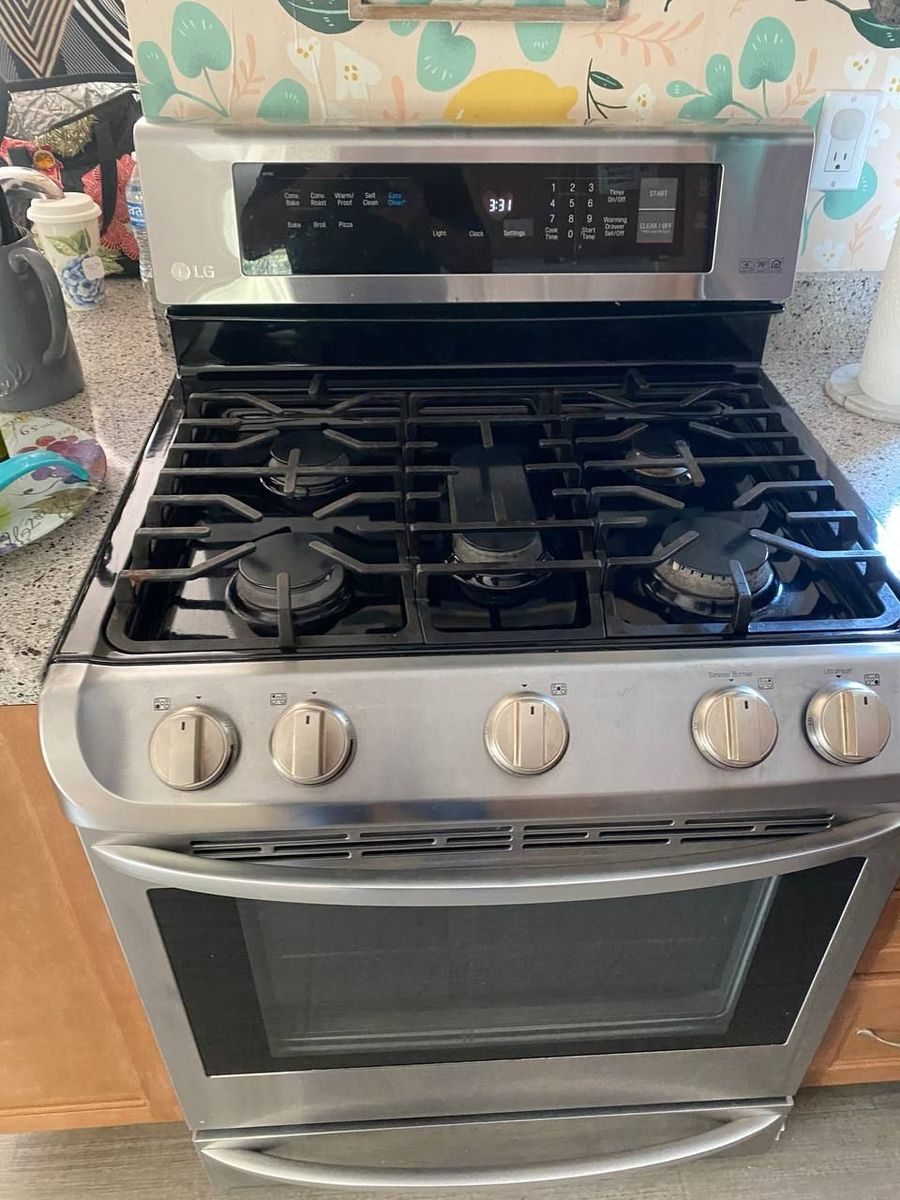
06 / 12
A five-burner gas range ready for testing. Burner igniters, the spark module and the bake igniter's amp draw are measured before a part is ordered.
Read the service page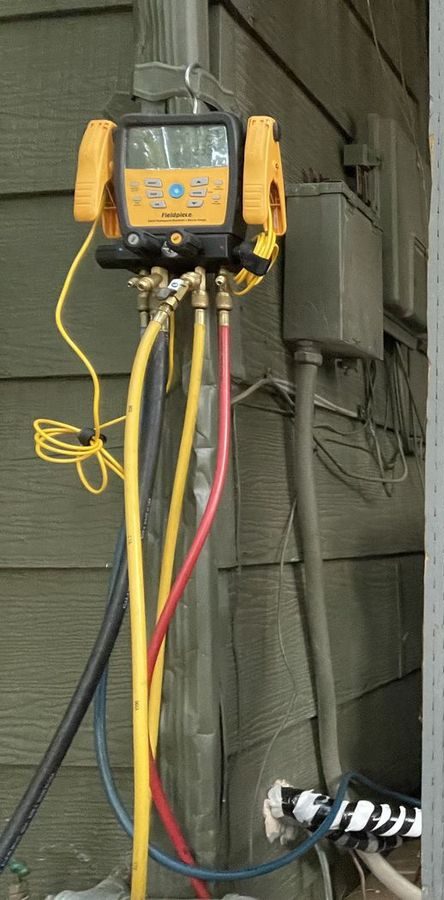
07 / 12
Digital gauges hang by the outdoor unit while the heat pump runs. Superheat and subcooling show whether the charge, a valve or the defrost board is the problem.
Read the service page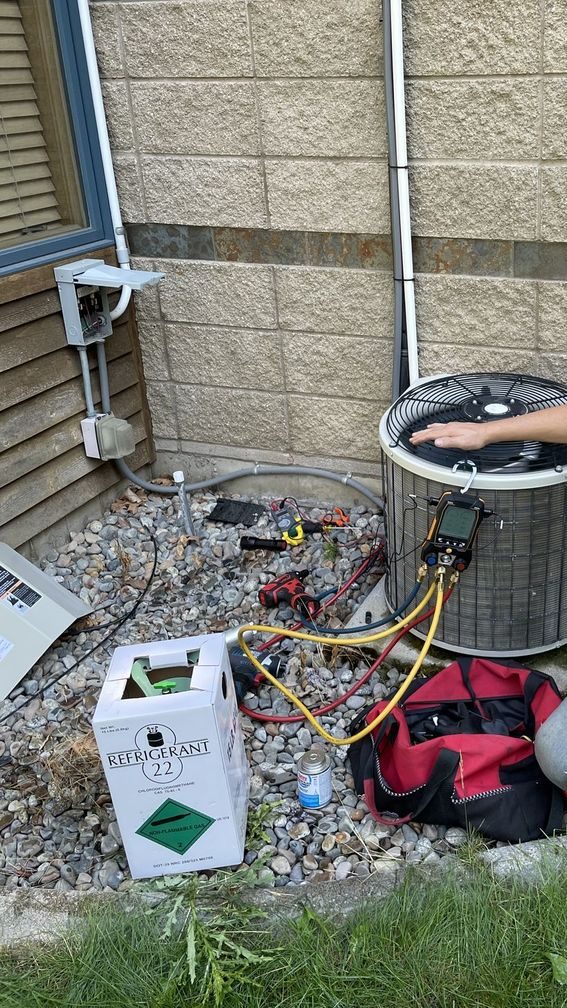
08 / 12
An older condenser under test with hoses on the service ports. The capacitor, contactor and fan motor get checked before anyone talks about refrigerant.
Read the service page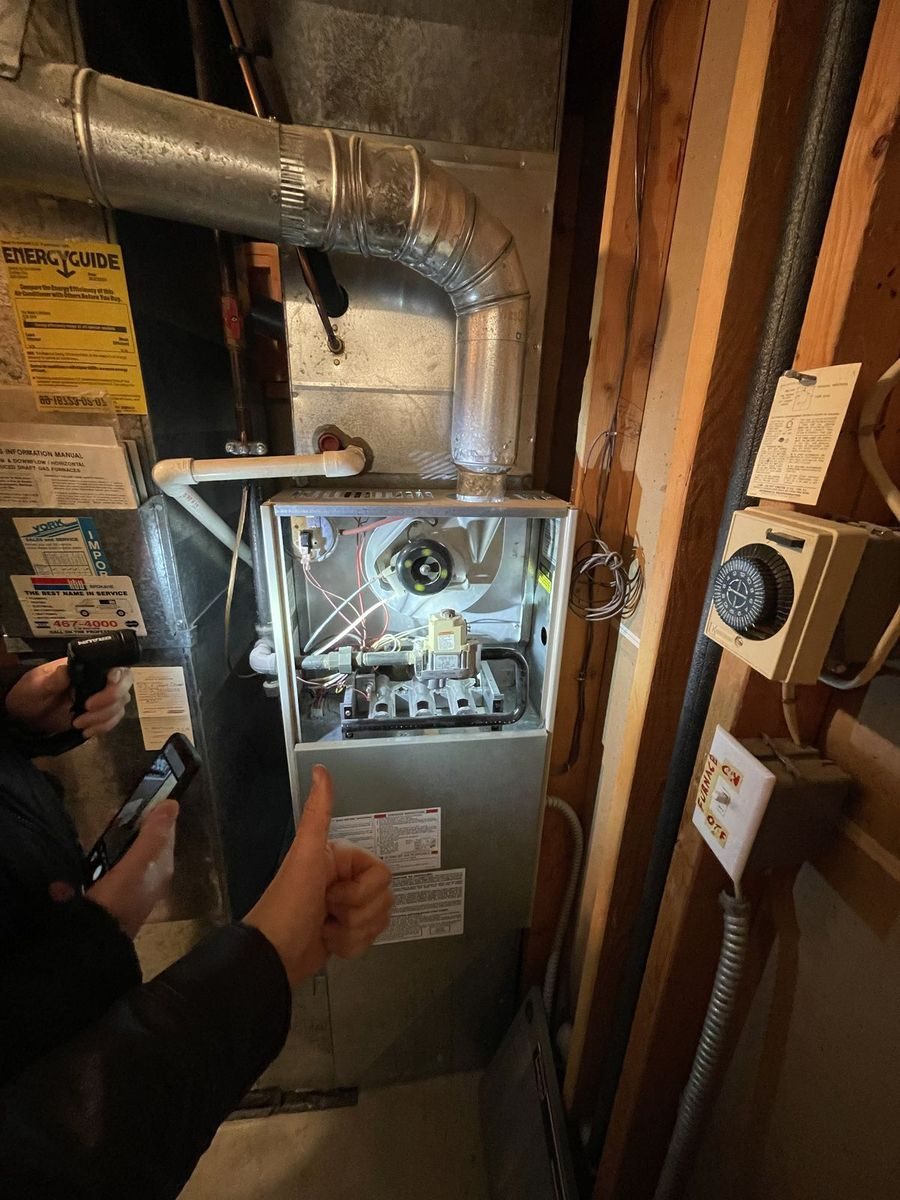
09 / 12
The burner compartment of a gas furnace, open. We follow the start-up order, inducer, pressure switch, igniter, flame sensor, until the step that fails.
Read the service page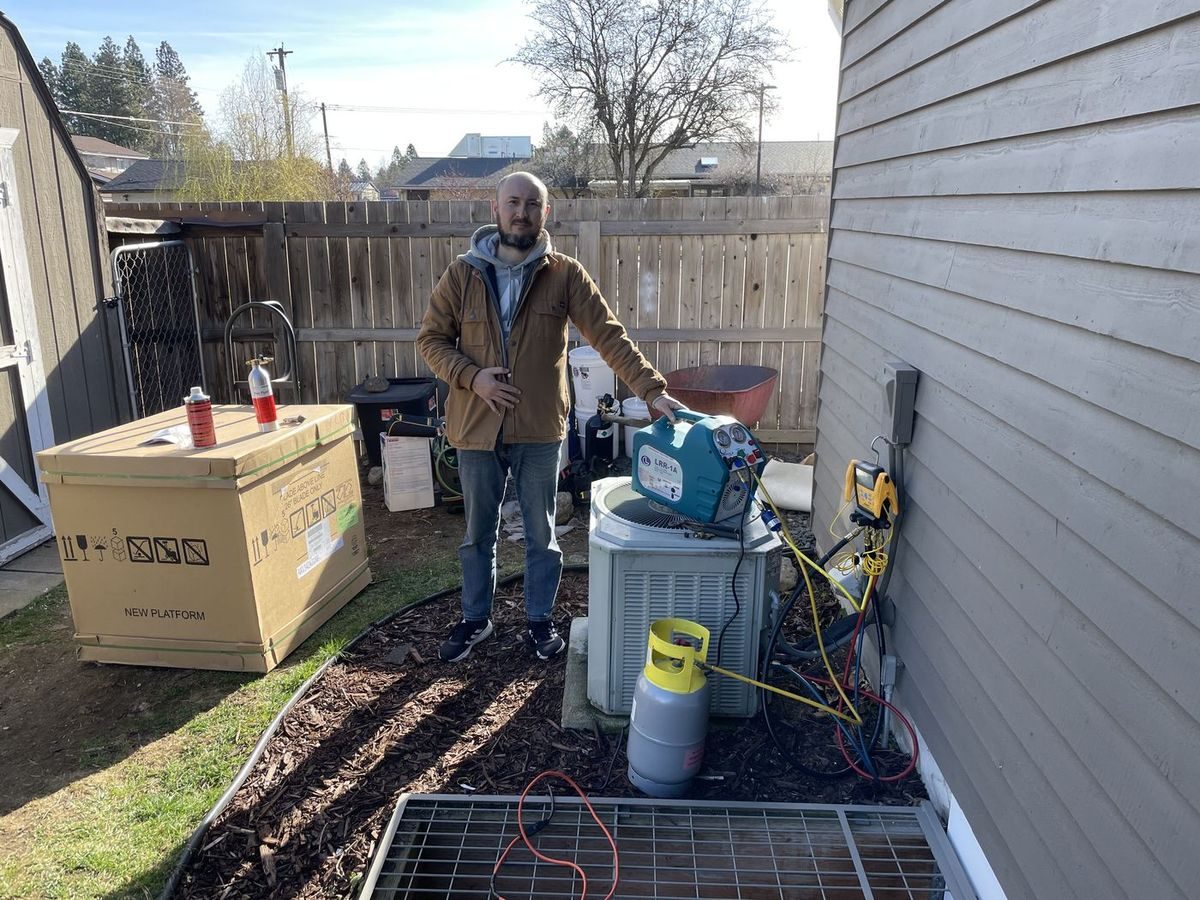
10 / 12
A recovery machine and cylinder beside an outdoor unit. On a replacement, the old refrigerant is pulled into the cylinder instead of the air.
Read the service page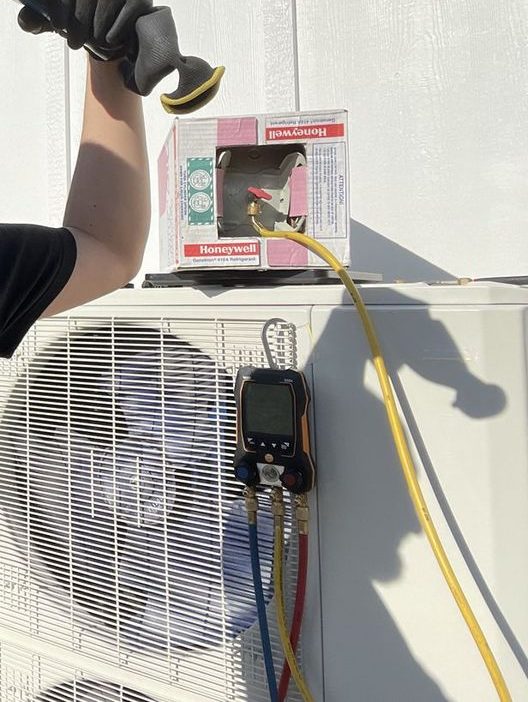
11 / 12
A ductless outdoor unit with a gauge set on it. Mini-splits get the same pressure and temperature readings as a central system, plus a look at the line-set insulation.
Read the service page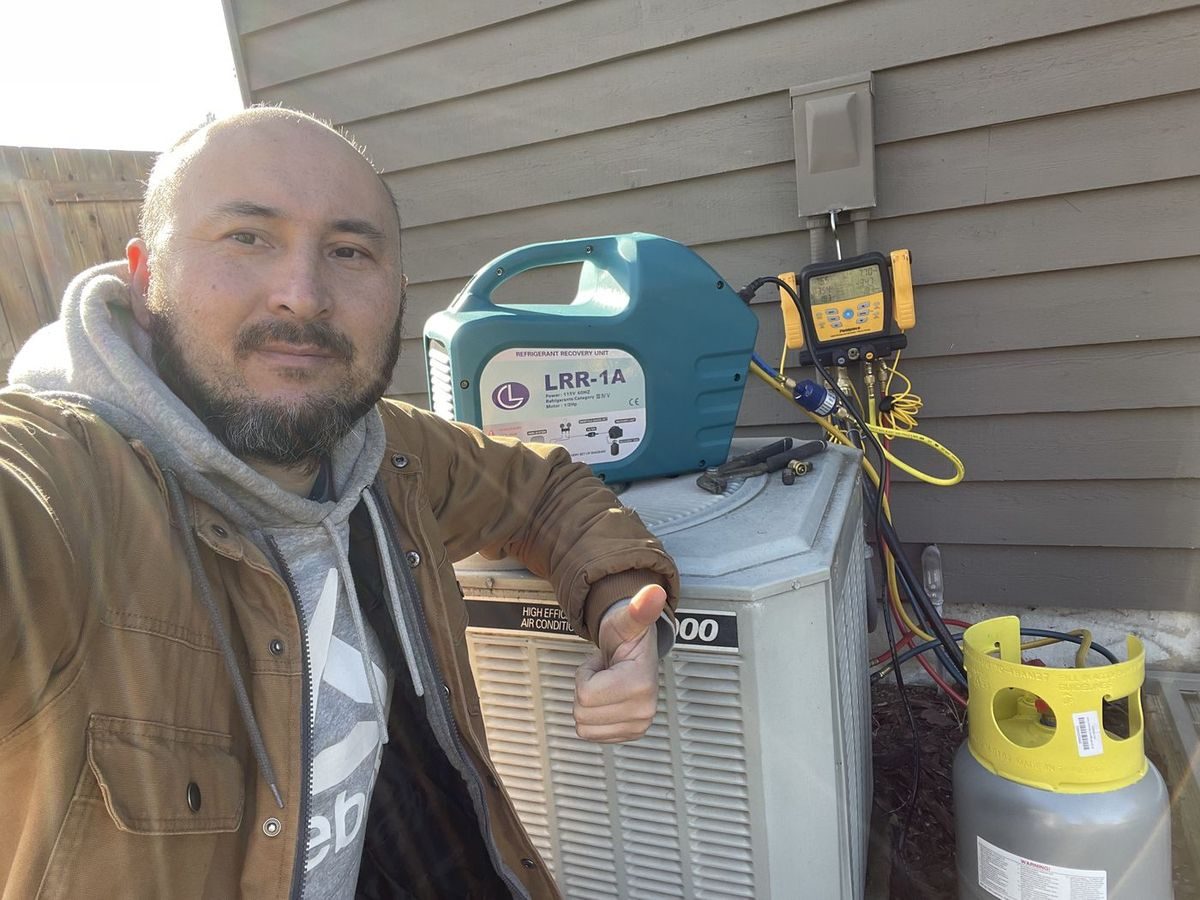
12 / 12
Gauges on a condenser during a seasonal visit. Spring visits wash the dust out of the coil; fall visits test defrost and heat strips before the fog weeks.
Read the service pageUsually, provided the refrigerator still holds temperature. An inlet valve, a filter head or a replacement ice maker is a contained job, and on most models a new ice maker drops into the same mounts and plugs into the same harness. Pause when the freezer itself runs warm from a sealed system leak, or when a door-mounted ice maker on an older French-door model keeps icing over its compartment; in those cases the ice maker only reveals a bigger refrigerator question. Our technician will say which case you are in and write a price for each path. Turning the ice maker off and buying bagged ice is a reasonable choice too, and we will say so. To book, set a day and an arrival window on our site or give us a call.
A partial fill is almost always the reason. The mold receives less water than it should because the filter is clogged, pressure at the refrigerator is low, or scale or sediment has narrowed the inlet valve. Start with a fresh filter. If the cubes stay small, our technician measures pressure and flow at the valve and checks the fill time programmed into the ice maker.
A fill tube freezes when water dribbles into it instead of arriving in one quick burst. A valve that seeps between fills, pressure too weak to push water through before it chills, or a freezer door letting warm, damp air reach the tube can each do it. Thawing the tube buys a day or two, but the lasting fix is the valve, the pressure or the seal behind the drip.
Yes, a little. Well water usually carries more sediment and minerals, so refrigerator filters load up faster and the inlet valve screen can clog long before the valve itself wears out. Replace the filter ahead of the printed interval, and treat slow dispensing as an early warning. If the house has a whole-home sediment filter, keeping it fresh protects the refrigerator too. Our technician can clean or replace a plugged valve.
Sometimes, but not reliably. On most models the control reads only the fresh-food compartment. A cold garage keeps that compartment chilly without help, the compressor rests, and freezer temperatures creep up. Some models offer a garage heater kit or are rated for a wider range of room temperatures. Our technician can look up your model's limits and tell you whether a kit, a setting or a move indoors makes sense.
Start with the freezer. When it stays close to 0°F and ice cream stays firm, the fault is likely in the water path or the ice maker module. If the freezer is soft, frosted on the back panel, or the fresh-food compartment has warmed as well, the ice maker is just the first thing you noticed. Then our technician looks at the evaporator fan, defrost heater and sealed system before touching the ice maker.
Our work starts at the refrigerator: the inlet valve, internal tubing, filter housing, fill tube and ice maker. We measure pressure at the inlet, so if the supply line, a saddle valve or a household shutoff is choking the flow, we show you the reading and explain what we found. Work on the home's water piping goes to a plumber, and the diagnostic fee is your only charge when the fault sits outside the appliance.
Talk to us
Use the online form to request a date and an arrival window, or phone us; calls are answered daily from 8 AM to 7 PM. The office calls back to confirm, and the technician checks in from the road.
Book a visit
One slip, filled top to bottom. The office phones to confirm the visit, and the technician calls again when on the way.
Every number below is a public state record. Look each one up on L&I Verify, or read what each license allows on our licenses page.
What our licenses cover