01 / 12
Oven & range repair
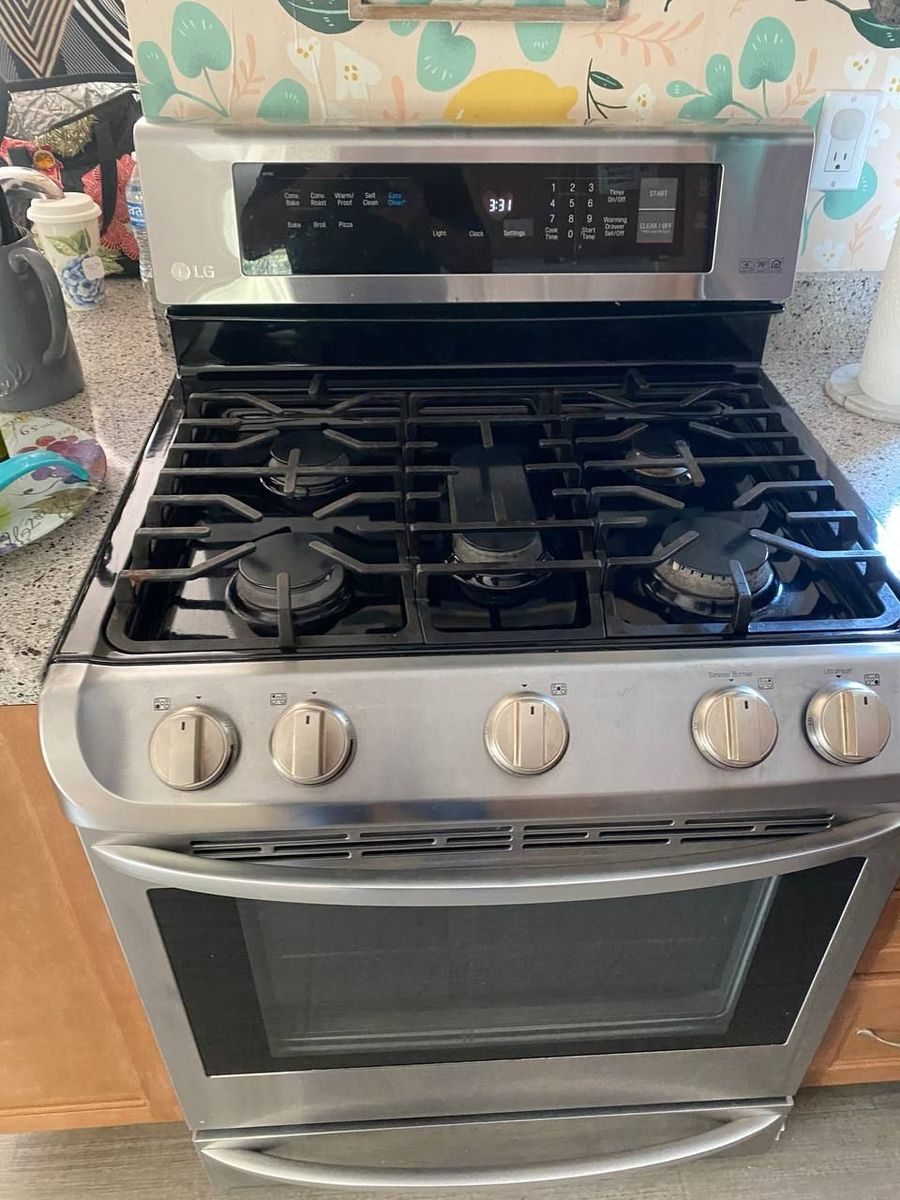
A five-burner gas range ready for testing. Burner igniters, the spark module and the bake igniter's amp draw are measured before a part is ordered.
Read the service pageBake, broil, burners and induction
A gas oven that stays cold, a bake element with a bubbled sheath, a cooktop that clicks with no flame, a door still latched hours after self-clean: each one has a part and a reading behind it. Our technicians measure first, explain what they found, and quote the job in writing.
Short answer
A gas smell outranks every repair: clear the house, and from the driveway let 911 or the gas utility know. Otherwise, nearly every oven or range breakdown comes down to a tired hot-surface igniter, a broil or bake element that has burned through, an oven probe reading wrong, a jammed door lock or a control board relay. We pin down which one, quote it on paper, and repair it once you sign off.
Most of the time a single part in the heating circuit has failed or weakened. In a gas oven, the hot-surface igniter must pass enough current to warm the bimetal strip inside the safety valve; an igniter that glows orange yet draws too little, often under roughly 3 amps on common designs, never lets the valve open, so the oven stays cold while the igniter looks healthy. On the electric side, a bottom element with a bubbled or cracked sheath reads open on a meter, and the cavity heats only from the broil element above, scorching tops and leaving bottoms pale.
When the oven heats but misses the setting, the temperature sensor is the next suspect. Plenty of GE, Whirlpool and Frigidaire ovens use a probe near 1,100 ohms at room temperature that climbs as the cavity warms; a reading far off that curve feeds the control a false number. If the probe checks out, attention turns to the board's relays. A relay welded shut can keep an element glowing after the oven is switched off, and that calls for shutting the range's breaker and booking a visit, not finishing the casserole.
We repair GE, Whirlpool, KitchenAid, Maytag, Frigidaire, LG, Samsung, Bosch, Electrolux and Kenmore models under our Washington electrical contractor license, specialty 07D Appliance Repair.
Safety comes first. With gas models, the technician first checks the air around the appliance for odor, runs a leak detector around the range's valve and regulator, and confirms the burners light cleanly before deeper testing. On electric and induction models, voltage is checked at the range's terminal block so a supply problem is not mistaken for a dead element. Then each suspect gets a number: igniter amps, element ohms, probe resistance, voltage leaving the board's relays. You see the readings, not just a verdict.
Igniters, bake elements, probes and switches usually come along in the truck. Control boards, lock assemblies and some induction parts get ordered, priced in writing up front, and fitted on a second trip scheduled the same way as the first. The diagnostic fee is stated by the office as you set up the visit; approve the work and the fee is tucked into its price; end things after the diagnosis and the fee alone is billed. Warranty terms are written right on the invoice.
Winter brings the heaviest oven use. When cold air settles into the Columbia Basin under an inversion, the Tri-Cities can sit in fog and freezing fog for days or weeks with highs stuck in the 30s. That stretch also covers holiday baking, when many people run self-clean first, and a cycle reaching temperatures near 900°F is exactly when a tired lock motor or thermal fuse gives out. Wipe heavy spills by hand ahead of a big meal, and if you do self-clean, leave a few days of margin. In summer, with 100°F afternoons possible from mid-May, ovens sit idle and the cooktop carries the load, so burner and induction complaints rise then.
Kitchens vary by neighborhood. Bigger homes in Southridge and Canyon Lakes tend toward double wall ovens, gas cooktops and induction, all with electronic controls that reward careful testing. Older Kennewick, from Hansen Park to the blocks off Clearwater Avenue and the grid close to downtown, still has plenty of coil-top electric ranges, where infinite switches and scorched coil receptacles are the usual failures. Out in Horn Rapids, open, windy ground lets fine dust find its way into induction and convection cooling fans. And for households in East Pasco near Lewis Street, Sylvester and Court, the office can answer in Spanish when asked.
One photo per tab from our service calls. Tap a tab, or let the file turn on its own.
01 / 12
A five-burner gas range ready for testing. Burner igniters, the spark module and the bake igniter's amp draw are measured before a part is ordered.
Read the service page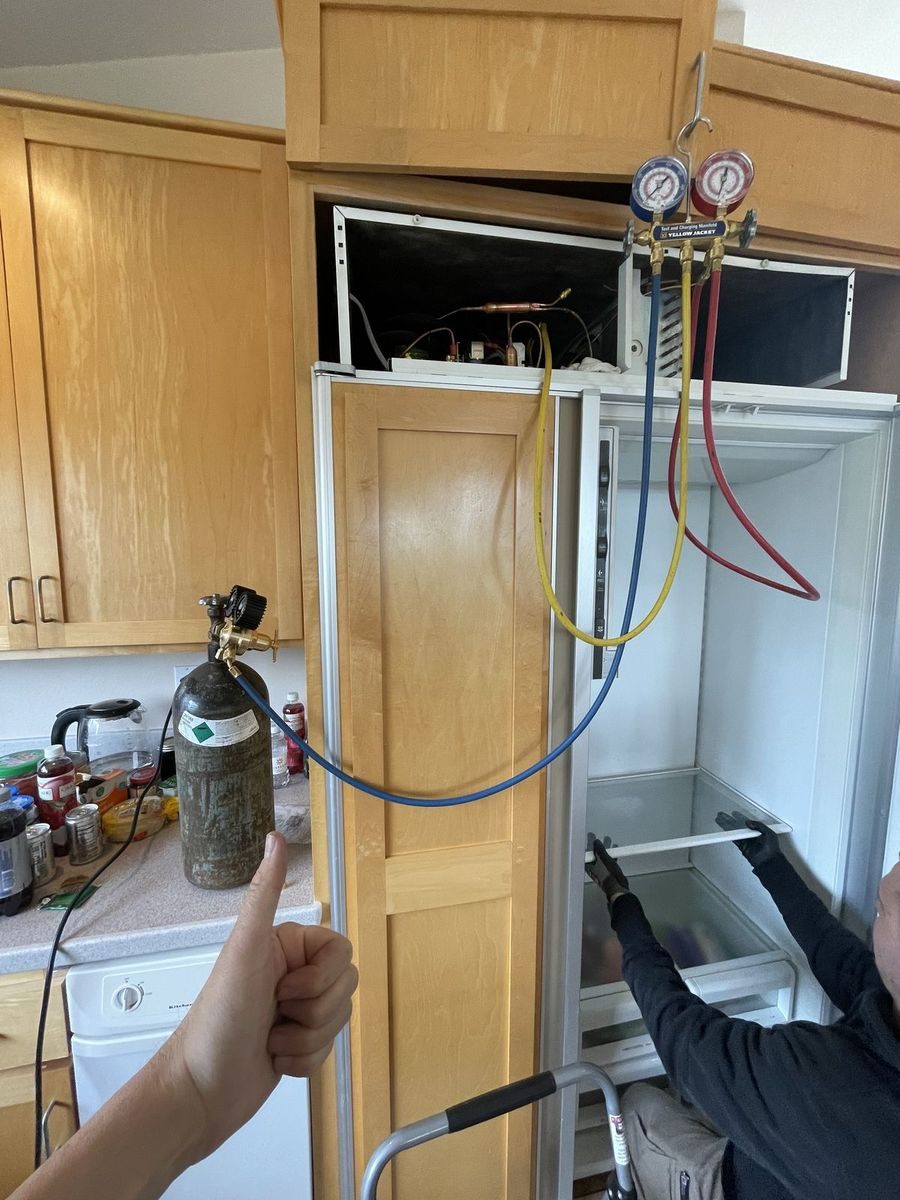
02 / 12
Gauges connected to a built-in refrigerator's sealed system. Leak searches, brazing and recharges happen in the kitchen, so the fridge stays where it is.
Read the service page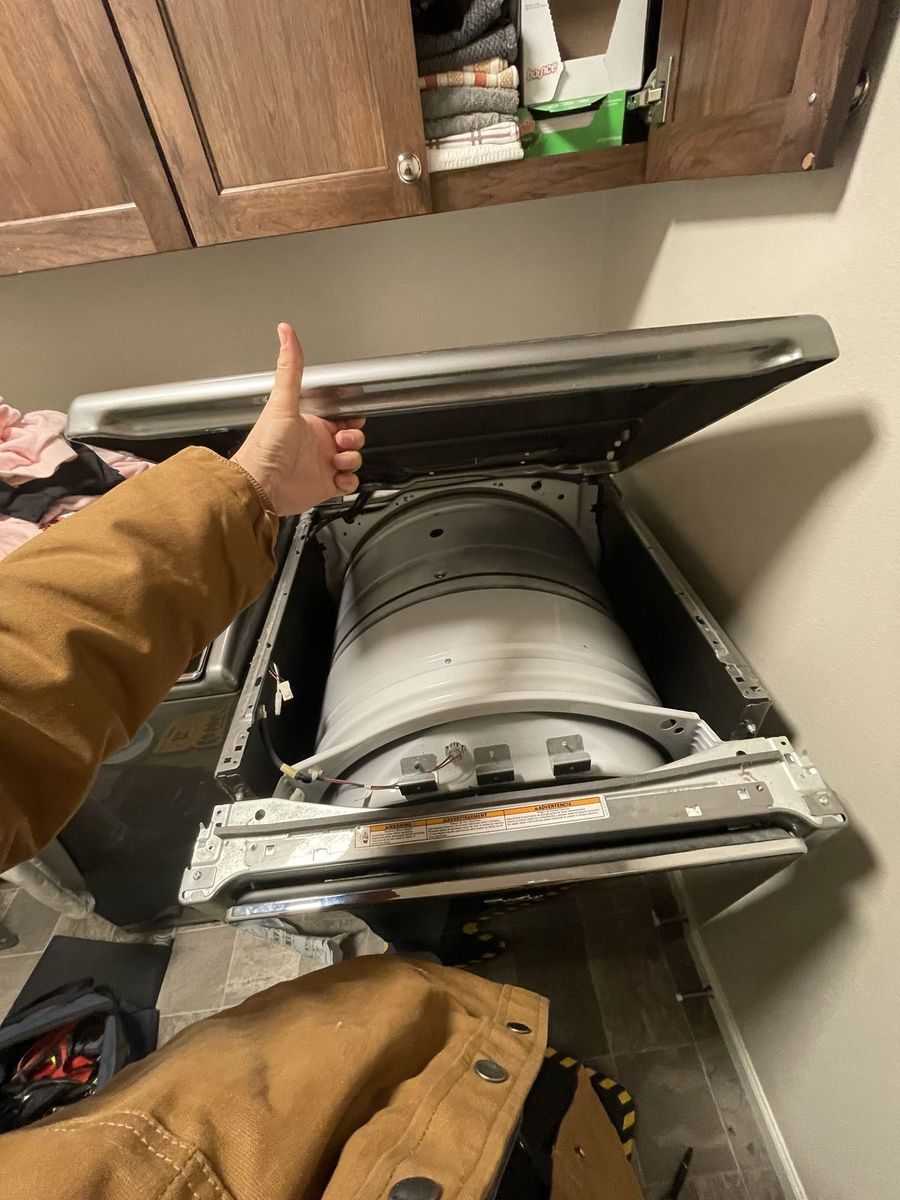
03 / 12
A top-load washer with the top panel raised. Lid switch, drive coupler and drain pump are all within reach once the top comes up.
Read the service page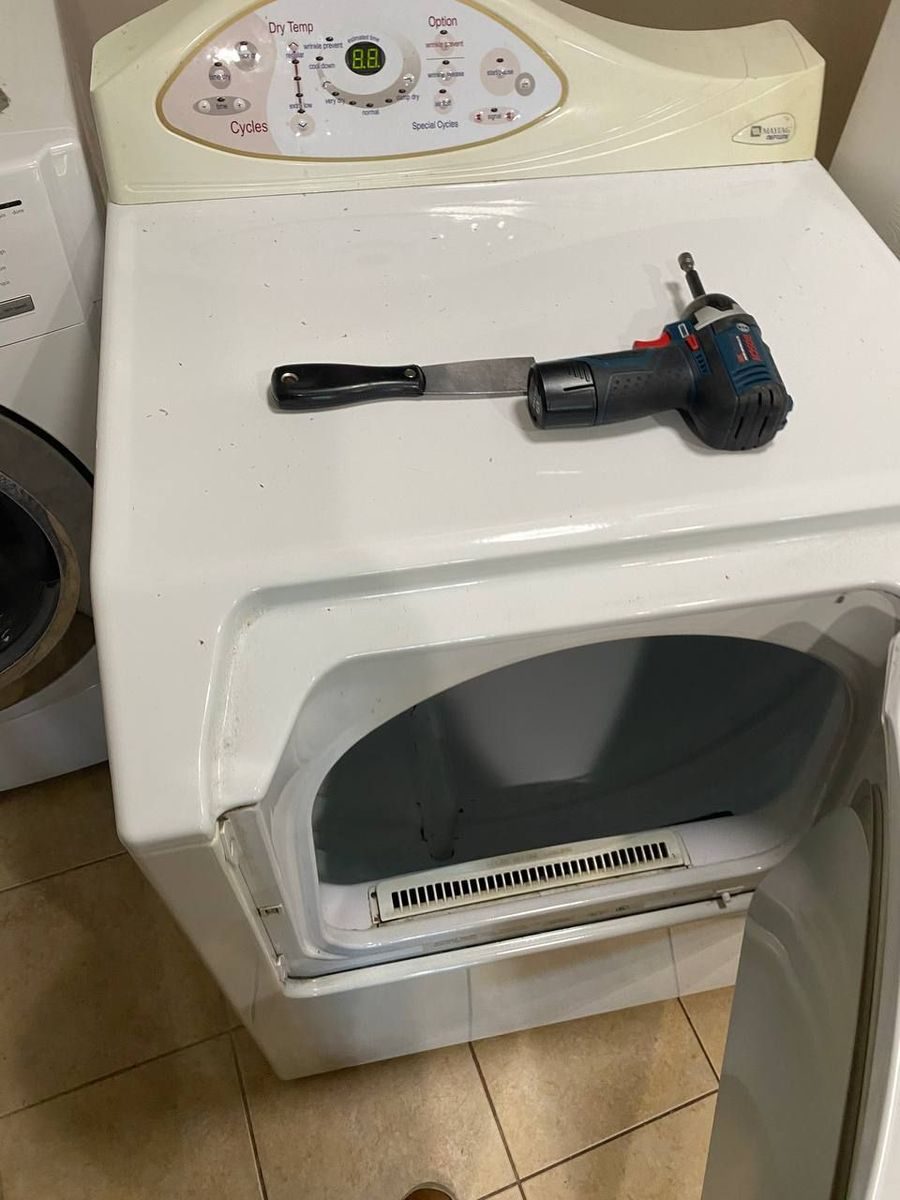
04 / 12
An electric dryer opened up in a laundry room. The thermal fuse, the heating element and the vent run behind the machine get tested together.
Read the service page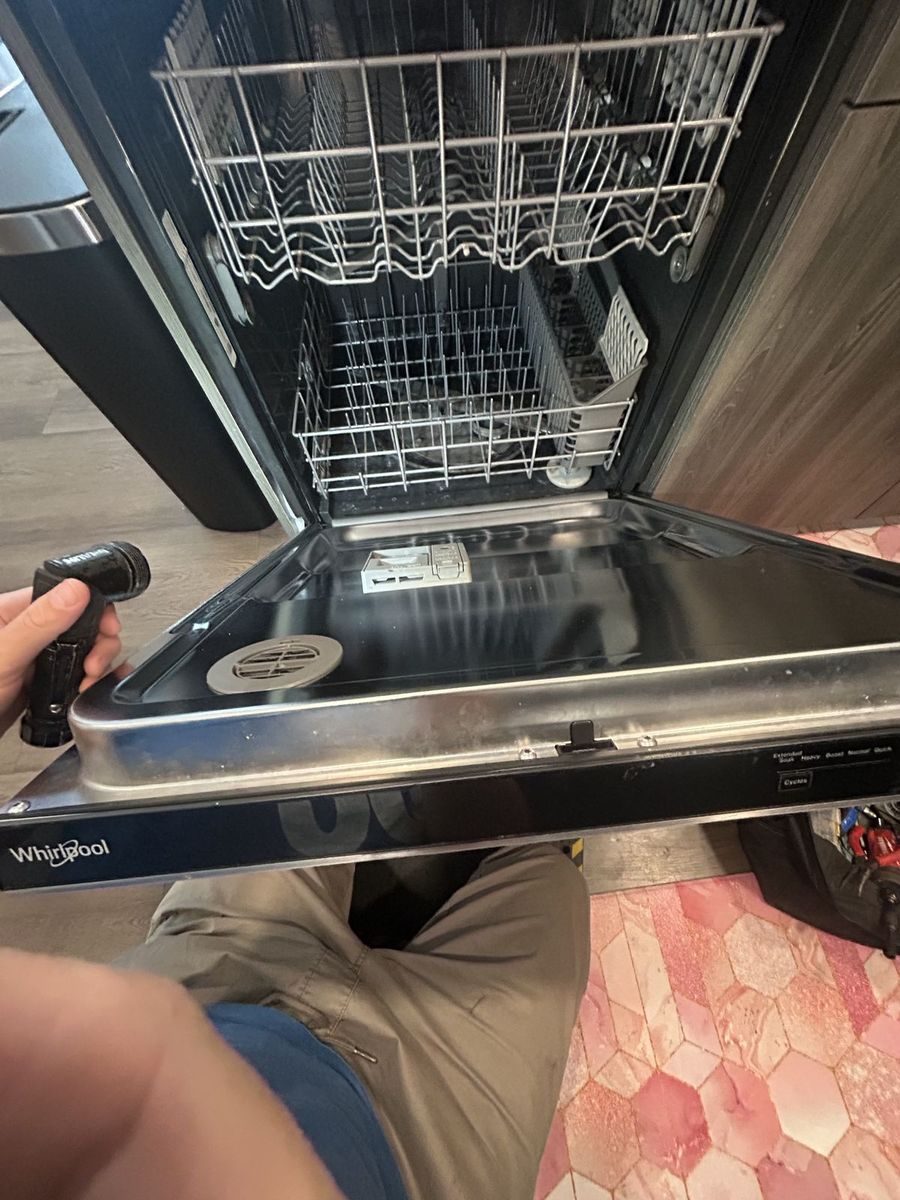
05 / 12
Door open and racks out on a dishwasher. A puddle left behind after the last rinse sends us to the filter screen, the pump and the hose route under the sink, in that order.
Read the service page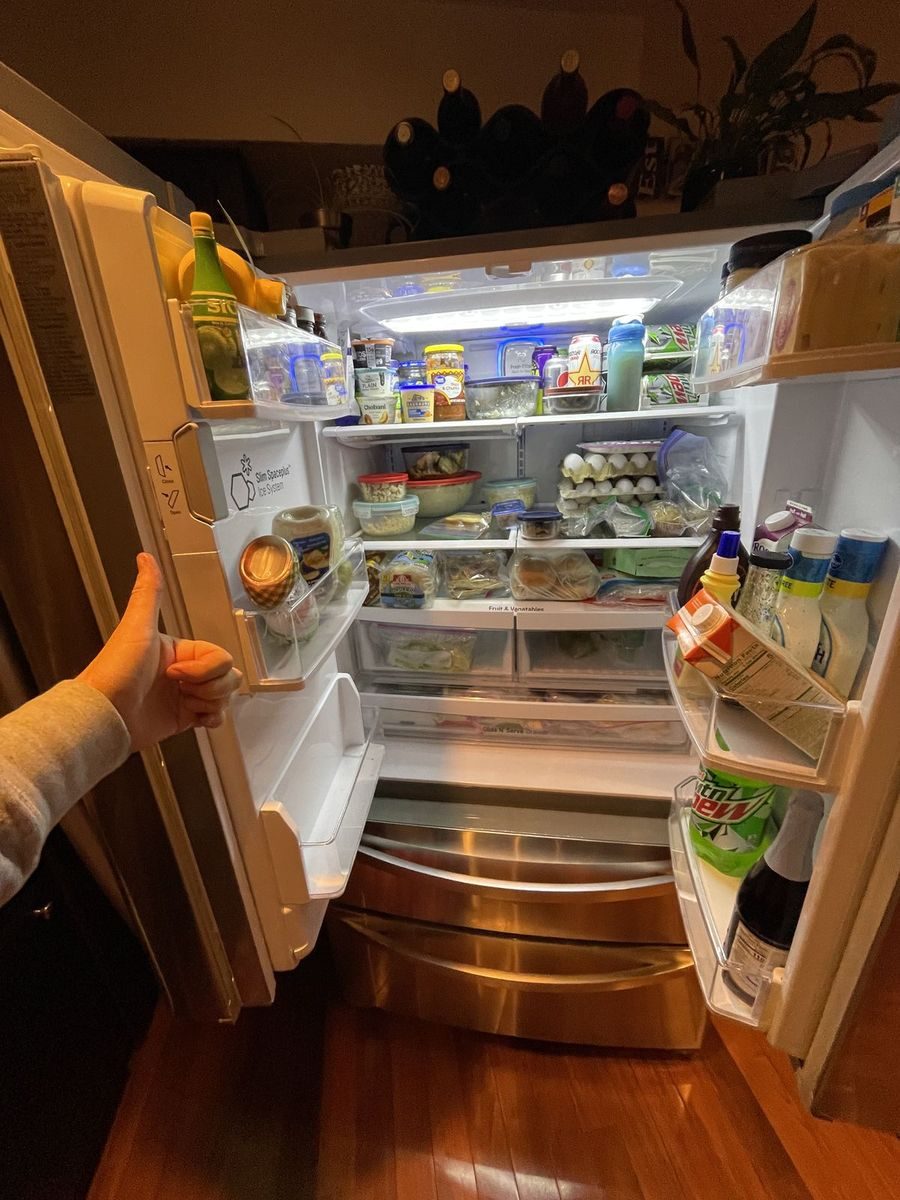
06 / 12
A French-door refrigerator open for diagnosis. Slow ice starts with the water: the inlet valve, the filter and a fill tube that can freeze shut.
Read the service page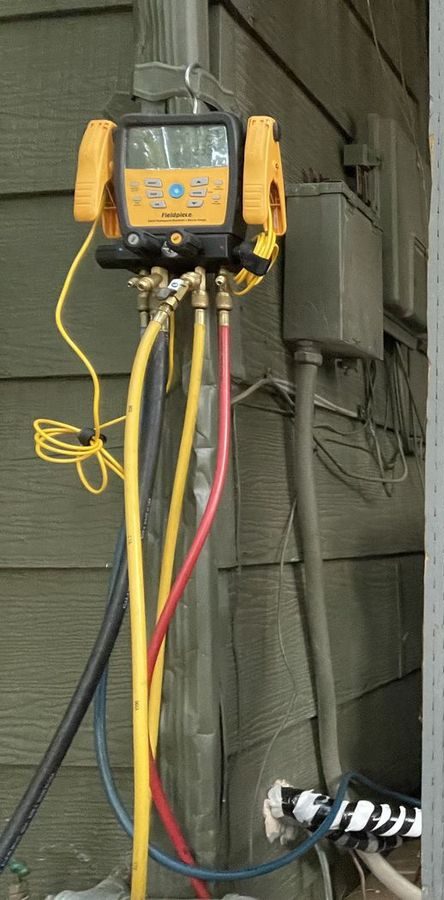
07 / 12
Digital gauges hang by the outdoor unit while the heat pump runs. Superheat and subcooling show whether the charge, a valve or the defrost board is the problem.
Read the service page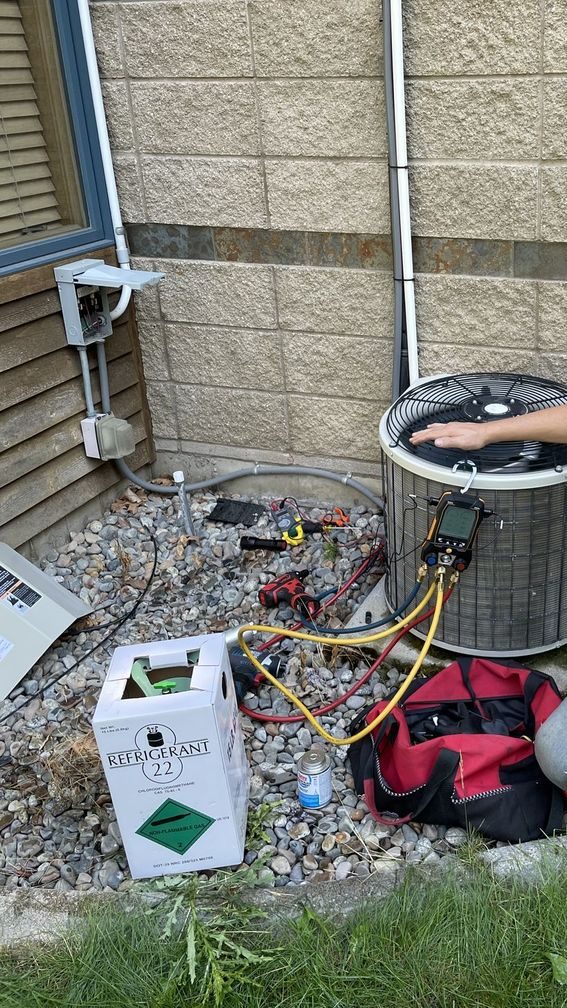
08 / 12
An older condenser under test with hoses on the service ports. The capacitor, contactor and fan motor get checked before anyone talks about refrigerant.
Read the service page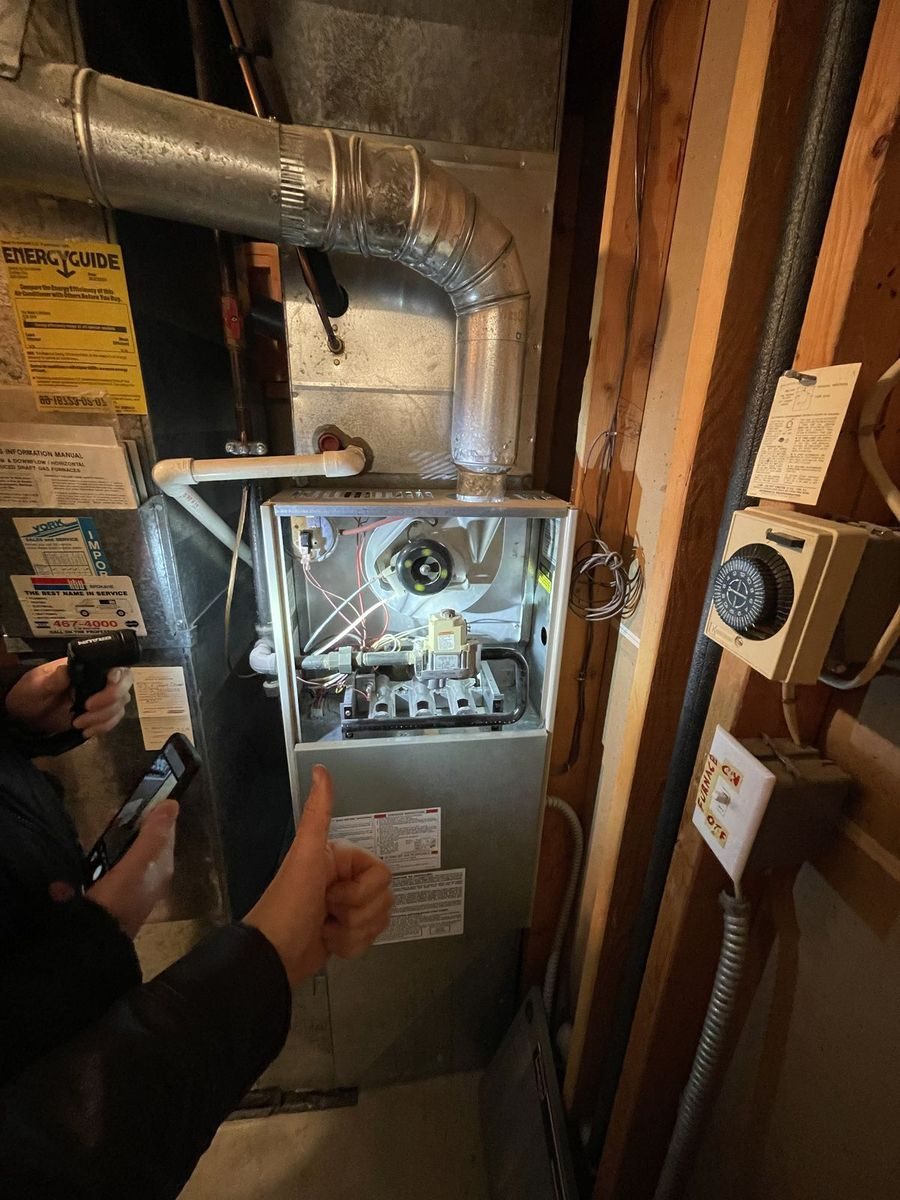
09 / 12
The burner compartment of a gas furnace, open. We follow the start-up order, inducer, pressure switch, igniter, flame sensor, until the step that fails.
Read the service page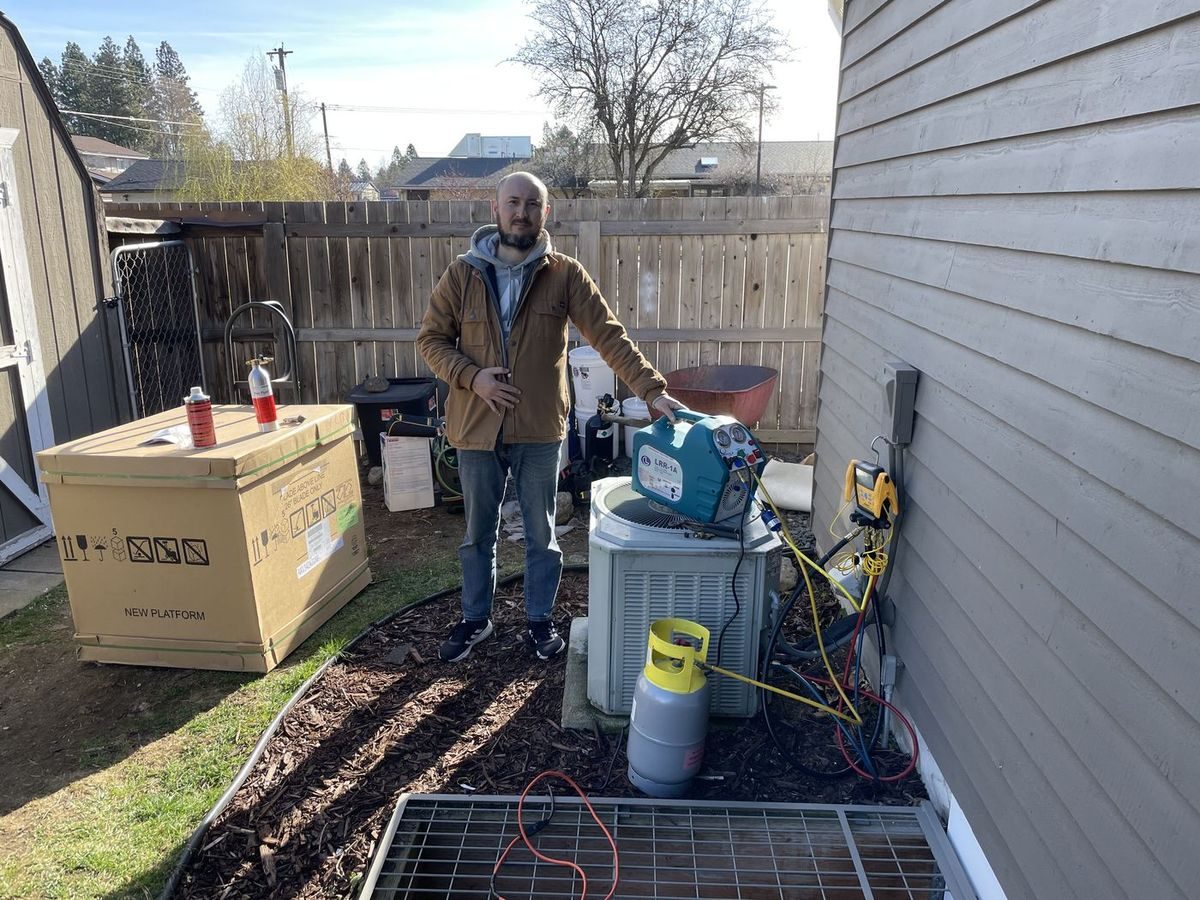
10 / 12
A recovery machine and cylinder beside an outdoor unit. On a replacement, the old refrigerant is pulled into the cylinder instead of the air.
Read the service page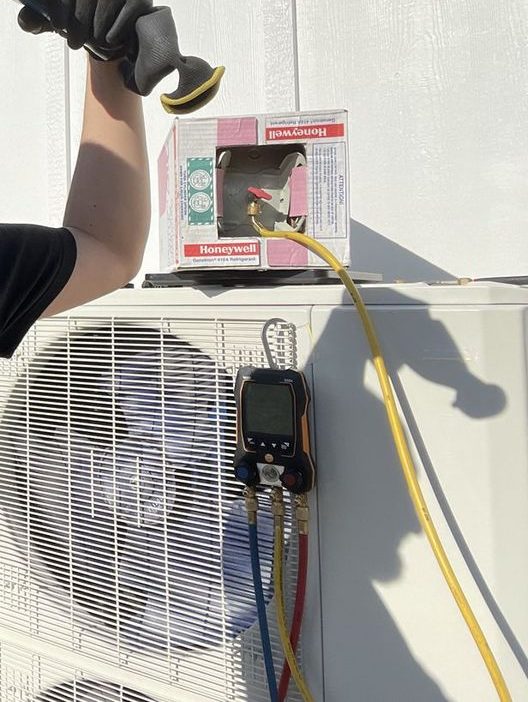
11 / 12
A ductless outdoor unit with a gauge set on it. Mini-splits get the same pressure and temperature readings as a central system, plus a look at the line-set insulation.
Read the service page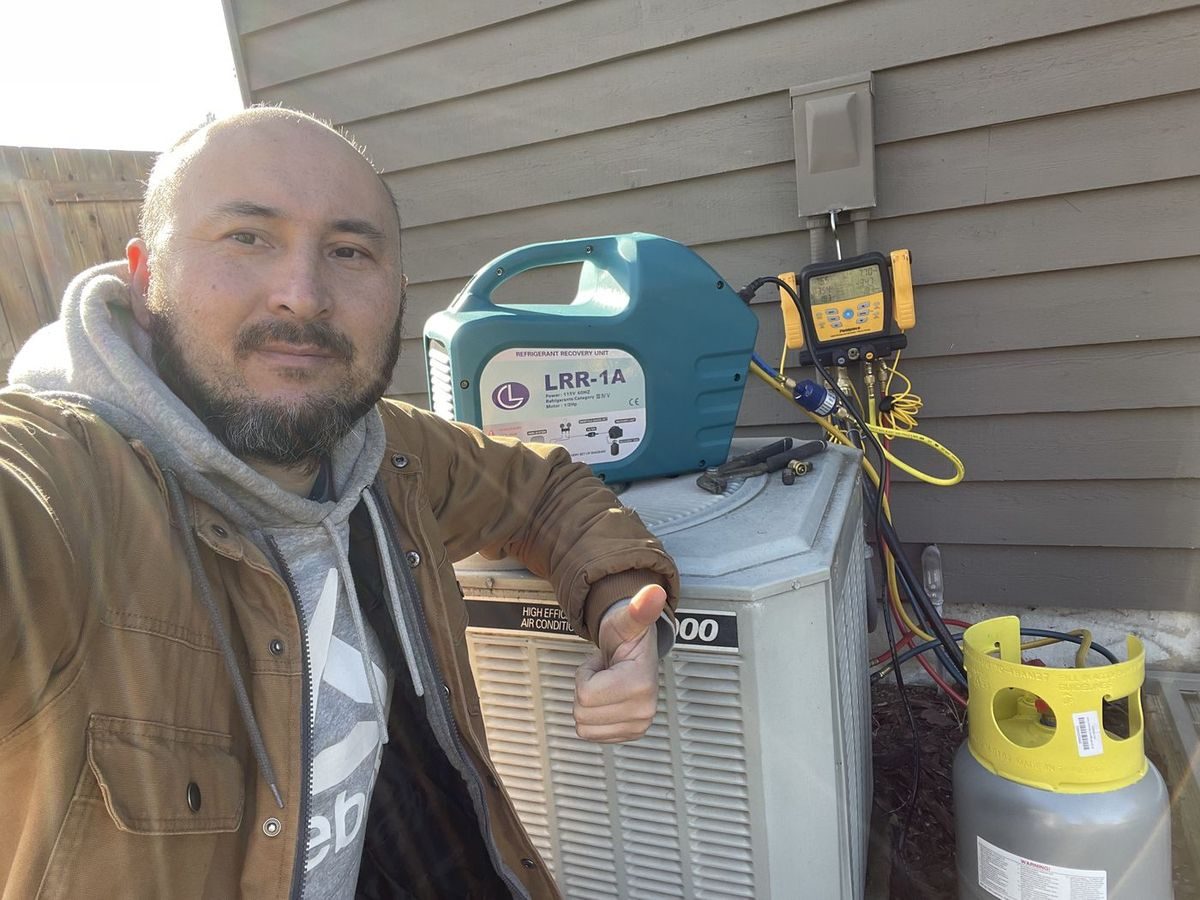
12 / 12
Gauges on a condenser during a seasonal visit. Spring visits wash the dust out of the coil; fall visits test defrost and heat strips before the fog weeks.
Read the service pageRepair nearly always pays for igniters, elements, probes, burner switches and door locks, since each is a self-contained part and the range around it is usually sound. Tougher decisions come with a glass top that has cracked across a zone, an oven floor on an aging gas range that has rusted through, or a control board and touchpad that have failed together on a model with dwindling parts supply. In those cases our technician writes out the repair price, explains what it buys you, and leaves the decision in your hands. If the range is in its first year, check the maker's coverage before paying for a part the manufacturer would replace. When you are ready, choose a date and an arrival window online, or phone us and the office will confirm.
Everyone out first; standing in the yard, dial 911 or reach the gas utility. Hold off on lighting anything, operating switches or appliances, or hunting for the leak yourself. A brief whiff the instant a burner ignites can happen; an odor that hangs in the room is a different story. Once the utility clears the house for use again, our technicians can work on the range's valves, burners and igniters.
Many ovens keep the latch engaged until the cavity has cooled well down from cleaning heat, and that cooldown is slow. If the door is still latched long after the oven feels cool, suspect the lock motor, its position switch or the control board. Killing power at the range's breaker briefly, then restoring it, will sometimes clear the lock. If not, our technician frees the latch and tests each part.
Not for long. An oven running far past its setting usually has a probe out of range or a control relay sticking closed, and a stuck relay can keep an element heating after the oven is turned off. If the oven heats with the controls off, switch off its breaker and book a visit. A small, steady offset is a different matter and can often be corrected in the oven's settings menu.
Yes. Induction faults usually come from pan detection, a clogged or failed cooling fan, a temperature sensor under the glass, or a power board. Our technician checks with a known magnetic pan, reads any stored fault codes, and tests the fan and boards. A cracked glass top is a bigger repair, because the glass is often sold as a full assembly, and we price it in writing before ordering anything.
On most GE ovens, F7 points to a stuck or shorted key on the touchpad or its ribbon cable. On many LG ranges, F9 is a lock fault: the control never saw the latch land where it should, often right after self-clean. Both codes narrow the search without proving which part failed, so our technician tests the keypad, lock motor and control before quoting a repair.
No. Our work is repairing ranges, ovens and cooktops under the 07D Appliance Repair specialty, not connecting new appliances or working on gas lines or household circuits. If our tests show a range is not getting gas or power at its connection, we show you the readings and explain which trade handles that part. Only the diagnostic fee would be billed.
Talk to us
Grab a date and an arrival window on our booking page, or call between 8 AM and 7 PM on any day. The office rings back to lock it in, and your technician calls once on the road.
Book a visit
One slip, filled top to bottom. The office phones to confirm the visit, and the technician calls again when on the way.
Every number below is a public state record. Look each one up on L&I Verify, or read what each license allows on our licenses page.
What our licenses cover