01 / 12
Heat pump repair
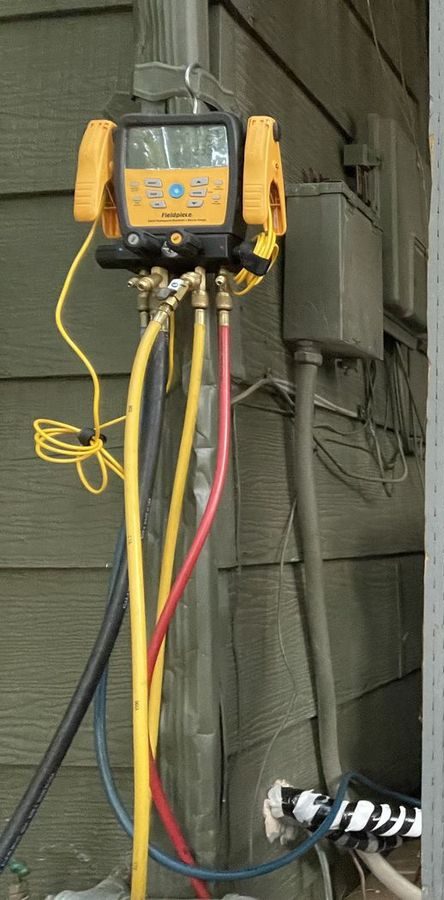
Digital gauges hang by the outdoor unit while the heat pump runs. Superheat and subcooling show whether the charge, a valve or the defrost board is the problem.
Read the service page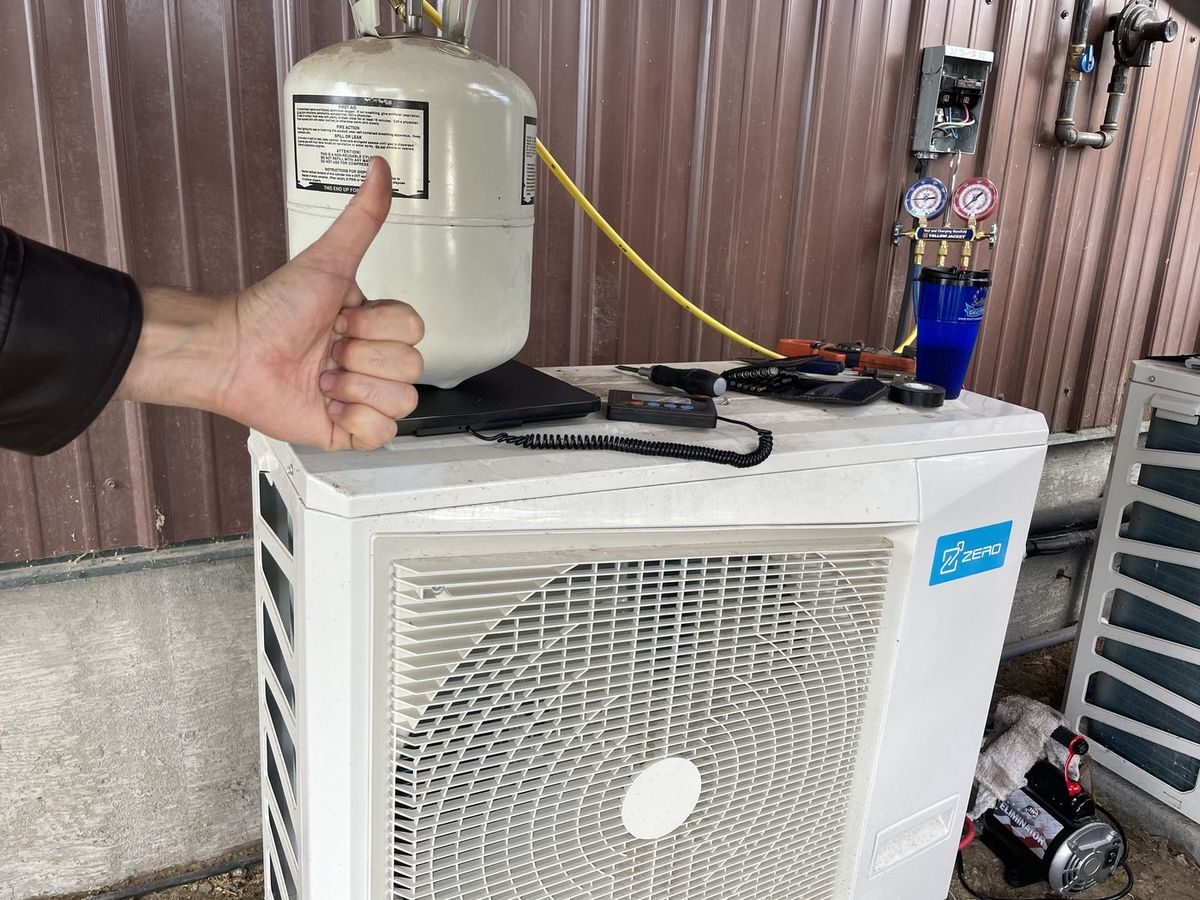
Heat pump repair in Kennewick, Pasco, Richland and nearby
In damp, freezing Tri-Cities weather a heat pump does things that look like trouble and aren't. Our technicians tell normal defrost apart from a stuck reversing valve, a dead defrost sensor or a slow leak, and the repair price reaches you on paper ahead of any work.
Short answer
Most heat pumps that blow cool air in winter are either in a defrost cycle, which ends within minutes, or have a fault in the parts that run defrost or switch modes: the defrost board and sensor, the reversing valve, a capacitor or contactor, or the refrigerant charge. We test each one, write the price down, and start only after you approve.
Usually because it is working as designed. A heat pump moves heat out of the outdoor air instead of burning fuel, so supply air often lands in the 90s, near skin temperature, and moving air that warm still feels cool on a hand. In damp cold it also flips into short defrost cycles, and for those minutes the registers run chilly.
Cool air becomes a problem when it lasts. Registers that stay cool past ten or fifteen minutes, an AUX light glowing hour after hour in mild weather, or an outdoor coil turned into a block of ice all mean a part has quit. The suspects are few: the defrost board and its coil sensor, the reversing valve and its solenoid, the run capacitor and contactor, and the refrigerant charge.
Larch holds a state electrical contractor license carrying the 06A HVAC/Refrigeration specialty, and each technician carries the EPA 608 Universal credential that opening a refrigerant circuit requires. We repair Daikin, Trane, Goodman, Lennox, Fujitsu, Carrier, Mitsubishi and Rheem heat pumps, among others. When cool air outlasts a defrost, that is the moment to book a visit.
A visit starts at the thermostat and ends at the outdoor coil. The technician confirms the mode, the O/B setting and backup heat staging, then compares return and supply air temperatures. Outside, they test power at the unit, read the run capacitor in microfarads against its label, inspect the contactor points, and jump the board's test pins to start defrost on command, watching the valve shift, the fan pause and the coil clear. Gauges go on only if the readings point to charge.
You read a written price and say yes before any part is replaced. Our diagnostic visit is billed as a separate fee, and the office quotes it while you schedule. Approving the work merges the fee into its price; saying no means that fee settles the visit. Capacitors, contactors and fan motors usually ride along on the truck, and a defrost board or reversing valve for your model is quoted before it is ordered. Warranty terms are written on the invoice.
Freezing fog makes a heat pump defrost far more often, and that alone is normal. During winter inversions, cold air pools in the Columbia Basin under warmer air above, and the region can sit for days or weeks in low cloud and fog with highs stuck in the 30s while western Washington stays milder. Air hovering near freezing and close to saturation frosts a coil fast. What needs a call is a coil that stays iced between cycles, ice climbing from the base pan, or a fan blade striking ice.
Wind and dust work on the coil the rest of the year. The Tri-Cities is the windiest of the medium and large Pacific Northwest metros, March, April and June are its gustiest months, and most of that wind blows from the west. Dust and sand pack the fins on the windward side, and tumbleweeds wedge against the cabinet. A gritty coil moves less air, frosts sooner in winter and runs hotter in summer. Units in open spots like Horn Rapids collect it fastest, and small heat pumps serving detached shops on West Richland acreage can go months unchecked. If a coil looks matted from a step back, mention it when you book.
One photo per tab from our service calls. Tap a tab, or let the file turn on its own.
01 / 12
Digital gauges hang by the outdoor unit while the heat pump runs. Superheat and subcooling show whether the charge, a valve or the defrost board is the problem.
Read the service page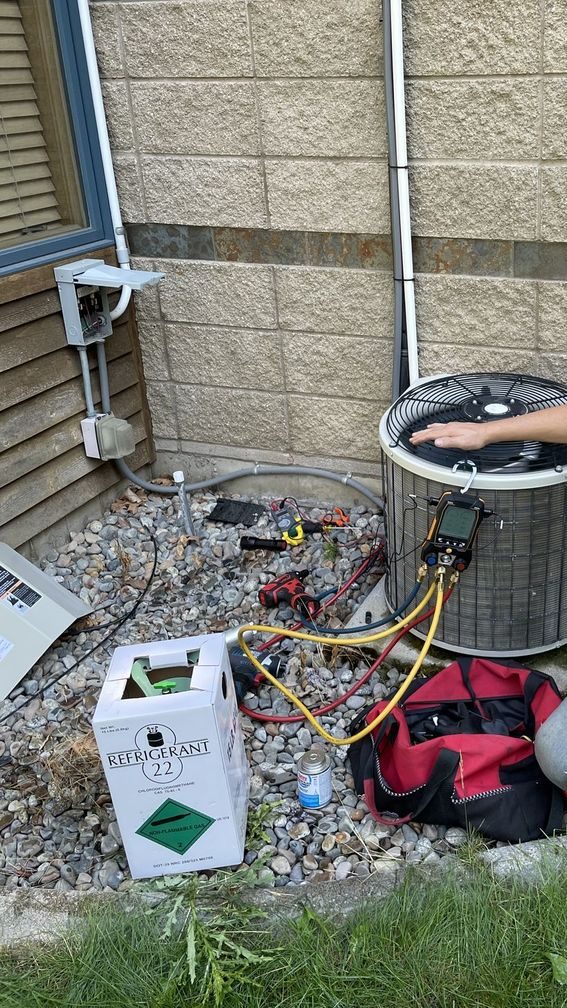
02 / 12
An older condenser under test with hoses on the service ports. The capacitor, contactor and fan motor get checked before anyone talks about refrigerant.
Read the service page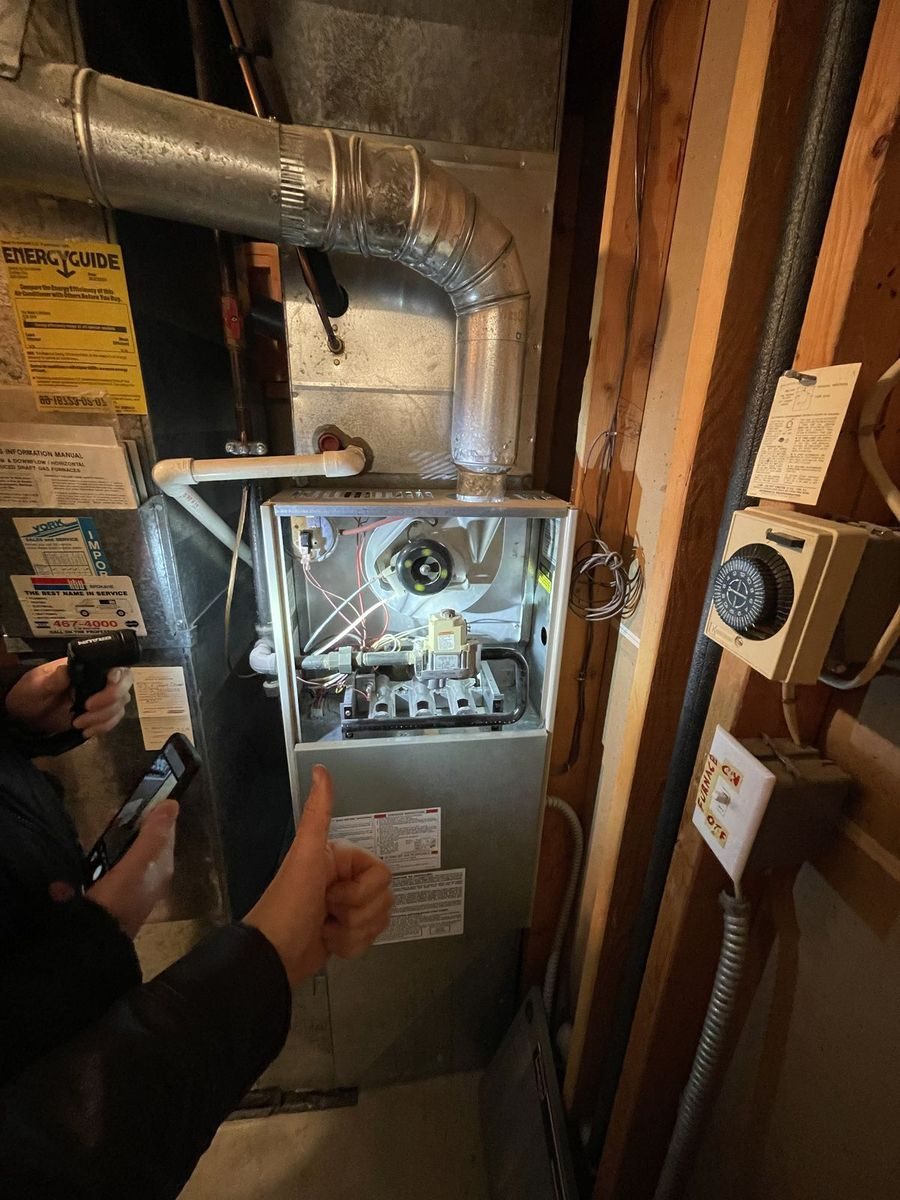
03 / 12
The burner compartment of a gas furnace, open. We follow the start-up order, inducer, pressure switch, igniter, flame sensor, until the step that fails.
Read the service page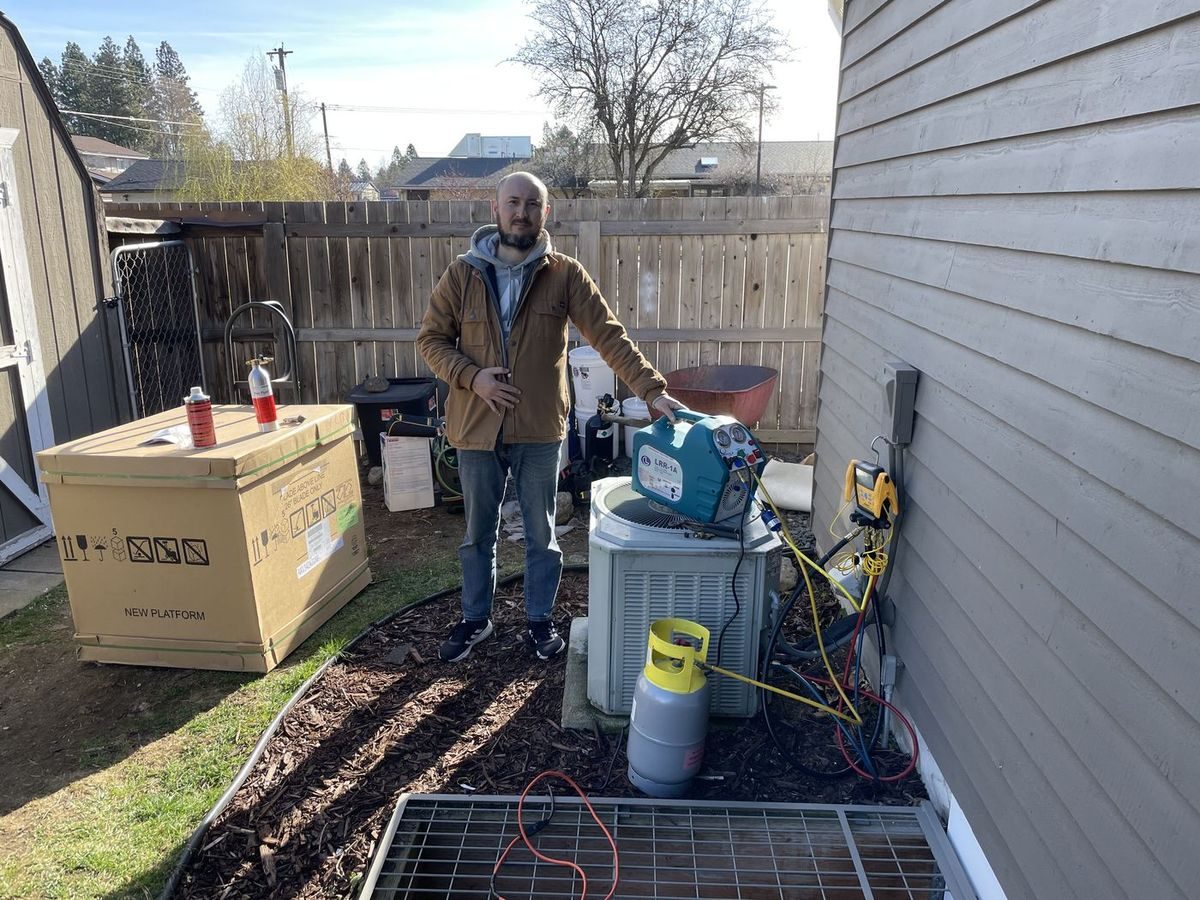
04 / 12
A recovery machine and cylinder beside an outdoor unit. On a replacement, the old refrigerant is pulled into the cylinder instead of the air.
Read the service page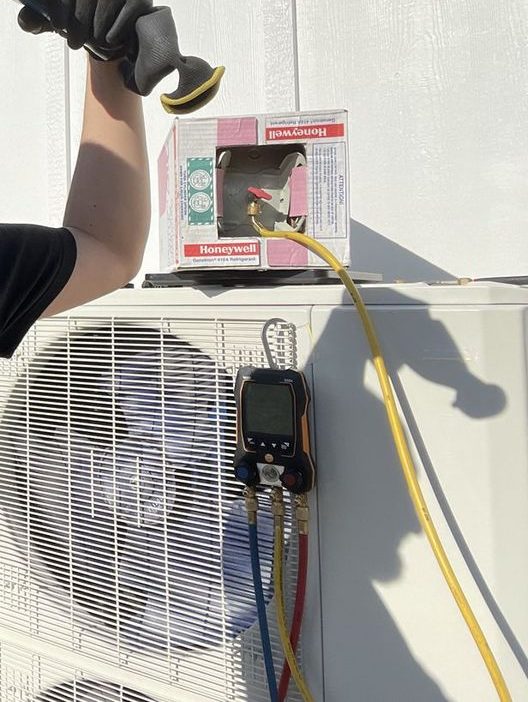
05 / 12
A ductless outdoor unit with a gauge set on it. Mini-splits get the same pressure and temperature readings as a central system, plus a look at the line-set insulation.
Read the service page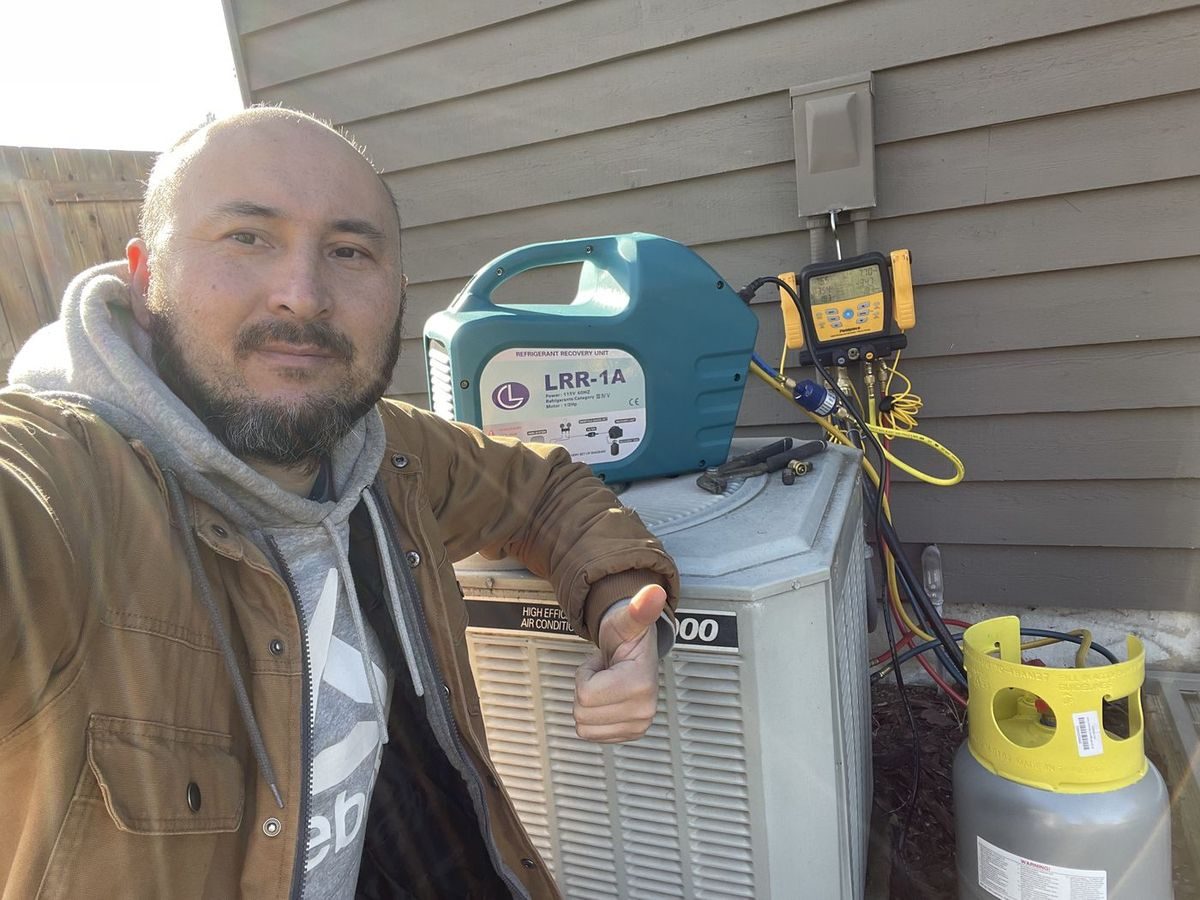
06 / 12
Gauges on a condenser during a seasonal visit. Spring visits wash the dust out of the coil; fall visits test defrost and heat strips before the fog weeks.
Read the service page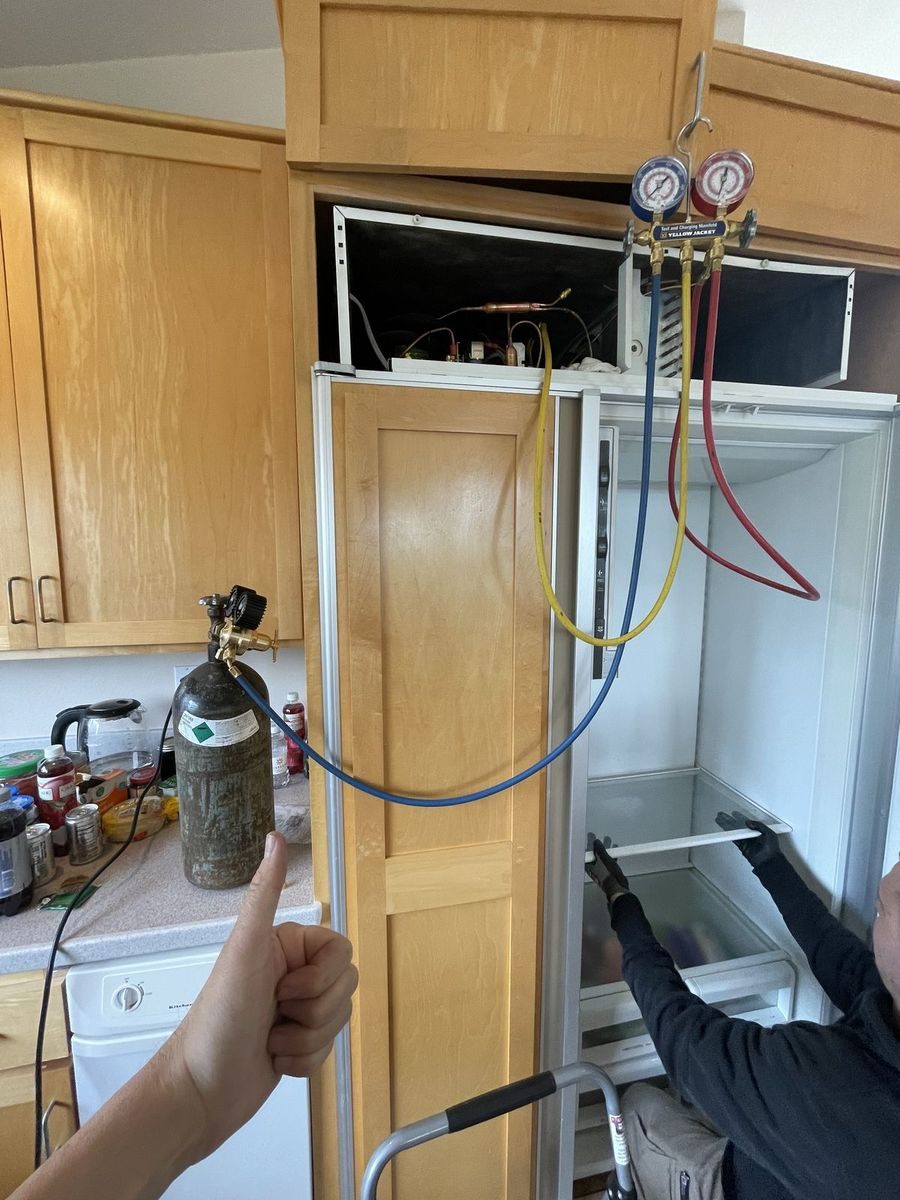
07 / 12
Gauges connected to a built-in refrigerator's sealed system. Leak searches, brazing and recharges happen in the kitchen, so the fridge stays where it is.
Read the service page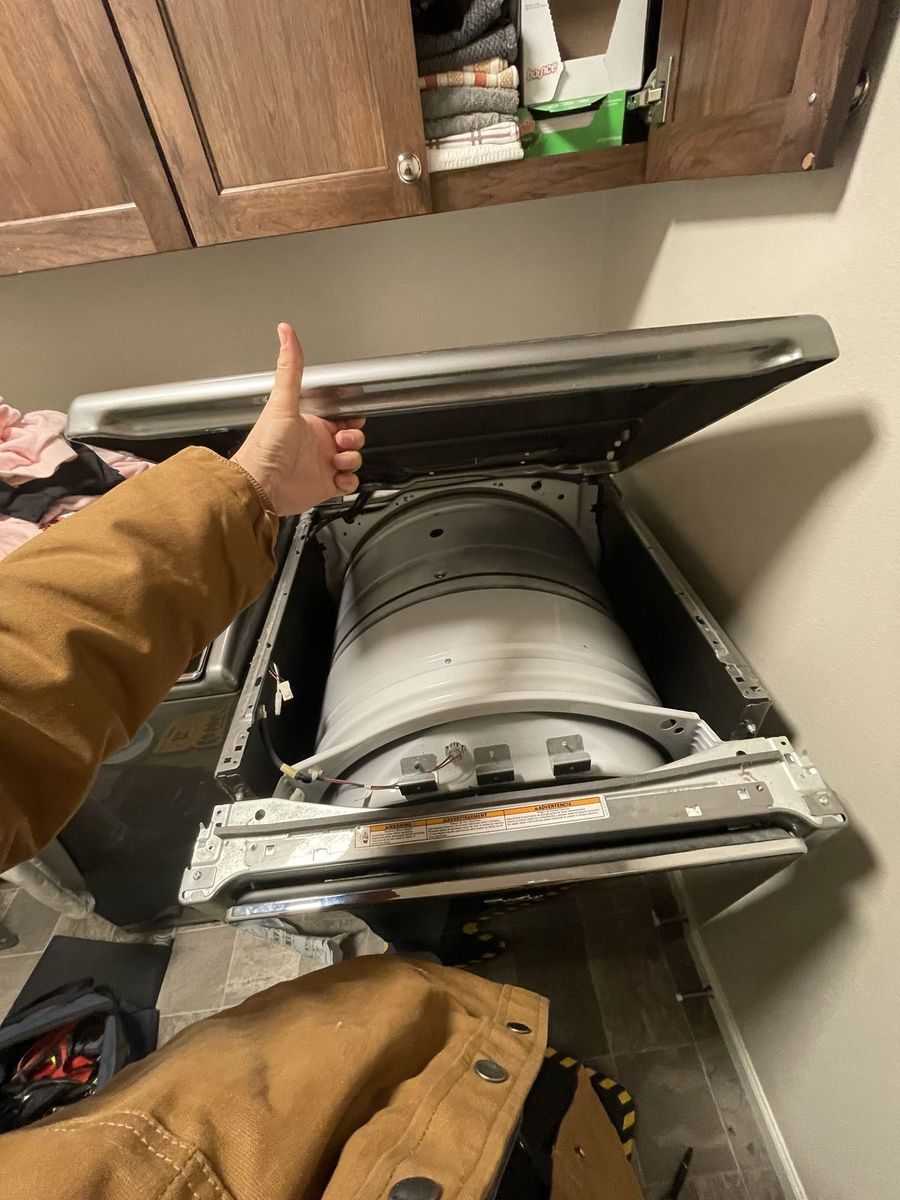
08 / 12
A top-load washer with the top panel raised. Lid switch, drive coupler and drain pump are all within reach once the top comes up.
Read the service page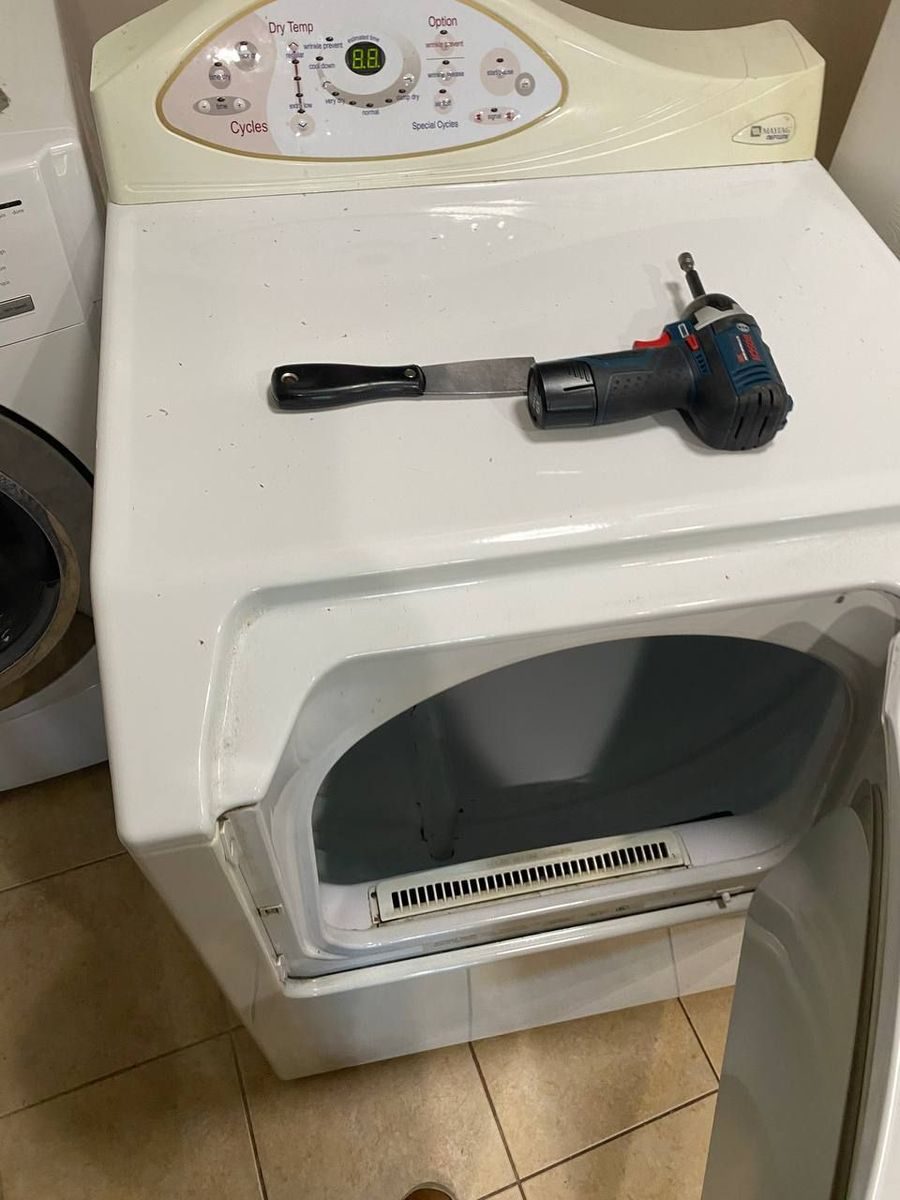
09 / 12
An electric dryer opened up in a laundry room. The thermal fuse, the heating element and the vent run behind the machine get tested together.
Read the service page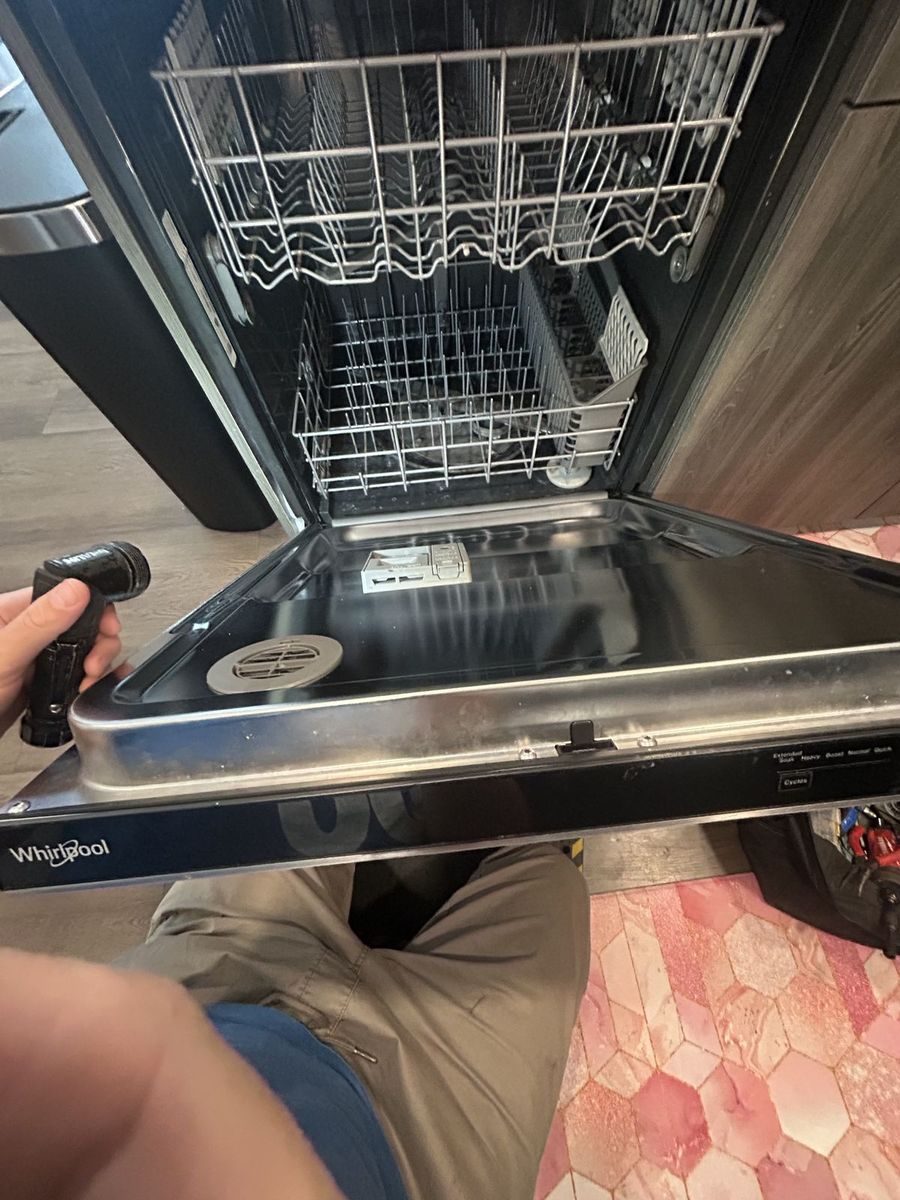
10 / 12
Door open and racks out on a dishwasher. A puddle left behind after the last rinse sends us to the filter screen, the pump and the hose route under the sink, in that order.
Read the service page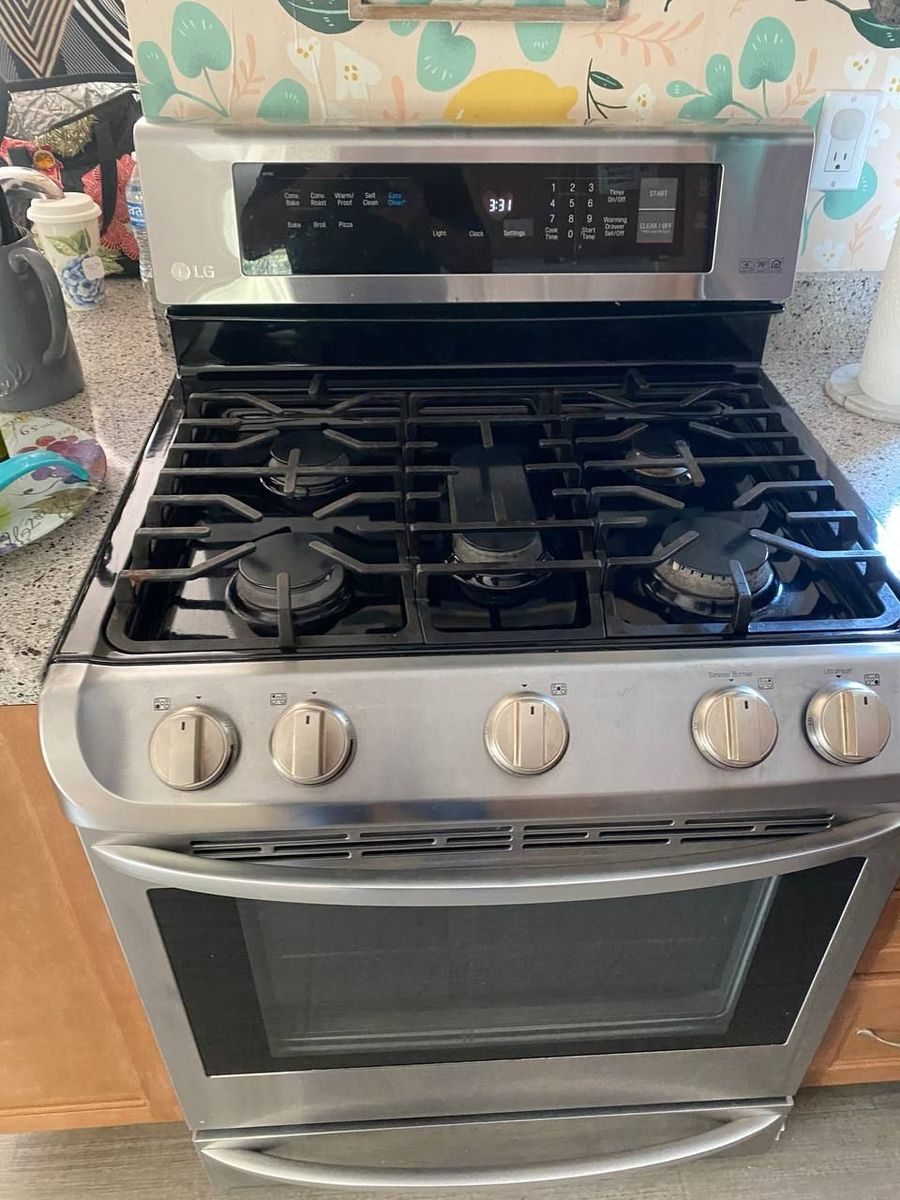
11 / 12
A five-burner gas range ready for testing. Burner igniters, the spark module and the bake igniter's amp draw are measured before a part is ordered.
Read the service page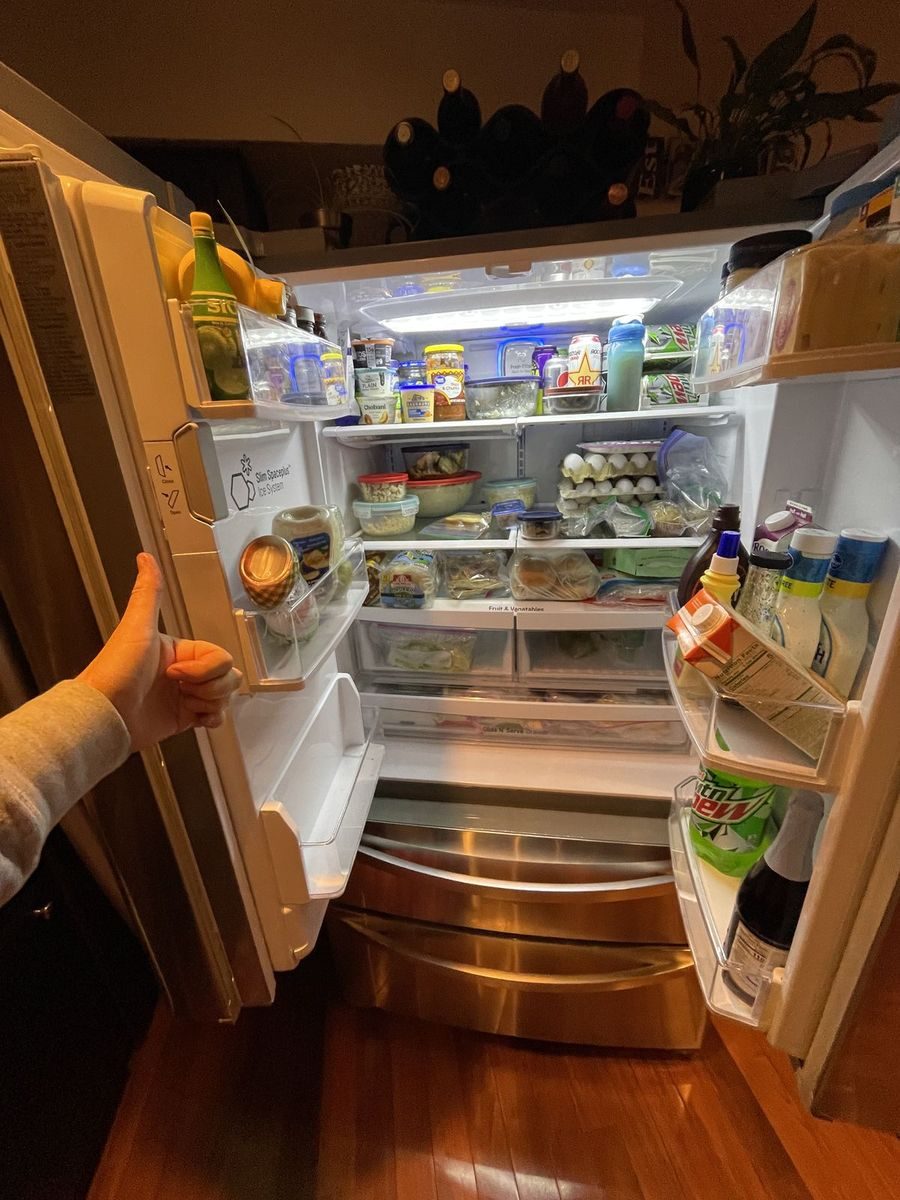
12 / 12
A French-door refrigerator open for diagnosis. Slow ice starts with the water: the inlet valve, the filter and a fill tube that can freeze shut.
Read the service pageRepair makes sense when the failure is limited to a capacitor, a contactor, the defrost sensor or board, or a fan motor, and the compressor and coils are sound. The math shifts when the compressor has failed, when the outdoor coil leaks in more than one place, or when an older system still holds R-22, which US plants stopped making, so each recharge draws on a shrinking reclaimed supply. In those cases we lay out both paths on paper: the repair price, and a written quote for a new system that lists equipment and installation as one figure. Larch also holds a Washington general contractor license for installation work. You weigh the two, and nothing begins until you agree.
No, vapor during a defrost cycle is normal. The heat pump briefly runs in cooling mode, the outdoor fan pauses, and hot refrigerant clears ice from inside the coil, throwing off a cloud for a few minutes before heating resumes. Call if the vapor smells like burning, repeats every few minutes all day, or leaves the coil still iced.
It means the backup heat strips are running alongside the heat pump or in place of it. During defrost, or briefly after a big jump on the thermostat, that is normal. On a 45-degree afternoon it is not, because the compressor should handle that weather alone. Strips cost more to run, so a light that never goes out deserves a visit.
Yes, if the outdoor coil is iced solid or the outdoor unit is grinding or buzzing. Running the backup heat strips alone protects the compressor, and many thermostats offer a setting that locks out the heat pump for this purpose. It costs more per hour, so treat it as a bridge until the technician arrives.
We can recharge it, but only after finding and fixing the leak. Refrigerant isn't burned like fuel, so a low charge means it escaped. Technicians with the EPA 608 Universal credential locate the leak, repair it, evacuate the system and restore the charge listed for your unit. Topping off without a repair just postpones the next cold morning with no heat.
It can, if the thermostat's reversing valve setting doesn't match the equipment. Heat pumps energize the valve either in cooling (O) or in heating (B), and a thermostat set the wrong way runs cooling when you ask for heat. Wiring the backup strips to the wrong terminal causes trouble too. Our technicians check the settings and wiring before suspecting the valve itself.
That depends on the model, but every heat pump loses output as outdoor air gets colder, and a Tri-Cities cold snap pushing lows toward 10°F asks a lot of a standard unit. That is when the backup strips are meant to help. Cold-climate models hold more output in deep cold. If the house falls behind on milder nights, though, the heat pump has a fault.
Talk to us
Request a date and an arrival window through the site, or call any day between 8 AM and 7 PM, and the office will confirm by phone. Prefer Spanish? Just ask.
Book a visit
One slip, filled top to bottom. The office phones to confirm the visit, and the technician calls again when on the way.
Every number below is a public state record. Look each one up on L&I Verify, or read what each license allows on our licenses page.
What our licenses cover