01 / 12
Ductless mini-splits
A ductless outdoor unit with a gauge set on it. Mini-splits get the same pressure and temperature readings as a central system, plus a look at the line-set insulation.
Read the service pageInstall and repair · Mitsubishi, Fujitsu, Daikin, LG
A mini-split heats and cools one space without ducts, which makes it a natural fit for a detached shop, a bonus room over the garage, an addition or a manufactured home. We install new systems and repair the ones that flash codes, drip water down the wall or quit keeping up.
Short answer
We install and repair ductless mini-splits across the Tri-Cities, from single-zone units in West Richland and Finley shops to multi-zone systems serving bonus rooms and additions. Most repairs trace back to a handful of causes: a clogged filter or grimy indoor coil, a failed condensate pump, a leaking flare joint in the line set, or wind-blown dust packed into the outdoor coil. We read the error code first, then confirm with gauges and a meter.
A mini-split earns its place wherever stretching ductwork would be awkward, costly or wasteful. Each indoor head carries its own fan and coil and connects to the outdoor unit through a small line set, a drain hose and a communication cable, all passing through one modest hole in the wall. A shop under a metal roof, a garage turned home gym, a bonus room that bakes by late afternoon or a new addition can then run on its own schedule without touching the main system.
Nearly every mini-split sold today is an inverter-driven heat pump, so the same unit cools through 100°F afternoons and heats through the gray, foggy stretch of an inversion. Mitsubishi, Fujitsu, Daikin and LG units are common around here, and we service each of those brands. A single-zone system pairs one head with one outdoor unit. A multi-zone system runs several heads off one condenser, which saves wall space outside but ties every room to one compressor.
Refrigerant work on these systems falls under our 06A HVAC/Refrigeration specialty, and the technicians doing it carry the EPA 608 Universal credential. To schedule, use the online form to select a date and an arrival window, or call between 8 AM and 7 PM on any day of the week. Someone from the office phones you back to lock it in.
A new install starts with the space itself: wall construction, sun exposure, insulation, roll-up doors and how the room gets used. A shop with an uninsulated metal roof needs far more capacity than a finished bonus room with the same floor area. We place heads so air throws across the room without blasting a workbench or a bed, plan the shortest sensible line-set route, and decide whether condensate can drain by gravity or needs a pump. The written quote gives equipment and installation as a single number.
During installation, every flare is cut with a proper flaring tool and tightened to spec using a torque wrench, then the line set holds nitrogen pressure and is evacuated on a micron gauge before the service valves open. Repair visits follow their own order: read the code, test power at the unit, then measure. The office states the diagnostic fee at the time you schedule. If you give the go-ahead, that fee becomes one line inside the repair figure you agreed to; if you say no, you settle the fee and the visit ends there.
Wind is the short answer. Among medium and large Pacific Northwest metros, the Tri-Cities is the windiest, March, April and June are the roughest months, and blowing-dust advisories come with the territory. On open West Richland acreage off Van Giesen Street, Keene Road or Bombing Range Road, or on Finley properties near the Columbia, an outdoor unit bolted to the west wall of a shop takes that dust head-on. Packed fins and mats of cottonwood fluff raise head pressure and cut capacity.
Housing plays a part too. Manufactured homes in Finley and Benton City often have cramped furnace closets and under-floor duct runs that run out of air before the far bedroom, and one wall-mounted head can even out the ends of the home. In West Pasco, bonus rooms over garages along Road 100 and Sandifur Parkway run hot because the main system cannot push enough air that far. Shops with sanding, cutting or welding going on load indoor filters with fine dust much faster than a living room does.
One photo per tab from our service calls. Tap a tab, or let the file turn on its own.
01 / 12
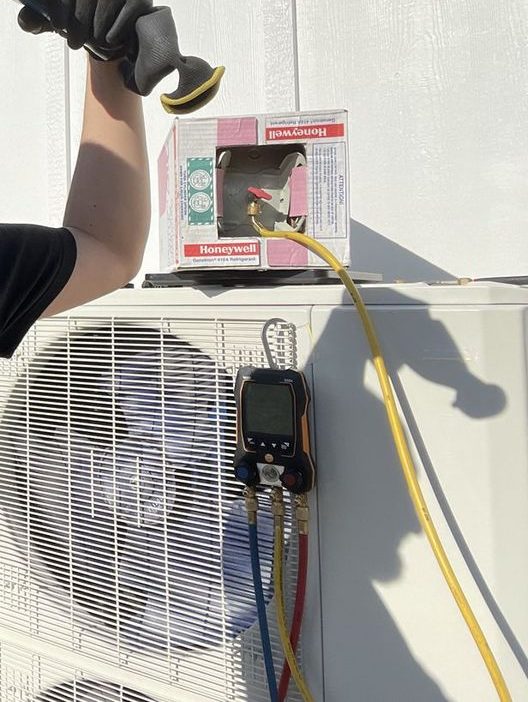
A ductless outdoor unit with a gauge set on it. Mini-splits get the same pressure and temperature readings as a central system, plus a look at the line-set insulation.
Read the service page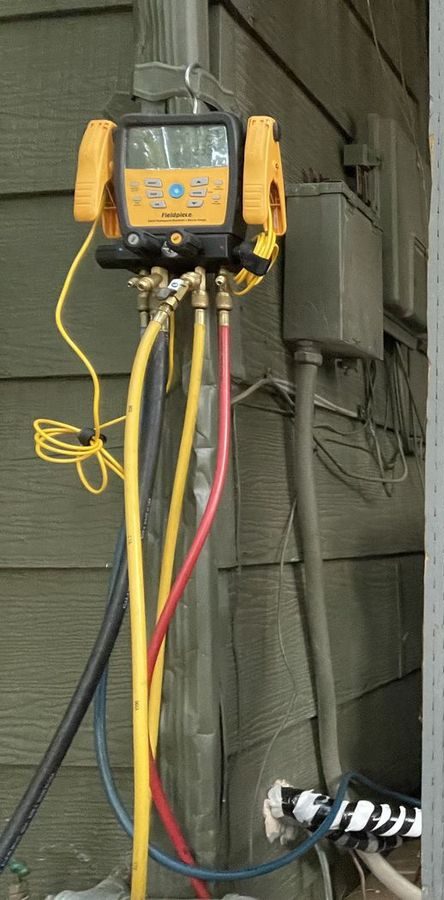
02 / 12
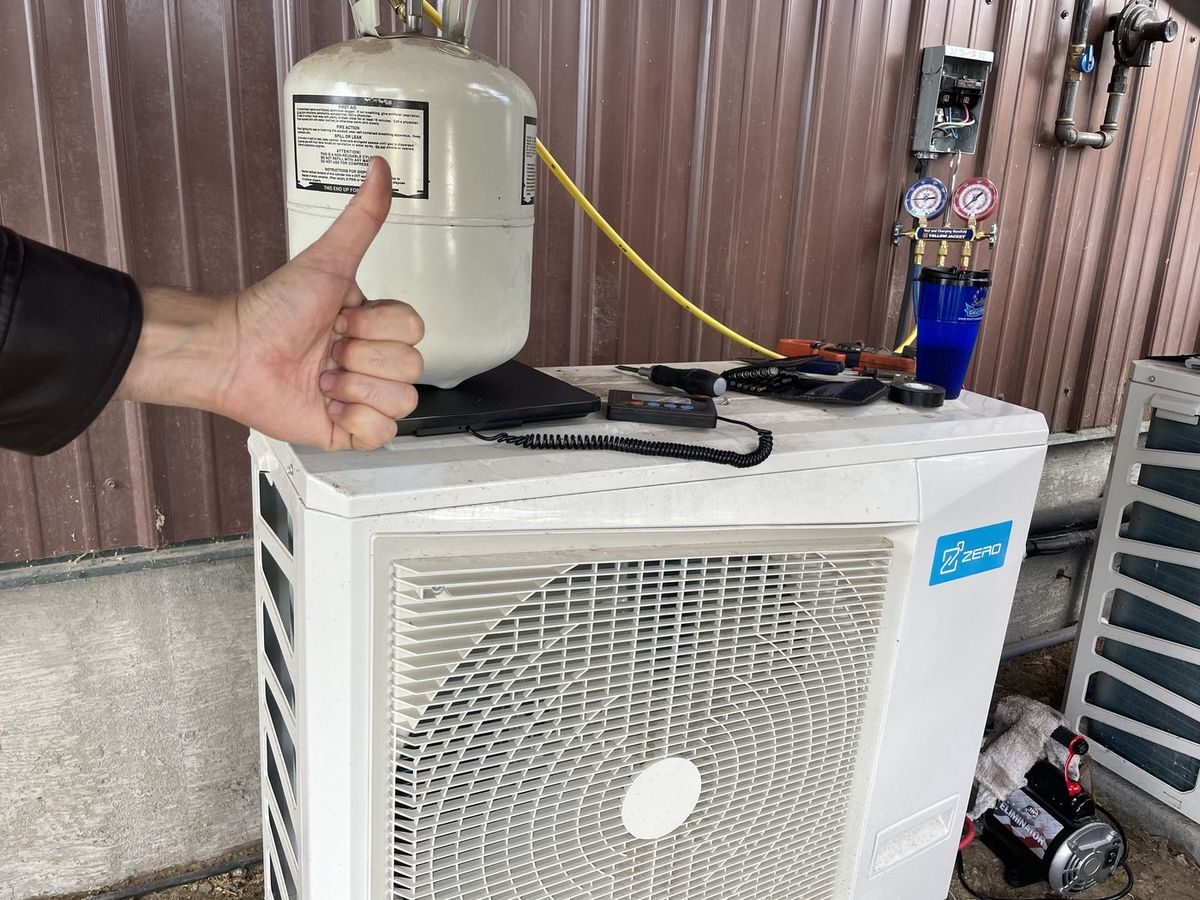
Digital gauges hang by the outdoor unit while the heat pump runs. Superheat and subcooling show whether the charge, a valve or the defrost board is the problem.
Read the service page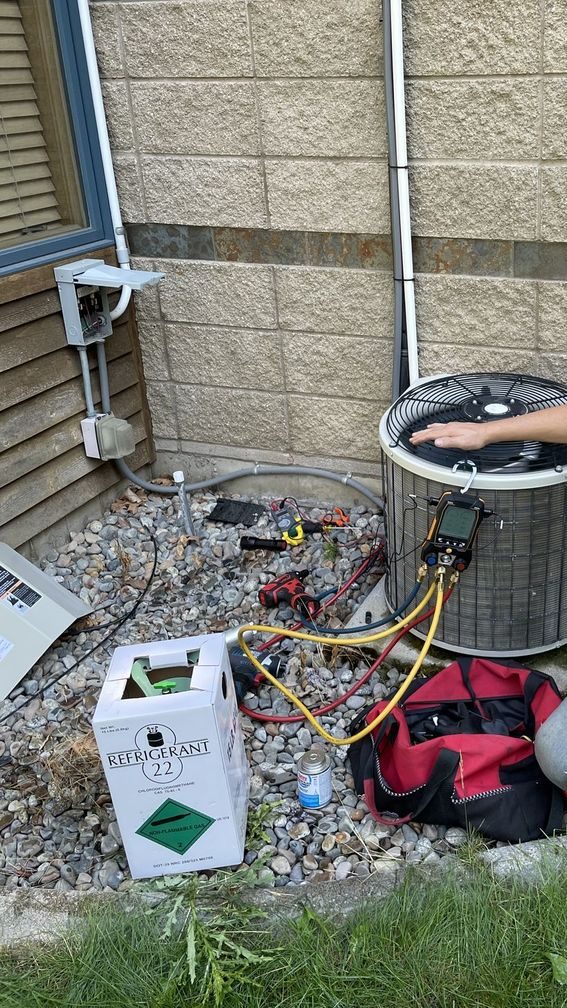
03 / 12
An older condenser under test with hoses on the service ports. The capacitor, contactor and fan motor get checked before anyone talks about refrigerant.
Read the service page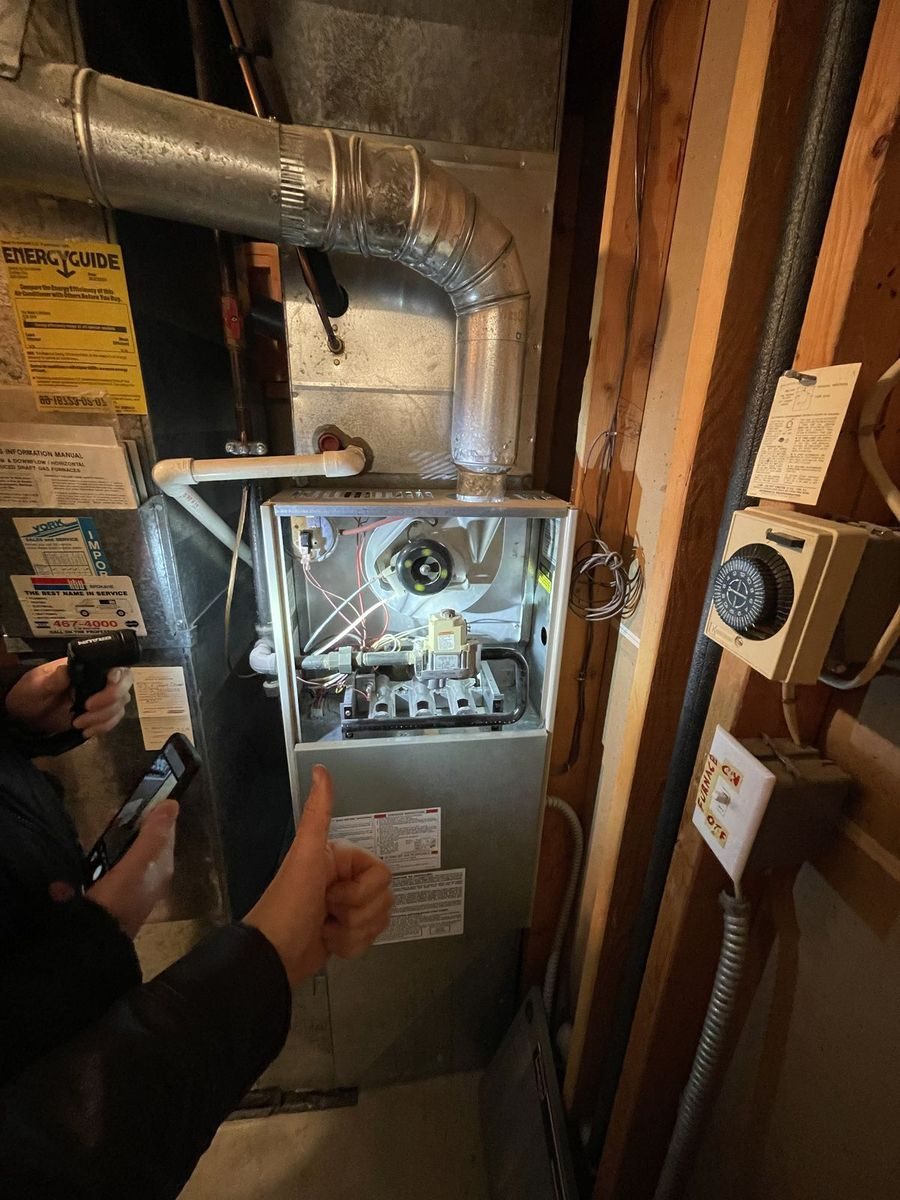
04 / 12
The burner compartment of a gas furnace, open. We follow the start-up order, inducer, pressure switch, igniter, flame sensor, until the step that fails.
Read the service page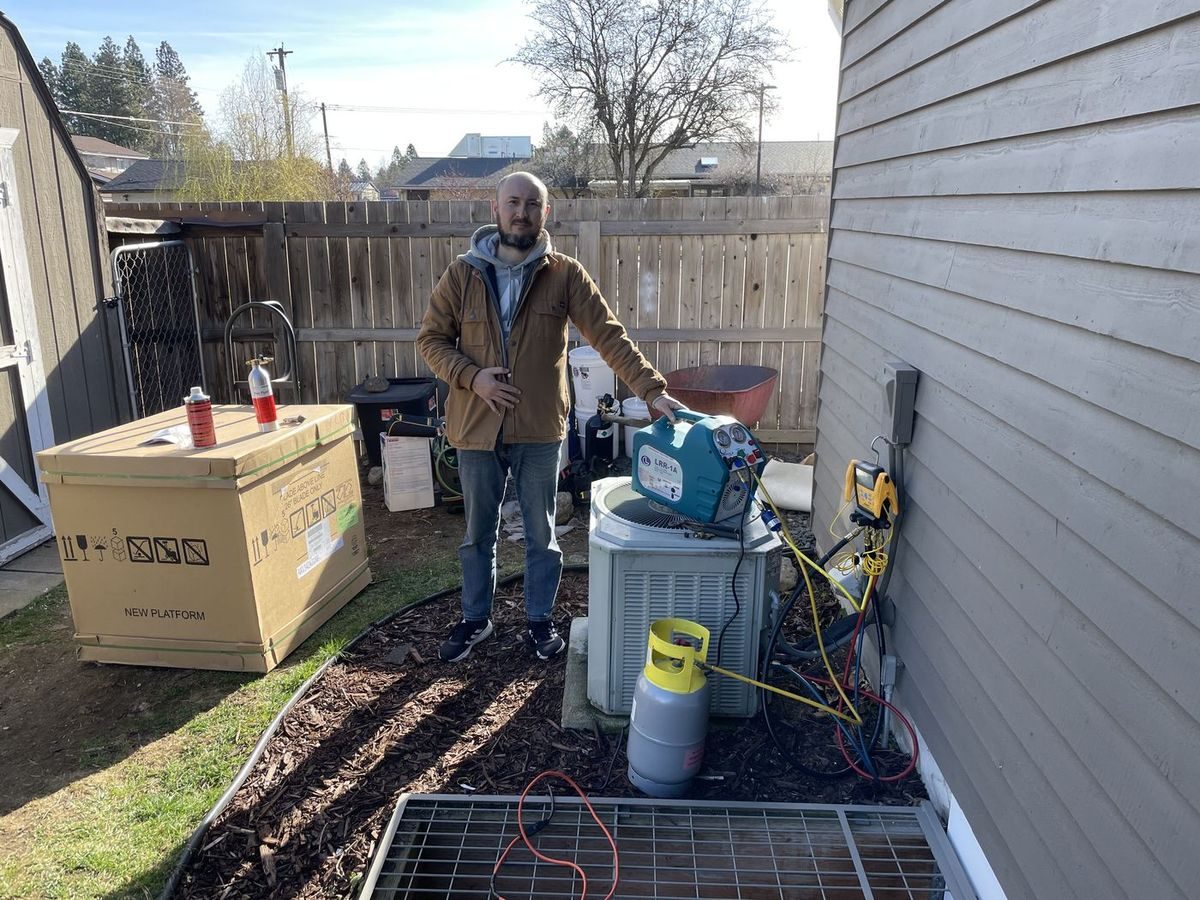
05 / 12
A recovery machine and cylinder beside an outdoor unit. On a replacement, the old refrigerant is pulled into the cylinder instead of the air.
Read the service page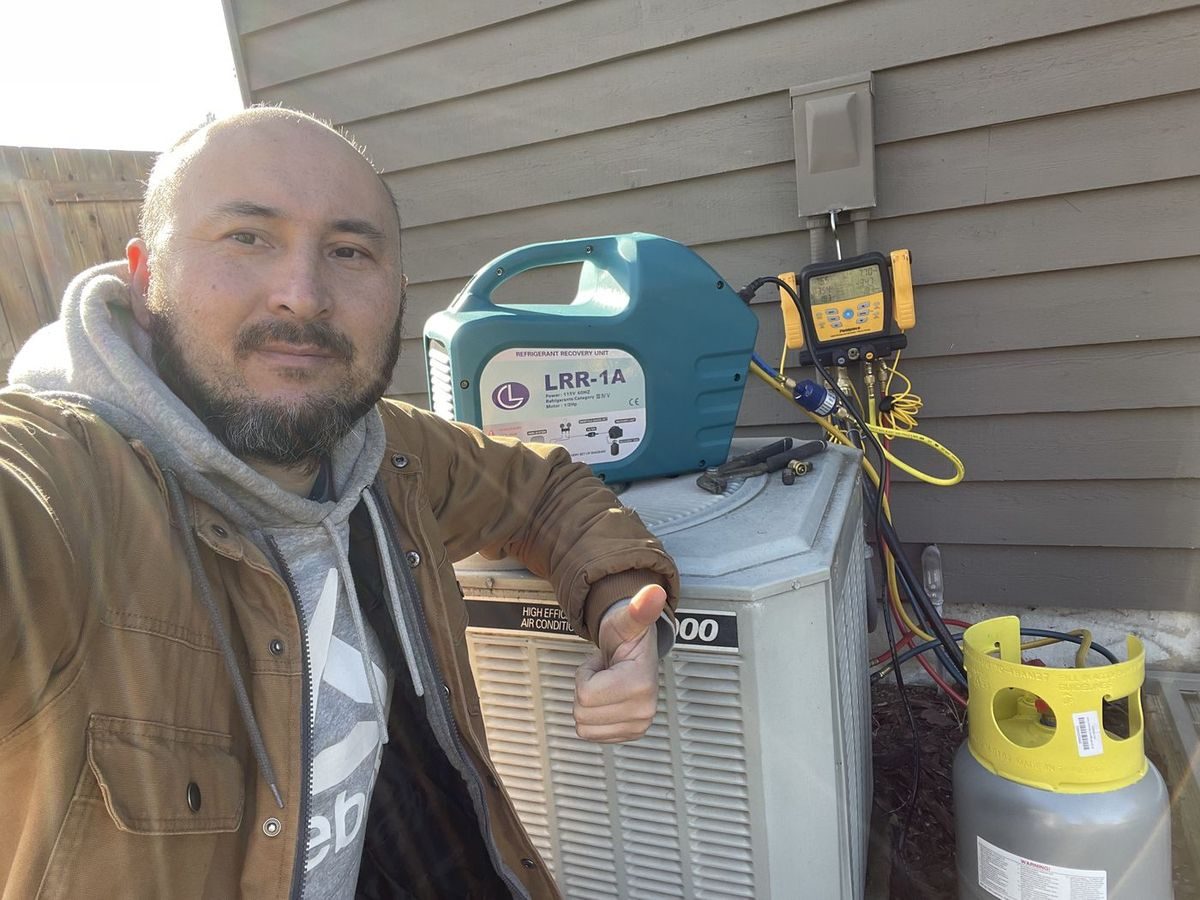
06 / 12
Gauges on a condenser during a seasonal visit. Spring visits wash the dust out of the coil; fall visits test defrost and heat strips before the fog weeks.
Read the service page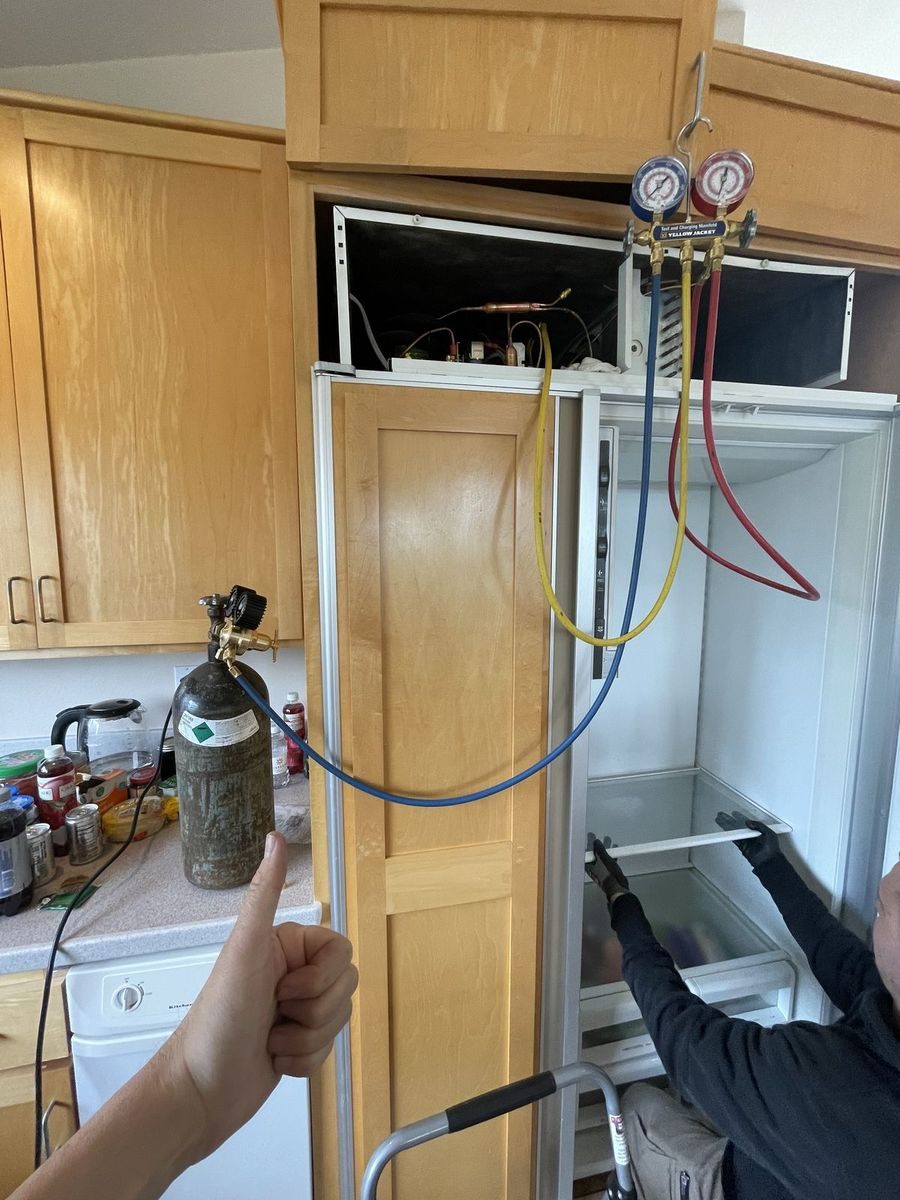
07 / 12
Gauges connected to a built-in refrigerator's sealed system. Leak searches, brazing and recharges happen in the kitchen, so the fridge stays where it is.
Read the service page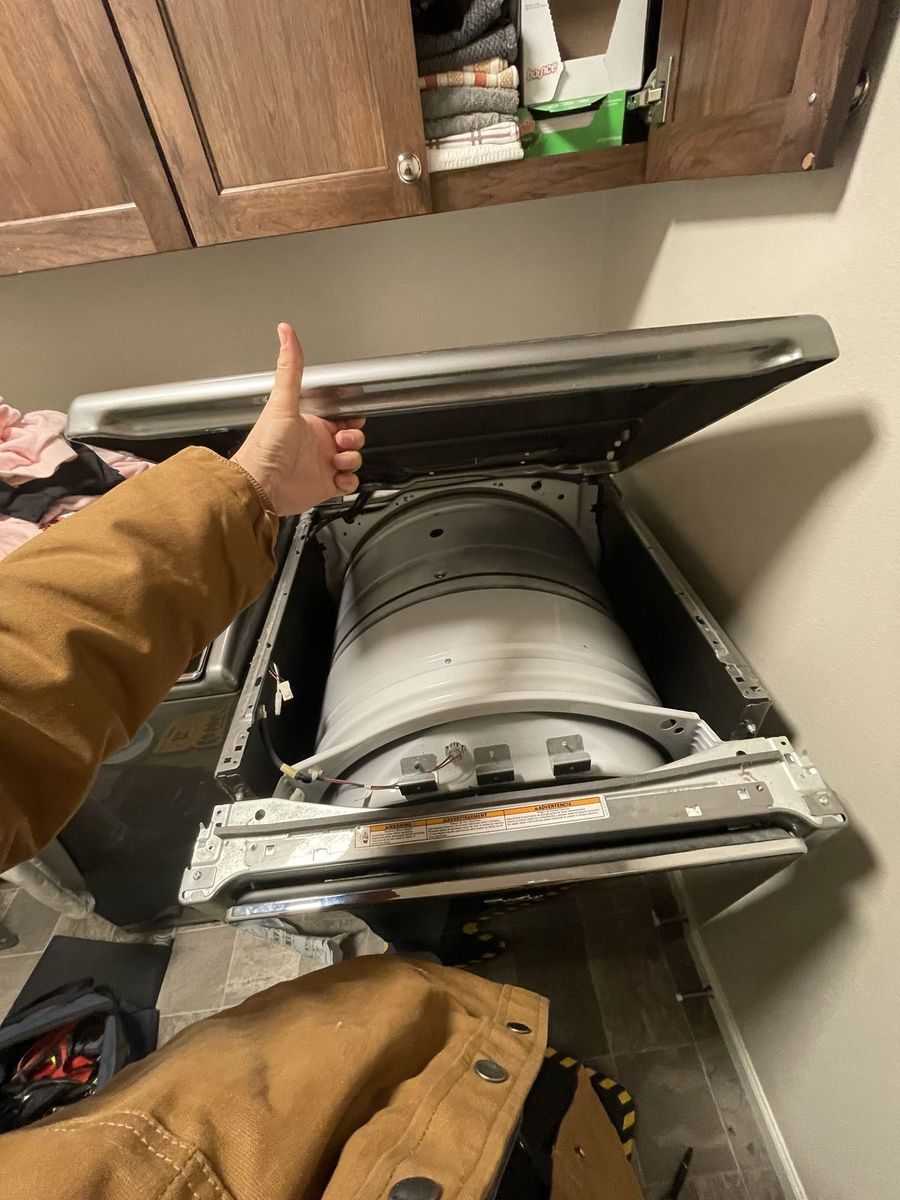
08 / 12
A top-load washer with the top panel raised. Lid switch, drive coupler and drain pump are all within reach once the top comes up.
Read the service page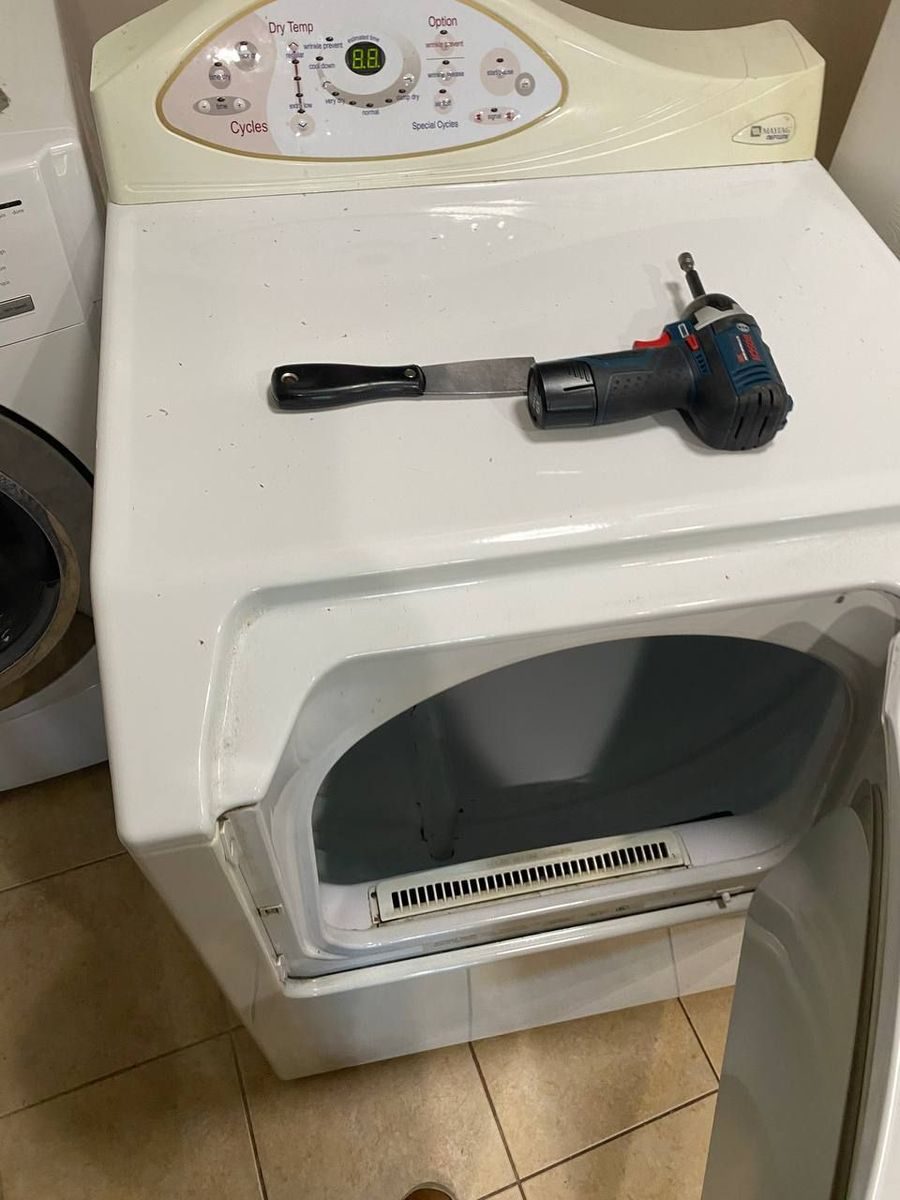
09 / 12
An electric dryer opened up in a laundry room. The thermal fuse, the heating element and the vent run behind the machine get tested together.
Read the service page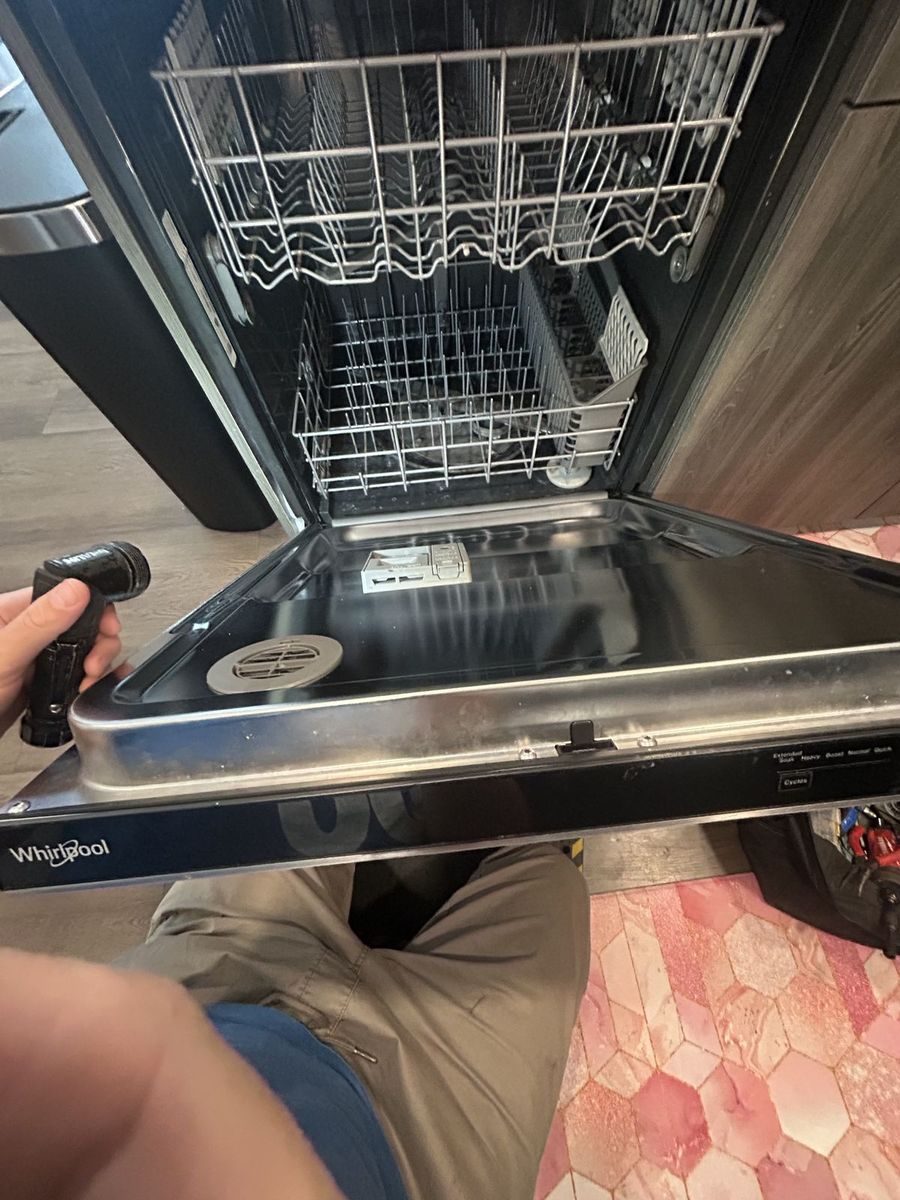
10 / 12
Door open and racks out on a dishwasher. A puddle left behind after the last rinse sends us to the filter screen, the pump and the hose route under the sink, in that order.
Read the service page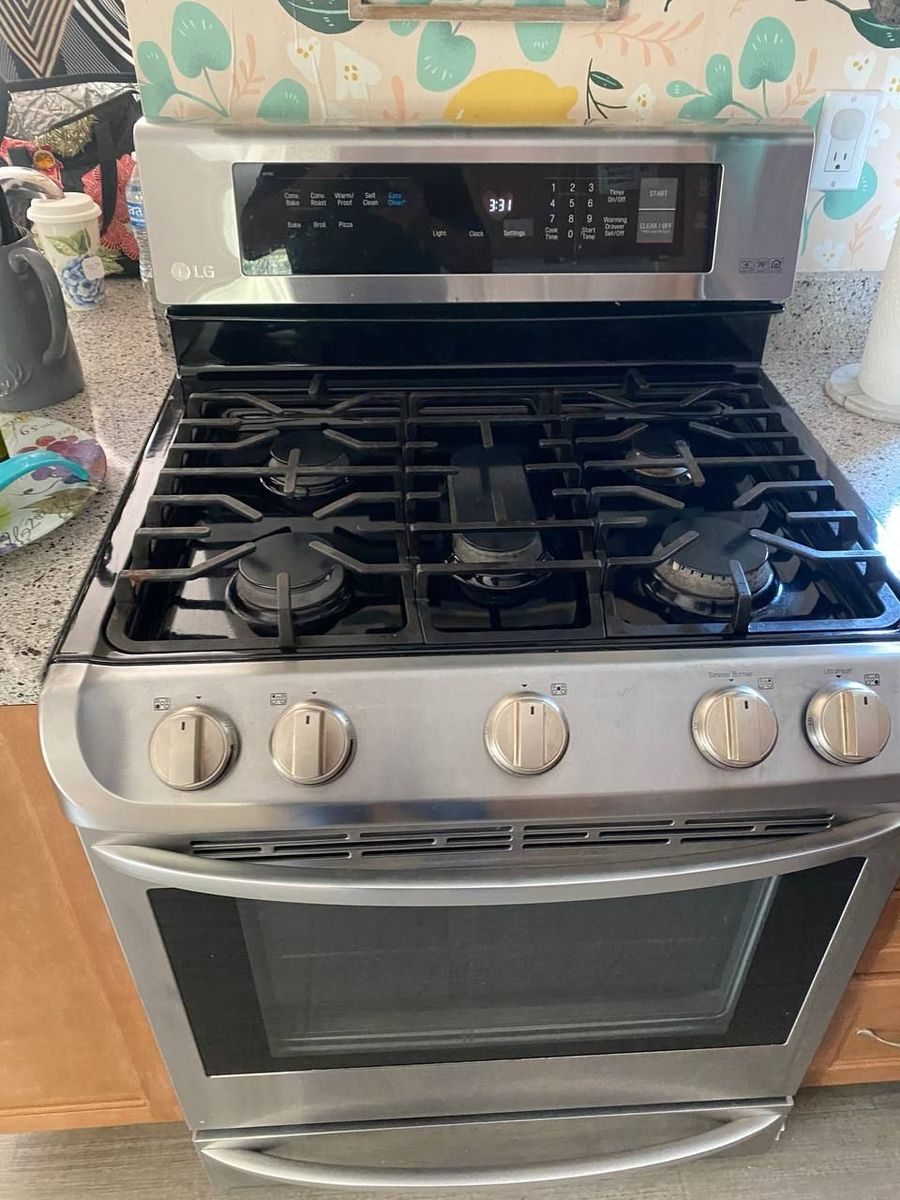
11 / 12
A five-burner gas range ready for testing. Burner igniters, the spark module and the bake igniter's amp draw are measured before a part is ordered.
Read the service page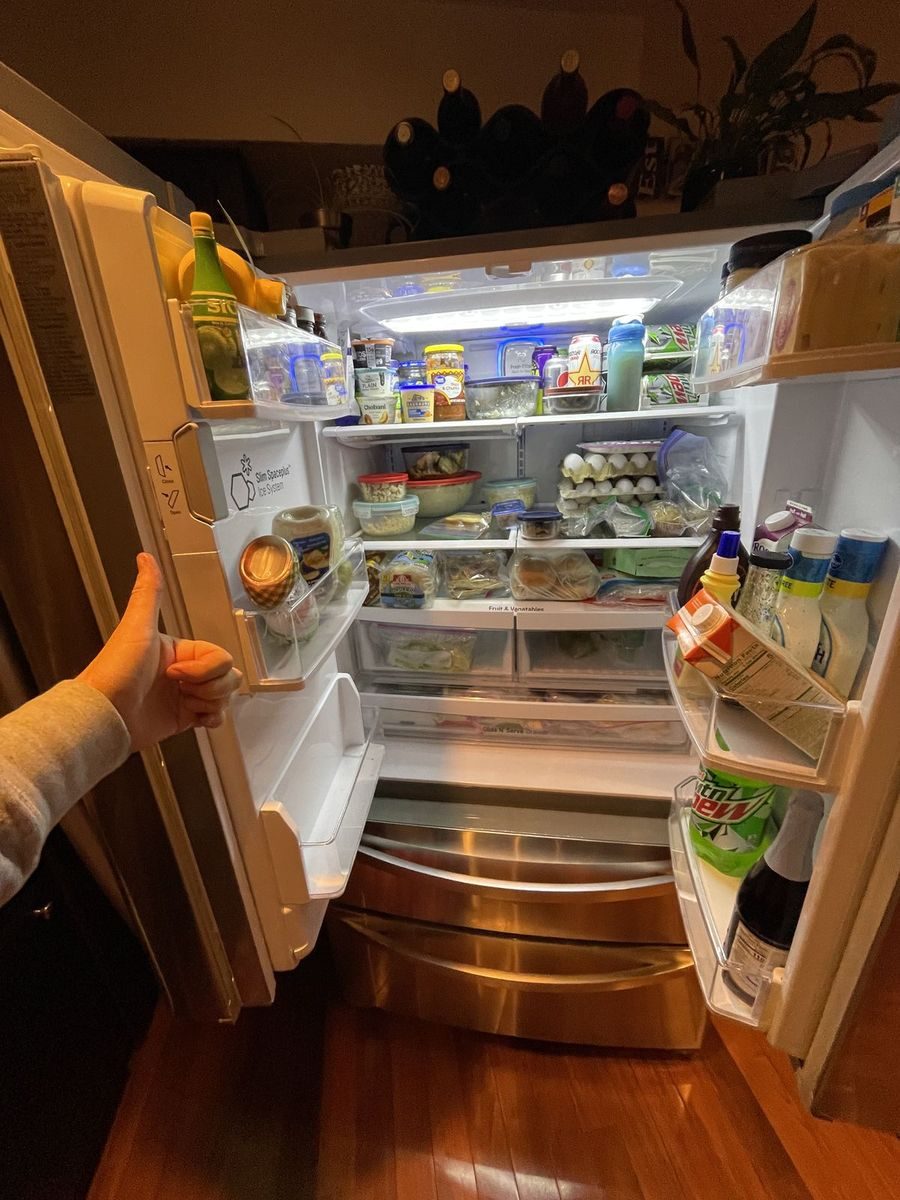
12 / 12
A French-door refrigerator open for diagnosis. Slow ice starts with the water: the inlet valve, the filter and a fill tube that can freeze shut.
Read the service pageRepair is usually the right call when the fault is a sensor, a condensate pump, a dirty coil or a single flare leak, because those parts are modest and everything else in the system still works well. Replacement deserves a look when the compressor or the inverter board dies on an aging unit, when parts for that model have become hard to get, or when the head was undersized from day one and the room has never felt right. Multi-zone systems add a wrinkle, since one outdoor failure takes every connected room offline at once. When the two paths are close, we write up both, note which parts are in stock and which must be ordered, and leave the decision with you. Work starts only after your yes.
Yes, if it is sized for the building and the shop is reasonably tight. Inverter-driven mini-splits can keep producing heat far below freezing, and we size for winter lows near 10°F as well as summer heat. An uninsulated metal shop with a large roll-up door needs more capacity, or some insulation first. We tell you which applies to your building before writing the quote.
Check them monthly through most of the year, and every couple of weeks during the windy spring months or whenever the room is dusty. The mesh filters rinse clean with plain water; let them dry fully before sliding them back in. When a filter clogs, the indoor coil gets too little air, which weakens heating and cooling and can ice the coil in summer.
Write the code down and try a single power reset at the breaker, since a brief power interruption can leave a stale fault behind. If the code comes back, call us. Codes point to an area rather than a specific part: a sensor code can come from a loose connector, and a communication fault can come from damaged interconnect wiring. Guessing tends to replace good parts.
We do, and they often suit manufactured homes in Finley, Benton City and other parts of the Tri-Cities, where furnace closets are tight and under-floor ducts lose air before reaching the far rooms. Our technicians check wall framing and siding for mounting points and the line-set path, plan the condensate route, and mount the condenser on a pad or stand that sits clear of the skirting.
Cooling pulls moisture out of the room air, and that water has to leave through the drain; in heating mode the indoor coil is warm and makes none. Summer dripping usually means a blocked drain line, a stalled condensate pump or a dirty coil that freezes and then overflows as it thaws. Switch the unit off to stop the drip, and our technician will find what is blocking the water.
We do not post prices online, because the right fix depends on what the meters show. When you schedule, the office shares the diagnostic fee up front. After testing, you get a written repair price, and the fee is rolled into that total if you approve. Decide against the repair and you pay that diagnostic fee and nothing else. Any repair you approve comes with written warranty terms on the invoice.
Talk to us
Request a visit online with the date and arrival window you prefer, or call between 8 AM and 7 PM. Tell us the brand and whatever code the head is showing; the office will confirm by phone.
Book a visit
One slip, filled top to bottom. The office phones to confirm the visit, and the technician calls again when on the way.
Every number below is a public state record. Look each one up on L&I Verify, or read what each license allows on our licenses page.
What our licenses cover