01 / 12
Heat pump repair
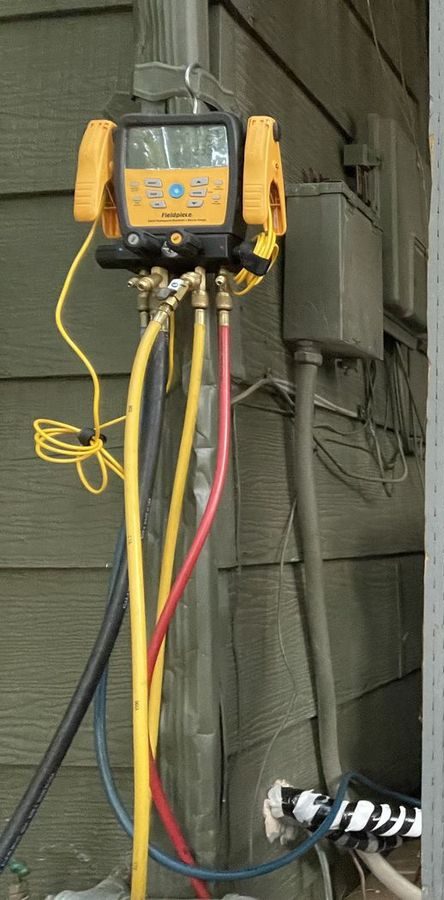
Digital gauges hang by the outdoor unit while the heat pump runs. Superheat and subcooling show whether the charge, a valve or the defrost board is the problem.
Read the service pagePricing
Amounts never appear on this site. What we can lay out is the process: what the diagnostic fee buys, the moment a written price reaches you, how install quotes are built, and how ordered parts and warranty terms are handled.
Short answer
Each visit carries a diagnostic fee, and its amount comes from the office at the moment you schedule, by phone or online. Once testing is done, the technician writes the repair cost onto an estimate and holds off until you decide. A yes folds the fee into that repair total; a no leaves the fee as your entire bill. New systems are quoted in writing as one figure covering equipment and installation.
It buys a trip, a set of tests and a named cause. That means actual measurements: microfarads on a run capacitor, amp draw on a compressor or drain pump, external static pressure across a furnace, superheat and subcooling on a refrigerant circuit, continuity through a thermal fuse or a bake element. The office tells you the amount up front, so it is settled before anyone drives over.
Where the fee ends up is your call. Green-light the repair, and the fee gets credited inside the repair total rather than charged a second time for the same trip. Say no, and that single diagnostic charge closes out the visit, while the written repair price stays with you in case you want time to think.
Before anyone picks up a wrench. As soon as the technician knows what failed, the price goes onto a written estimate, and nothing gets replaced, recharged or adjusted until you sign off. When a problem has two reasonable fixes, say a pitted contactor alone versus the contactor plus a capacitor that tested well under its microfarad rating, both options can be written out so you choose.
The truck is stocked with the usual failures, so capacitors, igniters, contactors, fan motors, flame sensors, belts, valves, pumps, door switches and thermal fuses are often on hand. If something has to be ordered, like a control board for one furnace model or a defrost board for a particular heat pump, its price sits on the estimate before the order goes in, and the office calls to set the return visit once it arrives.
As one figure that combines the equipment and its installation. The written quote names the heat pump, condenser, furnace, air handler or mini-split being put in, describes what the installation includes, and gives a single total for the whole thing.
That number reflects the specific house. A manufactured home in Benton City or Finley usually has a cramped furnace closet and its own duct and vent routing; a detached shop on West Richland acreage may suit a ductless unit better than a ducted one; a two-story West Pasco build may need the air handler reached through a tight attic or closet. The technician looks at those details first, so the total you approve is written for your home and not for a generic one.
Warranty terms go on the invoice, tied to the parts replaced or the system installed. Hold on to that invoice; if the same fault returns, call the office and mention it so the return visit is handled under those terms.
You pay for approved work against that written invoice, which shows the diagnostic fee already counted inside the repair. Ask the office which payment methods are accepted while you are booking, so nothing needs sorting out at the door. When you are ready for a diagnosis, pick a day and an arrival slot online, or phone between 8 AM and 7 PM.
Because the right figure depends on the equipment and the fault, and a number posted without seeing either would only be a guess. The diagnostic charge is quoted by the office up front, and after testing, the technician writes out the repair price. That way the amount you approve matches the work on your own system or appliance, not an average pulled from somewhere else.
Only the diagnostic charge. The technician tests the equipment, explains what failed and writes out the repair cost. Should you pass, for whatever reason, the bill for that visit ends at the fee and nothing else gets added. You can keep the written estimate and come back to it later if you change your mind.
Yes, provided you approve the repair. Then the fee is absorbed into the repair figure, never stacked on top as its own line, so the written number covers the visit and the fix together. Turn the repair down, and the fee alone settles things; it paid for the testing and the written findings.
You see that part's price on the written estimate before approving anything. The technician identifies the exact part from the model and serial numbers, writes the cost into the estimate, and the order is placed only after your yes. When the part arrives, the office calls to book the return visit to install it, and the warranty terms appear on the final invoice.
A written quote for a new system shows the equipment and its installation together as one figure. It names the unit being installed and describes the work involved, such as setting the outdoor unit, connecting ductwork at the equipment, charging refrigerant and wiring the thermostat. If the location needs something outside our scope, such as a new electrical supply, the quote says so in advance.
One photo per tab from our service calls. Tap a tab, or let the file turn on its own.
01 / 12
Digital gauges hang by the outdoor unit while the heat pump runs. Superheat and subcooling show whether the charge, a valve or the defrost board is the problem.
Read the service page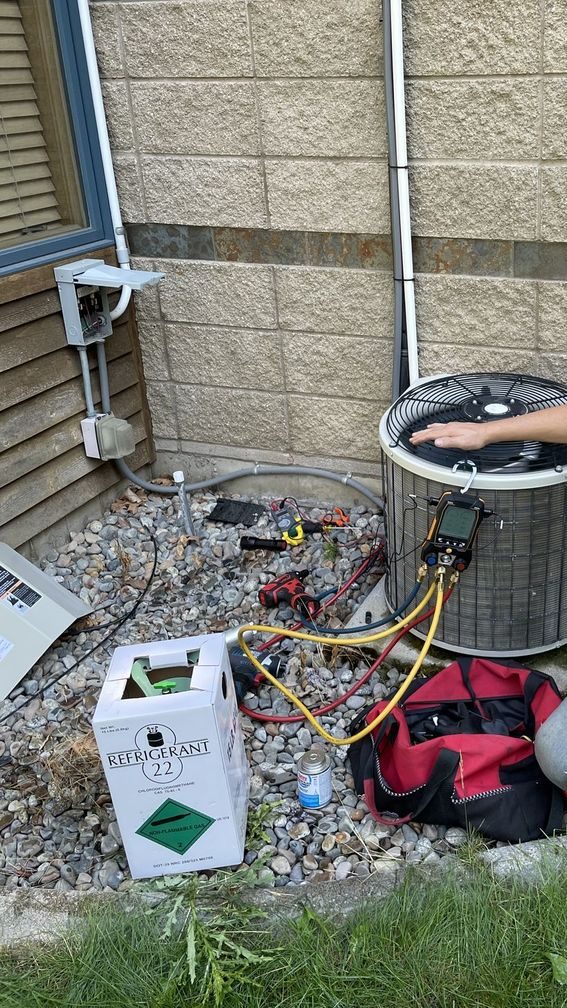
02 / 12
An older condenser under test with hoses on the service ports. The capacitor, contactor and fan motor get checked before anyone talks about refrigerant.
Read the service page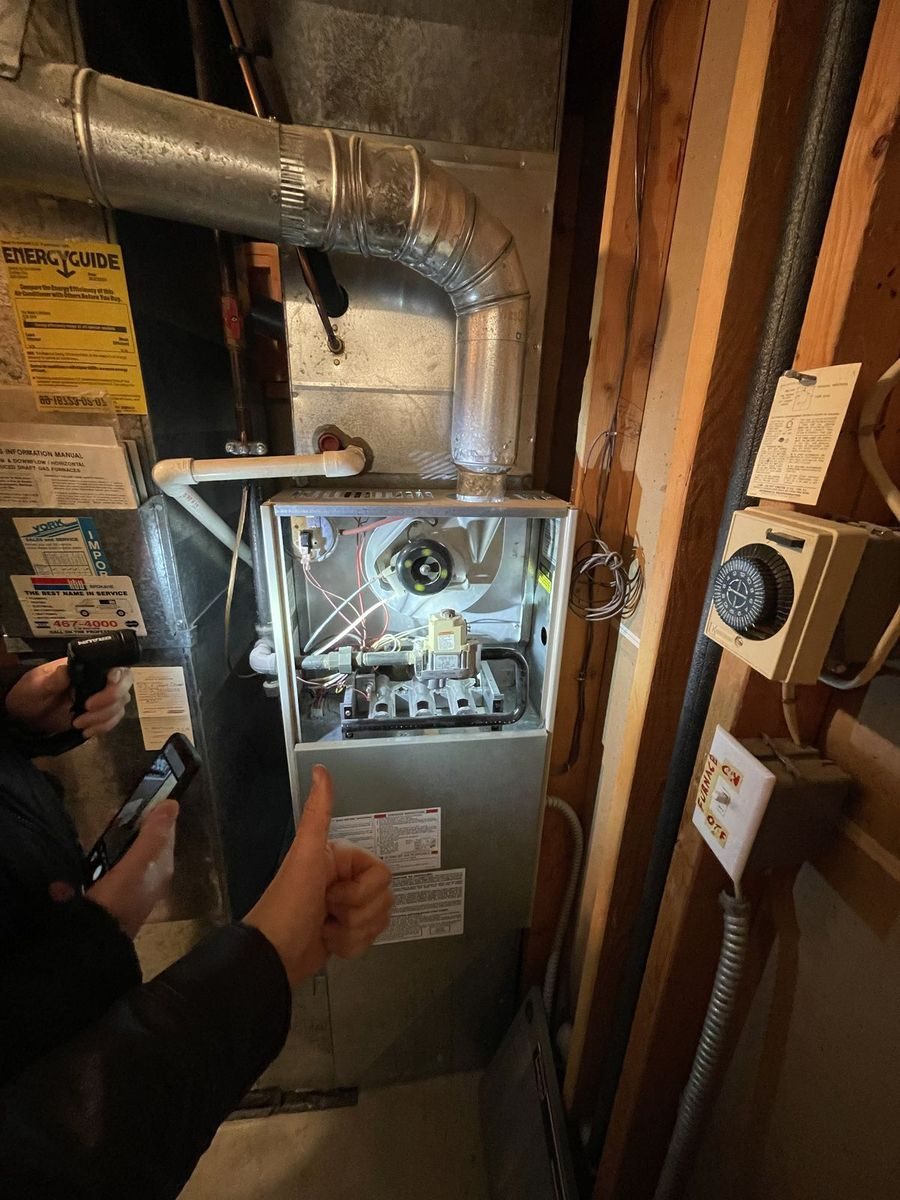
03 / 12
The burner compartment of a gas furnace, open. We follow the start-up order, inducer, pressure switch, igniter, flame sensor, until the step that fails.
Read the service page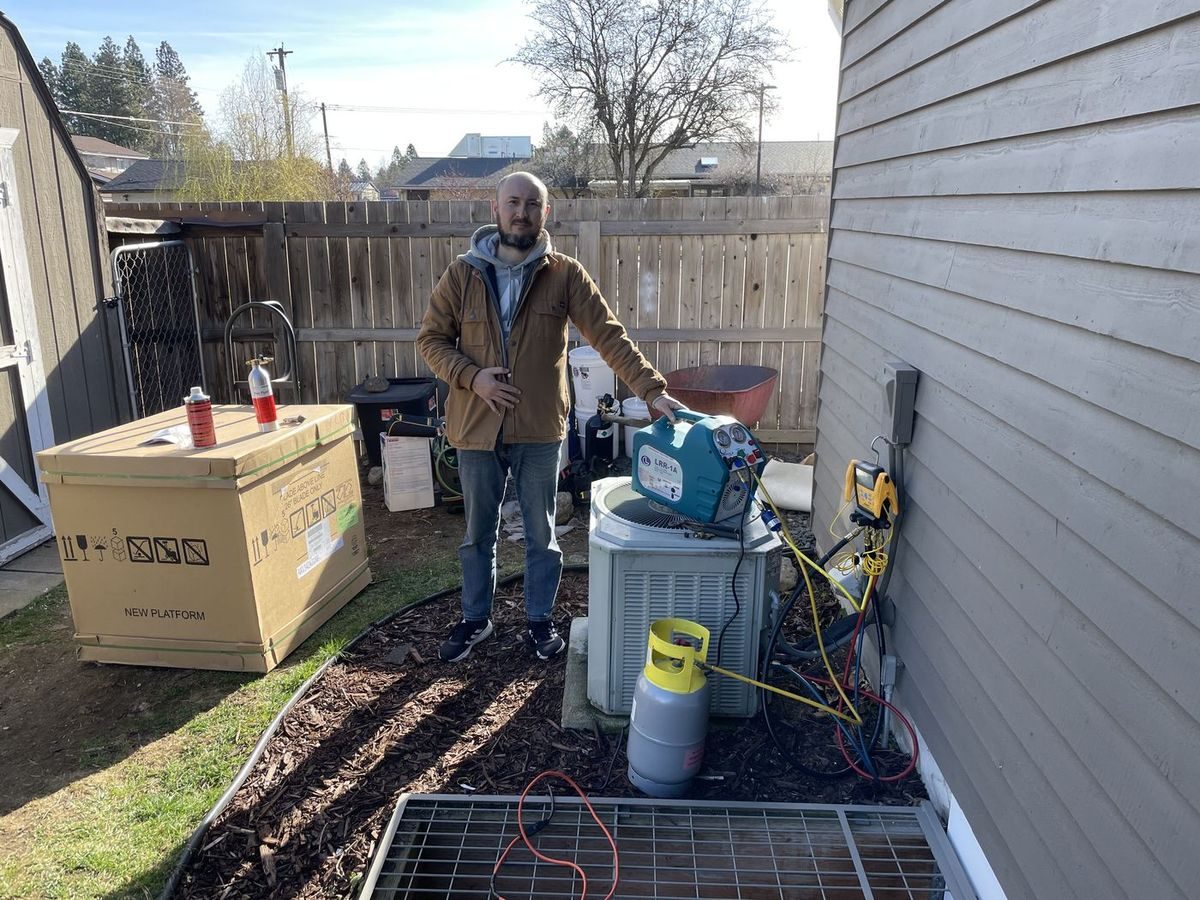
04 / 12
A recovery machine and cylinder beside an outdoor unit. On a replacement, the old refrigerant is pulled into the cylinder instead of the air.
Read the service page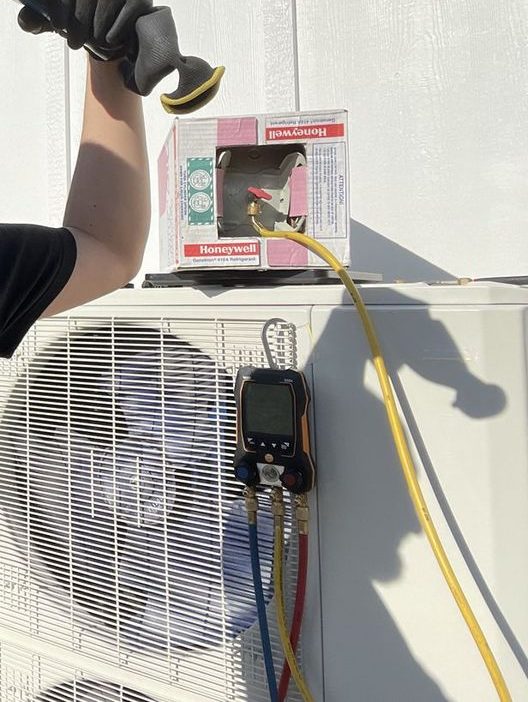
05 / 12
A ductless outdoor unit with a gauge set on it. Mini-splits get the same pressure and temperature readings as a central system, plus a look at the line-set insulation.
Read the service page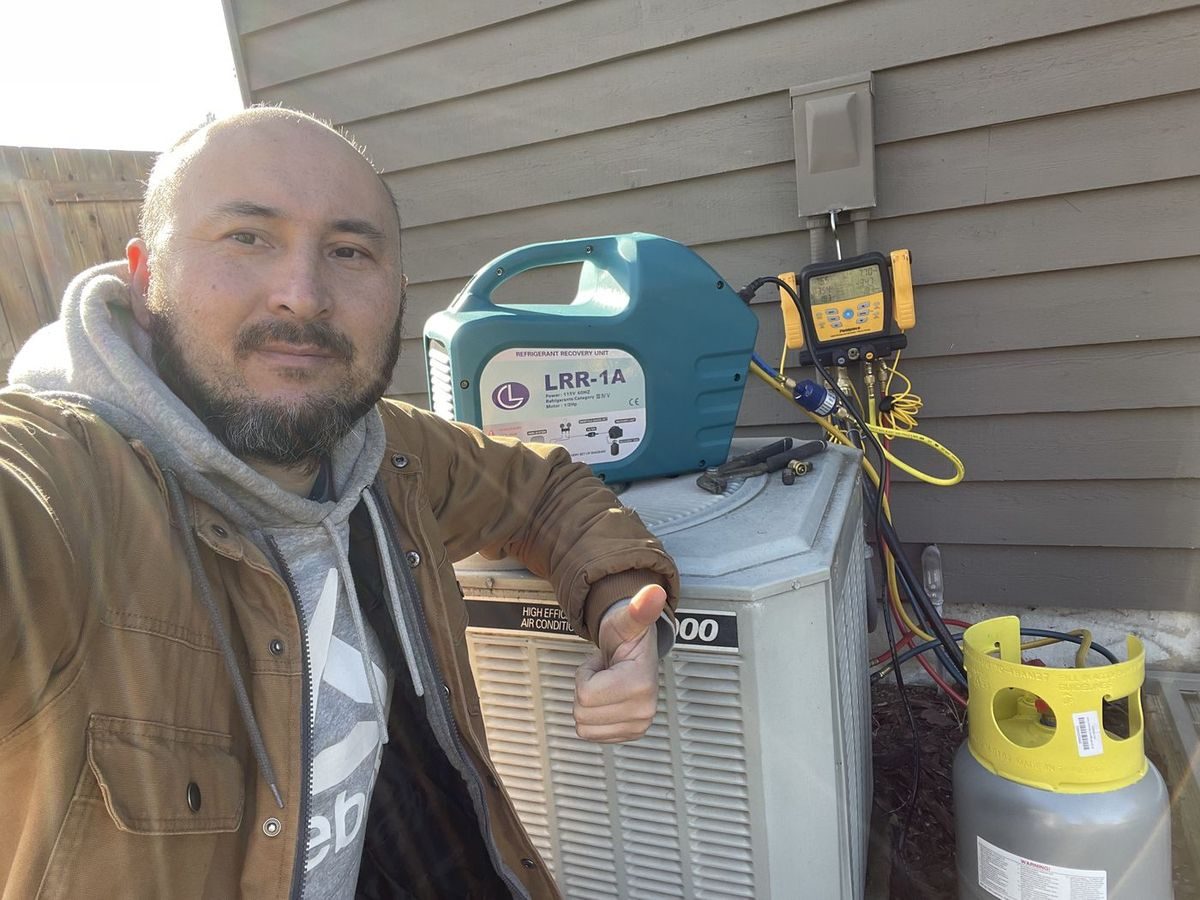
06 / 12
Gauges on a condenser during a seasonal visit. Spring visits wash the dust out of the coil; fall visits test defrost and heat strips before the fog weeks.
Read the service page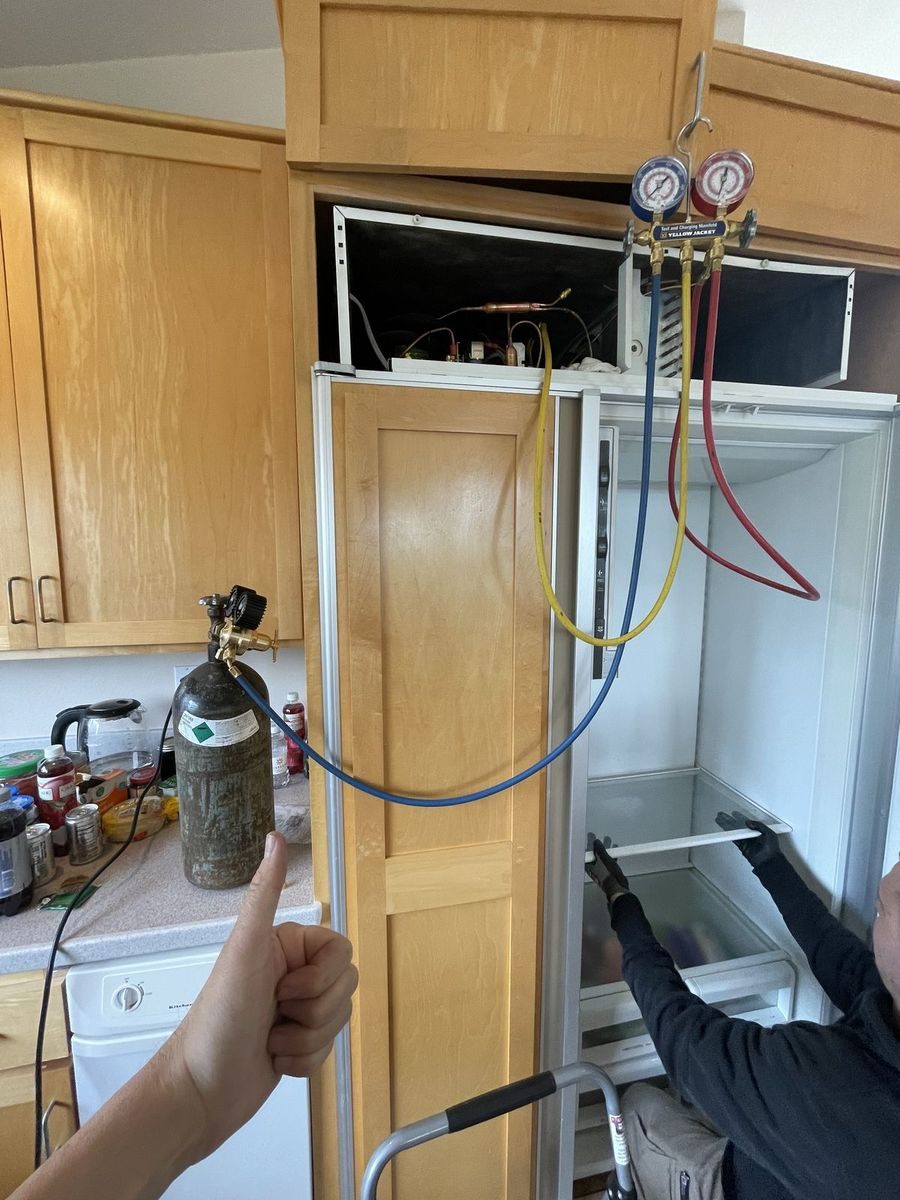
07 / 12
Gauges connected to a built-in refrigerator's sealed system. Leak searches, brazing and recharges happen in the kitchen, so the fridge stays where it is.
Read the service page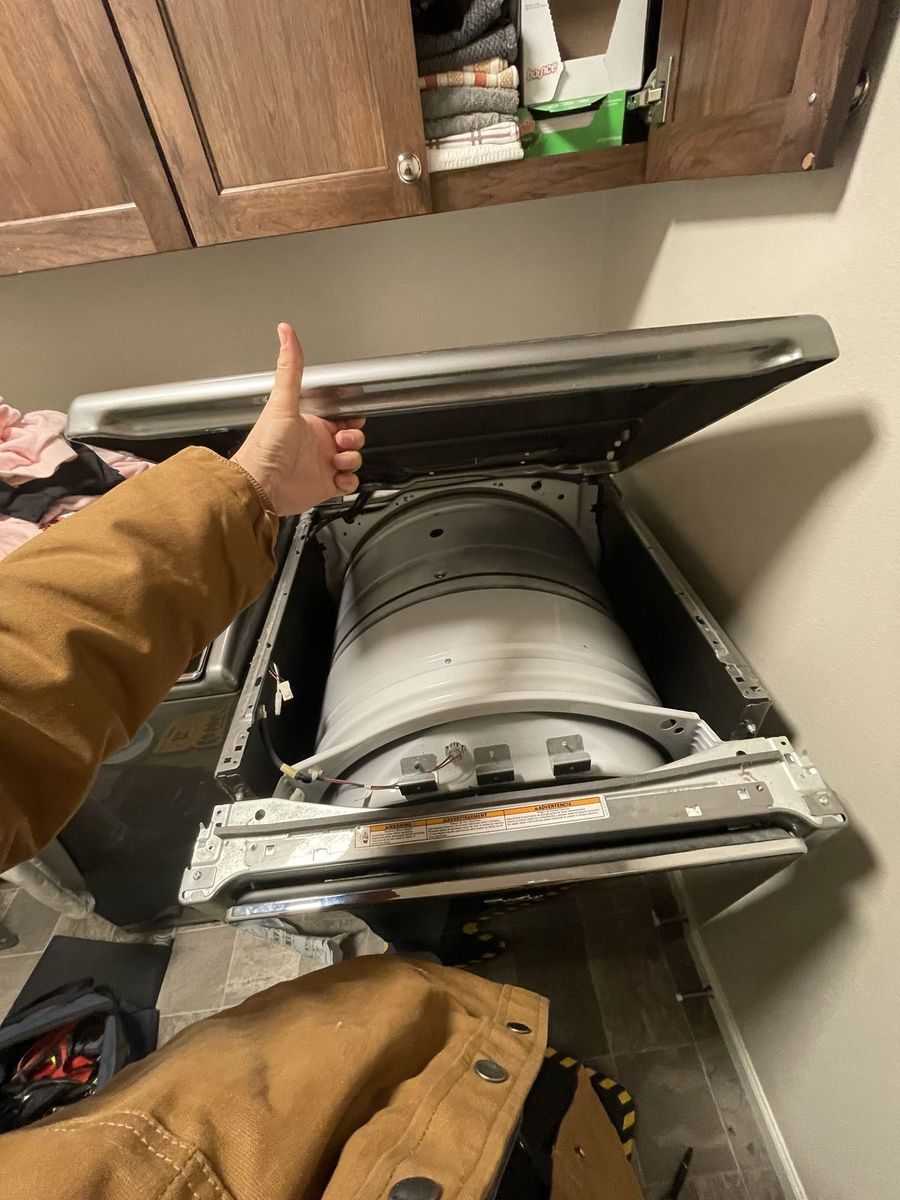
08 / 12
A top-load washer with the top panel raised. Lid switch, drive coupler and drain pump are all within reach once the top comes up.
Read the service page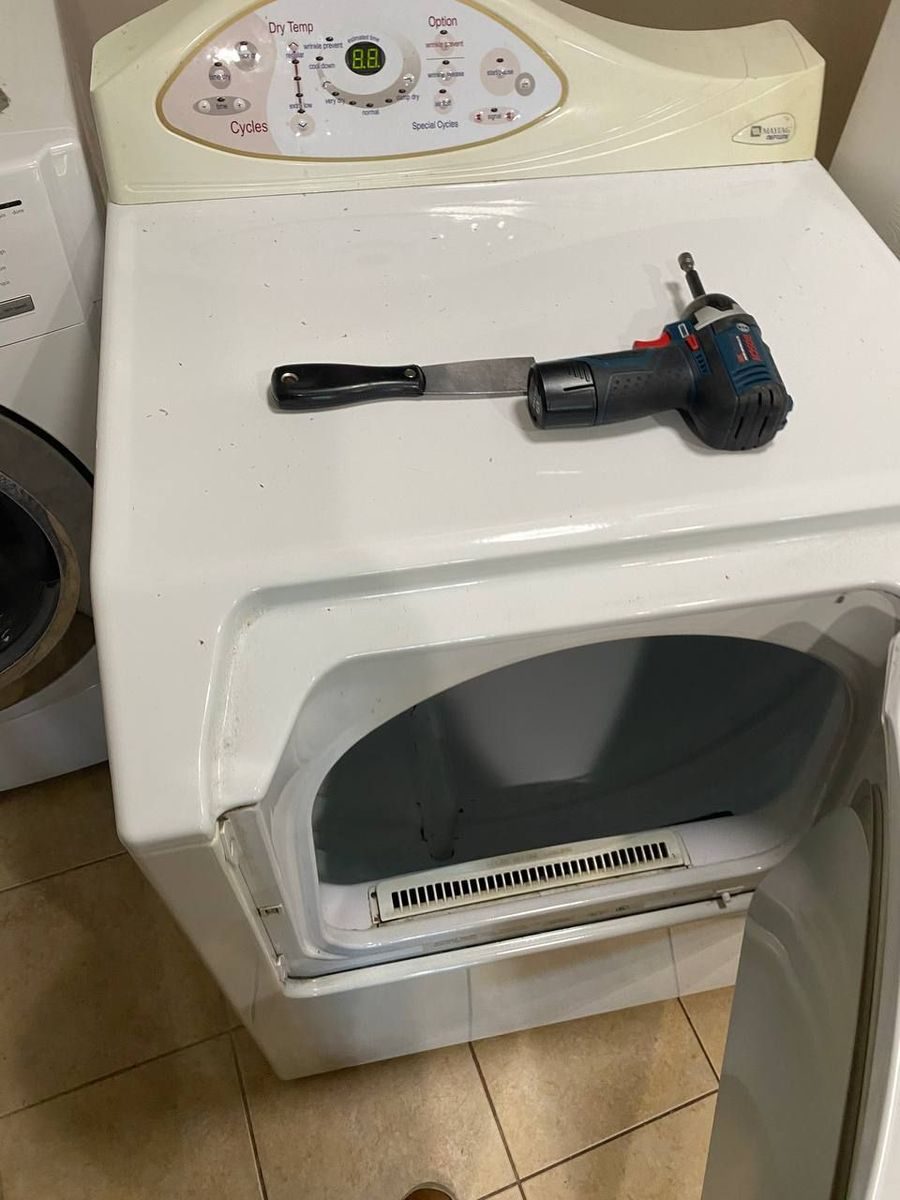
09 / 12
An electric dryer opened up in a laundry room. The thermal fuse, the heating element and the vent run behind the machine get tested together.
Read the service page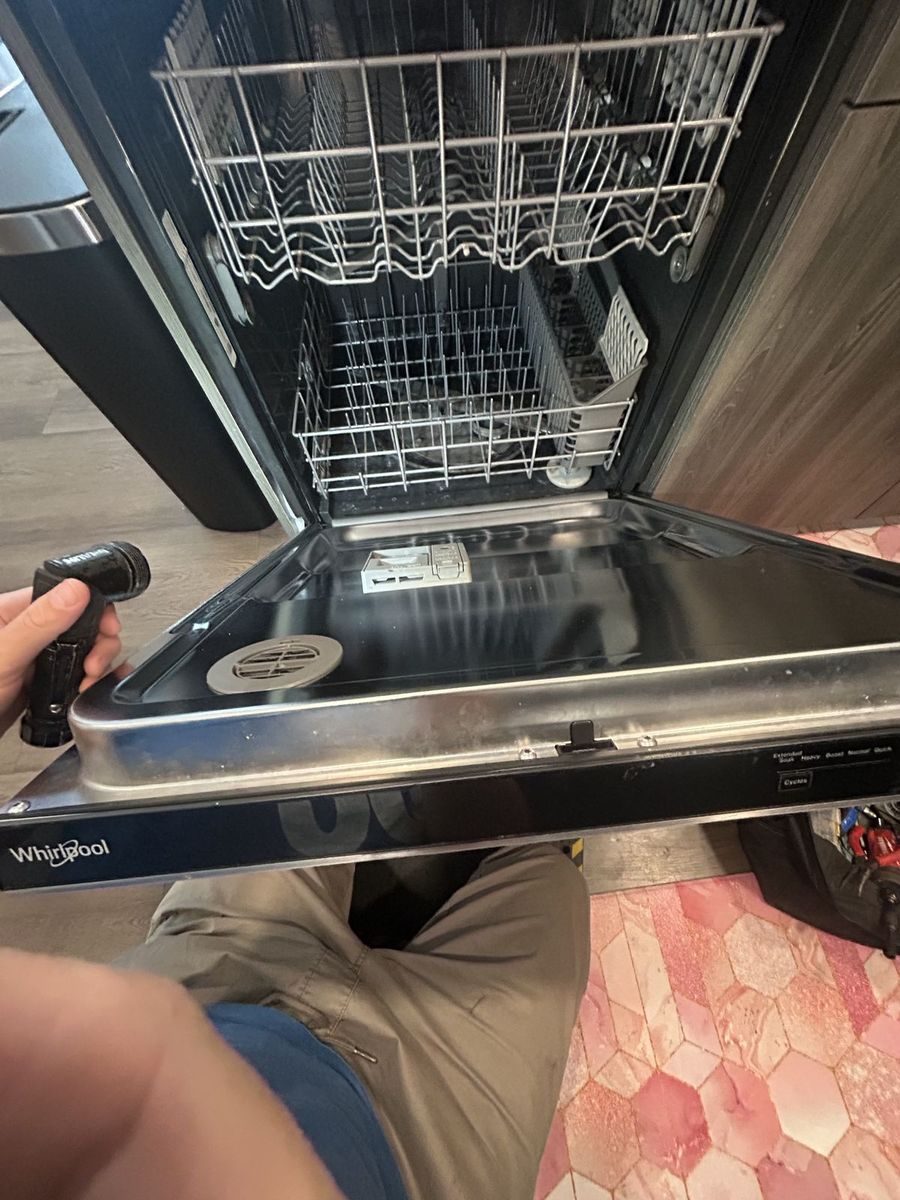
10 / 12
Door open and racks out on a dishwasher. A puddle left behind after the last rinse sends us to the filter screen, the pump and the hose route under the sink, in that order.
Read the service page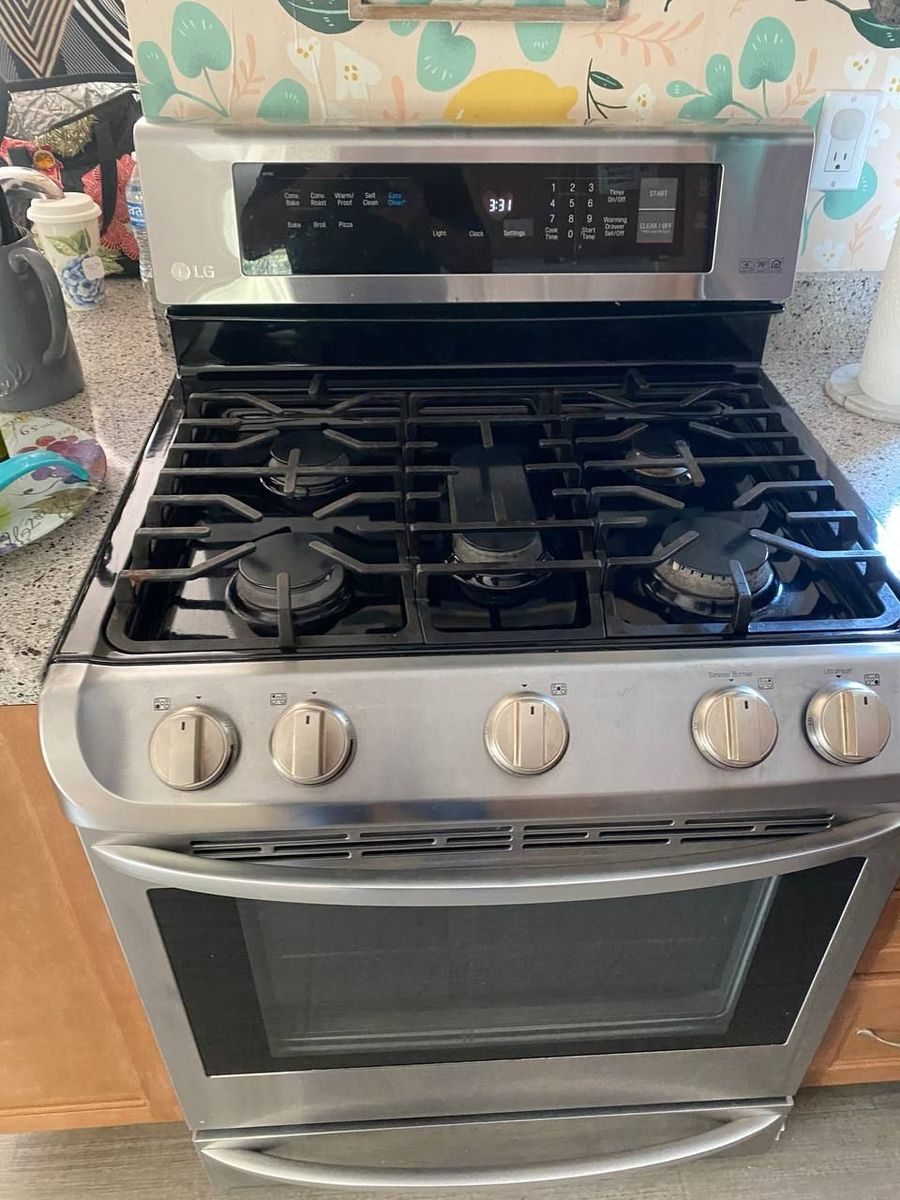
11 / 12
A five-burner gas range ready for testing. Burner igniters, the spark module and the bake igniter's amp draw are measured before a part is ordered.
Read the service page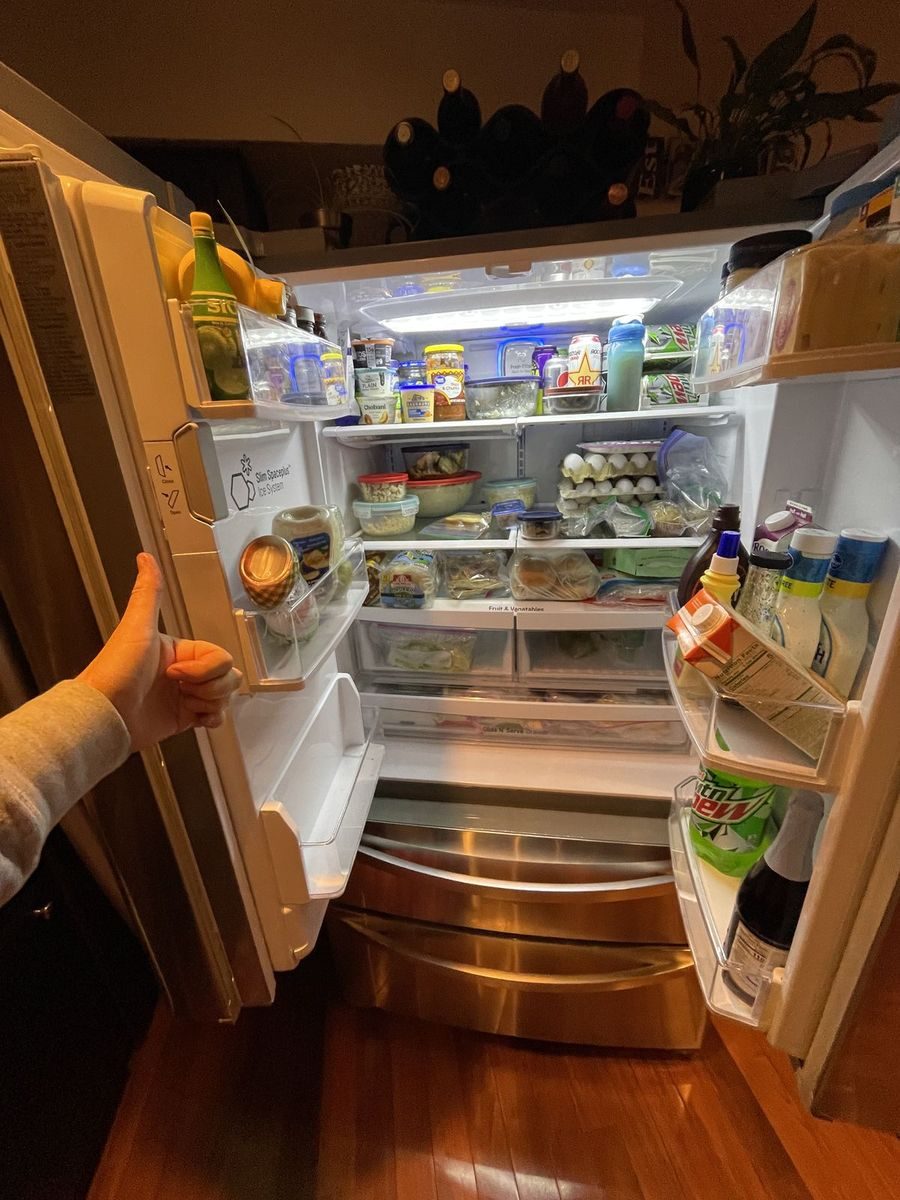
12 / 12
A French-door refrigerator open for diagnosis. Slow ice starts with the water: the inlet valve, the filter and a fill tube that can freeze shut.
Read the service pageTalk to us
Ask for a day and arrival window on the form, or ring the office any day from 8 AM to 7 PM to hear the diagnostic fee before committing.
Book a visit
One slip, filled top to bottom. The office phones to confirm the visit, and the technician calls again when on the way.
Every number below is a public state record. Look each one up on L&I Verify, or read what each license allows on our licenses page.
What our licenses cover