01 / 12
Heat pump repair
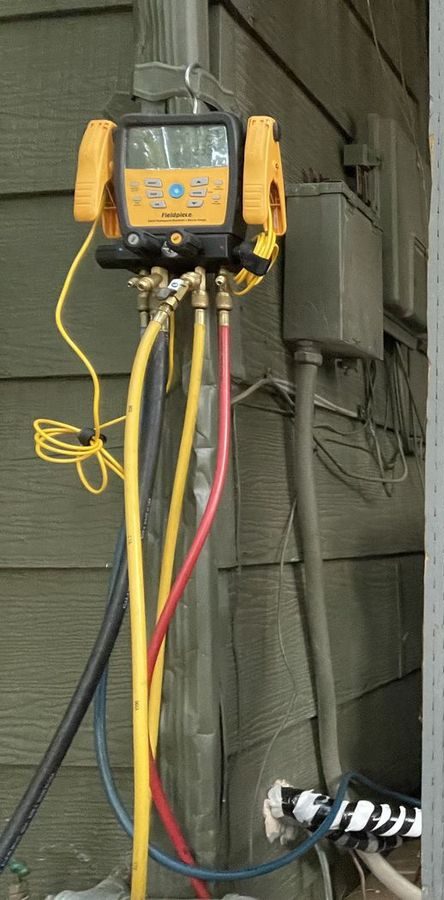
Digital gauges hang by the outdoor unit while the heat pump runs. Superheat and subcooling show whether the charge, a valve or the defrost board is the problem.
Read the service page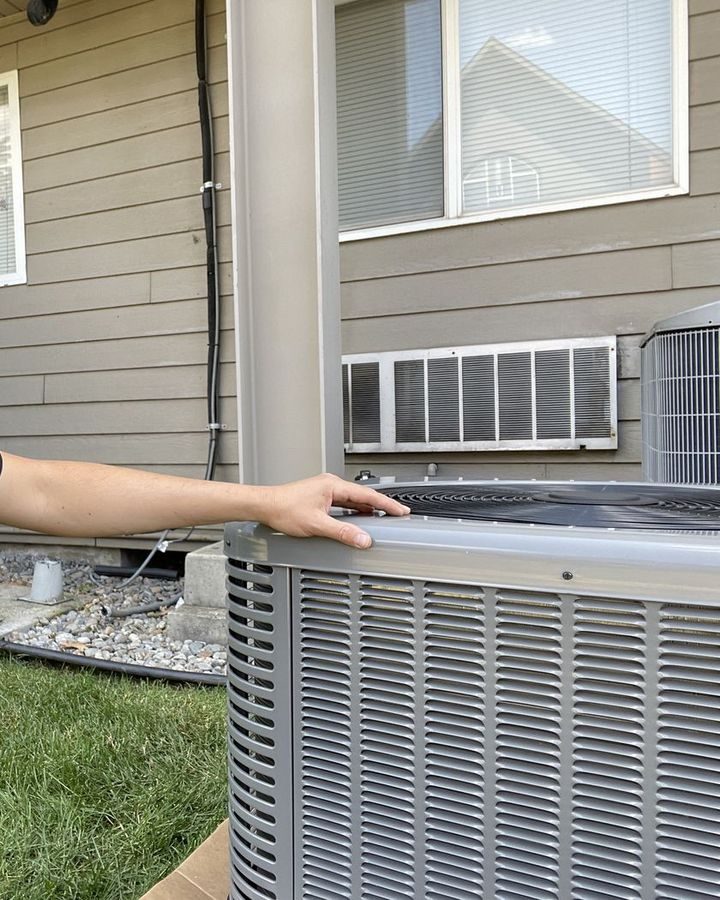
Kennewick, WA · 99336 · 99337 · 99338
Kennewick homes run on two kinds of heat: heat pumps that wrestle with freezing fog and gas furnaces that depend on a clean flame sensor. Add Columbia River water with real mineral in it, and the city has a repair pattern of its own. Here is how it plays out across town.
Short answer
Larch HVAC & Appliance repairs heat pumps, gas furnaces, central air, ductless mini-splits and household appliances throughout Kennewick's 99336, 99337 and 99338 ZIP codes. Pick a date, then an arrival window, on the booking page, or phone any day from 8 AM to 7 PM. A diagnostic fee applies, quoted by the office up front; approve the fix and its total absorbs that fee.
Two things set Kennewick apart: a long, hot cooling season and tap water with more mineral in it than most people expect. Kennewick records show 100°F as early as mid-May and as late as early September, so an air conditioner or heat pump here can be under heavy load from late spring well past Labor Day. The water, drawn from the Columbia River and Ranney collector wells, leaves scale in anything with a valve, a screen or a spray arm.
Housing adds a third variable. Southridge and Canyon Lakes hold larger, newer homes. Creekstone and Cherry Creek Estates date from the 2000s and 2010s, which puts their builder-grade equipment squarely in the years when parts begin to quit. Hansen Park, the streets off Clearwater Avenue and the grid near downtown are older still. A furnace call in Union/Edison and one in Southridge rarely turn out to be the same job.
Winter leaves its own fingerprint. When cold air pools in the Columbia Basin beneath warmer air, Kennewick can sit under fog and freezing fog for days or weeks with highs stuck in the 30s. Heat pumps frost up and defrost again and again in that air, while gas furnaces run long, steady cycles. Those gray weeks are when worn igniters and tired defrost boards finally quit.
On a heat pump, the defrost system causes most winter trouble and the run capacitor most summer trouble. During freezing fog, our technicians confirm that the defrost board starts a cycle, that the reversing valve shifts cleanly and that the coil sensor reads true, because a coil that stays iced points to one of the three. In July and August we test the capacitor's microfarads against its rating, look for pitted contactor points, and read superheat and subcooling before anyone talks about refrigerant. Any leak search or charging happens under the EPA 608 Universal credential our technicians carry.
Gas furnaces tend to fail in a familiar order. A burner that catches, burns for a moment and cuts out usually means a dirty flame sensor reading low microamps. No ignition at all often traces to a cracked hot-surface igniter, a pressure switch stuck open, or an inducer motor that hums without spinning. Gas odor in the house? Walk outside before doing anything else, and make the 911 or gas-utility call from a safe distance. We repair the furnace itself, never the gas piping, all under our 06A HVAC/Refrigeration specialty.
It shortens the life of nearly every water valve in the kitchen and laundry room. Kennewick's hardness swings between 50 and 200 parts per million through the year, roughly 5–14 grains per gallon. That mineral load narrows the screen in a washer inlet valve, crusts dishwasher spray arms and heating elements, and slows the refrigerator water valve until the ice maker's cubes come out thin and hollow.
Our technicians clean or replace inlet valves and screens, descale a part when it can be saved, and say so plainly when it cannot. Beyond water, Kennewick appliance calls look like this: refrigerators in hot garages losing ground in August, dryers with a blown thermal fuse behind a lint-packed vent, ovens with an open bake element or a weak igniter. LG, GE, Whirlpool, KitchenAid, Maytag, Bosch and Frigidaire are all familiar on Kennewick service calls, and the work falls under our 07D Appliance Repair specialty.
Larger, newer houses in Southridge sometimes split heating and cooling between two systems or two zones, so a complaint about one floor may trace to a zone damper, a thermostat or a second air handler. We check the temperature split on each system separately and read static pressure before blaming the equipment.
Bigger kitchens in Canyon Lakes may include a built-in fridge, double wall ovens or a panel-front dishwasher. Those units are the most sensitive to hard water and to dust drawn across the condenser, so a refrigerator visit here usually includes a condenser coil cleaning and a look at the water valve and its screen.
Built in the 2000s and 2010s, these neighborhoods are where original builder-grade heat pumps, furnaces and appliances are aging side by side. Capacitors, igniters and washer drain pumps usually go first. When repairs stop adding up, we write a replacement quote that shows equipment and installation as one figure.
Established homes around Hansen Park and along the Clearwater corridor often carry a second or third generation of equipment on duct runs sized for the first. Mismatched ductwork chokes airflow, so we measure static pressure and check the filter rack before anyone recommends a bigger unit.
Around Union and Edison and in the blocks near downtown, homes tend to have compact utility rooms and furnaces tucked into closets. Tight clearances make an inducer or igniter swap take longer, and older thermostat cable sometimes lacks the common wire a modern thermostat wants. We sort out the low-voltage side on site.
Up on the hills, outdoor units take the west wind with nothing to break it. Tumbleweeds, sand and cottonwood fluff pack into condenser fins faster, and head pressure climbs with them. A spring coil cleaning before the first 100°F stretch is well worth booking for a hillside home.
One photo per tab from our service calls. Tap a tab, or let the file turn on its own.
01 / 12
Digital gauges hang by the outdoor unit while the heat pump runs. Superheat and subcooling show whether the charge, a valve or the defrost board is the problem.
Read the service page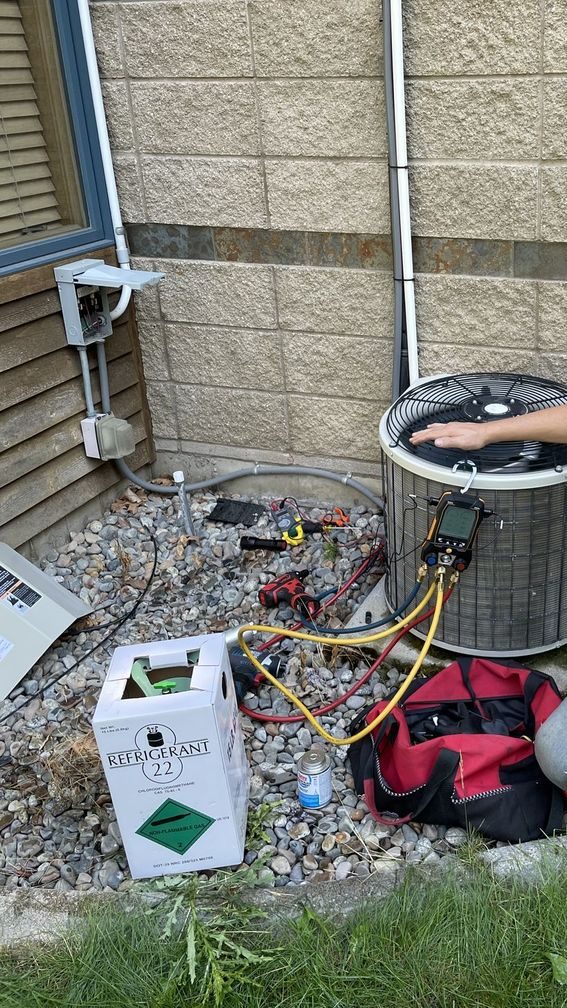
02 / 12
An older condenser under test with hoses on the service ports. The capacitor, contactor and fan motor get checked before anyone talks about refrigerant.
Read the service page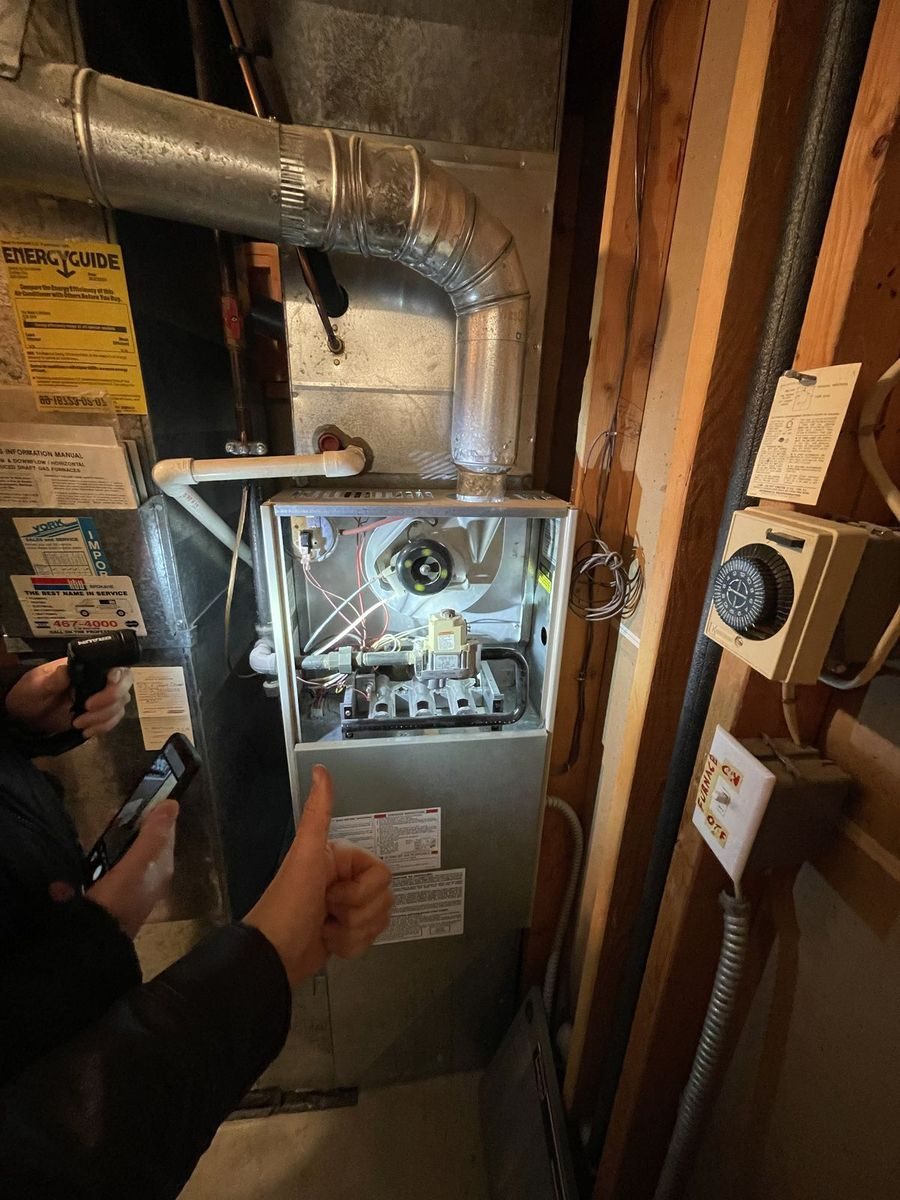
03 / 12
The burner compartment of a gas furnace, open. We follow the start-up order, inducer, pressure switch, igniter, flame sensor, until the step that fails.
Read the service page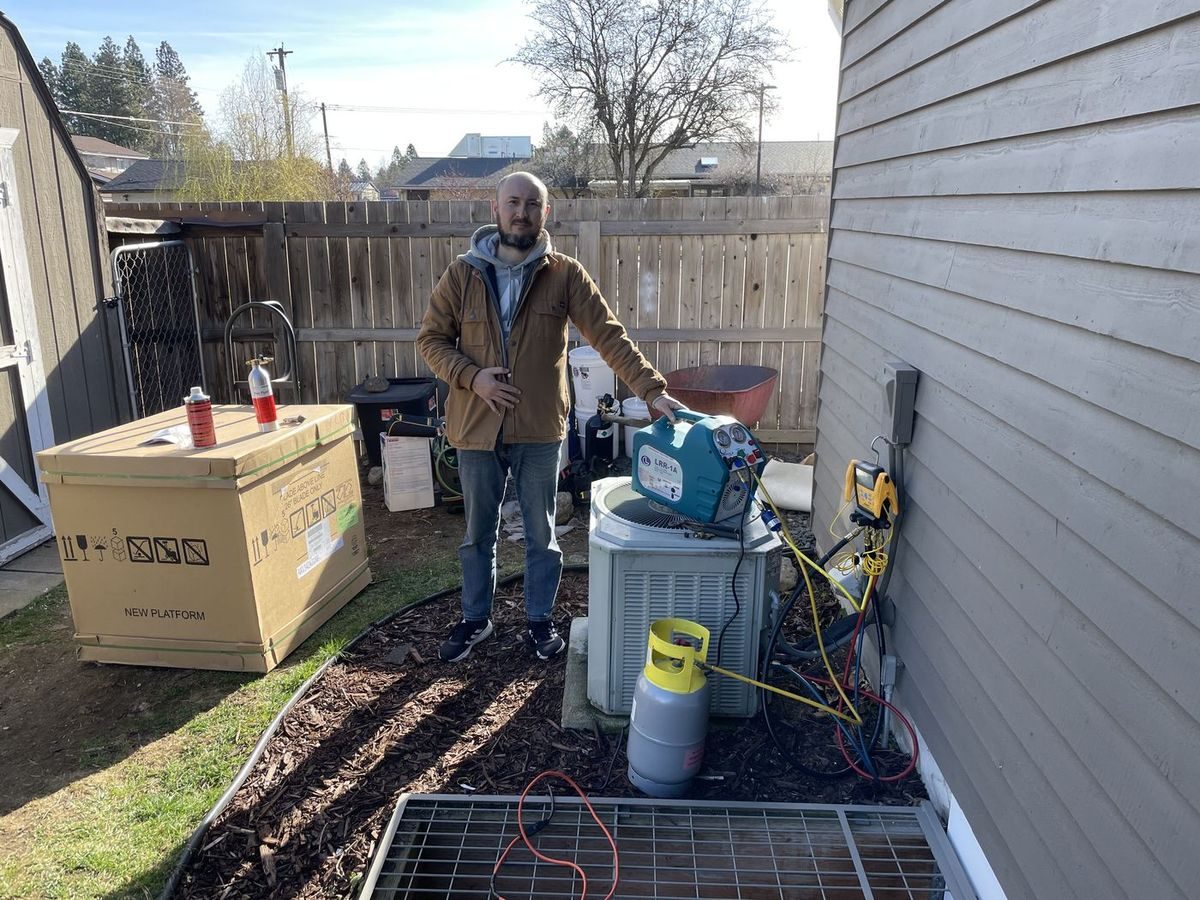
04 / 12
A recovery machine and cylinder beside an outdoor unit. On a replacement, the old refrigerant is pulled into the cylinder instead of the air.
Read the service page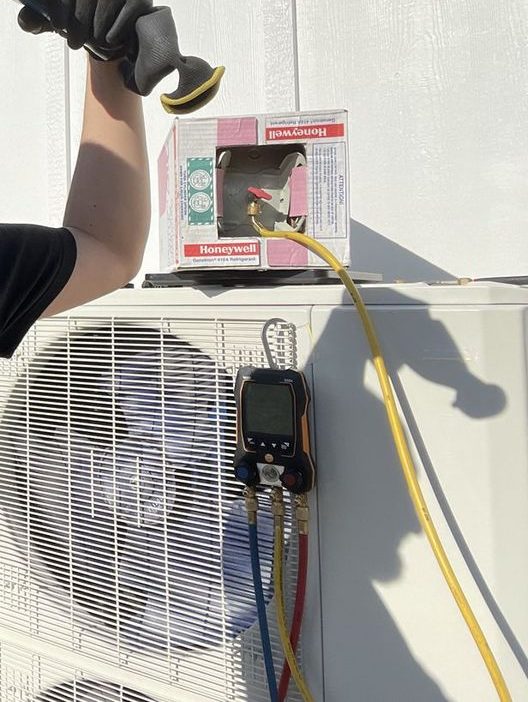
05 / 12
A ductless outdoor unit with a gauge set on it. Mini-splits get the same pressure and temperature readings as a central system, plus a look at the line-set insulation.
Read the service page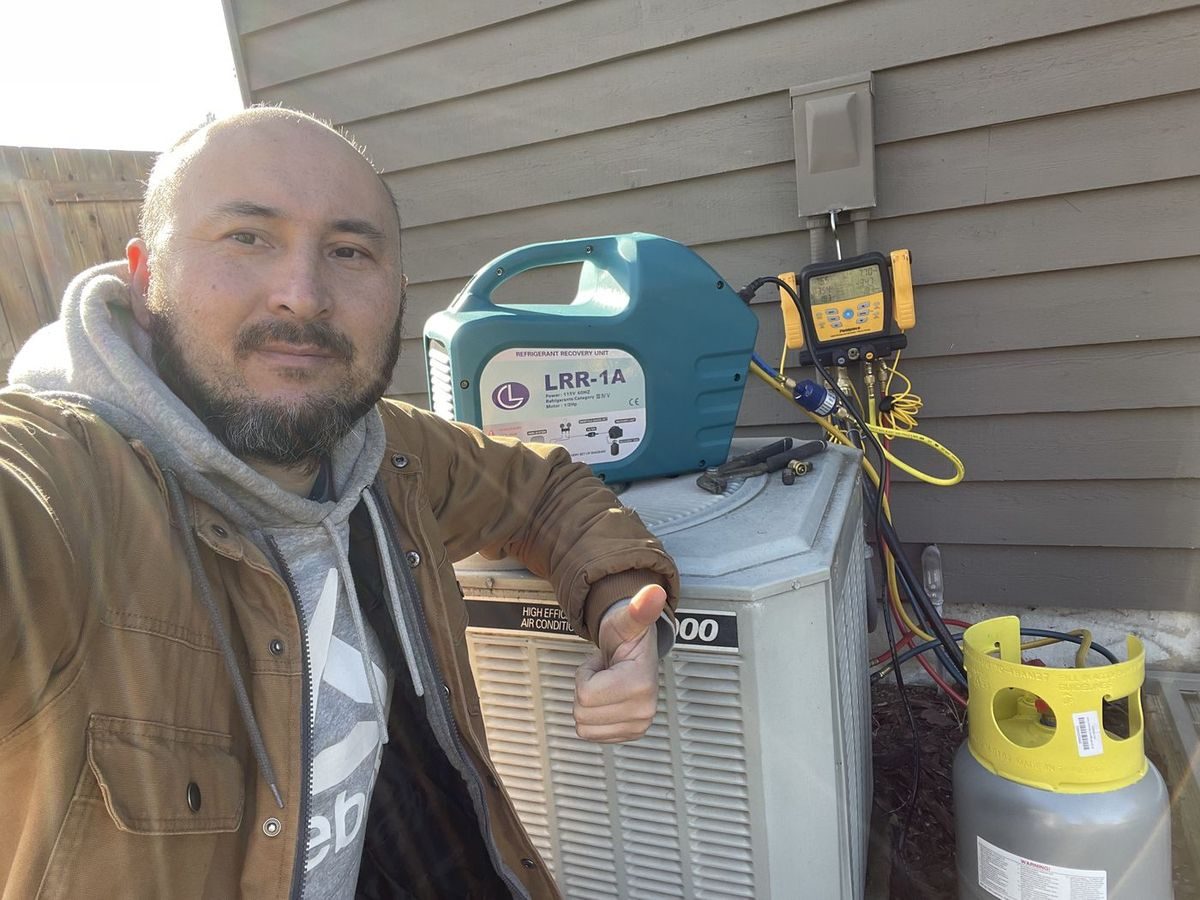
06 / 12
Gauges on a condenser during a seasonal visit. Spring visits wash the dust out of the coil; fall visits test defrost and heat strips before the fog weeks.
Read the service page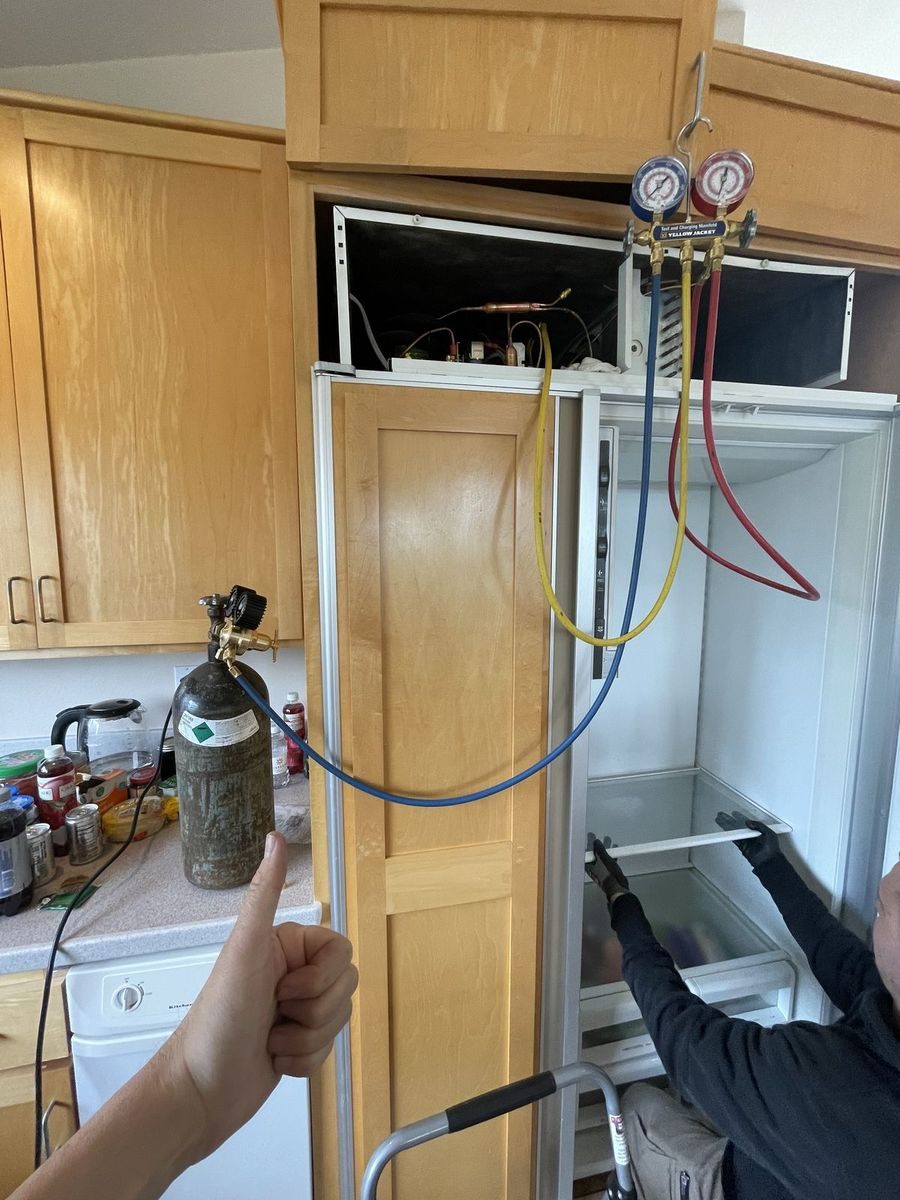
07 / 12
Gauges connected to a built-in refrigerator's sealed system. Leak searches, brazing and recharges happen in the kitchen, so the fridge stays where it is.
Read the service page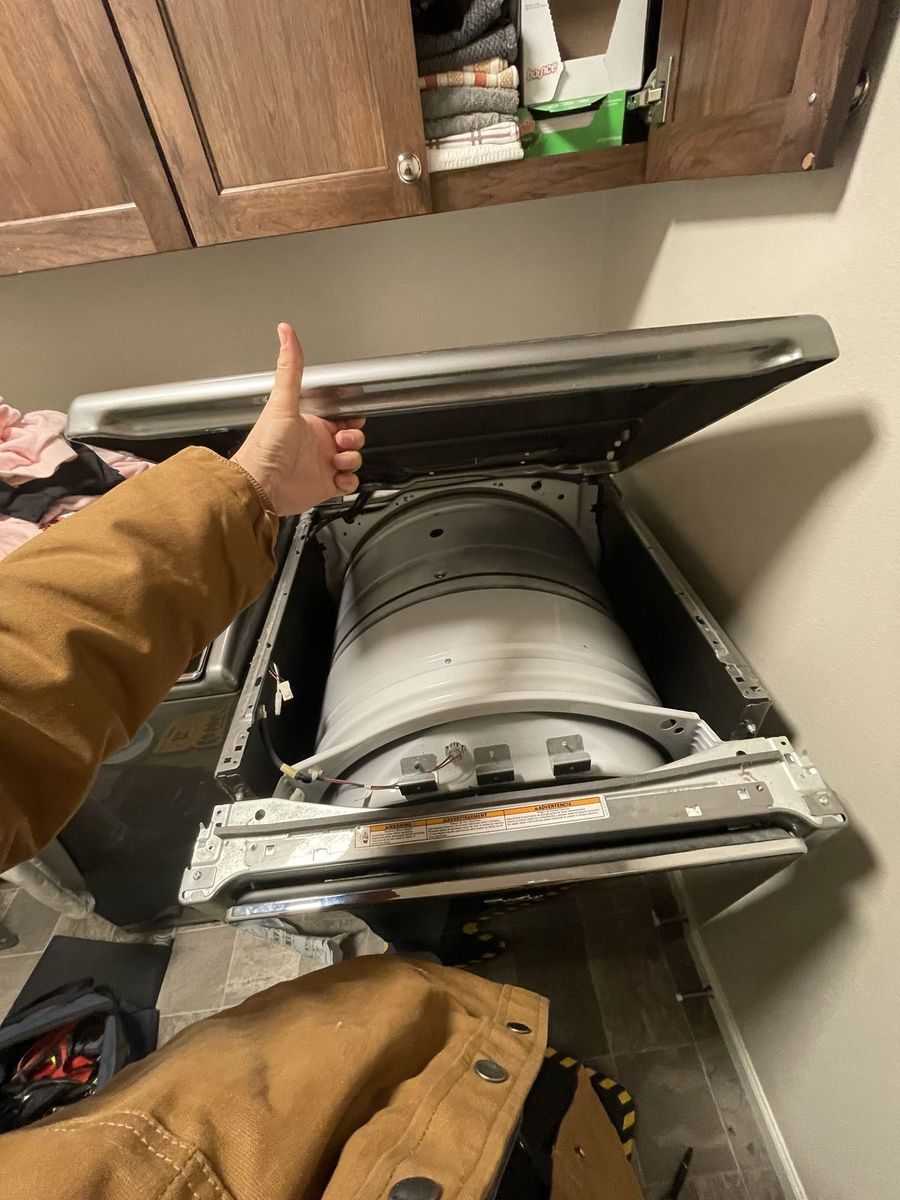
08 / 12
A top-load washer with the top panel raised. Lid switch, drive coupler and drain pump are all within reach once the top comes up.
Read the service page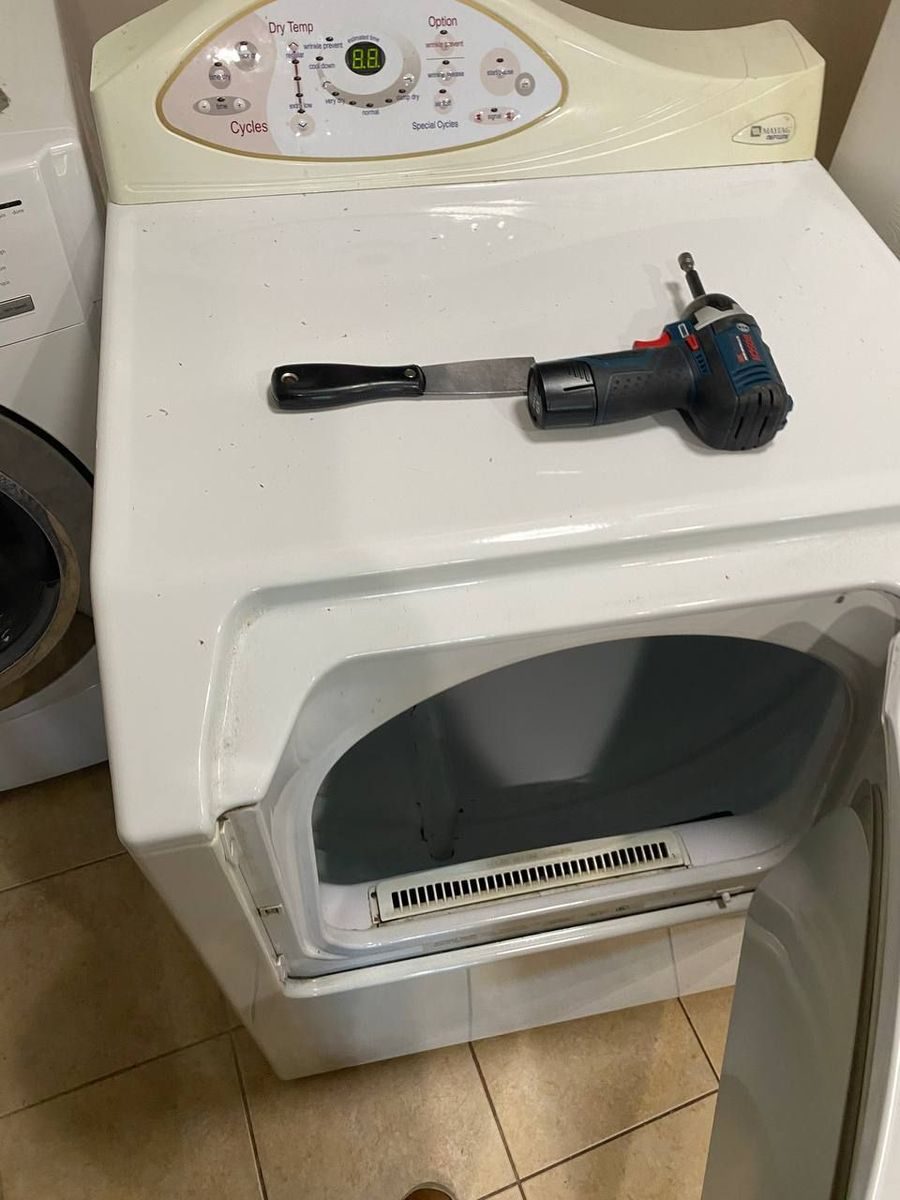
09 / 12
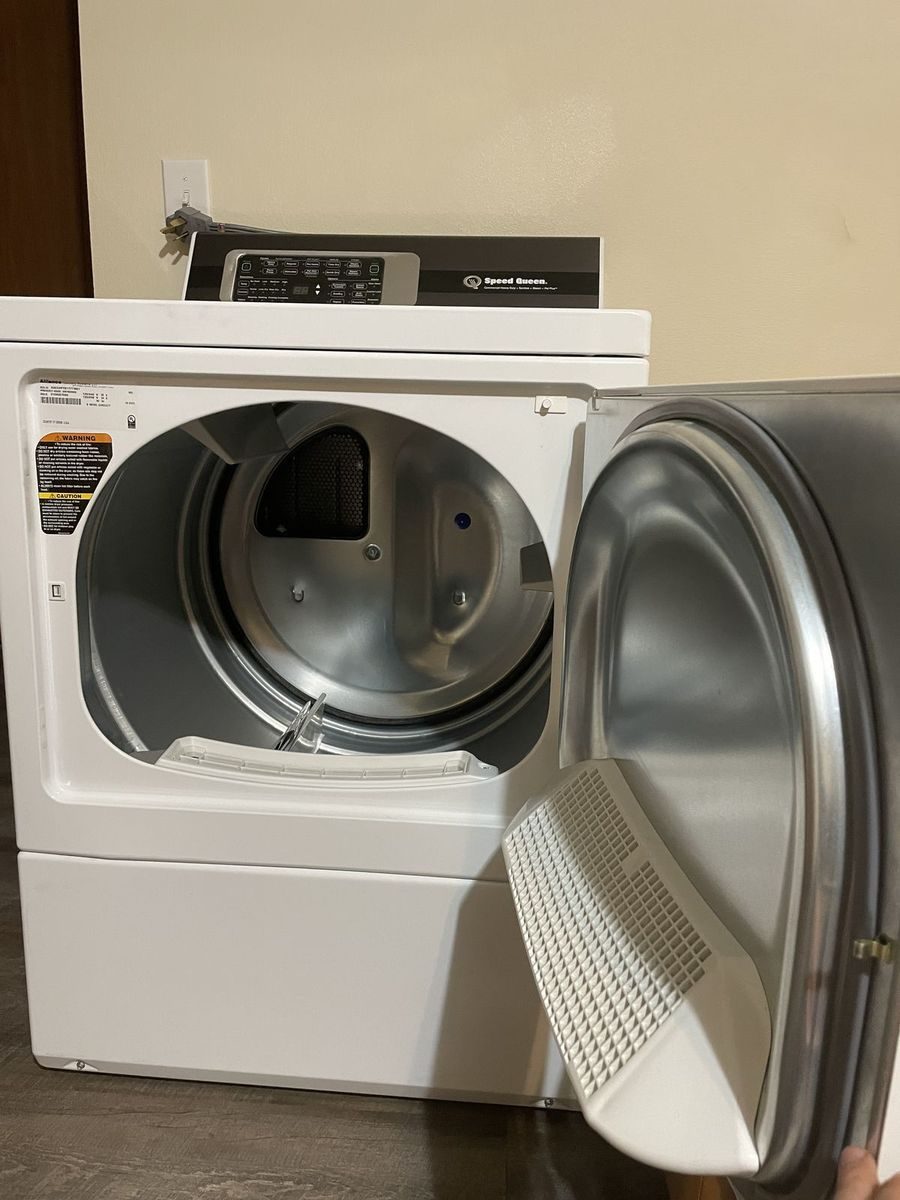
An electric dryer opened up in a laundry room. The thermal fuse, the heating element and the vent run behind the machine get tested together.
Read the service page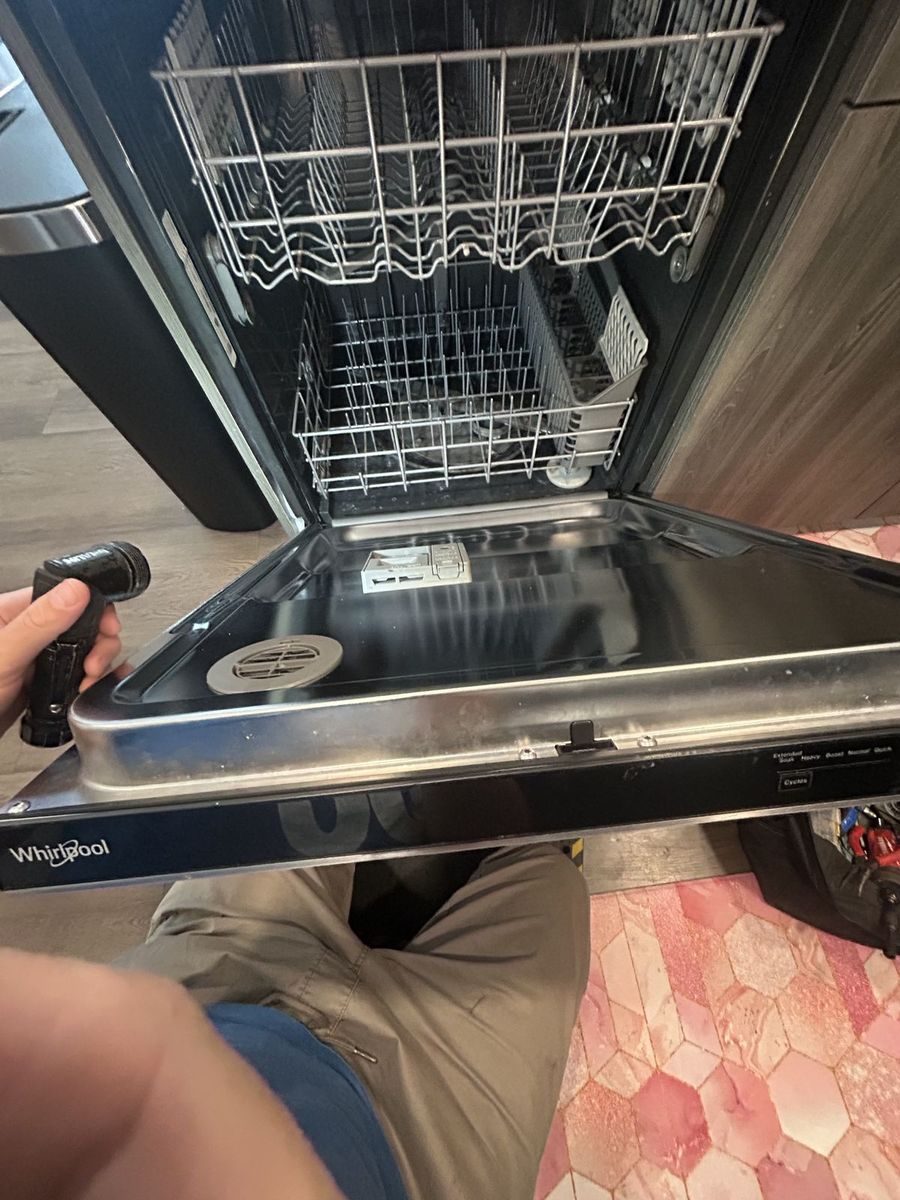
10 / 12
Door open and racks out on a dishwasher. A puddle left behind after the last rinse sends us to the filter screen, the pump and the hose route under the sink, in that order.
Read the service page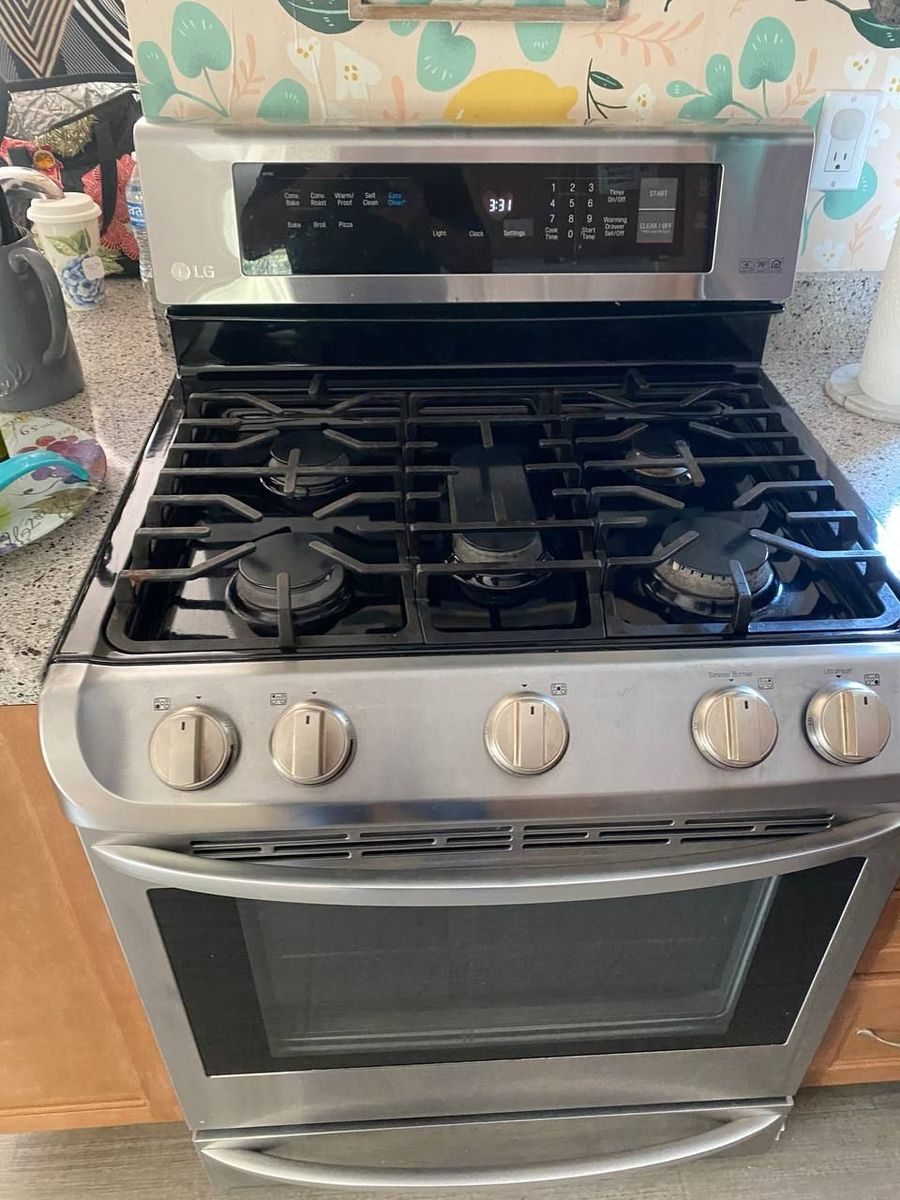
11 / 12
A five-burner gas range ready for testing. Burner igniters, the spark module and the bake igniter's amp draw are measured before a part is ordered.
Read the service page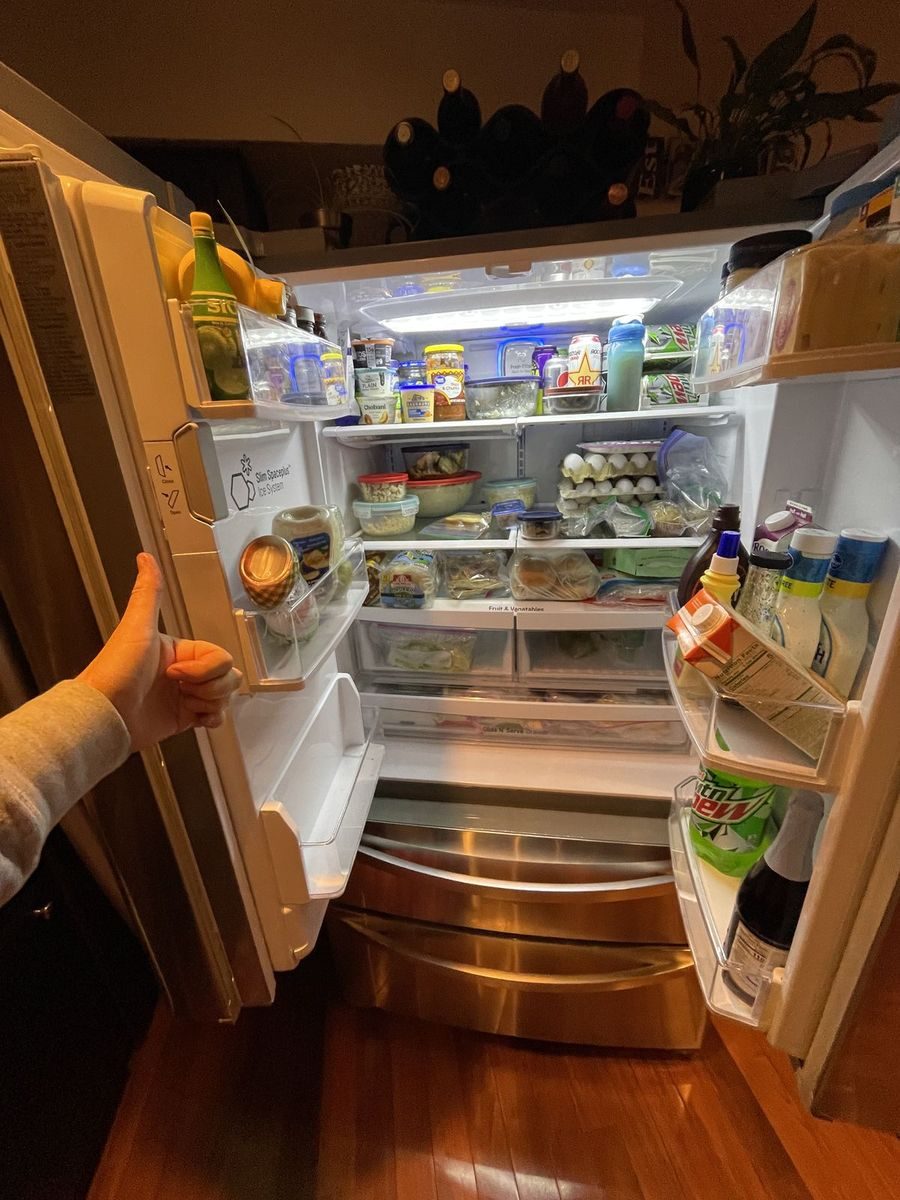
12 / 12
A French-door refrigerator open for diagnosis. Slow ice starts with the water: the inlet valve, the filter and a fill tube that can freeze shut.
Read the service pageProbably not. During inversions, cold, wet air frosts the outdoor coil fast, and a Kennewick heat pump answers with frequent defrost cycles, a burst of steam and a whoosh as the reversing valve shifts. Call us if the coil stays caked white after a cycle, the AUX light on the thermostat never clears, or the unit runs without warming the house. Those point to a defrost board, sensor or charge problem.
Somewhere between 50 and 200 ppm depending on the month, or about 5–14 grains per gallon. Over months, that coats spray arms and slows an inlet valve. Run a dishwasher descaler now and then, keep the rinse aid filled, and book a visit if fills get slow or glasses come out filmed even after a cleaning cycle.
The diagnostic visit is billed as its own fee, and the office quotes it before the appointment is set. Agree to the repair, and the diagnostic amount is counted inside what the repair costs, not stacked on it. Say no, and you settle only the diagnostic. Every repair price reaches you in writing first, and the invoice states the written warranty terms.
Yes. With the Blue Bridge (US 395) and the Cable Bridge both linking the two cities, a Pasco address and a Kennewick address can land on the same day's route. Once booked, the office phones you to lock in the window, and the technician rings ahead while en route.
That hinges on which part failed and on the shape of everything around it. A capacitor, contactor or igniter is a modest fix on equipment of almost any age. A failed compressor, a leaking coil or a cracked heat exchanger on builder-grade equipment from that era is a different conversation. We put both options in writing, and a replacement quote lists equipment and installation as a single figure.
Talk to us
Pick your date and arrival window through the online form, or reach us by phone any day, 8 AM to 7 PM. A confirming call from the office follows, and no repair begins without your yes.
Book a visit
One slip, filled top to bottom. The office phones to confirm the visit, and the technician calls again when on the way.
Every number below is a public state record. Look each one up on L&I Verify, or read what each license allows on our licenses page.
What our licenses cover