01 / 12
Refrigerator repair
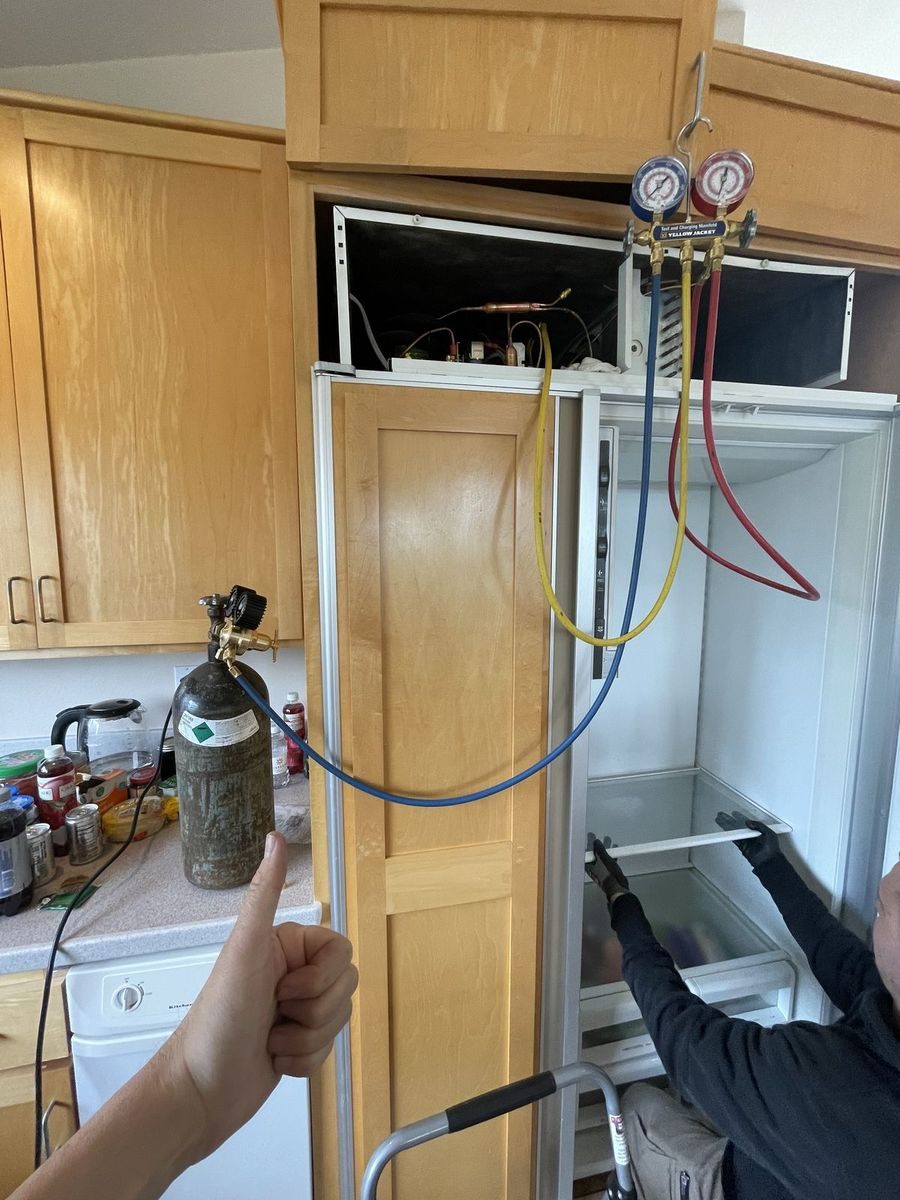
Gauges connected to a built-in refrigerator's sealed system. Leak searches, brazing and recharges happen in the kitchen, so the fridge stays where it is.
Read the service page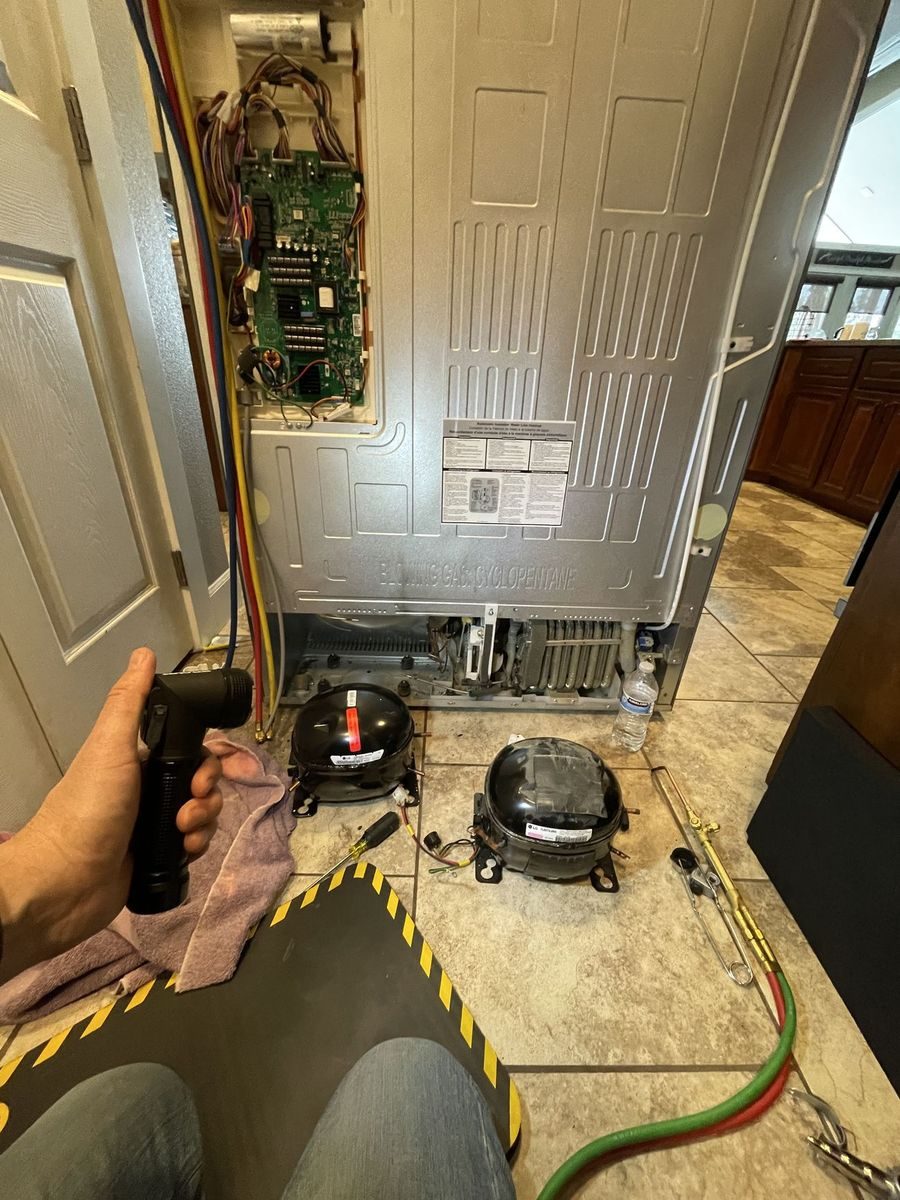
Refrigerator and freezer repair, Tri-Cities
A refrigerator rarely quits all at once. It drifts: milk spoils a day early, the freezer grows a frost wall, the compressor never seems to rest. Our technicians find the part that started the drift, write up the price, and fix it once you approve.
Short answer
If the freezer is holding temperature while the refrigerator section warms, look first at the evaporator fan and the defrost circuit. A defrost heater, thermistor, timer or board that quits lets the evaporator coil ice solid; a stalled fan stops cold air from crossing over. Dusty condenser coils and tired start relays come next. Our technicians test each one, and the written price comes to you for a yes or no before any repair.
In most refrigerators the fresh-food side has no cooling coil of its own, so it lives on air borrowed from the freezer. One evaporator sits behind the freezer's back panel, and a small fan blows its chill through a channel, past a damper on many models, and down or up into the refrigerator section. Bury that coil in frost, or stop the fan, and the freezer hangs on near zero while the shelves creep into the 40s and then the 50s.
Frost on the coil is normal. A working defrost system clears it on a regular schedule: a heater beside the coil warms it for a short stretch, a thermistor or bimetal defrost thermostat reports when the coil is clear, and a defrost timer or control board decides when to start. If any one of those fails, frost keeps stacking until air can no longer pass. Turning the dial colder will not help.
Dusty condenser coils, a clicking start relay or a stuck air damper can look similar at first. Telling them apart takes a thermometer, a meter and the freezer's back panel off. Refrigerators and freezers fall under 07D Appliance Repair, one of the two specialties on our Washington Labor & Industries electrical contractor license, and the record is public on the state's Verify lookup.
The technician starts with readings, not guesses. A thermometer in each compartment, the compressor's amp draw, and resistance across the defrost heater and thermistor usually narrow the fault before a single panel comes off. Frost spread evenly over the entire coil says defrost trouble; frost clinging to only the first few inches of tubing hints at a short refrigerant charge.
With the cause pinned down, the technician writes the repair price on the work order and stops there until you decide. A diagnostic fee applies to the visit, and the office quotes it as you schedule. Approving the work credits that fee toward the repair; passing on it leaves the fee as your only charge. Relays, overload protectors, fan motors, door switches and thermal fuses usually travel on the truck; a defrost board or sealed-system component may need ordering, and that part's price is set down before the order. The invoice spells out the warranty terms.
Summer pushes from one side. July highs average about 92°F, most summers bring 100°F days, and Kennewick has logged them as early as mid-May and as late as early September. A closed garage on a 100°F afternoon runs hotter than the air outside, and a beer fridge or spare chest freezer parked out there, or in a detached shop off Bombing Range Road, Keene Road or on Finley acreage, may run with almost no rest. Its condenser sits near the floor, right where blowing dust, cottonwood fluff and grit tracked in through an open door settle. A matted coil means higher pressures, hotter compressor windings and a start relay that wears out early.
January pushes from the other. Average lows sit around 28°F, and cold snaps can drive them toward 10°F. Plenty of two-door models carry their only thermostat sensor in the refrigerator section. When garage air gets nearly as cold as that setting, the compressor barely cycles on, and the freezer drifts up toward thawing while the fridge side seems perfectly happy. Some models are rated for unheated spaces or accept a garage heater kit from the maker; others belong indoors from December through February.
One photo per tab from our service calls. Tap a tab, or let the file turn on its own.
01 / 12
Gauges connected to a built-in refrigerator's sealed system. Leak searches, brazing and recharges happen in the kitchen, so the fridge stays where it is.
Read the service page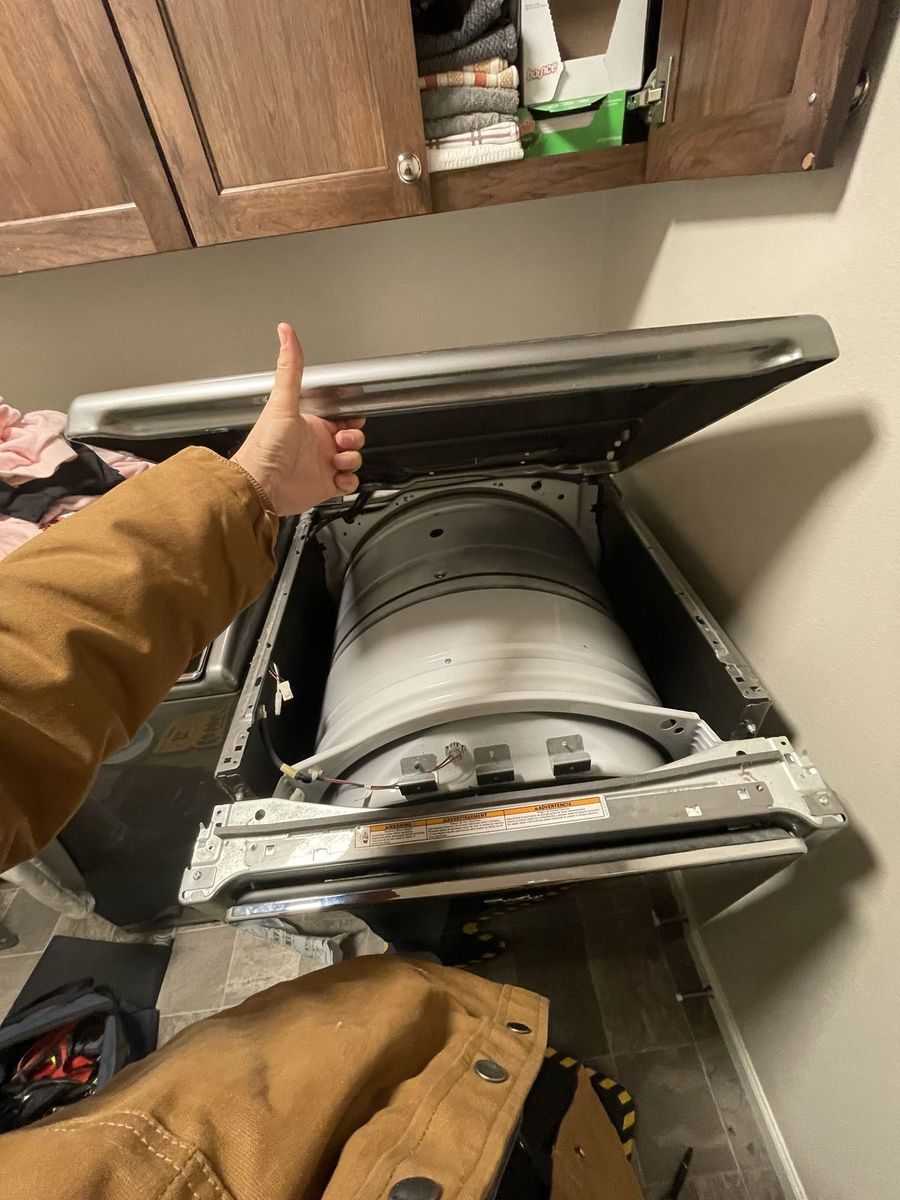
02 / 12
A top-load washer with the top panel raised. Lid switch, drive coupler and drain pump are all within reach once the top comes up.
Read the service page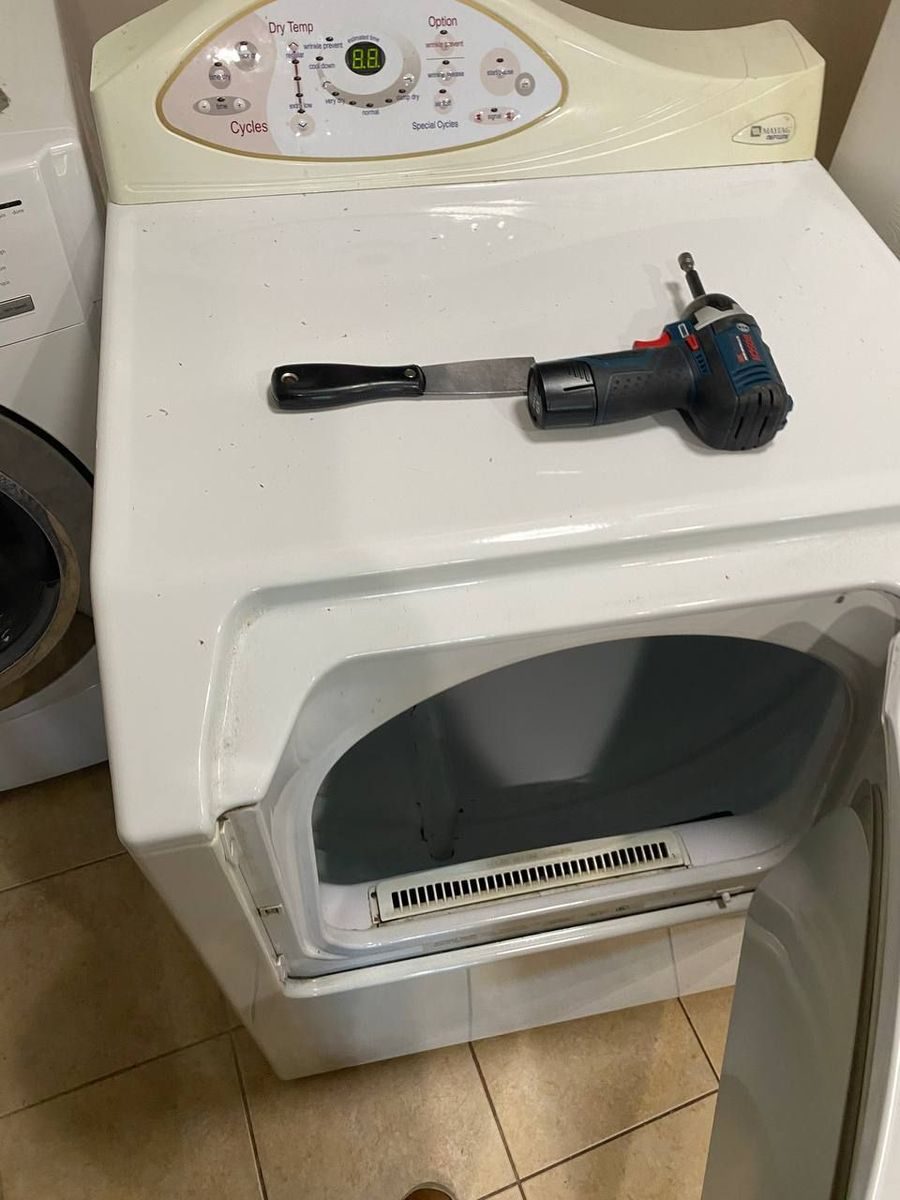
03 / 12
An electric dryer opened up in a laundry room. The thermal fuse, the heating element and the vent run behind the machine get tested together.
Read the service page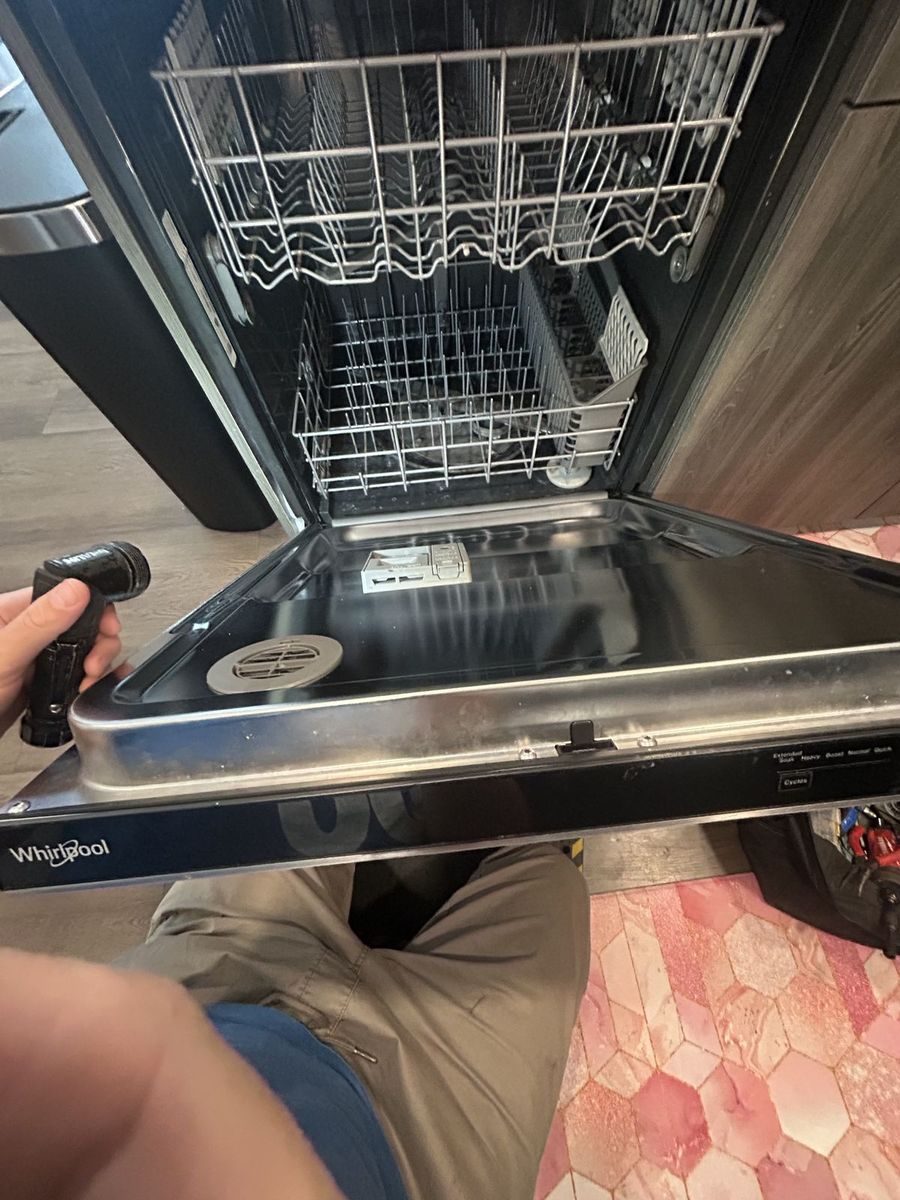
04 / 12
Door open and racks out on a dishwasher. A puddle left behind after the last rinse sends us to the filter screen, the pump and the hose route under the sink, in that order.
Read the service page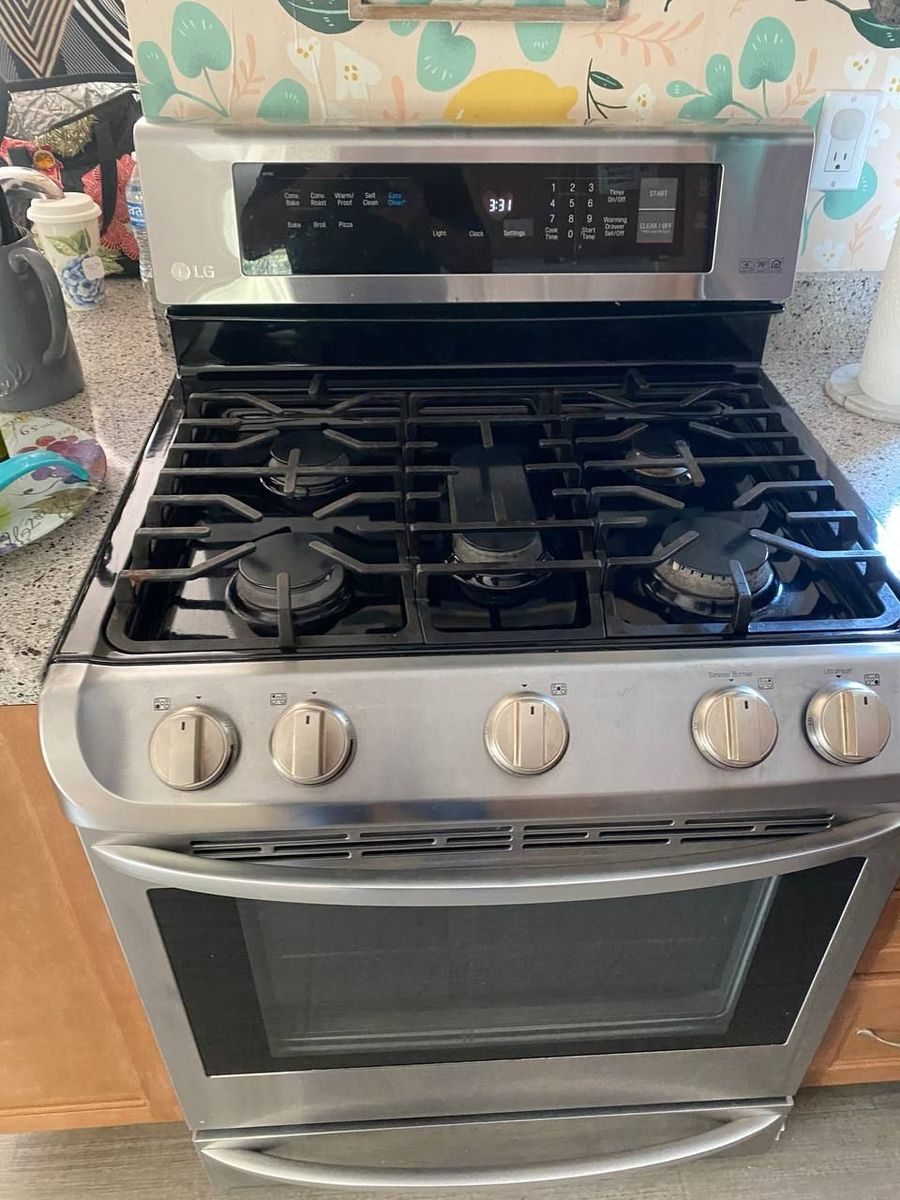
05 / 12
A five-burner gas range ready for testing. Burner igniters, the spark module and the bake igniter's amp draw are measured before a part is ordered.
Read the service page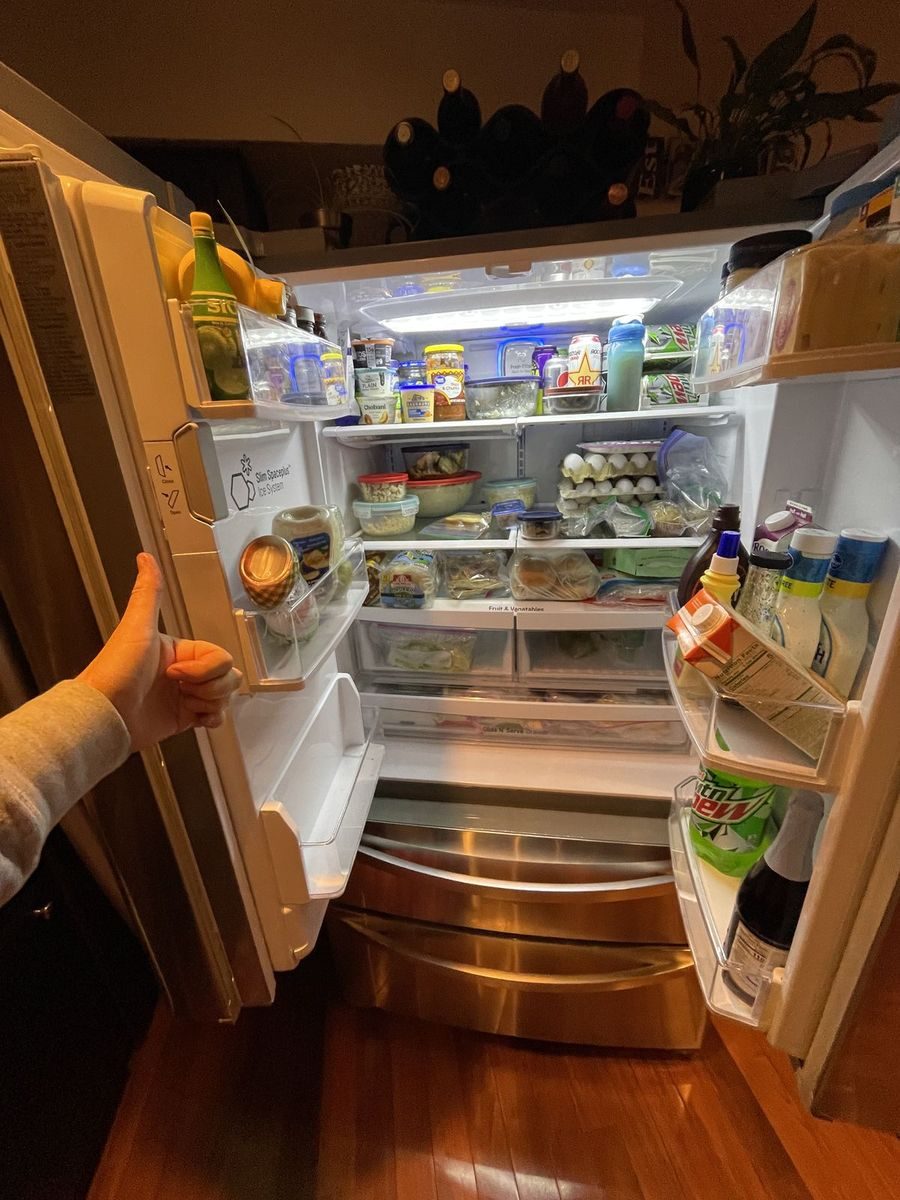
06 / 12
A French-door refrigerator open for diagnosis. Slow ice starts with the water: the inlet valve, the filter and a fill tube that can freeze shut.
Read the service page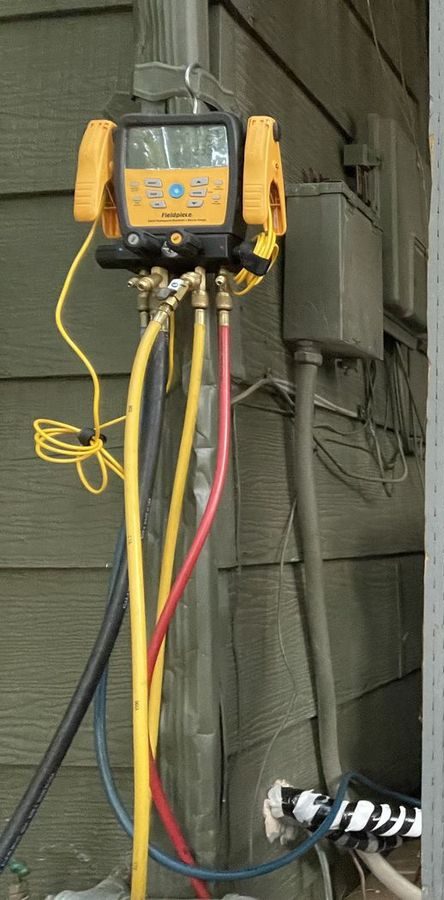
07 / 12
Digital gauges hang by the outdoor unit while the heat pump runs. Superheat and subcooling show whether the charge, a valve or the defrost board is the problem.
Read the service page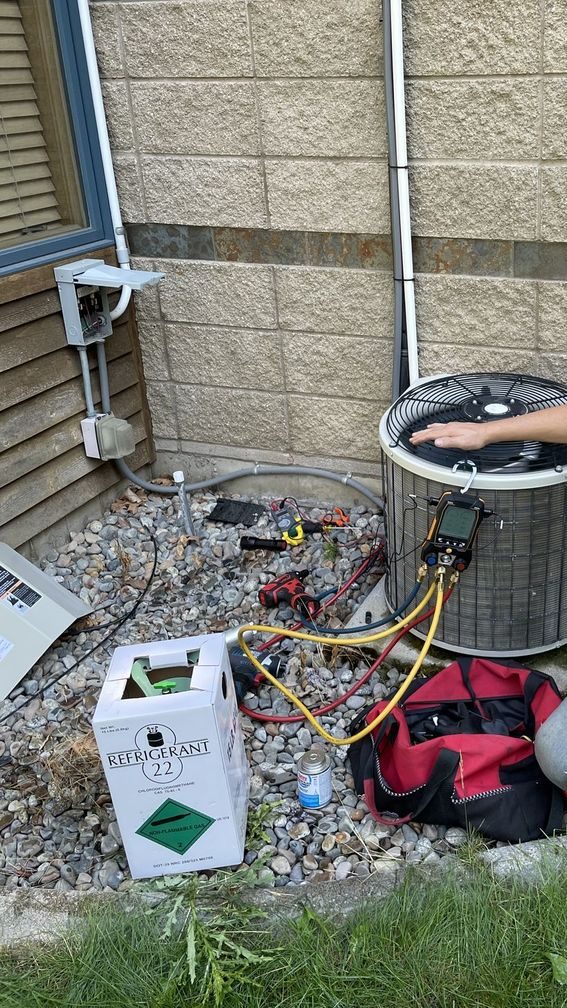
08 / 12
An older condenser under test with hoses on the service ports. The capacitor, contactor and fan motor get checked before anyone talks about refrigerant.
Read the service page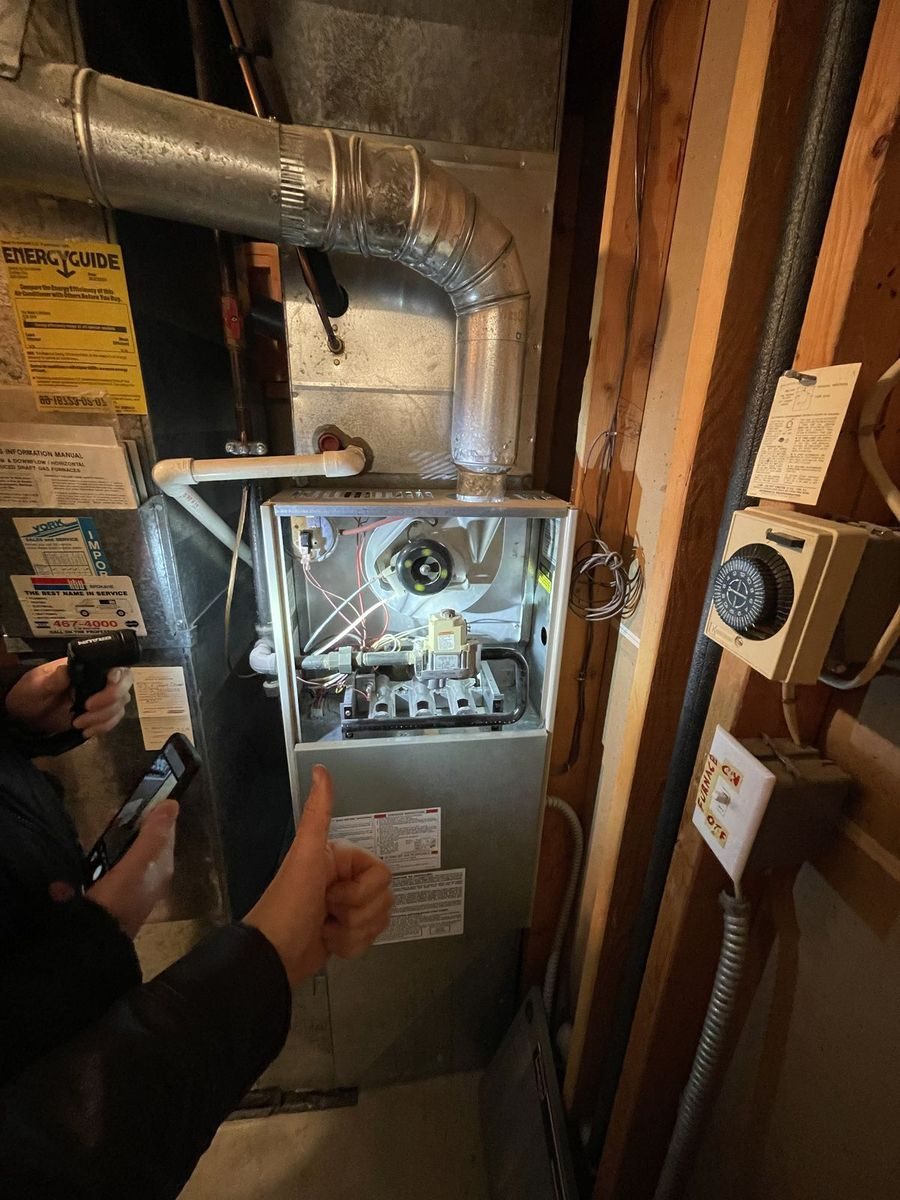
09 / 12
The burner compartment of a gas furnace, open. We follow the start-up order, inducer, pressure switch, igniter, flame sensor, until the step that fails.
Read the service page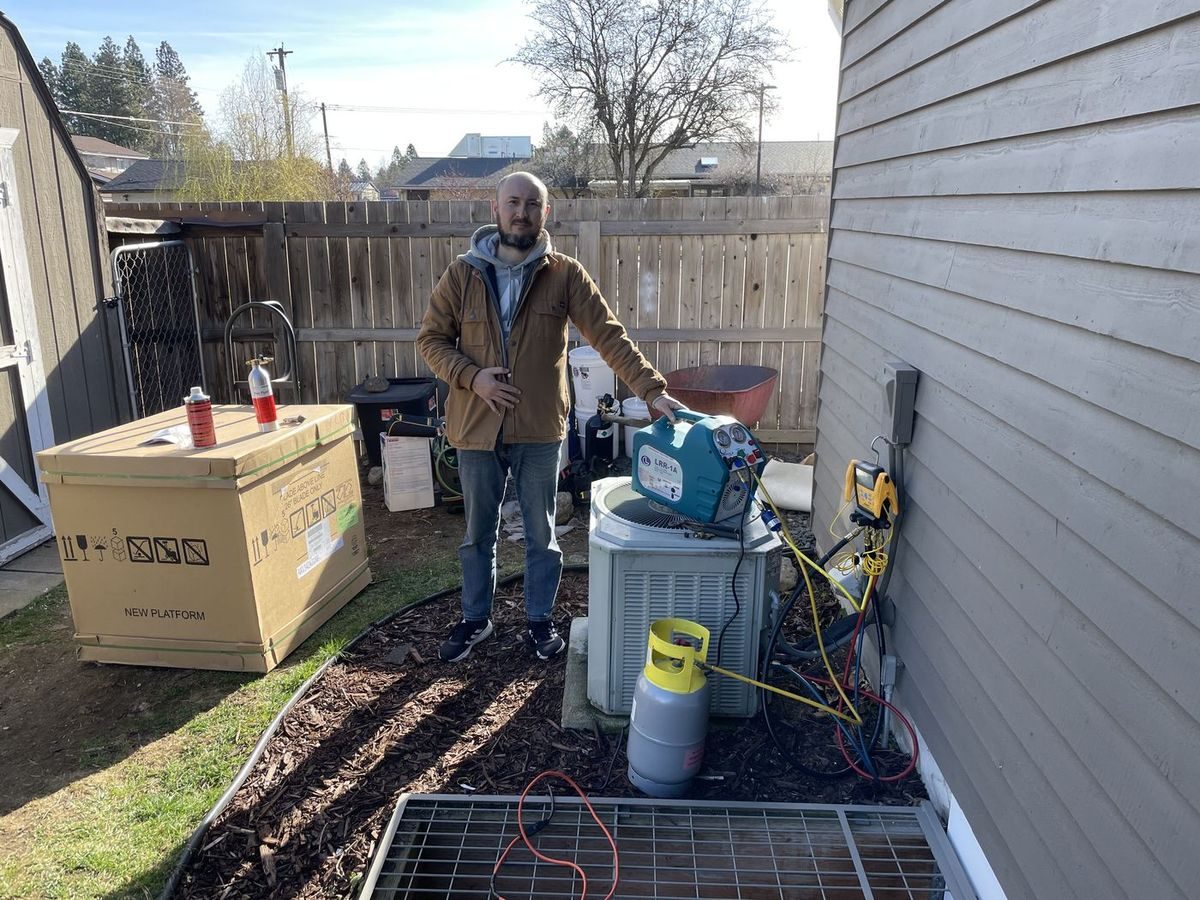
10 / 12
A recovery machine and cylinder beside an outdoor unit. On a replacement, the old refrigerant is pulled into the cylinder instead of the air.
Read the service page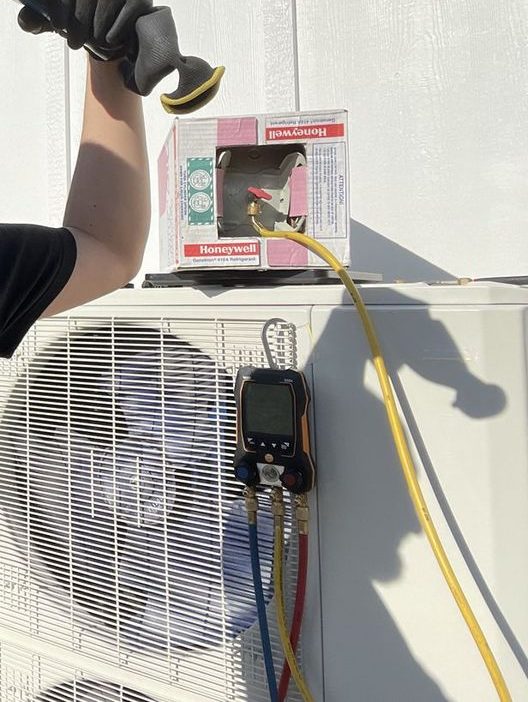
11 / 12
A ductless outdoor unit with a gauge set on it. Mini-splits get the same pressure and temperature readings as a central system, plus a look at the line-set insulation.
Read the service page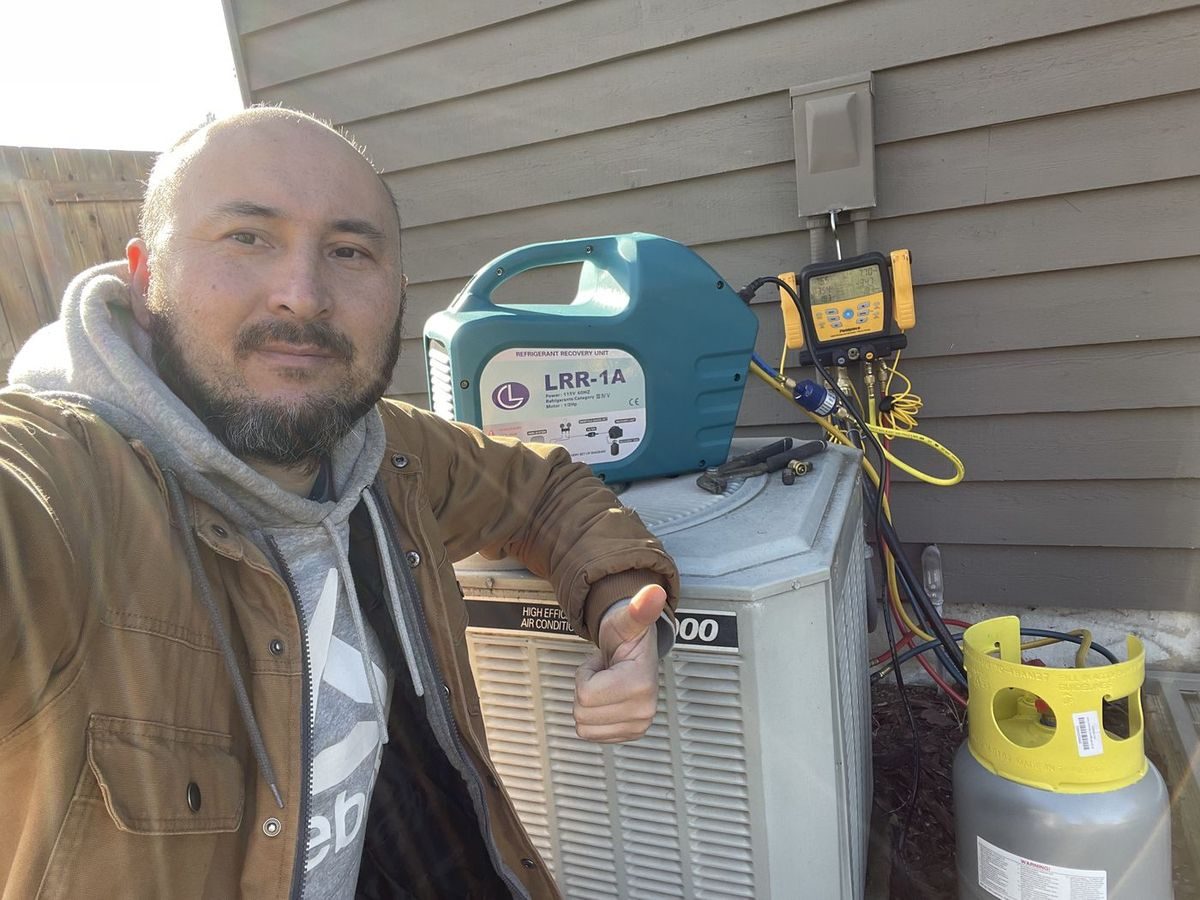
12 / 12
Gauges on a condenser during a seasonal visit. Spring visits wash the dust out of the coil; fall visits test defrost and heat strips before the fog weeks.
Read the service pageMost defrost, fan, relay and control faults are worth fixing, since the cabinet, liners and sealed system usually have plenty of life left. Sealed-system trouble is the tougher decision: a leaking evaporator, say, or a seized compressor. On an aging builder-grade fridge, like the ones now getting older in Creekstone and Cherry Creek Estates homes built in the 2000s and 2010s, that bill can creep near the price of a new fridge. Built-ins from Sub-Zero or Thermador change the math, because the cabinet is fitted to your kitchen and sealed-system work often pays off. You get the price written down plus a frank read on the door seals, liner and compressor, and then the call is yours.
Probably not. When the freezer holds temperature, the compressor and refrigerant are usually doing their job, and the fault lies in airflow: a frosted evaporator coil from a defrost failure, a stopped evaporator fan, or a damper stuck closed. Those are common, testable repairs. The technician confirms which one with resistance and voltage readings before quoting anything.
It can, if the condenser stays clean and the unit has room to breathe. Leave space behind and above it, keep it away from the dustiest wall, and vacuum the coil each spring and again in midsummer. A garage fridge that runs constantly on hot afternoons and still cannot hold temperature has a fault worth a visit, not just a hot garage.
Because the thermostat on many two-door models sits in the refrigerator section. Once garage air nears that setting, the compressor sees little reason to run, and the freezer creeps up. Garage-rated models are built for this, and some others take a heater kit from the maker. Otherwise, a freezer rated for unheated spaces, or a spot indoors for the winter, is the practical answer.
Yes. Recovering and charging refrigerant requires the EPA 608 Universal credential, and our technicians carry it. Sealed-system work on a refrigerator means locating the leak, recovering what is left, brazing in the repair or new component, replacing the filter-drier, pulling a deep vacuum and charging by weight. It costs more than a fan or defrost repair, so you see a written quote first.
Yes. Built-in and column refrigerators follow the same refrigeration principles, but the condenser often breathes through a top grille or the toe kick, where kitchen dust collects out of sight. The technician removes the grille, cleans and tests, and checks the hinges and gaskets that keep a tall door sealed. Model-specific parts are priced before they are ordered.
It becomes the only line on your bill. The amount comes from the office when you schedule, by phone or online, and it pays for the time spent finding the fault. Approving a repair works differently: the fee is credited toward that repair rather than charged on its own. Either way, the written price lets you turn the work down knowing exactly what it involved.
Talk to us
Choose a day and arrival window through the booking page, or phone the office any day between 8 AM and 7 PM. Expect a confirmation call from the office; the technician rings again while driving over.
Book a visit
One slip, filled top to bottom. The office phones to confirm the visit, and the technician calls again when on the way.
Every number below is a public state record. Look each one up on L&I Verify, or read what each license allows on our licenses page.
What our licenses cover