01 / 12
Air conditioner repair
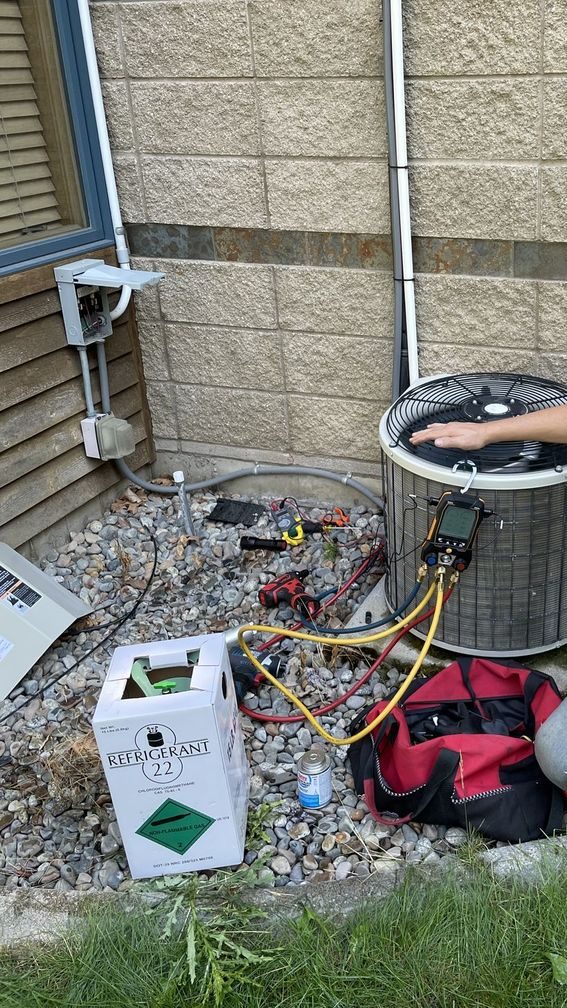
An older condenser under test with hoses on the service ports. The capacitor, contactor and fan motor get checked before anyone talks about refrigerant.
Read the service page
Central air conditioner repair, Tri-Cities WA
When the house stalls near 80 on a 100-degree afternoon, the AC is either broken or simply maxed out. We measure which, find what is stealing capacity, from a tired capacitor to a grit-caked condenser coil, and write up the repair for your approval.
Short answer
An AC that blows warm air or loses ground in the heat usually has one of a handful of problems: a failed run capacitor, a pitted contactor, a dirty condenser coil, a frozen evaporator from weak airflow, or a refrigerant leak. We measure temperature split, static pressure and refrigerant pressures to find which one, quote the repair on paper, and begin once you agree.
A thermometer answers that in minutes. Home systems are sized for a design temperature, and on hotter afternoons even a healthy unit runs nonstop while the indoor reading creeps up a few degrees. The better test is the temperature split: air at the return grille compared with air at a nearby supply register. A sound system usually drops that air roughly 16 to 22 degrees. A much smaller split with the unit running nonstop is a fault, not the weather.
Many summer failures start outdoors, because that is where the heat has to go. The condenser coil sheds the heat pulled from the house, the run capacitor keeps the compressor and fan motor turning at speed, and the contactor switches both on each cycle. When one weakens, head pressure climbs, the compressor runs hot and supply air warms up. Indoors, a clogged filter or weak indoor fan can freeze the evaporator, and leaky attic ducts can heat the air before it reaches a room.
We repair split-system central air, plus heat pumps in cooling mode, from Carrier, Lennox, Goodman, York, Bryant, Rheem and Ruud, Trane and others. The work falls under Larch's 06A HVAC/Refrigeration electrical specialty, and anyone handling refrigerant on our crew holds the EPA 608 Universal credential.
Airflow gets checked before refrigerant, because a charge reading taken with a dirty filter or an iced coil is meaningless. The technician checks the filter, measures total external static pressure and records the split. At the condenser, they test incoming power, read the capacitor in microfarads, look for pitting on the contactor and inspect both faces of the coil. Then the gauges: a fixed-orifice system is judged by superheat, a TXV system by subcooling, each held against the manufacturer's chart for that day's conditions. Low charge means a leak, and the leak is found before any refrigerant goes in.
Diagnosing the problem carries a fee, quoted by the office at the moment you schedule. Once you okay a repair, that fee is absorbed into it, never stacked on top; if you pass, the visit costs that fee alone. Capacitors, contactors and condenser fan motors are on the truck. A compressor, a coil or a model-specific board has to be ordered, and its price is on your written quote first. Warranty terms are printed on each invoice.
It stretches the cooling season at both ends and keeps compressors running for hours. July afternoons average about 92°F and August about 91°F, and most summers bring 100-degree days, with Kennewick records showing them as early as mid-May and as late as early September. Long run times are what wear out run capacitors and burn contactor points, and attic ducts and garages get far hotter than the air outside. In Creekstone and Cherry Creek Estates, built in the 2000s and 2010s, original builder-grade condensers are now old enough for these parts to fail, and heat is what finishes off a weak capacitor.
Wind loads the condenser coil right before the coil is needed most. The region is the windiest of the larger Pacific Northwest metros, June is among its gustiest months, west winds drive dust and sand into the fins, and blowing-dust advisories are issued here. Late spring adds cottonwood fluff that mats on the coil like felt. A coated coil can't shed heat, so head pressure and compressor temperature rise just as 100-degree afternoons arrive. In bigger homes, such as many in Southridge and Canyon Lakes, longer duct runs to distant rooms add to that load. Booking a coil cleaning in April or early May gets ahead of the first 100-degree day.
One photo per tab from our service calls. Tap a tab, or let the file turn on its own.
01 / 12
An older condenser under test with hoses on the service ports. The capacitor, contactor and fan motor get checked before anyone talks about refrigerant.
Read the service page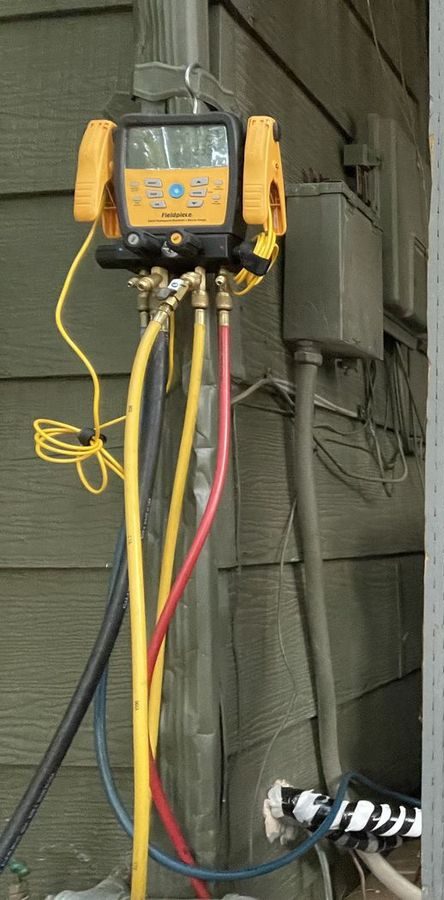
02 / 12
Digital gauges hang by the outdoor unit while the heat pump runs. Superheat and subcooling show whether the charge, a valve or the defrost board is the problem.
Read the service page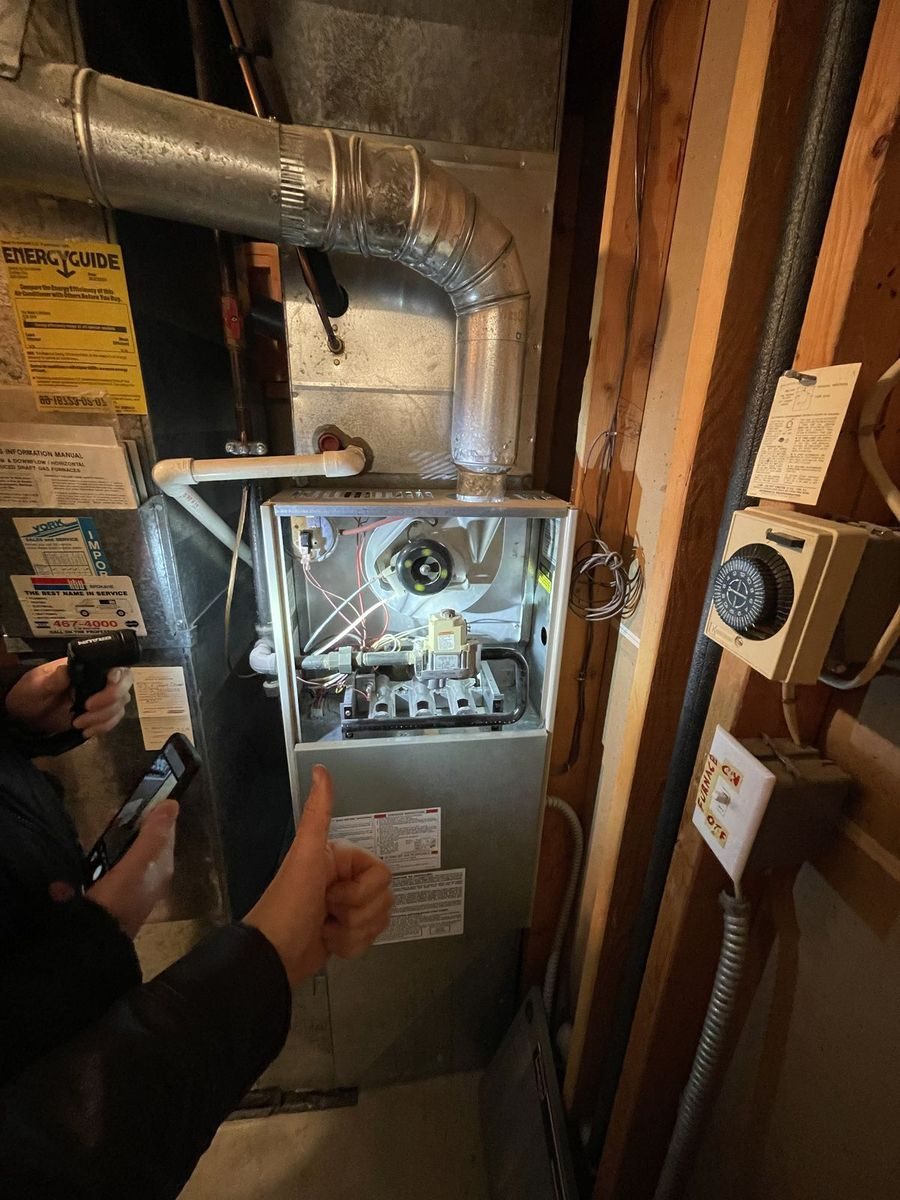
03 / 12
The burner compartment of a gas furnace, open. We follow the start-up order, inducer, pressure switch, igniter, flame sensor, until the step that fails.
Read the service page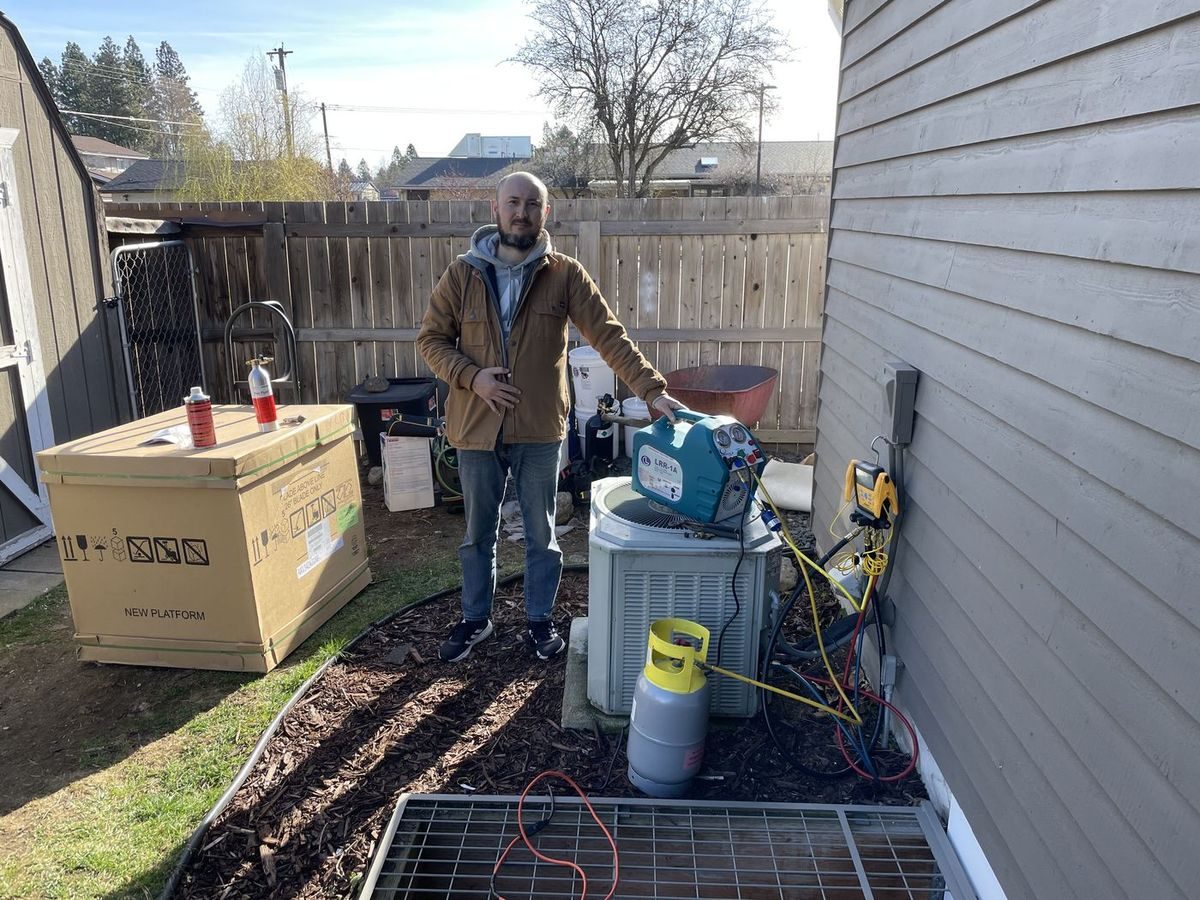
04 / 12
A recovery machine and cylinder beside an outdoor unit. On a replacement, the old refrigerant is pulled into the cylinder instead of the air.
Read the service page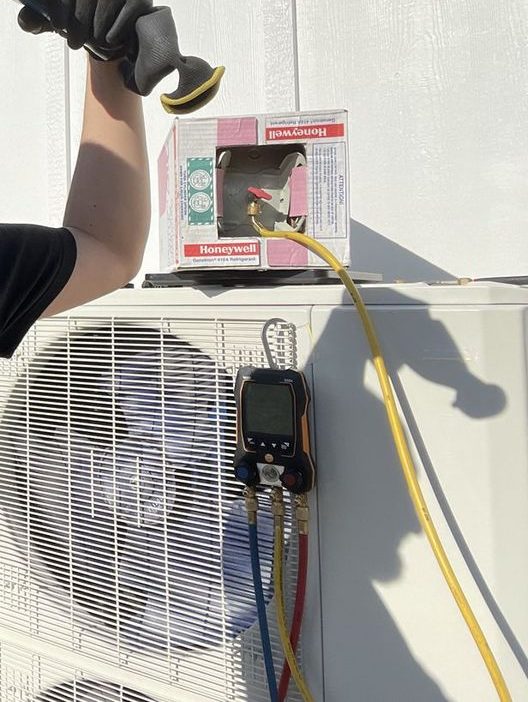
05 / 12
A ductless outdoor unit with a gauge set on it. Mini-splits get the same pressure and temperature readings as a central system, plus a look at the line-set insulation.
Read the service page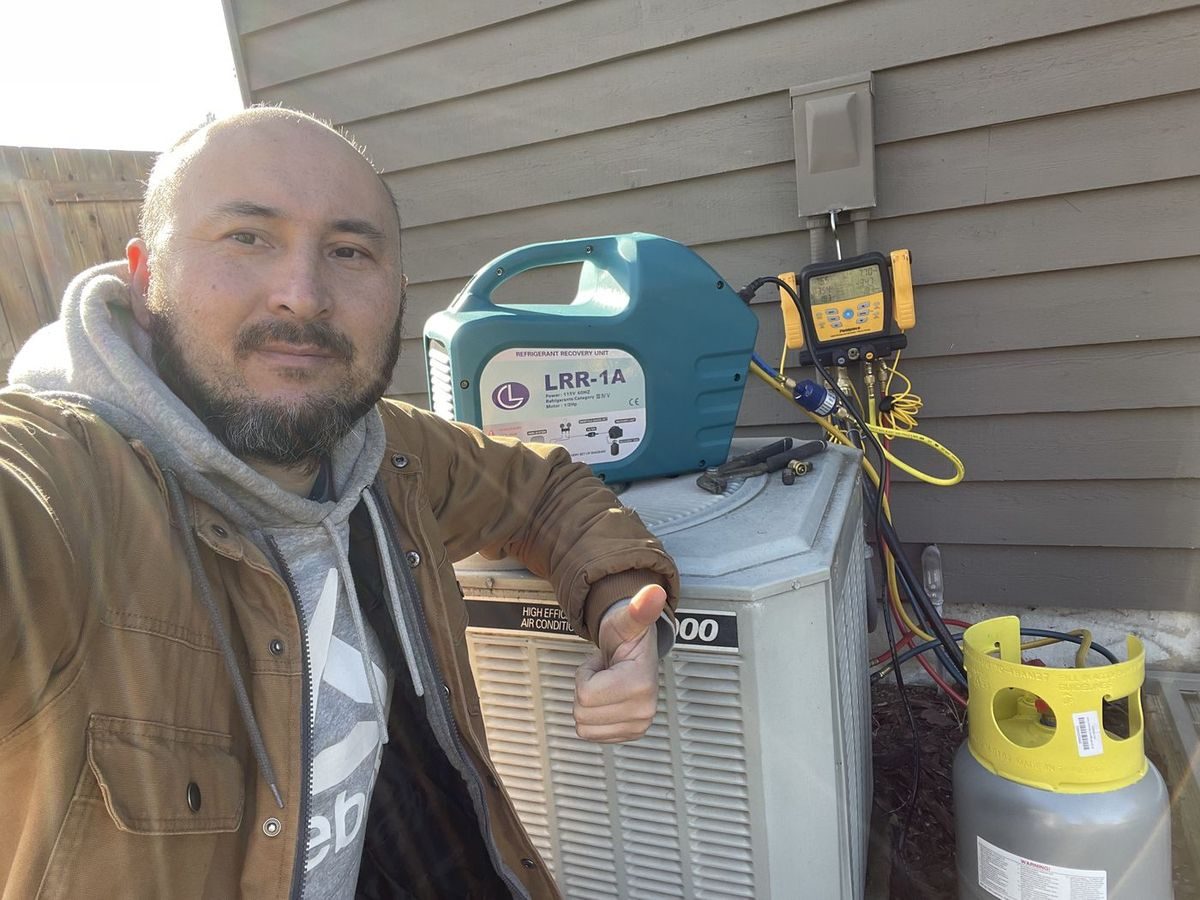
06 / 12
Gauges on a condenser during a seasonal visit. Spring visits wash the dust out of the coil; fall visits test defrost and heat strips before the fog weeks.
Read the service page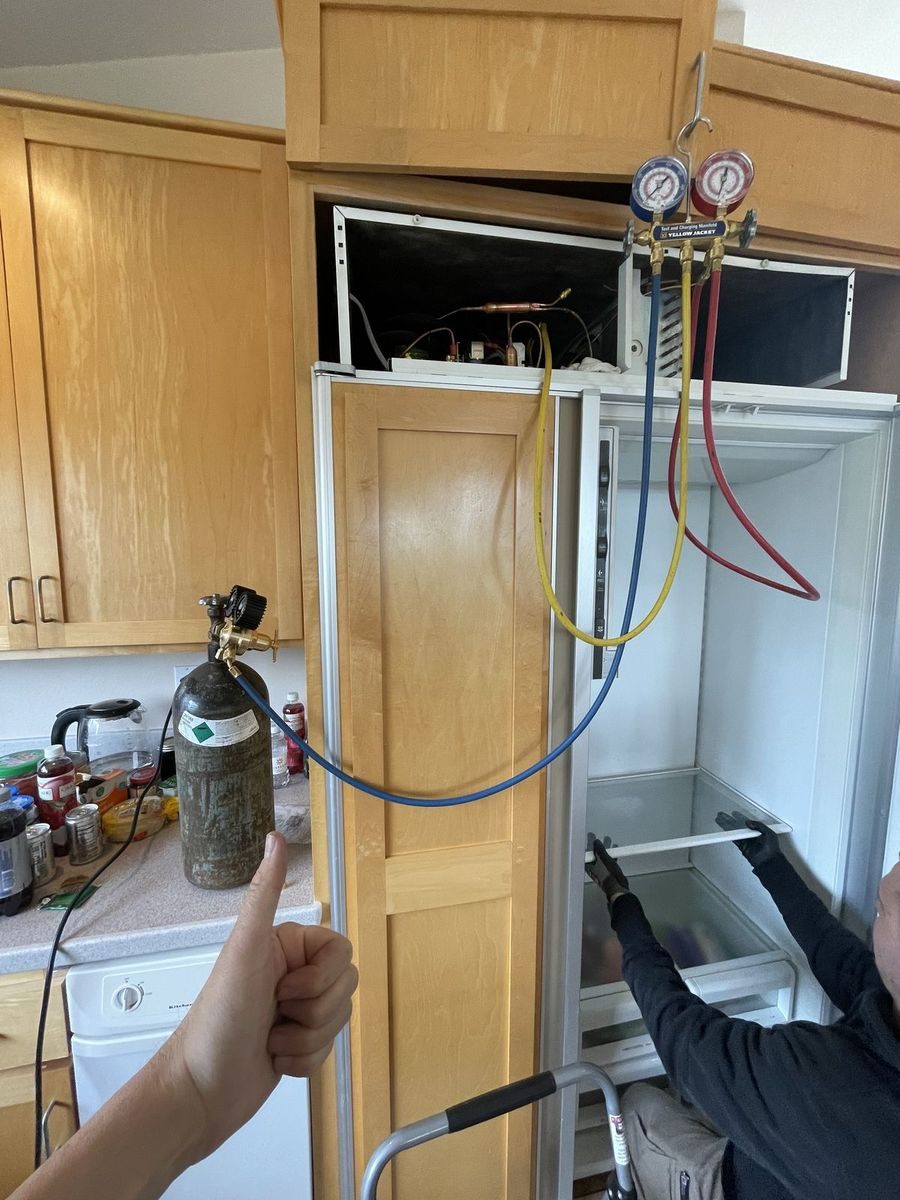
07 / 12
Gauges connected to a built-in refrigerator's sealed system. Leak searches, brazing and recharges happen in the kitchen, so the fridge stays where it is.
Read the service page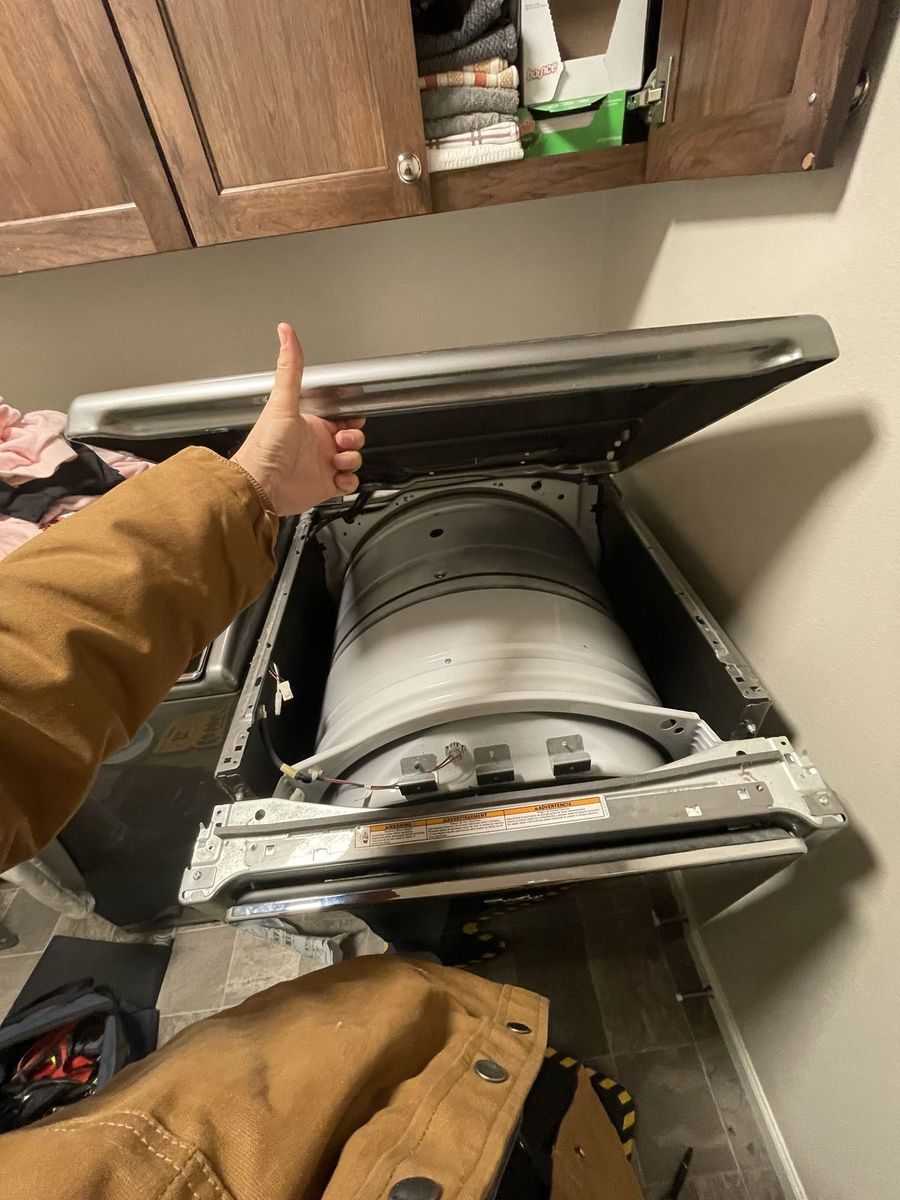
08 / 12
A top-load washer with the top panel raised. Lid switch, drive coupler and drain pump are all within reach once the top comes up.
Read the service page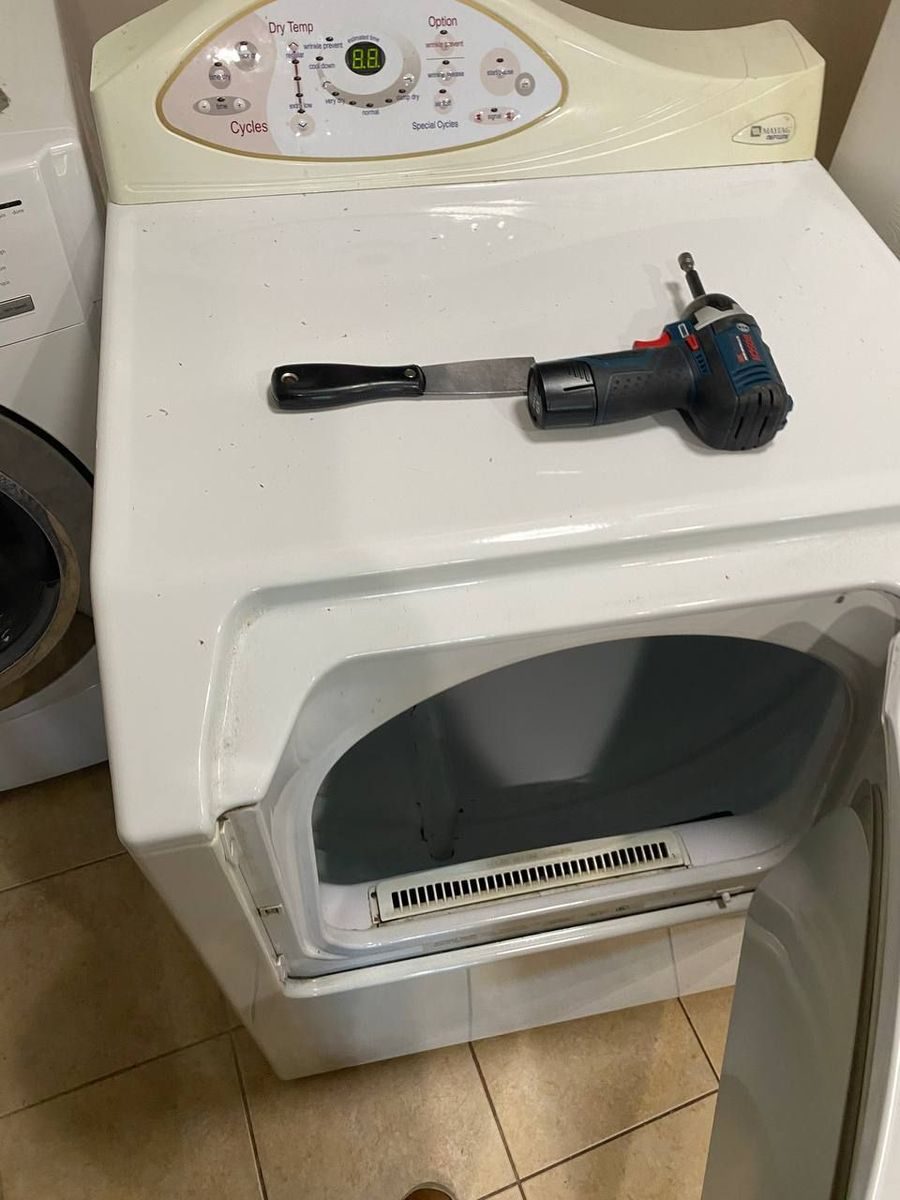
09 / 12
An electric dryer opened up in a laundry room. The thermal fuse, the heating element and the vent run behind the machine get tested together.
Read the service page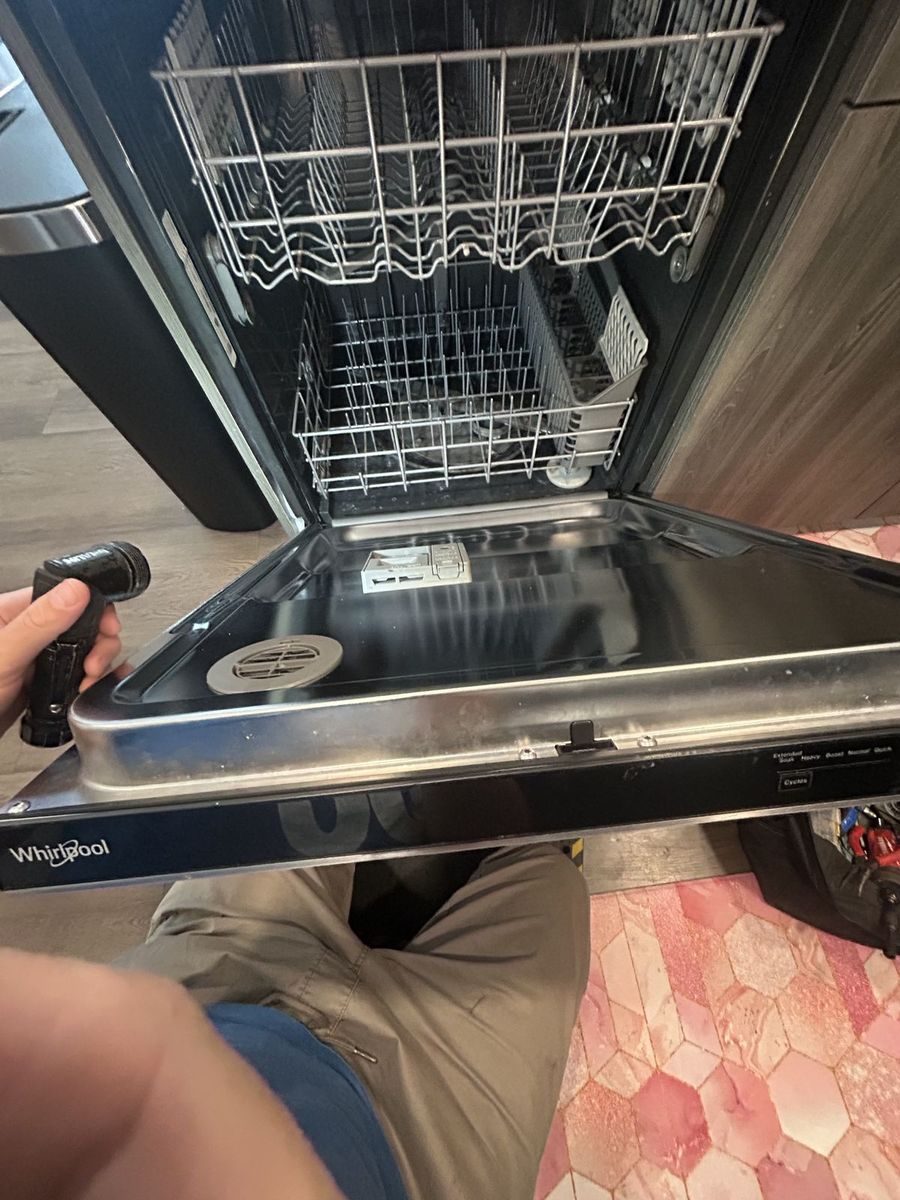
10 / 12
Door open and racks out on a dishwasher. A puddle left behind after the last rinse sends us to the filter screen, the pump and the hose route under the sink, in that order.
Read the service page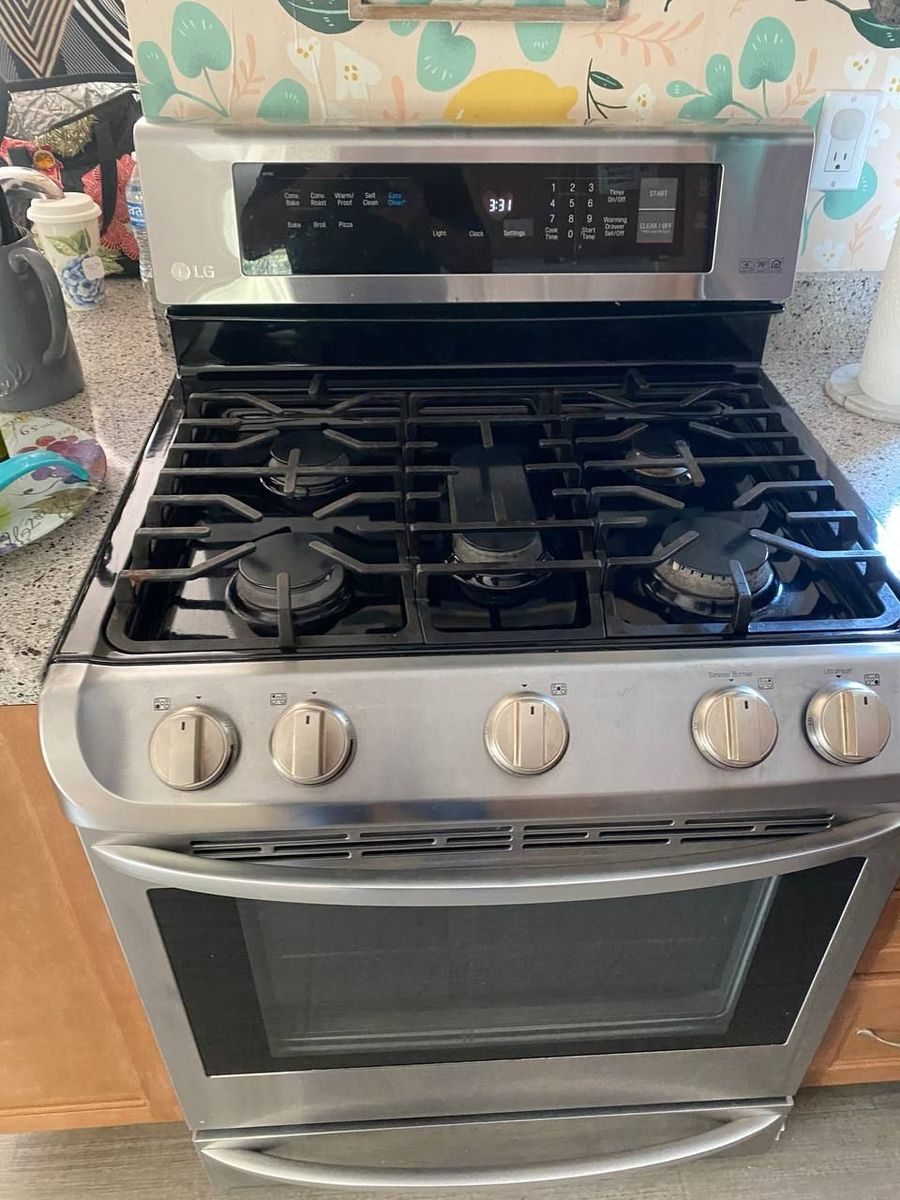
11 / 12
A five-burner gas range ready for testing. Burner igniters, the spark module and the bake igniter's amp draw are measured before a part is ordered.
Read the service page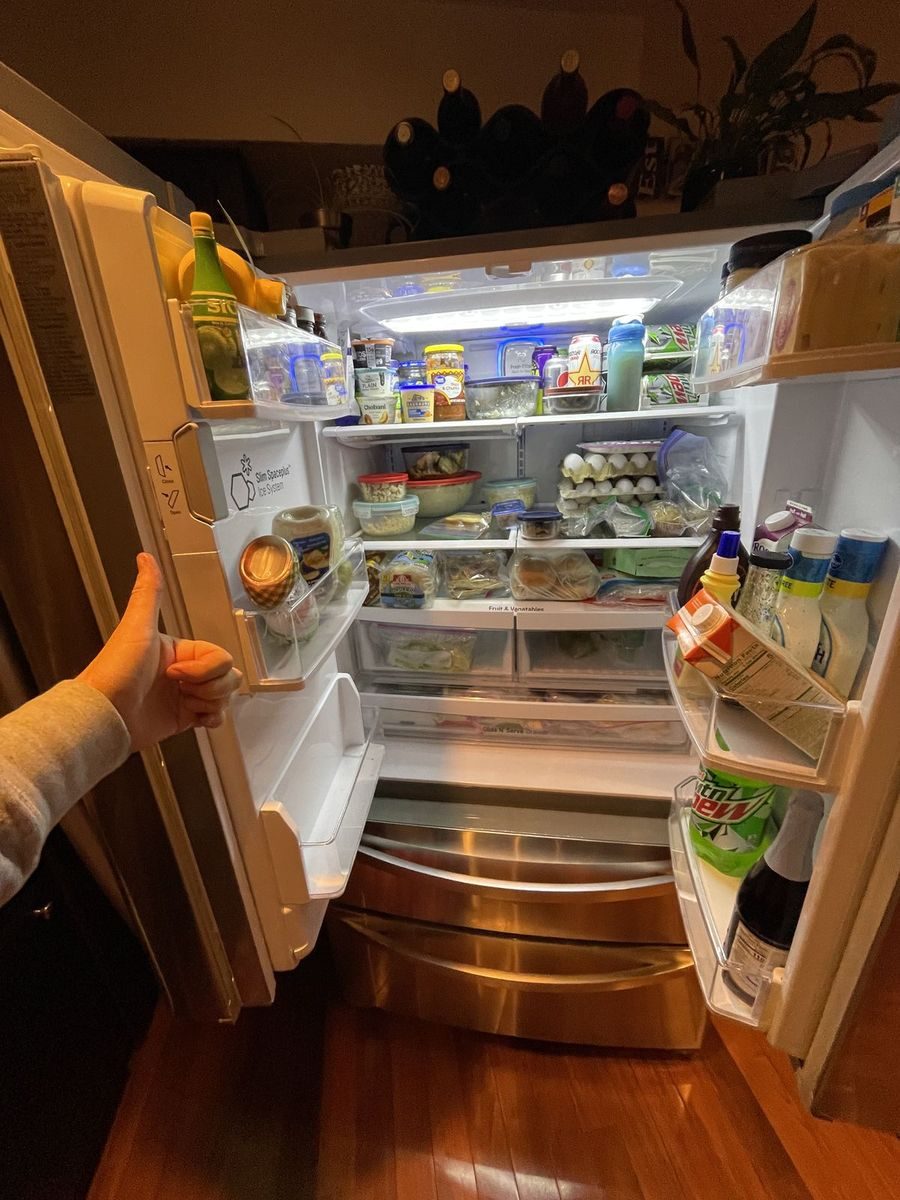
12 / 12
A French-door refrigerator open for diagnosis. Slow ice starts with the water: the inlet valve, the filter and a fill tube that can freeze shut.
Read the service pageOne failed part on an otherwise sound system, such as a capacitor, contactor, condenser fan motor or clogged drain, is usually worth fixing. The argument for replacement builds when the compressor is grounded or locked, when the evaporator or condenser coil leaks, when the system has needed refrigerant more than once, or when an older condenser is charged with R-22, which is now sold only as recovered and reclaimed stock. To compare, we write up both: the repair price, and a new-system quote showing equipment and installation as a single figure. Where a furnace stays in place, we also check that a new coil matches it. The choice stays yours.
Usually the fans are running while the compressor isn't, or the system can't move heat out fast enough. A failed run capacitor is a frequent culprit on hot days; a dirty condenser coil, a frozen indoor coil and low refrigerant come next. Check the filter and thermostat; if vent air stays near room temperature, book a visit.
No, long run times on a 100-degree afternoon are normal for a correctly sized air conditioner. Constant running becomes a concern only when the temperature split is small, the indoor temperature keeps climbing instead of holding, or the outdoor unit cycles on and off. A steady setpoint, rather than big afternoon swings, also helps it keep up.
Thaw it first: cooling off, fan on, for a few hours until the ice is gone. Restarting cooling on a frozen coil risks slugging the compressor with liquid refrigerant. Replace a dirty filter and open closed registers. If it freezes again, low refrigerant or an indoor fan problem is likely, and airflow and charge need measuring.
With gauges and temperature probes, not by how cold the line feels. On units with a piston or fixed orifice, the reading that matters is superheat; on units with a TXV, it is subcooling. Both get compared with the maker's target for the day's indoor and outdoor conditions. A short charge means a leak, which we track down before topping anything off.
Yes, and here it ranks among the most worthwhile jobs on any condenser. Dust, sand and cottonwood fluff pack into the fins, especially on the west-facing side. We apply coil cleaner, rinse gently from the inside out, straighten crushed fins with a fin comb where possible, and log pressures before and after so the improvement shows in numbers.
A breaker that trips as the AC starts usually points to a compressor struggling to start, a shorted fan motor, or a failing capacitor pushing a motor's current draw too high. Resetting it one time is fine; after a second trip, keep it off, since repeated restarts can damage the compressor. Our technician then tests power and amperage at the outdoor unit.
Talk to us
Pick your date and arrival window on the booking page, or phone us from 8 AM to 7 PM. A confirmation call comes from the office, and another from the technician once they are en route.
Book a visit
One slip, filled top to bottom. The office phones to confirm the visit, and the technician calls again when on the way.
Every number below is a public state record. Look each one up on L&I Verify, or read what each license allows on our licenses page.
What our licenses cover