01 / 12
Air conditioner repair
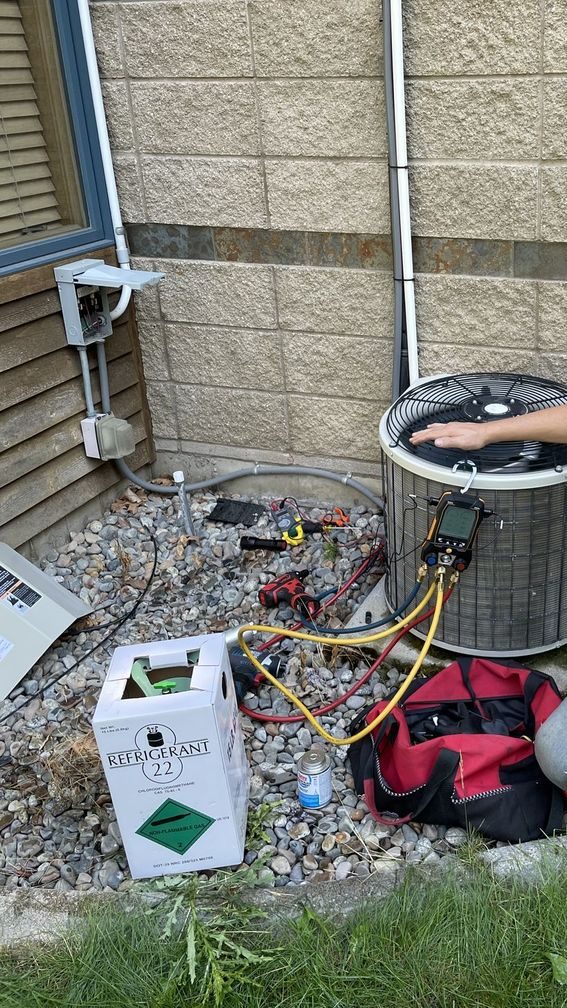
An older condenser under test with hoses on the service ports. The capacitor, contactor and fan motor get checked before anyone talks about refrigerant.
Read the service page
Pasco air conditioning repair
Pasco's cooling season is long, dusty and windy, and central air in 99301 works hard from late spring into September. Our technicians test the electrical parts, the coil and the refrigerant charge, then hand over a written figure before a repair begins. Spanish replies are available.
Short answer
When a Pasco air conditioner runs but won't cool, the usual culprits are a failed run capacitor, a worn contactor, a condenser coil choked with dust and tumbleweed bits, or refrigerant seeping out through a leak. Our technicians measure each one, explain what they find, and fix it only after you approve the written price. Ask the office for a Spanish reply anytime.
The parts that start and switch the system go first. In the Tri-Cities, a typical July high sits near 92°F and 100°F days arrive in most summers, so an outdoor unit in Pasco can run through most of the afternoon and evening. That duty wears the dual run capacitor, which loses microfarads as it ages, and the contactor, whose contact faces pit and burn. When either quits, the compressor or condenser fan stalls while the indoor fan keeps pushing warm air through the vents.
Airflow and charge come next. Dust settling out of the construction in fast-growing West Pasco works into condenser fins, and a fouled coil pushes head pressure higher until the compressor overheats or trips on its internal overload. Indoors, a packed filter or an undersized return starves the evaporator coil and can freeze it solid. Our EPA 608 Universal technicians read superheat and subcooling to tell an airflow fault from a refrigerant leak before recommending anything.
Wind and dust shape most of it. The Tri-Cities is the windiest of the medium and large Pacific Northwest metros, March, April and June are the windiest months, and most of that wind arrives from the west. In Pasco, outdoor units collect sand, tumbleweed fragments and cottonwood fluff on their windward face, so a coil can look tidy from the street and still be packed. Water in Pasco comes from the Columbia River, treated and moderately hard, so a gentle garden-hose rinse is enough; a pressure washer folds the fins.
Reaching you is part of the plan. West Pasco around Road 68 and Road 100 sits nearest the Interstate 182 bridge into Richland, while East Pasco near Court Street links to Kennewick over the Cable Bridge and the US 395 Blue Bridge. The technician rings you once headed over, so a slow bridge never leaves you wondering. We also reach Burbank, just across the Snake River.
West of US 395, many homes are recent builds with builder-grade condensers and ductwork in the attic. Early repairs on systems this new tend to be capacitors, contactors and condensate drains, plus bonus rooms over garages that run warm because attic duct runs soak up summer heat.
Established homes near Chiawana Park and the river often have older split systems, or ones already replaced once. We check which refrigerant the system uses, since older types can be costly to recharge, and whether the existing ducts suit a newer, larger indoor coil.
Older homes in central and east Pasco may cool with a split system added to existing ductwork, or with ductless mini-splits in rooms the ducts never reached. Our technicians service both, from mini-split capacitors and thermistors to condensate lines that drip down the wall.
One photo per tab from our service calls. Tap a tab, or let the file turn on its own.
01 / 12
An older condenser under test with hoses on the service ports. The capacitor, contactor and fan motor get checked before anyone talks about refrigerant.
Read the service page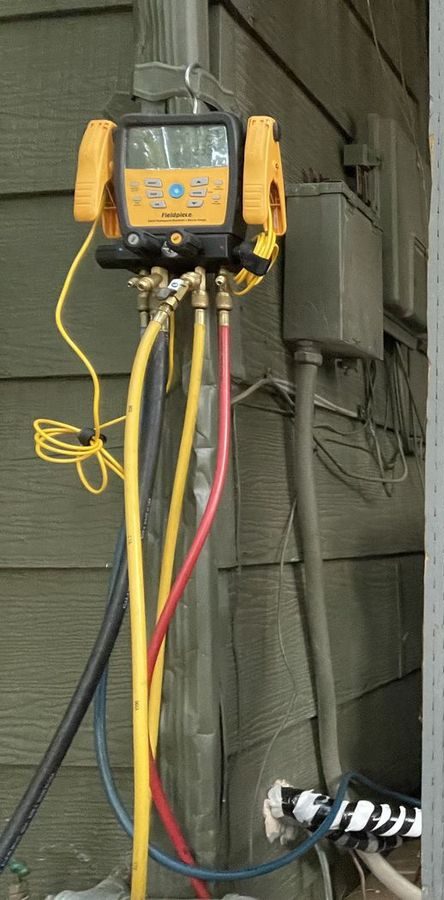
02 / 12
Digital gauges hang by the outdoor unit while the heat pump runs. Superheat and subcooling show whether the charge, a valve or the defrost board is the problem.
Read the service page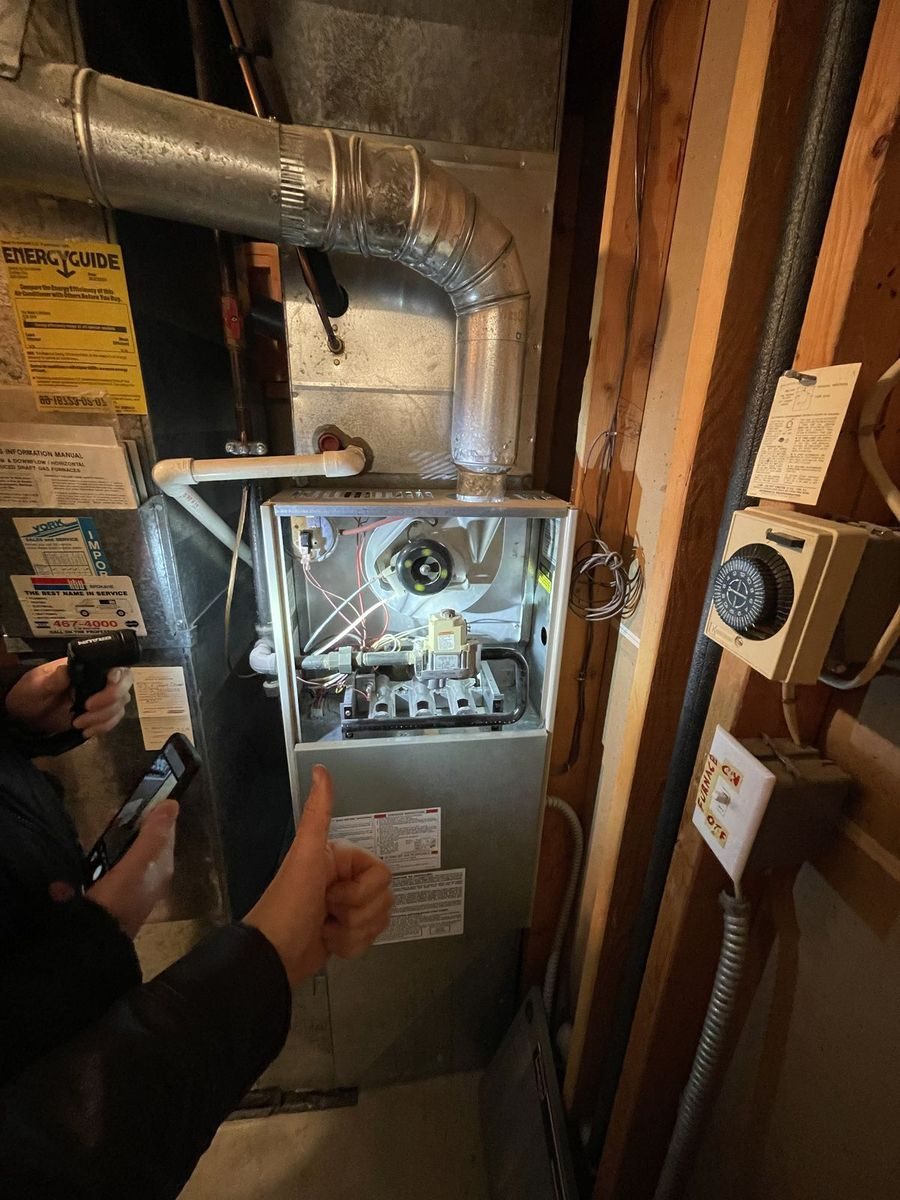
03 / 12
The burner compartment of a gas furnace, open. We follow the start-up order, inducer, pressure switch, igniter, flame sensor, until the step that fails.
Read the service page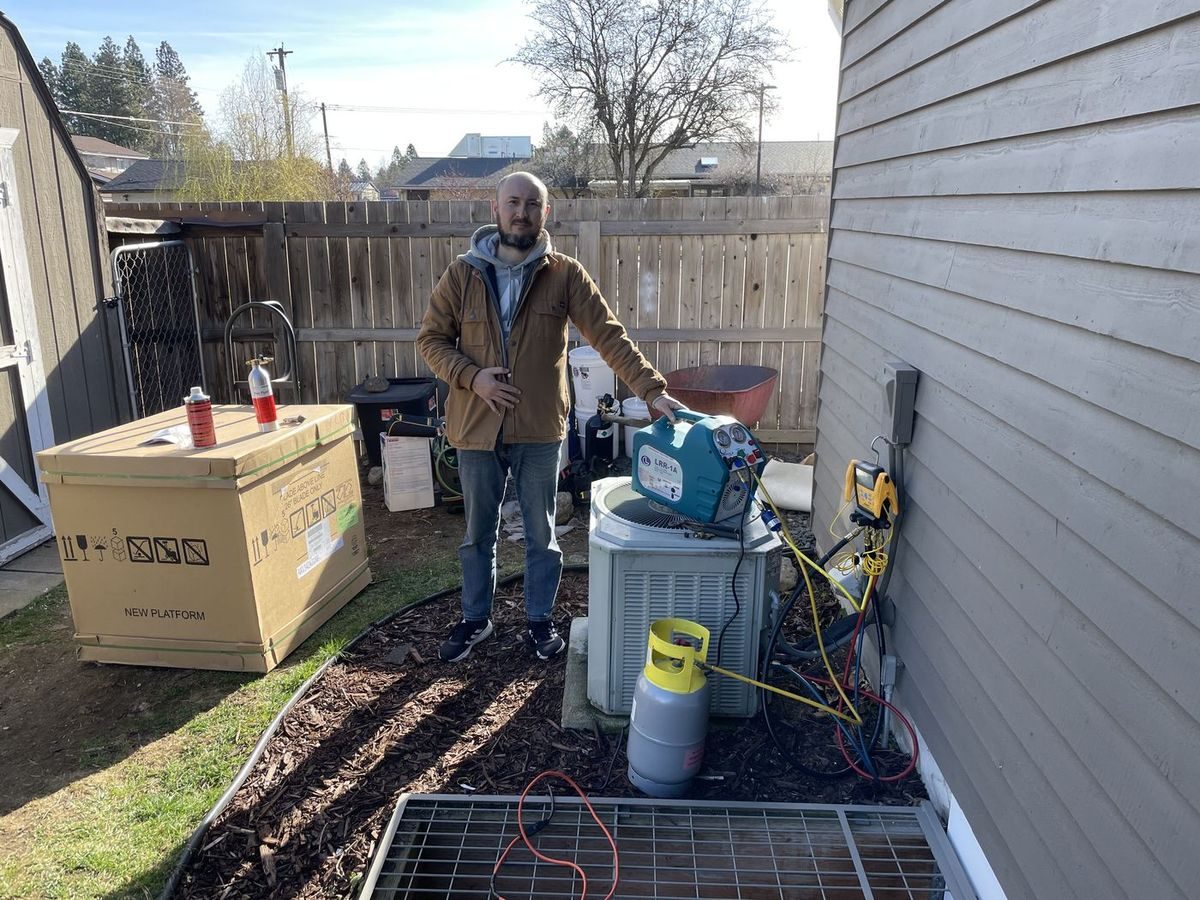
04 / 12
A recovery machine and cylinder beside an outdoor unit. On a replacement, the old refrigerant is pulled into the cylinder instead of the air.
Read the service page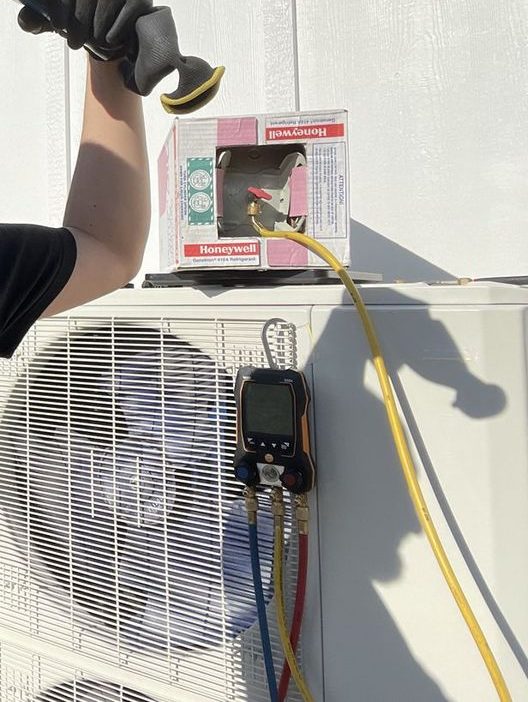
05 / 12
A ductless outdoor unit with a gauge set on it. Mini-splits get the same pressure and temperature readings as a central system, plus a look at the line-set insulation.
Read the service page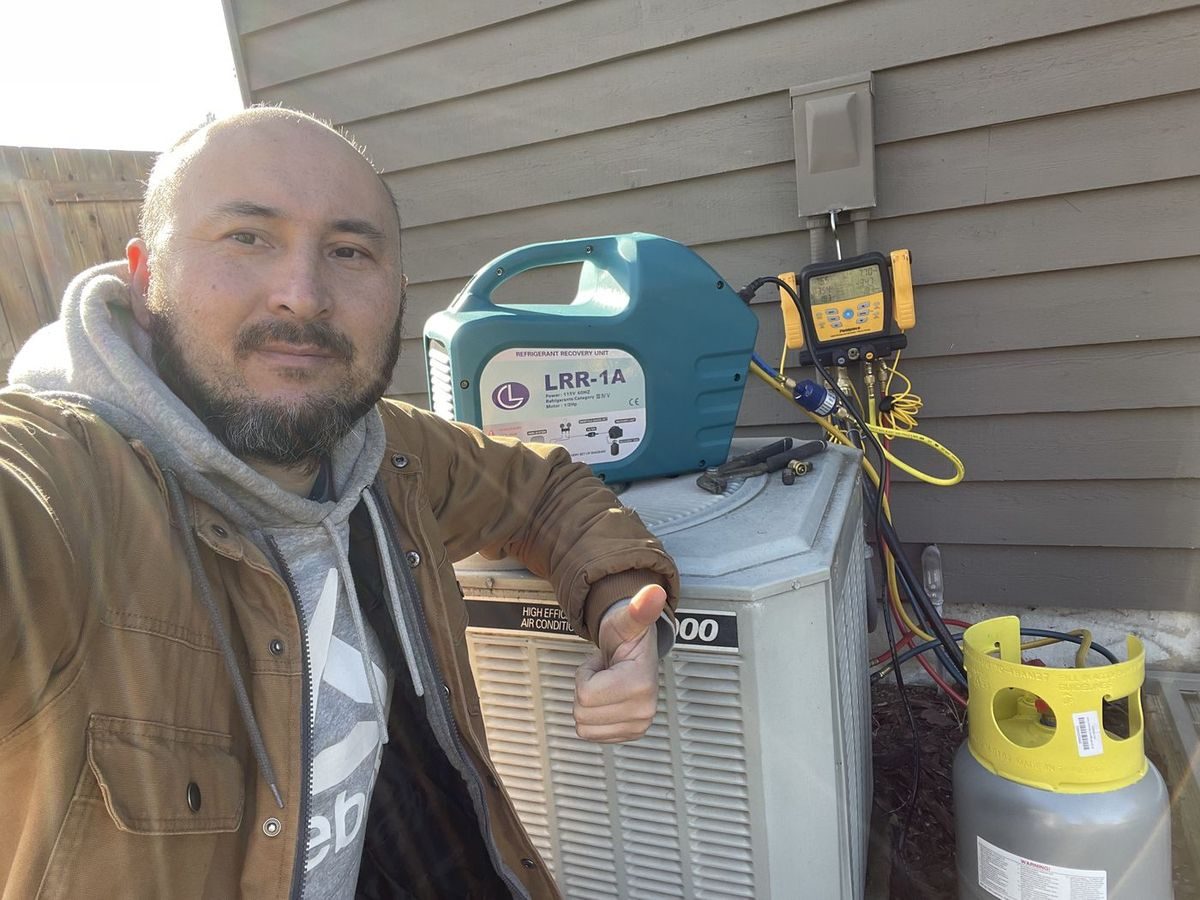
06 / 12
Gauges on a condenser during a seasonal visit. Spring visits wash the dust out of the coil; fall visits test defrost and heat strips before the fog weeks.
Read the service page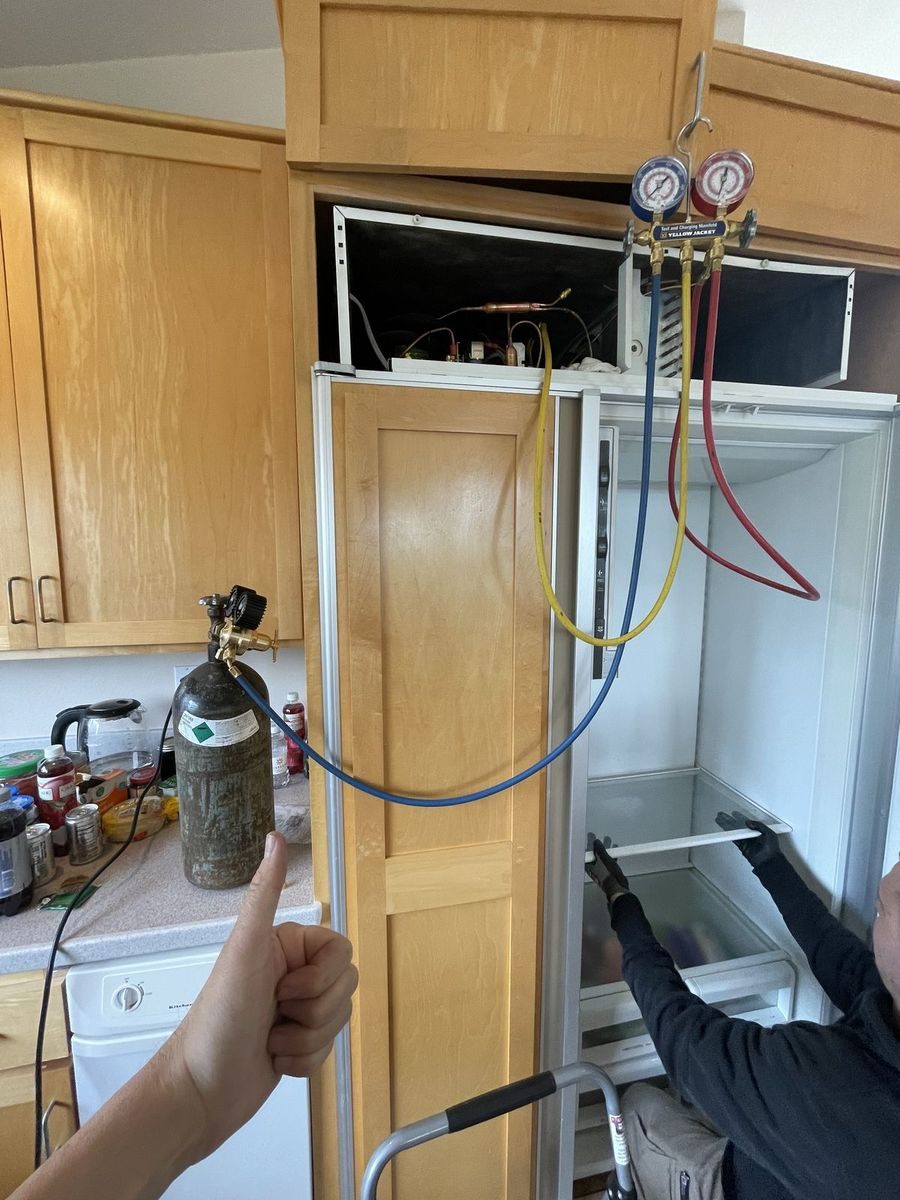
07 / 12
Gauges connected to a built-in refrigerator's sealed system. Leak searches, brazing and recharges happen in the kitchen, so the fridge stays where it is.
Read the service page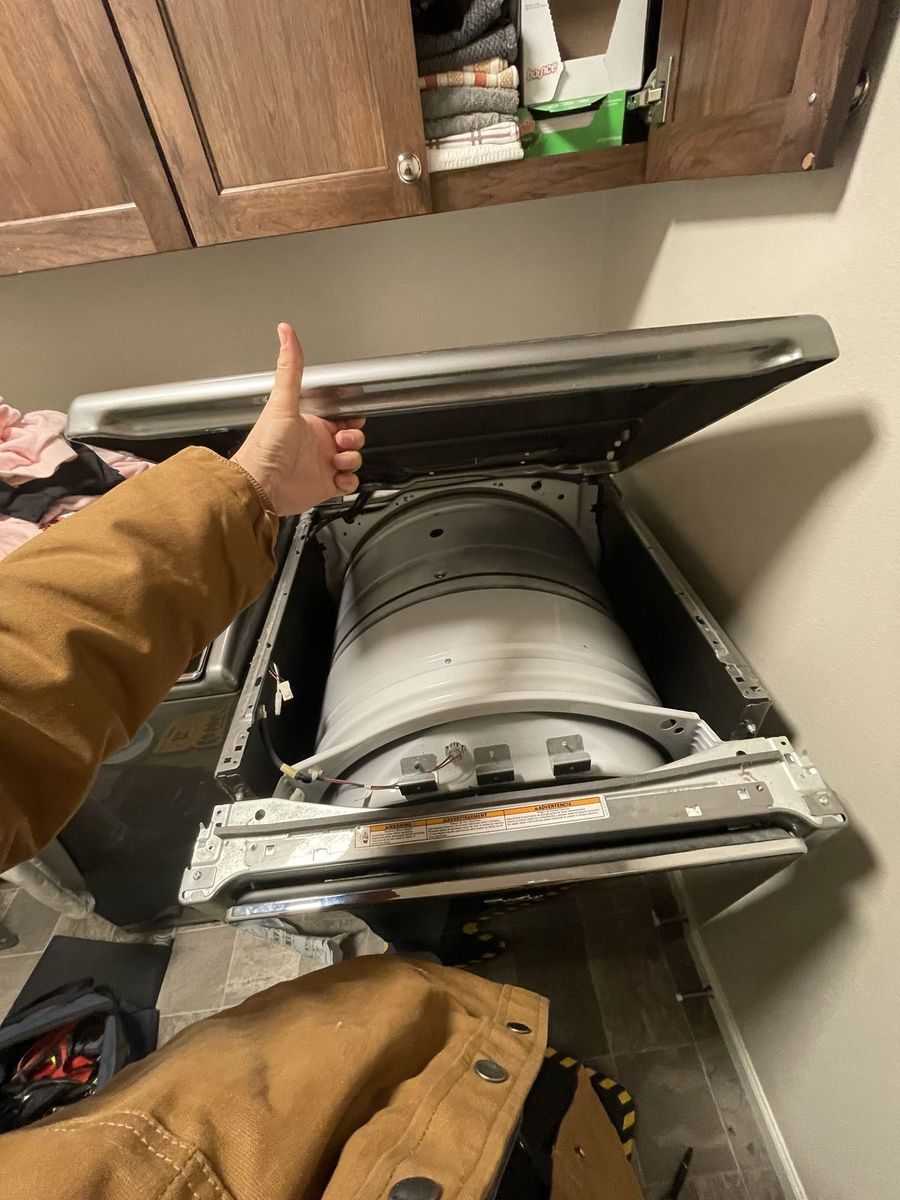
08 / 12
A top-load washer with the top panel raised. Lid switch, drive coupler and drain pump are all within reach once the top comes up.
Read the service page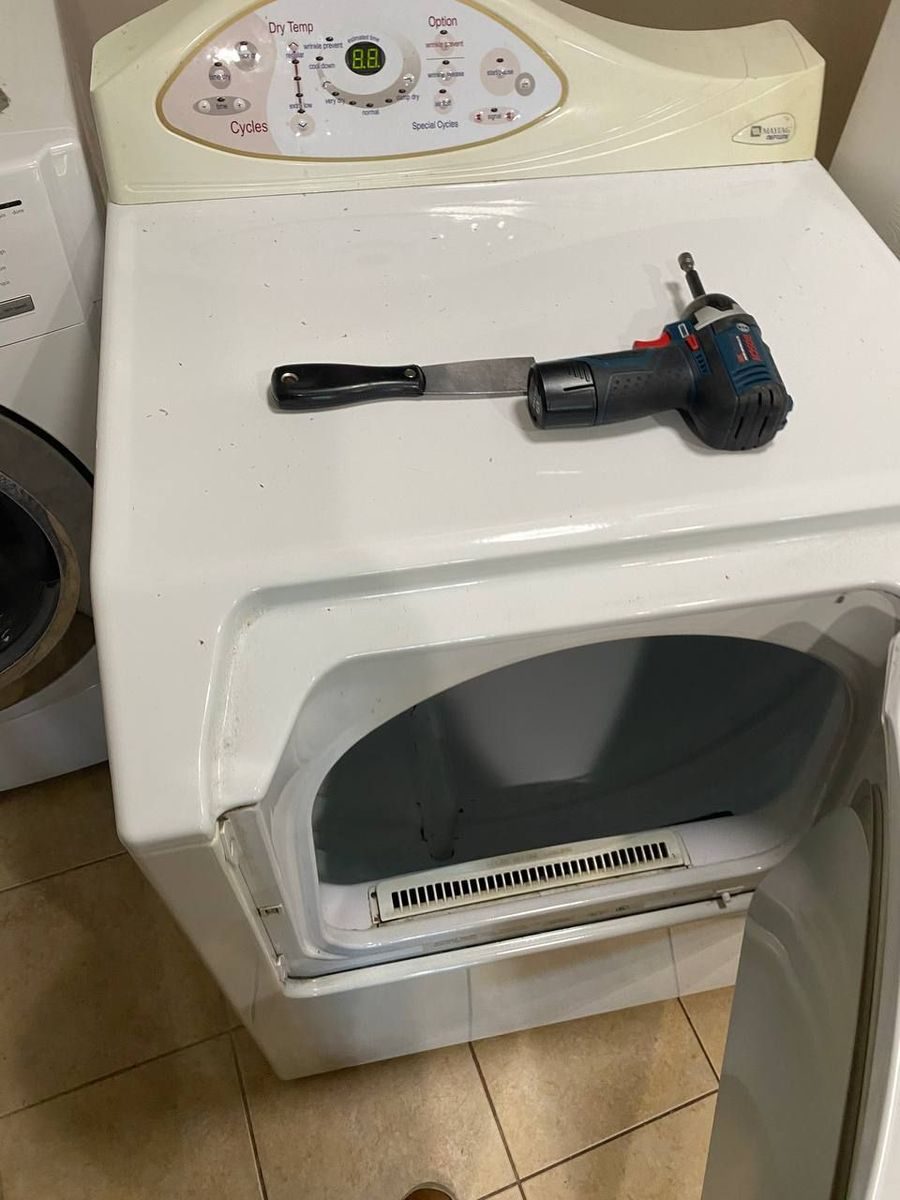
09 / 12
An electric dryer opened up in a laundry room. The thermal fuse, the heating element and the vent run behind the machine get tested together.
Read the service page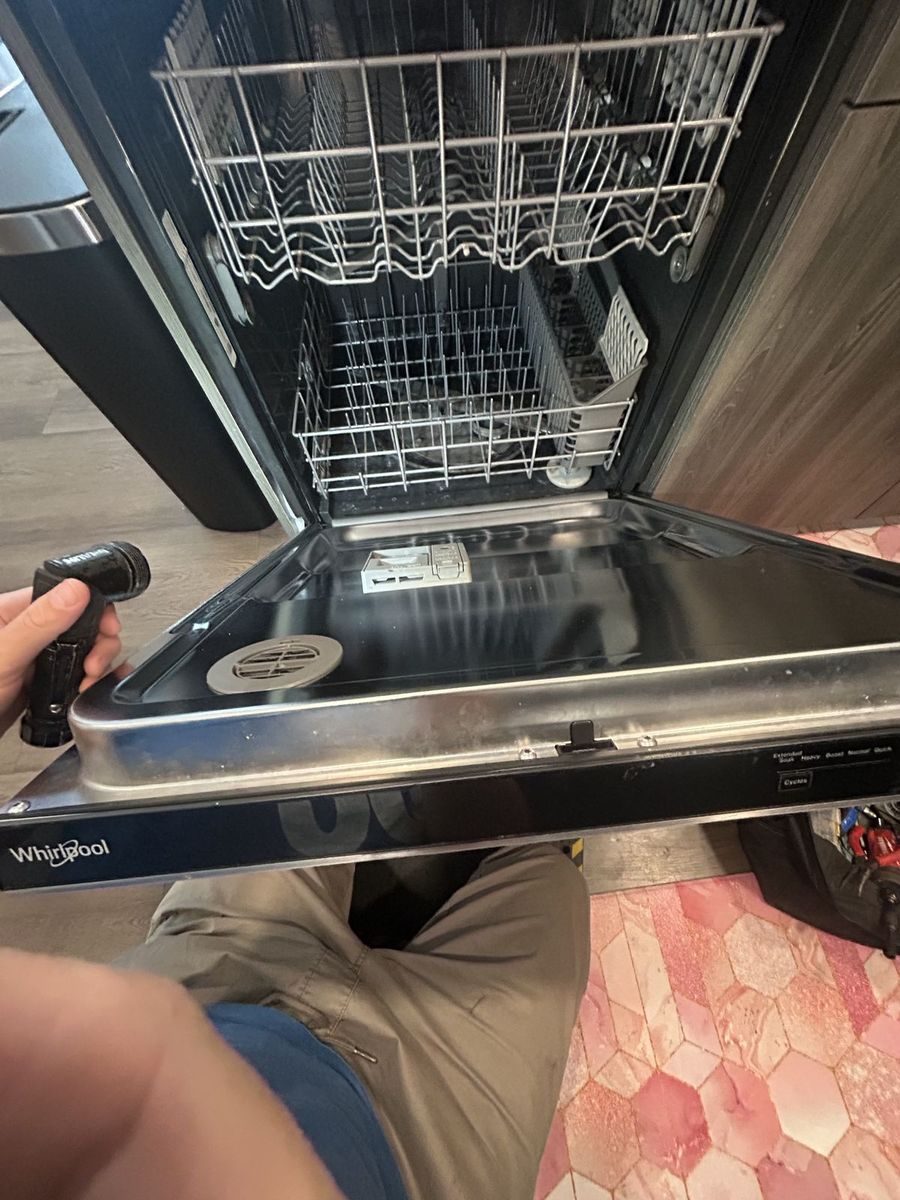
10 / 12
Door open and racks out on a dishwasher. A puddle left behind after the last rinse sends us to the filter screen, the pump and the hose route under the sink, in that order.
Read the service page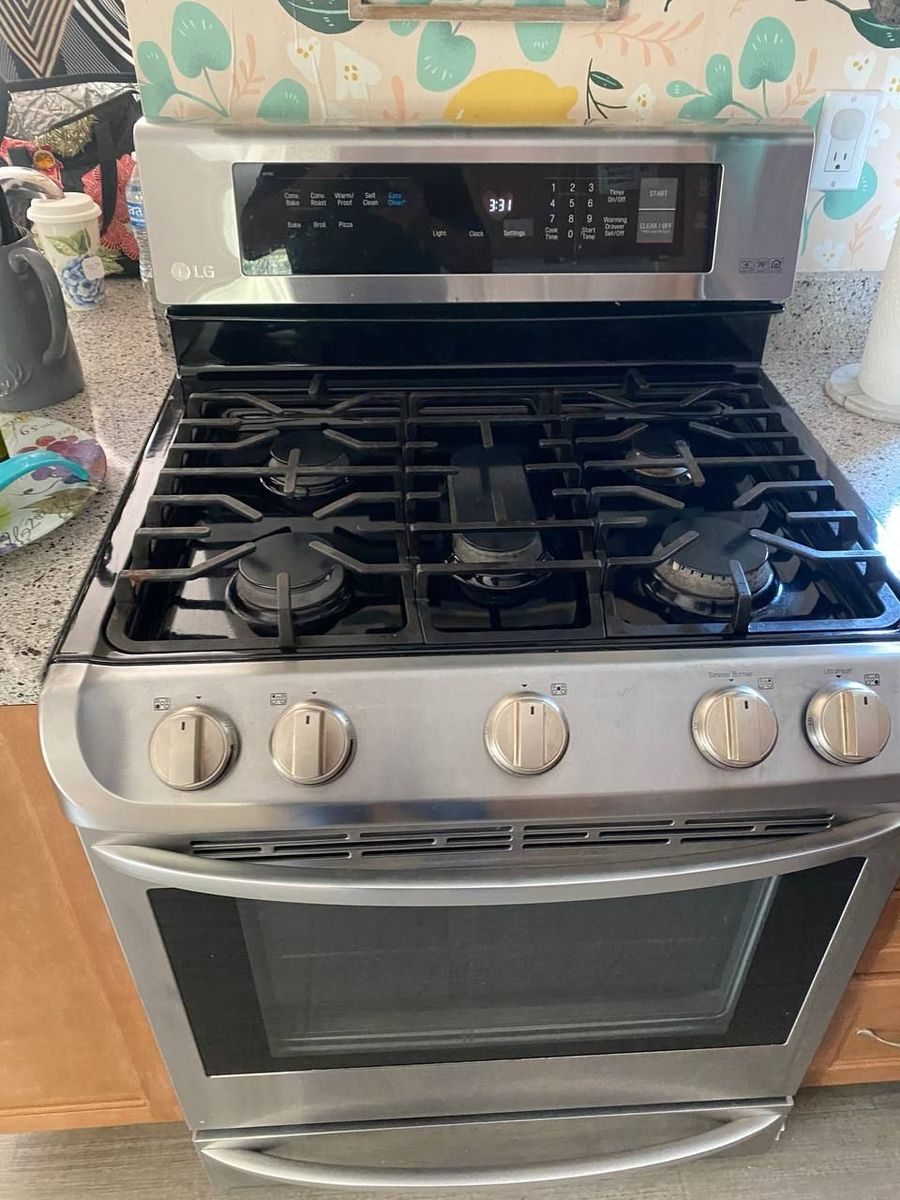
11 / 12
A five-burner gas range ready for testing. Burner igniters, the spark module and the bake igniter's amp draw are measured before a part is ordered.
Read the service page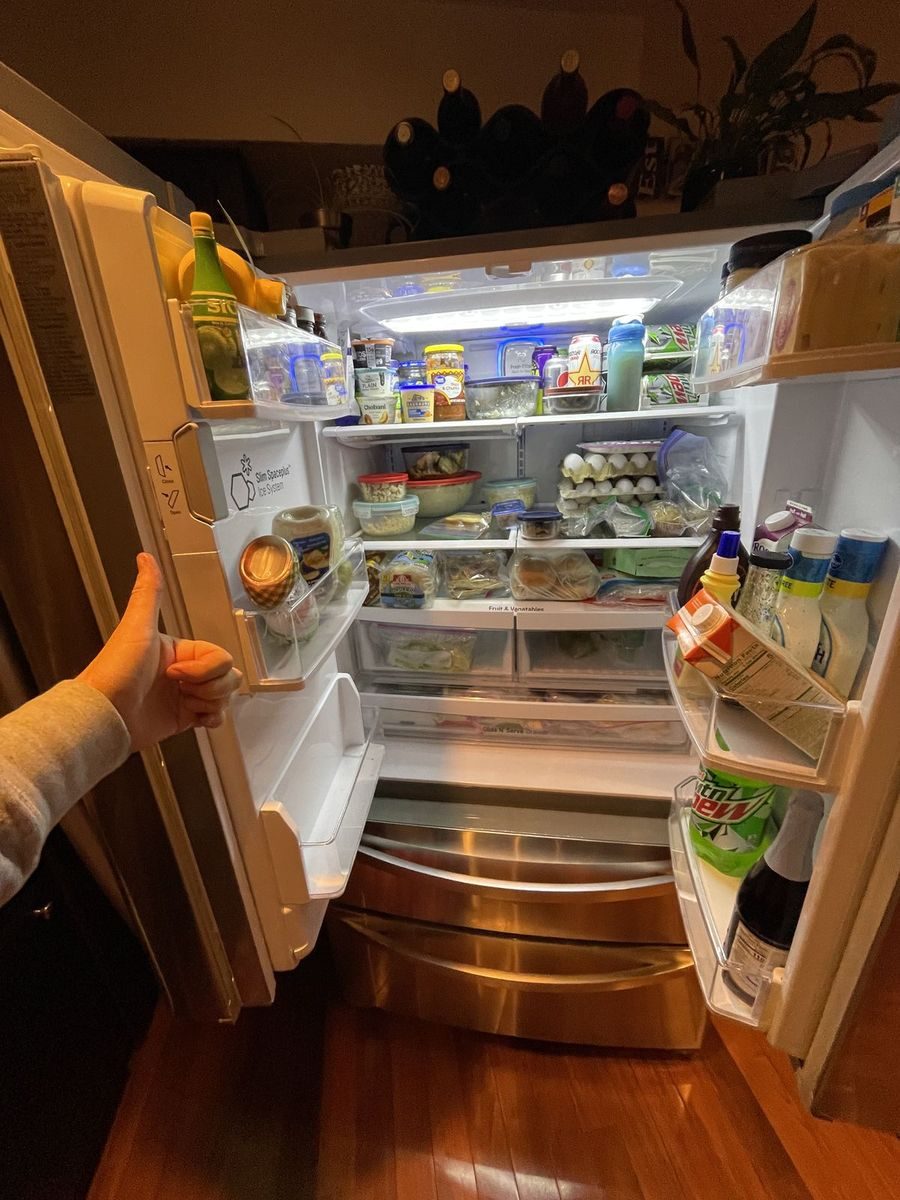
12 / 12
A French-door refrigerator open for diagnosis. Slow ice starts with the water: the inlet valve, the filter and a fill tube that can freeze shut.
Read the service pageYes. Pasco's Spanish-speaking community is large, and you can ask for a reply in Spanish when you call or book. The site has a Spanish version as well. Phones are answered daily, 8 AM through 7 PM, and the office calls to confirm each visit before the technician sets out for your street.
Not necessarily. On a 100°F Pasco afternoon, a correctly sized system may run nonstop and still be healthy. It deserves a look when vent air is barely cooler than room air, the outdoor fan stops, or ice forms on the copper lines. A temperature split well under the normal range of roughly 16 to 22 degrees across the indoor coil usually signals a fault.
Just the diagnostic charge. The office tells Pasco customers that amount at scheduling time, over the phone or through the online form. Agree to the written repair figure and the diagnostic charge is counted inside it, never piled on top. Our technician holds off on any repair until you give the word, and the warranty terms print on your invoice.
Yes. Replacing condensers, coils, heat pumps and furnaces, and tying ductwork into the new equipment, falls under our 06A HVAC/Refrigeration specialty along with our general contractor license. Your quote puts equipment and installation together as one figure. When a system is sound we usually suggest repairing it first, and we tell you directly once replacement is the smarter spend.
Talk to us
Use our scheduling page to set a day and an arrival window, or call any day from 8 AM to 7 PM. The office confirms with a phone call, in Spanish if you ask.
Book a visit
One slip, filled top to bottom. The office phones to confirm the visit, and the technician calls again when on the way.
Every number below is a public state record. Look each one up on L&I Verify, or read what each license allows on our licenses page.
What our licenses cover