01 / 12
Heat pump repair
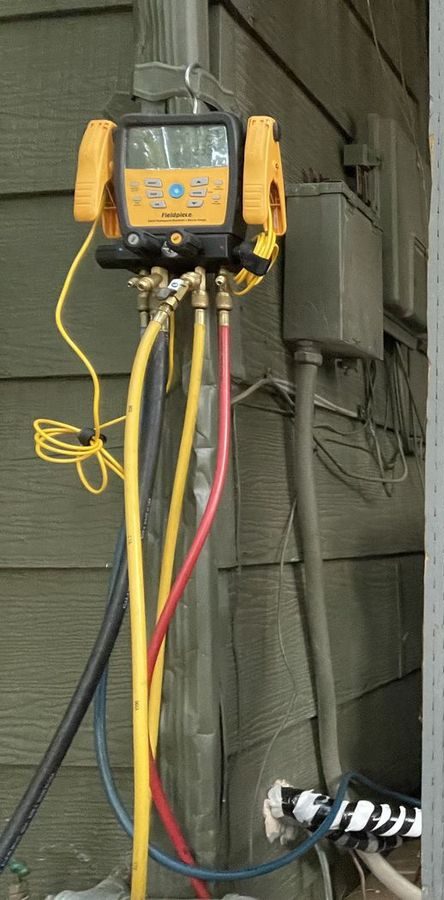
Digital gauges hang by the outdoor unit while the heat pump runs. Superheat and subcooling show whether the charge, a valve or the defrost board is the problem.
Read the service page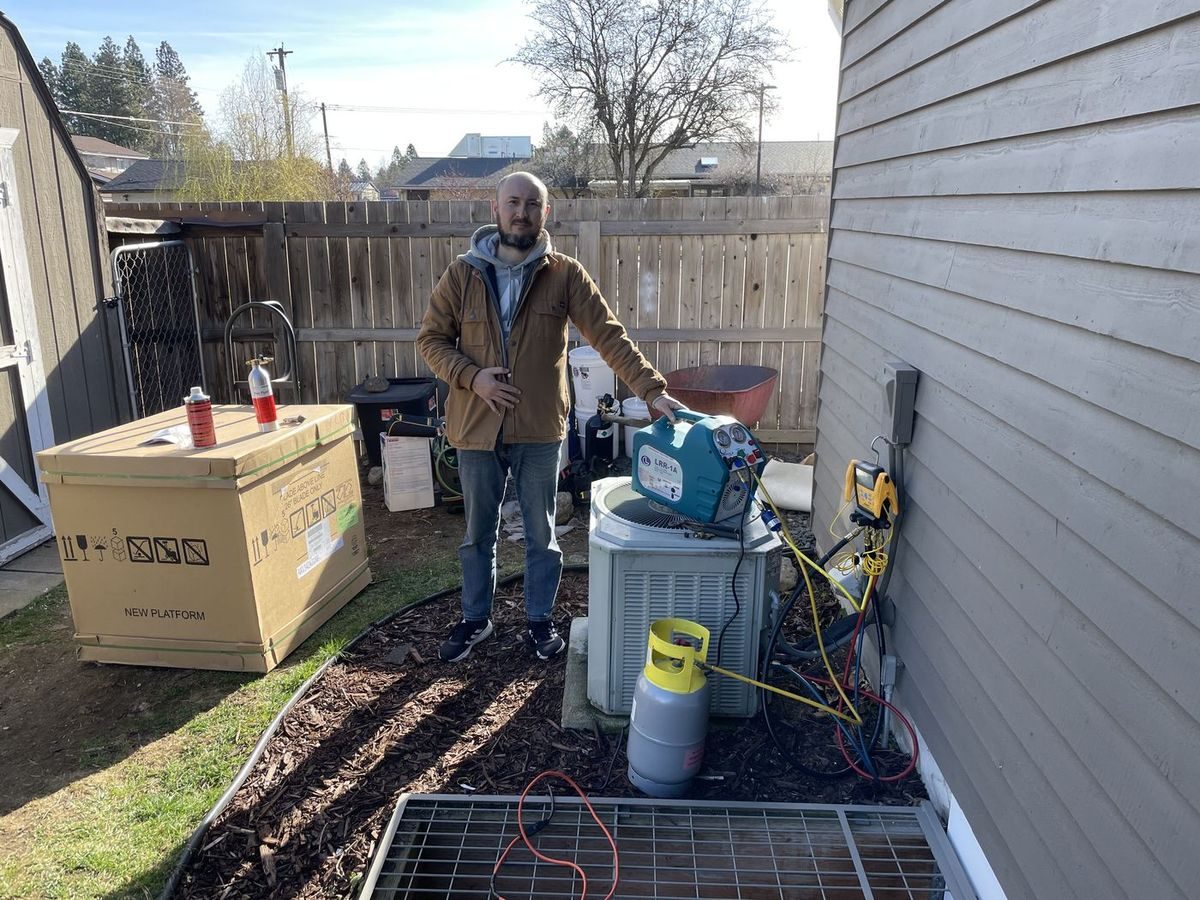
Licenses and credentials
A license number only helps if you know what it permits. Below, each of ours is explained in everyday terms, along with where to look it up and which nearby jobs we deliberately leave alone.
Short answer
Larch HVAC & Appliance holds Washington electrical contractor license LARCHHA742PL, carrying specialty 06A (HVAC/Refrigeration) together with specialty 07D (Appliance Repair), and general contractor license LARCHHA745PW. Our technicians hold the federal EPA 608 Universal refrigerant credential. Both state licenses can be confirmed by anyone on the Labor & Industries Verify lookup, searching by license number or by company name.
EPA
Refrigerant handling credential held by our technicians
We work under two state licenses and one federal credential, and each one lines up with a specific kind of work.
Open Washington's Labor & Industries Verify tool, the state's public contractor lookup, and type in LARCHHA742PL or LARCHHA745PW, or search under the company name. The record shows whether each license is active and lists the specialties attached to the electrical contractor license. You can run that search before booking, or before approving a quote; nothing about the visit requires taking our word for it.
Whether the house is one of Richland's 1943–45 alphabet houses near Jadwin Avenue, built from 22 lettered floorplans and mostly remodeled since, or a recent build in Badger Mountain Village, the scope stays identical. The license follows the equipment, not the age of the home around it.
Several jobs that sit close to heating, cooling and appliances are not ours, and we say so before quoting. Panel and circuit work, running new wiring or receptacles, hot-water tanks, gas piping, and the home's supply and drain lines are work we do not take on. If a project calls for any of that, the written quote points it out so you can arrange it separately.
What our technicians do is test the power supply right at the equipment. If a heat pump, furnace or dryer is getting no power, they confirm it at the unit and explain what they found. You are welcome to check or reset a tripped breaker yourself; when the trouble sits upstream of the equipment, we tell you plainly, and we come back for the equipment side once it is sorted.
Federal rules require anyone who opens a refrigerant circuit to hold an EPA 608 credential, because refrigerant has to be recovered rather than vented into the air. On a heat pump with a leaking TXV or a refrigerator with a sealed-system leak, our technicians recover the charge, repair the leak, pull a deep vacuum, and recharge by weight or by superheat and subcooling. In a place where July highs average about 92°F and 100°F days show up most summers, a correctly charged system is the one that keeps pace. When you want that kind of work done, set up a visit through the booking form, or call the office between 8 AM and 7 PM.
One photo per tab from our service calls. Tap a tab, or let the file turn on its own.
01 / 12
Digital gauges hang by the outdoor unit while the heat pump runs. Superheat and subcooling show whether the charge, a valve or the defrost board is the problem.
Read the service page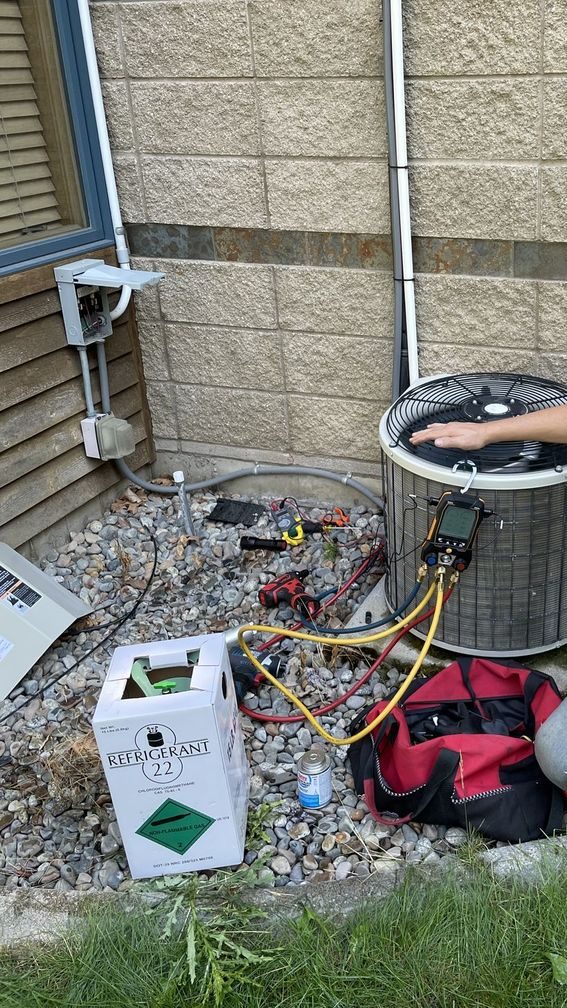
02 / 12
An older condenser under test with hoses on the service ports. The capacitor, contactor and fan motor get checked before anyone talks about refrigerant.
Read the service page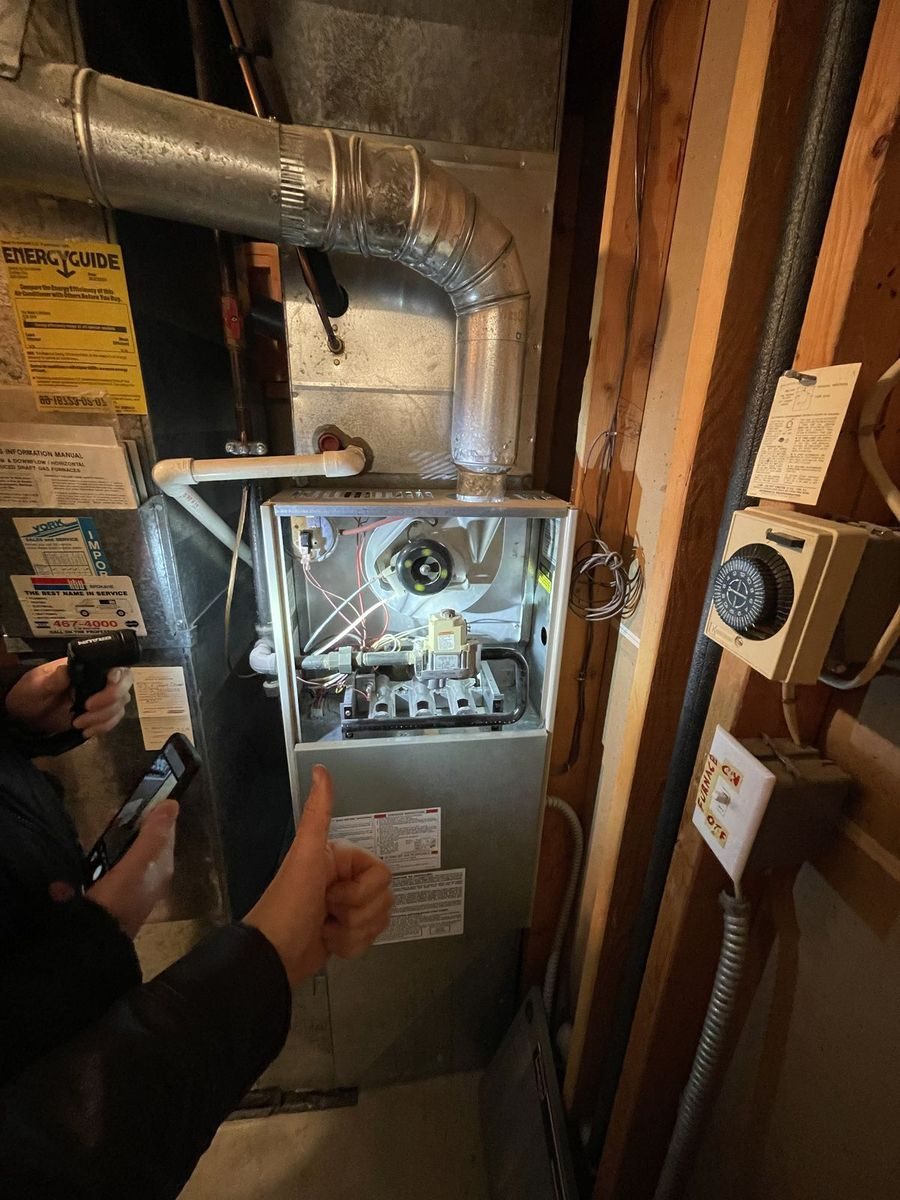
03 / 12
The burner compartment of a gas furnace, open. We follow the start-up order, inducer, pressure switch, igniter, flame sensor, until the step that fails.
Read the service page04 / 12
A recovery machine and cylinder beside an outdoor unit. On a replacement, the old refrigerant is pulled into the cylinder instead of the air.
Read the service page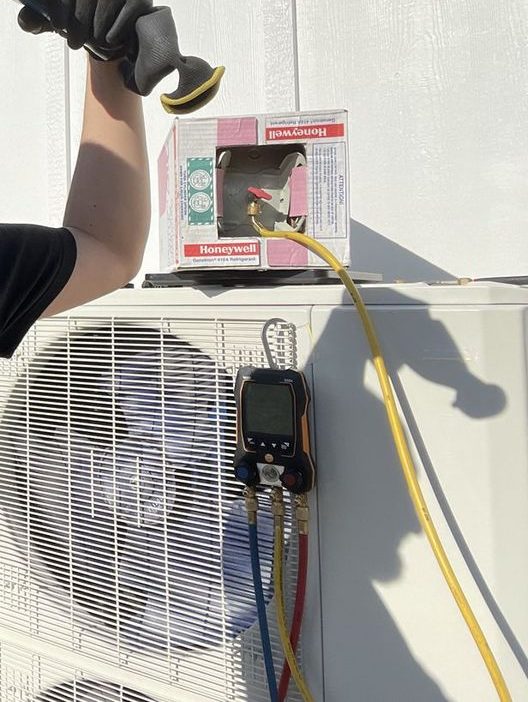
05 / 12
A ductless outdoor unit with a gauge set on it. Mini-splits get the same pressure and temperature readings as a central system, plus a look at the line-set insulation.
Read the service page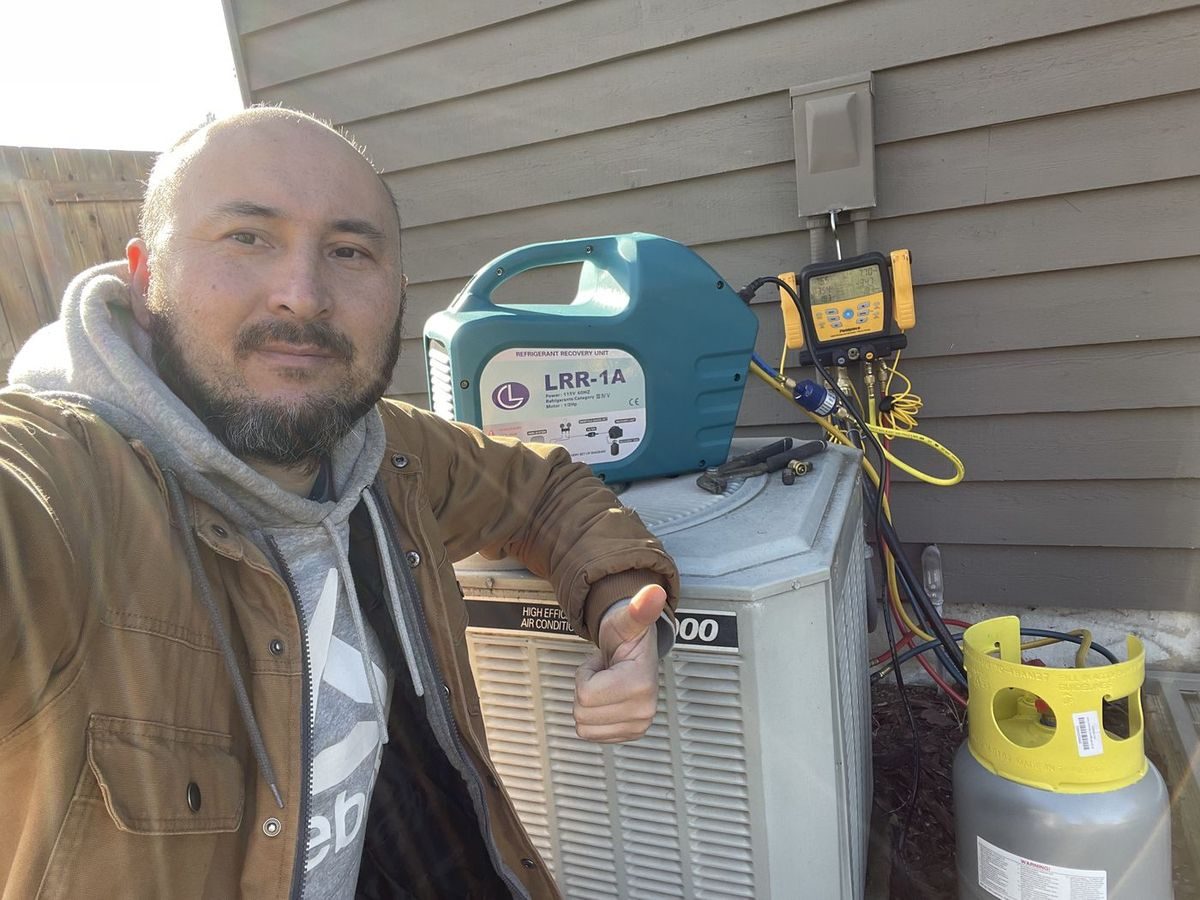
06 / 12
Gauges on a condenser during a seasonal visit. Spring visits wash the dust out of the coil; fall visits test defrost and heat strips before the fog weeks.
Read the service page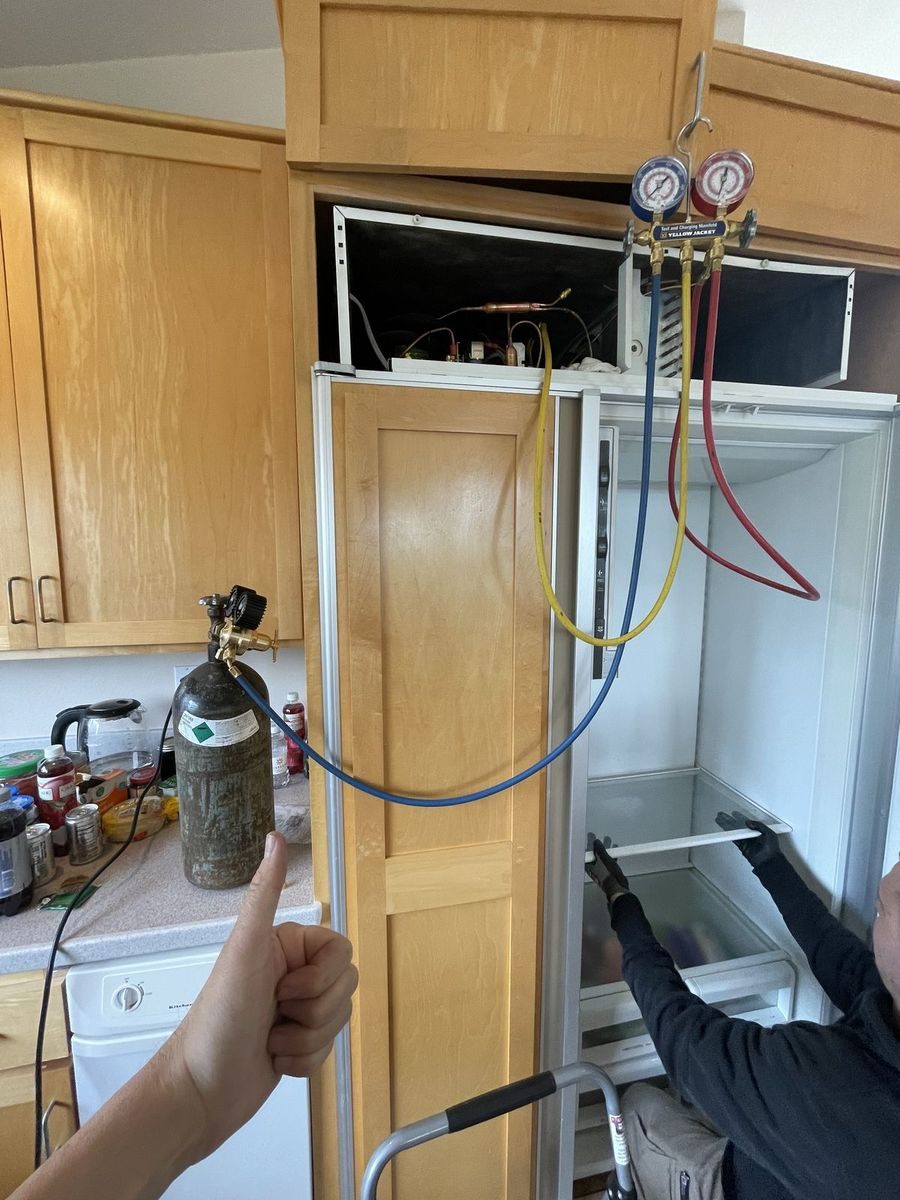
07 / 12
Gauges connected to a built-in refrigerator's sealed system. Leak searches, brazing and recharges happen in the kitchen, so the fridge stays where it is.
Read the service page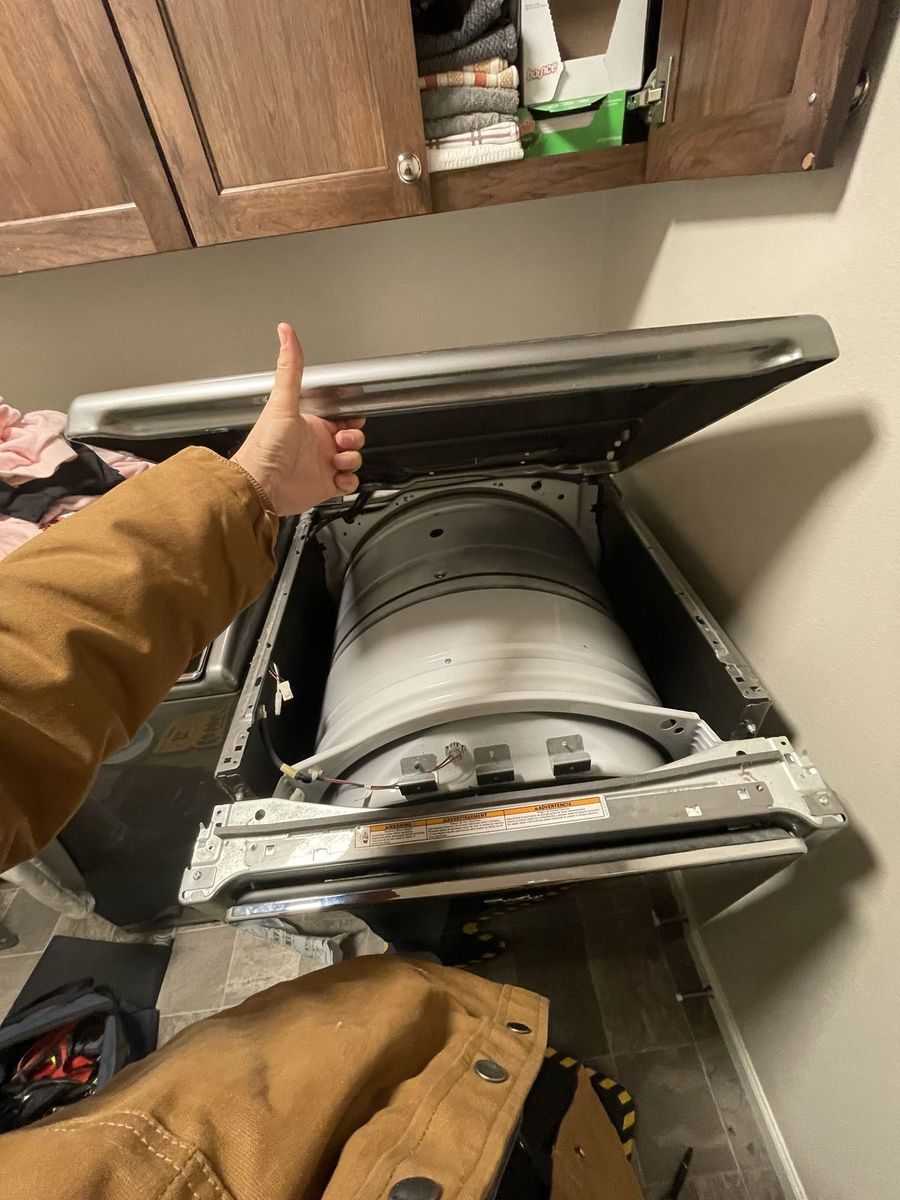
08 / 12
A top-load washer with the top panel raised. Lid switch, drive coupler and drain pump are all within reach once the top comes up.
Read the service page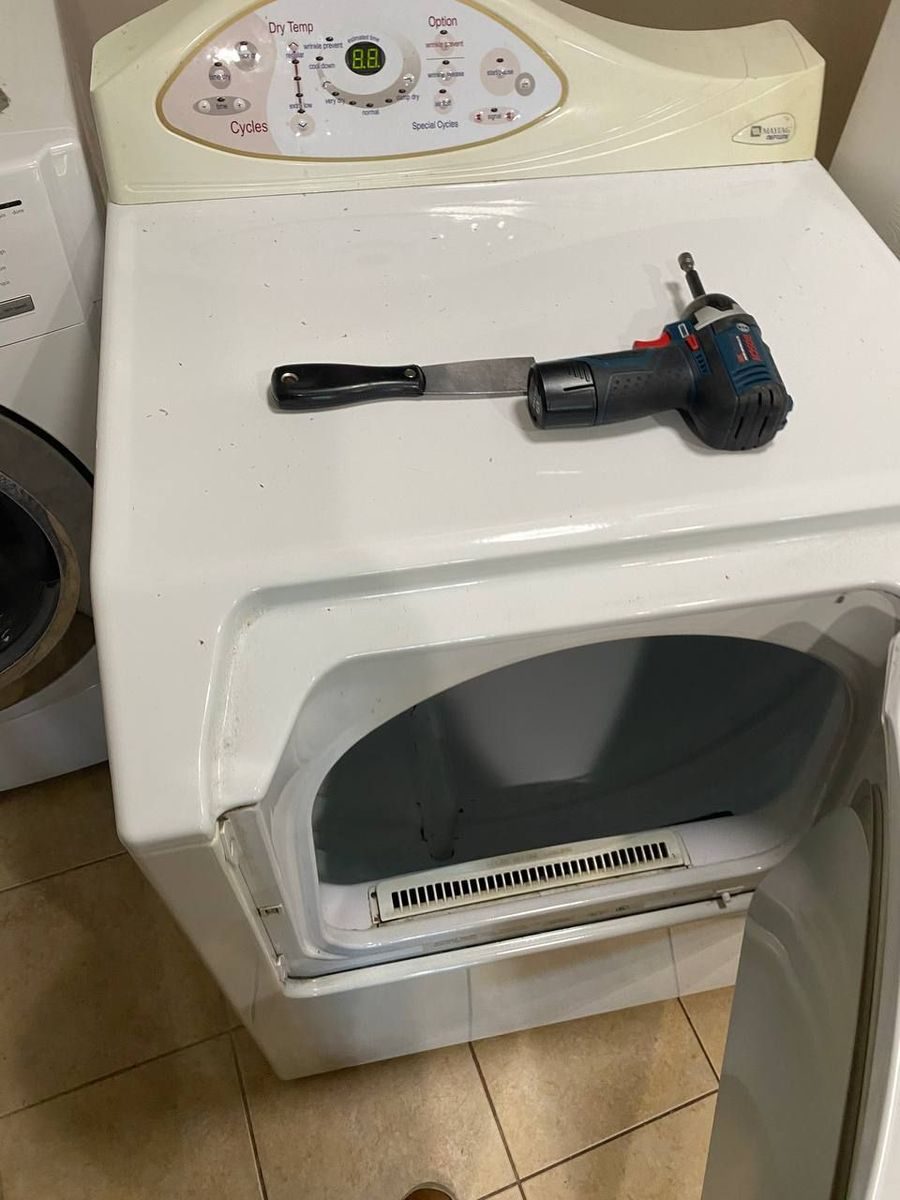
09 / 12
An electric dryer opened up in a laundry room. The thermal fuse, the heating element and the vent run behind the machine get tested together.
Read the service page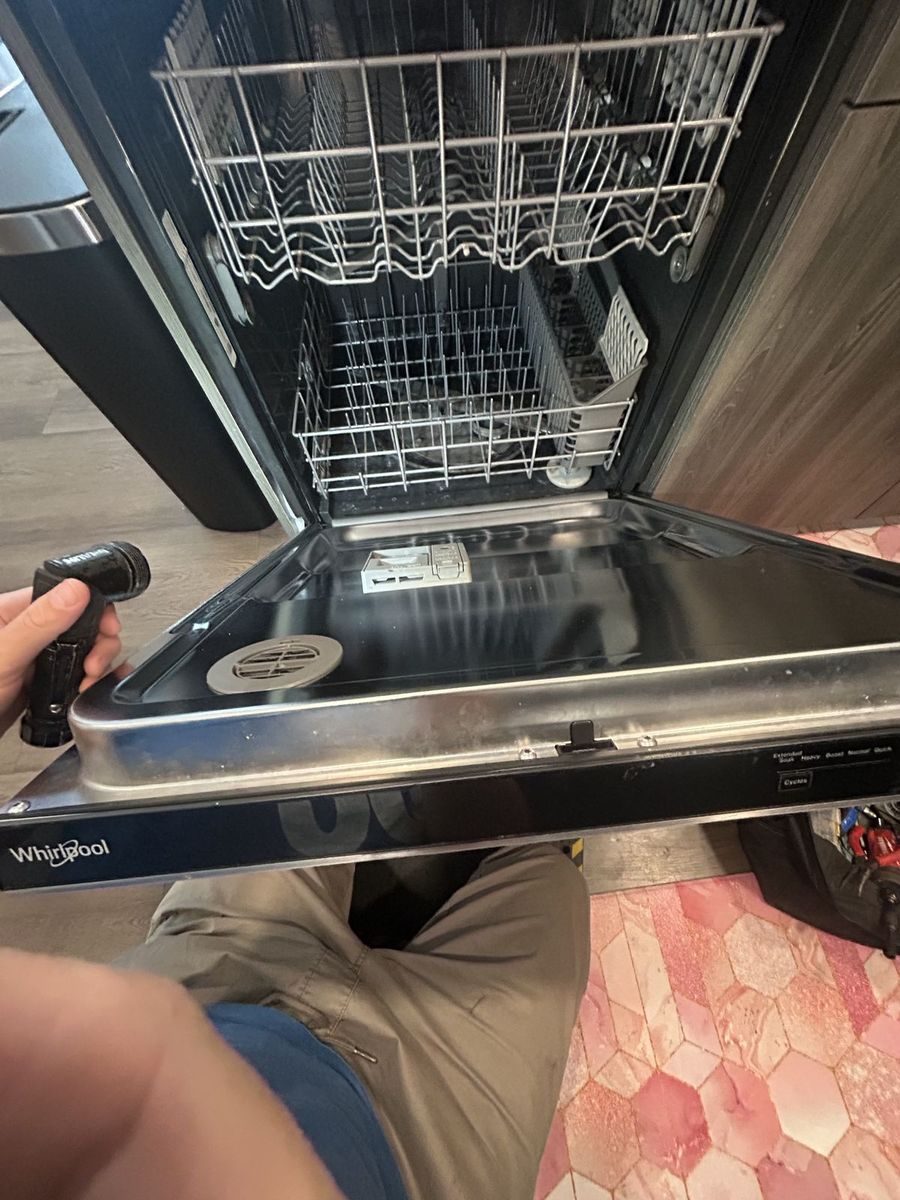
10 / 12
Door open and racks out on a dishwasher. A puddle left behind after the last rinse sends us to the filter screen, the pump and the hose route under the sink, in that order.
Read the service page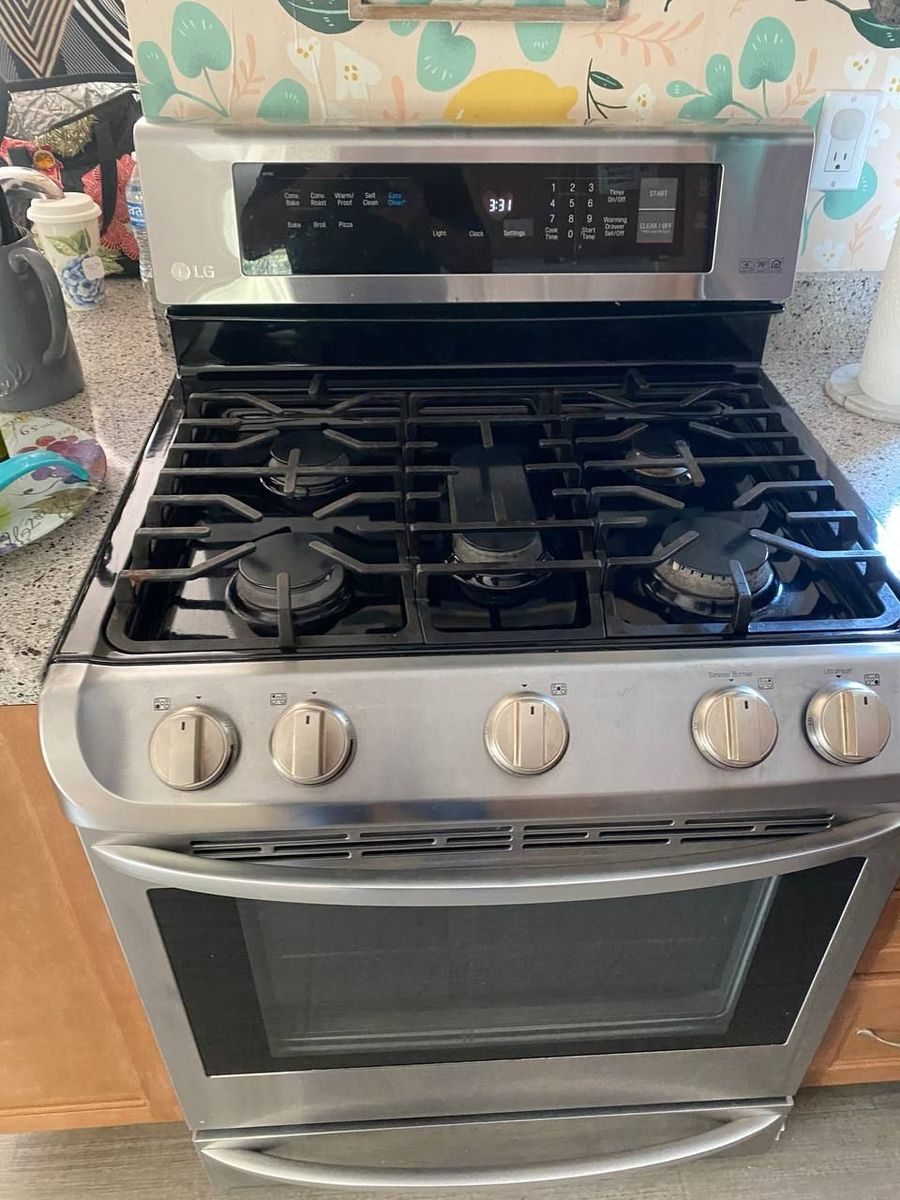
11 / 12
A five-burner gas range ready for testing. Burner igniters, the spark module and the bake igniter's amp draw are measured before a part is ordered.
Read the service page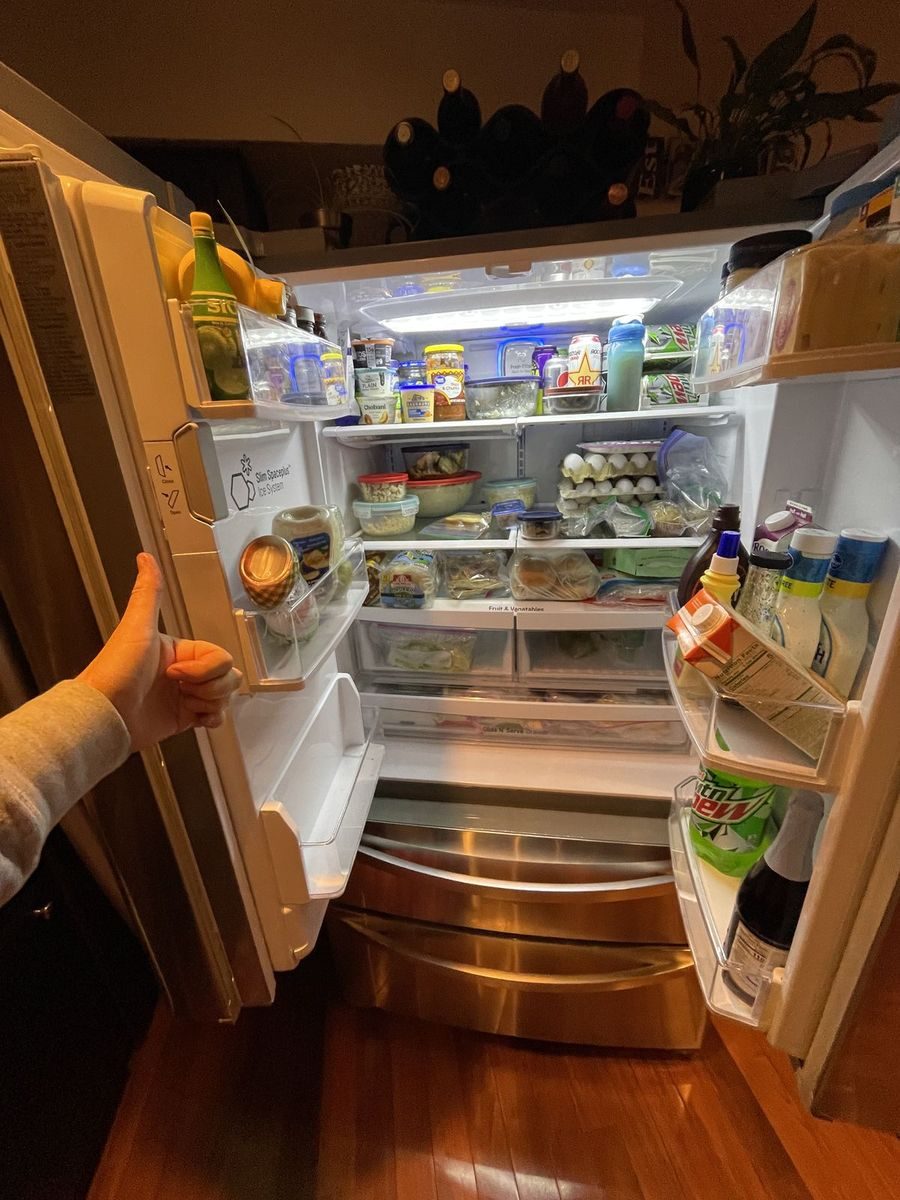
12 / 12
A French-door refrigerator open for diagnosis. Slow ice starts with the water: the inlet valve, the filter and a fill tube that can freeze shut.
Read the service pageYes. LARCHHA742PL, the electrical contractor license, lists 06A HVAC/Refrigeration as well as 07D Appliance Repair, and LARCHHA745PW is our general contractor license. Both are public on Washington L&I Verify. Search either number there to see the status and the specialties for yourself, before you book or before you approve any quote.
No, that part is not something we take on. We install the mini-split itself: the indoor head, the outdoor unit, the line set, the condensate drain and the interconnect cable between the two units. If the spot needs a power supply added, the written quote flags it so you can arrange that ahead of install day, and we schedule the installation around it.
It means our technicians may handle refrigerant on every equipment type the federal rules cover: small appliances such as refrigerators, high-pressure systems like heat pumps and central air conditioners, and low-pressure systems. Universal status requires passing the core section plus all three equipment sections. In practice, refrigerant gets recovered properly instead of escaping into the air.
Talk to us
Look up our numbers on the state's Verify tool, then pick a day and window on the form or phone the office any day, 8 AM to 7 PM.
Book a visit
One slip, filled top to bottom. The office phones to confirm the visit, and the technician calls again when on the way.
Every number below is a public state record. Look each one up on L&I Verify, or read what each license allows on our licenses page.
What our licenses cover