01 / 12
Heat pump & AC installation
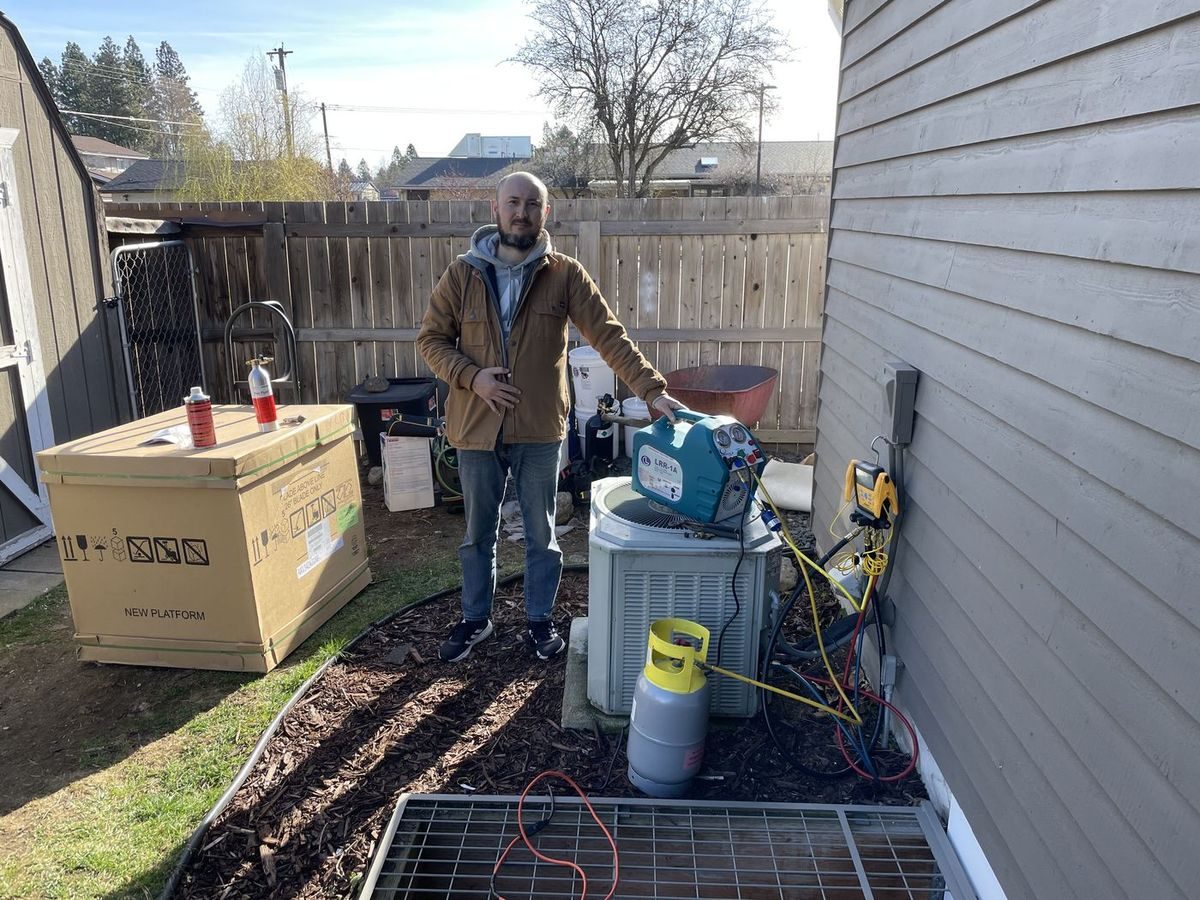
A recovery machine and cylinder beside an outdoor unit. On a replacement, the old refrigerant is pulled into the cylinder instead of the air.
Read the service page
Replacement and new systems · 06A HVAC/Refrigeration
When an aging heat pump or air conditioner reaches the point where repairs stop making sense, we replace it with equipment sized to your house rather than to the old unit's label. You get one written figure for equipment and installation, and nothing is ordered until you approve it.
Short answer
We size a new heat pump or central air conditioner with a room-by-room load calculation in the style of Manual J, built around 100°F summer afternoons and winter lows near 10°F. Then we help you weigh a cold-climate heat pump against dual fuel, where a gas furnace takes the coldest hours. We run a correctly sized line set, pull a deep vacuum and charge to spec. The quote is one written figure.
Replacement usually makes sense when the system is old, the repairs keep getting bigger, and the house still is not comfortable on the hottest afternoons. A failed capacitor on a younger unit is a repair. A compressor pulling high amps, a leaking indoor coil and an outdoor unit still charged with R-22, which is no longer manufactured for servicing, add up to a different conversation. Our technicians write up the repair and the replacement as two separate prices, so you can weigh them together and the choice stays yours.
A Tri-Cities system has a hard job. July afternoons average about 92°F, most summers bring 100°F days, and winter cold snaps can push lows toward 10°F. Between those extremes come inversion weeks when fog settles in and highs stall in the 30s. Equipment that was undersized, oversized or installed carelessly shows it here faster than in a mild climate, usually as short cycling, stuffy upstairs rooms or an AUX light on the thermostat that rarely goes out.
Larch HVAC & Appliance installs heat pumps, central air conditioners, air handlers and gas or electric furnaces under our Washington 06A HVAC/Refrigeration specialty, and refrigerant on every job is handled by technicians holding EPA 608 Universal. To get started, request an estimate visit on the booking page, picking the date and arrival window that suit you, or phone us. The office calls back to confirm.
The estimate visit starts with a tape measure, not a sales pitch. Our technician measures rooms and windows, checks insulation and duct runs, reads static pressure on the existing ductwork, and notes where the outdoor unit and line set can go. From that comes the load calculation and two or three equipment choices. Every written quote states equipment and installation together as one figure, so there is no separate column of extras to decode later.
On installation day we recover the old refrigerant, set the new indoor coil or air handler, and make the ductwork connections at the equipment. New line sets are sized to the manufacturer's table; a reused set is flushed and pressure-tested first. Every brazed joint is made while dry nitrogen purges the copper, so no scale forms inside. The system then holds a nitrogen standing test, is evacuated below 500 microns on a micron gauge, and has to hold that vacuum before any refrigerant is released. Final charge is verified by superheat or subcooling, temperature split and static pressure, and those start-up readings go on your paperwork next to the written warranty terms.
The Tri-Cities is the windiest of the medium and large Pacific Northwest metros, and most of that wind comes from the west, hardest in March, April and June. A condenser parked on the open west side of a house collects sand, tumbleweeds and cottonwood fluff against its coil, and a dusty coil pushes head pressure up right as the 100°F afternoons arrive. Where the lot allows it, we place the outdoor unit out of the prevailing wind, on a raised pad or stand above drifting sand, with open space on every side for airflow and service.
Placement plays out differently by neighborhood. In Horn Rapids and on the open edges of West Richland, a fence line or the house itself can shelter the unit from blowing dust. On newer lots in Badger Mountain South and West Pasco near Road 68, side yards are narrow, so we watch clearances, dryer vent exhaust and bedroom windows. In central Richland's remodeled alphabet houses, closets and crawlspaces often leave little room for a long line set, which shapes where the air handler and condenser can sit.
One photo per tab from our service calls. Tap a tab, or let the file turn on its own.
01 / 12
A recovery machine and cylinder beside an outdoor unit. On a replacement, the old refrigerant is pulled into the cylinder instead of the air.
Read the service page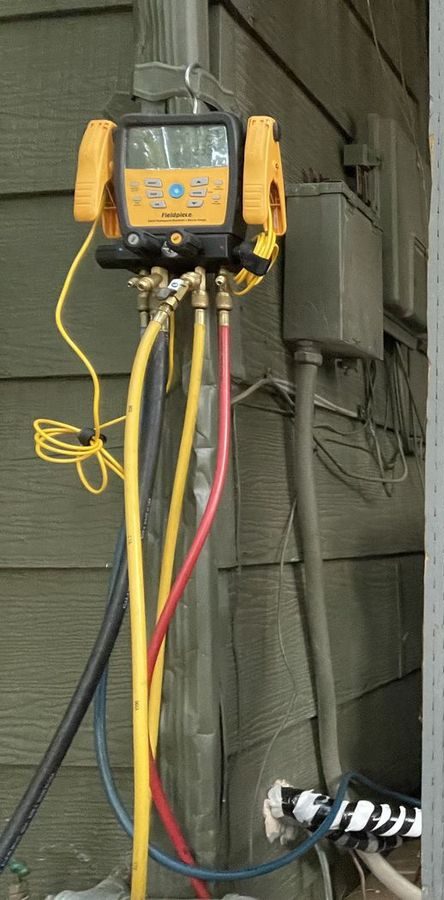
02 / 12
Digital gauges hang by the outdoor unit while the heat pump runs. Superheat and subcooling show whether the charge, a valve or the defrost board is the problem.
Read the service page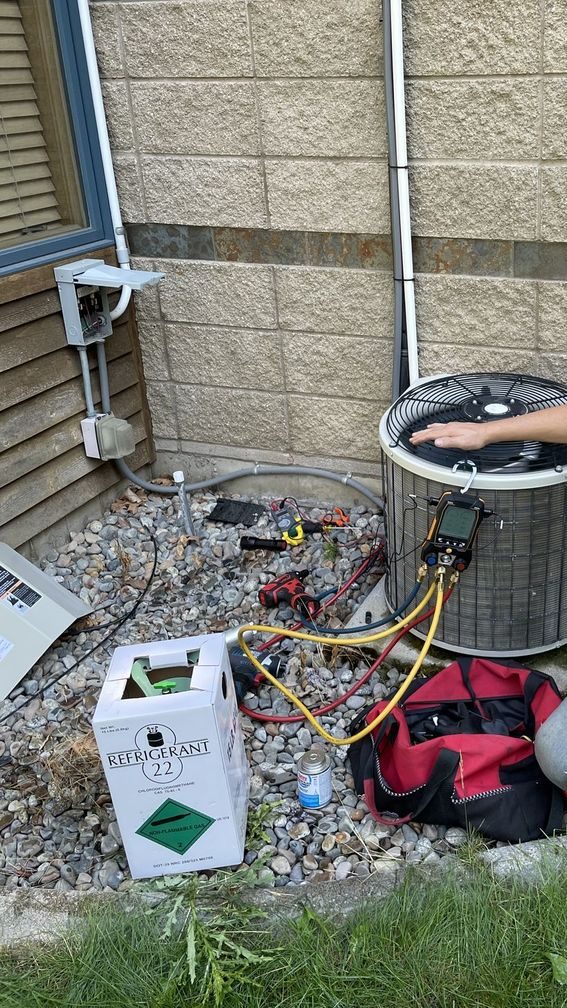
03 / 12
An older condenser under test with hoses on the service ports. The capacitor, contactor and fan motor get checked before anyone talks about refrigerant.
Read the service page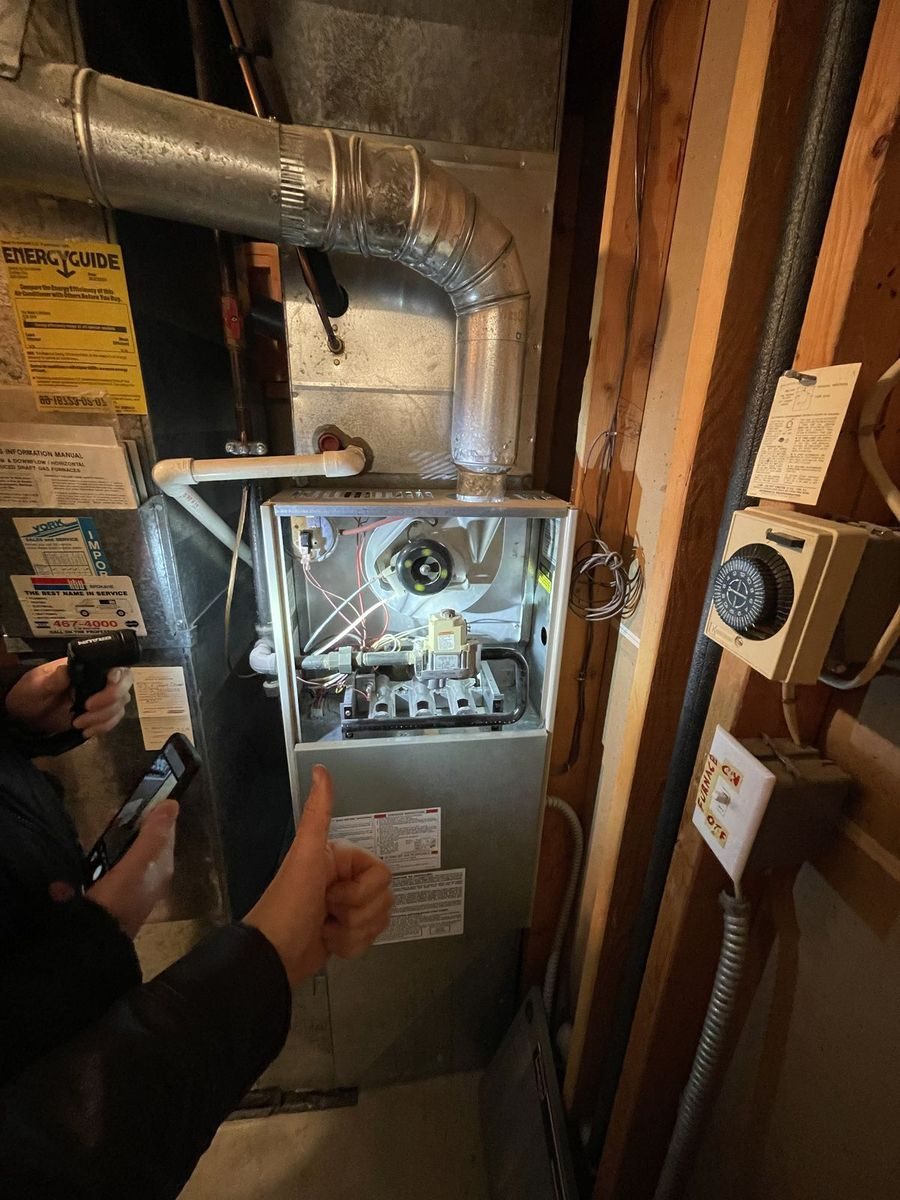
04 / 12
The burner compartment of a gas furnace, open. We follow the start-up order, inducer, pressure switch, igniter, flame sensor, until the step that fails.
Read the service page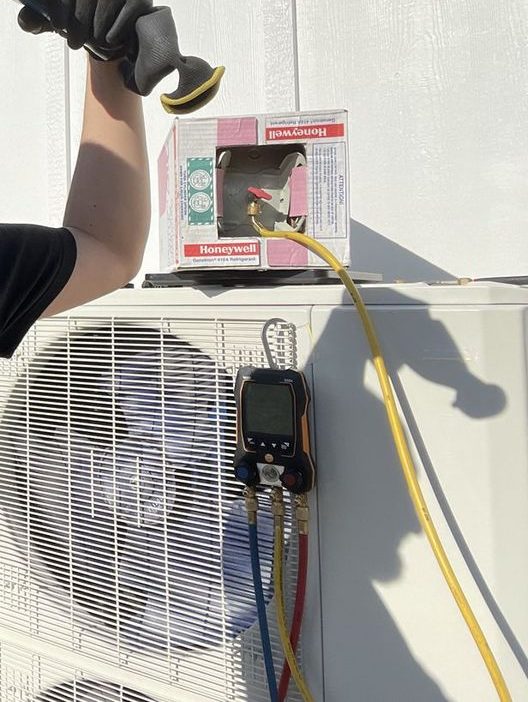
05 / 12
A ductless outdoor unit with a gauge set on it. Mini-splits get the same pressure and temperature readings as a central system, plus a look at the line-set insulation.
Read the service page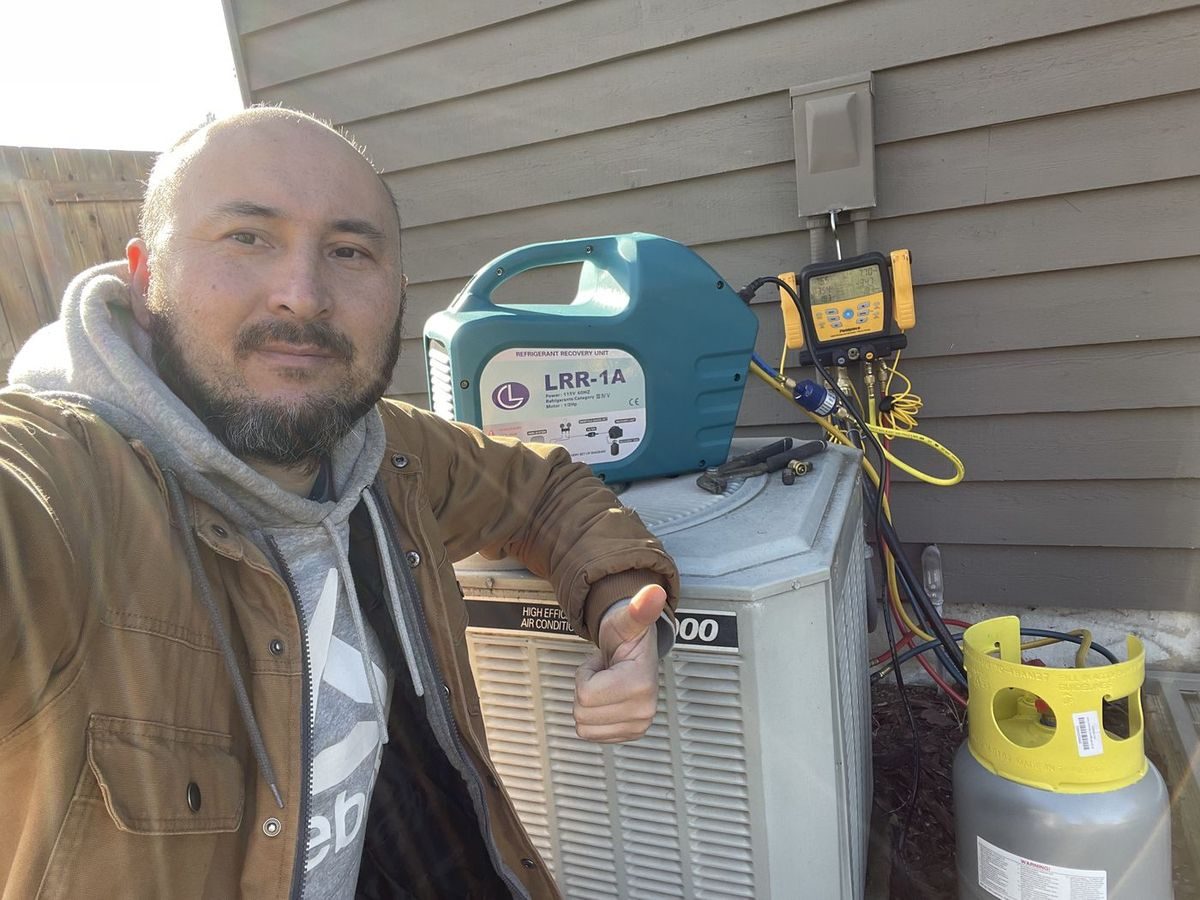
06 / 12
Gauges on a condenser during a seasonal visit. Spring visits wash the dust out of the coil; fall visits test defrost and heat strips before the fog weeks.
Read the service page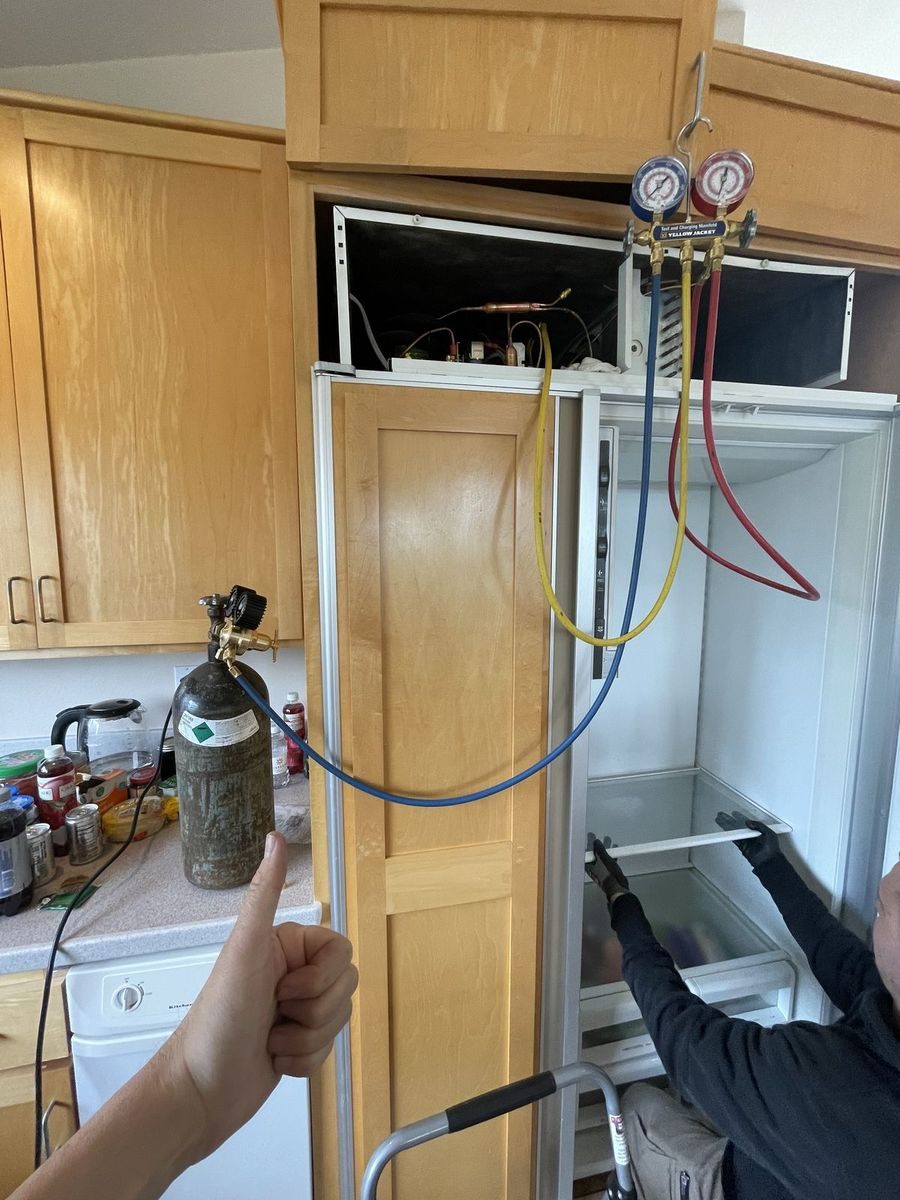
07 / 12
Gauges connected to a built-in refrigerator's sealed system. Leak searches, brazing and recharges happen in the kitchen, so the fridge stays where it is.
Read the service page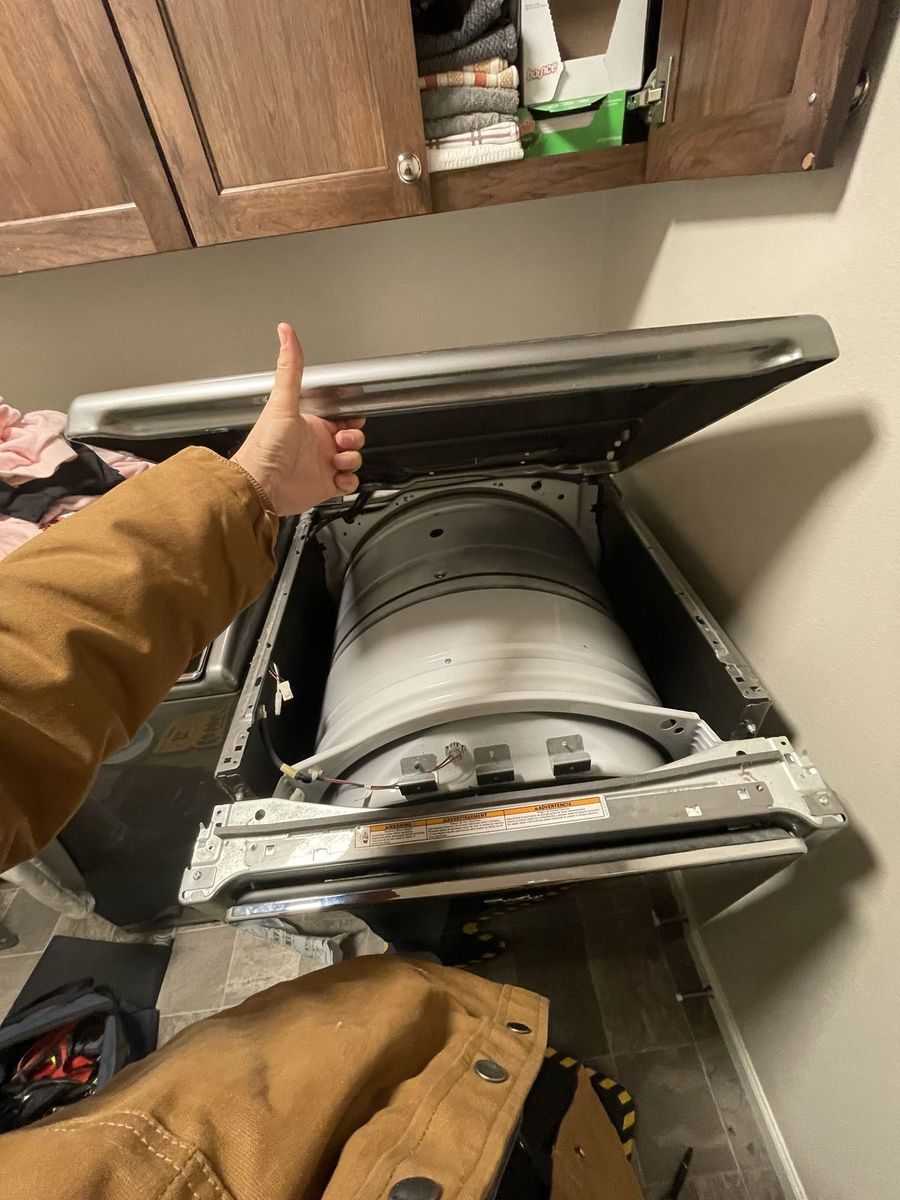
08 / 12
A top-load washer with the top panel raised. Lid switch, drive coupler and drain pump are all within reach once the top comes up.
Read the service page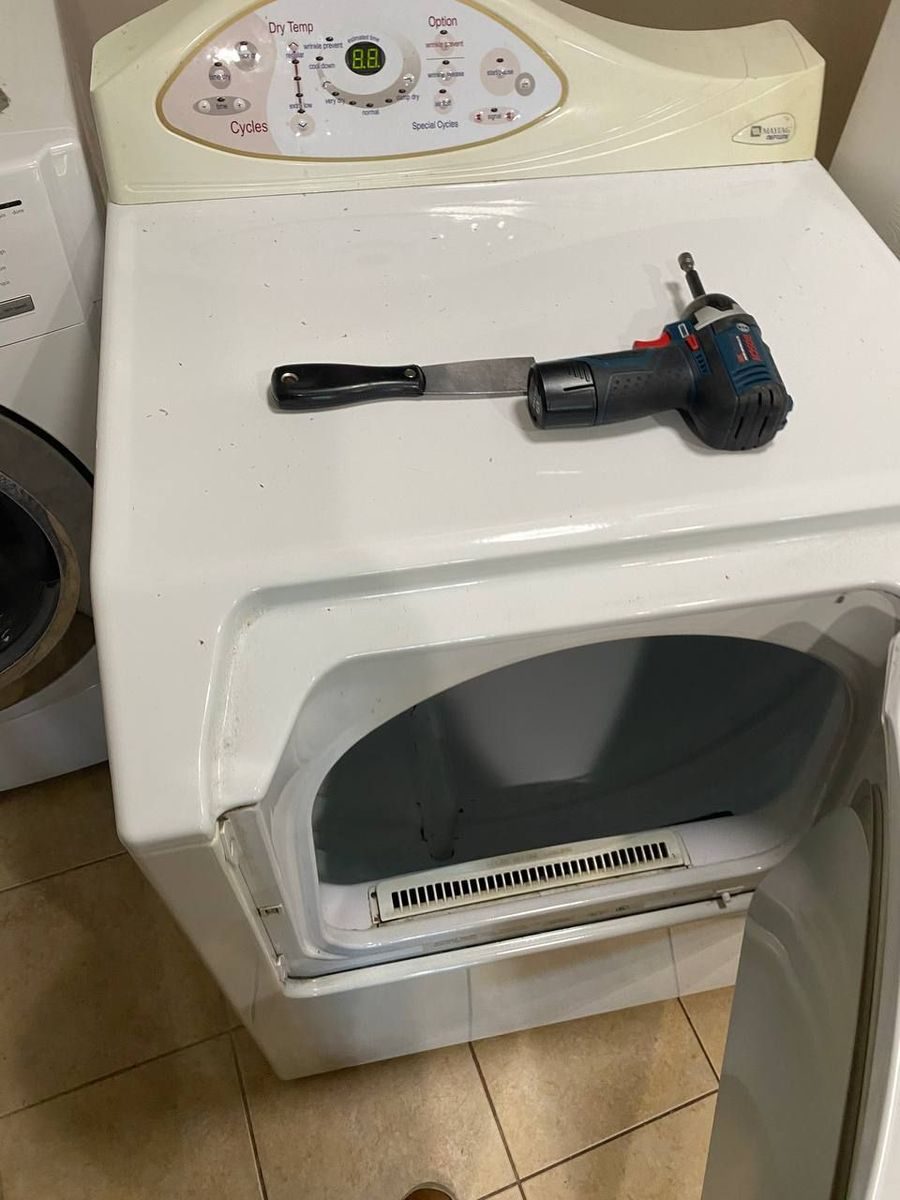
09 / 12
An electric dryer opened up in a laundry room. The thermal fuse, the heating element and the vent run behind the machine get tested together.
Read the service page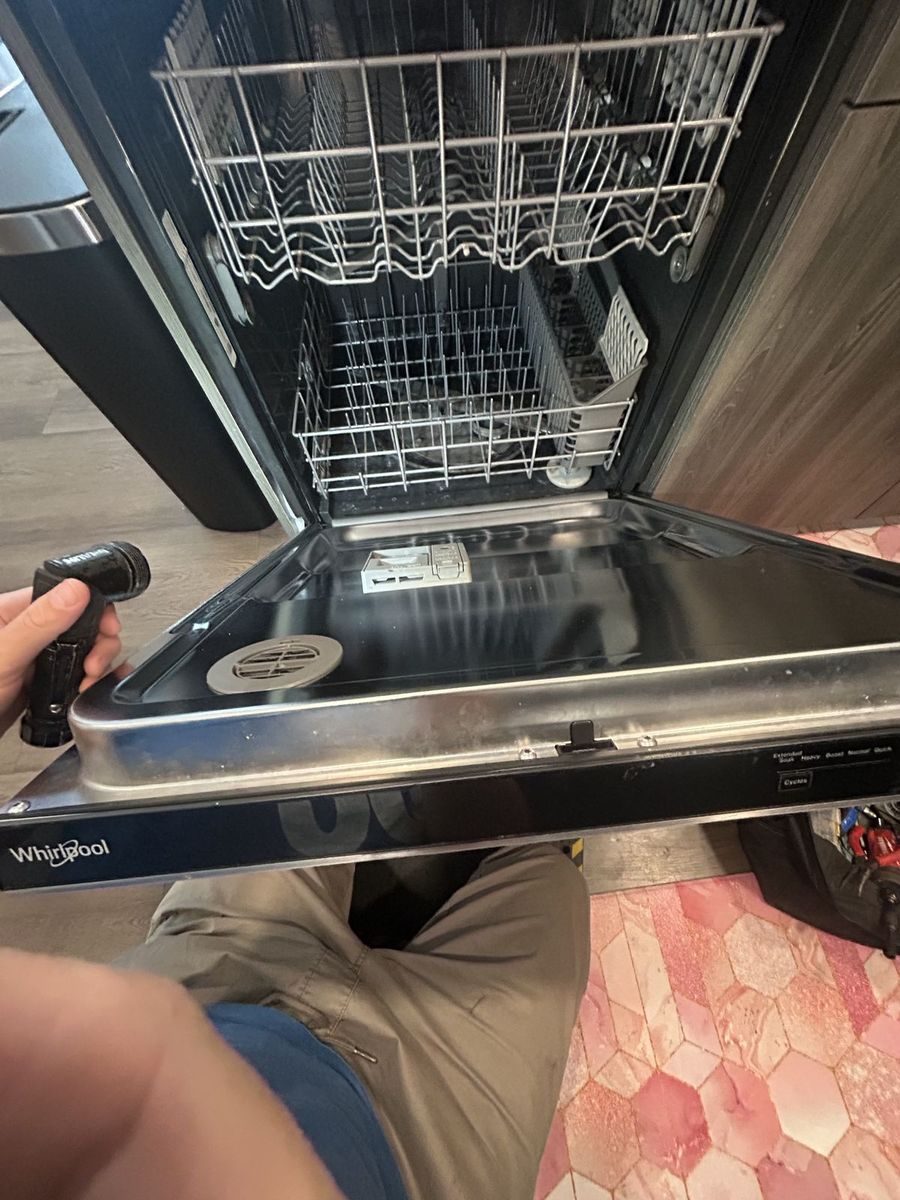
10 / 12
Door open and racks out on a dishwasher. A puddle left behind after the last rinse sends us to the filter screen, the pump and the hose route under the sink, in that order.
Read the service page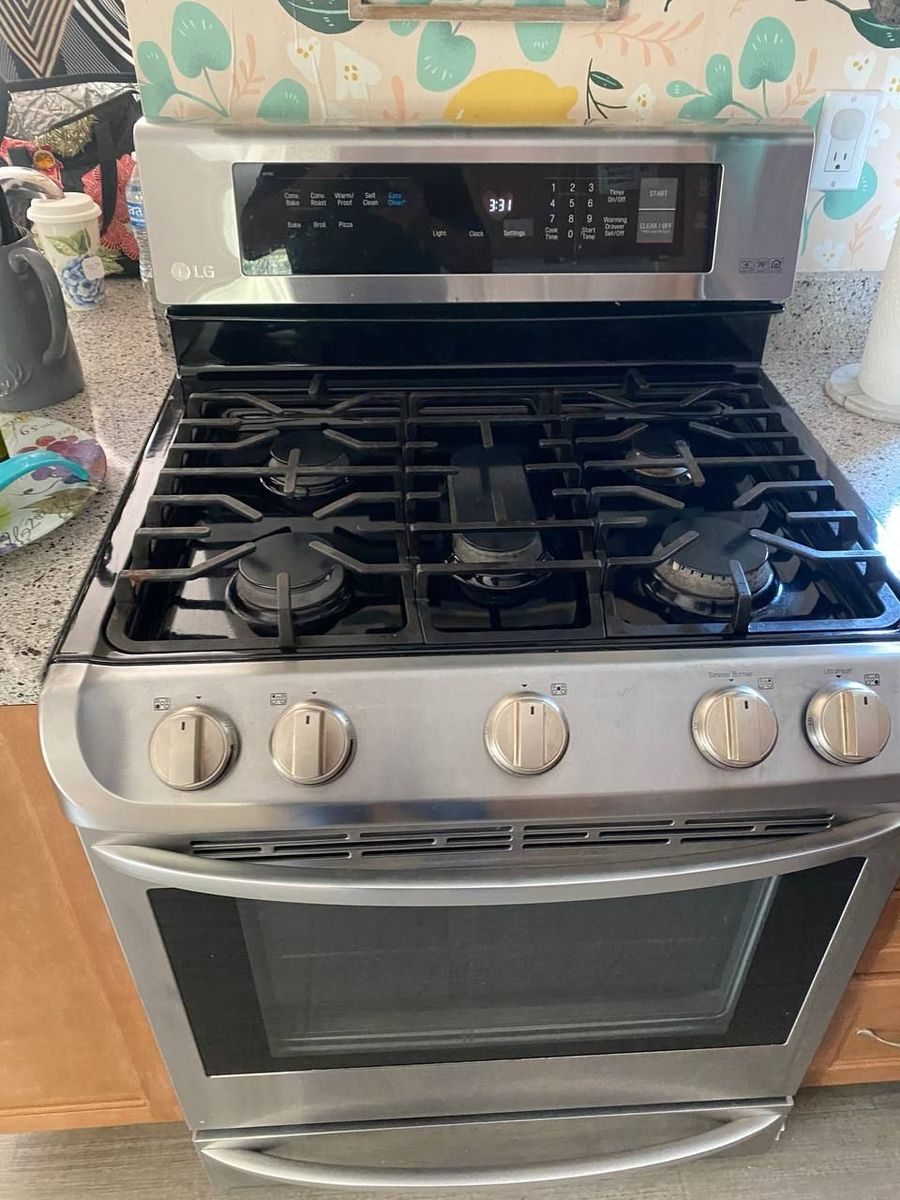
11 / 12
A five-burner gas range ready for testing. Burner igniters, the spark module and the bake igniter's amp draw are measured before a part is ordered.
Read the service page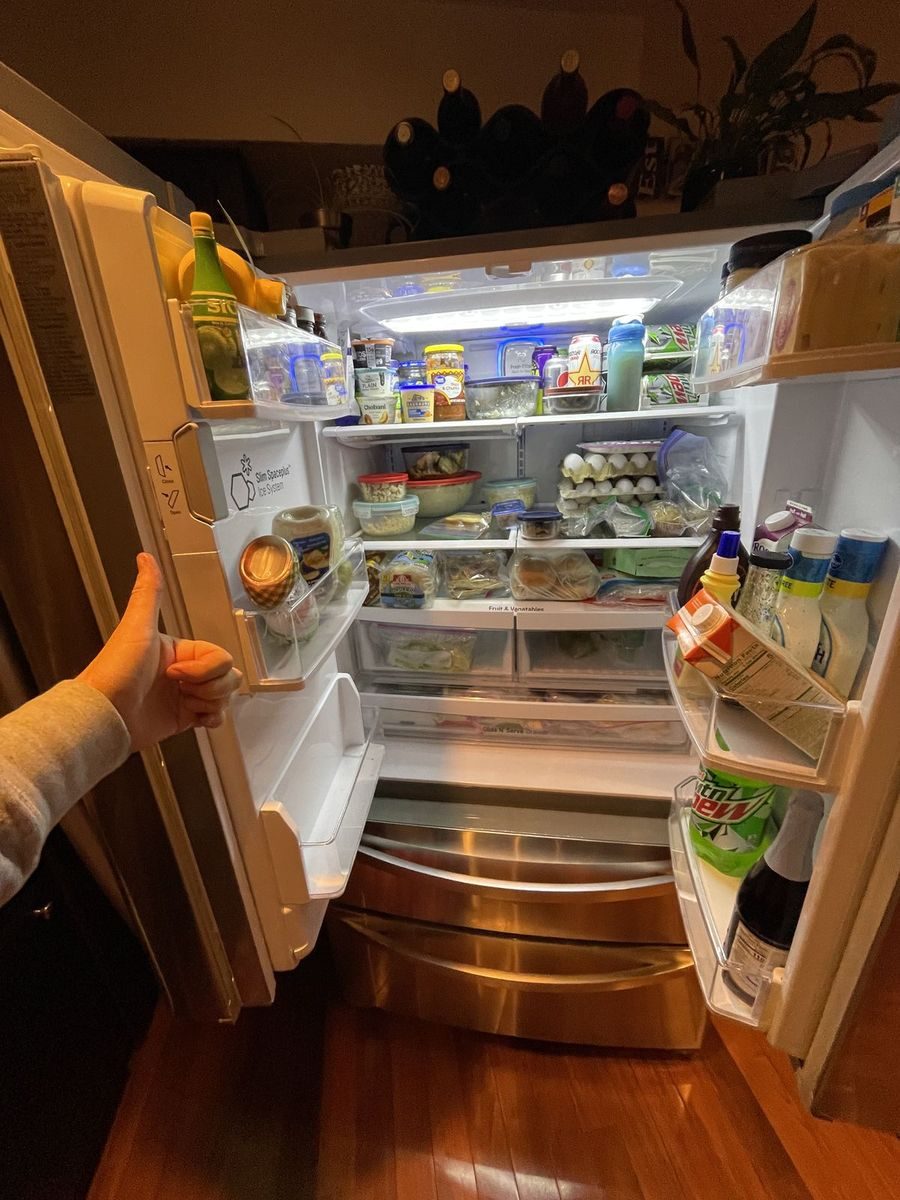
12 / 12
A French-door refrigerator open for diagnosis. Slow ice starts with the water: the inlet valve, the filter and a fill tube that can freeze shut.
Read the service pageIf your home already has gas service and a furnace in good shape, a dual-fuel system is often the simplest path: the heat pump covers summer cooling and the milder heating days, and the thermostat passes the coldest hours to the gas furnace once the outdoor temperature drops below a switchover point we set with you. If you are all-electric, or the furnace is nearly worn out too, a cold-climate heat pump, built around a variable-speed compressor, keeps producing useful heat on nights near 10°F and leans on backup heat strips only during the deepest cold snaps. Either one cools the same on a 100°F afternoon. Both options go in writing, each as one installed figure, along with our view of which suits your house, your bills and how long you plan to stay.
We size it with a room-by-room load calculation in the style of Manual J instead of copying the tonnage on the old unit. The calculation weighs floor area, window size and direction, insulation, air leakage and duct location against Tri-Cities summer and winter design temperatures. Oversized equipment short-cycles and wears its parts faster; undersized equipment runs all afternoon and still falls behind in July.
Sometimes, and we check before promising it. A line set can stay if its diameters match the new unit's table, the copper is sound, and it passes a nitrogen pressure test after flushing. Lines that are kinked, buried in a slab with an unknown history, or sized for a much smaller unit get replaced. The quote spells out which route we are taking, so installation day holds no surprises.
A cold-climate heat pump will, with help from backup heat strips on the very coldest nights. These models use variable-speed compressors built to keep delivering heat well below freezing. During inversion weeks you will also see frequent defrost cycles as freezing fog frosts the outdoor coil, which is normal. If you would rather lean on gas for that stretch, a dual-fuel pairing is the other option we quote.
It names the equipment by model number and gives equipment and installation as one combined figure. That figure covers the outdoor unit, the indoor coil or air handler, line set work, the pad or stand, ductwork connections at the equipment, refrigerant and start-up readings, plus a thermostat when one is part of the job. Anything outside our HVAC work that the project depends on is named in writing before you decide.
We install major brands including Carrier, Trane, Lennox, Goodman, Rheem and Ruud, Bryant, York and Daikin, and the quote lists exact model numbers. Brand matters less than correct sizing, a clean installation and a matched indoor and outdoor pair. If you already have a preference, tell the office while scheduling, and we will price that line next to an alternative.
Start with a diagnostic visit, because a failed capacitor or contactor on a sound system is a quick fix. A diagnostic visit carries a fee, which the office names during booking. Should you approve the fix, that fee is counted within the repair figure; should you pass, it covers the visit and nothing further is owed. If testing shows a dead compressor or a leaking coil on an older unit, we write up replacement options as well.
Talk to us
Pick a date and an arrival window on our booking page, or call any day between 8 AM and 7 PM. Once the office confirms by phone, our technician calls ahead and comes out to measure the house.
Book a visit
One slip, filled top to bottom. The office phones to confirm the visit, and the technician calls again when on the way.
Every number below is a public state record. Look each one up on L&I Verify, or read what each license allows on our licenses page.
What our licenses cover