01 / 12
Heat pump repair
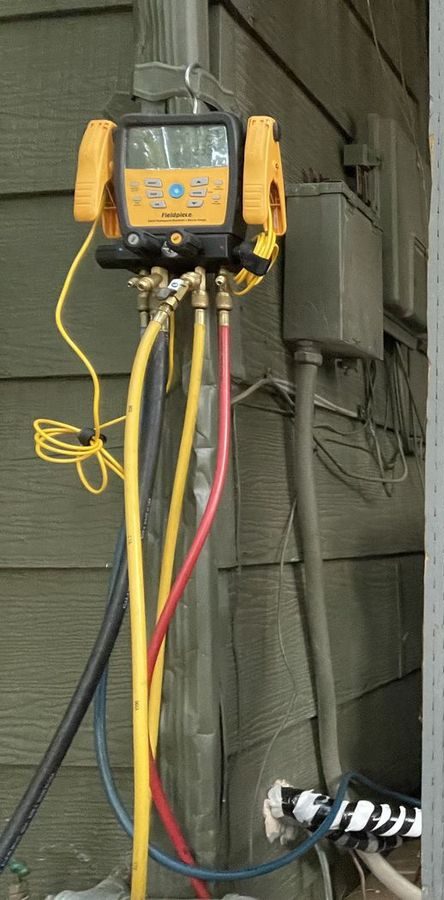
Digital gauges hang by the outdoor unit while the heat pump runs. Superheat and subcooling show whether the charge, a valve or the defrost board is the problem.
Read the service pageRichland · Ducted heat pumps & mini-splits
A Richland heat pump earns its keep twice a year: heating through gray weeks of freezing fog, then cooling through 100°F afternoons. When it ices over, blows lukewarm air, or leaves the AUX light glowing all day, our technicians test the defrost controls, reversing valve, charge and electrical parts, then write down the price.
Short answer
A Richland heat pump that stays caked in ice, leans on backup heat strips all day, or will not swap between heating and cooling usually has a defrost board or sensor fault, a sticking reversing valve, a refrigerant leak, or a tired capacitor or contactor. Our technicians test each suspect, write the repair figure down, and hold off until you approve. Book online or call 8 AM–7 PM.
Diagnosis runs from the thermostat out to the gauges. The technician first confirms the thermostat is actually calling and that the O/B wire powers the reversing valve solenoid at the right time. Then come voltage at the outdoor unit, the capacitor's microfarad reading, and a look at the contactor contacts. In heat mode, the temperature rise at the air handler plus suction and liquid pressures reveal whether compressor, TXV and charge are pulling together. An iced unit gets a forced defrost so the sensor and board can be watched doing their job.
A diagnostic fee applies to the visit; the office puts a number on it during booking. Choose to proceed and the fee rides inside that repair's total. Decide against the work, and the fee is the one thing billed. Either way, the repair cost is spelled out on paper first, nothing gets touched without your nod, and warranty terms arrive written on the invoice. Refrigerant recovery and recharging fall to technicians holding the EPA 608 Universal credential.
Inversions explain most of it. In winter, cold air settles into the Columbia Basin beneath a warmer layer and can sit there for days or weeks as low cloud, fog and freezing fog, with highs stuck in the 30s while western Washington stays milder. That cold, wet air frosts an outdoor coil fast, so a Richland heat pump may defrost many times a day: steam, a pause in the outdoor fan, and a whoosh as the valve shifts. Frequent defrost is expected then. A coil still white or thick with ice after the cycle ends is not.
Cold snaps that drive lows toward 10°F lean hard on the backup strips and on the sequencers staging them in, and summer reverses the job, with July averaging around 92°F and 100°F afternoons in most years. Long cooling seasons wear capacitors and contactors, and the west wind packs grit into the same coil that has to shed frost in January. Because one outdoor unit does both jobs, our technicians look for summer wear on winter calls and the other way around.
Newer homes around Badger Mountain South usually match the outdoor heat pump to an indoor air handler and a programmable or smart thermostat. A schedule that ends each night setback with a big jump in setpoint can call for strip heat the heat pump would have covered more slowly, so we review thermostat settings before calling anything broken.
Homes near Howard Amon Park sit beside the Columbia, where fog tends to hang on through an inversion stretch. Heat pumps along the river can defrost often for days at a time. Keep gutters from dripping onto the outdoor unit, and keep leaves and snow clear of its base so meltwater drains away instead of refreezing.
Around Uptown and the older central streets, many remodeled homes added heat pumps or ductless mini-splits along the way. Mini-split heads need clean filters and an open condensate line, and their outdoor units defrost just like a ducted system. Our technicians service ducted and ductless equipment on the same visit when a home has both.
One photo per tab from our service calls. Tap a tab, or let the file turn on its own.
01 / 12
Digital gauges hang by the outdoor unit while the heat pump runs. Superheat and subcooling show whether the charge, a valve or the defrost board is the problem.
Read the service page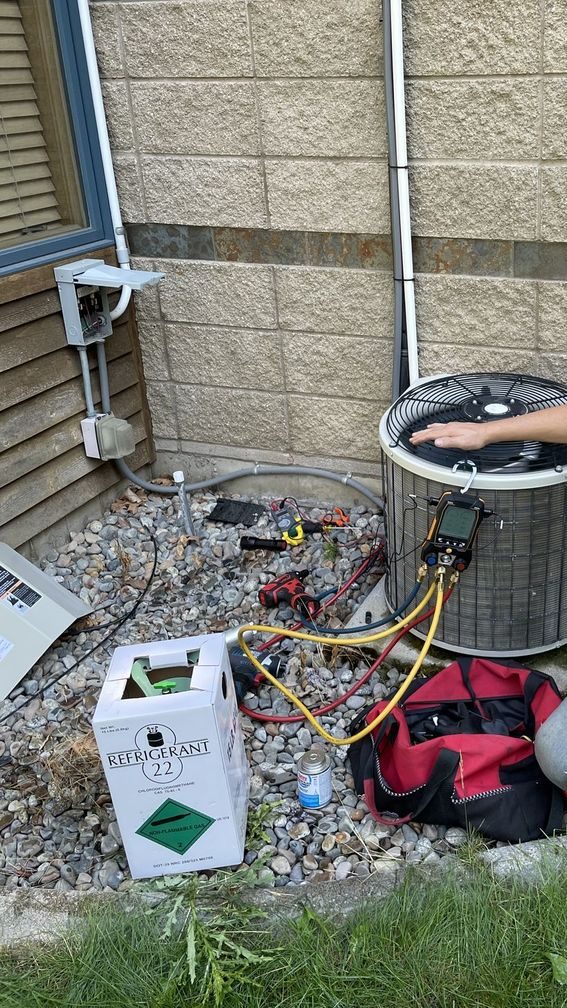
02 / 12
An older condenser under test with hoses on the service ports. The capacitor, contactor and fan motor get checked before anyone talks about refrigerant.
Read the service page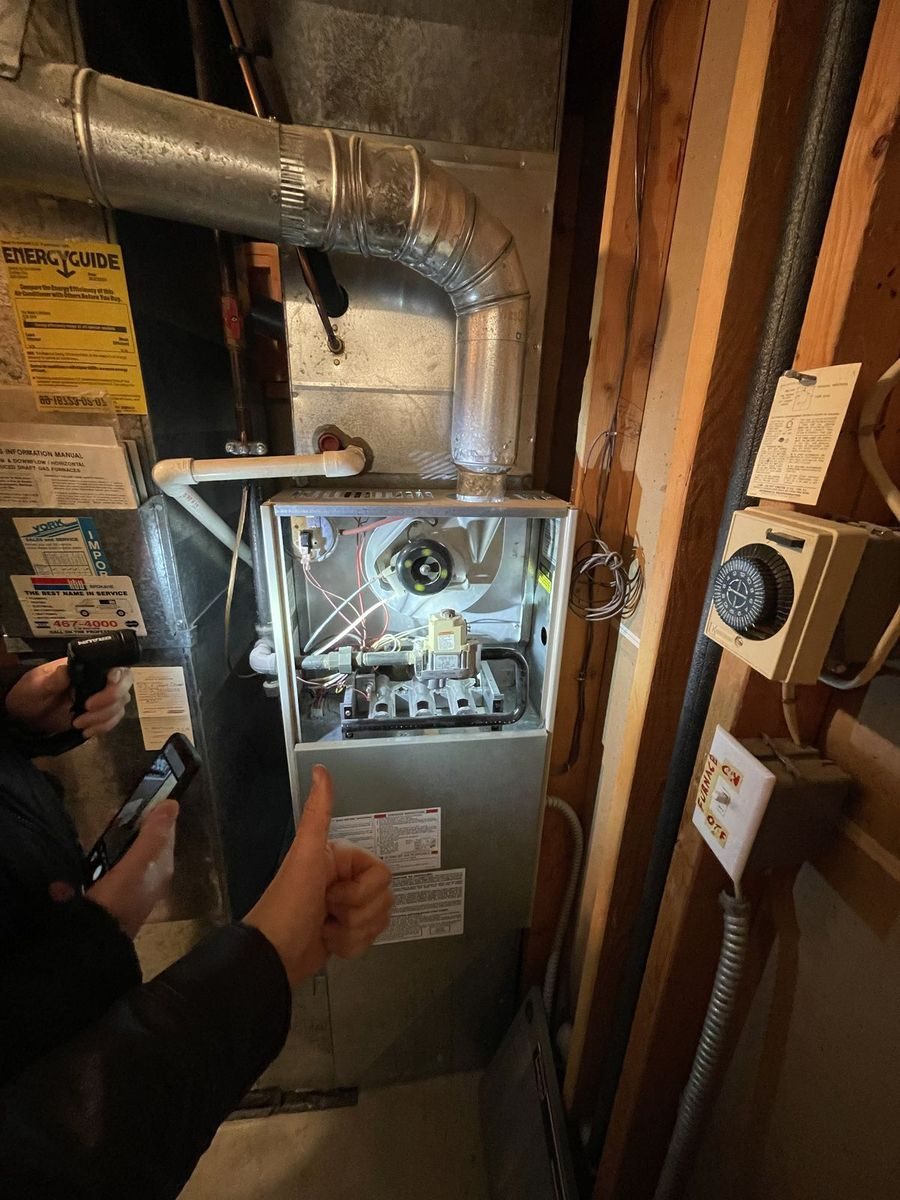
03 / 12
The burner compartment of a gas furnace, open. We follow the start-up order, inducer, pressure switch, igniter, flame sensor, until the step that fails.
Read the service page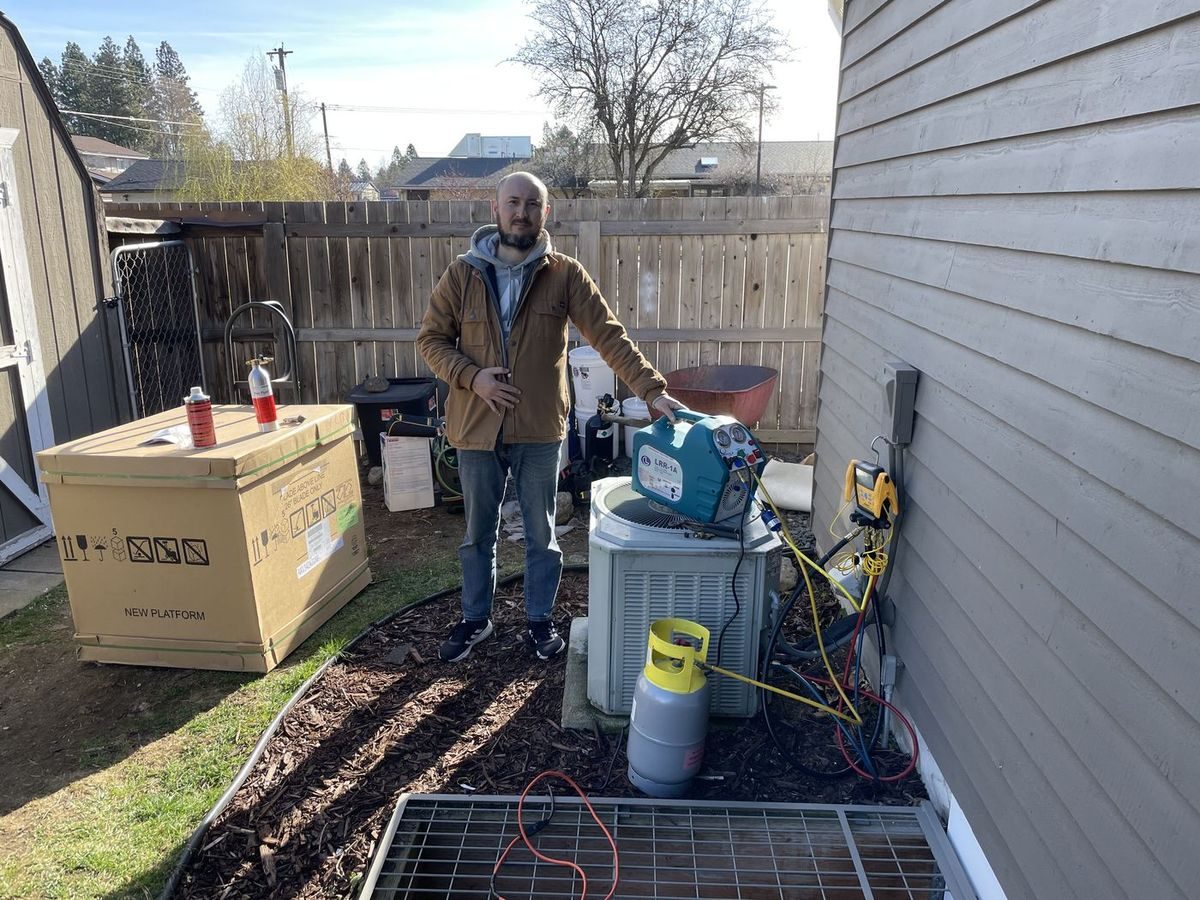
04 / 12
A recovery machine and cylinder beside an outdoor unit. On a replacement, the old refrigerant is pulled into the cylinder instead of the air.
Read the service page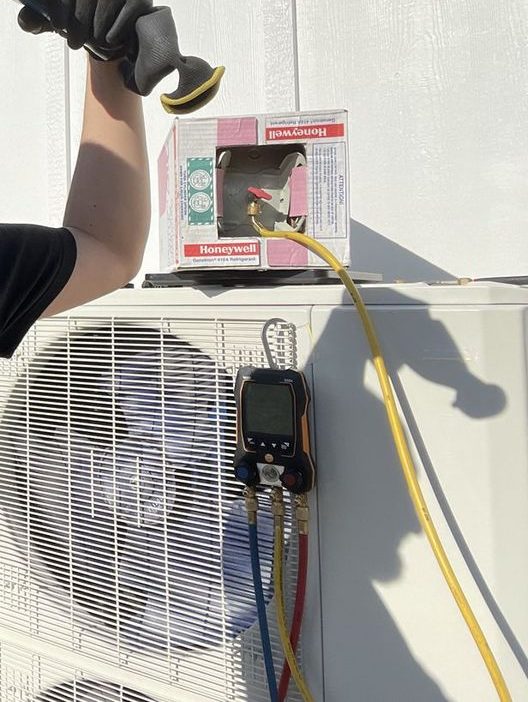
05 / 12
A ductless outdoor unit with a gauge set on it. Mini-splits get the same pressure and temperature readings as a central system, plus a look at the line-set insulation.
Read the service page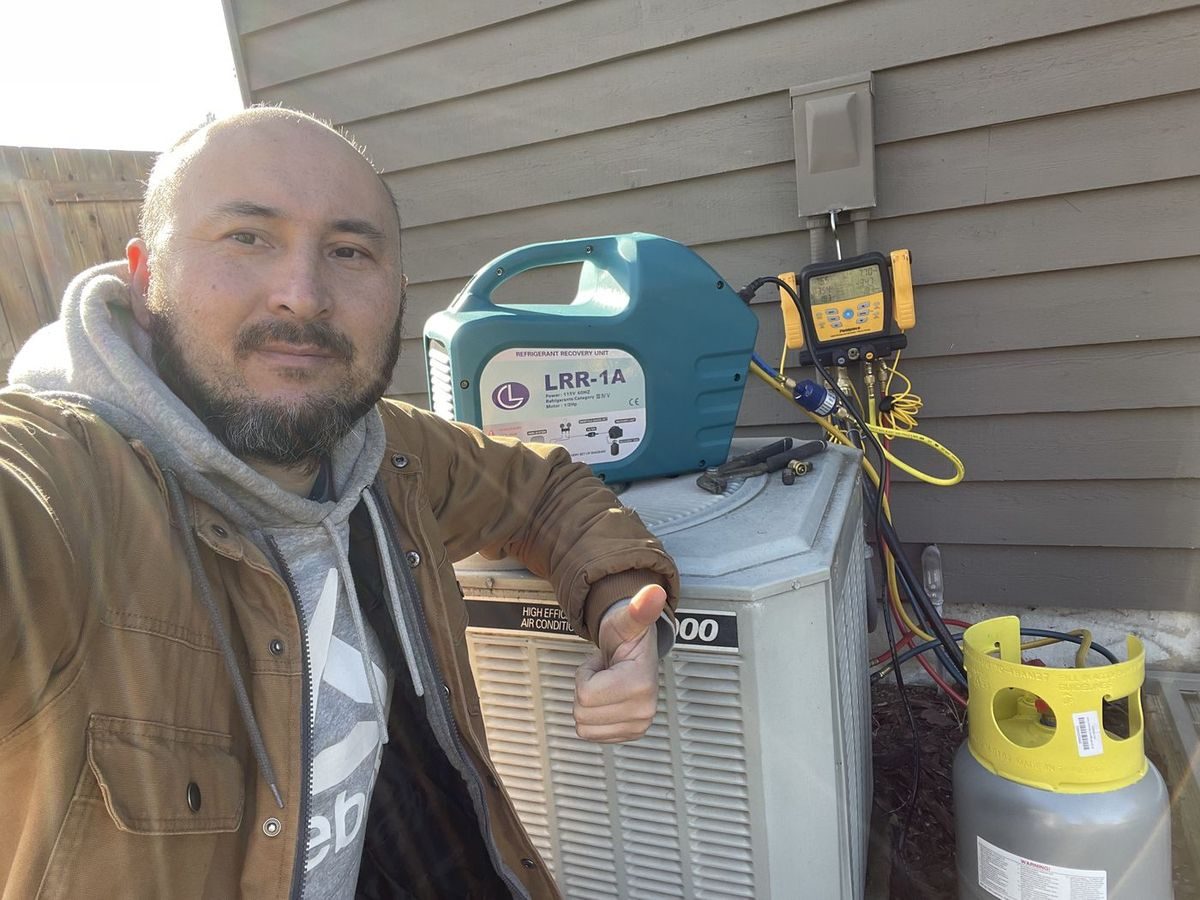
06 / 12
Gauges on a condenser during a seasonal visit. Spring visits wash the dust out of the coil; fall visits test defrost and heat strips before the fog weeks.
Read the service page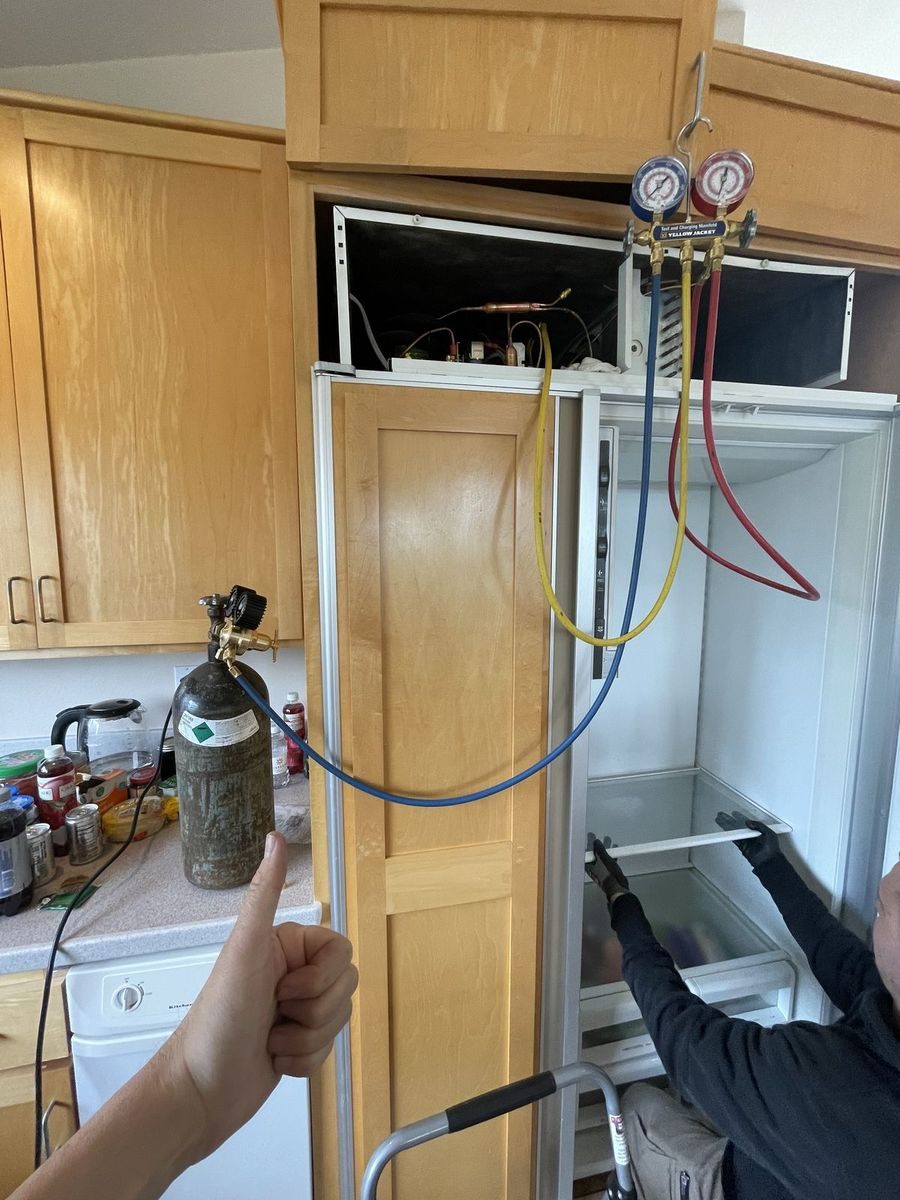
07 / 12
Gauges connected to a built-in refrigerator's sealed system. Leak searches, brazing and recharges happen in the kitchen, so the fridge stays where it is.
Read the service page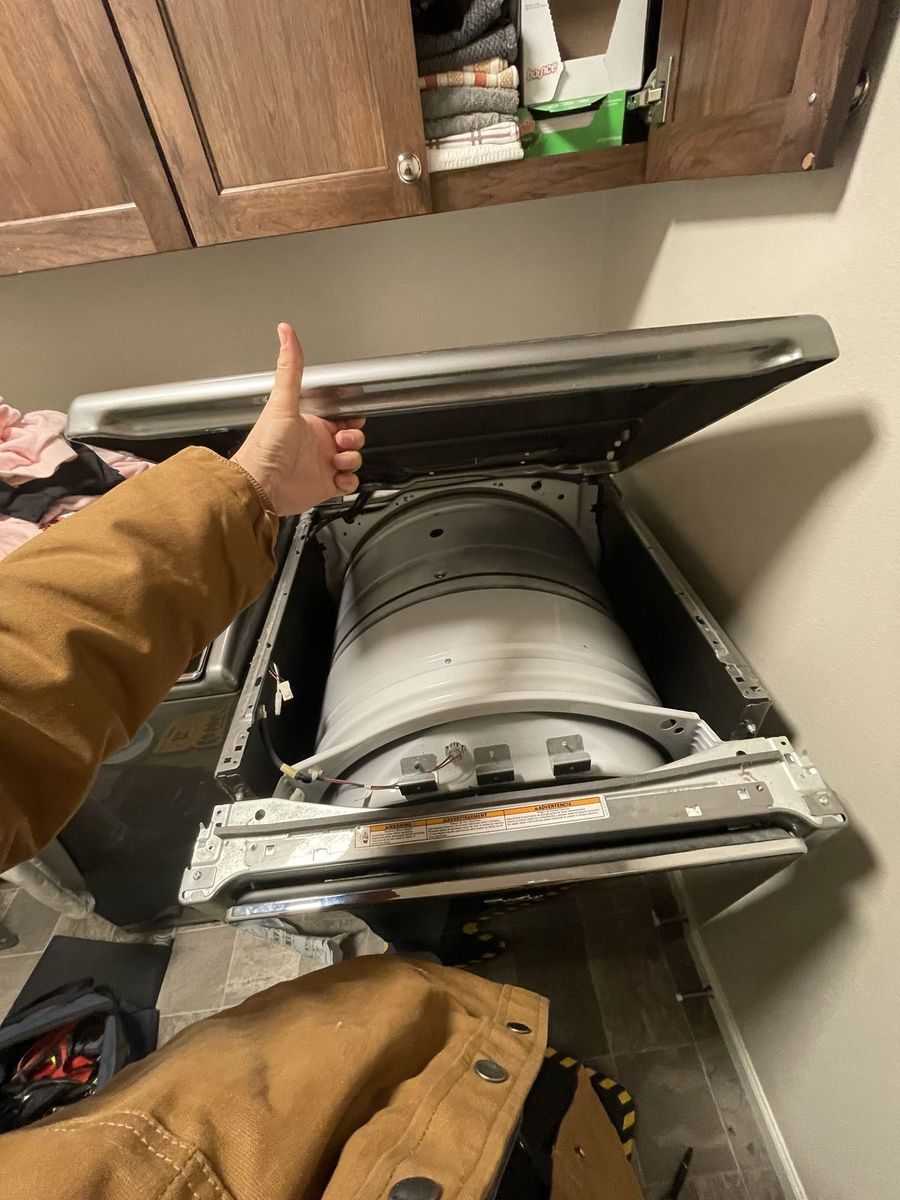
08 / 12
A top-load washer with the top panel raised. Lid switch, drive coupler and drain pump are all within reach once the top comes up.
Read the service page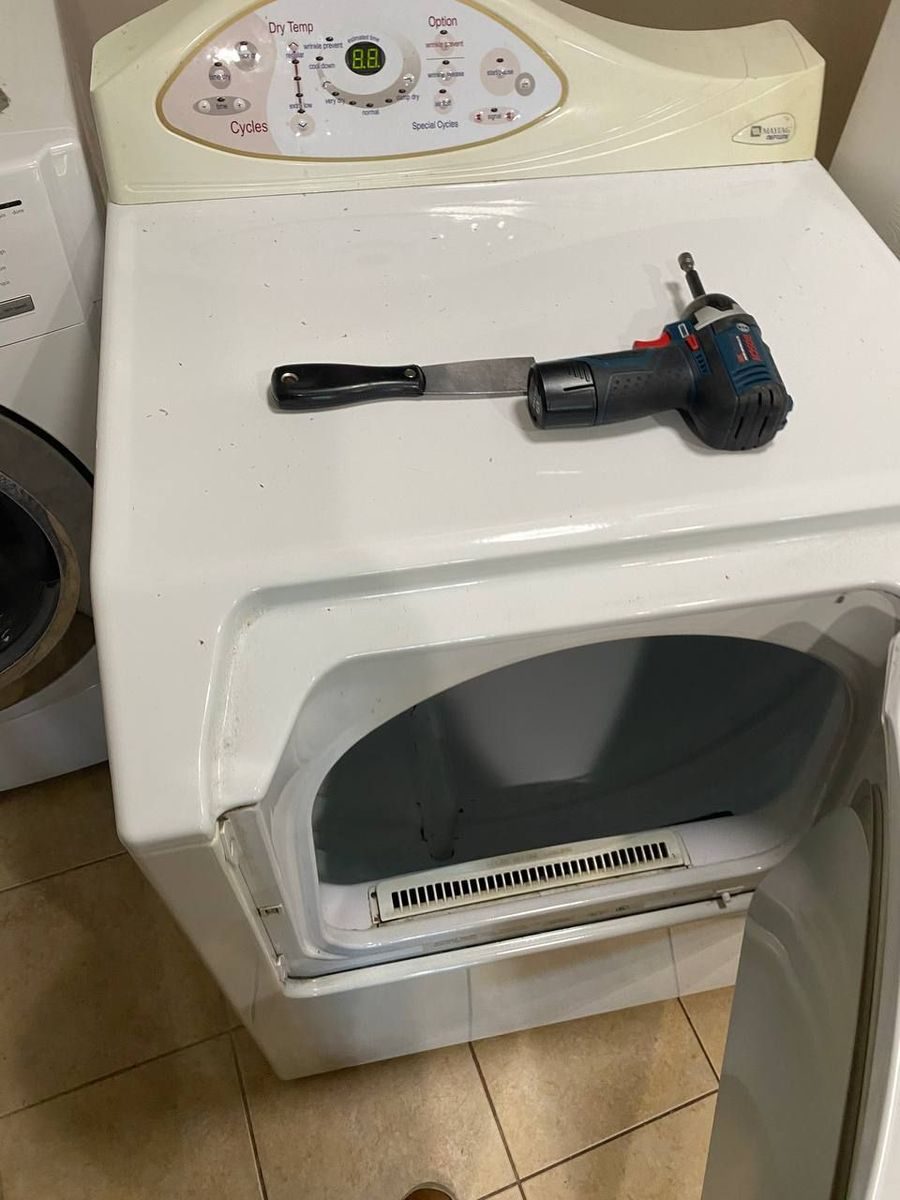
09 / 12
An electric dryer opened up in a laundry room. The thermal fuse, the heating element and the vent run behind the machine get tested together.
Read the service page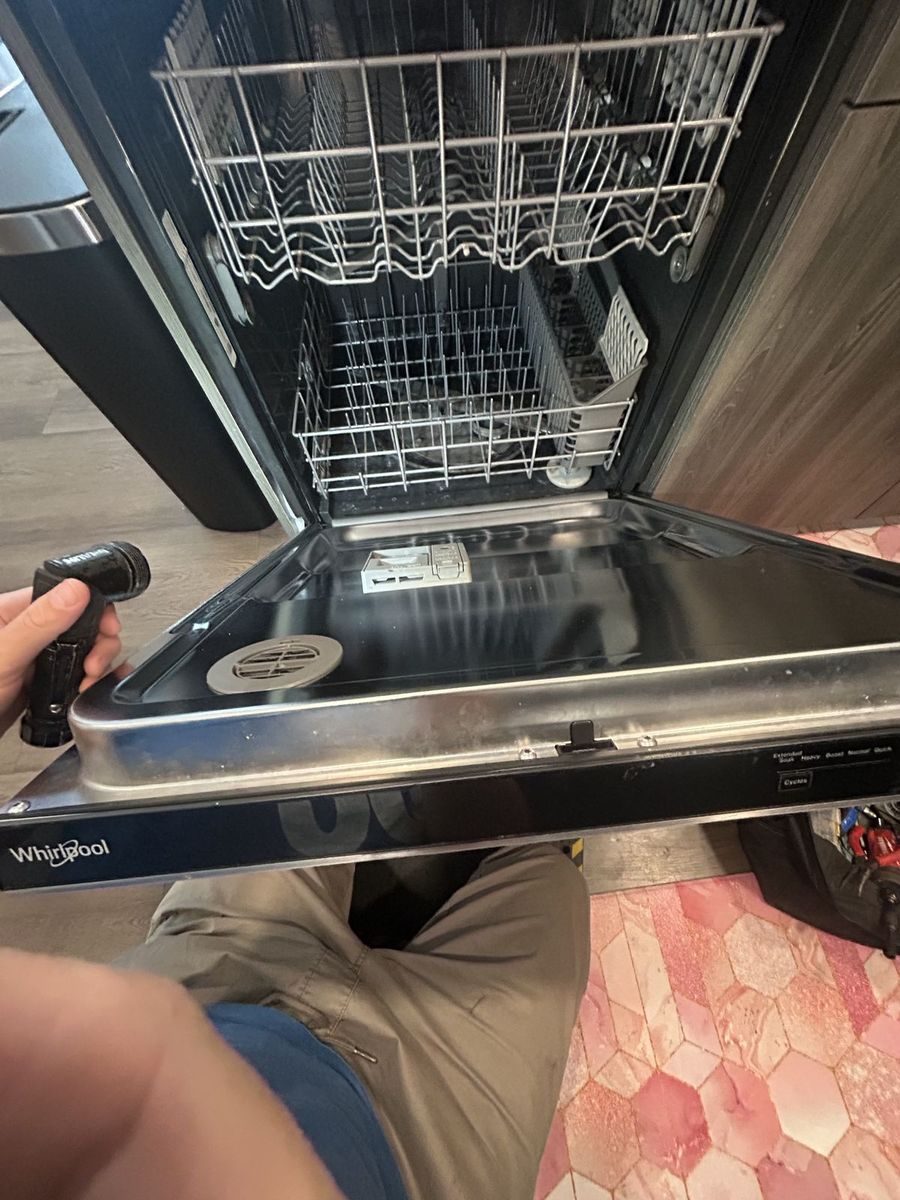
10 / 12
Door open and racks out on a dishwasher. A puddle left behind after the last rinse sends us to the filter screen, the pump and the hose route under the sink, in that order.
Read the service page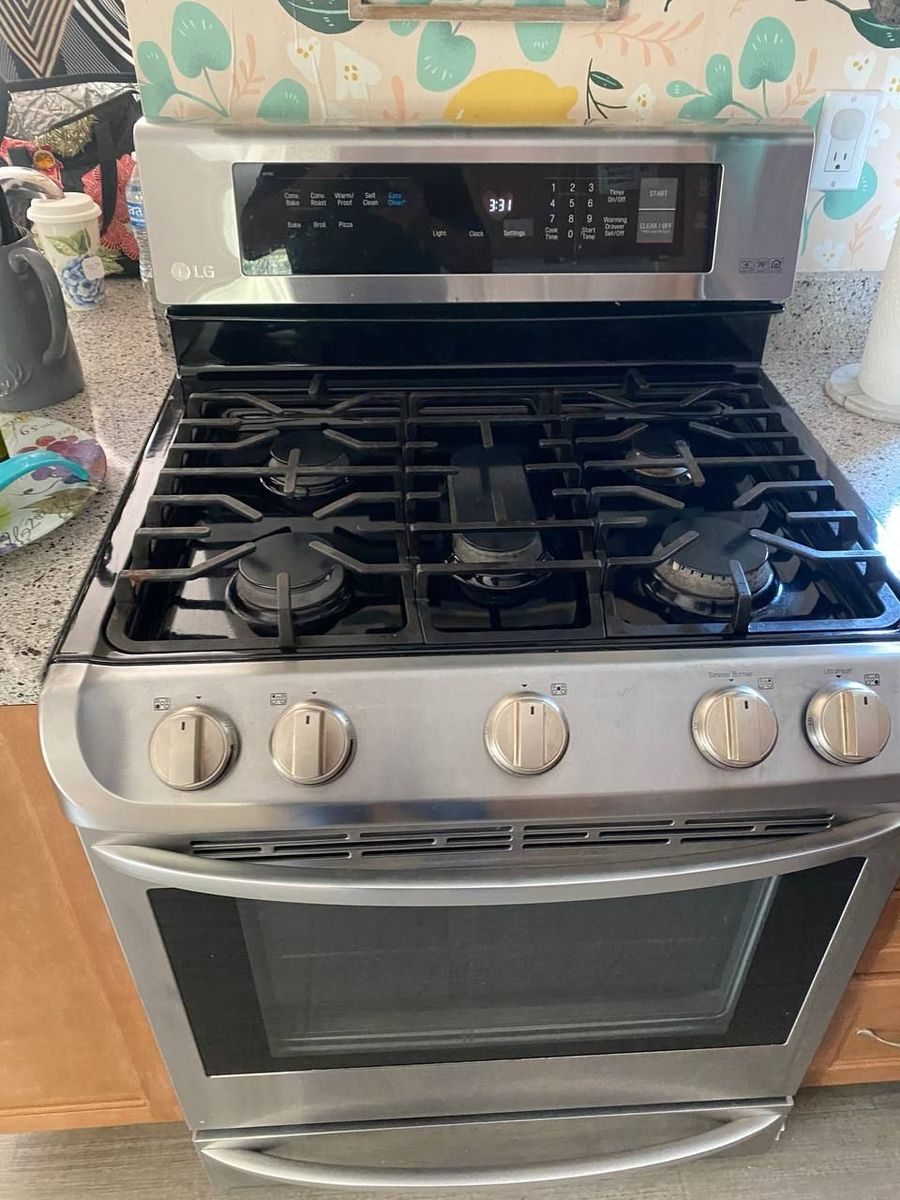
11 / 12
A five-burner gas range ready for testing. Burner igniters, the spark module and the bake igniter's amp draw are measured before a part is ordered.
Read the service page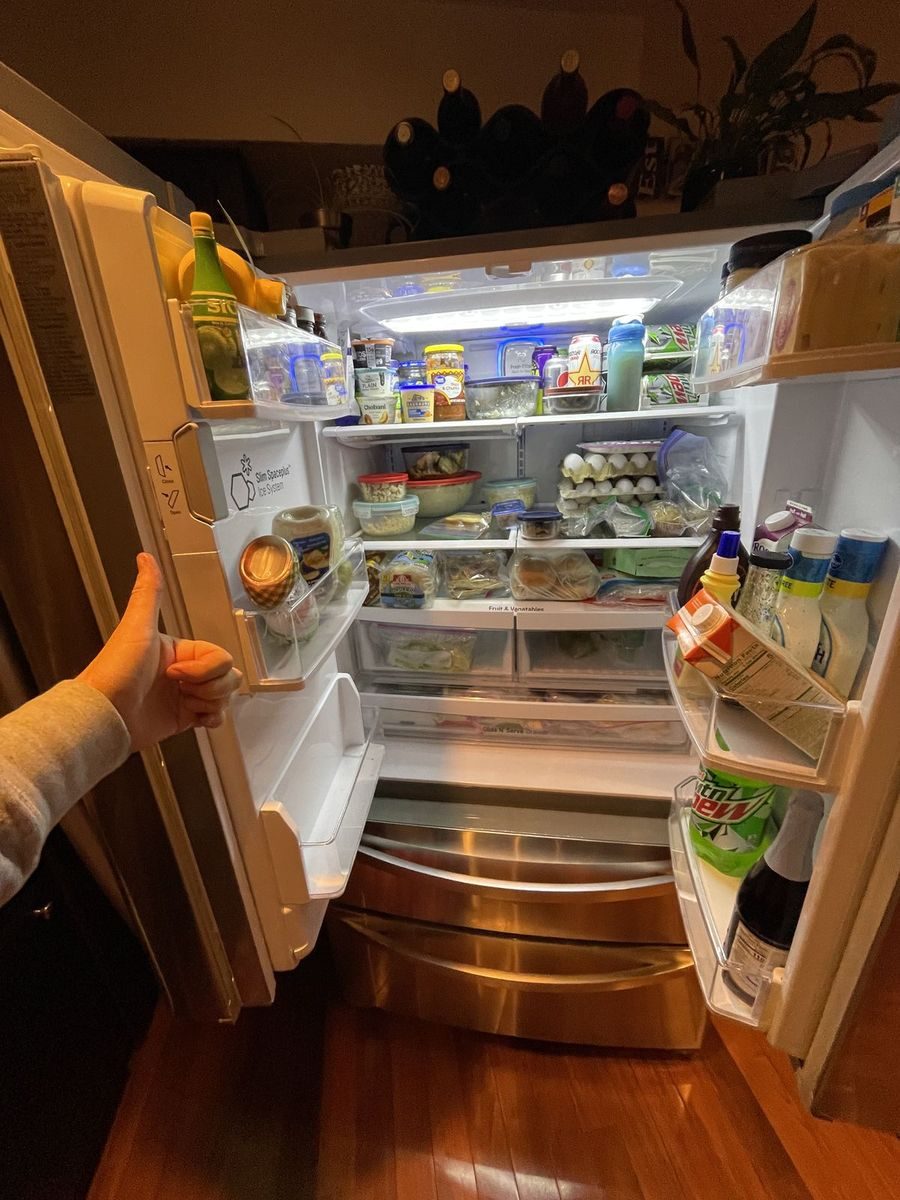
12 / 12
A French-door refrigerator open for diagnosis. Slow ice starts with the water: the inlet valve, the filter and a fill tube that can freeze shut.
Read the service pageOnly as a short-term step, if the outdoor coil has turned into one solid sheet of ice or the unit is grinding or scraping. Backup heat strips keep the house warm but draw far more electricity than the heat pump does. Book a visit at the same time, and return the thermostat to its normal heat setting once the technician has found and fixed the fault.
Yes. Mitsubishi, Fujitsu, LG and Daikin mini-splits run on the same refrigeration basics as a ducted heat pump, plus inverter boards, indoor fan motors, condensate drains and flared line-set joints. Our technicians read the error code, test sensors and boards, and leak-check the flares, and a written price comes to you before any board is ordered.
Often, though the answer turns on which piece failed. An open solenoid coil is a modest repair. A stuck valve body is a bigger job: the refrigerant comes out, a new valve is brazed in, and the system is evacuated and recharged. When the rest of the system is aging and showing wear too, a replacement quote may make more sense, and the technician can write up both.
Make sure the thermostat is in heat or cool with a setpoint that should call for it, that the filter is clean, and that the breakers for the outdoor unit and air handler are on. If one tripped, reset it once. Then look outside for heavy ice, debris against the coil, or a fan that is not turning, and mention what you saw when you book.
Talk to us
Use the booking page to set a date and an arrival window, or phone us any day from 8 AM to 7 PM. Expect a confirmation call from the office, and ask if you would like the reply in Spanish.
Book a visit
One slip, filled top to bottom. The office phones to confirm the visit, and the technician calls again when on the way.
Every number below is a public state record. Look each one up on L&I Verify, or read what each license allows on our licenses page.
What our licenses cover